The Summer of Flying Whatsists

We are approaching the anniversary of a very big week for the United States and for the world because between July 19th and July 27th of 1952 was the peak of intense UFO sightings in a year that had been filled with them. Over the course of the previous four years the US Air Force had recorded observations of 615 UFOs. In 1952 alone, that number jumped to 717.

USA National Archives and Records Administration, Public Domain, via Wimikedia Commons.

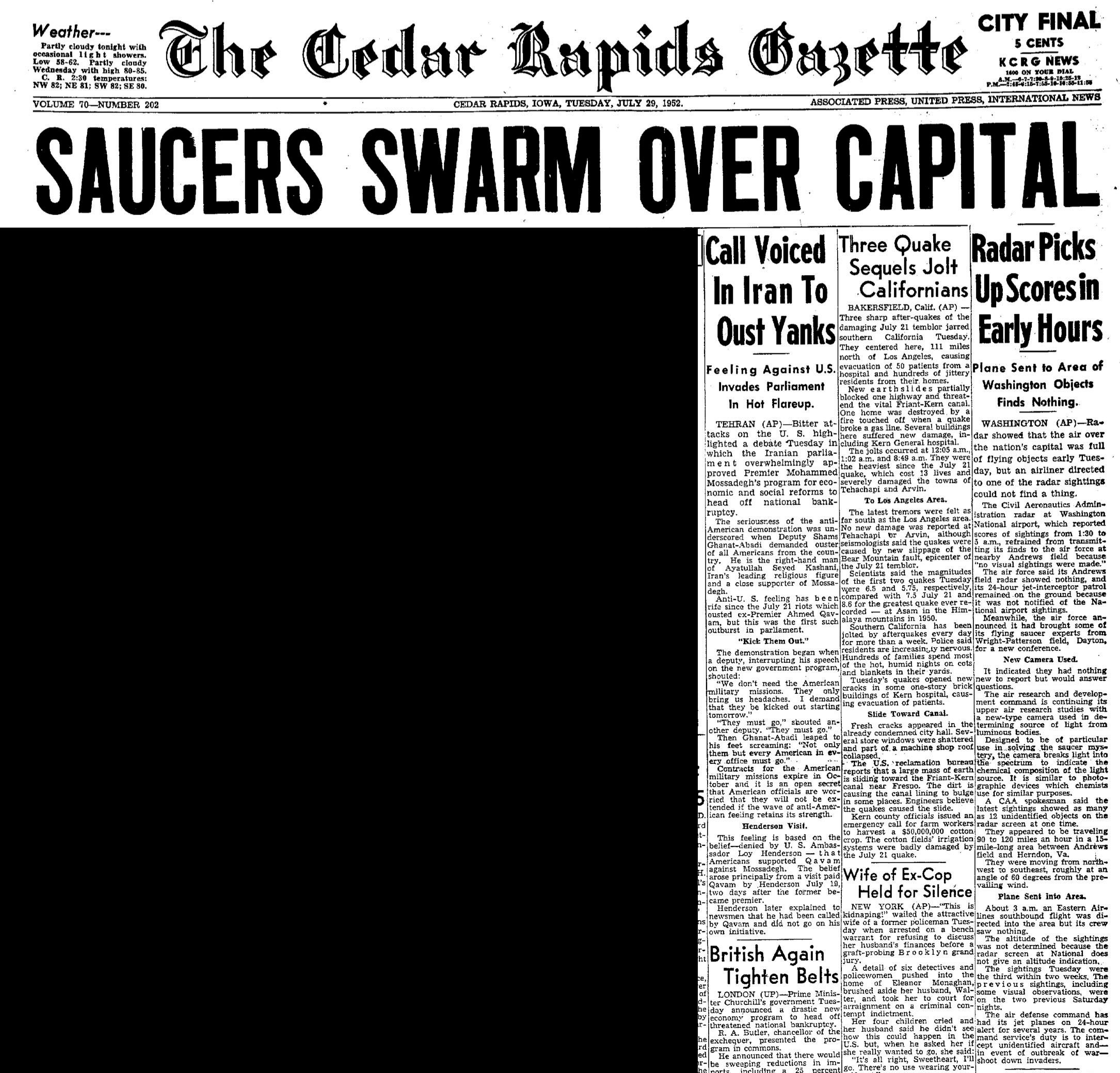
The media noticed, particularly in that one week in July when many of the reported UFOs were spotted in the air over Washington DC. Headlines across the nation proclaimed the news. The Cedar Rapids Gazette announced: “SAUCERS SWARM OVER CAPITAL.” The front page of the Standard-Sentinal out of Hazelton, Pennsylvania declared: “RADAR SPOTS MORE ‘FLYING WHATSITS’ OVER WASHINGTON, and in Monroe, Louisiana, the front page of the Monroe News-Star featured the headline: “RADAR SPOTS ‘FLYING SAUCERS’ IN BACKYARD OF NATIONAL CAPITAL.”

Of course most of the articles do acknowledge various versions of the official government response, provided in the largest Pentagon press conference since World War II, that there was no national security concern at all, and that the sightings could be attributed to natural phenomenon like air temperature inversions and meteorite activity.

The UFO media frenzy seems to have been touched off by an April article in Look magazine that asked the question, “HAVE WE VISITORS FROM SPACE?” Then it steadily built because the eyewitnesses to UFOs weren’t just the usual crazies, but also included more credible people like both military and civilian pilots as well as air traffic controllers, some of whom were insistent that their observations didn’t perfectly fit the explanations.

I did see a series of UFOs earlier this spring over my house. That is until my husband identified them as a Space X satellite launch. Still a pretty cool thing to get to see.

Of course the most likely truth rarely gets in the way of a good sensational headline, or even a slanted story, of the variety that will sell a lot of news to the hysterical people who most want to consume it. That was certainly true in 1952, just as it was during the Summer of the Shark in 2001, when everyone became so afraid to go into the water that the number of shark attacks was down a little bit, and just as it has been every single year, before or since, that there has been nationwide media coverage. 

Yes, that includes now. But before you get mad at me, it also includes every year the other political flavor held more power, too. Because media is a business designed, like all businesses, to make a grab for our attention and resources. It’s most successful when we’re scared and angry and maybe a little irrational, which is why it works very hard to keep us that way. 

Am I suggesting that there isn’t any truth to the sensational, terrible, nation-ending, world altering stories we are consuming in the media every day? Well, not exactly, but often with a little distance and the slight change in perspective it might offer, we can start to see things a bit more clearly.

I suppose I can’t really say for certain that DC wasn’t visited by flying saucers in July of 1952, but I have read that when digital filters were added to radar equipment in the 1970s, there was a sharp reduction in reported UFO sightings. And that really can only mean one thing. Clearly, flying saucer cloaking technology also saw vast improvement at that time.

Stolen Olympic Dreams

In 1903, David R. Francis, former mayor of St. Louis, former governor of Missouri, former US Secretary of the Interior, and then president of the Louisiana Purchase Exposition, had a couple of big problems. 

David R. Francis, whose impressive resume could include “Olympics Stealer” under Special Skills. Public domain, via Wikimedia Commons

Under his leadership, the City of St. Louis was attempting to carry off the grandest world’s fair yet. It was set to commemorate the one hundredth anniversary of the Louisiana Purchase land deal in which Thomas Jefferson bought from France the rights to be the conquering power in a gigantic territory that was inhabited already by quite a few indigenous people. It was a giant leap forward in the Get Really Friggin’ Big Destiny of the young United States. 

But it turns out that pulling off the largest world’s fair in history is something of a logistical challenge and the whole project had to be pushed to 1904. That still worked because the famous explorers Lewis and Clark didn’t set off into the Louisiana Territory until 1804, so with some minor fudging, that was good enough. 

Another big problem, however, was the fact that in 1901, the Olympic Committee in charge of determining the site of the third modern Olympic Games in 1904 had chosen Chicago. This would be the first Olympic Games on US soil and, though the Games didn’t yet garner nearly the attention they do today, it was still a world event that would compete directly with St. Louis’s moment in the spotlight.

Though founder of the Modern Olympics Pierre de Coubertin didn’t attend the St. Louis Olympiad which he feared “would match the mediocrity of the town” (ouch), in 2018 the IOC did finally allow the city to install Olympic rings (not a thing yet in 1904).

The two cities already had a strong rivalry going because the proud, historic City of St. Louis, Gateway to the West, on the bank of the Mighty Mississippi River had been usurped as the preeminent western city by some swampy upstart village to its north that became important only because someone decided to dig a ditch from the Hudson Bay to the Great Lakes. Whatever.

Francis wasn’t about to let the swampy upstart ruin his fair which, in case anyone is keeping score, was more than double the size Chicago’s little exposition had been in 1893. He saw to the planning of numerous athletic events and even managed to contract with the Amateur Athletic Union to hold their 1904 track & field championship as part of the fair. Presented with the very real possibility that this could spell failure for the burgeoning tradition of Olympic world competition, the Olympic Committee begrudgingly agreed to move the Games to St. Louis.

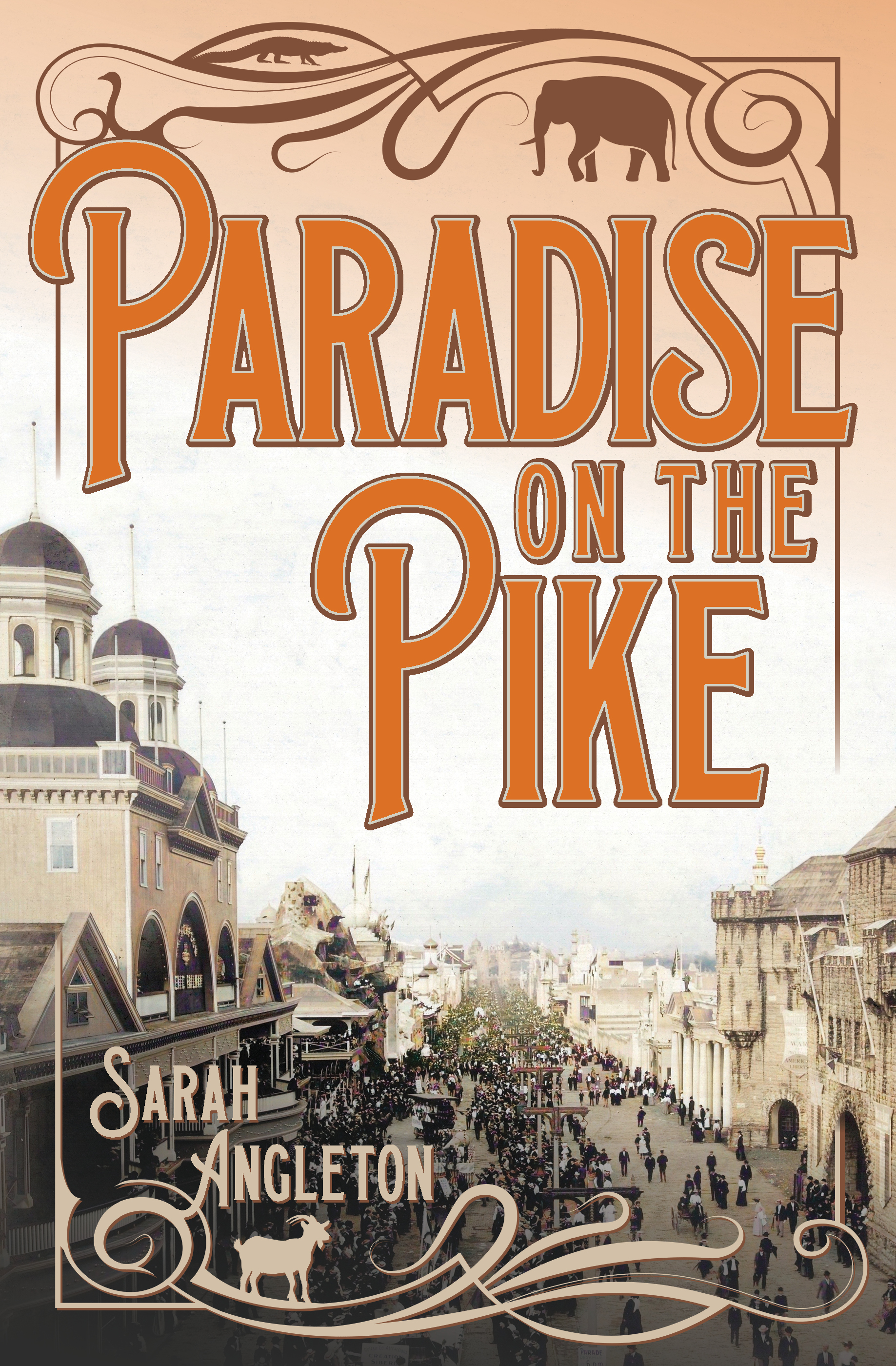
If you want to explore another, non-Olympic aspect of the 1904 World’s Fair, you can check out my newest historical mystery. https://sarah-angleton.com/paradise-on-the-pike/

Some Olympic historians have suggested that this was a blight on the history of the Games, but given that the whole concept of the Modern Olympics was still fairly new and in a bit of flux anyway, I’m not convinced that’s very fair. Yes, only twelve countries were represented and more than eighty percent of the athletes represented the United States. Yes, fair organizers tended to refer to every sport played on the fairgrounds as “Olympic,” which caused quite a bit of confusion. Yes, there was a deeply problematic “Anthropology Games” competition in which indigenous peoples were paid to compete in events in which they’d had almost no training in order to demonstrate the general superiority of western athleticism. And yes, the gold medal in the marathon was very nearly awarded to a man who’d completed much of the course in a car. 

But it was also the first Olympic Games in which gold, silver, and bronze medals were awarded to the top competitors, hurdler George Poage became the first Black athlete to win a spot on the Olympic podium, and competing with a wooden prosthetic leg, George Eyser won multiple medals in gymnastics. Also, there was not a single allusion to menage a trois in the opening ceremony. Nor was there an opening ceremony.

In the interest of not making every reader from Chicago completely hate me, I should clarify that I actually really like deep dish and think that it is infinitely better than the Provel and cracker crust garbage St. Louis likes to pass off as pizza. Chris6d, CC BY-SA 4.0 https://creativecommons.org/
licenses/by-sa/4.0, via Wikimedia Commons

One could even argue that because the Games were part of this gigantic fair, which welcomed nearly 20 million people and became the only Victorian era fair to make a profit, this boosted the visibility of the Olympics, which were already a little bit of a hot mess with an uncertain future at this point. 

So yes, David R. Francis and the City of St. Louis were a little bit sneaky and underhanded and totally stole the Olympics from Chicago, which still hasn’t hosted the Games. The city does have a lot going for it, though. They have a river they’re fond of dying green every St. Patrick’s Day, an interesting cheese casserole dish they refer to as pizza, an alarming number of murders, and a somewhat irrational, now mostly friendly rivalry with a tiny little proud city to the south on the bank of the Mighty Mississippi.

Not bad for some swampy little upstart.

Avoiding Traffic

August 15, 1969 was a mild, warm day near the small town of Bethel, New York. It was the perfect day for a leisurely drive down State Highway 17B. By leisurely of course, I mean about an eight hour drive to move about ten miles with nearly half a million of your closest friends.

Just like in the classic children’s book Go Dog, Go! by P.D. Eastman, the place everyone was going on that pretty day in the middle of nowhere, was a great big party—in this case, the Woodstock Music and Art Fair that was to take place for “three days of peace and music” on a 600-acre dairy farm.   

I have lots of friends who made the drive and took the pictures. This isn’t one of theirs, but they all look pretty much like this. Image by Dane from Pixabay

The weather didn’t stay nice, of course. The sky grew overcast and there was a fair amount of rain to try to soak into an already somewhat saturated ground. By the end of the event, which rain delays pushed into a fourth day, there was an awful lot of mud. And the road snarl to get there was bad enough the performers had to be brought in by helicopter. Nearly fifty-five years later it still makes the top ten list of all-time worst traffic jams in history.

But people who attended seem to think it was a pretty good time. The whole thing sounds like an absolute nightmare to me, but then my perfect day would more likely be spent on a dairy farm in the middle of nowhere with no one but the cows and a book. Well, maybe a few people could come with me. And I’d want at least three books. Also, no traffic. 

There are probably a lot of things I’d choose not to do just so I could avoid traffic. Earlier this week I made just such a decision when a swath of my state experienced a total solar eclipse. From the vantage point of my driveway, the moon’s coverage of the sun was somewhere close to 98%. 

If you do like to avoid a rush, you can still get a free advance digital copy of my new historical mystery by joining the launch team by April 15th: https://forms.gle/psi7ctZ6fNK88dbB9

A lot of people got pretty excited about the idea of traveling a smidge into the area of totality. I do mean a lot. The news reported that drive times doubled and even more than tripled in parts of the state. In many places, traffic completely shut down during the eclipse itself with motorists donning cardboard eclipse glasses and staring up at the sky.

Of those I know who traveled for the event, most say it was well worth it. I’m sure it was. If I hadn’t experienced a total eclipse seven years ago, I might have been excited enough to travel, too, but the traffic in my driveway was no thicker than usual.

At nearly 98% coverage of the sun, the sky grew noticeably darker, the air got cooler, the insect noise shifted a bit, and my dog grew a touch antsy. I had a pair of cardboard eclipse glasses and I did stare up at a sliver of the sun. Then I had a lengthy conversation with my four-year-old neighbor who was wearing a Spider-Man sweatshirt just in case the eclipse gifted him with superpowers. 

It didn’t, which was disappointing for both of us. But the day was mild and warm, perfect for standing on the driveway, looking up at the sky, and avoiding traffic.

The Phantom Blog Theory

In 1991, German historian Heribert Illig discovered a discrepancy that shocked the world when he suggested that around three hundred years of human history never actually existed. To draw this conclusion, Illig looked at the comparatively scant archaeological evidence from the years 614 AD to 911 AD, the presence of Roman-type architecture in Europe that clearly doesn’t date as far back as the Roman Empire, and that one weird time glitch created when Pope Gregory XIII decided the Julian Calendar wasn’t far enough behind the times.

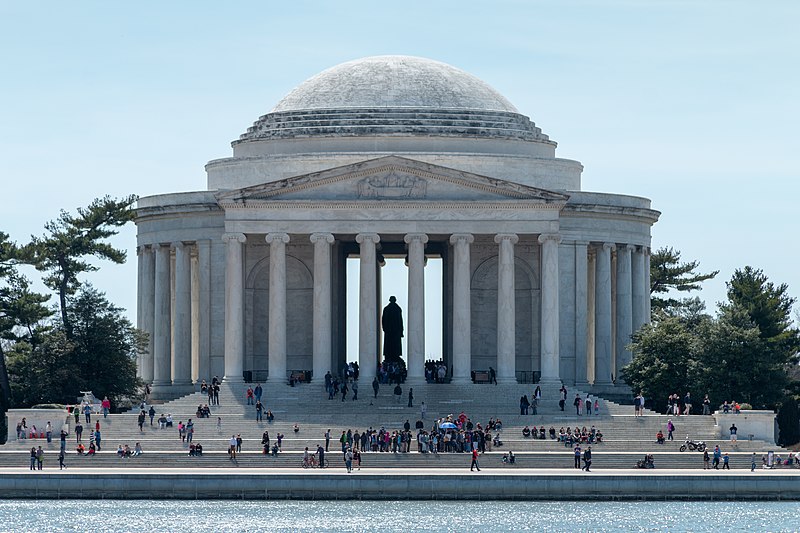
Jefferson Memorial in Washington DC, a structure that is super Roman and therefore serves as evidence that there’s closer to 1400 years of phantom time. Michael Jimenez, Public domain, via Wikimedia Commons

The theory goes that buddies Holy Roman Emperor Otto III, Pope Sylvester II, and Byzantine Emperor Constantine VII conspired to shift time in order to make their own lives and legacies more auspicious.

And it clearly happened just that way, because in 1582, Pope Gregory’s astronomer pals calculated that they could correct the Julian calendar, created in 45 BC, by subtracting a day for every one hundred and twenty-eight years. It was a solid plan until they rounded to ten, thereby correcting the calendar dating all the way back to the year 325 AD, the year of the Council of Nicaea.

That might be a little tough to follow, but don’t worry because in the 90’s, Illig did the math. What he realized is that 128 times ten is 1280, which leaves 347 years unaccounted for between 45 BC and 1582, as if it never happened at all. And the Phantom Time Theory was born.

To say that Illig shocked the world might be a little bit of an overstatement, but his theory did raise some historians’ eyebrows for a minute. And I can sort of understand why, because I have definitely experienced my own version of phantom time.

Silly theory or not, I gotta admit “phantom time” sounds pretty spooky and cool. Image by lidago from Pixabay

You see, five hundred and ninety-eight weeks ago, on May 9, 2012, I posted to this blog for the first time. I admit that at first I didn’t know exactly what I was setting out to create, but what it ended up being was a quirky mashup of history, as viewed from a slightly ridiculous angle, and my life, as viewed from an entirely ridiculous angle.

My aim was to blog once a week, realizing that some bloggers work on a much more ambitious schedule, but acknowledging that with the general demands of a busy life, I wasn’t going to be able to keep up with more. So, without any idea what I was doing, I got started and blogged once a week, for the next eleven-and-a-half years.

Now, if we do the math, that means that today’s post is my five hundred and ninety-ninth in this space. Not too shabby. Except that, according to the number-crunching monkeys at WordPress, this is my four hundred and twenty-fourth post. That sounds way less impressive. And it leaves one hundred and seventy-four weeks unaccounted for, as if they never existed at all.

What happened to those weeks? Well, any number of things might have occurred. It’s possible I was working on a book, or maybe I bumped my head and forgot to post, or I might have spilled a drink on my computer, or I could have blown off blogging and gone to a water park instead. That does sound like something I might do. Or is it possible that those weeks simply didn’t happen and I’m actually a little more than three years younger than I thought?

Yeah. I like that. I think I’m going to assume that’s what has happened here.

Now, I realize that some of you particularly astute readers might question my conclusion by suggesting that time was still passing for you during those missing weeks. Perhaps some of you even posted to your own blogs during the unaccounted-for one hundred and seventy-four weeks, leading you to believe that you have some sort of evidence that time kept marching on even without my contribution to the blogosphere. I mean, I guess if you’re that egocentric, your point could maybe be a little bit valid.

History-schmistory. This looks like way more fun. Image by cafrancomarques from Pixabay

That’s also the best argument against the Phantom Time Theory, which didn’t have most historians scratching their heads for very long. The theory assumes that the presence of 5th to 8th century artifacts from other world cultures sheds no light on whether or not time existed in Europe during the same period. It also relies on the impossibility that anyone in a later era might mimic an architectural style of an earlier era. Both of these assertions are a little hard to swallow.

Then there’s the astronomical evidence. While Otto III, Sylvester II, and Constantine VII were busy conspiring, it seems they forgot to reschedule the comets and eclipses reliably observed here on earth. So, maybe Europe just blew off history for a few centuries in favor of a trip to the water park. For the rest of the world, however, I think it’s safe to assume that time kept on ticking.

Maybe We Should Taco ‘Bout It

In 1632, Italian scientist Galileo Galilei published his book Dialogue Considering the Two Chief World Systems. Produced under a license issued by the Inquisition, the work presented a discourse between different points of view on a wide range of scientific topics of his day.

One of these conversations involved the competing theories of 2nd century Egyptian mathematician Ptolemy who believed the earth to be the stationary center of the solar system, and that of 16th century Prussian mathematician Nicolaus Copernicus who said, “Nuh-uh.”

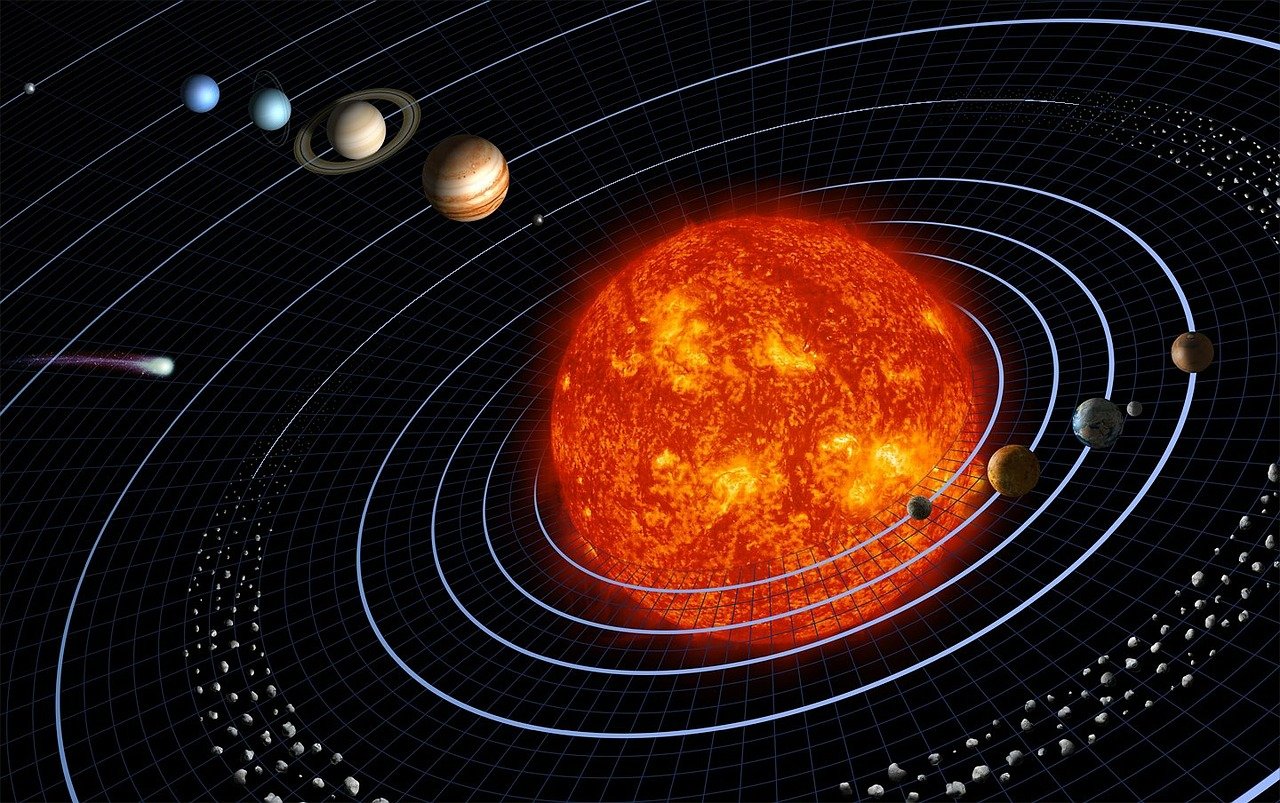
Clearly this is heresy. Image by WikiImages from Pixabay

It turned out that Galileo, a devout Catholic who was clearly well versed in the arguments of each, and pretty handy with a telescope, kind of sort of agreed a little bit completely with Copernicus. In the course of his Dialogue, it started to sound that way to his readers, too. Among those readers was Father Vincenzo Maculano who was appointed by Pope Urban VIII to suss out the truth behind Galileo’s potential heresy, general bigotry, and absolute hatred of puppies. Probably.

And he did just that, because three hundred and ninety years ago today, under the threat of torture, Galileo made a public statement denouncing his ridiculous, data-fueled suspicion that Earth revolves around the sun.

The Catholic church at the time, supported by the questionable literal reading of several verses of Scripture, was thoroughly convinced this was an error that had been inappropriately and willfully spread by Galileo’s heretical work. Also that Galileo most likely had other incriminating documents locked up at his house, or possibly in a box tucked behind his Corvette.

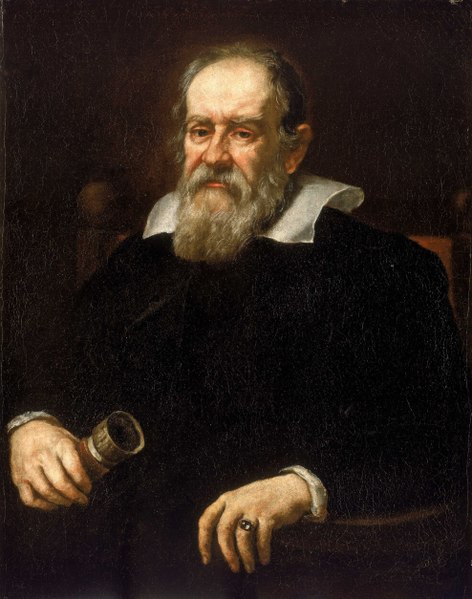
Although, the man really did know his way around a telescope. Justus Sustermans, Public domain, via Wikimedia Commons

It’s not hard to imagine why Galileo, sixty-nine years old at the time and not in the greatest of physical health, went ahead and stated for the record: “. . .with a sincere heart and unfeigned faith I abjure, curse, and detest the aforesaid errors and heresies, and generally every other error, heresy, and sect whatsoever contrary to the said Holy Church. . .”

The book was banned, which made the world much safer from thinking. That was a good thing since the world was already pretty busy revolving around the sun. Galileo himself was sentenced to penance and imprisonment that was soon softened to house arrest for the remainder of his life.

And it served him right, because troublemakers who float theories that go against the grain of societally accepted truth, and who are consequently bigots and puppy-haters who have obviously broken all the laws, deserve to be harshly judged and silenced.

Except that three-hundred and ninety years later, I think it’s safe to assume most of us would agree the trial and forced recantation of Galileo was wrong. It only took the Catholic church three hundred and fifty-nine years to officially come to that conclusion, remove his book from the list of the banned, and pardon the man so he could leave the house and get a taco. Tragically, he didn’t live long enough to see the day.

I’d probably be happy listening to any of your crazy ideas over a taco. Also, I might be a little bit hungry. Kurt Kaiser, CC0, via Wikimedia Commons

Still, it’s nice to know that given enough time, humans will listen to and consider the ideas of fellow humans without automatically assuming the person presenting those ideas hates puppies, which I should add, it’s entirely possible that Galileo did not.

I’d like to think we might even be able to swallow our pride enough to make an effort in fewer than three hundred and fifty-nine years, even though I know it can be pretty uncomfortable to listen to someone challenge a widely held idea that you personally think is pretty spot on.

But it might just be worth the effort to listen, because maybe the person on the other side of that discussion really is a bigot who hates puppies. Or it’s also possible that person actually shares most of your beliefs, but just has a telescope and some pretty good evidence that should also be considered. And that person would probably really like to go get a taco.  

The World’s Tastiest Hero

In the fall of 1529 the city of Vienna, Austria in the Holy Roman Empire was under siege by the Ottoman Empire. To explain what exactly was happening there would require a lot of complicated details surrounding a geopolitical hot mess that, of course, involves the death of a king, a civil war, and nosy neighbors who weren’t big fans of the Hapsburgs and would have loved to see them take it on their rather unusual chins. If you’d like to puzzle all of that out, then you’ve probably come to the wrong blog, because I’d rather talk about pretzels.

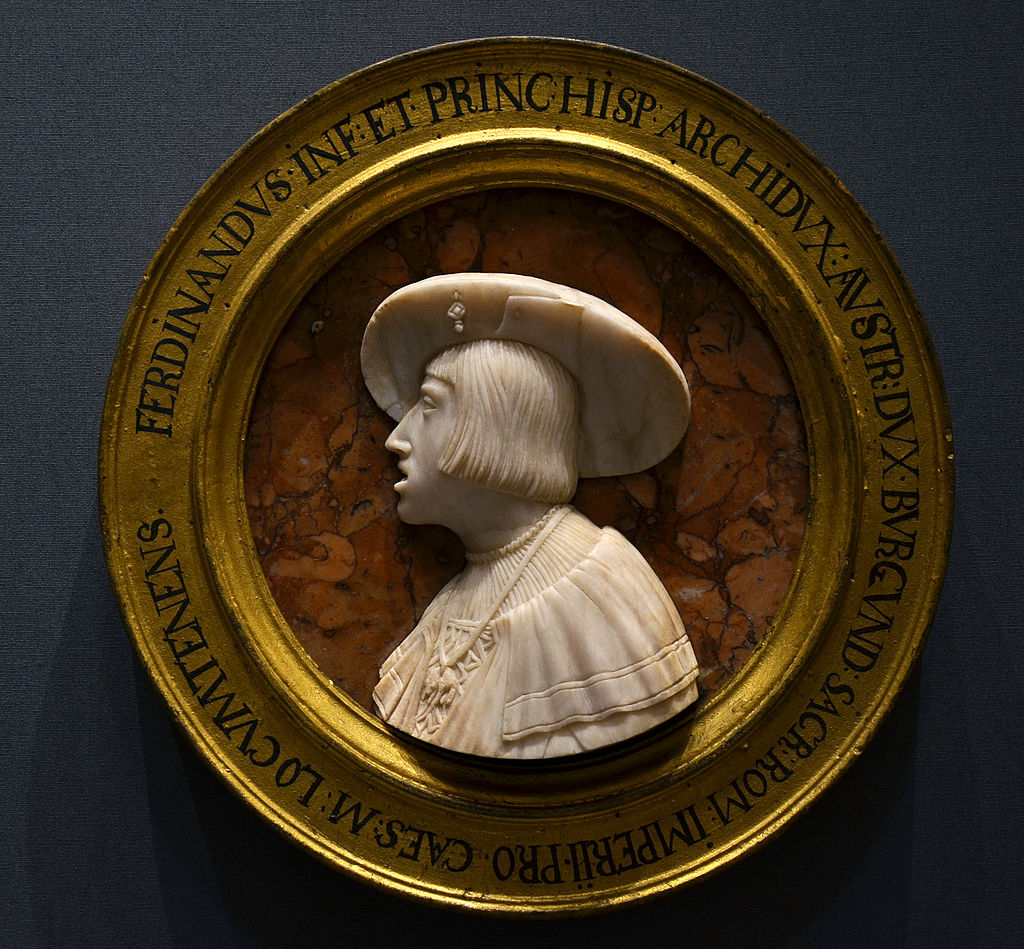
Ferdinand I, Archduke of Austria. King of Bohemia, Hungary, and Croatia, and eventually Holy Roman Emperor with is mouth open, ready to receive a pretzel. Vassil, CC0, via Wikimedia Commons

The 1529 siege of Vienna was ultimately unsuccessful, a fact that didn’t sit well with the Ottoman Empire until the second siege of Vienna one hundred and fifty-four years later, which didn’t really turn out all that well for them, either. I don’t know whether pretzels had anything to do with the struggles of 1683. And I don’t really know whether pretzels had anything to do with the thwarting of the 1529 siege either, but according to the historical rumor mill, it may have been the soft, salty treats that saved the day for the citizens of Vienna.

Since at least the early seventh century, and possibly further back than that, the pretzel has been the preferred snack of Catholic monks. Allegedly they used the twisted treats that not only mimic the crossed arms of a child in prayer, but also conveniently contain three holes corresponding nicely with the three parts of the trinity, to reward students who excelled at learning their catechism. That might be true.

Pretzels are a simple snack, that in addition to lacking any significant nutritional value, also have the advantage of containing no eggs or dairy and therefore fit perfectly into a traditional, fast-heavy Catholic Lenten diet. They also make an inexpensive, relatively quickly made food to pass out to the poor of the Middle Ages while simultaneously offering a little spiritual counseling. That’s probably true.

So then, the rumor that a couple weeks into the siege, it was a bunch of pretzel-making Viennese monks in the pre-dawn hours who heard, from within their basement pretzel kitchen, the digging of a horde of Ottoman would-be sneak-attackers, seems like it could be true. The monks alerted the city, which was ready then to fight off the attackers, break the siege, and celebrate victory with a soft, salty, and heroic snack.

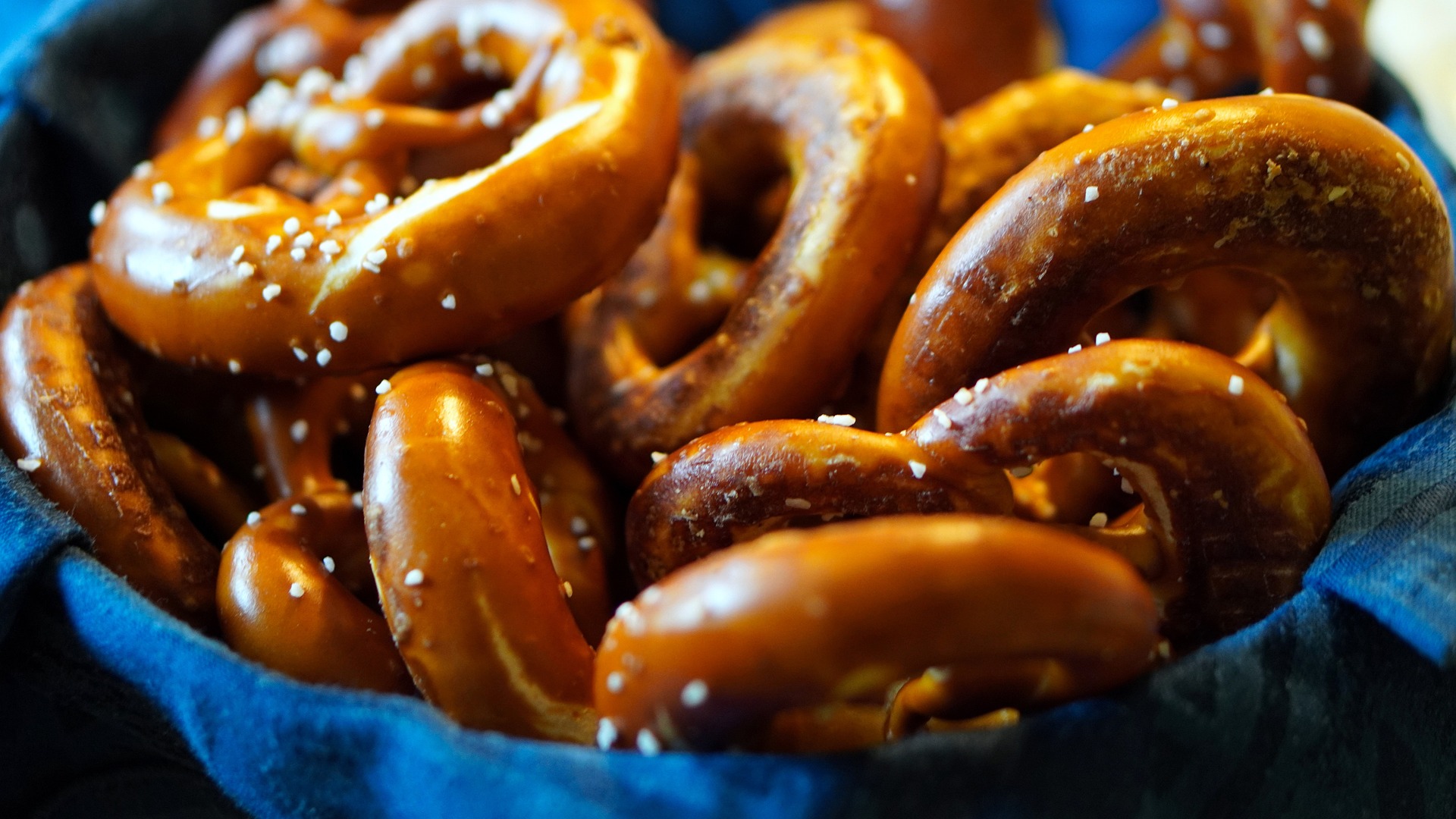
Looks pretty heroic to me. Image by Matthias Böckel from Pixabay

But if I’m honest, this sounds to me like the kind of story that probably isn’t true, though in my admittedly shallow internet research, I haven’t discovered the counterclaim. My teenage sons, who have studied more European history than I have, do assure me the story is somewhat dubious. Still, at least some historians seem to be willing to let this one slide.

I think that’s probably because people love pretzels. And boy do they. I haven’t been able to discover numbers of world popularity of the snack, but the average American eats two pounds of pretzels every year, and if you happen to live in Philadelphia, where most of the nation’s pretzels are made, your average is closer to twelve pounds.

I don’t happen to live in Philadelphia, but as an occasional booster club concession stand volunteer here in Missouri, I can attest that those big soft pretzels are the clear high school sports crowd favorite. And when my son’s robotics team recently sold pretzels from a long-time and beloved St. Louis pretzel business, it made for the easiest fundraising he’s ever tried to do. 

People love pretzels. There’s not much to them, but if you’re craving something either soft or crunchy that’s salty, is mostly devoid of nutritional value, pairs well with beer, can be dipped into just about anything, satisfies your Lenten munchies, reminds you to pray, and might just save your life from the invading Ottoman horde, then pretzels are for you. 

So, how do you like to enjoy them?

Smarter than the Average Dinosaur

It’s been 70.3 million years, give or take a day or two, since the approximately six-mile-wide Chicxulub meteor landed in Yucatan, Mexico and caused a mass extinction event. Earth’s dinosaur inhabitants didn’t so much as lift a finger to try to stop it, a decision they weren’t around to regret.

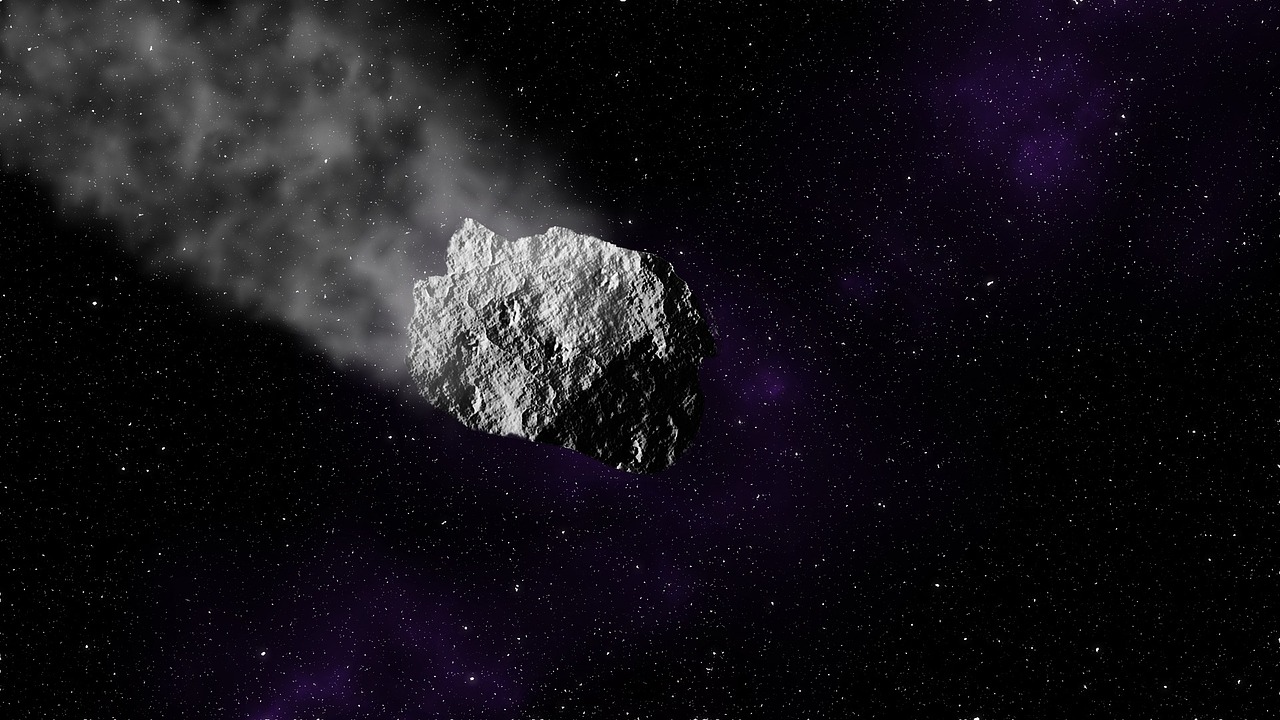
Image by A Owen from Pixabay

More than 1.9 billion years before that, the Vredefort meteor, now believed to have been more than twice as large as the Chicxulub, impacted the earth at what today is Free State, South Africa. Nothing was done about it by the unicellular lifeforms that might have eventually become dinosaurs if they could have been bothered.

And so, this week I was happy to hear that the planet’s current dominant inhabitants have decided to take the threat more seriously. Since the very first discovery of an asteroid by Italian astronomer, mathematician, and priest Giuseppe Piazzi in 1901, humanity has held onto a little niggling feeling that a human-ending catastrophe might just be hurtling its way through space on a collision course with our big blue ball.

Piazzi’s asteroid, Ceres, isn’t a threat. It seems content enough in the asteroid belt between Mars and Jupiter and has even received an upgrade to dwarf planet. But there are plenty of rocks flying around up there. The researchers who look at such things suggest that asteroids that are at least three miles in diameter have struck the planet about sixty times in the 4.5 billion years or so it’s been around. Of those, three of them were likely large enough to have caused mass extinction.

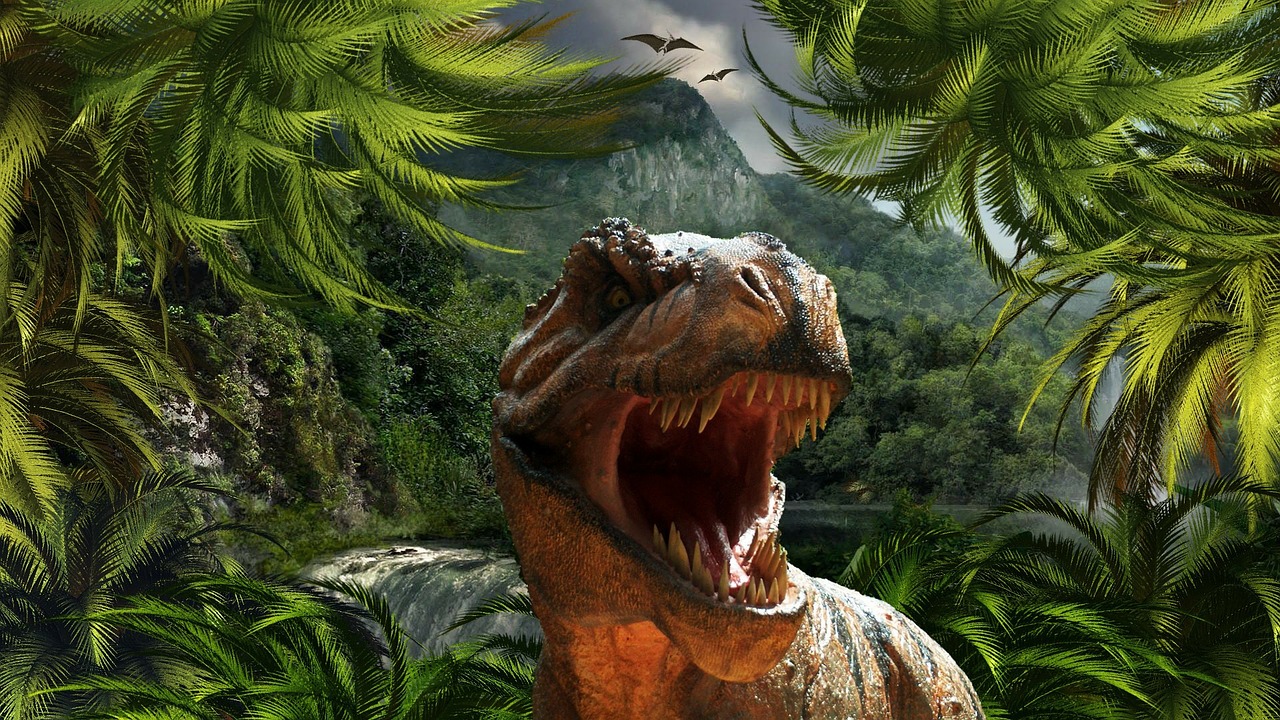
Image by Michael Watts from Pixabay

Frankly, while three instances in 4.5 billion years is enough to keep writers of science fiction busy for a long time, I’m not really all that concerned. The odds of being alive to see it happen are pretty small.

Of course, it’s just this kind of nonchalant attitude that took out the dinosaurs. Lucky for humanity, I’m not in charge of Earth’s defenses against incoming space rocks.

Don’t worry, because NASA is on the job. This past Monday, the Double Asteroid Redirection Test successfully collided with and nudged a completely innocent asteroid that was too busy minding its own business to wipe out life on Earth.

Over the next months and years, astronomers all over the world will be observing and calculating just how much impact the DART had on the asteroid’s path and we will all breathe a little easier knowing that we might just be smarter than the average dinosaur.

Did You Smell Something?

Every seventy-six years or so, Earth crosses paths with another resident of our solar system as the two of us get about the business of circling our mutual sun. It’s a pretty exciting event when it happens, at least as I seem to vaguely recall from my childhood in the 1980s when we last said hello to Halley’s comet.

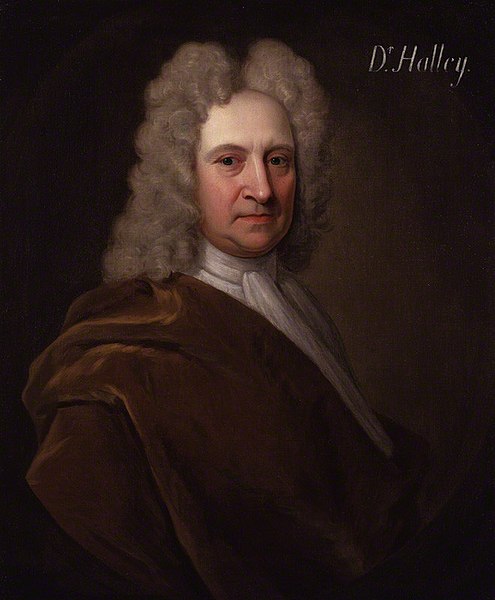
This man knows his comets. Richard Phillips, Public domain, via Wikimedia Commons

But to be honest, the encounter hasn’t always been perfectly friendly. Over the millennia this innocent-looking comet that may seem to mind its own business has been the cause of quite a bit of consternation. It has portended all kinds of dramatic and often violent changes in the world from the destruction of Jerusalem by the Romans just a few short years after its appearance, to the Norman Conquest of England, to the Mongol invasion of Europe undertaken by Genghis Kahn.

It wasn’t until 1704 when Edmund Halley pieced together that several of the comets observed throughout history might in fact be the same comet seen again and again, that we even knew our bad news neighbor’s name. Halley correctly predicted that the comet would be observed in 1758, and though he wasn’t alive to see it happen, he was right.

Armed with a new, slightly more scientific understanding of the comet, we the people of Earth didn’t find it quite so scary. That is until May 20, 1910 when it tried to kill us all. That’s when respected French astronomist Camille Flammarion used spectroscopy to discover that the comet’s tail contained cyanogen gas, that would certainly poison Earth’s atmosphere and swiftly wipe out all life on the planet.

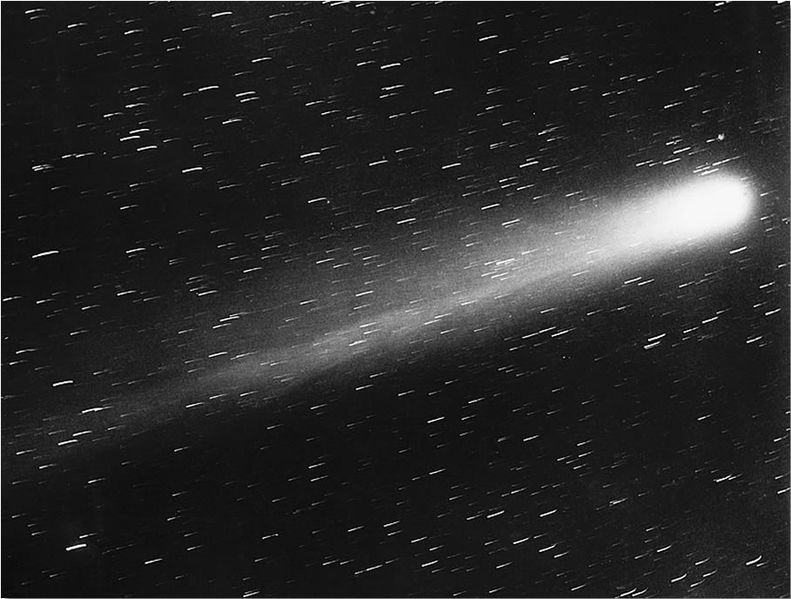
Our friendly neighborhood deadly comet. Professor Edward Emerson Barnard at Yerkes Observatory, in Williams Bay, Wisconsin., 1910. Public domain, via Wikimedia Commons

Not every highly regarded astronomist agreed, but much like today, expert disagreement wasn’t enough to stop the press from hyping a good story. And boy was it a good story. It sparked others to claim that the gravitational pull alone from the comet would cause the oceans to swell and cover great stretches of land, sweeping uprooted American forests across the Sahara Desert. The panicked public furiously sealed the cracks around doors and windows to keep the deadly gas from entering their homes and stocked up on essential supplies like gas masks and anti-comet pills. Toilet paper, too, I assume.

When May 20th arrived and the comet came into view right on time, humanity held its breath and awaited extinction.

Out of an abundance of caution. Image by Èric Seró from Pixabay

Now, as a purveyor of conversational historical cocktail party-worthy tidbits, let me be the first to reassure you that all life on planet Earth did not in fact come to an end in that moment. While there is poisonous cyanogen gas in the tail of Halley’s Comet, it’s not there in a significant enough concentration to make a lick of difference to life on the earth. The gravitational pull, too, of our punctual but not-so-scary neighborhood comet is of no significant consequence to our big blue ball of a home.

Which was just the kind of misinformation that got the vast majority of astronomists banned from all the social media sites. After life on the earth didn’t end catastrophically, Camille Flammarion did what any good disproven researcher would and assembled a bunch of witnesses who swore that though the danger of the poison gas might have been slightly miscalculated, they definitely smelled a whiff of something funny in the air.

I can’t argue with testimony like that. Pretty much every time the media runs with a story that forecasts the end of the world, I’m pretty sure I smell something funny. Anyway, if anyone needs them, I’ve got a stockpile of anti-comet pills. I’d be happy to sell you one for an exorbitant fee. Come the year 2061 and Earth’s next encounter with Halley’s Comet, you may be glad you have one.

Leave the Poop. Take the Rocks.

This past July marked fifty-two years since Neil Armstrong took one giant leap for mankind on the surface of the moon, leaving behind an American flag, some pretty funky footprints, and a plaque reading: “Here men from planet Earth first set foot upon the moon. July 1969 A. D. We came in peace for all mankind.” The message, I’m sure, is of great comfort to those visiting aliens who can read the English language.

But that’s not all the crew of the Apollo 11 left behind. They also abandoned, among other things, two golf balls, twelve cameras, twelve pairs of boots, a telescope, and bags of human waste, including urine, vomit, and yes, feces. In fact, between the six Apollo missions that landed on the moon, there have been ninety-six bags of human waste left behind. The items were left in order to compensate for the additional weight of the moonrocks the astronauts brought back. There just wasn’t enough room for the golf balls and poop.

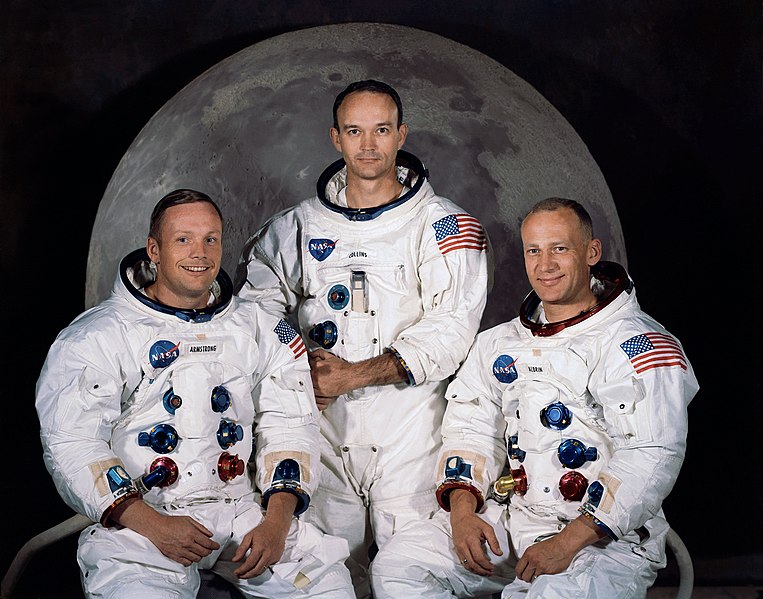
The first three men ever to leave their poop on the moon. NASA, Public domain, via Wikimedia Commons

It does seem like a very human thing to do to leave behind a trail of stuff. My family certainly did on our most recent trip. With some areas of the country a little more on edge than others and Covid numbers creeping up, we decided to stay a little closer to home for our summer family vacation this year. And so, we rented a cabin on Table Rock Lake in the southern part of our home state of Missouri.

We packed our suitcases, attached the cartop carrier filled with cycling and fishing gear, strapped our four bicycles to the back, and piled into the family truckster along with a cooler of snacks and a laundry basketful of goods for setting up our temporary home away from home. Fully loaded down, we headed out for our four-hour drive to the lake.

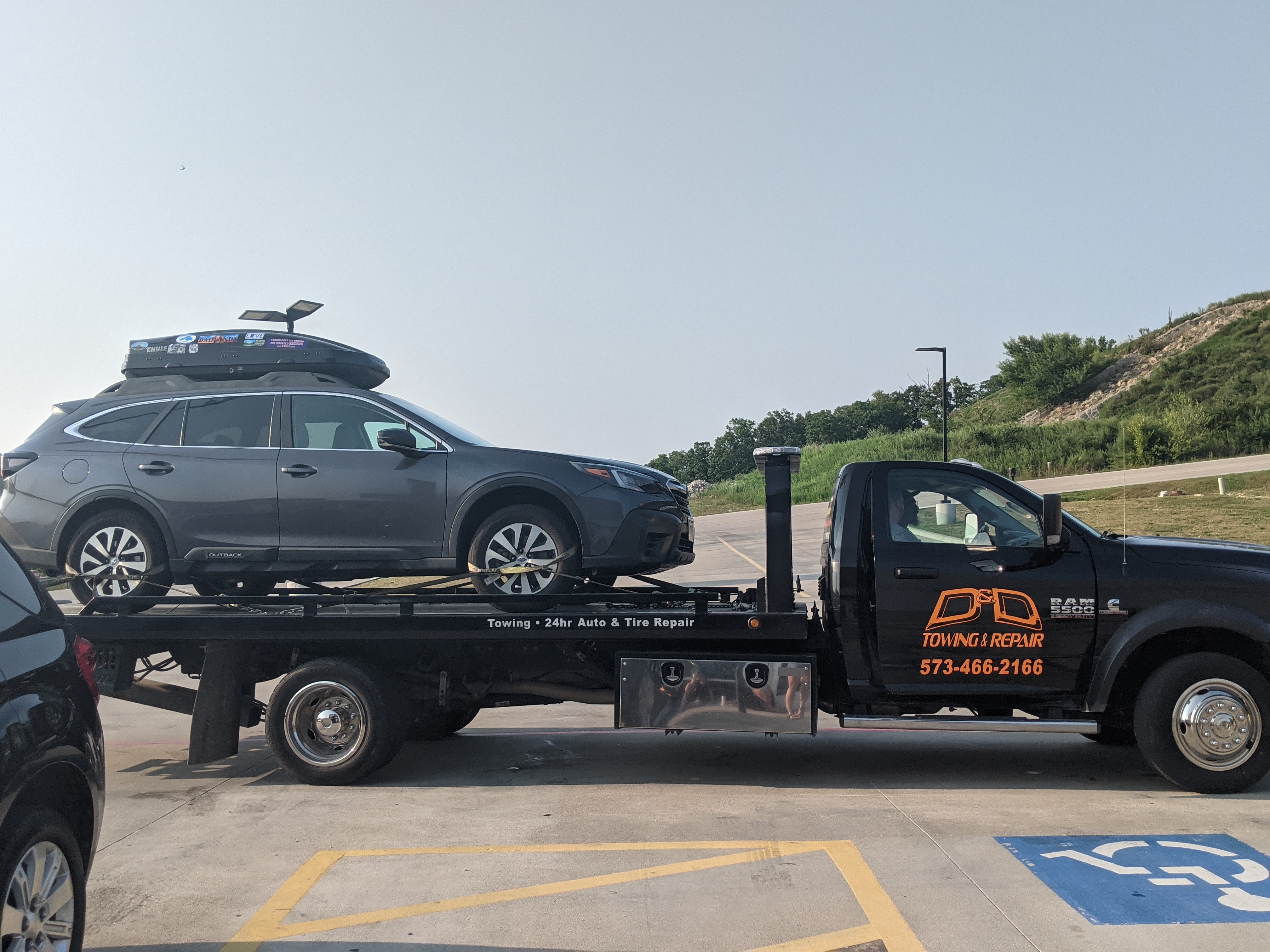
Eleven hours later, we arrived in a borrowed Jeep, with slightly dampened spirits, and in possession of only some of our belongings. The truckster (a 2020 Subaru Outback with just over 20,000 miles on it) decided it would rather make only half the journey and died a spectacular death on the interstate.

Right now it kind of feels like we left behind a big pile of poop. At least it’s still under warranty.

Fortunately, we did make it to the side of the road in a relatively wide-open spot where we could escape the shoulder over a grassy divide to a frontage road sporting a run-down motel that a very kind state trooper who soon stopped to help us called “not a nice place.”

After an hour or so of fighting the world’s most complicated phone tree to talk to someone with our insurance company at 5:00 on a Saturday, and calling on the kindness of some amazing family reinforcements who quickly volunteered to come to our rescue, we unstrapped our bikes and headed a couple miles down the frontage road to a safer part of the town whose last exit we’d just passed.

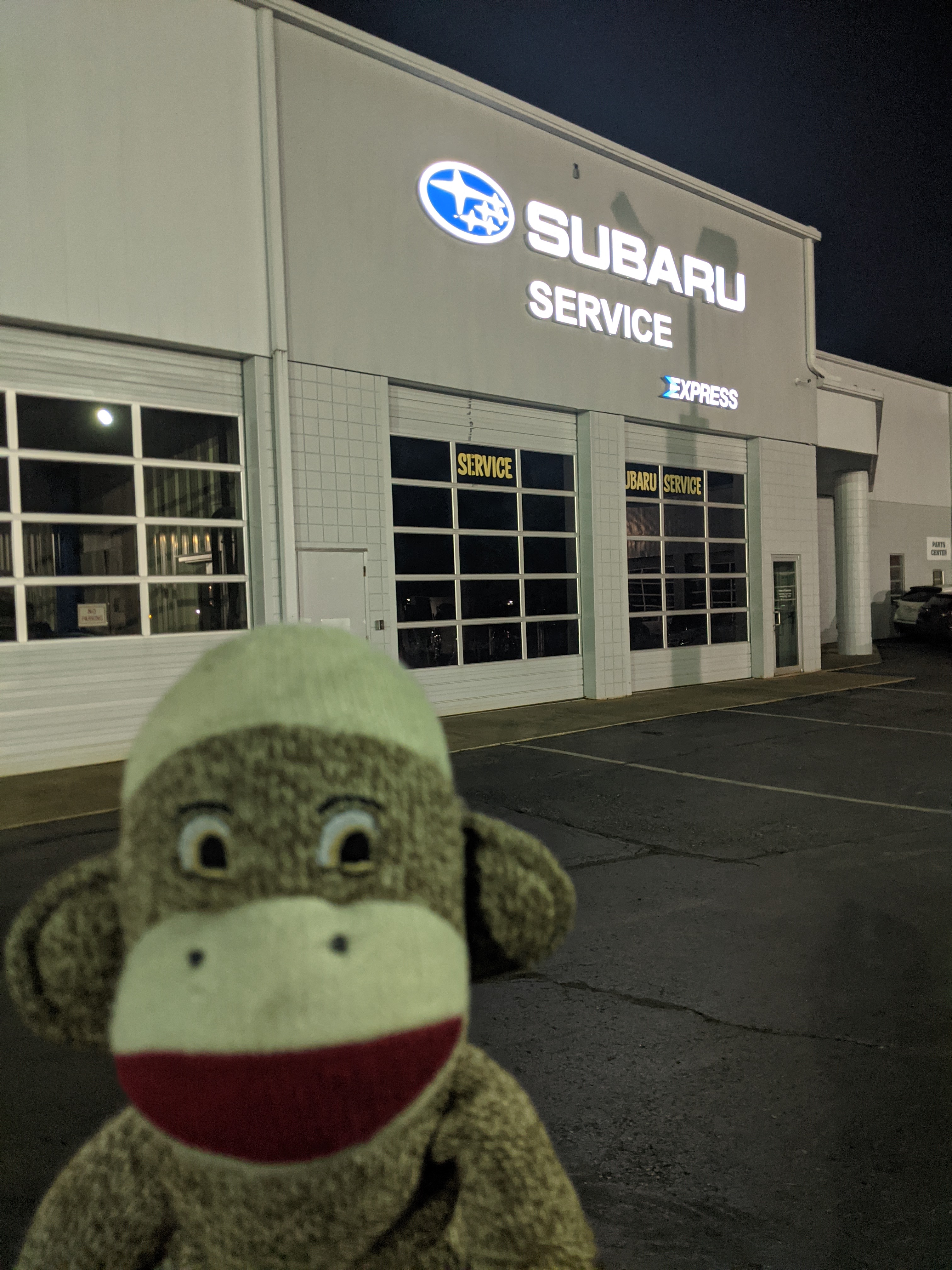
The truckster, minus a functional transmission and plus our luggage, got towed to the nearest Subaru dealership. That is at least located in the direction we were going, though is also an hour further from where we actually live.

Meanwhile, we played cards on the parking lot sidewalk of a gas station convenience store surrounded by our bikes and enjoying a dinner of the finest gas station convenience store food we could find, until my sister arrived with her Jeep complete with trailer hitch so we could transport our bicycles. Our nephew also came, so that he could transport her back to our house so she could take the car our oldest son normally drives back home for the week.

Next, we headed to the Subaru dealership, explained to a suspicious night security guard that we just wanted our suitcases, and rescued what we could. The Jeep held a lot, and with a second trip to the truckster the next day, we got most of our stuff transported to the cabin, where we strategized through the week how to get everything back home again.

Don’t worry. We didn’t have to leave our travel buddy Steve behind.

Of course, we didn’t. The laundry basket of household stuff broke in the process and so we disposed of it and we didn’t need to bring any food back with us, so a lot of little things could fit inside the empty ice chest. We threw away what we had to, left the household supplies that might be useful to future renters, and signed the guestbook: “We came in peace for all mankind.” The hubbs then pieced together the rest in the back of the Jeep, playing his finest game yet of what we like to call “Car Jenga.”  

Despite the ridiculous start and slightly cramped end, our vacation really was a lot of fun, and our left-behind hand soap, paper plates, and Clorox wipes were a pretty good trade-off for the memories made. We are definitely going to want the car back eventually, though. So far, we’re hopeful we might be able to retrieve it by the end of next week.

It’s now been fifty-two years and mankind has not yet retrieved most of its left-behind stuff from the moon. Frankly, no one misses the golf balls. They seem a pretty good trade-off for a pile of moonrocks and memories of an out-of-this-world trip. But with all the bacteria that has been exposed for decades to the environment of the moon, there are some scientists who are eager to get their hands on the poop. Personally, I think I’d just be happy with the rocks.