
This past Sunday morning I selected from my closet a pretty white dress I recently bought on sale (because it looks awesome on me). My husband looked at me and instead of saying, “You look really nice,” opted for the comment: “Good thing you’re wearing that while you can because next weekend is Labor Day.” Oh, and then he offered the obligatory compliment (because I really did look nice and he’s the kind of man who isn’t going to let that go unsaid).
But wait a minute. Although no one who knows me would accuse me of being a fashionista (which I don’t believe is a real word), I am the member of my family whose fashion sense is most often consulted. My husband rarely wears a new shirt/slacks combination without asking me if it works okay, and I often send my eight-year-old back to his room to change into clothing that at least matches a little. For my stubborn six-year-old (who on this 100° day chose to wear a long-sleeve red and gray Mario Brothers shirt with green and brown plaid shorts) there is no hope.
So, even though I probably wouldn’t have chosen to wear my pretty white dress after Labor Day, (because I was raised with a vague awareness that that is a fashion faux pas), I was stunned to hear my husband make reference to this hard and fast law of fashion.
Of course many suggest that it’s no longer a hard and fast rule, but it’s still out there and is generally followed by a lot of us. The origin of the guideline that suggests you should put away your white wardrobe between Labor Day and Memorial Day is a little unclear, but there are several theories about the social factors that may have contributed to its development.

First, summer is hot and industry is dirty. In the late 1800s, the wealthy who could escape the sweltering city summer, retreated to the country where there was significantly less industrial goop in the air and on the streets. There they were free to wear the white they could not wear in the filth of the city, where the working class wore much more practical, dirt and soot-colored clothing. Of course all good things (like summer vacation) must eventually end and so with the return of fall, came the return of drab colors.
Logically it follows that the distinction of wearing white in the summer months became closely associated with the wealthy who wished to differentiate themselves from the working class. But Industrialization brought with it lots of new money and an emerging strong middle class. Much of the population found itself needing to navigate a new social landscape and so rules developed to help. One that’s easy to remember (and enforce) is that of wearing white only between Memorial Day and Labor Day (holidays that were established in the second half of the 19th century and had come to mark the beginning and end of summer in the US).

But my favorite theory as to why this simple fashion rule stuck for so long is the most cynical. Since New York has long been the hub of American fashion trends, the experts that drive it opted for practicality (who’d have thought?). Since the region’s rainy fall begins sometime around Labor Day most years, the experts declared that at that date it was no longer acceptable to wear white, a declaration that failed to consider weather patterns elsewhere in the nation.
Whether or not there is any truth to that last theory, most fashion experts now generally agree that you can wear white year-round (and since they carry a fashion police badge, you’d better listen). Of course in the same breath they will advise you to wear “winter whites” after Labor Day, whatever that means (as far as I am concerned, if it isn’t in the Crayola box, it isn’t a color). I guess you have to be a fashionista (which is definitely not a real word, whatever Miriam-Webster has to say on the subject) to understand the subtle nuances of all the rules.
But since I am (or at least was until this past Sunday) the closest thing my family has to a fashionista (a word apparently coined when I was in high school; I wasn’t one then, either), it falls on me to take the kiddos shopping. Because they hate it, this is a task I perform only when it absolutely must be done. And as they can no longer wiggle their toes inside their cramped gym shoes, it had to be done this week.
Now I don’t know if you have shopped for tennis shoes in the last month or so, but as we have approached Labor Day, for some reason the tennis shoes have gone from traditional white (or occasionally gray or black, if you’re feeling a little wild) to the color of toxic waste (also known as “winter white”?). So I have to assume that the fashion experts have been lying to us and it is, in fact, a terrible fashion misstep to don white shoes at this time of year.

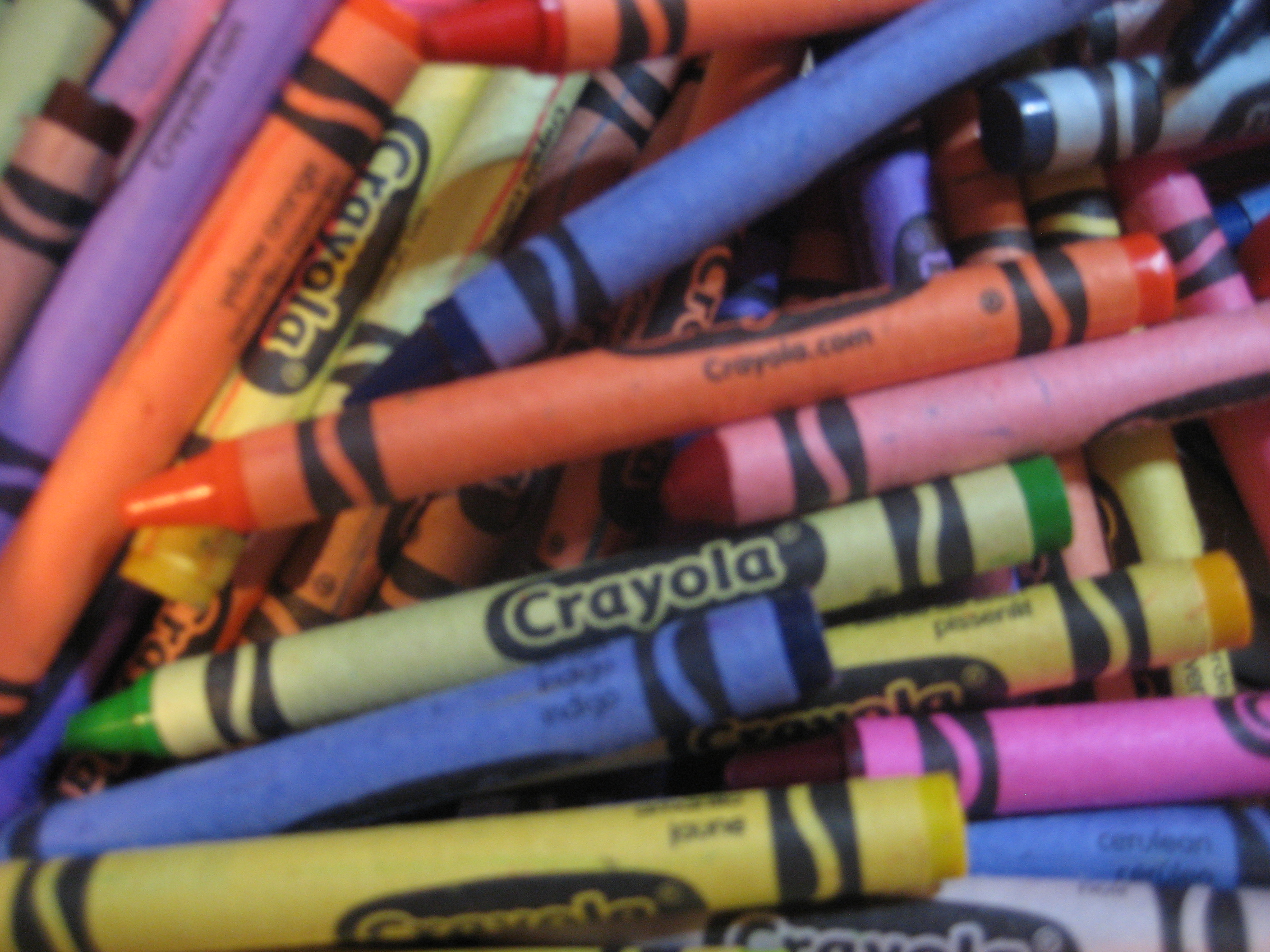
I don’t have a problem with bright colors (Crayola lists a few “neons” among its collection) and actually I can’t say that I hate my eight-year-old’s choice of shoes sporting neon carrot or even my 6-year-old’s laser lemon selection (which should pair nicely with his green and brown plaid shorts). The shoes look good on them in that adorable-little-kid-who-likes-to-express-himself sort of way.
My only real complaint is that it so happens I needed new tennis shoes, too. And apparently the experts think I might also look good in toxic waste shoes (in that crazy-lady-who-talks-to-herself-on-the-subway sort of way).
I looked long and hard (on a return trip during school hours because the kiddos have no patience for this sort of thing) and I finally found a pair with an adequate toe box and arch with only a minimal amount of sea serpent blue and wild watermelon. Not really my best colors, I think, but who am I to argue with fashion? Perhaps I’ll wear my new shoes with my pretty white dress. After Memorial Day, of course.


 Author Sarah Angleton