Superglue, Bailing Wire, and Candy Cane Goo

If you were to walk into my parents’ house at Christmastime, you would see an artificial Christmas tree strung with lights and topped with the same lighted, multicolored star my parents have had for as long as I can remember. At this point I’m pretty sure the star contains more bailing wire and superglue than original material and still it’s held together mainly by the sheer will of Christmas spirit. Well, that, and maybe a little sticky candy cane goo.
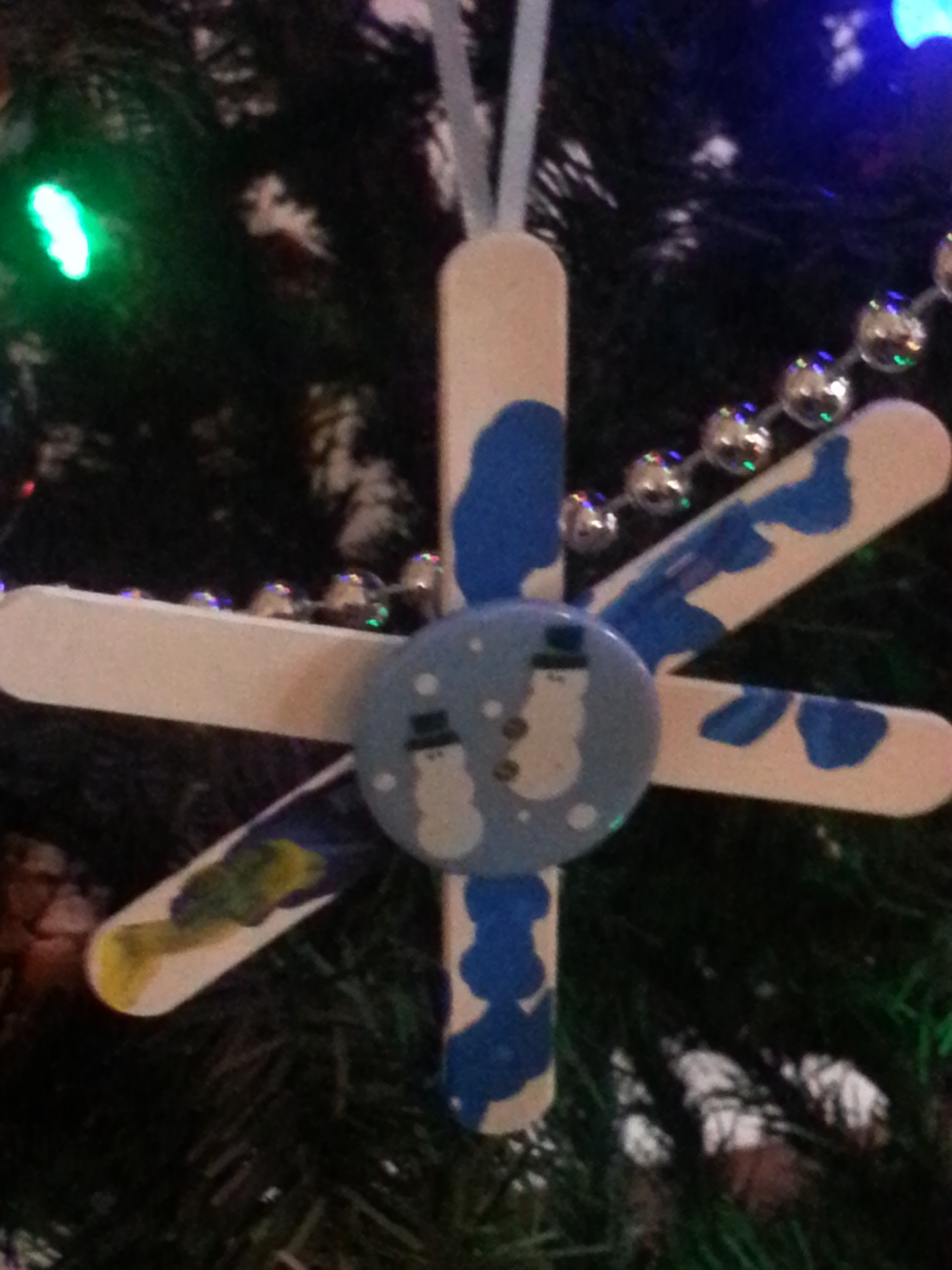
The most precious ornaments are always made with Popsicle sticks put together by little fingers.

I don’t remember when it happened because I had to have been very small at the time, but the story goes that as the family worked together to decorate the Christmas tree, my eldest brother, who is easily the tallest in the family, was teasing my sister, just two years younger and quite a bit shorter.

As she was always the most zealous keeper of holiday traditions in our house, I suspect she had been giving him a hard time about his tendency to clump the tinsel and to think little of the proper spacing of candy canes as he threw them randomly on the tree.

So he did what any young teenage boy might and stretched up beyond her reach to place a candy cane on the star. He expected it to irritate her. Instead, she was delighted. We all were. Somehow it seemed like the perfect touch to finish off the tree that primarily featured lumpy clay and Popsicle-stick-ornaments constructed by little fingers. And every Christmas since, the tree has been topped with the same (kind of garish) star and a single candy cane.

Because regardless of what religious symbolism a Christmas tree may hold (a hundred different sources will provide a hundred different interpretations), it should represent childhood and good Christmas memories.

At least that’s what Queen Charlotte, the German wife of England’s King George III, seemed to think. When she married in 1761, Charlotte spoke no English (though she learned quickly) and brought with her several German customs, one of which was the setting up of a decorated yew branch at Christmastime.

Christmas trees, or some version of them, had been part of German tradition since at least the 16th-century, when legend credits Martin Luther with the first. The claim of the legend is almost certainly false, but historians do generally agree that the first Christmas trees emerged from the general vicinity of Germany.

Queen Charlotte was certainly fond of the tradition and quickly transformed the private family yew branch celebration of her childhood into a spectacle like none the English nobility had ever seen. Then in 1800, she took the tradition to a whole new level, inviting the children of Windsor to a party featuring at its center an entire yew tree loaded with, according to one contemporary biographer, “bunches of sweetmeats, almonds and raisins in papers, fruits and toys, most tastefully arranged; the whole illuminated by small wax candles.”

He makes no mention of Queen Charlotte topping the tree with a star or a candy cane. Of course since there’s no definite evidence that the candy cane was invented until a hundred years later, I can give her a pass on that one.

Queen Victorian and Prince Albert gathered with their family around the Christmas tree.
Queen Victoria and Prince Albert looking very stylish around the Christmas tree.

What is clear is that the tree was a hit and Christmas trees started popping up in some of the noble households over the next few years, until in 1848, The Illustrated London News featured a woodcarving of Queen Victoria and her family gathered around their Christmas tree. After that, everyone wanted one. When the picture was run two years later in the American publication Godey’s Lady’s Book, the tradition caught fire (sometimes literally) in the United States as well.

Ours is not yet held together by bailing wire and hot glue, but give it time.

Queen Victoria and her Prince Albert often get the credit for popularizing the Christmas tree, but the honor may more appropriately belong to Queen Charlotte, who knew that there are some traditions worth preserving.

So if you were to walk into my house at Christmastime, you would see an artificial Christmas tree strung with lights, decorated with lumpy clay and Popsicle-stick-ornaments, and topped with a (kind of garish) multicolored, lighted star and a single candy cane.

What weird little traditions do you follow and wouldn’t dream of celebrating Christmas without?

Praying for KitKats

I don’t know how it is in your neighborhood, but mine is starting to get pretty spooky. Mummies, skeletons, and witches peek out from behind trees jumping, unwelcome, into my periphery. I love my neighbors, and they love Halloween, so I won’t really complain, but I admit, I’m not a big fan of this holiday coming up tomorrow.

As far as I can tell, fear isn’t a particularly enjoyable sensation. I have never understood the point of haunted houses or scary movies. I don’t like being startled. And I really don’t like nightmares.

Aren't you a little old to be Trick-or-Treating?   photo credit: abbynormy via photopin cc
Aren’t you a little old to be Trick-or-Treating? photo credit: abbynormy via photopin cc

But even though all of that is true, my family still observes Halloween, because I really do enjoy handing out candy to all of the creatively costumed kids and to the crowds of tiny Disney Princesses. As long as they don’t ring the doorbell past bedtime, I can even appreciate the clearly-too-old-to-participate teenagers that cut eye holes in their moms’ best sheets and show up on my doorstep.

My kiddos are all set, too. Their costumes have been pieced together and we’ve developed a plan for warm layers underneath because, of course, the meteorologists tell us that Halloween night may be bringing our first freeze of the season and I have worked too hard on these costumes to simply have them wear their coats.

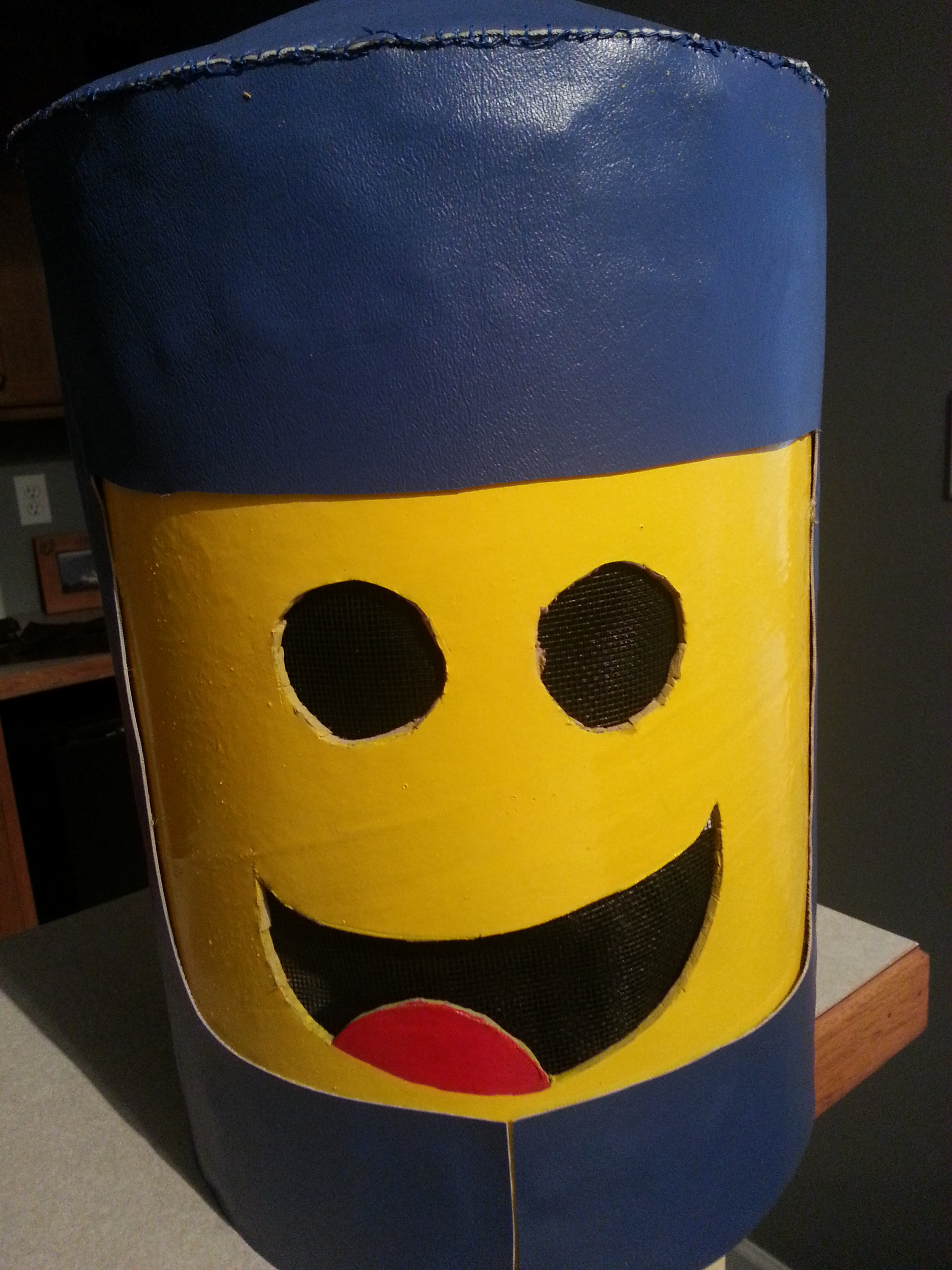
I mean, I don't want to brag that I'm the best mom in the world or anything, but an awful lot of love went into that mask.
I mean, I don’t want to brag that I’m the best mom in the world or anything, but an awful lot of love went into that mask.

All that’s left is for me to figure out what the heck we are going to do with all that candy. Because, as I mentioned, my neighbors seem to love Halloween and I love my neighbors, so I will not refuse their generosity.

But trick-or-treating is kind of a strange tradition, isn’t it? It’s generally assumed that the practice is derived from the Celtic festival of Samhain. Observed as far back as at least 2000 years, Samhain marked an important seasonal transition and a time when the spirits of the deceased were believed to walk the earth again.

Since it’s probably not smart to presume all wandering spirits are friendly, gifts of food (mostly KitKats, I assume) were often left for them by the living who also cut eye holes in their moms’ best sheets or donned Disney princess dresses so any unfriendlies might not notice them.

800 years later, when the Church decided to Christianize the Celts, Samhain became a problem. It’s really difficult to overcome superstition and the desire to give KitKats to tiny Disney princesses. What the Church decided to do was commandeer the holiday and transform it into Hallowtide, a festival encompassing All Hallow’s Eve, All Saint’s Day, and All Soul’s Day, from October 31 to November 2.

Because what wandering spirit wouldn't appreciate this?  photo credit: Andrew _ B via photopin cc
Because what wandering spirit wouldn’t appreciate this? photo credit: Andrew _ B via photopin cc

Instead of fearing evil wandering spirits, the holiday became about honoring and praying for the departed. By the 11th Century, the Church had come to be pretty cool with the idea of dressing up as angels, demons, and Disney princesses as a part of the celebration and soon the tradition of “guising” emerged. Children (and probably a few neighborhood teens who were clearly too old to participate) knocked on doors, often with a song, to beg for food or money in exchange for prayers offered up for the dead. The beggars became known as “soulers” and the treat most often given was called a “soul cake.”

Soul cakes were small and round, often with crosses marked on the top. I can’t find a recipe, but rumor has it they were sweet cakes with things like ginger, raisins, and not nearly enough KitKats in them. I’m betting that’s why the tradition has evolved from “if you give me a treat, I’ll pray for you” to “if you don’t give me a KitKat I’ll egg your house.”

Where's my KitKat?  photo credit: katerha via photopin cc
Where’s my KitKat? photo credit: katerha via photopin cc

But the soul cake does give me an idea of how I can deal with the massive amount of candy that will be entering my house tomorrow night. I’m going to take a lesson form the early Christian Church and commandeer my children’s candy bags (after letting them eat A LOT of candy on Halloween night, I promise) and re-purpose as many of the sweet treats as I can into baked goods that I will serve to friends and neighbors during the coming, more cheerful holiday season.

I have been scouring the Internet for recipes that will help me do just that. My favorite so far is this one for KitKat Cookie Bars. If you know others, please feel free to share. And keep in mind that if you don’t, I just might egg your house.

Drinks with the Devil Lead to Puking Pumpkins

This morning I’ve been living the stay-at-home mom’s dream. I took my children to school, covered my kitchen table in newspaper, and carved jack-o-lanterns. Okay, maybe it’s not every stay-at-home mom’s dream, or even mine, though I’m pretty sure my kids think I make them go to school just so I can play with their toys all day long.

Remember when we were kids and we had to do this with just a spoon and a steak knife. And bandaids.

I really did borrow their carving tools because I haven’t carved a pumpkin on my own since my oldest could manage to rub pumpkin guts in his hair, but tomorrow are the fall parties in my sons’ classrooms and while I did manage to dodge being put entirely in charge this time, I volunteered to help.

And no fall party would be complete without a few Jack-o-lanterns, that bizarre Halloween craft that traces its roots back to a not-so-nice wandering spirit named “Stingy Jack.” According to an Irish tale, Jack was a ne’er-do-well who had a run-in with the devil, a much more famous ne’er-do-well.

Because he was such a good guy, Jack invited the devil to join him for a drink. The devil agreed and even said he’d pay the bill when Jack suggested that the devil turn himself into a coin from which he could later transform back, thereby cheating the bar owner out of the price of the drinks. As soon as the devil transformed, Jack grabbed the coin and placed it in his own pouch next to a small cross he had presumably stolen from someone much nicer than himself. The devil was trapped and Jack only agreed to release him for a promise that he’d leave Jack his soul.

pumpkindrill
Don’t worry, my boys will get to carve they’re own pumpkins, too. They might even get to use Dad’s tools.

Some versions of the tale claim that Jack trapped the devil in a tree with similar results, but regardless of how it happened, the years went by and Stingy Jack died, as nearly all ne’er-do-wells eventually do. Of course, because of his ne’er-do-well ways, Jack didn’t make the cut for Heaven. The devil wouldn’t take him in either and so Jack found himself stuck. Not knowing where to go, he asked his old drinking buddy for directions. In answer, the devil flashed him what I have to assume was truly a devilish grin and tossed Jack a burning ember from the eternal fires of Hell.

Jack wasn’t too bothered. He simply placed the ember in the trusty old turnip he happened to be carrying with him into the afterlife, because that seemed like a pretty good folklore-y kind of thing to do. And ever since then, we’ve been carving vegetables because, well…because…um…

So it turns out this story might not really address the history of today’s jack-o-lanterns at all. There’s not even much evidence that the tradition is particular Irish in origin. Jack’s story is similar to tales from around the globe, used to explain the ghostly phenomenon of ignis fatuus, or the eerie lights that sometimes appear at night over marshy areas and, like a newborn’s smile, are often attributed to gas.

The Māori people of New Zealand were carving gourds to use as lanterns as early as 700 years ago, and it worked pretty well. On a night when little ghouls and goblins are running through the streets, it seems like a good idea to light their way. The practicality of the carved gourd as a way to see where one was going and ward off the evil of the night eventually merged with the spooky tale of Stingy Jack and the Jack-o-lantern we know and love was born, maybe as recently as the early 19th century.

So today the jack-o-lantern is a staple of Halloween décor and of fourth grade classroom fall parties, where it’s featured in the “puking pumpkin” experiment. How could I not volunteer to help with that!?

Uh oh. These pumpkins don't look like they're feeling so well.
Uh oh. These pumpkins don’t look like they’re feeling so well.

After the party tomorrow afternoon you can check out a video of the puking pumpkins on my Facebook page.

How Joe Somebody Met Pretty Girl

Of the many wondrous mysteries of my childhood, one survived until I became an adult. Every year on the night of April 30th, someone rang our doorbell and disappeared, leaving behind a gift of four small fudge sundaes from Dairy Queen on our doorstep, one for each of the children in our family.

That's my kind of May basket!    photo credit: Mr.TinDC via photopin cc
That’s my kind of May basket! photo credit: Mr.TinDC via photopin cc

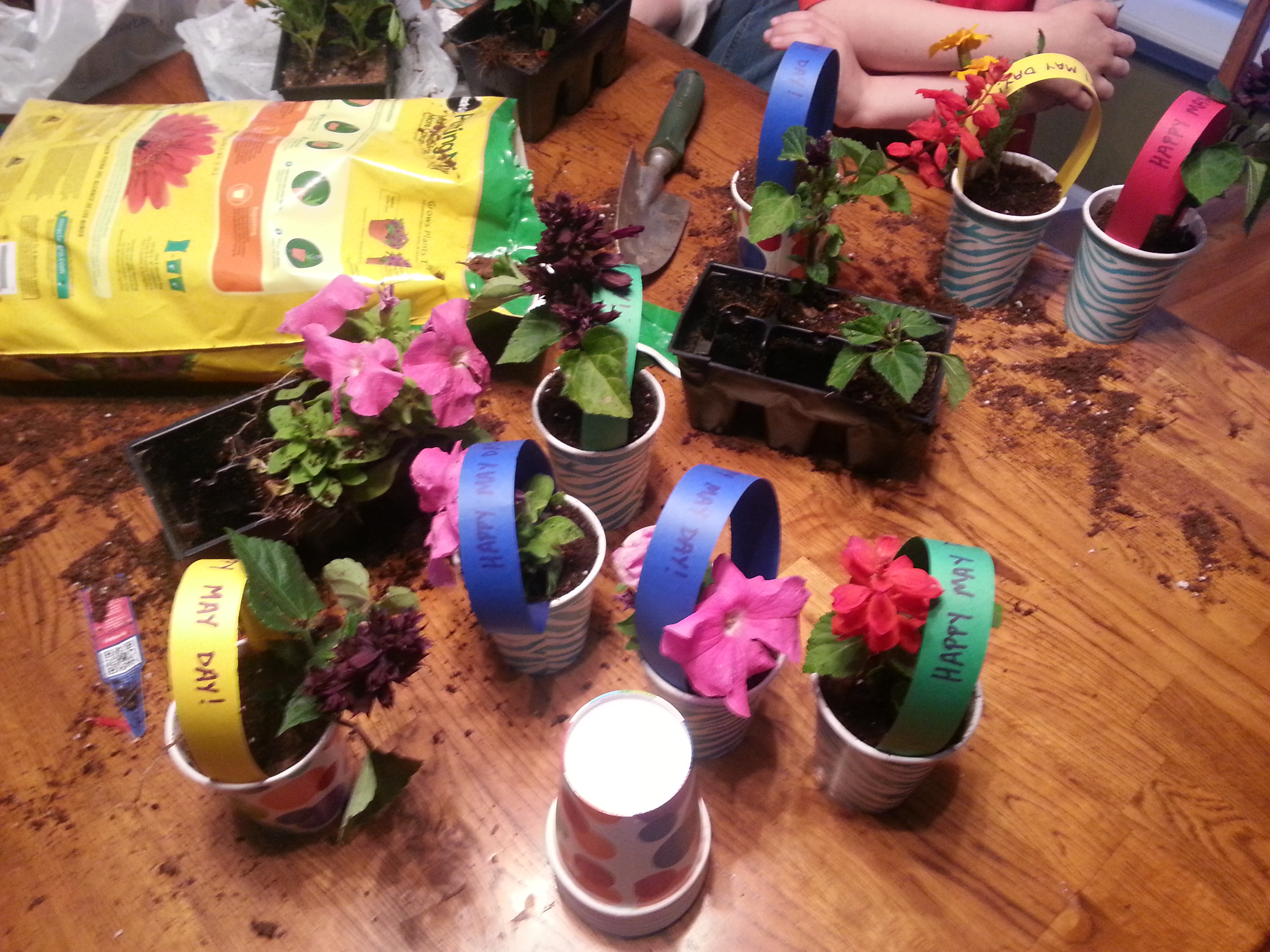
Often this happened shortly after we arrived back at home from our neighborhood May basket deliveries. I know, I know, that’s a quaint little tradition that nobody follows anymore, maybe even fewer people today than when I was growing up in the 1980’s, except that at my house we did. Up and down our block we placed a spring flower on each doorstep, planted in a little basket, usually made from a paper cup decorated with childish scrawl.

Most of the time, we left the gifts to be discovered in the morning, on May Day itself, but with some of the younger neighbors, the ones with kids our age, we would ring the doorbell and run like crazy to hide in the bushes or jump into the car with Mom at the wheel and the motor running (in another, less scrupulous, lifetime she might have made a good bank robber).

It wasn’t a huge secret that our family was behind the May baskets, but it was a great game for the neighborhood kids to try to catch us at it. And we were no better. I remember one year, one of my brothers (I won’t reveal which one because their children sometimes read this blog and it would be more fun to have them ask their dads), deciding he was going to wait out the fudge sundae bandit, dressed in head-to-toe black ninja garb and climbed the tree in the front yard to watch.

He successfully delayed the arrival of the sundaes (much to the dismay of the rest of us), but still they came. And my ninja brother didn’t see a thing.

The stealthiest and most efficient flower delivery service ever.    photo credit: JennyCide/grom via photopin cc
The stealthiest and most efficient flower delivery service ever. photo credit: JennyCide/grom via photopin cc

The May basket and the tradition of celebrating May Day has a messy history, not the kind of thing I usually like to write about. I’d love to be able to tell you about Joe Somebody winning the love of his fair maiden Pretty Girl by getting caught delivering a basket of flowers to her doorstep on May 1 of 472. This of course would have led to her kissing him and a happily-ever-after that their ancestors have been celebrating ever since. I guess that could have happened, but since no one thought to include that story on the Internet (until now), it’s forever lost to us.

What I can share with you is that May 1 has been observed for thousands of years, first as one of four seasonal Pagan holidays, symbolizing the beginning of summer and celebrated with purifying fire. Later the Romans got hold of the holiday and transformed it into a festival honoring Flora, the goddess of flowers. And there was a time when every English village had a Maypole to celebrate spring and welcome summer.

A May Day tradition that has nothing whatsoever to do with fudge sundaes. I don't get it.    photo credit: Liz Castro via photopin cc
A May Day tradition that has nothing whatsoever to do with fudge sundaes. I don’t get it. photo credit: Liz Castro via photopin cc

Not surprisingly, Puritan settlers in America didn’t care for the holiday and to this day it has never been widely observed in the United States. But there are pockets (like my childhood home) where the spring is marked by the sharing of a small gift with friends and neighbors and you might even find the odd festival that has children dancing around a maypole (which I’ve never done) and electing a May queen (which, alas, I’ve never been).

I’m delighted that my children enjoy the tradition now, too. But then what kid wouldn’t want to dress like a ninja and ding-dong-ditch the neighbors for a good cause? And it turns out we have a fudge sundae bandit in our neighborhood, too.

A fun, but messy tradition.
If only someone would sneak in and clean up the mess.

I did finally learn who was responsible for the annual sundae delivery of my childhood and it wasn’t the elderly neighbors down the street that for some reason I was always convinced were responsible. My mom let me in on her big secret a few years ago (sometimes even good bank robbers crack). In retrospect, I probably should have figured it out myself. But then childhood really should include a few good mysteries.


The Practical Historian Takes the Day Off

NOTE: I generally post on Thursdays, but have decided this week to post a little early so that I can spend the Thanksgiving holiday with my family, the way it was meant to be spent. Last year, I wrote about my absolute disgust that retailers were open for Black Friday sales on the Thursday of Thanksgiving, which meant that their employees were not able to spend the holiday at home with their families. Apparently, the retailers didn’t get my message as an even greater number of them are engaged in the practice this year. So, I’m going to try again, with this (slightly) revised post. I hope that you enjoy it and I welcome your comments, but please note that I will not be responding until Friday. This practical historian is taking the day off.

English: Oven roasted turkey, common fare for ...
Mmmm…smells like Thanksgiving. (Photo credit: Wikipedia)

Some Sincere and Honest Suggestions

Happy National Day of Thanksgiving on this the fourth Thursday of November when we here in the United States traditionally feel particularly thankful. But that wasn’t always when we celebrated as a nation. For much of our history, Thanksgiving was sporadically celebrated, with governors occasionally calling for state wide days of thankfulness.

It wasn’t until Abraham Lincoln that we had a national celebration. In 1863 as a gesture of unity for a nation at the height of civil war, Lincoln issued a presidential proclamation declaring the last Thursday of November the official day. Not surprisingly, the holiday was still not uniformly celebrated until 1870, when the war was finally over and Reconstruction was well under way.

After that, every year, part of the president’s responsibility was to declare the official day. And for many years that worked well, with each president following in Lincoln’s footsteps and proclaiming Thanksgiving to be on the last Thursday in November.

Then along came The Great Depression and Franklin Roosevelt. Listening to the appeals of concerned retailers who feared a late Thanksgiving would result in more sluggish Christmas sales, FDR decided to change Thanksgiving to Thursday, November 23, 1939.

Franklin Delano Roosevelt, 1933. Lietuvių: Fra...
Franklin Delano Roosevelt, the man who hated Thanksgiving. (Photo credit: Wikipedia)

What FDR hadn’t counted on, however, was the wrath of a nation determined to celebrate thankfulness on the traditional day. Though larger retailers were grateful for the change, smaller merchants, calendar makers, sports teams, and schools with already set schedules were just plain upset. Angry letters streamed into the White House from concerned citizens like Shelby O. Bennett of Shinnston, West Virginia who wrote the president with a few “sincere and honest suggestions” of other changes he might make including:

1. Have Sunday changed to Wednesday;

2. Have Monday’s to be Christmas;

3. Have it strictly against the Will of God to work on Tuesday;

4. Have Thursday to be Pay Day with time and one-half for overtime;

5. Require everyone to take Friday and Saturday off for a fishing trip down the Potomac.

Despite the outcry, FDR continued to ask the nation to celebrate Thanksgiving one week early and in December of 1941, Congress passed a law naming the fourth Thursday in November the official National Day of Thanksgiving. So at long last Americans were guaranteed more than 24 shopping days leading up to Christmas and as public anger faded, everyone was happy.

Then came Thanksgiving 2013 when, concerned about sluggish sales and with only a measly 27 days of Christmas shopping left to the American public, large retailers took it upon themselves to cancel the holiday altogether, declaring instead that “Black Friday” would begin on Thursday, November 28.

The First Thanksgiving, painting by Jean Louis...
A painting depicting Native Americans and early European settlers camped outside the Best Buy to get a great deal on an 84-inch flat screen.(Photo credit: Wikipedia)

In response, I have drafted a letter of my own:

Dear Retailers,

Though some may feel a little put off by your tenacity, personally I think it’s a great idea to begin your holiday sales extravaganza a little early this year. In fact, I have some suggestions for other changes you might consider as well.

  1. To get people excited for the holidays, start piping Christmas music into your stores in the last half of April.
  2. Offer free holiday gift wrapping for purchases of $50 and above after July 4th.
  3. Promote T.G.I.F. doorbuster deals beginning at 4 AM every Thursday all year long.
  4. In the month of October replace the traditional zombie, superhero, and princess Halloween costumes available in your stores with Santa suits, reindeer antlers, and elf tights.
  5. Open bright and early on Christmas morning to accommodate the returns and exchanges from those customers whose families open just one present on Christmas Eve.

Hoping that as I sit at home in my pajamas watching the Macy’s Thanksgiving Day Parade with my family, enjoying the aroma of a roasting turkey, and dreading the moment when I will finally have to start thinking about my holiday shopping, you will consider these sincere and honest suggestions, I remain,

Yours very truly,

Sarah Angleton

Check out Shelby O. Bennett’s letter to FDR here:

http://docs.fdrlibrary.marist.edu/thanksg.html#doc

I Bet Ghost Stories are Even Scarier in Pig Latin

Sometime near the end of the first century Pliny the Younger, a magistrate of Rome, heard a scary story. Presumably he was no stranger to fear. His father died when Pliny was only eight, and just a little over ten years later he was a witness to the eruption of Mount Vesuvius, which resulted in the death of the uncle who had been largely responsible for raising him.

Eruption of Vesuvius. Painting by Norwegian pa...
Eruption of Vesuvius. Much scarier, I would I think, than a little old ghost story. Painting by Norwegian painter I.C. Dahl (1826)

But he was also a relatively successful man. Well educated and known as an eloquent speaker who had served as a military tribune before entering into politics, Pliny rose well above his station. History remembers him most as a writer of letters. He wrote to his friends, to influential politicians, and likely with the intention of publication. He wrote about natural curiosities, daily life, and love. And he wrote about ghosts.

He began a letter to Licinius Sura: “I am extremely desirous to know your sentiments concerning spectres, whether you believe they actually exist and have their own proper shapes and a measure of divinity, or are only the false impressions of a terrified imagination?” Of course he didn’t write in English, but my Latin is a little rusty (though I do pretty much ockray at igpay atinlay).

English: illustration from Leech's comic latin...
Pig Latin: The language of the truly well-educated.(Photo credit: Wikipedia)

The first thing I find interesting about Pliny’s letter is that 2000 years later, we are still asking the same question, especially around this time of year. Television programming which within weeks will fill with family friendly specials featuring Santa Claus and good works is right now little more than an obstacle course of blood and terror feeding some fascination with the horrible, and a curiosity about the unexplained.

I’m not exactly complaining. In general I’m fond of Halloween. I enjoy helping the kids carve Jack-o-lanterns while the lightly seasoned pumpkin seeds burn to a crisp in the oven. And I like seeing all of the adorable children turned into begging hyper zombies just as much as the next mom. But I have to admit, I don’t really like scary stories.

It's that time of year once again, Halloween u...
Terrifying, no? (Photo credit: Wikipedia)

When I (very) occasionally see a scary movie or watch a TV special about a haunted house or hear a frightening tale around a campfire, it follows me. My mind lingers over the details of it for sometimes weeks afterwards, returning to me at the most unexpected moments and sending a shiver down my spine. And I think that’s what happened to Pliny, too.

In his letter he relates three separate stories of ghost encounters, but the longest and most detailed is the most interesting to me because it sounds so familiar. The tale begins with an old abandoned house, deemed uninhabitable because of the strange appearance of a shackled specter. Then one day the brave philosopher Athenodorus purchased the house, determined to live peacefully there.

Maybe the rumors got to him because he didn’t head to bed that first night in his new house and instead tried to occupy his time and thoughts with his writing. When at last the chained ghost approached, Athenodorus didn’t look at him, but instead motioned for him to wait a minute (because the best ghost stories have a funny moment to temporarily relieve some of the tension).

Cover of "Groundhog Day/Ghostbusters/Stri...
Athenodorus would have been able to sleep if only he’d remembered who he was supposed to call.

Obviously, the ghost didn’t like being put off and began to rattle his chains more aggressively (singing a rousing chorus of “Marley and Marley,” like a couple of grumpy old muppets) until finally the philosopher sighed and shouted “What!?” A little startled at the blunt response and frankly a little hurt at being ignored for so long, the ghost sheepishly led Athenodorus outside and disappeared.

The philosopher marked the spot where the ghost vanished and the next morning had the place excavated only to find human remains entangled in chains. He gave the remains a proper send-off. And the ghost never bothered him or anyone again.

Of the ghost stories that I haven’t managed to avoid, this is pretty much the plot of most of them. And Pliny’s may have been the first to provide a written description of ghosts as spirits in need of help to complete a task (it’s also likely that Athenodorus was the first to say “I see dead people”).

He claims in his letter that this is a story he heard about and he wants to get to the bottom of it. The concept of ghosts doesn’t fit, it seems, into his well-educated mind, and he’s trying to figure out if the story has merit, the same way we do every time we tune in to one of those ghost hunting shows, read the latest collection of stories about this or that city’s haunted past, or book the hotel room where that grisly murder allegedly took place a hundred years ago.

haunted house in illinois - HDR
I think if you willingly decide to buy a house that looks this creepy, you probably deserve to be haunted.(Photo credit: Jovan 2J)

Pliny ends his letter admitting that Sura is likely to answer with ambiguous logic, but imploring him to offer a true opinion instead. Pliny has heard the prevalent stories that are either conclusive proof of ghosts haunting the mysterious places of earth or wildly imaginative mass hallucinations. Like most of us, especially on Halloween as our thoughts dwell on the frightening, he wants to know for sure.

Unfortunately  we don’t know Sura’s answer or Pliny’s conclusion, but we do have 2000 years of stories to weigh as we puzzle out whether or not ghosts really do exist. And we may never find a conclusive answer. But the one thing I do know for sure is that I would rather watch a heartwarming Christmas special.

Iconic screen shot from the movie It's a Wonde...
Admittedly still a little scary. (Photo credit: Wikipedia)

Stepping in Toxic Waste: A Guide to Fashion after Labor Day

This past Sunday morning I selected from my closet a pretty white dress I recently bought on sale (because it looks awesome on me). My husband looked at me and instead of saying, “You look really nice,” opted for the comment: “Good thing you’re wearing that while you can because next weekend is Labor Day.” Oh, and then he offered the obligatory compliment (because I really did look nice and he’s the kind of man who isn’t going to let that go unsaid).

But wait a minute. Although no one who knows me would accuse me of being a fashionista (which I don’t believe is a real word), I am the member of my family whose fashion sense is most often consulted. My husband rarely wears a new shirt/slacks combination without asking me if it works okay, and I often send my eight-year-old back to his room to change into clothing that at least matches a little. For my stubborn six-year-old (who on this 100° day chose to wear a long-sleeve red and gray Mario Brothers shirt with green and brown plaid shorts) there is no hope.

So, even though I probably wouldn’t have chosen to wear my pretty white dress after Labor Day, (because I was raised with a vague awareness that that is a fashion faux pas), I was stunned to hear my husband make reference to this hard and fast law of fashion.

Of course many suggest that it’s no longer a hard and fast rule, but it’s still out there and is generally followed by a lot of us. The origin of the guideline that suggests you should put away your white wardrobe between Labor Day and Memorial Day is a little unclear, but there are several theories about the social factors that may have contributed to its development.

Gabrielle "Coco" Chanel
Actually Coco Chanel wore white after Labor Day long before it was cool. (Photo credit: Wikipedia)

First, summer is hot and industry is dirty. In the late 1800s, the wealthy who could escape the sweltering city summer, retreated to the country where there was significantly less industrial goop in the air and on the streets. There they were free to wear the white they could not wear in the filth of the city, where the working class wore much more practical, dirt and soot-colored clothing. Of course all good things (like summer vacation) must eventually end and so with the return of fall, came the return of drab colors.

Logically it follows that the distinction of wearing white in the summer months became closely associated with the wealthy who wished to differentiate themselves from the working class. But Industrialization brought with it lots of new money and an emerging strong middle class. Much of the population found itself needing to navigate a new social landscape and so rules developed to help. One that’s easy to remember (and enforce) is that of wearing white only between Memorial Day and Labor Day (holidays that were established in the second half of the 19th century and had come to mark the beginning and end of summer in the US).

English: Labor Day Parade, Union Square, New Y...
English: Labor Day Parade, Union Square, New York, 1882 (Lithographie) (Photo credit: Wikipedia)

But my favorite theory as to why this simple fashion rule stuck for so long is the most cynical. Since New York has long been the hub of American fashion trends, the experts that drive it opted for practicality (who’d have thought?). Since the region’s rainy fall begins sometime around Labor Day most years, the experts declared that at that date it was no longer acceptable to wear white, a declaration that failed to consider weather patterns elsewhere in the nation.

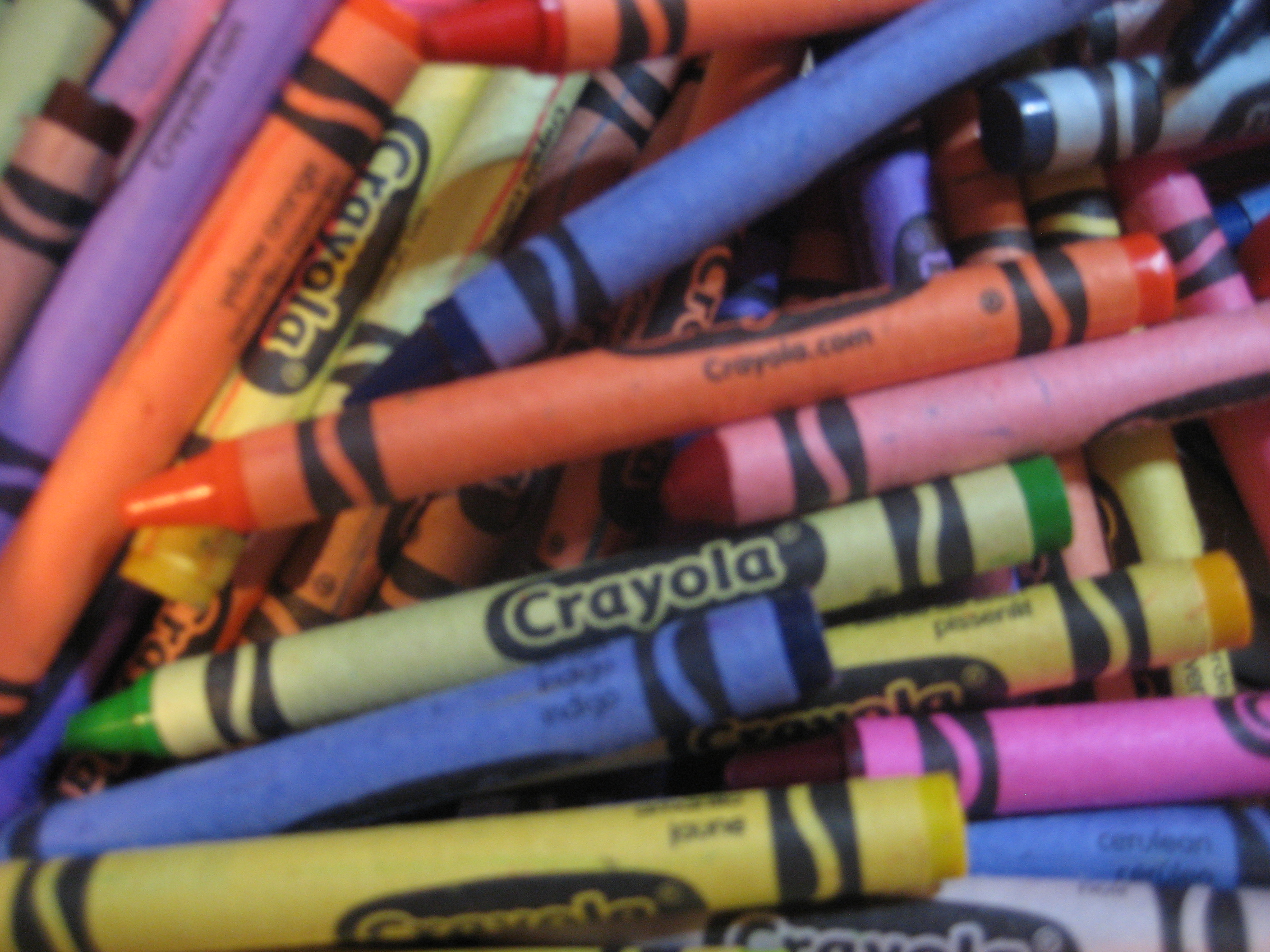
Whether or not there is any truth to that last theory, most fashion experts now generally agree that you can wear white year-round (and since they carry a fashion police badge, you’d better listen). Of course in the same breath they will advise you to wear “winter whites” after Labor Day, whatever that means (as far as I am concerned, if it isn’t in the Crayola box, it isn’t a color). I guess you have to be a fashionista (which is definitely not a real word, whatever Miriam-Webster has to say on the subject) to understand the subtle nuances of all the rules.

If it's a color, you will find it in there somewhere.
If it’s a color, you will find it in there somewhere.

But since I am (or at least was until this past Sunday) the closest thing my family has to a fashionista (a word apparently coined when I was in high school; I wasn’t one then, either), it falls on me to take the kiddos shopping. Because they hate it, this is a task I perform only when it absolutely must be done. And as they can no longer wiggle their toes inside their cramped gym shoes, it had to be done this week.

Now I don’t know if you have shopped for tennis shoes in the last month or so, but as we have approached Labor Day, for some reason the tennis shoes have gone from traditional white (or occasionally gray or black, if you’re feeling a little wild) to the color of toxic waste (also known as “winter white”?). So I have to assume that the fashion experts have been lying to us and it is, in fact, a terrible fashion misstep to don white shoes at this time of year.

English: tennis Español: tenis
Call me old fashioned, but I just think this is what tennis shoes should look like, before they turn dingy gray anyway. (Photo credit: Wikipedia)

I don’t have a problem with bright colors (Crayola lists a few “neons” among its collection) and actually I can’t say that I hate my eight-year-old’s choice of shoes sporting neon carrot or even my 6-year-old’s laser lemon selection (which should pair nicely with his green and brown plaid shorts). The shoes look good on them in that adorable-little-kid-who-likes-to-express-himself sort of way.

My only real complaint is that it so happens I needed new tennis shoes, too. And apparently the experts think I might also look good in toxic waste shoes (in that crazy-lady-who-talks-to-herself-on-the-subway sort of way).

I looked long and hard (on a return trip during school hours because the kiddos have no patience for this sort of thing) and I finally found a pair with an adequate toe box and arch with only a minimal amount of sea serpent blue and wild watermelon. Not really my best colors, I think, but who am I to argue with fashion? Perhaps I’ll wear my new shoes with my pretty white dress. After Memorial Day, of course.

Who says spaghetti doesn’t grow on trees?

1957 was a banner year for Switzerland’s spaghetti farmers. A mild winter paired with a dramatic decrease in the population of the dreaded spaghetti weevil led to the record harvest that has to this day never been equaled.  Small family farms went into overdrive plucking spaghetti strands from the trees that had been carefully cultivated to produce spaghetti of precisely the same length. The harvest was followed, as always, by a feast featuring the traditional dish, which, of course, is spaghetti, harvested and sun-dried fresh that morning.

This was the report presented by BBC news program Panorama on April 1, 1957. Panorama had long been a source of reliable serious news. After the story aired, viewers flooded the network with calls, a few of which were disgruntled viewers, but most of which were people genuinely interested in the story. Some even asked how they might grow their own spaghetti trees.

To be fair to the public duped by such a ridiculous prank, spaghetti was not yet a widely known dish in England. It was available only in a canned form and, really, canned vegetables (which have been nearly as processed as spaghetti’s original grain anyway) can kind of resemble pasta in texture. And Panorama went all out. I have to admit, it is a pretty convincing segment.

I have to wonder, though, why a serious news program would sacrifice its integrity to pull a silly prank on its trusting audience? The answer to that question is irritatingly unclear. I mean, yes, the BBC was participating in the long held tradition of April Fools’ Day when we are all supposed to get a little silly and try to make fools of one another. But why do we do it?

There are a couple of theories. The most common one batted about has to do with the introduction of the Gregorian calendar which placed the start of the New Year on January 1 instead of the vernal equinox, which happens just a little before April 1. Only fools continued to celebrate the old holiday instead of the new and so they became the victims of ridicule. One trouble with this theory is that England didn’t adopt the Gregorian calendar until 1752 and by then, April Fools’ Day had already long been a thing.

In 1983, Joseph Boskin, a Boston University history professor, presented perhaps a more plausible theory. According to the professor, a court jester by the name of Kugal claimed that he could run the Roman Empire better than Emperor Constantine. Amused by the claim (because if history has taught us anything it’s that Roman emperors liked having their authority challenged), Constantine gave up his throne for a day to Kugal whose first order of business was to declare a day of foolishness. The problem with this theory, of course, is that Boskin made the whole thing up as an elaborate April Fools’ prank.

And that, I think, is why we will never know the real history behind this very silly day that turns the most serious of people into

This image shows a Paradise fish (Macropodus o...
April Fish!

slightly mean-spirited jokesters. It is a day that has French children pinning paper fish to their teachers’ backs, pointing and erupting in giggles as they announce: “Poisson d’Avril!” (roughly translated as, “French children are not particularly known to be clever pranksters!”).

It is a day that encourages an otherwise loving sister to empty a Cadbury Cream Egg of its fondant center and reseal it with chopped onions packed inside so that she can coax her trusting brother into taking a bite (Alas, I can’t claim this one as my own as it was my sister who pulled off this feat. I did laugh, though.)

Maybe we just do it because the sun is finally shining a little more brightly, the flowers are starting to bloom, and the fading memory of the harsh trudge through winter makes us a little giddy. Whatever the reason for it, today is the day for harvesting spaghetti, assuming you remembered to plant your tree. According to the BBC all you have to do is “place a sprig of spaghetti in a tin of tomato sauce, and hope for the best.”

Nothing says Spring like a plate of home grown spaghetti.

Six of One, Half a Dozen of the Other

Groundhog Day 2005 in Punxsutawney, Pennsylvania
Phil the Groundhog surrounded by his Punxsutawney posse, dressed as always in 19th Century garb.

So today is perhaps the strangest holiday on the calendar, the day when otherwise perfectly normal people seek psychic advice from a rodent. Yes, it’s Groundhog Day. Because I realize this “holiday” is somewhat unique to North America (and, really, to Pennsylvania, the University of Dallas, and a few other odd pockets), I’ll go ahead and explain the tradition.

On February 2, the groundhog emerges from his hidey-hole to check the weather. If it’s cloudy, the little guy scrambles out into the wide world and spring is (obviously) “just around the corner.” But if the sun is out and this genius prognosticator can see his shadow, he runs back inside and we can be sure to expect six more weeks of winter.

The most famous of these furry meteorologists is “Phil” of Punxsutawney, Pennsylvania (made, if possible, even more famous by the 1993 Bill Murray film) who has been making his predictions since 1886, a curiously long life for a groundhog that should normally live less than 14 years. Since the celebration began, Phil has seen his shadow 100 times. And because no one wants to let go of such a nice round number, this morning he emerged under cloudy skies and predicted a nice short winter.

Cover of "Groundhog Day (15th Anniversary...
A movie that never seems to get better even when you watch it again and again and again.

Of course the practical historian in all of us wonders, I’m sure, from where on earth such a tradition could have come? No one really seems to be sure, but there are a few theories. The one that makes the most sense to me (if one can approach rodent weather prediction sensibly) is that the celebration was born from the clashing of two calendar systems.

While western countries in the Northern Hemisphere recognize the first day of spring as the day the length of daylight finally exceeds the length of night (the Vernal Equinox, which is around 6-7 weeks after Groundhog Day), Celtic tradition places the first day of spring at the cross-quarter day of Imbolc, when it is said that the daylight begins to make significant progress against the night. Probably not coincidentally, Imbolc occurs in Early February (just around the corner from Groundhog Day).

Naturally, people wanted to know when spring really would begin so the most logical thing to do was to seek signs in nature as to when the thaw would begin and the sun would truly emerge. And a tradition was born. Today you can attend Groundhog celebrations in many small towns throughout Pennsylvania, though I should warn you that you’ll need to brush up on your Pennsylvania German because if you speak English during the event, it may cost you up to 25 cents per word.

Of course if you happen to be an alumnus of the University of Dallas, then you know that the party to beat all parties for Groundhog Day is in Groundhog Park in Irving, Texas. This year marks the 50th anniversary of the remarks by University President Dr. Donald Cowan that started the epic celebration: “Think of something to celebrate—celebrate Groundhogs Day, for instance—but whatever you do, do it with style.”

And they have. The Groundhog Day festivities at the school resemble a homecoming celebration with the election of a Groundhog King and Queen, campus-wide sporting events, and crowds of alumni swarming in to join the student body in all-night, semi-controlled, frivolities in the park, which, if I understand correctly, involve quite a bit of heavy drinking.

Now, of course, as a responsible adult and practical historian, I cannot condone such behavior. But as my Pennsylvania German is a little rusty, I was at a loss as to how I could observe the day. Here’s what I decided on:

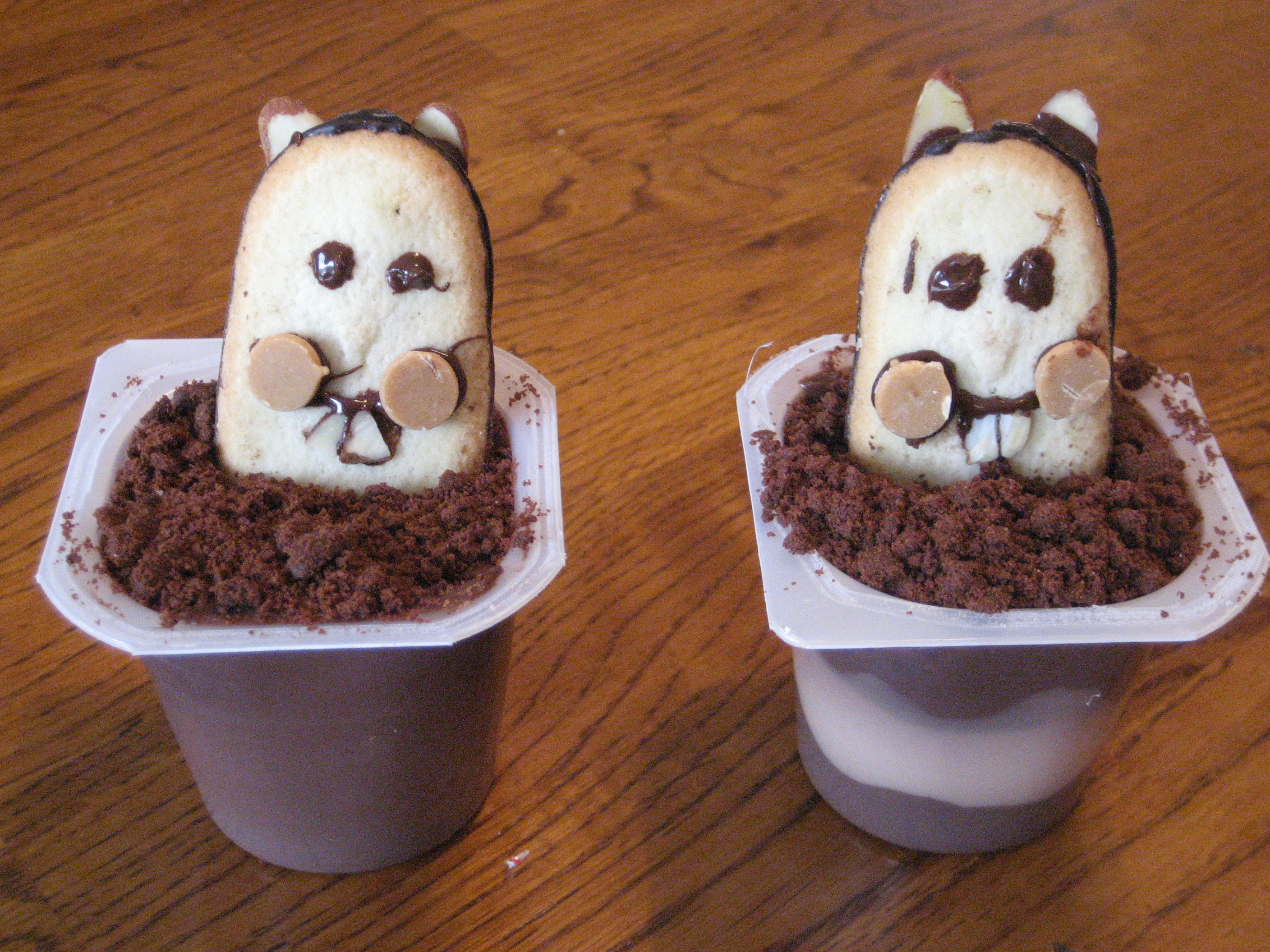
As with almost all of my creative cool mom ideas, this one come straight from a magazine. You can find cuter ones in the most recent issue of Family Fun.
As with almost all of my creative cool mom ideas, this one comes straight from a magazine. You can find cuter ones in the most recent issue of Family Fun.

All that remains to be determined, then, is whether the Groundhog, or Marmota monax (because my Latin is better than my Pennsylvania German) is a accurate meteorologist. The answers to that question are mixed. According to organizers of the event, Punxsutawney Phil has been right 38% of the time, which probably does make him at least as accurate as the average TV meteorologist. Some studies have given the rodent much more credit, claiming accuracy of 75 to 90% of the time.

I think the discrepancy occurs, though, because the beginning of spring may actually be a fairly subjective thing to measure. Depending, of course, on where you live, spring generally pops up somewhere in the six weeks or so just around the corner from the first few days of February. Maybe, then, what the groundhog is really trying to tell us to be patient because spring is either six weeks away or maybe just half a dozen.

Some sincere and honest suggestions

"The First Thanksgiving at Plymouth"...

Happy National Day of Thanksgiving on this the fourth Thursday of November when we here in the United States traditionally feel particularly thankful. But that wasn’t always when we celebrated as a nation. For much of our history, Thanksgiving was sporadically celebrated, with governors occasionally calling for state wide days of thankfulness.

It wasn’t until Abraham Lincoln that we had a national celebration. In 1863 as a gesture of unity for a nation at the height of civil war, Lincoln issued a presidential proclamation declaring the last Thursday of November the official day. Not surprisingly, the holiday was still not uniformly celebrated until 1870, when the war was finally over and Reconstruction was well under way.

After that, every year, part of the president’s responsibility was to declare the official day. And for many years that worked well, with each president following in Lincoln’s footsteps and proclaiming Thanksgiving to be on the last Thursday in November.

Franklin Delano Roosevelt, 1933. Lietuvių: Fra...

Then along came The Great Depression and Franklin Roosevelt. Listening to the appeals of concerned retailers who feared a late Thanksgiving would result in more sluggish Christmas sales, FDR decided to change Thanksgiving to Thursday, November 23, 1939.

What FDR hadn’t counted on, however, was the wrath of a nation determined to celebrate thankfulness on the traditional day. Though larger retailers were grateful for the change, smaller merchants, calendar makers, sports teams, and schools with already set schedules were just plain upset. Angry letters streamed into the White House from concerned citizens like Shelby O. Bennett of Shinnston, West Virginia who wrote the president with a few suggestions of other changes he might make including:

             1. Have Sunday changed to Wednesday;

            2. Have Monday’s to be Christmas;

            3. Have it strictly against the Will of God to work on Tuesday;

            4. Have Thursday to be Pay Day with time and one-half for overtime;

            5. Require everyone to take Friday and Saturday off for a fishing trip down the Potomac.

Despite the outcry, FDR continued to ask the nation to celebrate Thanksgiving one week early and in December of 1941, Congress passed a law naming the fourth Thursday in November the official National Day of Thanksgiving. So at long last Americans were guaranteed more than 24 shopping days leading up to Christmas and as public anger faded, everyone was happy.

Then came Thanksgiving 2012 when, concerned about sluggish sales with only a measly 32 days of Christmas shopping left to the American public, large retailers took it upon themselves to cancel the holiday altogether, declaring instead that “Black Friday” would begin on Thursday, November 22.

A Christmas tree inside a home.
A Christmas tree inside a home. (Photo credit: Wikipedia)

In response, I have drafted a letter of my own:

Dear Retailers,

Though some may feel a little put off by your tenacity, personally I think it’s a great idea to begin your holiday sales extravaganza a little early this year. In fact, I have some suggestions for other changes you might consider as well.

  1. Give away slightly damaged merchandise with purchase of electronics beginning October 1.
  2. Offer free holiday gift wrapping for purchases of $50 and above after July 4th.
  3. To get people thinking Christmas, put up trees decorated with shamrocks and rainbows for St. Patrick’s Day in March (Save the white and pink trees, of course, for when the real Christmas season begins in April).
  4. Open early on Christmas morning to accommodate the returns and exchanges from those customers whose families open just one present on Christmas Eve.

Hoping that as I sit at home in my pajamas watching the Macy’s Thanksgiving Day Parade with my family, enjoying the aroma of a roasting turkey, and dreading the moment when I will finally have to start thinking about my holiday shopping, you will consider these sincere and honest suggestions, I remain,

Yours very truly,

Sarah Angleton

Check out Shelby O. Bennett’s letter to FDR here:

http://docs.fdrlibrary.marist.edu/thanksg.html#doc