Down the Creek Without a Paddle

It’s been a big couple of weeks in the house of practical history. If you’ve followed this blog for long you’re probably aware that I have two sons. When I started this thing way back once upon a time they were pretty small, just starting school, giving me, their mommy, bits of time to devote to something like blogging about history and nonsense.

As children do, they’ve gone and grown up now. My youngest graduated from high school last spring, turned eighteen this summer, and left this week on a great adventure. I won’t go into the specifics because he is an adult with sole possession of his own stories. I will say that I’m really proud of him and I miss him already.

It was a beautiful trip.

My oldest son spent the summer away on an adventure of his own, returning about a week and half before his brother’s planned departure, and so as a family we decided to spend a little fun time together. We chose to take a quick getaway in the middle of the week to canoe down part of the North Fork of the White River in Southern Missouri. It’s a beautiful little river and the state has experienced plenty of rain this spring and summer. The occasional low spots one might sometimes experience were nicely covered over and the current was swift.

My husband and I used to be pretty experienced canoeists; my sons, not so much, but after spending the summer apart, they wanted to catch up and canoe together. No mother could say no to that. Of course, we as the the more experienced, took the cooler and strapped the dry bag to our boat.

They worked together really well, communicating through the tougher spots where rocks and debris made the steering (and staying dry) a little more challenging. Despite more experience and twenty-five years of marriage, we didn’t do quite as well. The problem wasn’t our lack of communication exactly. It was more our admittedly slower reflexes and slightly poorer eyesight that got us. And also a fallen tree that we didn’t manage to skirt on an outside bend the way we needed to.

The current was fast where it happened. When the canoe dumped, my husband managed to hold onto it and ride with it several bends downstream, while I grabbed onto the first thing that came to hand, which was the cooler. I clutched it tightly and rode the current, feet first, until I got to a place I could safely stop myself, very near where my husband had finally managed to bring the canoe to shore.

A couple of kind strangers helped him empty the water while our sons chased down all of the wayward objects that had once been in our boat. They found everything except for one paddle. The dry bag was still fairly dry, the cooler that had so beautifully kept me afloat, was no worse for wear, and they even managed to grab my favorite baseball cap that had been swept off my head.

I’m pretty sure this happened yesterday.

Other than a couple scrapes and bruises, we were unhurt, although the strap of one of my husband’s sandals broke during the ordeal leaving him with only one functioning shoe, and of course, there was the beating we took to our egos. That only got worse when shortly after the incident, our just grown sons decided that for our safety, they should each take one of us. And we agreed. Ouch.

Though I don’t think we were at any serious risk of injury in this shallow river, the reality was that for a few minutes there, we were up a creek without a paddle, a phrase that though surely older in conversation, began showing up commonly in American print in the mid to late nineteenth century.

So there we were, divided up between our children, my husband with only one shoe and me without a paddle, each being steered down the river by one of the boys whose lives used to more or less take the direction we chose for them. I suppose now we get to watch them navigate the currents of their own lives.

They were good boys. They are good men. I guess that’s just how life flows.

A Big, Big Man

If you drive along the western portion of US Rt. 2 into the Upper Peninsula of Michigan you will, as you approach the Village of Vulcan in the Norway Township, come across a big, big, man. This man carries a pickaxe, wears a yellow raincoat, and stands forty feet tall as he advertises tours of the Iron Mountain Iron Mine. 

At forty feet tall, this Big John is slightly bigger than the 6’6″ described in Jimmy Dean’s famous song. I mean that’s tall, but it doesn’t really strike me as legendary.

On my recent visit to the UP, I had the opportunity to experience this tour, which is a pretty cool one that takes visitors 2600 feet through an exploratory tunnel into a large man-made cavity from which much of the mine’s nearly twenty-two million tons of retrieved iron ore were taken.

Along the way, an expert guide, who in our case was an extremely knowledgeable retired high school history teacher, tells the harrowing tale of the many miners who risked, and often lost, their lives during the operation of the mine between its opening in 1877 and its final closure in 1945. The tour includes demonstrations of some of the ingenious but terribly dangerous equipment used in different eras of mining and plenty of stories about the awful conditions in which of men worked over the years to supply the iron needed to build a burgeoning industrial world power. 

That’s an awfully big wheel barrow.

What the tour does not include is anything about Big John who stands so prominently in the parking lot, is featured on the tee shirts for sale in the gift shop, and about whom the 1961 hit song by Jimmy Dean was written. The song plays on a loop in the visitor’s center, which made me suspect that it might somehow be related to the iron mining industry in the area.

It occurred to me too late that I should have asked our knowledgeable tour guide, so instead I posed the question to the young lady selling tickets for the next tour. Her face grew a little red as she sheepishly admitted that there was absolutely no connection between Iron Mountain, or any iron mine as far as she knew, to Jimmy Dean and his song, or to the legendary figure of Big Bad John. “It just attracts attention,” she said. 

It was a disappointing answer, as I thought maybe I had stumbled onto a hidden gem of a story. Still curious, I looked into the background of the song, and discovered that the co-opted folk legend hero of miners everywhere was inspired by a real life man who, as far as I know, may never have set foot in the UP, or in an iron mine, or in any mine at all. 

Dean’s Big Bad John sprang instead from the musician’s acquaintance with an obscure, but tall, actor by the name of John Minto. Dean started jokingly calling the man, who was six feet five inches tall, “Big John,” and as the name rolled around in his head a hit song emerged, and a new American folk hero was born. 

While Vulcan’s Big Bad John holds the world record as the tallest, you can also find Big Johns in Whitwell, Tennessee and Helper, Utah. The song, and the legendary tale it tells, has no connection to those locations either, but each statue serves to honor the early miners who worked in incredibly dangerous conditions to obtain the materials necessary to build the industrialized world we live in.

In my book that makes this big, big man a gem of a story.

Murder Free Since 1952

Last week I had the opportunity to squeeze in a quick girls’ trip with my sister and our aunt and cousin to spend a few days exploring Michigan’s Upper Peninsula. Our home base was an adorable rental cottage on Independence Lake near the tiny unincorporated community of Big Bay, MI, about thirty miles northwest of Marquette and a long, cold swim from Canada.

Sock Monkey Steve and I noticed this curious sign on the Lumberjack Tavern before we discovered why it was there. To the right of this sign, you can see part of the image from the movie poster as well.

Though it does have a post office, Big Bay is not large enough to sport a traffic light. It contains around a thousand people during the summer when stunning views of Lake Superior, lots of great hiking trails, waterfalls, and even a good stretch of sandy Great Lake beach attract visitors like us. 

In the winter it may host some hardcore snowmobilers and skiers, but most area locals we met said winter in the UP was best spent either hiding inside or living somewhere else. After experiencing a thirty degree temperature shift from one day to the next, I tend to believe them.

But for all the things Big Bay doesn’t have, it features two excellent places to eat, The Lumberjack Tavern, which includes a sign proclaiming it has been “murder free since 1952,” and The Thunder Bay Inn, which was featured in the Academy Award nominated film Anatomy of a Murder, directed by Otto Preminger and starring Jimmy Stewart. 

The Thunder Bay Inn still looks more or less the same as it does in the movie. At least enough to recognize it, both inside and out.

The film, released in 1959, was based on a novel of the same title by Robert Traver. That was the pen name of former Michigan Supreme Court Justice John D. Voelker, who in addition to being an avid fly fisherman, served as defense attorney in the case of a murder that occurred at a tavern in the tiny community of Big Bay in 1952.

What made the case such an interesting subject for fiction was the unlikely victory of the defense. An Army lieutenant stood accused of shooting and killing his wife’s alleged rapist. The jury found him not guilty based on a decades old precedent that used a fairly obscure diagnosis of a type of temporary insanity.

It was a good bit of legal acrobatics that translated nicely to the screen under the capable talents of a strong cast and set to a truly excellent Duke Ellington sound track. Since its release, the film has garnered praise from the legal profession as well as accumulated plenty of accolades from the film industry, including a 2012 selection to the National Film Registry for its cultural, historical, and aesthetic significance.

But the UP really does have a lot more to offer than murder.

Not being a classic film aficionado, I had never seen it, but you don’t vacation on a movie set and not watch the movie. Shortly after arriving back home, I got hold of a copy and I have to say, in my humble opinion, it’s good. 

If you want to visit it, just be forewarned that part of its cultural significance is its unflinching use of descriptive words referencing sexual violence that were atypical for a film in its era, words that got it briefly banned in the highly Catholic city of Chicago. 

Well, maybe not entirely unflinching. There is an amusing interaction in which the judge calls the counselors to the bench to discuss the possible use of alternative words for panties. After some debate in which one suggests perhaps a French word, they determine there are no better alternatives, and decide to just plow ahead, panties and all.

And while it has nothing to do with why we decided to take our little family girls’ trip to the incredibly beautiful UP, it is why unincorporated Big Bay, Michigan, with a year-round population 256, is evidently kind of famous. 

Wrong-Way Angleton

Recently, the hubs and I returned, via the back roads, from a quick getaway to commemorate our twenty-fourth wedding anniversary. It was a lovely, relaxing couple of days. We hiked and swam and ate well and just generally enjoyed the kind of meandering schedule that’s hard to follow when you’re toting around bored teenagers.

And so it felt right when the hubs asked me if on the way home I’d like to explore the back roads where not so much as a single bar of GPS-supporting data signal can be found. It was a suggestion he made almost apologetically because he assumed I’d be more comfortable sticking to roads I know better.

That was a considerate thought, because I have been known to lose my way from time to time and it has occasionally been a traumatic experience. The truth is, though, I have pretty much accepted that this disadvantage is just part of who I am, and if I have the time, I’ve even enjoyed getting a little turned around, because one never knows when you might end up somewhere better than you’d intended to go.

That could have been the case for one pilot who has gone down in history for going the wrong way. Eleven years after he helped ready Charles Lindbergh’s Spirit of St. Louis for its famous nonstop flight across the Atlantic, mechanic Douglas Corrigan made headlines himself as the last of the great aviation transatlantic daredevils. For his efforts, he was inducted into the Burlington, Wisconsin Liars Club and his pilot’s license was suspended.

On July 17, 1938, not long after landing in New York in a rickety modified aircraft salvaged from the junkyard and held together by little more than the audacity and ingenuity of its pilot, Corrigan took off again to make the return trip west across the country. Then to the surprise of onlookers, he turned and headed east instead.

When he landed twenty-eight hours later in Dublin, he asked the locals where he was and explained that he and his unreliable old compass had gotten turned around in the clouds.

Douglas “Wrong Way” Corrigan, looking pretty happy to be wherever he is. Unknown photographer, Public domain, via Wikimedia Commons

Of course not everyone believed the man who quickly became known as “Wrong-Way Corrigan,” possibly because his tale came with a wink and a grin. Also maybe because he’d already attempted to file a transatlantic flight plan in New York and had been denied since his plane was (I’m paraphrasing here) a hunk of junk.

The the public loved Corrigan, most likely because it’s kind of fun to root for an antihero who thwarted the rules and got away with. I have to assume, too, though, that there were a few sympathetic souls out there who thought there was a chance he was telling the truth.

I’m not suggesting that everyone who believed him was a gullible fool. I’m suggesting that they may have been the type who live with the condition I have come to know as directional insanity. As a fellow sufferer of this terrible malady, I could sympathize with a person who accidentally, delightfully, ended up in Ireland instead of California.

I’m not alone, either. In fact, there is a growing number of us. While I have been so afflicted since my earliest days of childhood, long before the era in which we all carry GPS devices in our pockets, the habitual use of such gadgets has been shown to negatively affect our spacial memories.

It’s also true that most of us have a harder time navigating as we age, so there really was never any hope for this gal who at one time went the wrong direction on an interstate she traveled regularly and didn’t realize it until she’d driven the amount of time that it should have taken her to get home and instead arrived at a town she’d never heard of.

This same gal, maybe a year ago, ended up about two hours north of where she was supposed to meet her sister for lunch because she got confused in a construction zone and took an exit she never takes from an interstate she travels regularly. The worst was the phone call to said sister who has never experienced a moment of directional insanity in her life, and rarely relies on GPS. Said sister wasn’t the least bit surprised.

So, card-carrying Wisconsin Liars Club member Douglas Corrigan would have had my sympathy had I been alive to see his possibly accidental triumph. He stuck to his story for the rest of his life and didn’t really get in very much trouble over it. His pilot’s license was revoked for about two weeks, the length of time it took him to make it back to the United States by ship, and he didn’t seem the least bit bothered by where he ended up.

For the Bragging Rights

On October 4, 1986 the Missouri River flooded its banks and damaged the stretch the Missouri-Kansas-Texas Railroad track that stretched between Sedalia and Machens, Missouri. This in itself wasn’t particularly unusual. The area is prone to flooding and had proven a problem for the railroad company since the earliest days of the route. What was unusual about the 1986 flood was that the company decided to abandon rather than repair the route.

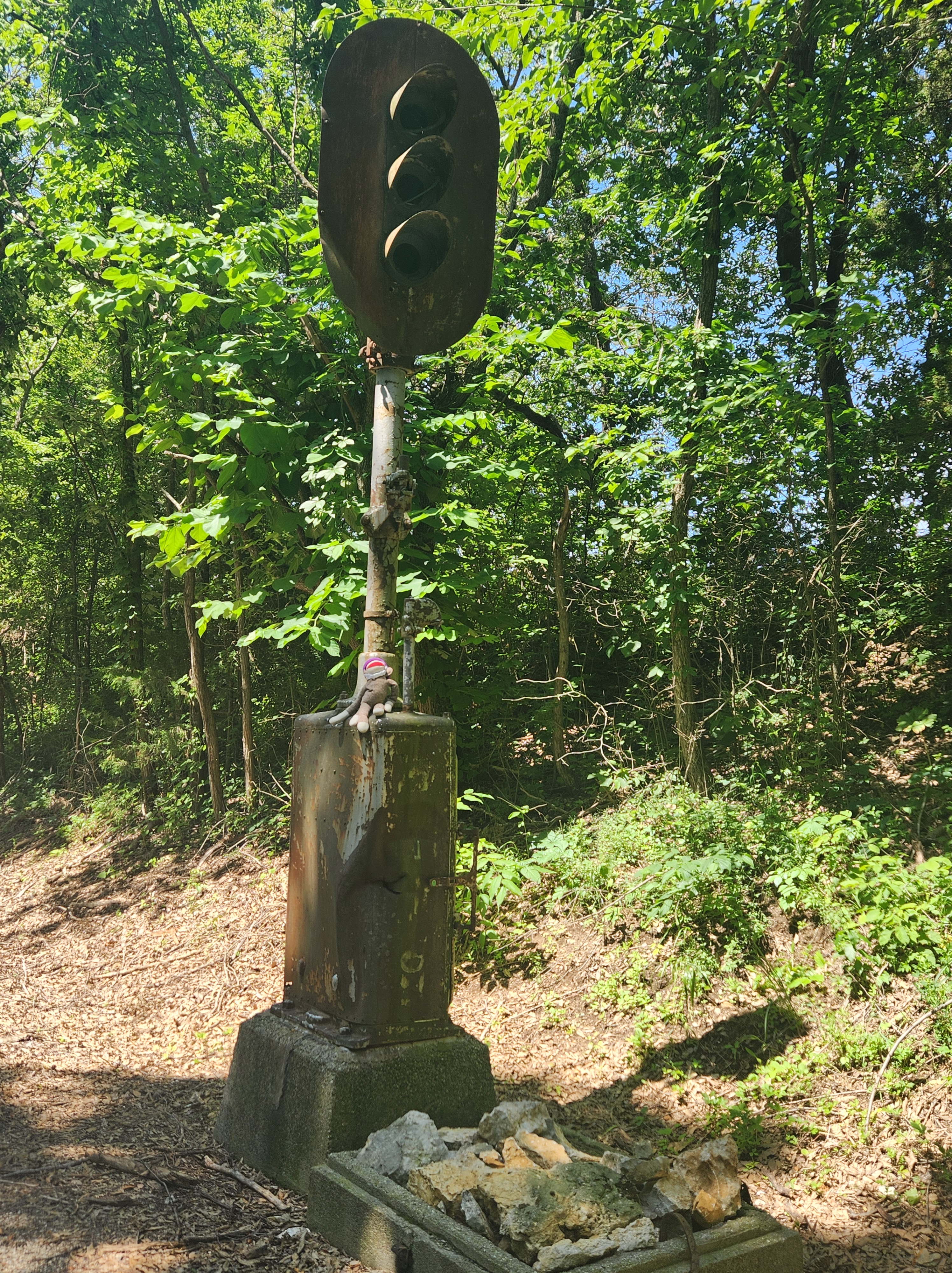
This is the last remaining signal from the MKT Railway.

This turned out to be good news for the biking and hiking enthusiasts of the Great State of Missouri. With help from a generous donation from Ted and Pat Jones (of the Edward Jones Financial Investment Company based in St. Louis), the Missouri Department of Natural Resources purchased the abandoned right-of-way to use as a trail. 

The first section of the crushed limestone MKT trail, shortened to KT, which became simply “the Katy” opened in 1990 around Rocheport, Missouri. Today it officially extends from Clinton in the western part of the state to Machens in the east, comes in at about 239 miles, and is the longest recreational rail trail in the United States. Several spurs offer additional distance, including a 47-mile Rock Island Spur that runs to Kansas City.

Sock Monkey Steve came along as well, but his skinny little monkey legs weren’t much help.

My sister and I were happy enough last week to hop on our bicycles and crush the route between Clinton and St. Charles. That’s officially 12.7 miles from the end in Machens, but St. Charles is a better place to stop and get picked up and taken out for celebration barbecue and cookies. Also, if we add in all of the spurs into towns that we took along the way, we more than made up the difference.

It turns out a lot of cyclists (and some hikers) tackle the whole Katy. We met quite a few cyclists, some of them traveling the same direction as us, some day riders who had done the whole thing on previous occasions, some with light loads and dedicated sag wagons, and others carting their own camping gear. Some riders do the full length in as little as three days. Five to six days seems to be the most common. 

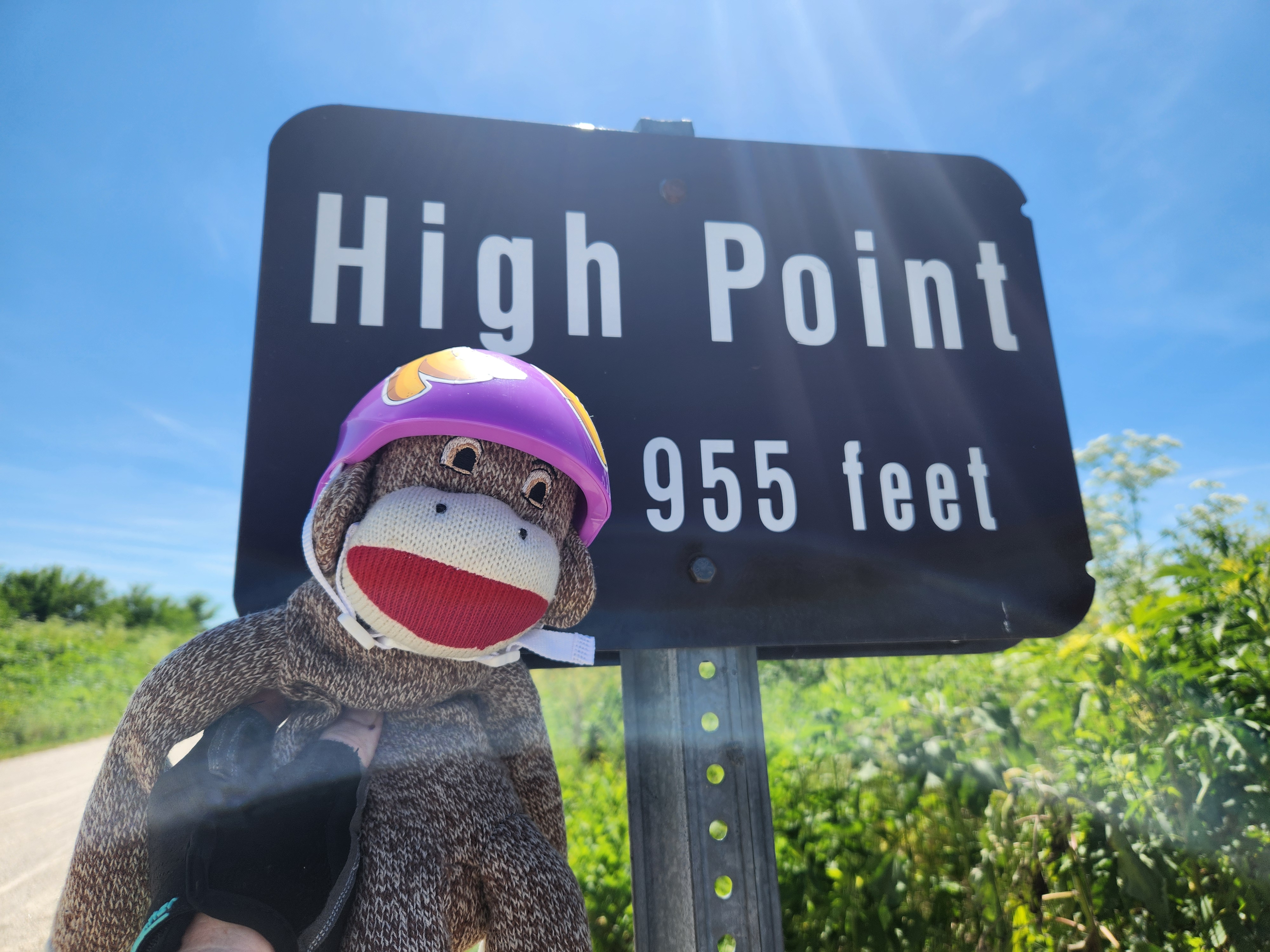
We reached the high point of the trail on the first day, but it definitely was not all downhill from there.

We did six, which was good enough for us. And we stayed in hotels and B&Bs along the way, because we couldn’t imagine that sleeping on the ground was going to be restful enough for us after forty-plus miles of biking on crushed gravel to then be able to get back up and do it again the next day. We did carry our gear with us, though, which was enough of a burden. 

The trail, though straight and flat-ish, requires a lot of work. Some patches are very well groomed. Some not so much. After one stormy night, we had to dodge quite a few downed branches. There are some stretches where large gravel and washouts make the riding all the more challenging, and the western portion of the trail all the way to about a mile outside Boonville is often slightly uphill, just enough to be a slog.

A train tunnel near Rocheport.

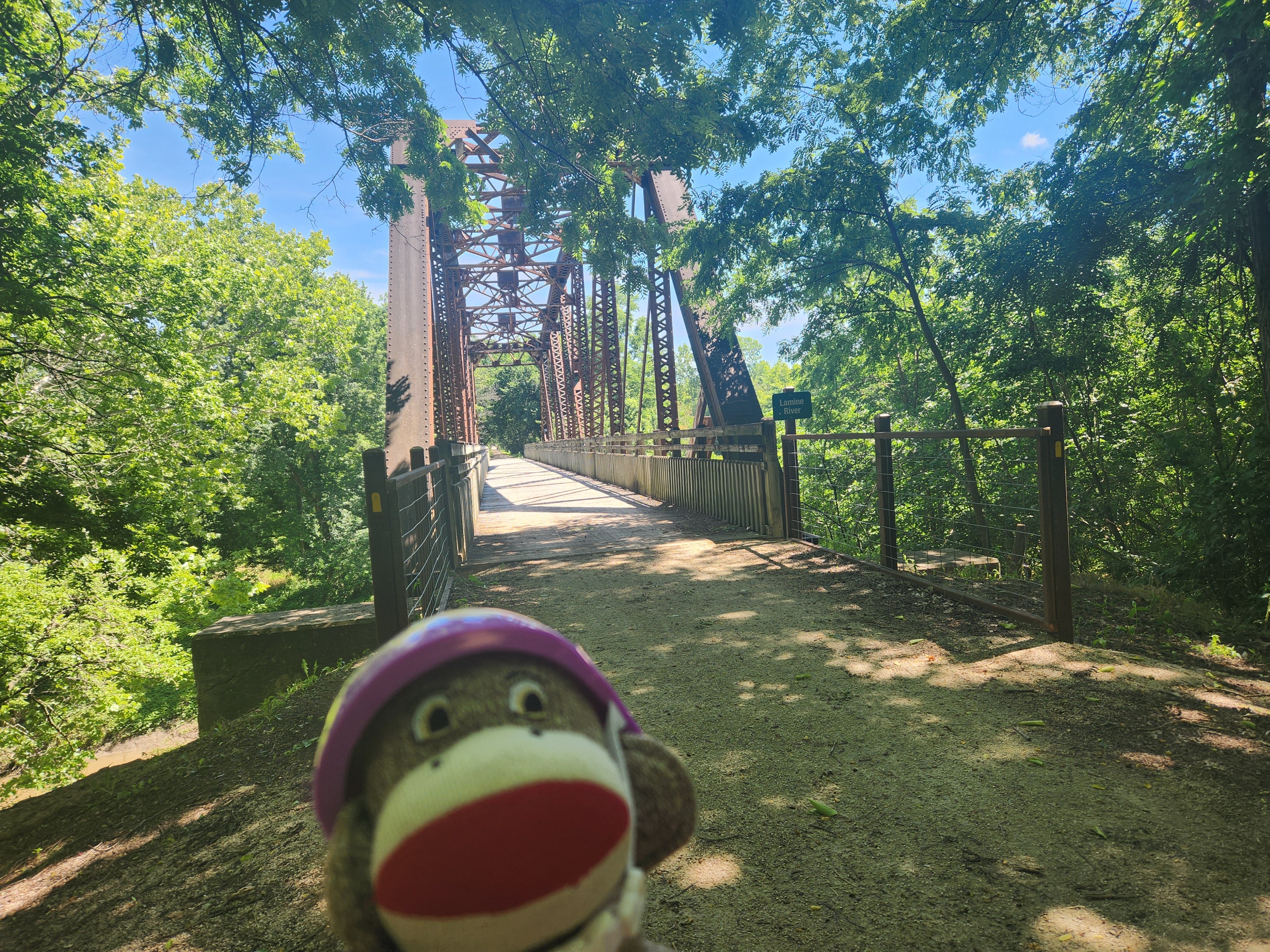
But the trail is beautiful, with much of it running between the Missouri River and gorgeous bluffs. It crosses over numerous creeks on pretty truss bridges, through tunnels, forest, wetlands, prairie land, rolling farmlands, and past historic remnants of the railroad.

As challenging as some days were, as sore as our bodies ended up being, and as tired as we were by the time we lugged our bikes from the trail to our stops each night, I’m awfully glad we did it. I don’t know that I learned anything profound from the experience, though someday when my backside is less sore, I will probably think of some way to turn the experience into a terribly moving and deeply reflective personal essay. For now, it’s enough to have crushed the Katy for the bragging rights.

Avoiding Traffic

August 15, 1969 was a mild, warm day near the small town of Bethel, New York. It was the perfect day for a leisurely drive down State Highway 17B. By leisurely of course, I mean about an eight hour drive to move about ten miles with nearly half a million of your closest friends.

Just like in the classic children’s book Go Dog, Go! by P.D. Eastman, the place everyone was going on that pretty day in the middle of nowhere, was a great big party—in this case, the Woodstock Music and Art Fair that was to take place for “three days of peace and music” on a 600-acre dairy farm.   

I have lots of friends who made the drive and took the pictures. This isn’t one of theirs, but they all look pretty much like this. Image by Dane from Pixabay

The weather didn’t stay nice, of course. The sky grew overcast and there was a fair amount of rain to try to soak into an already somewhat saturated ground. By the end of the event, which rain delays pushed into a fourth day, there was an awful lot of mud. And the road snarl to get there was bad enough the performers had to be brought in by helicopter. Nearly fifty-five years later it still makes the top ten list of all-time worst traffic jams in history.

But people who attended seem to think it was a pretty good time. The whole thing sounds like an absolute nightmare to me, but then my perfect day would more likely be spent on a dairy farm in the middle of nowhere with no one but the cows and a book. Well, maybe a few people could come with me. And I’d want at least three books. Also, no traffic. 

There are probably a lot of things I’d choose not to do just so I could avoid traffic. Earlier this week I made just such a decision when a swath of my state experienced a total solar eclipse. From the vantage point of my driveway, the moon’s coverage of the sun was somewhere close to 98%. 

If you do like to avoid a rush, you can still get a free advance digital copy of my new historical mystery by joining the launch team by April 15th: https://forms.gle/psi7ctZ6fNK88dbB9

A lot of people got pretty excited about the idea of traveling a smidge into the area of totality. I do mean a lot. The news reported that drive times doubled and even more than tripled in parts of the state. In many places, traffic completely shut down during the eclipse itself with motorists donning cardboard eclipse glasses and staring up at the sky.

Of those I know who traveled for the event, most say it was well worth it. I’m sure it was. If I hadn’t experienced a total eclipse seven years ago, I might have been excited enough to travel, too, but the traffic in my driveway was no thicker than usual.

At nearly 98% coverage of the sun, the sky grew noticeably darker, the air got cooler, the insect noise shifted a bit, and my dog grew a touch antsy. I had a pair of cardboard eclipse glasses and I did stare up at a sliver of the sun. Then I had a lengthy conversation with my four-year-old neighbor who was wearing a Spider-Man sweatshirt just in case the eclipse gifted him with superpowers. 

It didn’t, which was disappointing for both of us. But the day was mild and warm, perfect for standing on the driveway, looking up at the sky, and avoiding traffic.

Really Fowling Up the Place

In March of 1847, 19th century literary journal The Knickerbocker published what is most likely the first printed version of what has become one of the most ubiquitous terrible jokes in the English language. It asks, “Why does a chicken cross the street?” It also offers up the answer: “Because it wants to get to the other side!”

Gas station chicken.

And because as everyone knows, a joke is always funnier when its punchline is thoroughly explained, the editor includes that as well: “There are ‘quips and quillets’ which seem actual conundrums, but yet are none.” In other words, the joke is vaguely funny, because it’s not.

This joke has been running through my head a lot the last couple of weeks because my family and I recently returned from a vacation in Hawaii, a big trip when you consider that we live in Missouri.

Many years ago, my husband and I decided we wanted to visit all fifty states in the US by the time we turned fifty. Our ambitious now eighteen-year-old son decided he would do it by the time he turned 25. He’s close, and pretty smart, so when we asked him to choose our family vacation destination before heading off to college, he didn’t hesitate.

Parking lot chicken.

When the boys were small, and we lived on the West Coast not far from an airport with direct flights to the islands, the two of us left the kiddos with grandparents and visited the Big Island, but this was the first trip there with all four of us.

We chose Maui this time (with a quick hop over to Oahu to visit Pearl Harbor for the history buffs among us) and it was as absolutely gorgeous as you might expect. There were waterfalls, and rainbows, and sea turtles, and lava tubes, and secluded beaches, and deadly narrow roads on mountainsides, and feral chickens.

So many chickens. There were chickens at the airport, at our hotel, on hiking trails, in the parking lot of the grocery store, and even hanging out beside the pumps at the gas station, where I assume they were fueling up to head out across the road.

Resort chickens. What is funny is the amount of time I spent during my vacation to beautiful Hawaii taking pictures of chickens.

I was more or less expecting most of the sights we took in, but I admit I was not expecting feral chickens. I didn’t remember noticing them on the Big Island. I’ve since discovered that while it’s a problem there, too, the islands of Maui and Kauai are especially overrun.

There have been chickens on the islands for as long as there have been people there. When the Polynesians first arrived as early as 1200 AD, they brought food supplies with them, including several crops and animals like red junglefowl, which is believed to be the ancestor of the domesticated chicken.

When Captain Cook arrived in 1778, he brought a more domesticated version with him. So did the missionaries, turned businessmen who ran large sugarcane plantations. That industry surged through the American Civil War when the North couldn’t import sugar from the South and then declined sharply toward the end of the century. Chickens, which were good to have around for pest control on the plantations, were then released into the wild where they began really fowling up the place.

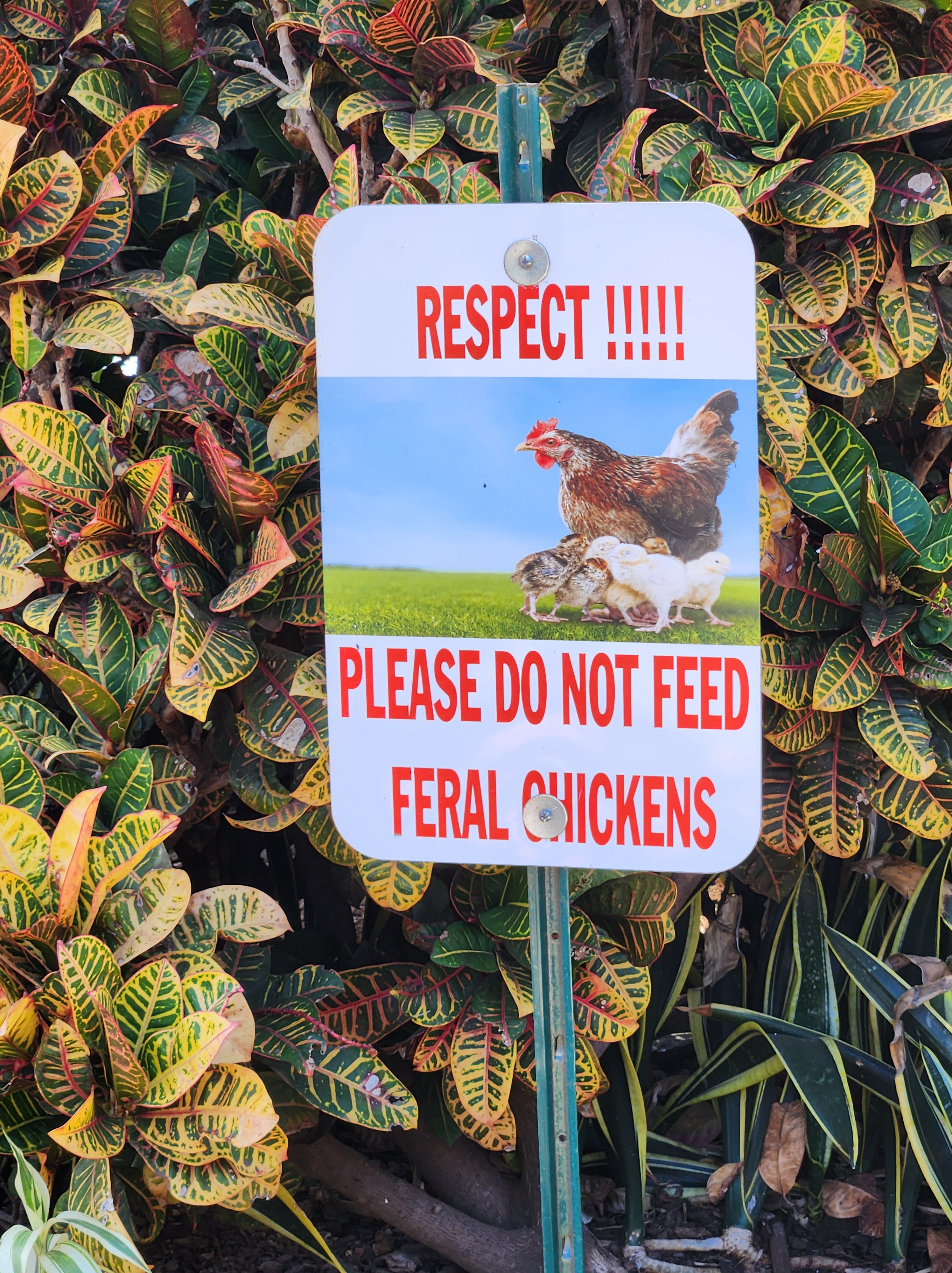
The state hasn’t managed to get control of the chicken problem, but their efforts have resulted in a number of signs. So I guess that’s something.

And then there are the hurricanes and storms that blow up and tear apart chicken coops, releasing even more of the birds onto islands where there’s abundant food for them and not much in the way of predators that want to eat them.

Of course, humans make a pretty formidable predator of chickens, except that these have crossbred with the protected red junglefowl, making it difficult to know which, if any, can be legally harvested. Also, rumor has it, they are awfully gamey.

The state has made attempts to address the growing problem of loud, messy, feral chickens scratching up gardens and making a general nuisance of themselves, but they haven’t made a lot of progress. And so, for now, Hawaii has breathtaking sunsets, gorgeous flowers, awe-inspiring starry skies, majestic marine life, and a whole bunch of chickens crisscrossing its streets. That could seem vaguely funny, except that of course, it’s not.

A Little History and a Lot of Sun

In December of 1821 the schooner Lively, which was supposed to bring about twenty or so men to meet up with Stephen F. Austin at the mouth of the Colorado River, missed its target and landed instead at the mouth of the Brazos River in what today is known as Surfside Beach, Texas.

The Lively was part of Austin’s effort to settle his “Old 300” (actually 297) grantees on three hundred-seven land parcels approved by the newly-independent Mexican government for American settlers between the Colorado and Brazos Rivers in then sparsely populated Texas.

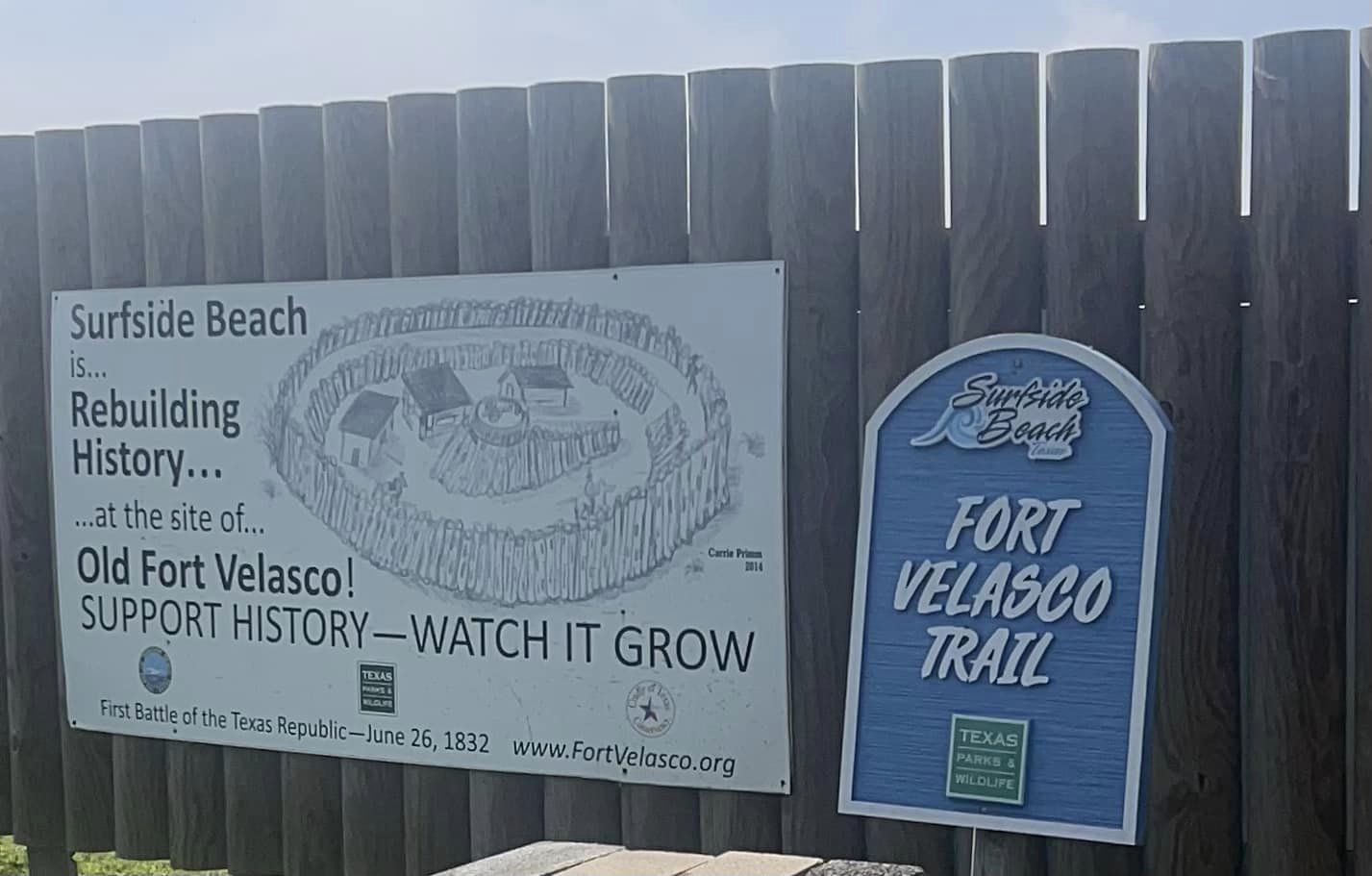
Also at the mouth of the Brazos as it flows into the Gulf of Mexico, was Fort Velasco, constructed in May of 1832 in order to help enforce customs and immigration laws as Mexico began to fear the annexation of Texas by the United States. It was about a month before the fort fell to Texas settlers in the Battle of Velasco, which marks the beginning of the Texas Revolution that led to Texas independence and yes, eventually US annexation of Texas.

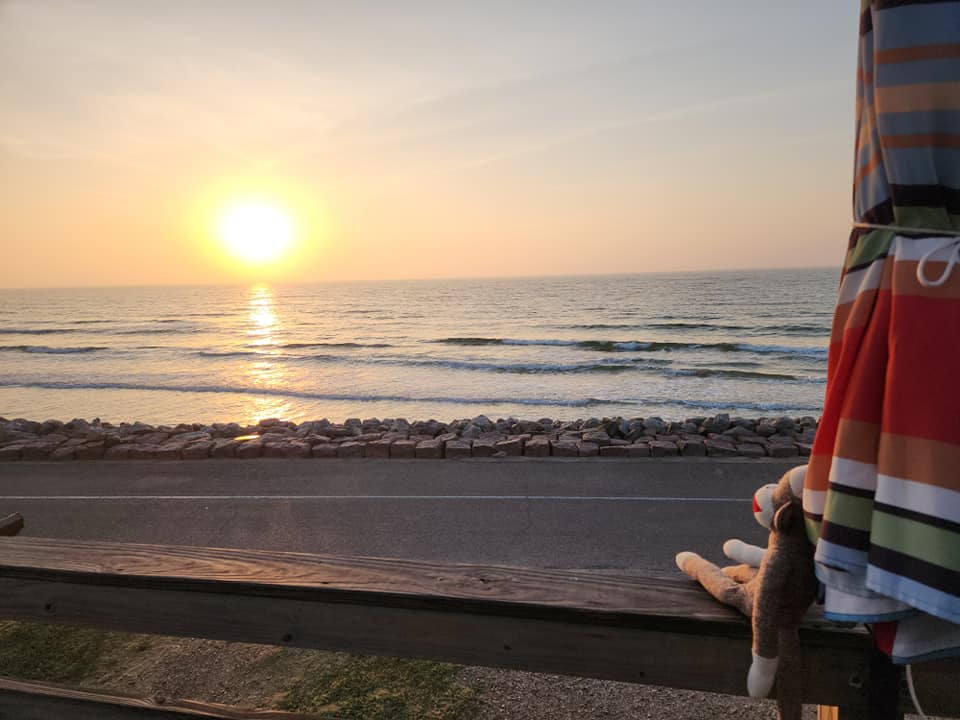
Traces of the first Fort Velasco (because there have been at least a couple of others) have largely disappeared through the years and hurricanes, but there is an ongoing effort to build a replica on the location of the original in the village of Surfside Beach. It isn’t much yet, but I got to see it and the plans for it on a quick girls’ beach getaway last week and I can see why the settlers aboard the Lively might not have been too disappointed to land there even if it did mean they missed their meetup.

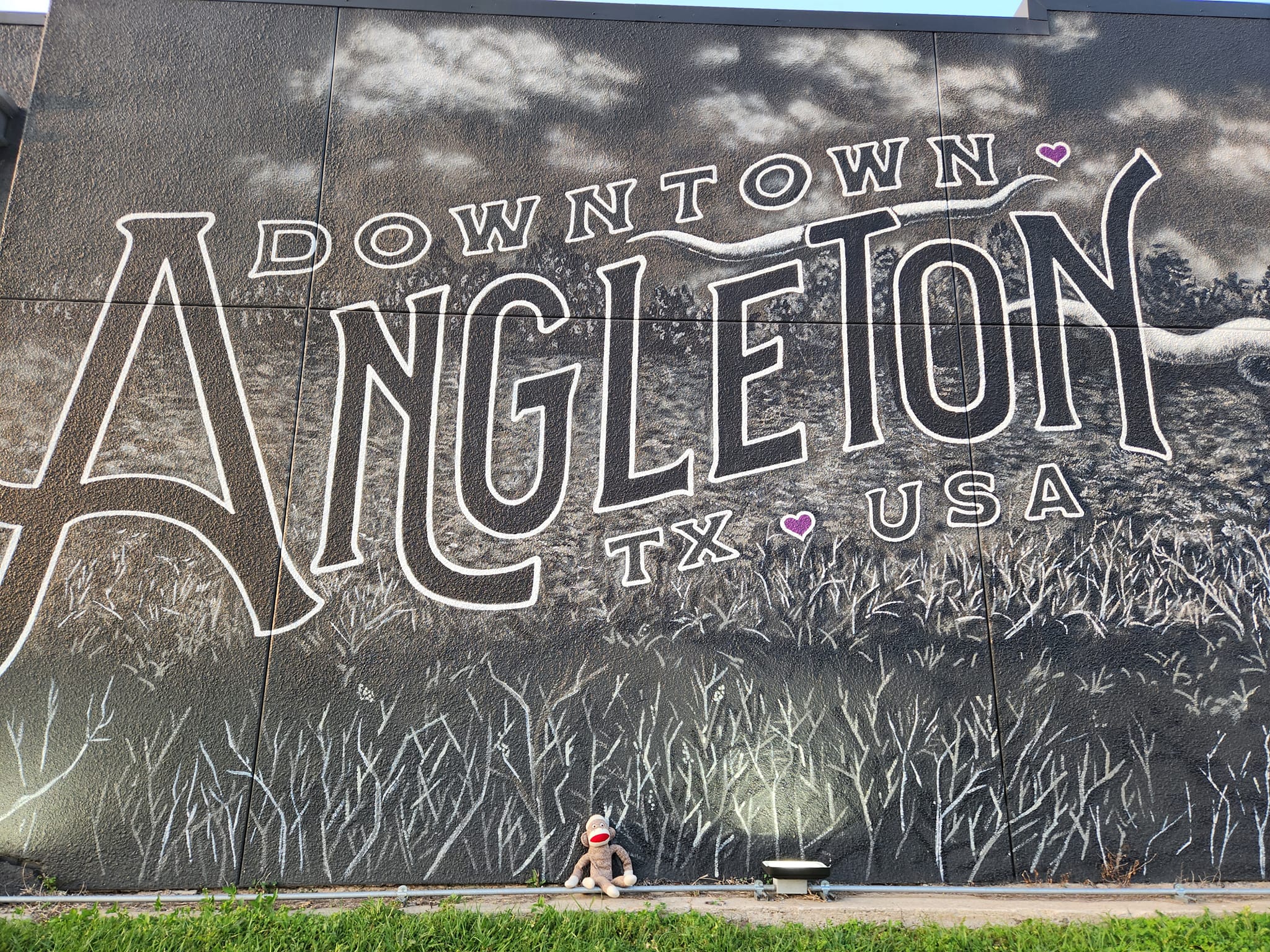
With my aunt, cousin, sister, and of course Sock Monkey Steve who got to be an honorary girl for the trip, I drove down to spend several days in a beach house within a quick walk of the mouth of the Brazos River and the Fort Velasco site. Surfside Beach is about forty miles southwest of Galveston and, much to my delight, not quite twenty miles southwest of the best named little Texas town I have ever come across.

Alas, Angleton, Texas was not named for me, an Angleton by marriage rather than by birth. According to the town’s historians, it was named in honor of the wife of the general manager of the Velasco Terminal Railroad, who rumor has it was an “Angle” and not an Angleton at all. Personally, I prefer the family legend that suggests the town was named for the fearsome band of Angleton horse thieves that hid out there. Which only goes to show that, unlike most things, tall tales are not necessarily bigger in Texas.

I admit, I spent more time on the trip soaking up the sun and taking pictures of Steve than I did learning the history of either the fort or the curiously named town, but I’m glad to have since read up on it. And it was really nice to get away for a little while, especially since while I was gone, a certain husband I know started on a project. Allegedly this had been planned for some time and had nothing to do with anything I may or may not have posted on the internet with his full knowledge and permission.  

But either way, Steve and I are glad to be home.

Leave the Poop. Take the Rocks.

This past July marked fifty-two years since Neil Armstrong took one giant leap for mankind on the surface of the moon, leaving behind an American flag, some pretty funky footprints, and a plaque reading: “Here men from planet Earth first set foot upon the moon. July 1969 A. D. We came in peace for all mankind.” The message, I’m sure, is of great comfort to those visiting aliens who can read the English language.

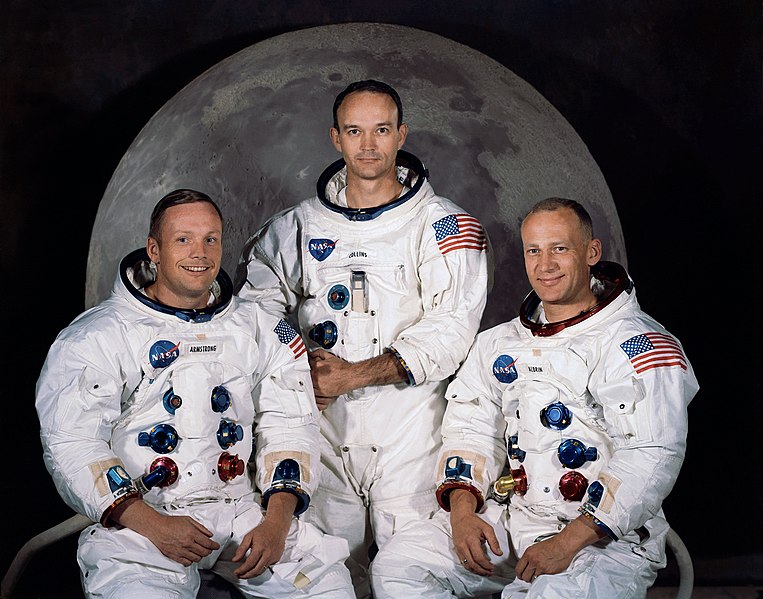
But that’s not all the crew of the Apollo 11 left behind. They also abandoned, among other things, two golf balls, twelve cameras, twelve pairs of boots, a telescope, and bags of human waste, including urine, vomit, and yes, feces. In fact, between the six Apollo missions that landed on the moon, there have been ninety-six bags of human waste left behind. The items were left in order to compensate for the additional weight of the moonrocks the astronauts brought back. There just wasn’t enough room for the golf balls and poop.

The first three men ever to leave their poop on the moon. NASA, Public domain, via Wikimedia Commons

It does seem like a very human thing to do to leave behind a trail of stuff. My family certainly did on our most recent trip. With some areas of the country a little more on edge than others and Covid numbers creeping up, we decided to stay a little closer to home for our summer family vacation this year. And so, we rented a cabin on Table Rock Lake in the southern part of our home state of Missouri.

We packed our suitcases, attached the cartop carrier filled with cycling and fishing gear, strapped our four bicycles to the back, and piled into the family truckster along with a cooler of snacks and a laundry basketful of goods for setting up our temporary home away from home. Fully loaded down, we headed out for our four-hour drive to the lake.

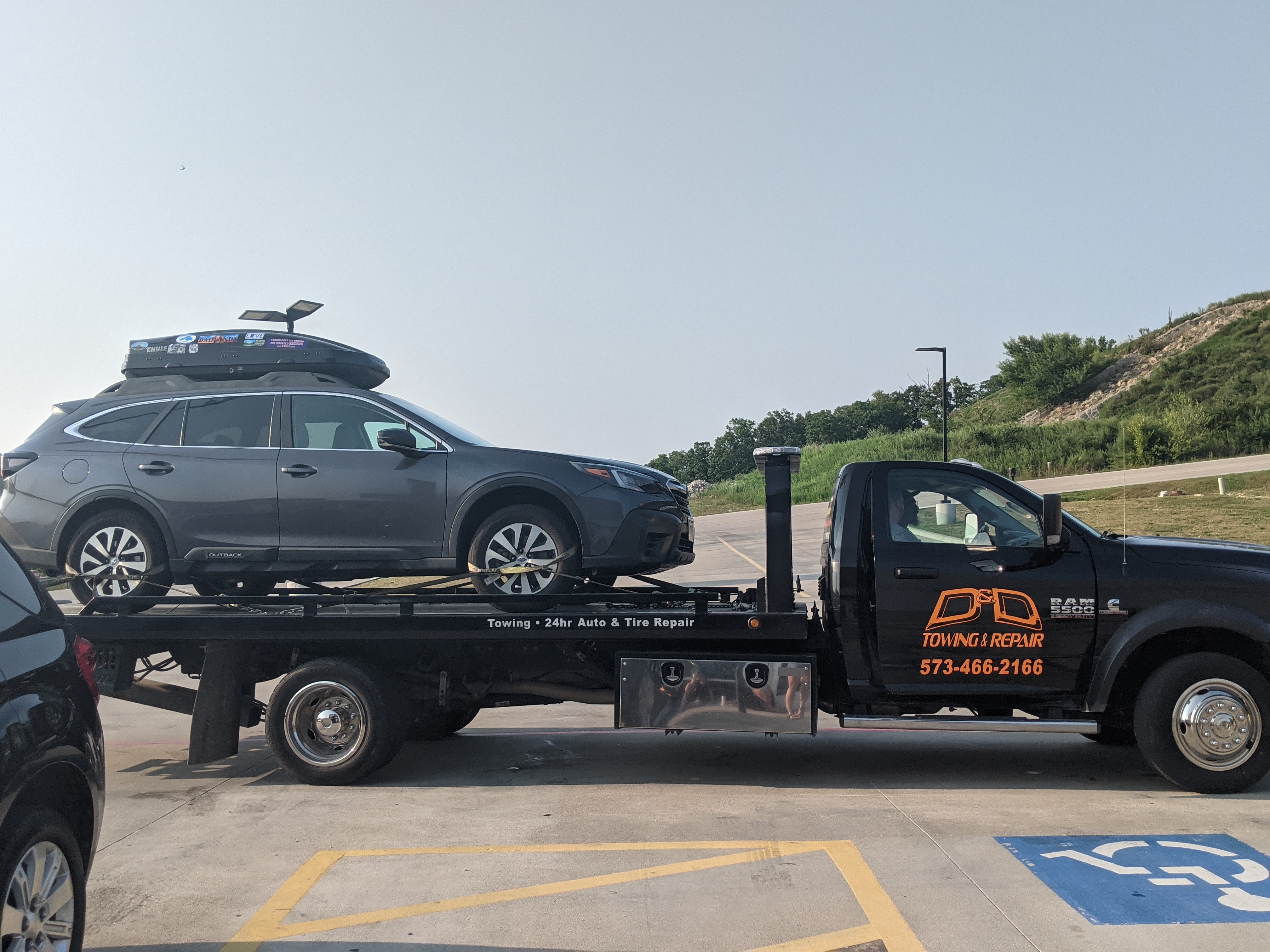
Eleven hours later, we arrived in a borrowed Jeep, with slightly dampened spirits, and in possession of only some of our belongings. The truckster (a 2020 Subaru Outback with just over 20,000 miles on it) decided it would rather make only half the journey and died a spectacular death on the interstate.

Right now it kind of feels like we left behind a big pile of poop. At least it’s still under warranty.

Fortunately, we did make it to the side of the road in a relatively wide-open spot where we could escape the shoulder over a grassy divide to a frontage road sporting a run-down motel that a very kind state trooper who soon stopped to help us called “not a nice place.”

After an hour or so of fighting the world’s most complicated phone tree to talk to someone with our insurance company at 5:00 on a Saturday, and calling on the kindness of some amazing family reinforcements who quickly volunteered to come to our rescue, we unstrapped our bikes and headed a couple miles down the frontage road to a safer part of the town whose last exit we’d just passed.

The truckster, minus a functional transmission and plus our luggage, got towed to the nearest Subaru dealership. That is at least located in the direction we were going, though is also an hour further from where we actually live.

Meanwhile, we played cards on the parking lot sidewalk of a gas station convenience store surrounded by our bikes and enjoying a dinner of the finest gas station convenience store food we could find, until my sister arrived with her Jeep complete with trailer hitch so we could transport our bicycles. Our nephew also came, so that he could transport her back to our house so she could take the car our oldest son normally drives back home for the week.

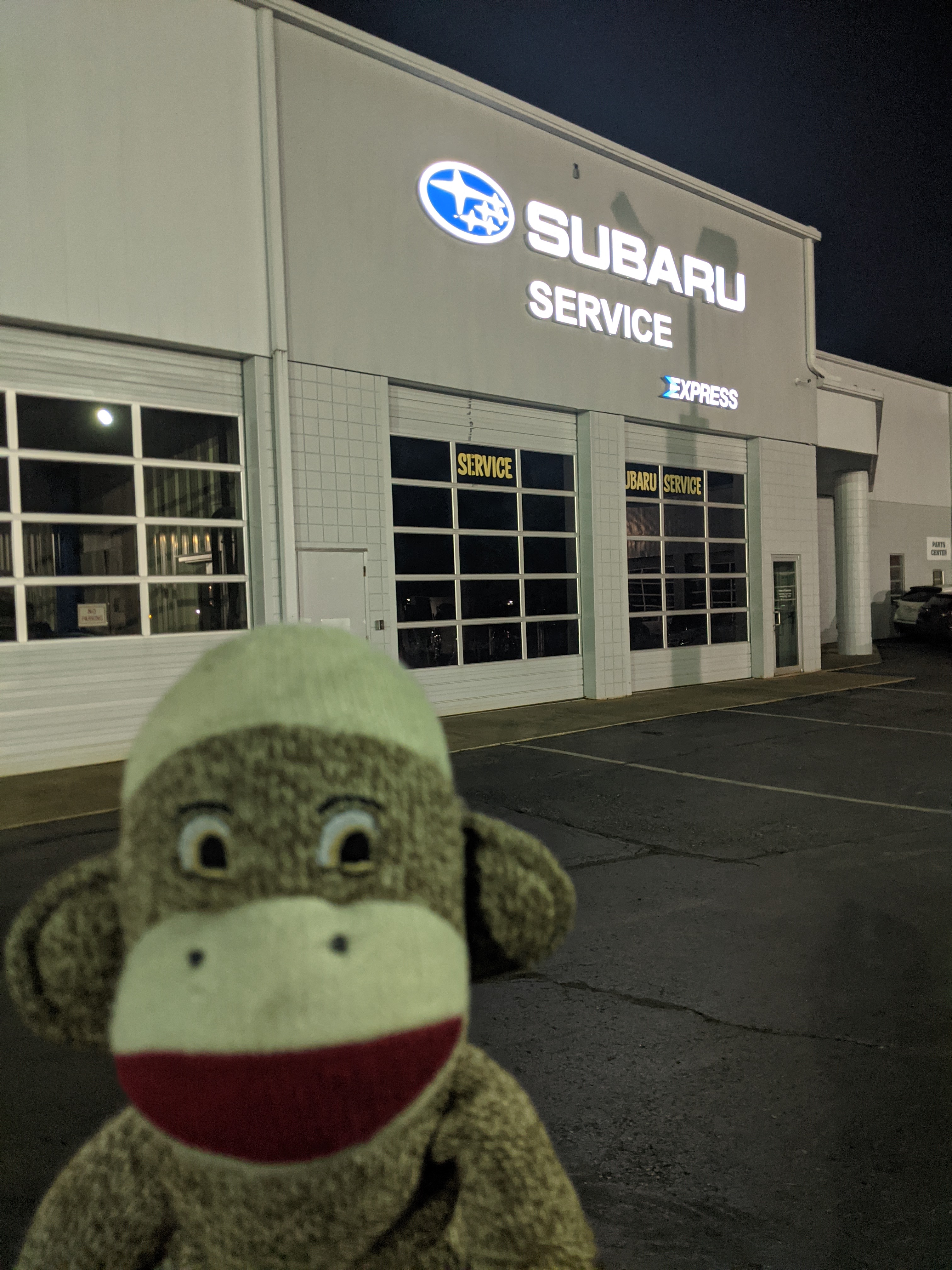
Next, we headed to the Subaru dealership, explained to a suspicious night security guard that we just wanted our suitcases, and rescued what we could. The Jeep held a lot, and with a second trip to the truckster the next day, we got most of our stuff transported to the cabin, where we strategized through the week how to get everything back home again.

Don’t worry. We didn’t have to leave our travel buddy Steve behind.

Of course, we didn’t. The laundry basket of household stuff broke in the process and so we disposed of it and we didn’t need to bring any food back with us, so a lot of little things could fit inside the empty ice chest. We threw away what we had to, left the household supplies that might be useful to future renters, and signed the guestbook: “We came in peace for all mankind.” The hubbs then pieced together the rest in the back of the Jeep, playing his finest game yet of what we like to call “Car Jenga.”  

Despite the ridiculous start and slightly cramped end, our vacation really was a lot of fun, and our left-behind hand soap, paper plates, and Clorox wipes were a pretty good trade-off for the memories made. We are definitely going to want the car back eventually, though. So far, we’re hopeful we might be able to retrieve it by the end of next week.

It’s now been fifty-two years and mankind has not yet retrieved most of its left-behind stuff from the moon. Frankly, no one misses the golf balls. They seem a pretty good trade-off for a pile of moonrocks and memories of an out-of-this-world trip. But with all the bacteria that has been exposed for decades to the environment of the moon, there are some scientists who are eager to get their hands on the poop. Personally, I think I’d just be happy with the rocks.

The Greatest Travel Monkey Ever

It’s finally here—that wonderful time of year when my family’s crazy, busy, fun summer days wind down and my kids head back to school. My sons are in high school and middle school now, so we’ve done this a few times, but this year, of course, has been different.

Really, it just snuck up on me, because it’s been a strange summer. For one thing, the boys have been at home since early March. Also, there haven’t been a lot of traditional summer activities. Camps were cancelled, family get-togethers went digital, and time with friends slowed to a trickle. There wasn’t any baseball for most of the summer, and now that there finally is, it’s weird and a little uncomfortable to watch.

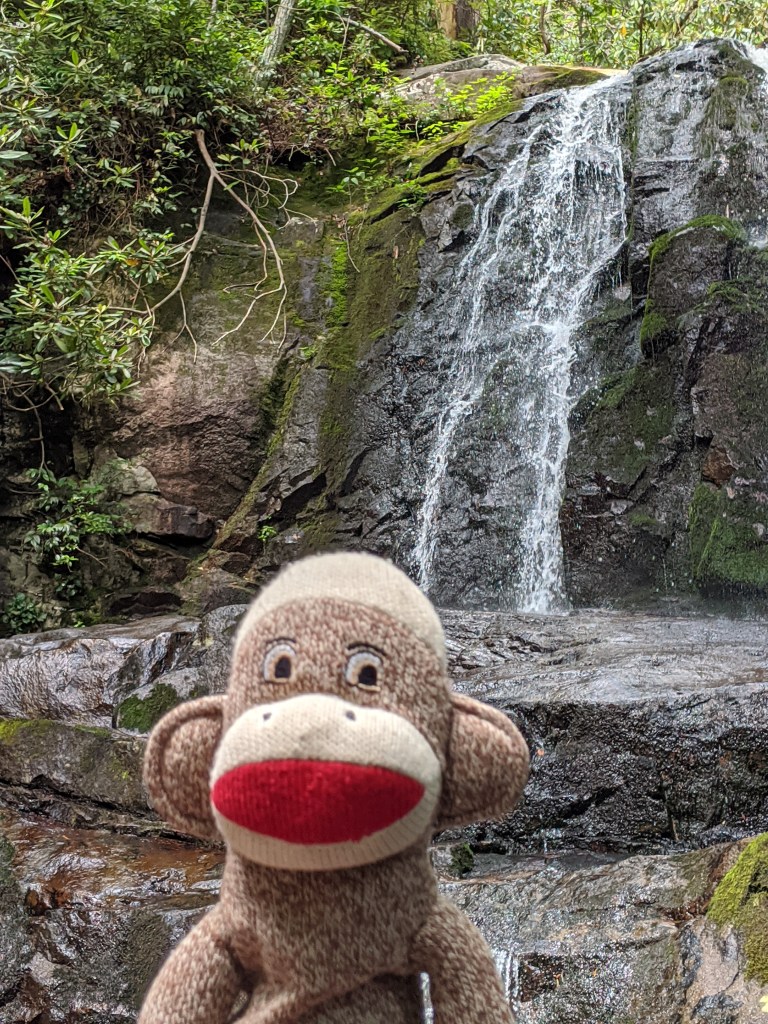
Steve chased a lot of waterfalls in Smoky Mountain National Park.

Even our long-planned family vacation had to get indefinitely postponed. But thankfully we did get the opportunity a few weeks ago to take a smaller trip together. We rented a fairly isolated cabin in the Smoky Mountains of Tennessee, which isn’t a terrible drive for us, loaded up the family truckster, grabbed our travel mascot Steve the Sock Monkey, and away we went.

We had several good days of hiking and playing in chilly mountain streams. We did our own cooking, played games, and spent good family time together, because, you know, we’ve had so little time to spend stuck together as a family lately. So yes, it was pretty much like our routine at home, except with more mountains and a greater threat of bear encounters. It was a nice getaway.

After a few days of mountain exploration, we dropped down to Huntsville, Alabama to see the US Space & Rocket Center, which none of us had visited before. At the museum you can get up close and personal with the Saturn V rocket, walk through a replica of the International Space Station, and take small steps and giant leaps across a fake moon surface, pretending you are in league with Stanley Kubrick and the mass hallucination of 400,000 of the most rock solid conspirators in the history of the universe. The museum is well worth a visit, and at limited pre-ticketed capacity, felt very safe and spacious.

After exploring a replica of the International Space Station, Steve is ready to volunteer to become the first US sock monkey in space.

We all had our favorite parts, even Steve. If you’ve followed this blog for a long time, you may have encountered Steve before. He got his start as a family travel mascot when the boys were small, and my husband and I left them with grandparents to enjoy a trip to Hawaii without them. We posted pictures of Steve’s Hawaiian Adventure for Grandma to share with the boys each day we were gone.

The monkey was a hit, not just with the boys, but with our friends and family tuning in on Facebook. Since then he’s been all over the place, telling the stories of our adventures, both when we travel separately and when we all travel together. He’s been to every corner of the continental United States and has left the country a few times.

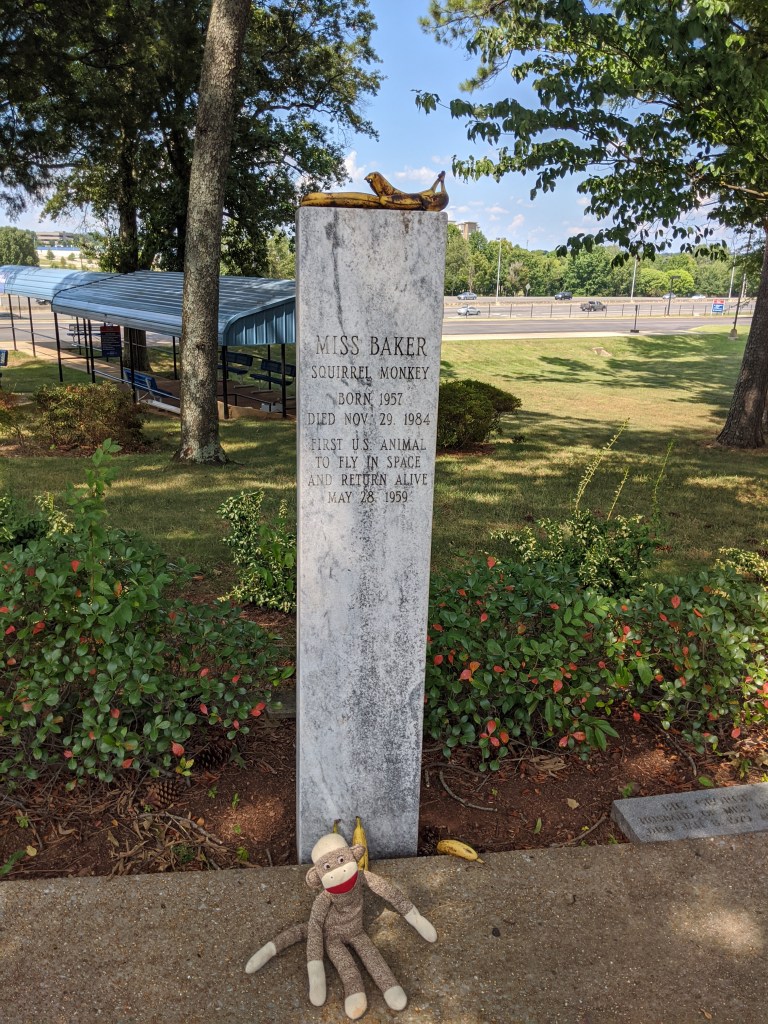
But he’s never made it to space, and unbeknownst to us, this had apparently been bothering him a little. So on this trip to Huntsville, Steve was really excited to learn about the greatest travel monkey ever, Miss Baker.  

I’m pretty sure Steve just wants the fame and glory.

Baker was a squirrel monkey who, along with Rhesus partner Able, became the first US animal to successfully launch into space and return unharmed to the earth. Chosen from among twenty-five squirrel monkey candidates for her ability to remain pretty chill while confined to a small space connected to a bunch of electrodes, and because she looked really good in a tiny space helmet, Miss Baker went to space on May 28, 1959.  

When she landed, the slightly bewildered squirrel monkey was given a cracker and a banana before she took a well deserved nap. Then it was on to Washington DC for a press conference and fame. Along with Able, who sadly passed away a few days later during a surgical procedure to remove electrodes, Baker posed for the cover of Life magazine. Always gracious, she later received a Certificate of Merit for distinguished service from the ASPCA.

Steve didn’t know he was supposed to bring a banana. Next time he’ll be prepared.

After her big trip into space, she lived for about ten years at the Naval Aerospace Medical Center in Pensacola, Florida where she met and married her long time companion Big George. The happy couple moved to the US Space & Rocket Center in Huntsville, Alabama in 1971, where Baker delighted scores of fieldtripping school children until 1984 when she died a very old squirrel monkey.

Today she rests on the grounds of the museum that was her home. Steve got to pay his respects to his hero, where admirers often leave a banana or two as a thank you for her service.

Steve does realize that as well traveled as he is, he’s unlikely to make it into space. But as he spends a lot of his time stuffed into a backpack, he’s pretty chill about small spaces. He also loves smiling for the camera. And he would definitely rock a tiny space helmet. Who knows? It’s been a strange year.