Don’t Call it a Comeback

Hello blogosphere! I know it’s been a hot minute since I appeared in this space. It turned out I needed the break. I also have had less time to write as I spent the last school year working full-time at a middle school where I learned to use phrases like “it’s been a hot minute.” I had a great year and would happily return for another, but life is shifting again, as it does. 

For well over a year now, my husband has been dealing with a long commute for a job that he loves. With our youngest son’s graduation from high school this spring, we’ve been looking to escape the bustling suburb that has been our home for more than a decade, searching for more land, a smaller house, and a shorter drive.

I’m pleased to report that we found all three, but as his route to work is shortening, mine is lengthening too much for my position to be practical. And that’s okay, because now, in between renovation projects on our new kind of weird house that sits on the pretty much perfect land, I can spend more time writing again.

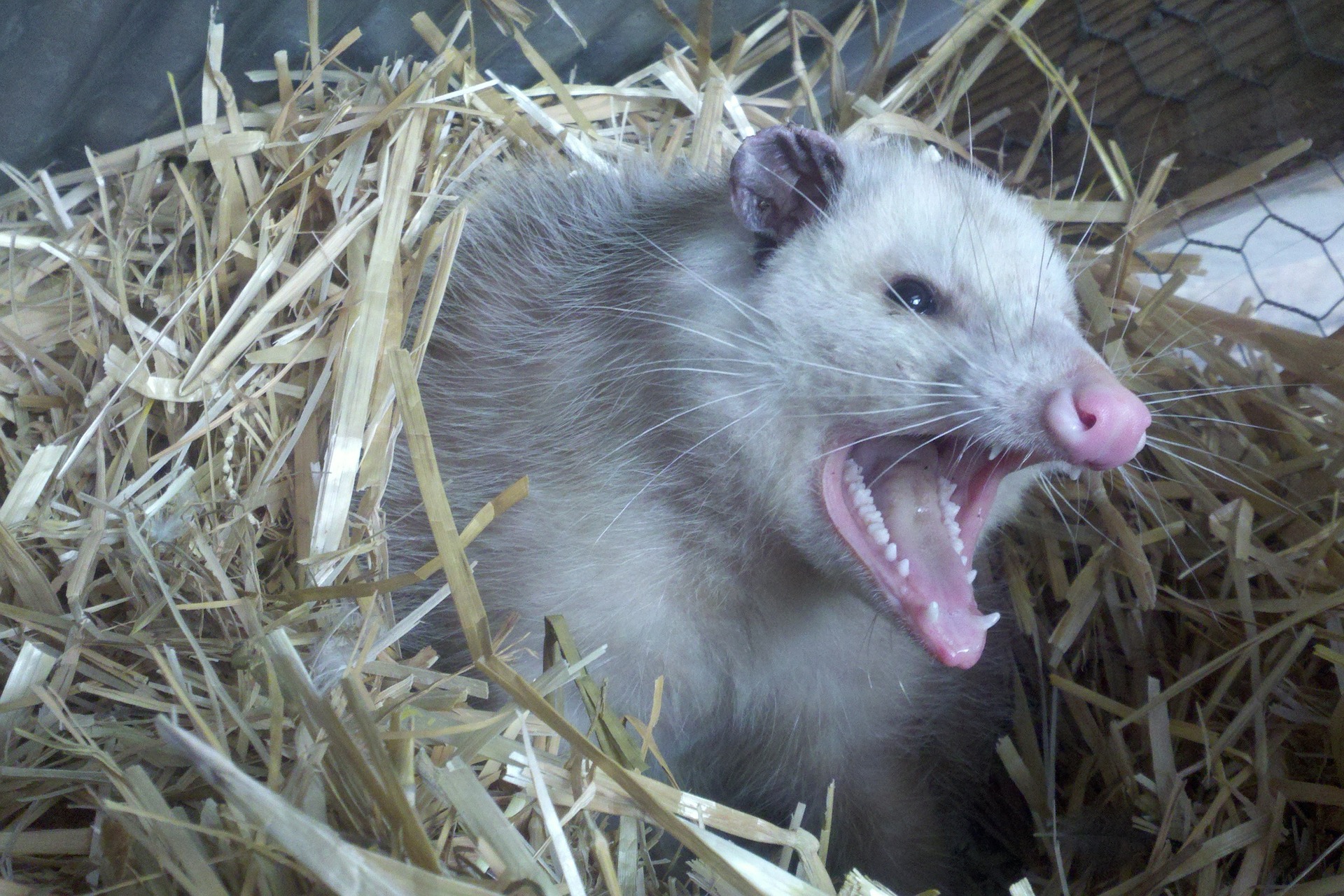
Because when I see a majestic creature like this, the first thing I think is that it sure would look good in a hat. Minette Layne from Seattle, Washington, USA, CC BY 2.0 https://creativecommons.org/licenses/by/2.0, via Wikimedia Commons

I’m excited to be back. I’ve missed this sharing of vaguely historical and occasionally hysterical tidbits, kind of like one misses the hottest trends of their childhood. I’m seriously at least as excited as I would be if celebrities suddenly started wearing acid wash jeans again, we all decided to walk like an Egyptian, or whales donned dead salmon hats

Okay, so you may not have been entirely hip to Orca culture of the late 1980s like I have recently pretended to be, but yes, apparently, there was a brief window of time in 1987 when trendy killer whales, particularly those who frequented the Puget Sound, placed jaunty dead fish on their enormous heads.

Why they did this researchers aren’t sure, but then acid wash jeans didn’t make a lot of sense either. Some suggest it was a clever way to save some food for later during times of abundance. Orcas have been known to swim with large chunks of food tucked under a fin, a mode of transportation that isn’t terribly practical for a relatively small fish like a salmon. That fits much better as a hat. 

Or it could just be a playful fashion statement that this year has seen a little bit of a comeback. It’s definitely not as wide-spread as it was in 1987, but then I suppose the retro look isn’t for everyone. 

In case you want to dress like a fashionable Orca, Amazon has you covered.

Still, there have been a few instances over the past several months of Orcas once again sporting dead fish hats, enough to get some in the whale fashion industry to declare it a hot trend of the season, similar to the boat rudder disabling challenge that cropped up a couple years ago or the orca kelp massage fad surging right now, that is surely the result of a whale lifestyle influencer.

And why not bring back a little bit of fun, like a silly hat in a great big briny sea, or one more hopefully amusing, poorly researched, sort-of history blog written by a real human being drifting in a metaphorical sea of the artificially intelligent web.

I mean, I’m not walking like an Egyptian, but I am pretty excited to be back.

At Some Point I’ll Be Back to Title This Post

In 1880, led by then University President Charles W. Eliot, Harvard began a program of granting sabbatical to its professors. A concept derived from Old Testament Biblical tradition, this year of rest from the demands of teaching would include half the normal salary and could only take place once every seven years. 

Not how I’ve been spending my time. But wouldn’t it be lovely? Image by Lukas from Pixabay

Though Harvard was the first to apply the concept, several universities followed suit over the course of the next few years. Today, of course, the sabbatical is a common occurrence in university settings, but it is also surging in the corporate world, where more and more companies are recognizing productivity benefits in allowing their high level employees to take a little time to switch directions and clear their minds a bit.

I’m a big fan of taking a minute, and have from time to time found in my own creative journey, the need to do so. Sometimes when the creative juices are less willing to flow, a walk or a day spent in some other kind of work, has often been helpful to get them going again. But the notion of a full year away has always been a lot to imagine.

It turns out that even though corporate sabbaticals are beginning to become more common, a good percentage  still begin with unplanned events, like an unexpected  health challenge or family emergency. I can’t claim either was the impetus for the sabbatical I have recently found myself on.

Also not how I’ve been spending my time But it probably should be. Image by Pexels from Pixabay

I’m sure that those of you who follow this blog very closely have noticed that I haven’t posted in quite a while. I apologize for disappearing without explanation, but I honestly didn’t realize how much I needed to step away. 

Many of you know that this school year I took on a full-time position for the first time since my children were born, the youngest of whom is a high school senior. I knew that in doing so, I would be limiting the time I could spend writing. I just didn’t know how much I would benefit from that. I also didn’t know that it would extend to the blog. 

I do sometimes miss writing, but for the moment, I’m happy putting my creative energy elsewhere, and I’m hopeful that when I return it will be with renewed enthusiasm. There is a book simmering away on the backburner, perhaps growing thicker and richer for the neglect. There are jotted notes about potential future blog posts and essays and short stories, their flavors melding in the back of the fridge. And though I have thought up several excellent mixed metaphors, there remain exactly zero poems on the horizon.

This break has not been a resignation nor a retirement. I’ve come to think of it as a necessary sabbatical. I’m not sure precisely when yet, but I’ll be back.

One Wicked Omission

A few weeks ago in this space, I posted a piece about Taylor Swift and the history of public education in the United States. Except that apparently I didn’t. A few hours after the post went live, I received a text from one of my aunts saying, “Am I the first to point out a spelling error?…”

She was the first, and the error was unfortunate because instead of typing public education, I had accidentally left out a very important letter l. Fortunately, I was able to fix it quickly and if any of the rest of you noticed, you were gracious enough to cut me some slack.

Whales. Image by M W from Pixabay

I try to be a meticulous editor, but anyone who has followed this blog for very long has probably spotted the occasional error that gets through. Often either the hubs or my eagle-eyed mother will discover them and point out the mistakes spell check won’t catch. One time a reader I don’t know personally was kind enough to politely point out that the country of Wales is spelled differently than the marine mammal with a similar name.

You’ve all been very kind over the years, and as far as I know none of my silly typos have led to any controversy. Royal printers Robert Barker and Martin Lucas were not so fortunate. In 1632, they stood trial in the court of King Charles I for a mistake that made its way into their 1631 re-printing of the King James Bible. The mistake occurred in Exodus 20:14, which should read: “Thou shalt not commit adultery.” The problem was that this printing omitted the word not.

Barker and Lucas had to answer for the slip-up to the tune of £300. That’s roughly £56,000 today, or about 75,000 US Dollars, which is a pretty steep price to pay for three little letters. To make matters worse, the gentlemen lost their publishing license.

But think about how many words they got right! Image by Pexels from Pixabay

While nearly all of the one thousand misprinted Bibles were confiscated and destroyed before they had a chance to tear apart too many families, at least fifteen copies still exist today—seven in England, seven in the United States, and one in New Zealand.

A British rare book dealer named Henry Stevens obtained one of the copies in 1855 and called it the Wicked Bible, a name that has pretty much stuck since then. In the last decade, copies have changed hands for somewhere around $50,000, which means that if the descendants of Robert Barker and Martin Lucas still had a copy, they’d need to wait a few years yet to come out ahead.

I doubt any of my typos would fetch that kind of bling, and so my promise to you, dear reader is that I will continue to do my best to catch all the irritating little typos on this blog. I can assure you that if I ever suggest adultery as a good life choice, then you can assume it’s a terrible mistake.

I do feel for Barker and Lucas, though. It may be true that none of the errors that have occasionally popped up in my little corner of the blogosphere have been so grievous or costly. Still, I’m certainly aware that no matter how cautious an editor one may be, it can be a big risk to put your words out there in a pubic space.

Eggs, Months, Disciples, and Blog Years

Earlier this week I received a congratulatory notice from WordPress that I had been at this blogging thing for twelve years, which feels like a pretty significant milestone. As I reflected back on the winding road of ridiculousness that this space has taken over the years, I recalled that not many months into the adventure I wrote about another significant anniversary in my life when my husband and I celebrated twelve years of marriage.

Good things come in twelves. Image by Jean Christophe Baux from Pixabay

In that post, I lamented that between kids’ schedules, work schedules, and the generally tiring pace of life, we put off actually celebrating. We were in a busy time of life then, and twelve years, I suggested, didn’t really feel like a special number. Then I argued that it really should.

So, twelve years after I posted for the first time in this space, a few months before my husband and I will celebrate twenty-four years of marriage, I’m revisiting the case for year number twelve, bloggiversary style.

Because great things come in twelves, things like eggs, months, and disciples, hours on the analog clock, signs of the zodiac, tribes of Israel, drummers drumming, and years of the Practical Historian blog: your guide to practically true history. We regularly bake cookies, cupcakes, and muffins in multiples of twelve, and twelve even has its own special nickname, placing it on par with other rock star numbers like 3.14… and 6.02 x 10²³.

Image by profivideos from Pixabay

The word dozen comes from the French douzaine, which is a derivation of douze, the Latin word for twelve with a collective suffix tacked onto the end. Of course it’s perfectly possible to tack the same suffix onto the end of other numbers and get, for example, quinzaine (a group of fifteen) or centaine (a group of one hundred), but at least in English, we typically don’t.

Because twelve is particularly special.

Speaking mathematically (and if one feels so compelled) there’s a pretty good argument for counting in a base twelve system, rather than the base ten system in which we normally operate. We do it already when we tell time, measure in inches, or order a gross of cocktail umbrellas. In the field of finance where calendar months are often an important part of the calculation a duodecimal or dozenal system (that’s what math nerds who actually do feel compelled to argue about this kind of thing call base twelve) could make sense.

And if we think in terms of factors, which are the kind of things math nerds really geek out about, Twelve is a lot more versatile than ten. Ten factors to 2 x 5, whereas twelve factors to 6 x 2, 4 x 3, and 2 x 2 x 3.

So, thank you WordPress for the heads up, because twelve really is a thing worth celebrating:

6 posts about aliens x 2 Gravitar photo updates = 4 novel launches x 3 posts about vampires = 3 anti-censorship soapboxes x 2 summer blog breaks when my kids were young x 2 more posts about my dog than any history blog has a right to post = 12 years of spilling history and nonsense into this little corner of the blogosphere.

Here’s to another twelve years. And maybe another twelve years after that. I might even suggest that I’ll still be at this twelve times twelve years from now. But that would just be gross.

Thanks for coming along for the ride!

Meet Me at the Fair

On November 22, 1944 after schedule delays, numerous script rewrites, budget woes, and a leading lady still unhappy with her role, a new Christmas musical debuted on the big screen in St. Louis, the city at the film’s heart. 

The song “Meet Me in St. Louis,” well known today because of the musical, is actually from 1904 and was written specifically for the World’s Fair. Public Domain, via Wikimedia Commons

Despite the mess of getting to that moment, Meet Me in St. Louis enjoyed immediate success, becoming Metro-Goldwyn-Mayer’s second highest grossing film up to that point, coming in only behind Gone With the Wind. After the premiere, Judy Garland even decided she liked it after all and commented to the producer, “Remind me not to tell you what kinds of pictures to make.”

The screenplay is based on a series of semi-autobiographical short stories by St. Louis native Sally Benson who wrote of an upper middle-class family that lived at 5135 Kensington Avenue during the construction of the 1904 World’s Fair on the grounds of Forest Park in St. Louis.

I confess, I saw the movie for the first time later in life than I should have, having grown up within easy reach of St. Louis. My childhood summers included trips to downtown to watch the Cardinals play at Busch Stadium where the musical’s title song is still played by the organist at every game and the crowd sings along as the words scroll across the jumbotron. 

I’ve been many times to the wonderful outdoor Muny theater in Forest Park where the stage adaptation of Meet Me in St. Louis, originally produced in 1989, is performed every few years. I even got engaged in that park on the very grounds of the actual 1904 World’s Fair.

I was lucky enough to get a sneak peek at the new exhibit, open to the public on April 27th. It contains a scale model of the entire fairgrounds. And it’s spectacular.

Officially known as the Louisiana Purchase Exposition, the Fair is a big deal in St. Louis history. It transformed the city, launching it for about seven months into the center of the world’s attention. 

And it’s still a big deal, today. One-hundred and twenty years later the World’s Fair looms large in the community memory carried now by not a single living person who was there to see it, sparking excitement whenever it comes up in conversation, which is kind of weirdly a lot.

It’s especially on everyone’s minds right now because at the end of this month, just in time to celebrate the 120th anniversary of the opening of the Fair, the Missouri History Museum will reveal a newly re-imagined permanent World’s Fair exhibit. 

Equally exciting for everyone who either lives in my house or happens to be my mother, is the release of my new historical mystery set on the grounds of the 1904 World’s Fair in St. Louis. 

Paradise on the Pike is available for the first time today. The story takes place in the enchanting world of Hagenbeck’s Zoological Paradise and Trained Animal Circus on the Pike, which is the entertainment strip within the Fair. It’s not a light, sentimental sort of story like Sally Benson’s, but it does contain elephants and lions and a pair of cantankerous goats. It also allowed me, and will hopefully allow you, to spend some time strolling through the Fair, which was almost entirely constructed of temporary buildings meant to disappear.

Available today! Order from your favorite independent bookstore or slightly bigger bookstore or Amazon.

And maybe that’s why, one hundred and twenty years later, it still takes up space in our imaginations, because we’re a little like six-year-old Tootie at the end of Benson’s stories when the family marvels over the lights and fountains on the fairgrounds and her sister Agnes asks if it’ll ever be torn down.

Tootie emphatically replies, “They’ll never tear it down. It will be like this forever.”

Agnes, relieved, exclaims, “I can’t believe it. Right here where we live. Right here in St. Louis.”

Forest Park retains very few physical reminders of the enormous event that once filled its every corner and held the attention of the world, but in the hearts of the St. Louisans who stroll through the grounds and wish they could have seen those lights shining, it will never be torn down. It’ll be like this forever.

You can find more information about Paradise on the Pike at this link.

Malapropos of Nothing

I admit to being a little bit of a language snob. Of course I recognize that language evolves and a misspoken word today may be perfectly acceptable tomorrow, at least for some, but know that if you use a malapropism, I’ll probably judge you.

In case you are unfamiliar with the word malapropism, in lame man’s terms, it’s the mistaken replacement of a word with another that sounds similar. The term, derived from the French mal à propos, meaning inappropriate, got picked up in the English language because of playwright Richard Brinsely Sheridan. In his 1775 play The Rivals, a character named Mrs. Malaprop is notorious for muddling up her words. 

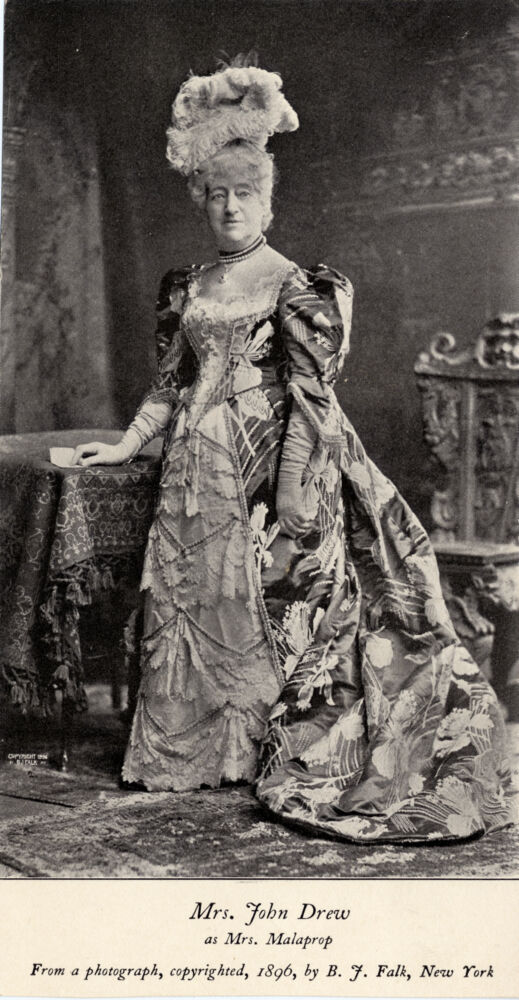
One version of Mrs. Malaprop looking “as headstrong as an allegory on the banks of the Nile,” which is one of her delightful lines. University of Illinois Urbana-Champaign University Library, Public domain, via Wikimedia Commons

That’s not to say that Sheridan was the only, or even the first, writer to make use of such a character trait, but I suppose that’s a moo point. For all intensive purposes, that’s when the concept entered the English language where it’s been driving language snobs like me bonkers ever since.

I’ve been thinking about malapropisms a lot lately because the publication date of Paradise on the Pike, my new historical novel set in the 1904 World’s Fair in St. Louis, is drawing near and I have discovered that not everyone is familiar with the word “pike.” 

If you happen to live in one of the handful of US states that contain a turnpike, you might be able to puzzle out that “turnpike” is another word for toll road and that “pike” is another word for a road. You might even be familiar with the phrase “coming down the pike,” meaning something is going to happen in the future. For example, I have a new novel coming down the pike. 

If you don’t happen to live near a turnpike, then you might mistakenly believe the phrase is “coming down the pipe,” in which case, I’m probably judging you. 

But this particular malapropism does make some logical sense because there is another phrase “in the pipeline” that also refers to something that is going to happen soon. I could, for example, tell you that I have a new novel in the pipeline. Conflating the two seems like a fairly innocuous mistake.

And of course you can go ahead and say whatever you like. It’s a doggy dog world and I don’t always get my way even if I do think malapropisms ought to be nipped in the butt whenever possible. Really, I could care less. Except that the expression, “coming down the pike,” may actually have its roots in the 1904 World’s Fair in St. Louis in which a mile long stretch of road along the north side of the fairgrounds that formed the main entertainment section of the fair was referred to as “the Pike.”

A new historical mystery coming down the pike on April 18, 2024.

The Pike contained all manner of concessions including battle reenactments, rides, a wax museum, fashion demonstrations, mock-ups of exotic locales, dancers, musicians, and animal shows. It was also the site of daily parades, leading to much excitement as people crowded around to catch a glimpse of what wondrous things might be coming down the Pike.

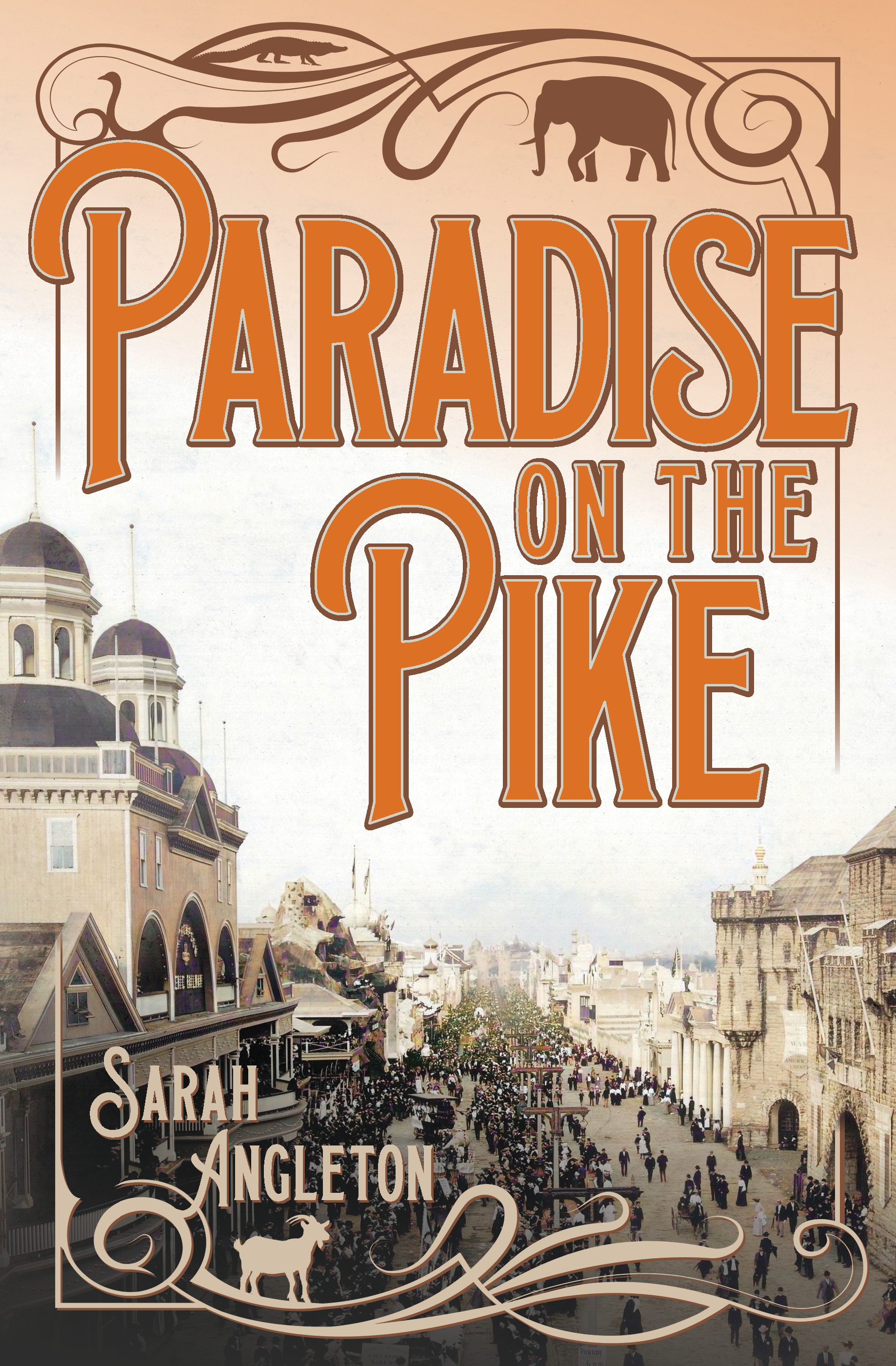
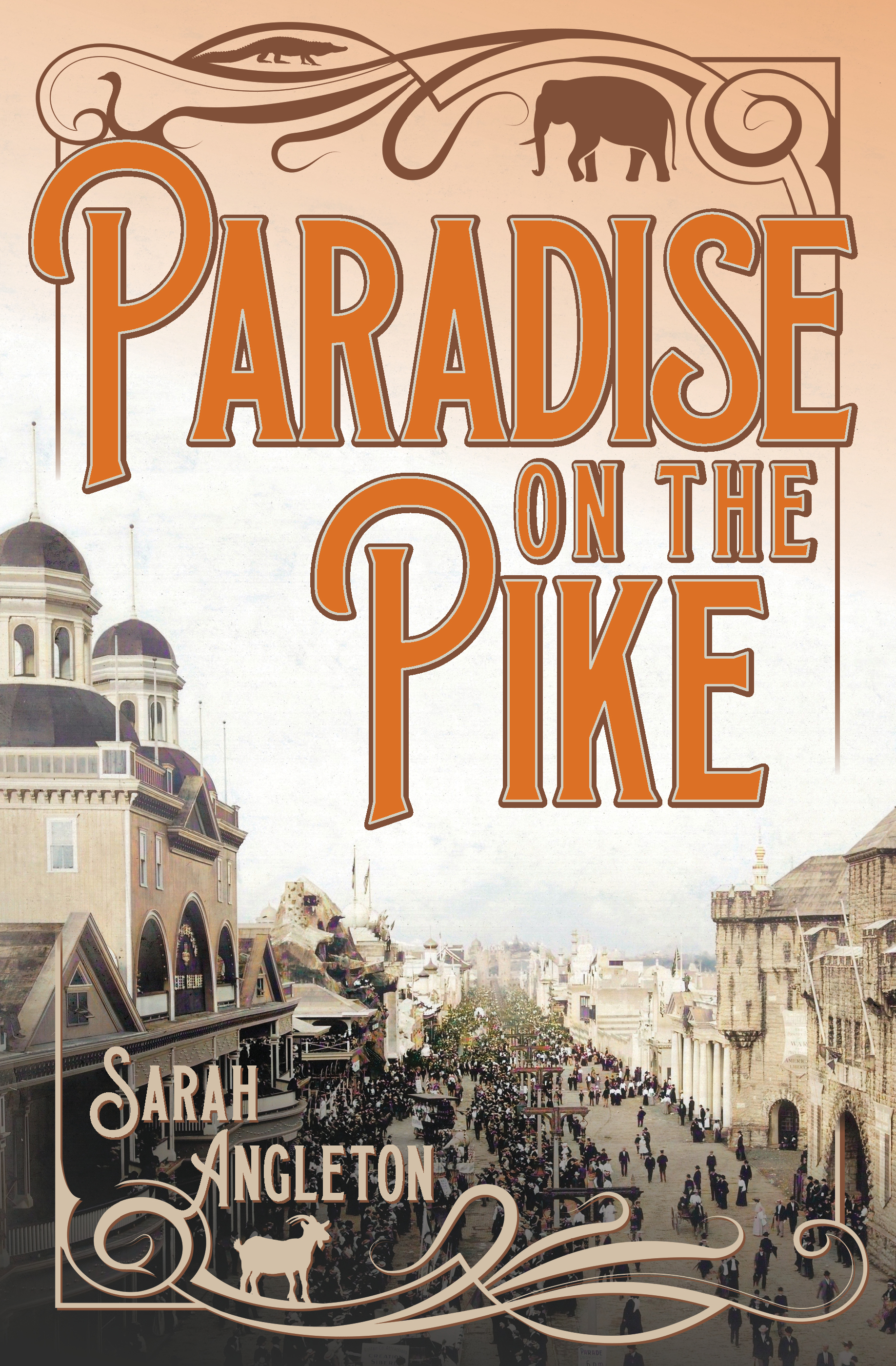
And so, the cover of my newest novel in the pipeline that will be coming down the pike on the 18th of April, just in time to celebrate the 120th anniversary of the 1904 World’s Fair, features a picture looking down the historical Pike. I hope you’ll forgive me for stringing out the cover reveal and keeping you on tender hooks for a few weeks. I also hope you’ll really enjoy the book when it’s finally here. And in the meantime, language snobbery aside, I hope you’ll love the book by its cover.

Challenge Accepted

There’s a rumor running around out there on the Internet where, as everyone knows, all things are true, that William Shakespeare invented more than 1,700 words of the English language. If one considers that the Modern English of Shakespeare’s day was a fairly young language, then it makes sense that new words might have been developing pretty fast. And if you’ve ever met a writer, and particularly a poet, then you’ve probably noticed that they do occasionally invent new words or more likely, new uses of old ones. There’s no question Shakespeare did his fair share of that.

Challenge accepted.

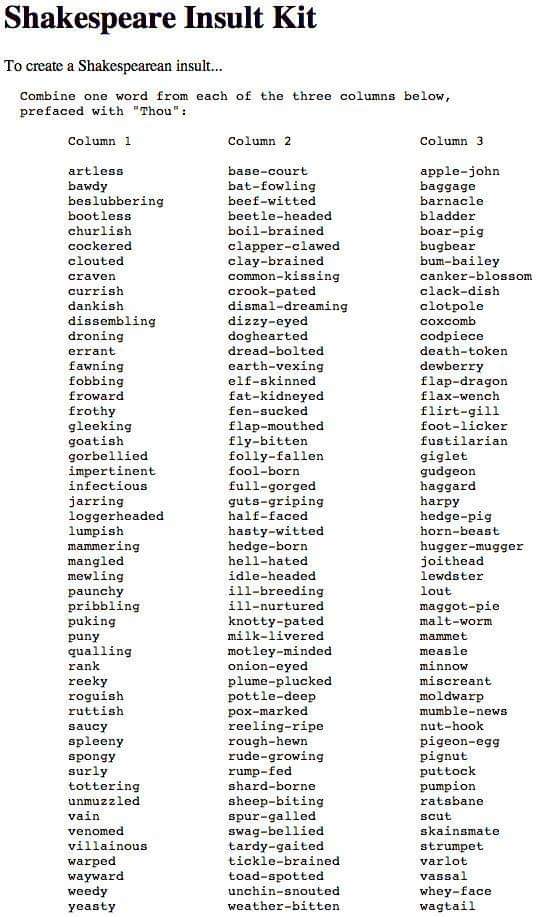
Also roaming around on the Internet lately is a fun challenge in which three columns of insulting Shakespearean words can be combined to come up with a single devastating slight to use in your next piece of writing. Most recently posted by The Writer’s Circle, this was issued as a challenge to me by a friend who knows I’m a writer who likes a good challenge as much as a like a good old timey insult.

Of course I’m only assuming these columns of words show up somewhere among the nearly 29,000 unique words spread across Shakespeare’s forty three surviving works. There are no citations, and I’m not going to take the time to search for them, because regardless of their origin, they make up some pretty fantastic insults.

Still, it’s worth noting I think that if Shakespeare invented 1,700 new words, that means his works contained roughly 6% unique words that would have been entirely unfamiliar to his audience.

Now, because I enjoy a challenge, I certainly don’t mind reading a work that is going to make me pick up a dictionary once in a while, but if I have to look up 6% of the unique words I encounter, I’m going to find myself pretty quickly frustrated by the beslubbering hasty-witted joithead who wrote them.

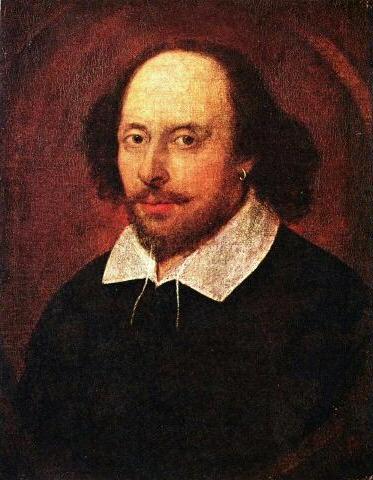
There’s no doubt in my mind that a brilliant insult is forming behind those eyes. Attributed to John Taylor, Public domain, via Wikimedia Commons

It’s worse than that, too, because the first English-language dictionary wasn’t put together until more than a century after the saucy doghearted coxcomb of a poet William Shakespeare produced his venerated works.

The Oxford English Dictionary, which provides the written origin of English words, wasn’t even attempted until the second half of the nineteenth century and wasn’t completed until 1928. This thanks to somewhere around three thousand contributors who meticulously hunted through centuries of English language works to determine that 1,700 words or so probably came from the mind of that one old English playwright/poet that everyone had actually heard of.

In other words, the editors and contributors of the OED, while dedicated and deserving of our respect and thanks, may have occasionally been loggerheaded tickle-brained foot-lickers when it came to Shakespeare. Arizona State University English professor Jonathan Hope has been particularly effective in pointing out that OED contributors had more access to and read more carefully from Shakespeare’s works than from those of other writers who now in the digital age, we can more easily discover used quite a few of The Bard’s newfangled words before he did.

Just eleven more weeks until the release of my new historical mystery! I can’t share the cover just yet, but this picture gives a hint about the book, which contains no Shakespearean insults and probably very few made up words.
Photo by Winfred C. Porter, Public domain, via Wikimedia Commons

I don’t think that discovery necessarily takes anything away from Shakespeare’s works or his influence on English literature and language. In reality, I think it makes him better, because he wasn’t asking his dictionary-deficient audience to puzzle out what he was trying to say. That joy he reserved for the mewling folly-fallen gudgeons in future high school classrooms.

To the audience of his day, and to those who care to notice today, what he did was use words well. And while he probably didn’t use most of the words in this handy kit in quite the same combinations I’ve attempted to use them in this post, there’s no question the man knew his way around an insult.

And now I challenge you to use one in the comments.

Creativity Plays Opossum

A few days ago, as I was driving through the City of St. Louis and scanning the local radio stations, my brain caught on a conversation about ChatGPT and dead opossums. If you have been paying much attention around the water cooler lately, you’ve probably heard about ChatGPT. It’s the AI app that will quickly compose an email for you or help you solve that tricky math problem. It can give you the illusion of companionship, tell you a joke, write an essay for your English class, and offer useful advice like that you probably shouldn’t cheat on your English essay.

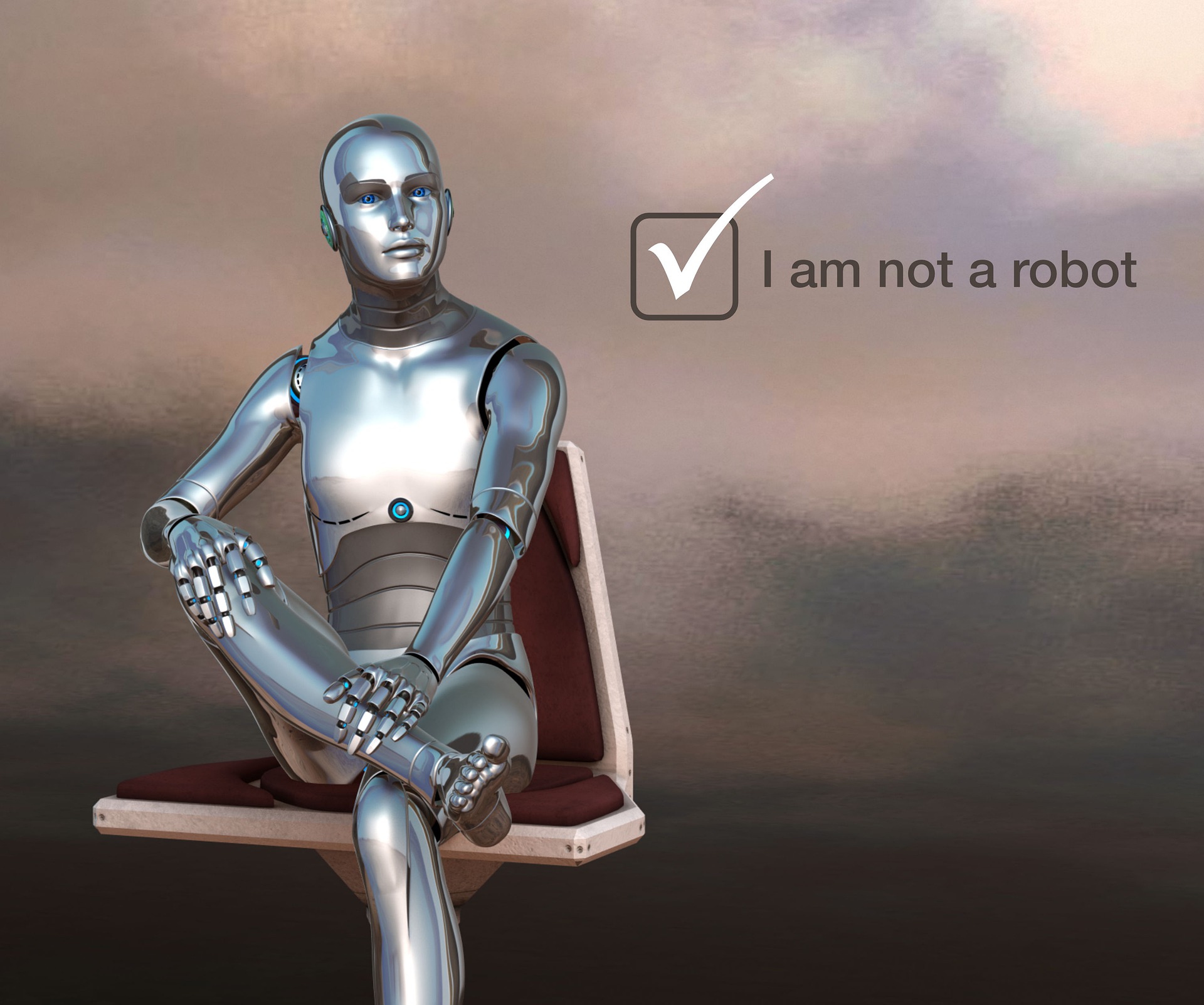
Which is, of course, exactly what I would say if I were a robot. Image by Janos Perian from Pixabay

I’m told it can even put together a blog post, but as the creative mind behind this blog has been artificially intelligent for years, I’m not sure there’d be much call for it in my little corner of the blogosphere. And yes, though I didn’t catch enough of the conversation to know why one might want this, ChatGPT can also compose lyrics for a song about dead opossums, or presumably also live opossums that are playing dead. It can even do it in a much shorter time period than your average folksinger, most of whom would likely never attempt to write one in the first place.

Personally, I’ve never used the app, and at this moment in time, I believe I never will, but it’s fascinating to listen to people talk about it. For most, it seems to be a bit like watching a horror movie. It’s super creepy and it makes your heart pound and your stomach hurt as your mind gnaws on the notion that human creativity appears as dead as an opossum. But on the other hand, it’s also kind of cheesy and entertaining and pairs well with popcorn.

There’s no doubt that AI is exploding onto the scene, but it’s been on the rise for years, beginning in the 1950s when computers were first able to store and retrieve data in addition to simply running through a program. The concept of artificial intelligence stretches back even further than that to at least 1872 to English writer Samuel Butler’s Erewhon.

This is kind of how I’m currently feeling about AI. Image by Roy Guisinger from Pixabay

The novel tells the tale of protagonist Higgs who discovers a hidden Utopia filled with people who are remarkably concerned about his pocket watch. It turns out that three hundred years before Higgs’s arrival, the Erewhonians gave up all technology, including pocket watches, for fear that it would evolve to eventually overcome the human race.  

At the time the novel was published, and for many years after, it was assumed to be a commentary on the evolutionary work of Charles Darwin. It probably was, but from the perspective of 2023, it might read a little more like an incredibly insightful horror novel that is difficult to get through because it was written in the 19th century and as a result probably seems sort of dull to most 21st century readers.

I bet it could be nicely modernized by ChatGPT if anyone wanted to give it a try. Throw in a nice song about dead opossums, and you might just have a great work on your hands.