The One to Watch

Last weekend I watched football. Kind of, anyway. My husband and I attended a Superbowl party, but while I enjoyed spending time with great friends and good snacks and I do appreciate clever commercials, I am not really a fan of the sport. And honestly, I’m a little sported out at the moment anyway.

Because though it seems not many of us have particularly noticed, the Winter Olympics are also occurring right now, amid a great deal of geopolitical strife in a world that feels like it might be on the verge of reshaping itself in some fashion.

The Games have been on in our house because, as I have mentioned before in this space, I am married to an Olympic junkie. I can support this habit. At least he is not an actual junkie, which may not be true for at least one of the figure skaters competing in the 2022 Games.
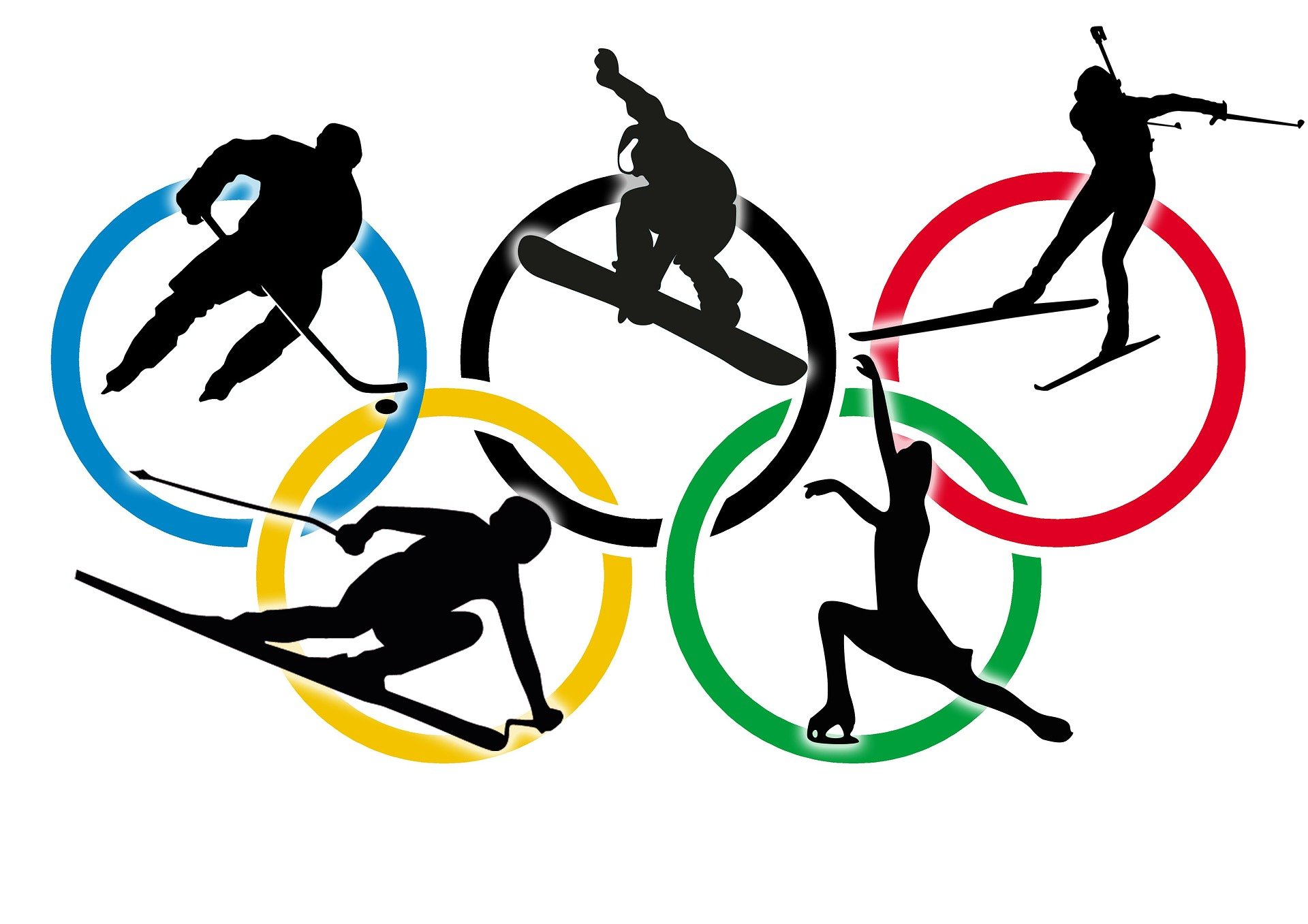
Curling probably should have at least made the graphic. Image courtesy of stux, via Pixabay.

So, we have been watching. A quick and highly scientific poll of my friends at the Superbowl party suggests most of the rest of you probably haven’t been. Well, maybe with the exception of the occasional curling match, because who can resist that? I guess.

Actually, it might surprise you (or not) that curling is not the most popular winter event, though does easily crack the top fifteen.* It’s a little difficult to know which sport will end up on top for the 2022 Olympics since they aren’t over yet and most surveys I found looked at subsections of the population in either the US or the world. Still, figure skating tops most lists, often followed by snowboarding.

Ski jumping has also been popular this year, against the vaguely post-apocalyptic industrial backdrop Beijing has chosen for it. Short-track speed skating also pulls in a crowd of spectators, unable to tear their eyes from a race that will likely see the disqualification of a good 75% of the competitors and at any moment might result in someone losing a finger.

Perhaps it is the danger factor that keeps the spectators on the edges of their cozy living room recliners, because pulling up more or less in fifth place on the list of popular winter sports to watch is luge.

Sandro Halank, Wikimedia Commons, CC BY-SA 4.0, CC BY-SA 4.0, via Wikimedia Commons

I will be the first to admit that outside of the Olympic Games, I have never in my life seen a luge competition, and I suspect I’m not alone in that. I have, however, watched it quite a bit during the 2022 Winter Games, most of it through the slits between my fingers. I don’t know about you, but to me luge seems like the kind of bad idea a bunch of friends might cook up one boring winter day at a resort in the Swiss Alps.

And that’s exactly how the sport traces its history, to a posh resort in the town of St. Moritz in Switzerland, where in the late 1800s, tourists, allegedly at the suggestion of hotelier Caspar Badrutt, started entertaining themselves by commandeering delivery sleds and racing at breakneck speeds through town.

It must have been great fun, because the idea quickly spread to other resort towns and spawned competitions which led to new sledding technologies, international organizations, icier tracks, and in 1964 to the Olympics. All because some bored tourists decided it might be an entertaining way to pass the time. 

Nope. Can’t watch. Image courtesy of Victoria_Borodinova, via Pixabay.

Some of those early competitors even decided to go headfirst to make the sport, if not faster, then at least more devastatingly dangerous. That’s how skeleton was born. It made its Olympic debut in 1928, was dropped and added again in 1948, then was dropped again and added back in 2002. This may be because skeleton was a bit too niche for the Olympics, or it could have been because anyone who ever watches it surely realizes that a mistake in the sport will most likely lead to a swift death or life-altering injury for the athlete.

I draw the line at watching skeleton. My heart can’t take it, even through the gaps between my fingers, but for the Olympic junkie I live with, every Olympic sport is the one to watch.

*There are currently fifteen distinct sports featured in the Winter Olympic Games.

Gold Medal Throw Down with a Monk

Olympic spirit has infected my home like a bad case of the flu. I like the Olympics. I’ve enjoyed watching US snowboarders own it, and the figure skating is quite lovely, but my case is pretty light. My husband, on the other hand, is somewhat delirious. The man is obsessed. If the Olympic Games came around more frequently than every two years, it would definitely be time to stage an intervention.

This same guy, who ordinarily couldn’t care less about the world stage of biathlon or wouldn’t devote a moment’s thought to the subtleties of bobsledding technique, has transformed into an expert on all things international sports.

curlers
Okay, it does look kind of fun. photo credit: Wyoming_Jackrabbit IMG_1787 via photopin (license)

Nowhere is his illness more apparent than in his newfound (and likely short lived) dedication to the sport of curling. If we can assume the DJ on my preferred morning radio station got her information from a reliable source and that I heard correctly (both pretty big assumptions), then curling is currently the third most popular winter Olympic sport amongst the American viewing public.

Why not? It’s got slippery ice and heavy rocks and some very enthusiastic sweeping, everything a sport needs I should think. It has the nail-biting moments of tension that beg for otherwise responsible sports enthusiasts to stay up late even though they have to be at work the next morning.

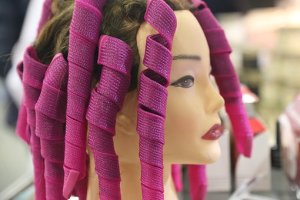
hair curlers
Prior to 1998, the only thing that came to mind for most of us when someone mentioned curling. Image courtesy of oga_red, via Pixabay

The sport is loud, too, sometimes called the “roaring game” because of the unique rumble of stone scraping against ice or possibly because of the crazy fanboy shouting coming from my living room.

Some of the interest in Olympic curling may simply be because it’s a relative newcomer to the Games, only included since 1998. Sort of. The sport actually made its Olympic debut with the first Winter Games in 1924, but was then downgraded to an exhibition sport because it lacked an international organization necessary to meet the requirements of the IOC.

Really, despite its recent emergence in the consciousness of Olympic fanatics, curling is an older sport than even its most dedicated historians (and yes, it has some) are willing to speculate. There’s disagreement about whether curling is originally Dutch or Scottish in origin, but the earliest written evidence of the sport, or something like it, comes from Scotland in the form of a legal record book from the 16th century covering the goings on of Paisley Abbey.

Scholars discovered the book in 1976 and quickly turned it over to be examined by curling historian David Smith, who is the kind of dedicated historian that might argue with you about the origin of the sport and would win because, let’s face it, you’d probably be out of your depth.

Pieter Bruegel Winter Landscape
One of the earliest instances of curling caught on canvas, Winter Landscape with Skaters and Bird Trap By Dutch painter Pieter Brueghel the Elder, 1565. Public Domain, via Wikimedia Commons

When Smith translated the passage of interest from Latin, he found that it described, ever so briefly, a practice run of Brother John Sclater who slid three stones to roar across the ice and felt fairly satisfied he was ready to meet the challenge he’d previously issued to Gavin Hamilton, the new lay governor of the Abbey.

Because the record of the anticipated match appears in Latin legalese, scholars point out that this most likely wasn’t a friendly contest. Rather it’s an example of how an angry 16th century monk issues a throw down. There’s no record of which man won, suggesting that the notary was rooting for the other guy.

I bet it broke his heart to see his favorite curler miss the mark. He’d probably stayed up late to watch the match, biting his nails as the stones roared against the ice and the competitors shouted and swept. He probably had to head to the office bright and early the next morning where he’d put in a full day filling books with Latin legalese. But he didn’t care because he’d caught the fever.