Stolen Olympic Dreams

In 1903, David R. Francis, former mayor of St. Louis, former governor of Missouri, former US Secretary of the Interior, and then president of the Louisiana Purchase Exposition, had a couple of big problems. 

David R. Francis, whose impressive resume could include “Olympics Stealer” under Special Skills. Public domain, via Wikimedia Commons

Under his leadership, the City of St. Louis was attempting to carry off the grandest world’s fair yet. It was set to commemorate the one hundredth anniversary of the Louisiana Purchase land deal in which Thomas Jefferson bought from France the rights to be the conquering power in a gigantic territory that was inhabited already by quite a few indigenous people. It was a giant leap forward in the Get Really Friggin’ Big Destiny of the young United States. 

But it turns out that pulling off the largest world’s fair in history is something of a logistical challenge and the whole project had to be pushed to 1904. That still worked because the famous explorers Lewis and Clark didn’t set off into the Louisiana Territory until 1804, so with some minor fudging, that was good enough. 

Another big problem, however, was the fact that in 1901, the Olympic Committee in charge of determining the site of the third modern Olympic Games in 1904 had chosen Chicago. This would be the first Olympic Games on US soil and, though the Games didn’t yet garner nearly the attention they do today, it was still a world event that would compete directly with St. Louis’s moment in the spotlight.

Though founder of the Modern Olympics Pierre de Coubertin didn’t attend the St. Louis Olympiad which he feared “would match the mediocrity of the town” (ouch), in 2018 the IOC did finally allow the city to install Olympic rings (not a thing yet in 1904).

The two cities already had a strong rivalry going because the proud, historic City of St. Louis, Gateway to the West, on the bank of the Mighty Mississippi River had been usurped as the preeminent western city by some swampy upstart village to its north that became important only because someone decided to dig a ditch from the Hudson Bay to the Great Lakes. Whatever.

Francis wasn’t about to let the swampy upstart ruin his fair which, in case anyone is keeping score, was more than double the size Chicago’s little exposition had been in 1893. He saw to the planning of numerous athletic events and even managed to contract with the Amateur Athletic Union to hold their 1904 track & field championship as part of the fair. Presented with the very real possibility that this could spell failure for the burgeoning tradition of Olympic world competition, the Olympic Committee begrudgingly agreed to move the Games to St. Louis.

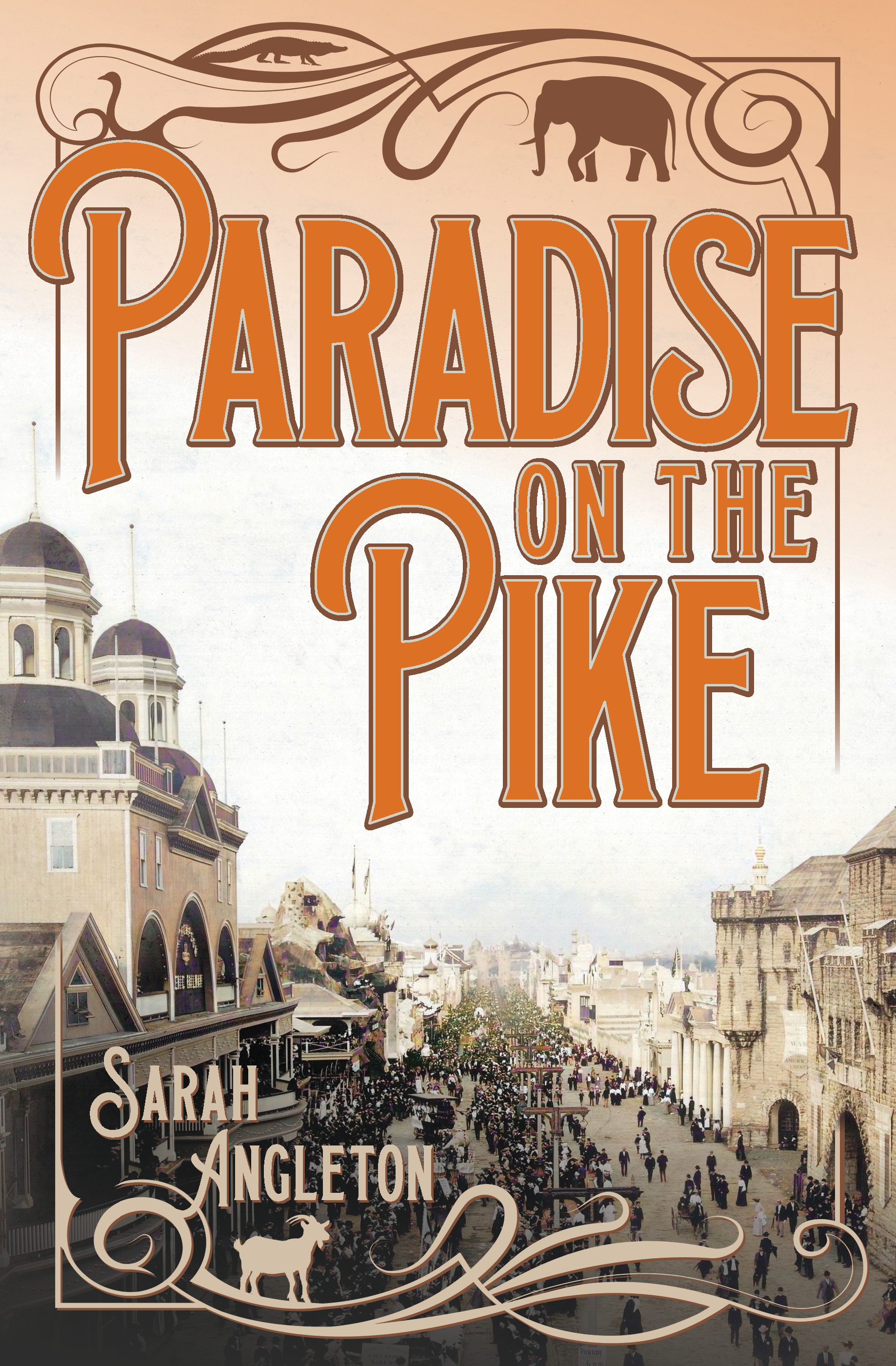
If you want to explore another, non-Olympic aspect of the 1904 World’s Fair, you can check out my newest historical mystery. https://sarah-angleton.com/paradise-on-the-pike/

Some Olympic historians have suggested that this was a blight on the history of the Games, but given that the whole concept of the Modern Olympics was still fairly new and in a bit of flux anyway, I’m not convinced that’s very fair. Yes, only twelve countries were represented and more than eighty percent of the athletes represented the United States. Yes, fair organizers tended to refer to every sport played on the fairgrounds as “Olympic,” which caused quite a bit of confusion. Yes, there was a deeply problematic “Anthropology Games” competition in which indigenous peoples were paid to compete in events in which they’d had almost no training in order to demonstrate the general superiority of western athleticism. And yes, the gold medal in the marathon was very nearly awarded to a man who’d completed much of the course in a car. 

But it was also the first Olympic Games in which gold, silver, and bronze medals were awarded to the top competitors, hurdler George Poage became the first Black athlete to win a spot on the Olympic podium, and competing with a wooden prosthetic leg, George Eyser won multiple medals in gymnastics. Also, there was not a single allusion to menage a trois in the opening ceremony. Nor was there an opening ceremony.

In the interest of not making every reader from Chicago completely hate me, I should clarify that I actually really like deep dish and think that it is infinitely better than the Provel and cracker crust garbage St. Louis likes to pass off as pizza. Chris6d, CC BY-SA 4.0 https://creativecommons.org/
licenses/by-sa/4.0, via Wikimedia Commons

One could even argue that because the Games were part of this gigantic fair, which welcomed nearly 20 million people and became the only Victorian era fair to make a profit, this boosted the visibility of the Olympics, which were already a little bit of a hot mess with an uncertain future at this point. 

So yes, David R. Francis and the City of St. Louis were a little bit sneaky and underhanded and totally stole the Olympics from Chicago, which still hasn’t hosted the Games. The city does have a lot going for it, though. They have a river they’re fond of dying green every St. Patrick’s Day, an interesting cheese casserole dish they refer to as pizza, an alarming number of murders, and a somewhat irrational, now mostly friendly rivalry with a tiny little proud city to the south on the bank of the Mighty Mississippi.

Not bad for some swampy little upstart.

Meet Me at the Fair

On November 22, 1944 after schedule delays, numerous script rewrites, budget woes, and a leading lady still unhappy with her role, a new Christmas musical debuted on the big screen in St. Louis, the city at the film’s heart. 

The song “Meet Me in St. Louis,” well known today because of the musical, is actually from 1904 and was written specifically for the World’s Fair. Public Domain, via Wikimedia Commons

Despite the mess of getting to that moment, Meet Me in St. Louis enjoyed immediate success, becoming Metro-Goldwyn-Mayer’s second highest grossing film up to that point, coming in only behind Gone With the Wind. After the premiere, Judy Garland even decided she liked it after all and commented to the producer, “Remind me not to tell you what kinds of pictures to make.”

The screenplay is based on a series of semi-autobiographical short stories by St. Louis native Sally Benson who wrote of an upper middle-class family that lived at 5135 Kensington Avenue during the construction of the 1904 World’s Fair on the grounds of Forest Park in St. Louis.

I confess, I saw the movie for the first time later in life than I should have, having grown up within easy reach of St. Louis. My childhood summers included trips to downtown to watch the Cardinals play at Busch Stadium where the musical’s title song is still played by the organist at every game and the crowd sings along as the words scroll across the jumbotron. 

I’ve been many times to the wonderful outdoor Muny theater in Forest Park where the stage adaptation of Meet Me in St. Louis, originally produced in 1989, is performed every few years. I even got engaged in that park on the very grounds of the actual 1904 World’s Fair.

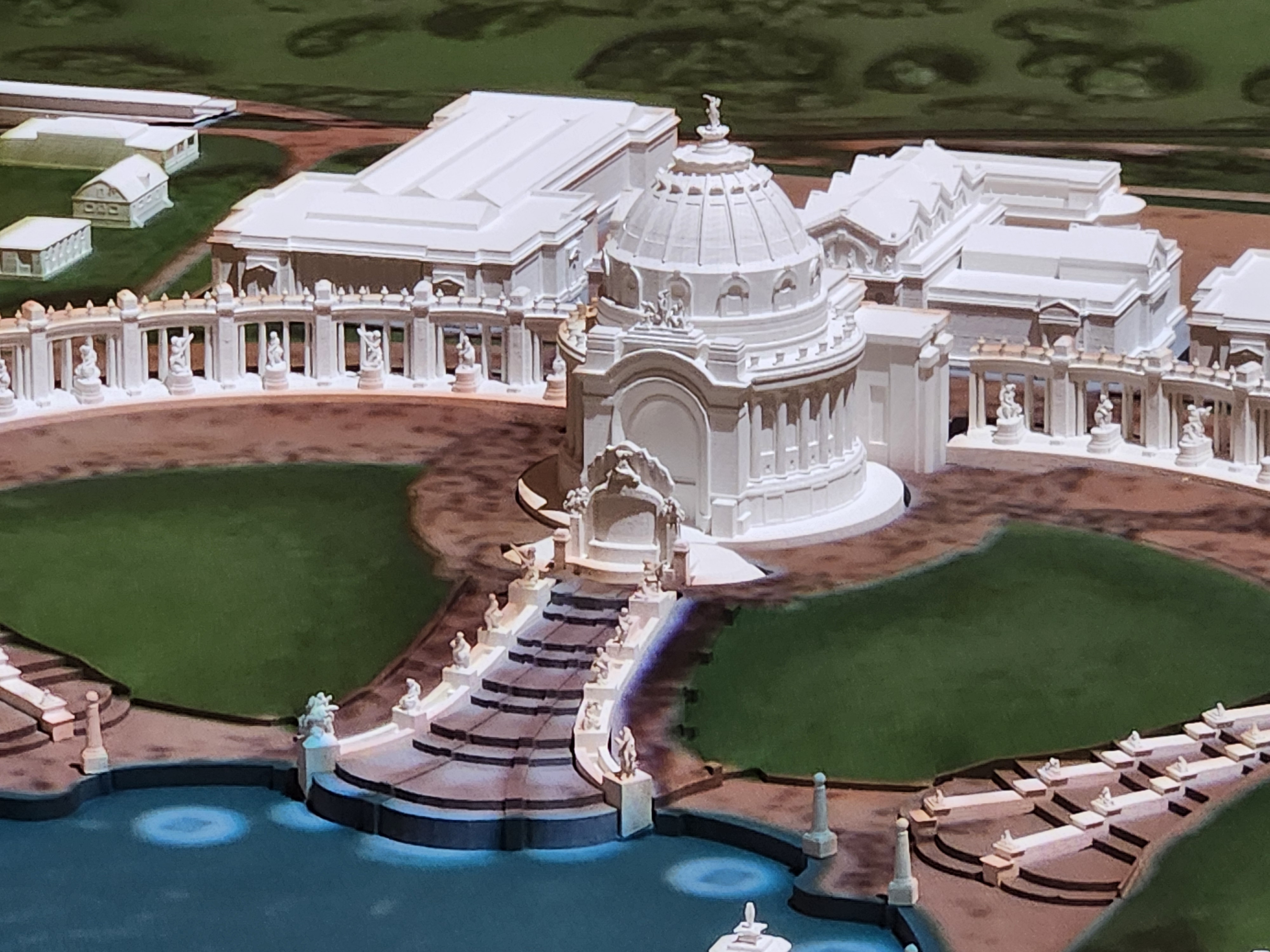
I was lucky enough to get a sneak peek at the new exhibit, open to the public on April 27th. It contains a scale model of the entire fairgrounds. And it’s spectacular.

Officially known as the Louisiana Purchase Exposition, the Fair is a big deal in St. Louis history. It transformed the city, launching it for about seven months into the center of the world’s attention. 

And it’s still a big deal, today. One-hundred and twenty years later the World’s Fair looms large in the community memory carried now by not a single living person who was there to see it, sparking excitement whenever it comes up in conversation, which is kind of weirdly a lot.

It’s especially on everyone’s minds right now because at the end of this month, just in time to celebrate the 120th anniversary of the opening of the Fair, the Missouri History Museum will reveal a newly re-imagined permanent World’s Fair exhibit. 

Equally exciting for everyone who either lives in my house or happens to be my mother, is the release of my new historical mystery set on the grounds of the 1904 World’s Fair in St. Louis. 

Paradise on the Pike is available for the first time today. The story takes place in the enchanting world of Hagenbeck’s Zoological Paradise and Trained Animal Circus on the Pike, which is the entertainment strip within the Fair. It’s not a light, sentimental sort of story like Sally Benson’s, but it does contain elephants and lions and a pair of cantankerous goats. It also allowed me, and will hopefully allow you, to spend some time strolling through the Fair, which was almost entirely constructed of temporary buildings meant to disappear.

Available today! Order from your favorite independent bookstore or slightly bigger bookstore or Amazon.

And maybe that’s why, one hundred and twenty years later, it still takes up space in our imaginations, because we’re a little like six-year-old Tootie at the end of Benson’s stories when the family marvels over the lights and fountains on the fairgrounds and her sister Agnes asks if it’ll ever be torn down.

Tootie emphatically replies, “They’ll never tear it down. It will be like this forever.”

Agnes, relieved, exclaims, “I can’t believe it. Right here where we live. Right here in St. Louis.”

Forest Park retains very few physical reminders of the enormous event that once filled its every corner and held the attention of the world, but in the hearts of the St. Louisans who stroll through the grounds and wish they could have seen those lights shining, it will never be torn down. It’ll be like this forever.

You can find more information about Paradise on the Pike at this link.

Chocolate, Vinegar, and Ashes

And another hint! As we slide down the backside of February we draw ever closer to a new historical mystery. Ten more weeks until publication! Public Domain, via the Missouri History Museum.

We’ve finally made it to the half-way point of February, which has the nerve to include an extra day this year. I realize if you live in the Southern Hemisphere, this milestone is not a huge cause of celebration for you, but if like me, you are located in the Northern Hemisphere, February is the last great stronghold of dreaded winter, and you know, it hasn’t really been that bad, at least not in my little corner of the world.

That’s probably because it’s been busy. The month started with that famous rodent prognosticator Punxsutawney Phil failing to see his shadow, allegedly a sign that spring is not a long six weeks away, but is in fact right around the corner in just a quick six weeks or so. 

Then last Sunday, the Kansas City Chiefs won the Superbowl, which was a big deal here in the Great State of Missouri, and I guess also for fans of Taylor Swift. In case you are not familiar with Midwestern geography, Kansas City is located in both Kansas and Missouri. The Chiefs represent the latter. And in case you have been fortunate enough to escape the hoopla, Taylor Swift is dating a Chief, so she’s been at a lot of the games, including this one, over which there was much ado made.

If you want to keep the good times rolling, apparently today (February 15) is World Hippo Day. Image by Don Orchard from Pixabay

Then came Pancake Day, followed by Ash Wednesday, which this year fell on Valentine’s Day, a holiday that celebrates chocolate and overpriced roses (both sharply discounted today, in case you forgot).

Of course Valentine’s Day isn’t so special for everyone. It can be a tough day if everyone else seems to have a special someone and you don’t. But it could also be worse, because it turns out people knew how to be mean to one another even before the invention of the internet.

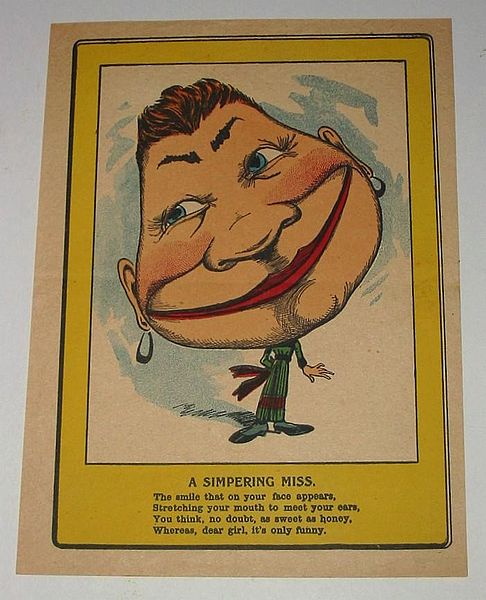
Valentine’s Day has been celebrated in some capacity as a day of love since the early 15th century, but card makers didn’t get in on the action until about 1840. That’s when mass produced Valentines hit the market, and when they did, not all of them were nice. Sure, you could find a beautifully constructed card with a sweet romantic poem on the inside and address it to your sweetheart, but on the shelf next to it, you might just find what came to be known as a vinegar Valentine.

These were more cheaply made, tended to feature grotesque drawings and included rude suggestions and insults. If that wasn’t bad enough, they also went through the mail anonymously with postage to be paid by the recipient. At the height of their popularity millions of such sour Valentine’s greetings were sold in both the US and England, and in the mid-19th century, they made up about half of the Valentine’s Day card market. 

Public Domain, via Wikimedia Commons

What isn’t entirely known is whether a large percentage of these might have been viewed as friendly jokes, but what is true is that it’s harder to find well preserved examples of them than it is their sickeningly lovey-dovey counterparts. That could be because they tended to be cheaper and made of flimsy materials. Or it could be that people didn’t feel particularly compelled to hang onto the insults.

Thankfully, it’s not as common to find an insulting Valentine’s card today because as a species, humans have evolved past the point of sending anonymous hate through the mail. Instead we create false social media profiles and spew it on the internet. As God intended.

Anyway, I hope you had a good February 14th, free of vinegary insults, and that you got from it what you hoped—to eat chocolate and feel loved or to don ashes and reflect on the weight of sin and death. Or both. Either way, the end of February is in sight. And I don’t think it’s really going to be that bad.