Meet Me at the Fair

On November 22, 1944 after schedule delays, numerous script rewrites, budget woes, and a leading lady still unhappy with her role, a new Christmas musical debuted on the big screen in St. Louis, the city at the film’s heart. 

The song “Meet Me in St. Louis,” well known today because of the musical, is actually from 1904 and was written specifically for the World’s Fair. Public Domain, via Wikimedia Commons

Despite the mess of getting to that moment, Meet Me in St. Louis enjoyed immediate success, becoming Metro-Goldwyn-Mayer’s second highest grossing film up to that point, coming in only behind Gone With the Wind. After the premiere, Judy Garland even decided she liked it after all and commented to the producer, “Remind me not to tell you what kinds of pictures to make.”

The screenplay is based on a series of semi-autobiographical short stories by St. Louis native Sally Benson who wrote of an upper middle-class family that lived at 5135 Kensington Avenue during the construction of the 1904 World’s Fair on the grounds of Forest Park in St. Louis.

I confess, I saw the movie for the first time later in life than I should have, having grown up within easy reach of St. Louis. My childhood summers included trips to downtown to watch the Cardinals play at Busch Stadium where the musical’s title song is still played by the organist at every game and the crowd sings along as the words scroll across the jumbotron. 

I’ve been many times to the wonderful outdoor Muny theater in Forest Park where the stage adaptation of Meet Me in St. Louis, originally produced in 1989, is performed every few years. I even got engaged in that park on the very grounds of the actual 1904 World’s Fair.

I was lucky enough to get a sneak peek at the new exhibit, open to the public on April 27th. It contains a scale model of the entire fairgrounds. And it’s spectacular.

Officially known as the Louisiana Purchase Exposition, the Fair is a big deal in St. Louis history. It transformed the city, launching it for about seven months into the center of the world’s attention. 

And it’s still a big deal, today. One-hundred and twenty years later the World’s Fair looms large in the community memory carried now by not a single living person who was there to see it, sparking excitement whenever it comes up in conversation, which is kind of weirdly a lot.

It’s especially on everyone’s minds right now because at the end of this month, just in time to celebrate the 120th anniversary of the opening of the Fair, the Missouri History Museum will reveal a newly re-imagined permanent World’s Fair exhibit. 

Equally exciting for everyone who either lives in my house or happens to be my mother, is the release of my new historical mystery set on the grounds of the 1904 World’s Fair in St. Louis. 

Paradise on the Pike is available for the first time today. The story takes place in the enchanting world of Hagenbeck’s Zoological Paradise and Trained Animal Circus on the Pike, which is the entertainment strip within the Fair. It’s not a light, sentimental sort of story like Sally Benson’s, but it does contain elephants and lions and a pair of cantankerous goats. It also allowed me, and will hopefully allow you, to spend some time strolling through the Fair, which was almost entirely constructed of temporary buildings meant to disappear.
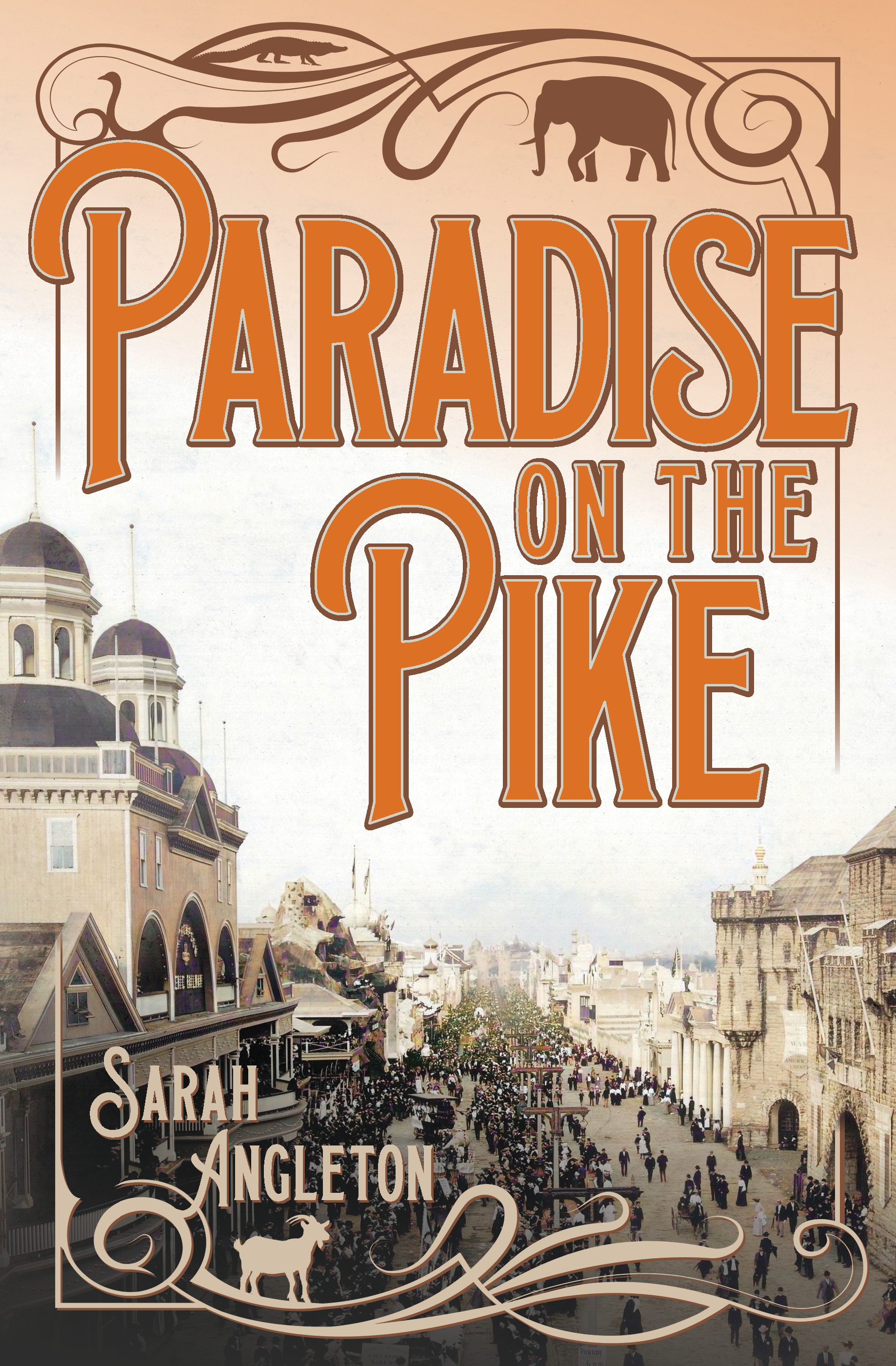
Available today! Order from your favorite independent bookstore or slightly bigger bookstore or Amazon.

And maybe that’s why, one hundred and twenty years later, it still takes up space in our imaginations, because we’re a little like six-year-old Tootie at the end of Benson’s stories when the family marvels over the lights and fountains on the fairgrounds and her sister Agnes asks if it’ll ever be torn down.

Tootie emphatically replies, “They’ll never tear it down. It will be like this forever.”

Agnes, relieved, exclaims, “I can’t believe it. Right here where we live. Right here in St. Louis.”

Forest Park retains very few physical reminders of the enormous event that once filled its every corner and held the attention of the world, but in the hearts of the St. Louisans who stroll through the grounds and wish they could have seen those lights shining, it will never be torn down. It’ll be like this forever.

You can find more information about Paradise on the Pike at this link.

Why Ghosts are so Bad at Telling Jokes

Halloween is nearly upon us, which means it’s that time of year when we all better be prepared for little costumed ghouls and goblins to knock on our doors, throw flour in our faces, and tell us they hate us before scurrying off to dance wildly about the leaping flames of a bonfire in the middle of the street.

Or maybe not. I recently watched the musical movie Meet Me in St. Louis for the first time, which in itself is a shock, given that I live just outside of St. Louis and have been known to join in a singalong of the title song with 40,000 or so of my closest friends at sporting events in the city. But that’s nothing compared to the shock of the film’s depiction of a typical St. Louis Halloween celebration circa 1903, as experienced by Agnes and Tootie, dressed as a “horrible ghost” and a “terrible, drunken ghost.”

Of course, the mother in me had a visceral reaction to the scene, which is rude and scary and feels terribly dangerous. And I was also confused, because that is not how Halloween is done in St. Louis today. In fact, one of the more charming things about the city is that we have a really sweet and innocent and fairly unique tradition on Halloween night.

Image by cocoparisienne from Pixabay

Now, it’s not uncommon to see neighbors gathering around fire pits, sipping hot chocolate and handing out candy, but in the nearly eight Halloweens I’ve been here, I’ve never once come across a gang of children tossing furniture into a bonfire in the middle of the street. And while I suppose we do get the occasional horrible ghost or terrible, drunken ghost that shows up to ask for a Halloween treat, I usually see a lot more Disney princesses and superheroes than anything else.

The best part is that almost all of our costumed visitors come prepared with a joke or two to share. I’m talking scary awful, groan-worthy jokes, like the kind you would read in a bubblegum wrapper or like the kind that might encourage you to give someone a piece of candy just so they’ll go away.

Image by Pixaline from Pixabay

Not every kid will tell one. There are always some who are too little or too shy or too nonverbal, and that’s okay. Our candy distribution is not dependent on anyone’s joke-telling prowess, but it is a fun little tradition and no one really knows for sure how it got started.

The best guess comes from local folklorist John Oldani who believed it descended from an influx of Irish immigrants holding onto remnants of the Gaelic harvest festival of Samhain. A lot of Halloween traditions were likely influenced by Samhain, including costumes, pumpkin carving, bonfires, and the offering of a song or poem or even a joke in exchange for a fun size Snickers.

No one seems to know why this took hold so firmly in the St. Louis area and not really elsewhere, except that perhaps the city started encouraging it as an alternative to pranks and vandalism and bonfires in the middle of Kensington Avenue. It seems to have arisen alongside trick-or-treating itself around 1940 or so. Maybe it was even a reaction to the 1944 film Meet Me in St. Louis that convinced the mothers of St. Louis that we needed a little more charm to our Halloween.

However it happened, the city has embraced it and come Halloween night, I’m pretty sure I’m going to hear some truly awful jokes. Maybe I’ll get lucky and hear some poems, too. And there’s probably a full-size candy bar in it for any terrible, drunken ghost that sings “Clang, clang, clang went the trolley.”

If you’ve got a good (or bad) Halloween joke, I’d love to hear it!