
In 1870, renowned paleontologist Edward Drinker Cope published a description of a newly discovered giant plesiosaur (an extinct aquatic reptile that a reader less informed than you might mistakenly refer to as a dinosaur). Unfortunately, he’d failed to place the head on the right part of the body, sticking the skull to the end of the creature’s long tail.

Once insult was added to injury, the great Bone Wars began, with two of the most prominent paleontologists in North America behaving like squabbling children. The rivalry raged for twenty years resulting in great advances in the field, which before this period had discovered only eighteen dinosaur species on the continent. Between the two men, they described and named over 130 new species of dinosaur.
But as beneficial as it may have been, this feverish pace of scientific discovery had some drawbacks, too. The paleontologists’ dig teams were known to spy on each other, steal fossils from one another, vandalize one another’s dig sites, or even dynamite their own to keep anyone else from digging there. And then there were the mistakes of the men themselves that occasionally found their way into work that was rushed to publication.
![Edward Drinker Cope, respected paleontologist, second-place in the bone war, and also maybe a little bit of a squabbling child. [Public domain], via Wikimedia Commons](https://sarah-angleton.com/wp-content/uploads/2015/04/cope.jpg)
Because life isn’t fair, and sometimes parents decide to name their son Othniel, the earlier name had precedent. And so, since the year 1903, there has been no such thing as a brontosaurus. No friendly leaf-eating, lumbering, earth-shaking, and, let’s face it, small-brained brontosaurs. And despite what you may have learned from the Flintstones, no brontosaurus burgers or brontosaurus ribs either.
![Brontosaurus (but later Apatosaurus, and now brontosaurus again) skeleton displayed with the wrong head at the Carnegie Natural Museum of Natural History. By Dinosaurs, by William Diller Matthew [Public domain], via Wikimedia Commons](https://sarah-angleton.com/wp-content/uploads/2015/04/dino-skeleton.jpg)
By Dinosaurs, by William Diller Matthew [Public domain], via Wikimedia Commons
Even the US postal service got itself into a heap of trouble when as recently as 1989 it issued a series of stamps featuring popular dinosaurs, including Tyrannosaurus, Stegosaurus, Pteranodon, and Brontosaurus. To be fair, though, the USPS was probably using an elementary school science textbook as a reference.
So why did the name persist for so long? Well, according to Matt Lamanna, paleontologist and curator at the Carnegie Museum of Natural History, Brontosaurus is just a really cool name. It means “thunder lizard,” evoking the ominous thumping and quaking at the creature’s approach. In contrast, Apatosaur means “deceptive lizard,” which I guess evokes the desire for the creature to pose as a different species so it can go by a cooler name.
Personally, I miss the brontosaurus. Or at least I did. Because earlier this week a team of researchers from the Nova University of Lisbon in Portugal revealed that a comprehensive comparative analysis of dino bones has led them to the undeniable conclusion that Brontosaurus was a separate species after all.
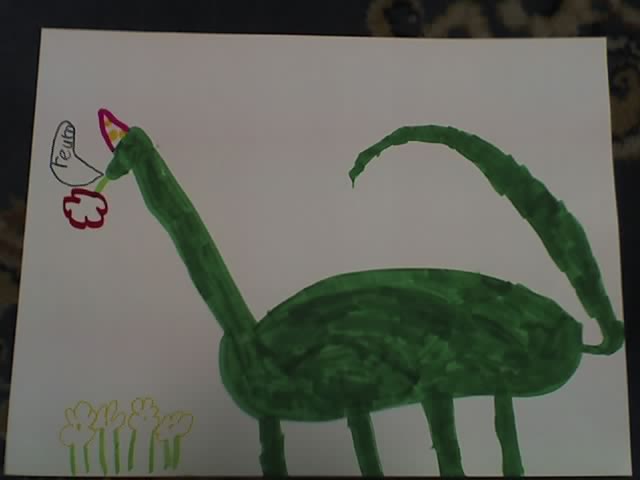
So break out the old text books, reissue the dino stamps, and grill up some stoneage burgers, because the Thunder Lizard is back. I guess Cope didn’t get the last laugh after all. Smiling in Heaven now, the indisputable victor of the bone wars is O.C. Marsh, which is how he’s most often referred to in the literature, because it’s a much cooler name than Othniel.
 Author Sarah Angleton