Chocolate, Vinegar, and Ashes

And another hint! As we slide down the backside of February we draw ever closer to a new historical mystery. Ten more weeks until publication! Public Domain, via the Missouri History Museum.

We’ve finally made it to the half-way point of February, which has the nerve to include an extra day this year. I realize if you live in the Southern Hemisphere, this milestone is not a huge cause of celebration for you, but if like me, you are located in the Northern Hemisphere, February is the last great stronghold of dreaded winter, and you know, it hasn’t really been that bad, at least not in my little corner of the world.

That’s probably because it’s been busy. The month started with that famous rodent prognosticator Punxsutawney Phil failing to see his shadow, allegedly a sign that spring is not a long six weeks away, but is in fact right around the corner in just a quick six weeks or so. 

Then last Sunday, the Kansas City Chiefs won the Superbowl, which was a big deal here in the Great State of Missouri, and I guess also for fans of Taylor Swift. In case you are not familiar with Midwestern geography, Kansas City is located in both Kansas and Missouri. The Chiefs represent the latter. And in case you have been fortunate enough to escape the hoopla, Taylor Swift is dating a Chief, so she’s been at a lot of the games, including this one, over which there was much ado made.
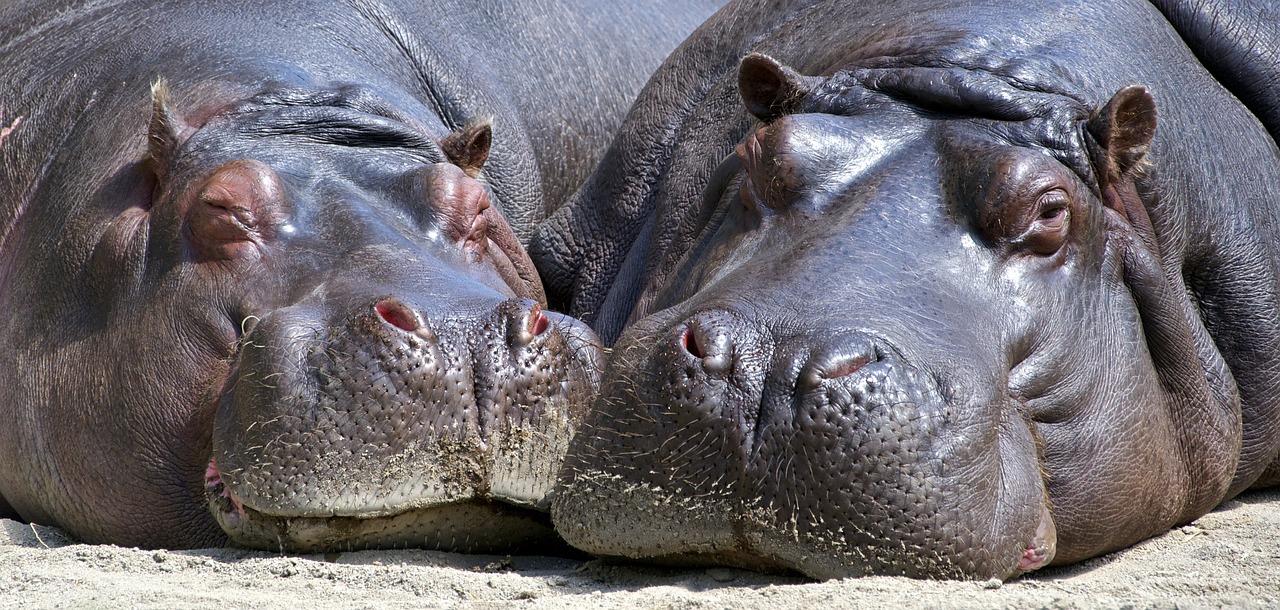
If you want to keep the good times rolling, apparently today (February 15) is World Hippo Day. Image by Don Orchard from Pixabay

Then came Pancake Day, followed by Ash Wednesday, which this year fell on Valentine’s Day, a holiday that celebrates chocolate and overpriced roses (both sharply discounted today, in case you forgot).

Of course Valentine’s Day isn’t so special for everyone. It can be a tough day if everyone else seems to have a special someone and you don’t. But it could also be worse, because it turns out people knew how to be mean to one another even before the invention of the internet.

Valentine’s Day has been celebrated in some capacity as a day of love since the early 15th century, but card makers didn’t get in on the action until about 1840. That’s when mass produced Valentines hit the market, and when they did, not all of them were nice. Sure, you could find a beautifully constructed card with a sweet romantic poem on the inside and address it to your sweetheart, but on the shelf next to it, you might just find what came to be known as a vinegar Valentine.

These were more cheaply made, tended to feature grotesque drawings and included rude suggestions and insults. If that wasn’t bad enough, they also went through the mail anonymously with postage to be paid by the recipient. At the height of their popularity millions of such sour Valentine’s greetings were sold in both the US and England, and in the mid-19th century, they made up about half of the Valentine’s Day card market. 
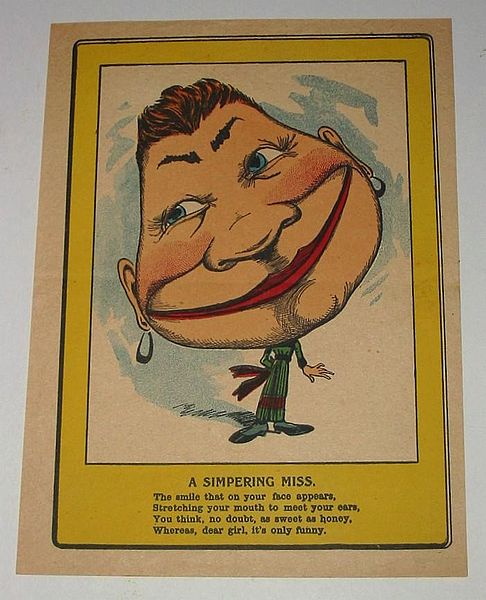
Public Domain, via Wikimedia Commons

What isn’t entirely known is whether a large percentage of these might have been viewed as friendly jokes, but what is true is that it’s harder to find well preserved examples of them than it is their sickeningly lovey-dovey counterparts. That could be because they tended to be cheaper and made of flimsy materials. Or it could be that people didn’t feel particularly compelled to hang onto the insults.

Thankfully, it’s not as common to find an insulting Valentine’s card today because as a species, humans have evolved past the point of sending anonymous hate through the mail. Instead we create false social media profiles and spew it on the internet. As God intended.

Anyway, I hope you had a good February 14th, free of vinegary insults, and that you got from it what you hoped—to eat chocolate and feel loved or to don ashes and reflect on the weight of sin and death. Or both. Either way, the end of February is in sight. And I don’t think it’s really going to be that bad.

Prognosticator of Prognosticators

On February 2, 1887, exactly one year after Punxsutawney Spirit newspaper editor Clymer Freas suggested the idea of an official Groundhog Day, a group of well-dressed and maybe just a little bit silly local businessmen who referred to themselves as the Punxsutawney Groundhog Club began a tradition that has to go down as one of the most ridiculous annual ceremonies I actually pay attention to.

I refer of course to that preferably not so bright Candlemas morning when the world’s most famous rodent named Phil appears before an adoring public to make an official statement regarding the amount of winter weather that remains to be endured.

The groundhog, aka woodchuck is an animal that is at least as good at long-range weather forecasting as it is at chucking wood, which it would probably do a lot of if it could. Image by Mona El Falaky from Pixabay

Officially known as Punxsutawney Phil, Seer of Seers, Sage of Sages, Prognosticator of Prognosticators, and Weather Prophet Extraordinaire, Phil is allegedly the oldest groundhog on record at the whopping age of 136. That’s approximately 130 years longer than the expected lifespan of a groundhog.

Phil’s “Inner Circle,” which includes the world’s only human speaker of Groundhogese, explains that his exceptionally long life can be attributed to a life elixir he takes every summer, the side effects of which can cause him to occasionally change his physical appearance somewhat dramatically.

Okay, it’s quirky. Maybe even just plain weird, but the Groundhog Day celebration draws as many as thirty to forty thousand visitors to the tiny town of Punxsutawney, Pennsylvania every February second. Hordes of groundhog enthusiasts flock to Gobbler’s Knob, the site of Phil’s proclamation near Downtown Punxsutawney, and probably spend a fair bit of cash while visiting the community.

The movie that put Punxsutawney and Phil on the map was actually filmed in Woodstock, Illinois, which also has stupid cold February mornings. Public Domain, via Wikimedia Commons

And so, it makes perfect sense to have continued the event since the 1993 film Groundhog Day forced Bill Murray to live the day over and over again, and let the world know about this silliest of festivals. What makes less sense is that the annual tradition occurred for one hundred and six years before that. I somehow doubt that the members of the original Punxsutawney Groundhog Club foresaw a day when Hollywood would come knocking on Phil’s burrow.

Then again, they do have a connection to the Seer of Seers, and his accuracy in predicting whether spring is right around the corner or we will experience six more weeks of winter, is about 36%. For those of you keeping track at home, that’s less accurate than a coin flip.

But he is just a really old rodent. And groundhogs have not always been a part of such predictions. The Candlemas long-range forecasts themselves are actually much older, with a general acceptance that “If Candlemas Day is clear and bright, Winter will have another bite.”

Looking at this halfway point between the winter solstice and vernal equinox as a predictor of weather patterns coming into spring even predates Candlemas as a part of the Celtic celebrations of Imbolc. Groundhogs didn’t get mixed up with it until German immigrants brought the tradition with them to Pennsylvania and made it their very own.

Phil, looking super thrilled to be here. Chris Flook, CC BY-SA 4.0 https://creativecommons.org/
licenses/by-sa/4.0, via Wikimedia Commons

But I guess it’s okay that they’re mixed up with it now. Punxsutawney Phil’s festival in Gobbler’s Knob has inspired at least thirteen similar festivals throughout the Eastern United States, because I guess it’s something to do while we wait out the last six or so weeks of winter. So, here we go again.

I have been known from time to time to be delighted by silly traditions and I confess that I have a fair few bizarre events on my bucket list. Groundhog Day in Punxsutawney, dear reader, is not one of them, mostly because February mornings in Pennsylvania are really stupid cold. For you, however, I did watch the livestream of Phil’s pronouncement this morning from the comfort of my warm living room while still in my pajamas.

I may not have been there, but Miss Pennsylvania was, and so was the governor of the state, as well as a large number of reporters who were probably questioning their career choices. The top hat-clad president of the Punxsutawney Groundhog Club was there, too. He had a lengthy conversation with a rodent, who I’m sad to say, predicted six more weeks of winter, and there’s only a 64% chance he’s wrong.

Happy Groundhog Day!

Six of One, Half a Dozen of the Other

Groundhog Day 2005 in Punxsutawney, Pennsylvania
Phil the Groundhog surrounded by his Punxsutawney posse, dressed as always in 19th Century garb.

So today is perhaps the strangest holiday on the calendar, the day when otherwise perfectly normal people seek psychic advice from a rodent. Yes, it’s Groundhog Day. Because I realize this “holiday” is somewhat unique to North America (and, really, to Pennsylvania, the University of Dallas, and a few other odd pockets), I’ll go ahead and explain the tradition.

On February 2, the groundhog emerges from his hidey-hole to check the weather. If it’s cloudy, the little guy scrambles out into the wide world and spring is (obviously) “just around the corner.” But if the sun is out and this genius prognosticator can see his shadow, he runs back inside and we can be sure to expect six more weeks of winter.

The most famous of these furry meteorologists is “Phil” of Punxsutawney, Pennsylvania (made, if possible, even more famous by the 1993 Bill Murray film) who has been making his predictions since 1886, a curiously long life for a groundhog that should normally live less than 14 years. Since the celebration began, Phil has seen his shadow 100 times. And because no one wants to let go of such a nice round number, this morning he emerged under cloudy skies and predicted a nice short winter.

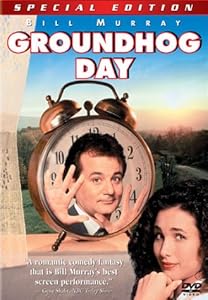
Cover of "Groundhog Day (15th Anniversary...
A movie that never seems to get better even when you watch it again and again and again.

Of course the practical historian in all of us wonders, I’m sure, from where on earth such a tradition could have come? No one really seems to be sure, but there are a few theories. The one that makes the most sense to me (if one can approach rodent weather prediction sensibly) is that the celebration was born from the clashing of two calendar systems.

While western countries in the Northern Hemisphere recognize the first day of spring as the day the length of daylight finally exceeds the length of night (the Vernal Equinox, which is around 6-7 weeks after Groundhog Day), Celtic tradition places the first day of spring at the cross-quarter day of Imbolc, when it is said that the daylight begins to make significant progress against the night. Probably not coincidentally, Imbolc occurs in Early February (just around the corner from Groundhog Day).

Naturally, people wanted to know when spring really would begin so the most logical thing to do was to seek signs in nature as to when the thaw would begin and the sun would truly emerge. And a tradition was born. Today you can attend Groundhog celebrations in many small towns throughout Pennsylvania, though I should warn you that you’ll need to brush up on your Pennsylvania German because if you speak English during the event, it may cost you up to 25 cents per word.

Of course if you happen to be an alumnus of the University of Dallas, then you know that the party to beat all parties for Groundhog Day is in Groundhog Park in Irving, Texas. This year marks the 50th anniversary of the remarks by University President Dr. Donald Cowan that started the epic celebration: “Think of something to celebrate—celebrate Groundhogs Day, for instance—but whatever you do, do it with style.”

And they have. The Groundhog Day festivities at the school resemble a homecoming celebration with the election of a Groundhog King and Queen, campus-wide sporting events, and crowds of alumni swarming in to join the student body in all-night, semi-controlled, frivolities in the park, which, if I understand correctly, involve quite a bit of heavy drinking.

Now, of course, as a responsible adult and practical historian, I cannot condone such behavior. But as my Pennsylvania German is a little rusty, I was at a loss as to how I could observe the day. Here’s what I decided on:

As with almost all of my creative cool mom ideas, this one come straight from a magazine. You can find cuter ones in the most recent issue of Family Fun.
As with almost all of my creative cool mom ideas, this one comes straight from a magazine. You can find cuter ones in the most recent issue of Family Fun.

All that remains to be determined, then, is whether the Groundhog, or Marmota monax (because my Latin is better than my Pennsylvania German) is a accurate meteorologist. The answers to that question are mixed. According to organizers of the event, Punxsutawney Phil has been right 38% of the time, which probably does make him at least as accurate as the average TV meteorologist. Some studies have given the rodent much more credit, claiming accuracy of 75 to 90% of the time.

I think the discrepancy occurs, though, because the beginning of spring may actually be a fairly subjective thing to measure. Depending, of course, on where you live, spring generally pops up somewhere in the six weeks or so just around the corner from the first few days of February. Maybe, then, what the groundhog is really trying to tell us to be patient because spring is either six weeks away or maybe just half a dozen.