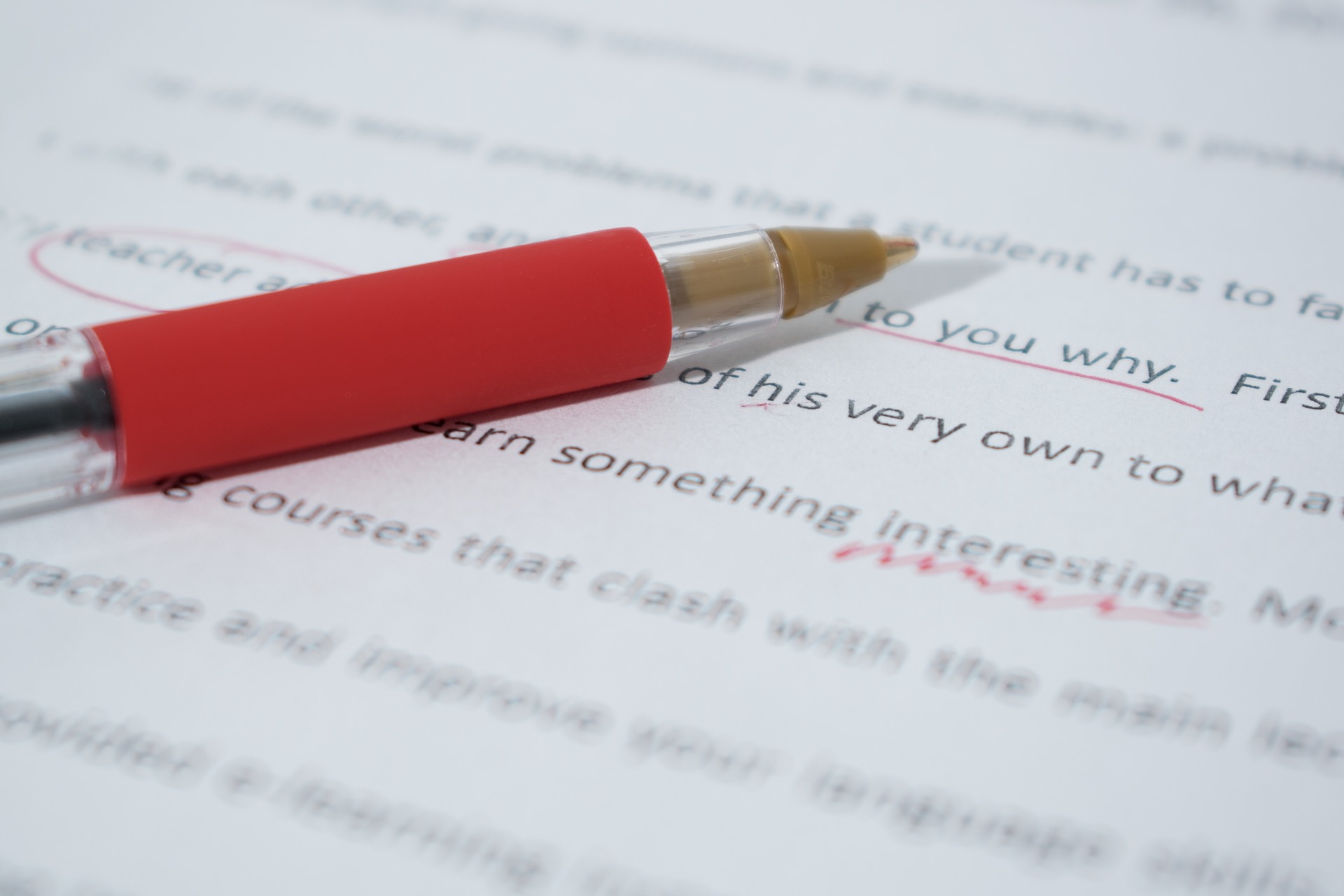
One Wicked Omission

A few weeks ago in this space, I posted a piece about Taylor Swift and the history of public education in the United States. Except that apparently I didn’t. A few hours after the post went live, I received a text from one of my aunts saying, “Am I the first to point out a spelling error?…”

She was the first, and the error was unfortunate because instead of typing public education, I had accidentally left out a very important letter l. Fortunately, I was able to fix it quickly and if any of the rest of you noticed, you were gracious enough to cut me some slack.

Whales. Image by M W from Pixabay

I try to be a meticulous editor, but anyone who has followed this blog for very long has probably spotted the occasional error that gets through. Often either the hubs or my eagle-eyed mother will discover them and point out the mistakes spell check won’t catch. One time a reader I don’t know personally was kind enough to politely point out that the country of Wales is spelled differently than the marine mammal with a similar name.

You’ve all been very kind over the years, and as far as I know none of my silly typos have led to any controversy. Royal printers Robert Barker and Martin Lucas were not so fortunate. In 1632, they stood trial in the court of King Charles I for a mistake that made its way into their 1631 re-printing of the King James Bible. The mistake occurred in Exodus 20:14, which should read: “Thou shalt not commit adultery.” The problem was that this printing omitted the word not.

Barker and Lucas had to answer for the slip-up to the tune of £300. That’s roughly £56,000 today, or about 75,000 US Dollars, which is a pretty steep price to pay for three little letters. To make matters worse, the gentlemen lost their publishing license.

But think about how many words they got right! Image by Pexels from Pixabay

While nearly all of the one thousand misprinted Bibles were confiscated and destroyed before they had a chance to tear apart too many families, at least fifteen copies still exist today—seven in England, seven in the United States, and one in New Zealand.

A British rare book dealer named Henry Stevens obtained one of the copies in 1855 and called it the Wicked Bible, a name that has pretty much stuck since then. In the last decade, copies have changed hands for somewhere around $50,000, which means that if the descendants of Robert Barker and Martin Lucas still had a copy, they’d need to wait a few years yet to come out ahead.

I doubt any of my typos would fetch that kind of bling, and so my promise to you, dear reader is that I will continue to do my best to catch all the irritating little typos on this blog. I can assure you that if I ever suggest adultery as a good life choice, then you can assume it’s a terrible mistake.

I do feel for Barker and Lucas, though. It may be true that none of the errors that have occasionally popped up in my little corner of the blogosphere have been so grievous or costly. Still, I’m certainly aware that no matter how cautious an editor one may be, it can be a big risk to put your words out there in a pubic space.

Pomp, Illuminations, and the Hard Work of Revision

So, today we celebrate a pretty big holiday here in the United States. We follow in the footsteps of John Adams who wrote to his wife Abigail that Independence Day should be recognized with “pomp and parade, with [shows], games, sports, guns, bells, bonfires, and illuminations from one end of this continent to the other.”

It’s a little rainy today in my corner of the world, but most of us will have all that pretty much covered. Of course, we aren’t really celebrating the anniversary of the day the Continental Congress first declared independence, nor the day one of history’s most famous breakup letters was drafted. The holiday doesn’t fall on the anniversary of the signing of the Declaration of Independence, and it doesn’t mark the moment when King George III read it and decided to sing a love song about sending an armed battalion.  

John Trumbull, Public domain, via Wikimedia Commons

Today’s July 4th celebration does commemorate all of that, but what it actually marks on the calendar is the day of the final pen stroke of the final draft of the document that spurred a war that birthed a nation.

As a writer who recognizes that first drafts rarely amount to much and that most of the best writing occurs in the rewriting, I find this pretty satisfying. It seems John Adams would not have agreed with me. When he wrote of his future nation’s Independence Day, he was referring to July 2, 1776.

I get it. He was excited. He’d had a hand in the original draft, working with Benjamin Franklin, Robert Livingston, Roger Sherman, and of course Thomas Jefferson to get it just so. Like a student who waited too long to start his final term paper and stayed up all night before the due date, assuming that in his push to get it finished, he’d written the most brilliant words ever penned by any student in the history of students, Adams was probably anxious to get it turned in to the Continental Congress, send it on to the king, and sit back to watch the fireworks.

Image by Johnny Maertens from Pixabay

Not surprisingly, however, Adams and his fellow committee members weren’t the only ones who had something to say about the wording of the Declaration. The debating began. In some ways, this important American document was improved by a few tweaks here or there, a little tightening of language or nuance of phrasing. And in other ways, it was made worse, like in the removal of all references to the immorality of slavery.

It’s still possible to make the wrong decision in revision, too, which is one of the things that makes the process so difficult. But the Continental Congress figured out where they had to compromise in order to make the declaration work enough for all the representatives in the room to move forward. The final draft would be signed nearly a month later on August 2. The date at the top of the document, however, remained July 4, which became an officially declared federal holiday in 1870.

The date is pretty ingrained at this point and I think, all things considered, it’s the right one to celebrate, though with the a full day of rain expected, and much to the frustration of my poor dog, I suspect many of my neighbors will celebrate with illuminations on the 5th and 6th this year.

Image by Jill Wellington from Pixabay

But in my mind, the 4th is the day the United States truly embarked on the notion that freedom and liberty sometimes require compromise and consideration of those who don’t agree with us, and that revision is painful, difficult, and necessary work.

The United States, such as it was imagined by the Second Continental Congress, wasn’t a perfect nation, nor was the vision of it perfected yet. That would take many, many years. So many, in fact, we’re still counting, and I suspect always will be.

But the best work comes in the difficult, painful revision process in which debate and compromise occurs. No matter how politically divided we may think we are, or how we as individuals may feel our nation is doing in this moment, I hope that’s something every American can be proud to celebrate.

If you are celebrating American Independence today or perhaps in the coming days, please be careful with all your pomp and illuminations, and have a wonderful holiday!

P.S. In the interest of full disclosure, I originally posted a version of this a few years ago, but it’s a holiday and the post still feels pretty relevant

Celebrating the Not Quite Right Just Yet

So, we’re about to celebrate a pretty big holiday here in the United States. We will follow in the footsteps of John Adams who wrote to his wife Abigail that Independence Day should be recognized with “pomp and parade, with [shows], games, sports, guns, bells, bonfires, and illuminations from one end of this continent to the other.”

I think we’ll pretty much have that covered. But we won’t be celebrating on the anniversary of the day the Continental Congress first declared independence, nor the day one of history’s most famous breakup letters was drafted. The holiday won’t fall on the anniversary of the signing of the Declaration of Independence, and it doesn’t mark the moment when King George III read it and decided to sing a love song about sending an armed battalion.  

A man who knew how to party. John Adams by Gilbert Stuart, Public domain, via Wikimedia Commons

Of course, the July 4th celebration does commemorate all of that, but what it actually marks on the calendar is the day of the final pen stroke of the final draft of the document that spurred a war that birthed a nation.

As a writer who recognizes that first drafts rarely amount to much and that most of the best writing occurs in the rewriting, I find this pretty satisfying. It seems John Adams would not have agreed with me. When he wrote of his future nation’s Independence Day, he was referring to July 2, 1776.

I get it. He was excited. He’d had a hand in the original draft, working with Benjamin Franklin, Robert Livingston, Roger Sherman, and of course Thomas Jefferson to get it just so. Like a student who waited too long to start his final term paper and stayed up all night before the due date, assuming that in his push to get it finished, he’d written the most brilliant words ever penned by any student in the history of students, Adams was probably anxious to get it turned in to the Continental Congress, send it on to the king, and sit back to watch the fireworks.

That looks like a lot of hard work. Image by Lorenzo Cafaro from Pixabay

Not surprisingly, however, Adams and his fellow committee members weren’t the only ones who had something to say about the wording of the Declaration. The debating began. In some ways, this important American document was improved by a few tweaks here or there, a little tightening of language or nuance of phrasing. And in other ways, it was made worse, like in the removal of all references to the immorality of slavery.

It’s still possible to make the wrong decision in revision, too, which is one of the things that makes it so difficult. But the Continental Congress figured out where they had to compromise in order to make the declaration work well enough for all the representatives in the room to move forward. The final draft would be signed nearly a month later on August 2. The date at the top of the document, however, remained July 4, which became an officially declared federal holiday in 1870.

The date is pretty ingrained at this point and I think, all things considered, it’s the right one to celebrate, though with the 4th falling on a Sunday this year, and much to the frustration of my poor dog, I suspect many of my neighbors will celebrate with illuminations on the 2nd and 3rd as well.

But in my mind, the 4th is the day the United States truly embarked on the notion that freedom and liberty sometimes require compromise and consideration of those who don’t agree with us, and that revision is painful, difficult, and necessary work.

Ooh. Aah. Illuminations! Image by PublicDomainPictures from Pixabay

The United States, such as it was imagined by the Second Continental Congress, wasn’t a perfect nation, nor was the vision of it perfected yet. That would take many, many years. So many, in fact, we’re still counting, and I suspect always will be.

But the best work comes in the difficult, painful revision process in which debate and compromise occurs. No matter how politically divided we may think we are, or how we as individuals may feel our nation is doing in this moment, I hope that’s something every American can be proud to celebrate.

If you are celebrating American Independence this weekend, please be careful with all your pomp and illuminations, and have a wonderful holiday!