Take a Walk, Ya Scurvy Dogs

A couple weeks ago, I had a run-in with a pirate. It was a sunny, post-tropical storm day in Charleston, South Carolina, a place that takes great pride in its pirates. We’d been in the area to celebrate the wedding of a niece and decided to take in a little bit of the colorful local history.

That’s when the pirate showed up. He was everything you’d expect with tall boots, a real sword, and a trusty parrot sidekick named Captain Bob. He knew everything there was to know (or at least everything I’d ever think to ask) about the swashbuckling personalities that graced the waters from North Carolina to Barbados during piracy’s Golden Age.

pirate-eric
Eric the pirate and Capt. Bob of Charleston Pirate Tours.

We walked with our pirate companion quite a few city blocks and along the oceanfront park where convicted buccaneers were once hanged for their crimes. This same site today still hosts scores of Charlestonians engaging in unsavory acts. Like yoga.

But the true treasure of the experience was the vast knowledge shared about real people from history including Stede Bonnet, the gentleman pirate who gave up a life of privilege in Barbados to play pirate with his hired friends. And Anne Bonny, a society girl gone wild, with a preference for scallywags. And that most famous of all pirates known sometimes as Edward Teach, or less commonly as Edward Beard, or more commonly as Black Beard. Boy, that guy didn’t turn out to be quite what we (or Wikipedia) thought.

You might begin to wonder how I, a respected practical historian, could simply trust the word of a pirate, not necessarily assumed to be the most honest of men. But I think I did mention he had a parrot, right? Also, never once did he utter the sound Arrrr.


079
My only previous encounter with live pirates, at the St. Louis Renaissance Fair. These were somewhat less concerned with historical accuracy.

Well, okay, that’s not entirely true. He did say it once, when he informed us that to the best of his knowledge (and that of everyone else that knows about these things) pirates didn’t actually say Arrrr.

That, along with that uniquely gruff Piratey accent and the stubborn reluctance to correctly use a possessive pronoun or conjugate the verb “to be,” is an entirely fictional construct, popularized mostly by British actor Robert Newton in his role as the one-legged Long John Silver in Disney’s 1950 version of Treasure Island.

It turns out that though they were probably a little more well-versed in nautical terms for boat riggings and sea monsters than was the average landlubber, pirates most likely talked like, well, guys of their era. Their language, like ours, was shaped by their various heritages and experiences, and would not have been particularly uniform.

And I’m sorry to be the one to tell you that no pirate ever said the words “Shiver me timbers!” without getting laughed off the plank.
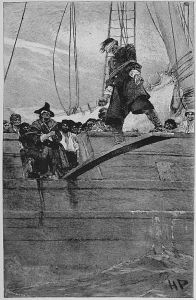
 

800px-pyle_pirate_plank_edited
Actually plank walking has a somewhat dubious history, too. Illustration by Howard Pyle, Public Domain, via Wikimedia Commons


Now I know that like me, this revelation must concern you somewhat. After all, International Talk like a Pirate Day is rapidly approaching (on September 19, which you no doubt already knew) and you haven’t a thing to say.

The holiday, begun sort of unofficially in 1994 by two guys playing racket ball and talking like guys of their era, became slightly official when columnist Dave Barry gave it a rousing stamp of approval in 2002.

What started as friends having a little fun irritating the heck out of their coworkers, has blossomed now into a truly international event prompting (if you can believe the handy pirate map on the holiday’s official website) perhaps dozens of organized events designed to annoy the heck out of way more people’s coworkers.

But beneath all of the irritation, the day really is about having fun, together with your friends, talking like average guys of your era, the kind of guys who think that pirates said things like, “Arrr, treasure I ain’t got nor knows wheres, but ye be cutthroats and ye better serve up yer peace or I’ll feed ya piecemeal to the rats, ya scurvy dogs.”

So join in the fun and celebrate the day like Long John Silver would, says I. Plunder some booty, shiver some timbers, and irritate the heck out of your coworkers with your creative grammar and imaginative slang. But if you ever find yourself in South Carolina, look up Charleston Pirate Tours and take a walk with Pirate Eric and Captain Bob. I promise it’ll be worth ye the hour, me mateys.


A Troublesome Apple and an Ample Supply of Butt Glue

It all started with an apple. Or perhaps it started when Eris, the goddess of discord got her toga in a bunch because she wasn’t invited to a wedding. The problem with offending the goddess of discord is that she’s pretty good at causing trouble. The story goes that Eris crashed the wedding, but only long enough to present a golden apple to the fairest of them all.

enrique_simonet_-_el_juicio_de_paris_-_1904
The world’s first beauty contest, maybe ever so slightly more risqué than the swimsuit competitions of today. The Judgement of Paris by Enrique Simonet, 1904, Pubic Domain, via Wikimedia Commons

Three formidable goddesses (Hera, Athena, and Aphrodite) stepped forward to claim the prize. Zeus wasn’t about to wade into that hornet’s nest by declaring a victor, so he passed the responsibility off to Paris, who faced a very difficult choice. None of the goddesses was keen to hand over the title of fairest and so they bribed their unfortunate judge. Hera offered him the opportunity to rule, Athena offered him victory on the battlefield, and Aphrodite offered him the love of Helen, who was quite a beauty queen herself.

Paris chose the pretty girl because, like Aphrodite, she appeared well-poised and graceful in a swimsuit and high heels and could clearly benefit from a scholarship. She also wanted world peace and “like such as, uh, South Africa, and, uh, Iraq, everywhere like such as…”*

Alas, world peace was not to be, since Helen was married to Menelaus of Sparta, and he didn’t agree that Aphrodite should be given the title of Miss Olympus. War broke out and because the Trojans couldn’t resist a good looking giant wooden horse any more than Paris could resist a pretty girl, it didn’t end well for Troy.

Given the bloody history, then, it isn’t all that surprising that outside of a few small May Day festivals, there really wasn’t much in the way of beauty contests for thousands of years. Then along came P.T. Barnum who, in 1854, thought it would be a great idea to parade women in front of a crowd to judge their beauty.

margaret_gorman_first_prize_beauty_altantic_city
Margaret Gorman, 16-year-old, 1921 winner of the Bather’s Review, and the first Miss America, without even a single glob of butt glue to keep her swim suit in place. Public Domain, via Wikimedia Commons

It turned out it was a pretty good money-making idea, just a little ahead of its time. But what ended in angry protest in 1854, started to catch on almost seventy years later in Atlantic City, as the Inter-City Beauty Contest in which women competed for applause and a chance to parade around in their swimming suits the next day in the “Bather’s Review.”

From these humble beginnings emerged the Miss America Pageant, which is ongoing and will wind up with the crowning of a new beauty in a glued-on bathing suit this Sunday, September 11.

Now, I’m not a big pageant fan myself, and I have never competed in one (frankly, it just wouldn’t be fair to the other ladies), so I have mixed feelings about criticizing them. I do think that, with a few unfortunate exceptions, the contestants of most of the larger pageants today, are smart, talented, and highly-motivated women who are working hard to find a platform from which to make a positive difference in the world.

I don’t begrudge them that opportunity, but here’s my question. If we have so many smart, talented, and highly-motivated women in the world (or even the universe, though I think that pageant is rigged as only Earth girls have ever been crowned), why is it that we need to see them in a bathing suit and high heels? Does their poise and athleticism while half-naked make them somehow more likely to be forces for positive change? Or does their successful application of butt glue somehow make them more worthy of college scholarships?

bust_homer_bm_1825
Homer: a practical history blogger before his time. Public Domain, via Wikimedia Commons

Tough questions, I know, and not easily answered by world peace and, like um, South Africa. Too tough for me, a lowly blogger of all things historical, and, evidently mythological. Because, yes, in addition to being among the four fifths of Americans who can identify the United States on a world map, I am also aware that the Trojan War may not have happened at all. And if some version of it did, it most likely didn’t start with an epic godly beauty pageant.

But then again, on the rare occasion that I have flipped on the television and watched part of the Miss America Pageant, I have usually found myself asking if it’s for real, too.


*Actual excerpt from an actual response given by a contestant in the 2007 Miss Teen USA Pageant while answering the question, “Recent polls have shown a fifth of Americans can’t locate the U.S. on a world map. Why do you think this is?” In her defense, it was a pretty high pressure situation and a FIFTH OF AMERICANS CAN’T IDENTIFY THE U.S. ON A WORLD MAP! Likely this beauty contestant is not among them. I suspect she can also find, uh, South Africa, and, uh, Iraq.

Growing Up is Overrated

In 1959, John Scurlock discovered his employees engaging in a surprising activity. A successful engineer, Scurlock had lent his inventive expertise to both the oil and gas industry and to projects at NASA, and then decided to turn his attention to tennis, a sport he loved. What he came up with was a rapidly inflating cover that could be spread out to protect a clay tennis court at the first inkling of rain.

His invention may have been great for that, had his employees not discovered that it was also quite bouncy. What Scurlock quickly realized was that his adult employees might actually have been incapable of resisting the urge to bounce and that what he’d invented was not a tennis court cover at all. Instead it was a play structure that he called the Space Walk.

Sport_Arena_Bounce_house_15x19_2014-02-03_14-15
It was really only a matter of time before Bounce Houses and elite sporting events got together. By User:Azbounce4kids (Own work) [CC BY-SA 3.0 (http://creativecommons.org/licenses/by-sa/3.0)%5D, via Wikimedia Commons
Over the next decade, Scurlock’s invention got a little safer (with the addition of walls) and he entered the rental business, providing hours of bounce house fun for birthday parties, school fairs, and company picnics. But even though it has obvious adult appeal, bounce castles have generally been considered the realm of children.

Until now.

For the past couple of years, a new themed run has swept across the US and Canada, called the Insane Inflatable 5K. The event is pretty much exactly what it sounds like. It’s a 5K with about a dozen inflatable obstacles set up along the route. Participants climb, jump, slide, fall, and yes, bounce. Often on purpose. Sometimes on their backsides. Because it’s super fun.

fb_img_1470925308671.jpg
These were some (sort of) serious obstacles. It was kind of like a short Tough Mudder, except for people who don’t like to get muddy and really aren’t that tough.

While there’s no age restriction for the event, the participants are pretty overwhelmingly adults. At least that was true at the one in which I recently participated.


If you’ve been reading this blog for long, you may have stumbled across the fact that I believe in my heart of hearts that running is stupid. But (and I realize that this is a bit hypocritical of me) I also really enjoy participating in race events. I love the camaraderie that comes from accomplishing something challenging in the midst of so many other people who are also accomplishing something challenging. I love the cheering and encouragement that comes from fellow race participants and from those who are watching from the sidelines. And, I admit it, I can’t resist a silly theme.

So when I got the opportunity to participate in the Insane Inflatable (or as we more often referred to it, the Bouncy House 5K), I couldn’t pass it up. In fact, when the group I was originally planning to register with began to waver in their enthusiasm, I found another group willing to go on an earlier date.

20160806_101701
The event wasn’t timed, but I did get a medal. So I’m basically an Olympian now.


Running may be stupid, but bouncy houses are super fun and as it says on the back of my new silly themed race shirt, “Growing up is overrated.”

John Scurlock’s employees realized that in 1959 and an amazing industry was born.

On This Site in 1897

I’m not going to lie, it’s been a long summer. And a short summer in some ways. My kids, now 9 and 11 ½  are getting older so they are better at finding ways to keep themselves busy. They’ve got more friends and activities and thoughts of their own. Still, as we wind down these last few days of our more or less 24/7 time together before school starts next week, the season, as it does every year, has gotten the best of me.

I hope to be posting weekly again beginning next Thursday. Today I’m going to shop for new school supplies instead. Perhaps soon I will relate to you the fascinating history behind the number 2 pencil, but I’m afraid you’ll just have to wait for that little gem.

DSCN0391

And Once Again Conspiracy Theorists Get it Right

Today marks the 47th anniversary of American astronaut Neil Armstrong’s giant leap for mankind, that moment when human beings first stepped onto the surface of the moon. Except that according to an article in the October 2, 1909, issue of Scientific American, written by John Elfreth Watkins, Armstrong may not have actually been the first.

Wan_Hu_large
Something about the crosshairs in the upper right hand corner seems off. I’m sensing something fishy about this story. [public domain], via Wikimedia Commons
Watkins relays an old Chinese legend that claims an official by the name of Wan Hu (or sometimes Wang Tu or Wan Hoo, depending on the source) launched a lunar mission around 2000 BC. According to this legend, Wan Hu strapped forty-seven small rockets to a large wicker chair, sat down, and told his assistants to light him up. Neither the man nor his rocket chair were ever seen again, perhaps an indication of success. And so after Soviet probe Zond 3 did a flyby of the moon in 1965,  a crater on the dark side of the moon was deservedly named for famed Chinese astronaut.

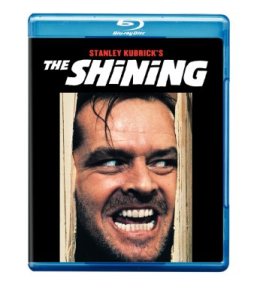
Of course some people believe that Wan Hu faked the entire stunt with the assistance of some fancy camera work under the direction of Stanley Kubrick, a scheme long covered over by a joint effort from the Chinese government and the cryogenically frozen head of Walt Disney.  The evidence is far too involved to go into detail here, but it stems from the numerous drawings of the events that, to the well trained eye, reveal peculiar shadow angles, an oddly marked rock, and an unfurling flag, among other truly alarming details.  Don’t even get me started on the secret clues buried within The Shining.

81ff3jlaJDL._SX342_
If you look really closely at Jack Nicholson’s space helmet, you can totally see a shadowy reflection of an object that might be a boom mic.

Now, I’m not generally a big believer in conspiracy theories, but this one, to me, seems entirely plausible. Because it turns out that prior to the 9th century, the Chinese didn’t yet have gunpowder, and they most certainly weren’t launching rockets in 2000 BC, strapped to a chair or not.

About thirty-five years after the publication of the Scientific American article, American author Herbert S. Zim offered a thoughtful update to the tale in his book Rockets and Jets. He logically placed the story of Wan Hu in the early 16th century. And it was some time after that when the Chinese began to adopt the tale, eventually erecting a statue of this hero of space travel at the Xichang Satellite Launch Center.

But if that’s not enough to convince you that the whole thing might just be made up, MythBusters Jamie Hyneman and Adam Savage attempted to recreate Wan Hu’s famous flight using technology that would have been available in 16th century China. They weren’t successful. And when they cheated and used more modern technology in an attempt to duplicate the results, their trusty dummy Buster wound up blown to bits and, most notably, not on the moon.

So, I think it’s safe to assume the conspiracy theorists have it right this time. Wan Hu could not have been the first man to step on the moon. The honor still belongs to Neil Armstrong, and thankfully, there’s no reasonable debate about that.

Apollo 11 Moon landing: conspiracy theories debunked

10 Reasons the Moon Landing Could Be a Hoax


The Pokémon Pandemic is Upon Us…Go Wash your Hands

In February of 1512, a Spanish Conquistador named Juan Ponce de León received a royal commission to pillage, plunder, and claim the rumored islands northwest of Hispaniola. King Ferdinand specifically wanted this honor to go to Ponce de León, a Spanish son of a good Spanish family, because he did not want to cede any more power to Diego Columbus, the uppity son of that silly Italian fellow who’d done all the exploring for them in the first place.

Ponce de León had travelled to the New World initially on the second voyage of Christopher Columbus in 1493. Though it’s not clear what he did in the meantime, by 1504 he became the right hand man of the appointed governor of Hispaniola, Nicolás de Ovando, by effectively squashing a rebellion by the native Taínos.

Juan_Ponce_de_Leon
Juan Ponce de Léon, pillager, plunderer, and Pokémon Trainer extraordinaire. Public Domain, via Wikimedia Commons

Thus began Ponce de León’s widely successful career of murder and exploration. He soon set off for the island eventually known as Puerto Rico in search of riches rumored by the Taínos, in exchange for which he enslaved many of them and gave the rest smallpox because he never washed his hands. He did find a great deal of gold, but by the time he returned to Hispaniola, Ovando had been usurped by the pesky Diego Columbus and a power struggle soon raged.

So when King Ferdinand suggested Ponce de León go exploring, he was probably pretty happy to oblige. He was the kind of guy who would jump at the chance to gather slaves, glory, and eternal youth, even if it meant wandering into a dark alley at 2 o’clock in the morning.

Because, yes, I think it’s safe to assume that if Ponce de León were alive today, he would be pretty obsessed with the game Pokémon Go. Now I don’t know where else in the world this game may be at this point, but here in the US, it made its debut earlier this month, and I’m telling you, wash your hands, because the pandemic is coming. If you are in the US and you don’t know the game yet, it’s what those people wandering aimless through your neighborhood while staring intently at their phones are doing.

28027624222_17f46b2aed_o
There’s one! Oh wait, no, that’s just a toy. photo credit: 对阵/Versus via photopin (license)

I was just a few years too old to get caught up in the Pokémon craze the first time around and I’m going to sit it out this time around, too, so if you one of those obsessed (and I’m betting you’re not because you wouldn’t be wasting time/cell phone battery on reading this post), then I apologize for the following explanation.

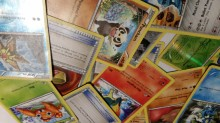
As far as I can figure, Pokémon is a game in which you capture little powerful creatures and make them fight each other for your entertainment. In the late nineties, you did this by buying or trading Pokémon cards that you would play against your friends who would try to counter your attack with whatever cards they bought or traded for.

Now it’s gone mobile and realistic-ish, because through the magic of Internet mapping, Pokémon (the critters) can show up anywhere at any time and in order to capture them, all you have to do is throw Pokéballs (whatever those are) at them or hatch them from an egg by walking around like a crazy person.

pkemon
Ah the good old days, when Pokémon was just a game that everyone was obsessed with. Oh, wait…


And if that’s not exciting enough for you, yes, you can make them fight, and you can take over “gyms” from other Poképlayers (a word I think I just made up, but probably not).  The “gyms” are located in real-life public spaces, businesses, and even private properties that were once designated as something else, without any permission whatsoever given by the property-owners, or any recourse for those who don’t want their property to be a part of the game.

Did I get this about right?

And people have become absolutely obsessed with this game. I know because when I first heard about it maybe three or four days ago, it took over my Facebook feed, where so many of my otherwise pretty rational friends began posting screenshots of all the funny little places they’d found Pokémon, like in the bathroom stall at work. I would say an equal number of otherwise rational friends began railing against the posts and the crazy people stumbling about staring at their phones in places they ought not to have been, like the bathroom stalls of someone else’s workplace. Then I turned on the radio and the dj was droning on and on about Pokémon Go and I realized that even though I didn’t understand a single word, she assumed all her listeners knew exactly what she was talking about. And they probably did.

robb's pokemon
Virtual Pokémon in the non-virtual world. I admit, it looks pretty fun. Thanks to my multiple FB friends who, when I put out a call for a pic, obliged quickly and enthusiastically.


So why are people so obsessed with the game? All I can think is that they are reliving their childhoods, searching for a little bit of that wonder they felt in their youth, and hoping that by scouring a dark alleyway at 2 o’clock in the morning, and taking over new lands (or “gyms”), perhaps they can find it.

The great rumor mill of history suggests that that’s what Ponce de León was after as well when he stumbled into Florida. In addition to gold and slaves and glory, he was searching for the famed fountain of youth. Of course there are no contemporary sources that suggest this was the case, and even if he was seeking it, he never found it. In 1521, the conquistador was shot by poison tipped arrows fired by native inhabitants of his new land. Sapped of the strength even to throw a Pokéball, he died shortly after. And it couldn’t have happened to a nicer guy.

But despite the possible private property issues and potentials for abuse, which will need to be worked out, the game seems innocent enough. I wish all the Pokéballers (another word I think I just made up, but probably not) good luck on their quests for youth. But seriously, go wash your hands.


BOOM! Aliens: A Detour Through Crazy Town

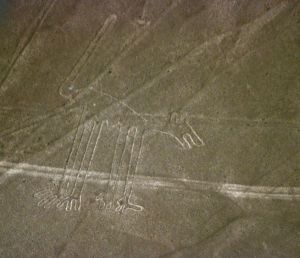
In 1553, Spanish conquistador Pedro Cieza de León included in the first part of his Crónicas del Perú, a description of what he assumed were trail markers, basically a series of shallow trenches stretching across the plateaus of the Nazca Desert. Then in 1940, historian Paul Kosok flew over the trenches and saw in their patterns the very clear shape of a bird.

Eventually the Nazca lines were discovered to include several hundred animal and human figures of varying sizes covering nearly 200 square miles. Experts determined the lines were pretty simple to make with only very limited ancient trenching tools similar to what non-experts might call “sticks.” Many of these very technical tools have been found near the trenches and have helped scientists to date the designs to between 500 BC and 500 AD.

20160629_194120
It’s completely irrational to assume the Nazca people could have had access to such advanced technology. To my mind, this is definitive proof of Extraterrestrial visitation to Ancient Earth.

But no one has been able to come up with a completely satisfactory explanation of why the designs were put there in the first place. It’s been suggested by archaeologists that the trenches may be related to irrigation. Some astronomers think the designs may point out important heavenly bodies or mirror the constellations. Many anthropologists think the designs might be a type of offering to the gods who had the power to either bless or curse crops in the arid land. And one art historian even suggested the lines might be giant ancient textile patterns.

But the most delightful explanation comes from the field of Ancient Astronaut Theory, or as it is more commonly known among professional circles, Crazy Town. What Crazy Town suggests is that the lines and shapes were constructed to commemorate a visit to Earth from aliens, and that they were perhaps even created by the alien visitors themselves.

Because research is tedious and slow and, you know, aliens.

Ancient Astronaut Theorists have enjoyed a certain degree of seeming legitimacy for the last few years because of the History Channel show, Ancient Aliens, which premiered in 2009. Now, I know what you’re thinking. A channel that purports to focus on history while mostly providing reality shows about pawn brokers and monster hunters, parallels pretty nicely a blog that claims to be about history, but winds up being more about my dog.

I like the History Channel, at least some of it. When it started out, its list of programs mostly included thoughtful and well-produced documentaries about World War II. Even today you can occasionally find thoughtful and well-produced documentaries featuring the commentary of actual experts in their respective, non-crazy fields of study. Which is why the History Channel, much like this blog, can still lull you into thinking that it’s a reliable source of solid information.

696px-Nazca-lineas-perro-c01
As the Nazca people obviously could not have had access to a picture of my dog, this, to my mind, is definitive proof of Extraterrestrial visitation to Ancient Earth. via Wikimedia Commons

Because even Ancient Aliens tends to start out sounding pretty legit. The camera swoops in on an ancient landscape. A voice with an unmistakable authoritative ring begins to ask serious, thought-provoking questions. The author of Great Adventures in Crazy Town, sounding more or less like an academic, sums up the conventional archaeological explanation of what you’re seeing. Then, just when they have you thinking that you’re being spoon-fed all the important details that will make you sound brilliant at your next cocktail party: BOOM! Aliens.

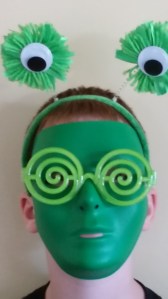
20160613_111334
Maybe not my best work, but the fact that five minutes at a craft store and a little hot glue yields this is, to my mind, definitive proof of Extraterrestrial visitation to Ancient Earth. And at least I didn’t end up writing about my dog.

It’s a little disconcerting when a trusted authoritative source takes a detour through Crazy Town. And I imagine that’s how my oldest son felt when he came to me a couple weeks ago with a problem. We were about to leave on a long road trip through the northeast, and I was busy working my way through the packing process so, really, I was in Crazy Town already. He reminded me, a trusted reliable source of all things crafty and motherly, that he needed a space-themed costume for the camp he was scheduled to go to the day after we were due back from vacation.

And motherly craft magic is tedious and slow, and you know, aliens.

BOOM!


Don’t forget to sign up to receive updates and bonus materials related to my forthcoming historical novel, which is not about my dog. You can sign up here: http://eepurl.com/b3olY1


Lessons from a Typewriter

On the wall above the desk where my computer sits is a beautiful painting of an old typewriter. It hangs there I suppose because it makes a sort of sense in this space where fingers fly across the more modern QWERTY keyboard composing e-mails and blog posts and the next great American novel. But when I reflect on the story of how the typewriter came to be, I think there’s more to it than that.

800px-TypewriterPatent1868
Sholes received a patent for his typewriter 148 years ago today (June 23, 1868). Public Domain, via Wikimedia Commons

In July of 1867 in Milwaukee, Wisconsin, mechanic Carlos Glidden passed on a Scientific American article to his friend, printer Christopher Latham Sholes. The article detailed a recently invented writing machine called the pterotype. Sholes and a partner had recently been somewhat successful designing a number printing machine and when he looked at the device his friend showed him, Sholes thought he might just be able to do better.

He quickly set to work and soon used a converted telegraph key to type the letter “W.” Excited about their initial success Sholes and Glidden had a model with a full alphabet and some punctuation by September of 1867. The only thing left to do was to get the machine to market, which was a long and frustrating experience during which Sholes remarked on several occasions that he wouldn’t recommend the no-good invention to anyone anyway.

Finally in 1873, after receiving an intriguing typewritten query letter, sewing machine and firearms manufacturer E. Remington and Sons asked for a demonstration at their New York headquarters. Seeing what the machine could do, they wasted no time in manufacturing a thousand of them, and optioned 24 thousand more.

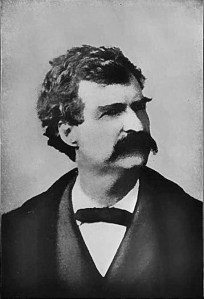
Mark_Twain_1883
Mark Twain’s Life on the Mississippi became the first manuscript ever typed on a typewriter. Public Domain, via Wikimedia Commons

Initially the Remington typewriter wasn’t a commercial success. Despite the claim that a skilled person could produce 57 words per minute, and a stamp of semi-approval from Mark Twain who had a love/hate relationship with one of the earliest models, the machine cost a whopping $125. The trouble was that at that price, the typewriter cost significantly more than a pen, which came with significantly fewer glitches.

It would take a number of revisions to the initial design, a more reasonable price tag, and the help of a good marketing plan to lead to the typewriter’s eventual success. Sholes, who gained little fortune from his invention, plugged away at improvements for the rest of his life, never really satisfied that he’d gotten it exactly right.

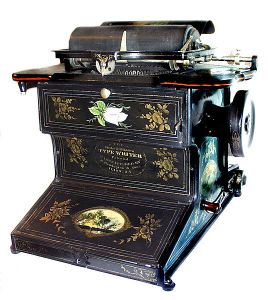
536px-S&g1
And this sure is prettier than my computer. By User:Kosmopolitat [GFDL (http://www.gnu.org/copyleft/fdl.html) or CC-BY-SA-3.0 (http://creativecommons.org/licenses/by-sa/3.0/)%5D, via Wikimedia Commons

Near the end of his life, however, he had this to say: “Whatever I may have felt in the early days of the value of the typewriter…I am glad I had something to do with it. I built it wiser than I knew, and the world has the benefit of it.”

So a beautiful painting of an old typewriter hangs above my computer because when I sit down at the keyboard, I want to reflect that when my project is at long last complete, and has come out perhaps even wiser than I knew, I will be glad to have been a part of it. And I want to be reminded that in addition to inspiration, great ideas take time and hard work, and often a lot of revision. An intriguing query letter and killer marketing plan won’t hurt either.


Note: I originally wrote this article over a year ago for Saturday Writers of St. Charles County, Missouri, but thought on this 148th anniversary of the original patent for the Sholes typewriter, I would share it in this space. As a writer, I am grateful for the invention of the typewriter. I am even more grateful that I don’t have to use one.

Hold the Fermented Fish Sauce

I am not a brilliant cook. I’m not exactly terrible either, unless you ask my youngest son, but then he refuses to eat anything that doesn’t come in a pizza box so I’m not sure you can trust his judgment on the matter. I have gotten braver with ingredients than I once was and may even occasionally go off recipe, which even more occasionally works out fairly well. And I have a few dishes that are actually quite good.

25994550643_12ba7c9d08_o
Over IX billion served. photo credit: The Golden Arches via photopin (license)

But meal planning for a picky household and trying to get everyone fed something that’s not terrible for them before they rush off to the next thing is tough. This is especially true in the summertime when I spend long days playing with my kids and then have to throw dinner together at the last minute.

So like so many busy families, we eat out, or at least eat take-out, far more than we should. It’s a problem that’s been around for millennia.

We know because the Roman city of Pompeii, so perfectly caught in the act of everyday life by the volcanic ash spewing from Mt. Vesuvius in 79 AD, had take-out restaurants. Or at least archaeologists can make a reasonable guess that that’s what they were. These cookshops or thermopolium (which roughly translates as “McDonald’s”) are equipped with stone counters with large recessed bowls. Some of the more well-preserved ones include depictions of the menu items offered.

26488193064_fc1fe16434_o
I’ll take a number VII with a Coke. Hold the fermented fish sauce. photo credit: Au marché, les poissons, Cesenatico, province de Forli-Cesena, Emilie-Romagne, Italie. via photopin (license)

They offered simple, easy to prepare fare, such as lentils, cheese, and porridges. Customers slathered their food with garum, a fermented fish sauce as ubiquitous as ketchup is today (though significantly more disgusting on French fries).

The food must have been fairly cheap, as the cookshops almost exclusively served the less well-to-do, an assumption made by archaeologists both because of the disdain with which Ancient writers refer to the thermopolium, and from the inclusion of kitchen facilities in the homes of the wealthy, a luxury lacking in most of the more modest dwellings.

I suppose if you don’t have a kitchen, it makes sense to eat out all the time. In retrospect, maybe this is the feature (or lack of feature) I should have looked for in a house. Instead I have a lovely kitchen. It’s roomy enough to work in and visit with family, friends, and neighbors while we prepare food to share. I love that.

20160613_084001
But going out to eat with friends is also pretty nice.

It’s the daily grind, when it’s just me, and whining, hungry kids that aren’t going to eat whatever I’m cooking anyway, and a mountain of dishes, that I’m not too fond of. That’s when I start to think that the citizens of Ancient Rome may have had the right idea. Well, except about the fermented fish sauce.

A Post for Every Season

In 1958, seventeen-year-old American high school student Robert G. Heft needed to find a good project for his history class. Realizing that his nation might be on the cusp of something important, Heft decided what he would do was address the obvious problem presented by admitting two more states to the then 48-state United States.

Young Heft spent twelve hours (probably the night before the project was due), using a yard stick and his mother’s sewing machine to carefully produce a new American flag design featuring 100 hand-cut stars, fifty on each side of the blue section.

17571380795_bac6abbe67_o
The new flag was raised on July 4, 1960 above Fort McHenry where Francis Scott Key famously penned the words that would one day be set to the most difficult tune on the planet for anyone to carry, though that doesn’t stop scores of drunken baseball fans from trying. photo credit: My favorite flag in the world. via photopin (license)

Bleary-eyed, he presented his project to his teacher Mr. Pratt, who promptly awarded him a B-. But young Heft had worked really hard and he wasn’t satisfied with the grade so he complained to his teacher, who sighed and finally agreed that he would give the project an A as soon as Congress accepted Heft’s design as the new American flag.

What was most likely meant as a dismissal, Heft took as a challenge. So in January of 1959, when Alaska became the first new state admitted to the Union since Arizona in 1912, he started to get excited. When later that same year, on August 21, Hawaii became number fifty, Heft held his breath in anticipation. Because he, along with somewhere around 1500 of his fellow citizens (all desperate to improve their history grades), had submitted unsolicited new designs for the flag. President Eisenhower himself called Heft to inform him that his design had been chosen.

It’s a great story, because it’s that of a relatively powerless young person, working hard, taking a chance, and achieving success against the odds. In a way it feels a little like the story of the United States itself.

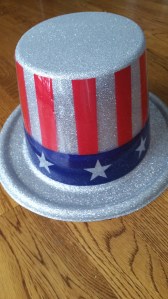
20160609_073234
And super stylish hats. Let’s not forget those.

We Americans love our flag. Mostly, of course, we love what it represents, freedom and sacrifice and that fierce American pride instilled in us at birth. Many of us fly flags at home and we put the stars and stripes on ties and tee shirts and coffee mugs. We hoist our flag on Memorial Day at the end of May in honor of the men and women who have sacrificed to protect all that it represents. We display it again on July 4th, in honor of the original declaration of American attitude.

And thanks to a movement derived from the lesson plans of a creative Wisconsin teacher in 1885, whose school celebrated the flag’s birthday on June 14 (the 108th anniversary of the adoption of the stars and stripes), we now also fly it for Flag Day.

What this means is that in addition to showing our patriotism, we also get to be incredibly lazy. Because from the end of May to the beginning of July, it is perfectly appropriate to feature your stars-and-stripes front door decoration, candy dishes, and knick-knacks. And really, who’s going to say anything if you start at the beginning of May when you finally put the Easter bunnies away, and stretch it until the scarecrows come out in, say, September.

20160609_065732
Heck, I’m so patriotic, I might just leave this up all year.

No one. Because you are patriotic. And if they do say anything, then clearly, they are not. If you want to be really lazy patriotic you might even stretch your flag-themed paraphernalia through Veteran’s Day in November, by which time, it is nearly acceptable to swap it for Christmas decorations. I recommend snowmen because they’ll last you well into Lent.  

That, my friends, is how you become the envy of all your neighbors, because you always have such beautiful seasonal decorations in your home, while they can’t seem to find the time for such nonsense. Maybe they just aren’t as thoroughly patriotic as you.

20160609_070524
Rest assured, even the addition of more states won’t render this centerpiece any  less delightfully patriotic.

And the best part about all this wonderfully American stuff is that the number of stars doesn’t particularly matter. So if in a few years, there’s a 51st state, your oh-so-starred-and-striped paper-weight should weather the storm just fine.

Of course the flag itself will have to change in that case, but it’s okay because Robert Heft has us covered. He did retrospectively get his A on his project and went on to become a teacher and even served as mayor of his little Ohio town. When he passed away in 2009, Heft also held copyrights to flag designs with fifty-one through sixty stars. Just in case.


Don’t forget! You can join my e-mail list to receive updates on my forthcoming novel here: http://eepurl.com/b3olY1