Santa Claus: A Fat, Jolly Kleptomaniac with a Raging Coke Addiction

In 1931, Michigan-born illustrator Haddon Sundblom was approached by the Coca-Cola Company to reinvent the image of Santa Claus. The artist had a lot to work with. The legend which had begun with the generosity of a 4th-century bishop was Americanized by Washington Irving in 1809.

20151216_090918.jpg
Coke and Santa Claus, forever linked by the efforts of Haddon Sundblom. That’s effective advertising.

In 1823, thanks to the poetry of Clement Moore (maybe), he became a jolly elfish figure with magical flying reindeer.  During the American Civil War, artist Thomas Nash gave St. Nicholas his more familiar name. Santa Claus became an enthusiastic Union supporter dressed in fur from head to toe.

American artists Rockwell, Wyeth, and Leyendecker captured the essence of Santa Claus in the early 20th-century. The jolly fat man received a fur-trimmed stocking cap, wide black belt, black boots, and a large bag of toys. This is also when red and white became his undisputed favorite colors.

By the time Sundblom got hold of him, Santa already resembled a Coke can in the American imagination. But Santa was still elfish, stern, and a little bit too much like a random fat guy in a funny suit. Evidently, that didn’t make people want to run out and drink Coca-Cola.

Sundblom solved the problem by recruiting his neighbor, a fat, jolly salesman, to model for him. The result was a magical looking image of a warm and friendly man people the world over began to identify with. For thirty years, Sundblom breathed life into his Santa. He played with toys, relaxed by the fire, and pilfered the Christmas feast from the refrigerator.

Coca-cola_truck_fragment
A jolly Sanata demonstrating for an innocent child that it’s perfectly okay to snag a drink from someone else’s fridge without asking permission. By User:Husky [CC BY-SA 3.0 (http://creativecommons.org/licenses/by-sa/3.0)%5D, via Wikimedia Commons
All this he did with a warm smile and a bottle of Coke. The images captured the imagination of the world, even in nations where “Santa” was more often portrayed as a wiry bishop. The rumor spread that Sundblom and Coca-Cola invented the iconic red and white suit of the American Santa Claus.

But it isn’t exactly true. What they did was standardize Santa as a fat kleptomaniac with a friendly face and a raging Coke addiction. And Christmas has been all the jollier ever since.  

6463743173_00a2eb0804_o
Creeptastic. Seriously. photo credit: Elf on a Shelf Playing with Knives via photopin (license)


My kiddos have outgrown their Santa years, and thankfully we never got into that creeptastic Elf on a Shelf thing. But they appreciate the magic of the legend, and they’ll have a hard time getting to sleep on Christmas Eve. Because our stockings are still hung by the chimney with care, and my boys know St. Nicholas soon will be there.

He’ll be jolly-ish as he assembles surprises late into the night (maybe we could use an elf on our shelf). He’ll drink the Coke left for him on the hearth because he’ll need the caffeine. And before he stumbles bleary-eyed into bed, he might even raid the fridge.

No Historical Figures were Harmed in the Writing of this Book: A Review of The Magician’s Lie

On the night of January 19, 1897, illusionist and recent widow Adelaide Herrmann stood before a firing squad at the Metropolitan Opera House in New York. In front of a large crowd of people that I imagine were sitting on the edges of their seats, the squad opened fire. When the guns were silent, Herrmann still stood, revealing to the audience that she had successfully caught six bullets and was completely unharmed.

110243467_59d8186c30_o
Famous performers of the simultaneous bullet catch, in which neither has yet died. But they’re not revealing how they do it. photo credit: Penn & Teller via photopin (license)

Not every magician who has performed a version of the bullet catch illusion has been so fortunate. The earliest performance that I could find reference to occurred around 1580, and was accomplished by a French magician who lived long enough afterward to be killed by a disgruntled assistant more than thirty years later. But there have been a fair number (both verifiable and not) of magicians injured and possibly more than a dozen killed in the course of performing the catch.

How exactly the illusion is accomplished I couldn’t tell you (though plenty of people have offered explanations on the Internet) and even Penn and Teller aren’t revealing this one. What is clear to me is that it’s both dangerous and enduring (and quite possibly stupid), as iconic to the illusion performance industry as sawing a woman in half.

Harvard_Theatre_Collection_-_Hermann_TCS_28
Adelaide Herrmann, the Queen of Magic, levitating, which is not nearly as dangerous as catching a bullet. Public Domain, via Wikimedia Commons

What makes Adelaide Herrmann’s performance notable is that this marked her debut as a headlining magician, taking the place of her deceased husband, illusionist Alexander Herrmann who’d been scheduled to perform it. Adelaide never included the illusion in her act again (an indication that she was not stupid), but she went on to become a highly successful illusionist in her own right, performing in Vaudeville circuits until finally retiring in 1928 at the age of seventy-four.

Her long and successful career as the Queen of Magic, highly respected by fellow illusionists, including Harry Houdini (a man who once announced that he would perform the bullet catch and later cancelled the performance citing concerns over the danger), in a field that was (and still is) male dominated, makes her a truly fascinating person in my book. But until recently I’d never heard of her.

And that is why I love to read historical fiction, because sometime I encounter truly interesting people with great stories. I was introduced to the Queen of Magic by the novel The Magician’s Lie by Greer Macallister. The story follows a fictional young female dancer turned illusionist named Arden at the turn of the century, who possesses a bit of true magical ability as well as a fascination with illusion and a love for the stage.

20151119_094911
Seems like a good week to take a break from the news and read a good book.


In the novel, Arden is mentored by Herrmann and eventually takes over her circuit, adding her own flare to the show, including an act in which she (a woman) has the audacity to saw a man in half. When one performance ends in the discovery of a murdered man stuffed inside her equipment, Arden attempts to convince a small town police officer (with plenty of issues of his own) to hear out her story before deciding her fate.

The novel does play with history a little (like by shortening the career span of Adelaide Herrmann) but I don’t think any historical figures were particularly harmed by those choices. All in all, this was a beautiful story, ultimately about the illusions we can create for ourselves, the lies we must believe in order to misunderstand our own predicament, and the very real danger of playing with magic and sometimes catching a bullet.

Hyperactive Goats, a Pragmatic Pope, and the Bitter Red Cups of Satan

According to legend, sometime in the tenth century or so, Ethiopian goat herder Kaldi made a discovery that would forever change the course of the world. He noticed that his goats were suddenly acting kind of like two-year-olds at bedtime, annoyingly energetic and determined not to sleep.

These guys look like they could use some coffee beans. photo credit: little bobbies via photopin (license)

Kaldi traced the behavior to a berry the goats ingested and alerted the local abbot who decided to try the magic berries himself. The abbot used them to brew a bitter drink that gave him the boost of energy he needed to make it through his evening prayers. Delighted, he passed on his secret.

Soon people (and goats) across the Arabian Peninsula were gathering in cozy coffee houses, discussing politics and the weather while sipping steaming cups of coffee and staying up way past their bedtimes.

By the 17th century, coffee reached Europe and while some rejoiced, adding sugar and cream to make the stuff more palatable, others were suspicious because whereas other popular drinks of the day, like wine and beer, made you sluggish and stupid, this new beverage instead made people thoughtful, productive, and pretentious.

20151111_125114
But no way would you have caught Pope Clement VIII drinking coffee from a plain red cup. I bet.

And so coffee was deemed the “bitter invention of Satan,” with the local clergy in Venice condemning the drinking of the dangerous stimulant. But the people weren’t having it, convinced as they were that if they didn’t start their day with a cuppa, then they might commit homicide. So Pope Clement VIII decided to step in and settle the issue once and for all. He hopped into the pope-mobile, headed to the corner Starbucks, and ordered himself a venti Iced Caffé Latte with skim milk. And you know what? He liked it!

With Satan’s drink safely exorcized, it quickly spread to the Americas. Then in December of 1773, a group of liberty-minded men got all hopped up on coffee and dumped a whole lot of tea (which, as far as I am concerned is at least Satan’s second favorite beverage) into Boston Harbor. Thomas Jefferson then boldly declared (among other notable things) that coffee is the “the favorite drink of the civilized world.”

And for many people, it is.  Personally I’ve never been much of a coffee drinker (though I do make the occasional exception for a Starbucks vanilla Frappuccino, but that’s really more milkshake than coffee), so maybe this isn’t my war to wage. But recently, Satan reclaimed the civilized world’s favorite drink.

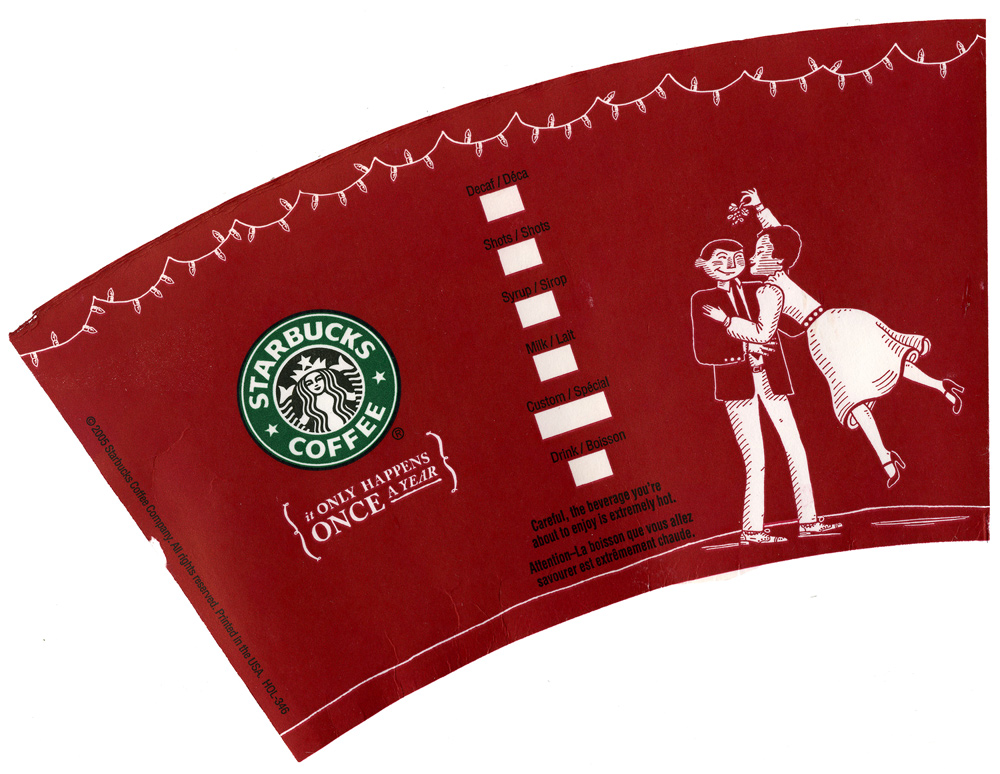
Because nothing says Jesus like levitating under the mistletoe. photo credit: Starbucks 'Red Cup' 2005 (mistletoe) via photopin (license)
Because nothing says Jesus like levitating under the mistletoe. photo credit: Starbucks ‘Red Cup’ 2005 (mistletoe) via photopin (license)

In case you’re not familiar with the controversy, earlier this week a video went viral of a self-declared “former pastor,” and “disciple of Jesus” explaining how he pranked Starbucks. The company, which has traditionally changed its cup designs to reflect the holiday season with pictures of sleds and snowflakes, revealed that this year its holiday cups (clearly designed by Satan himself) will simply be red with a Starbucks logo.

The “prank,” in which video guy was encouraging Christians to participate, was to tell the barista that his name was “Merry Christmas” so she’d have to write that on his cup. His claim is that by eliminating reindeer from the outside of his coffee cup, Starbucks is somehow persecuting Christians and that it is time to stand up and fight back.

Ha! Take that, Satan!

I can’t follow the logic either. But there’ve been a surprising number of people who have taken to Twitter with images of Starbucks coffee cups with “Merry Christmas” written on them. (Ha! Take that, Satan!). I think it’s safe to assume, most of these people have had entirely too much coffee because they’re behaving kind of like hyper goats.

Of course, I’m also happy to report that a larger number of Christians have taken to social media to say, “Um…what?”

Still, perhaps it’s time to call on Pope Francis to hop into the pope-mobile and settle this mess once and for all. Because I could sure go for a vanilla Frappuccino. But don’t worry, I’ll get the last laugh. I’m going to tell the barista my name is “Snowman.”

Dave Glover Spews Pea Soup?

In 1949, Jesuit Priest Walter Halloran was a student of history at St. Louis University who also served as a driver for William Bowdern, then pastor of St. Francis Xavier College Church. On the night of March 9, Bowdern asked Halloran to drive him to a charming two-story brick house in the northwestern suburb of Bel-Nor.

Halloran assumed he would wait in the car while the priest conducted his business at the home, but when they reached their destination, Bowdern surprised him, saying, “I’ll be doing an exorcism. I want you to hold the boy down in case it’s needed.”

As the story goes, in January of that year, a thirteen-year-old boy from near Washington DC (perhaps the most frightening place on earth), began exhibiting some very strange behavior after attempting to contact his recently deceased aunt with the aid of a Ouija board.

St. Louis's own Exorcism House, the last remaining location of the 1949 exorcism that inspired the novel and movie. Picture via Destination America, which will air
St. Louis’s own Exorcist House, the last remaining location of the 1949 exorcism that inspired the novel and movie. Picture via Destination America, which will air “Exorcism: Live!” at 9 pm EDT, on October 30. 2015.

Fearing he might be possessed, the family contacted their Lutheran minister, who directed them to Father Albert Hughes, a local Catholic priest. It seems Hughes knew only slightly more about exorcism than did his Lutheran counterpart and managed to get himself injured by the boy, who still appeared very much possessed.

After that, the family decided a change of scenery may be best (because nobody wants to exorcize a demon in their own house) and they headed to St. Louis where the boy’s mother had grown up and where there are evidently priests who know more about exorcisms than do their DC counterparts.

The demon seems to have agreed because the word “LOUIS” allegedly formed on the boy’s chest. The family (in a demonstration of the same kind of good judgment that led them to allow their son to attempt to contact the dead in the first place) took that as a sign.

And that’s when Bowdern and Halloran entered the scene, along with assistant and priest Raymond Bishop who kept a detailed diary of the proceedings. After more than a month of prayer and ritual, and moves both to the rectory of St Francis Xavier Church on the campus of St. Louis University and to the psychiatric ward of the Alexian Brothers Hospital (neither of which still stand), the exorcism was finally successful on April 18, 1949.

The boy and his family returned to their Maryland home where, his true identity safely obscured, he is said to have gone on to enjoy a normal, productive, and likely Ouija board-free life. But his ordeal became the basis of William Peter Blatty’s 1971 novel, The Exorcist, and the 1973 film adaptation, most well known for the spectacular spewing of pea soup.

Terrifying. photo credit: Fresh Pea and Ham Soup via photopin (license)

But the neat little brick house in Bel-Nor, Missouri is still here. The house is occupied, though the homeowners don’t seem to want to comment about the story. Neighbors and some previous owners have associated strange, unsettling feelings with the northwest upstairs bedroom where the exorcism is said to have partly taken place. Still, others are more skeptical.

All the priests who participated in the exorcism, with the exception of Halloran remained quiet on the subject in the interest of protecting the privacy of the possessed boy. Halloran never gave details either, but he did admit that he wasn’t quite sure what he had witnessed and that the entire episode may have been attributable to mental illness rather than true demon possession.

Others remain convinced that the house itself possesses an unusually large amount of spooky presence. Tomorrow night (October 30, 2015), on Destination America, television ghost hunters the Tennessee Wraith Chasers will join psychic and medium Chip Coffey, and Archbishop James Long (of the United States Old Catholic Church) in an attempt on live television to rid the house of lingering evil. With them will be local St. Louis radio talk show host Dave Glover.

5165775210_428bb0aa15_o
This is what I’m hoping my Halloween will look like. photo credit: Walking via photopin (license)

And probably not tuning in will be me.

Because there are some things, whether real or not, I think probably ought not be messed with. Instead, I plan to enjoy my weekend of handing out candy to Disney Princesses and tiny Darth Vaders. Then on Monday, I’ll flip on my radio to find out if Dave Glover is spectacularly spewing pea soup.

One Cool Artsy Hat

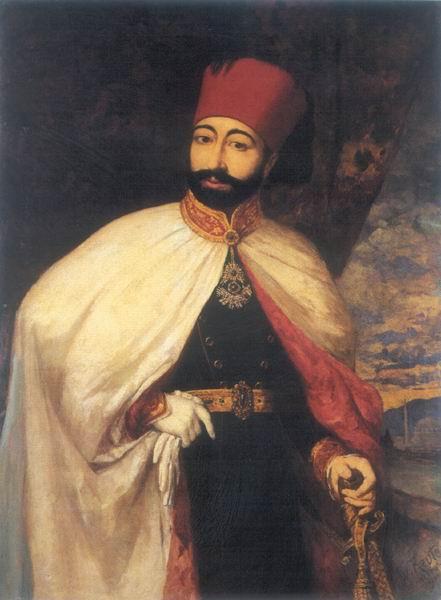
Sultan Mahmut II sporting his modern look. Public Domain, via Wikimedia Commons
Sultan Mahmut II sporting his modern fez. [Public Domain], via Wikimedia Commons
On November 25, 1925, the parliament of Turkey passed a law prohibiting citizens of that country from wearing a fez in a public space. The widely worn rimless hat had been an important part of the culture for nearly one hundred years, initially stemming from an 1829 decree by Ottoman Sultan Mahmud II that all civil officials and military personnel were required to update their headwear to the fez.

The move was part of a larger effort to modernize the Ottoman Empire, similar to Peter the Great’s grand plan to westernize Russia by taxing the beard. Though there was some resistance at first, the people more or less responded well and by the end of the century, the fez had become not only standard headwear, but also a beloved national symbol.

And that’s what led to the Hat Law. Prior to its passage Turkish leader Mustafa Kemal Atatürk spoke passionately of his vision for the burgeoning nation of Turkey, which, he demonstrated, included the wearing of Panama hats, which he thought were much cooler.

First president of Turkey, with his modern Panama hat. [Public domain], via Wikimedia Commons
First president of Turkey, Mustafa Kemal Atatürk, with his even more modern Panama hat. [Public domain], via Wikimedia Commons
Alas, the public already thought it looked pretty good wearing a fez and was not prepared to embrace yet another change to its attire. Instead of immediately casting aside the fez in favor of the rakish fedora, pockets of the population rose up in revolution.

The uprising didn’t last long, and it didn’t go particularly well for the revolutionaries who adopted the fez, formerly a symbol of reform, then a rallying cry for proponents of Turkish cultural conservatism. More than thirty people, both men and women, were executed in the course of Turkey’s brief Hat Revolution.

And though it is rarely enforced with much gusto today, the law remains on the books in Turkey, where it’s been for ninety years, even during the rise and fall of the casual European man lounging in a smoking jacket and matching fez.

I have to say, as far as symbols of cultural tug-of-war go, the fez is a pretty cool one (unless it’s paired with a smoking jacket, which most people can’t pull off). And I suspect that may be one of the reasons the online arts and literary journal Red Fez adopted it.

Because in 2002, magazine founder Leopold McGinnis decided to rise up against the well-guarded path to traditional publishing and provide writers with a new opportunity to get their imaginative work out there for public consumption.

Within a few years (with the help of additional artistic revolutionaries) Red Fez expanded to include not only fiction and poetry, but also comics, photography, music, and videos. And it became a really cool Internet hangout for artists of all types (like maybe even cool enough to pull off a smoking jacket).

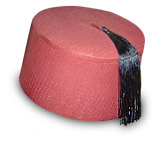
That's one artsy hat.
That’s one cool artsy hat.
“Fes”. Licensed under CC BY-SA 3.0 via Wikimedia Commons – http://bit.ly/1Kauoek

The magazine is published monthly and to date has served up “1,481 poems, 568 stories, 114 graphic works, 70 videos, 35 audio works, 424 articles and reviews from 1302 authors and artists around the world.” And this month, among the creepy artistic offerings of Issue 83: October 2015, The Halloween Issue, there is a story by a little known practical historian.

The story is called “Elixir of Life.” It’s not of a historical nature, but I hope you’ll follow the link and enjoy it anyway. While you’re there, don your fez and coordinating smoking jacket (you’re cool enough to pull it off) and hang out for a while because there’s a lot of good stuff to soak in.

Bald Might Be Better

On October 8, 1905 in London, German-born hairdresser Karl Nessler carried out the first successful public demonstration of a permanent hair wave process. Nessler applied sodium hydroxide to the long hair of Katherine Laible, wrapping sections of it around a dozen or so 2-pound brass rollers electrically heated to 212˚F. He then suspended the rollers above Laible’s head from an elaborate chandelier contraption so she wouldn’t be burned as she waited the six hours necessary for her new do to be done.

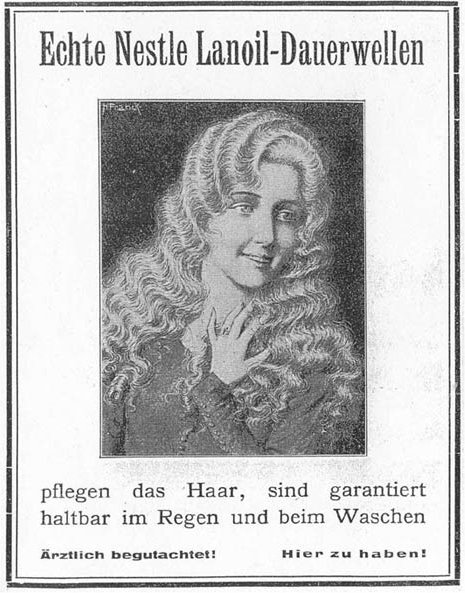
Turn of the century ad for Nessler's Permanent Wave Process. rough translation :
Turn of the century ad for Nessler’s Permanent Wave Process. Rough translation : “Better than bald!” [Public domain], via Wikimedia Commons
The demonstration was promising and it led to a 1909 patent held by Kessler who continued to improve his permanent wave machine up until he was subjected to internment during World War I. After the interruption to his career, Nessler immigrated to the US, changed his name to Charles Nestle, and grew a successful hairdressing business that included branches in major cities across the country.

But as far as I’m concerned, Charles Nestle is not the hero in this story. That title belongs to Katherine Laible, his incredibly supportive wife. Because before the successful demonstration of 1905, in addition to the chemical and heat experimentation on wigs, there had been at least two previous attempts to put permanent waves into a woman’s locks.  Katherine was the guinea pig then, too.

Six Hours. Hooked up to this. That better have been a really good perm. By Stillwaterising (Own work) [CC0], via Wikimedia Commons
And at least twice she wound up bald, with painful burns on her scalp. Obviously she was a much better wife than I am, because she kept letting him try. I often don’t even return to a hairdresser a second time if I don’t like the way my cut turned out.

Actually, I’ve been on a quest for the perfect haircut for about two-and-a-half years. The trouble is that when we lived in Oregon, for the first time in my life, I had great hair, like the kind of great that would make strangers stop me on the street and ask where I got it done.

Then we moved 2000 miles away and though I tried, I couldn’t persuade my hairstylist to move with us. Since that time, I have been to probably a half dozen salons, scoured family snapshots and determined that no one ever takes a picture of the back of my head, and made a fool of myself asking countless perfect-haired strangers where they got their dos. So far no one has successfully duplicated my cut.

photo credit: You're a good cop, Velez via photopin (license)
On second thought, bald might be better. photo credit: You’re a good cop, Velez via photopin (license)

But no one has yet burned away all of my hair, leaving me blistered and bald, either. Nor have I had to sit for six hours strung up by a machine that looks like it is more likely to suck out my brain than give me fabulous hair. So maybe I should take a lesson from Katherine Laible and give someone another chance. Or maybe I should honor this 110th anniversary of Charles Nestle’s success and just get a perm.

Pickled History Scraped from the Bottom of the Barrel

On October 21, 1805, the British Royal Navy, under the leadership of Admiral Horatio Nelson, achieved what has been often identified as its most decisive naval victory of the Napoleonic Wars, at the Battle of Trafalgar. But the victory came at a price, because Admiral Nelson had been shot by a French marksman, and soon died with the words, “Thank God I have done my duty,” on his lips.

Admiral Nelson had previously lost his right arm in battle. It is not clear in which liquor barrel it was stashed. Oil on canvas by Lemuel Francis Abbott [Public domain], via Wikimedia Commons
Admiral Nelson had previously lost his right arm in battle. It’s not clear in which liquor barrel the arm was stashed.
Oil on canvas by Lemuel Francis Abbott [Public domain], via Wikimedia Commons
Like most important men of the era who had the misfortune to die at sea, the admiral was placed in a barrel of brandy for safekeeping on the trip home aboard his ship, Victory. Then the HMS Pickle, a schooner that had been present during the battle, was sent ahead to deliver the news that the navy had been victorious and that the admiral had been, well, pickled.

King George III was delighted with the news of the victory, but was purportedly sad to have lost Admiral Nelson, a hero whose memory lives on in the country for which he so nobly fought and died and that is still dotted with tributes to his heroism.

Perhaps the most bizarre tribute to the memory of the admiral is not a monument, however, but instead comes in the form of a tale that evolved from his final voyage, the one he took soaking in a barrel of brandy.

By the late 19th century, a strange saying had emerged from the Royal Navy. If one were caught sneaking an illicit drink, he would be said to have been “tapping the admiral.” I can almost hear you saying, “Oh, that’s where that comes from.” And now I can almost see the disgusted face you’re making as you realize what the rest of that story must entail.

Ship physician William Beatty faced some criticism for choosing to put the admiral's body in brandy rather than the more customary rum. In some versions of the tale it was a rum barrel that was used, which makes this particular branding just a little bit disturbing.
Ship physician William Beatty faced some criticism for choosing to put the admiral’s body in brandy rather than the more customary rum. In some versions of the tale it was a rum barrel that was used, which makes this particular branding just a little bit disturbing.

Apparently, sailors flush with victory, and probably mourning the loss of friends as well, like to get their drink on. Never having served in the navy myself, I will just have to take the tale-tellers’ words for it. As the story goes, these sailors really needed to get their drink on and they weren’t about to let good brandy go to waste over one dead admiral.

As the ship sailed, the crew took turns siphoning off bits of the brandy, so much so that when the admiral finally arrived home and the barrel was opened, he was still perfectly preserved, but there wasn’t a drop of brandy left.

First of all, gross. Second of all, I think it’s pretty safe to assume it never really happened. Again, I’ve never served in the navy, but I’m acquainted with several people who have, and what I do know is that most of them like to tell tales.

Though various versions of this story are splashed across the Internet, I first encountered it a while ago in a book I was reading as part of my research for the novel I’m currently writing. And then very recently, as I was reading through another (quite different) source for the same project, I stumbled on it again.

When you head into the liquor barrel of history, there's really no telling what you might find. photo credit: Aging Barrels via photopin (license)
When you dive into the liquor barrel of history, there’s really no telling what you might find. photo credit: Aging Barrels via photopin (license)

I find that one danger of writing historical fiction is that often the story I want to write gets hijacked by my research, by the stories I find along the way (sometimes again and again) that really want to be shared, but that have no place in the book I’m working on.  I’m sorry to disappoint any of you out there who might one day read my book, but Admiral Nelson and his barrel of brandy are not in it.

The story behind “tapping the admiral” is fascinating not because it’s true (again, gross), but because someone was devilish enough to make it up in the first place. And I would hate to think, dear reader, that you might someday find yourself at a party, sipping a drink (perhaps even brandy) without this story handy to pull out and share.

So here it is, one of the little legends drifting around in the great barrel that contains the tale I’d rather tell. Someday, after I’ve reached the end of the long, winding road toward a final published work, I hope you’ll enjoy the pickled remains. In the meantime, I will occasionally have to siphon off a little of the excess, because unlike the sailors who tell them, good stories should never be wasted.

“If you didn’t win a prize — and especially if you did — better luck next year!”

On the morning of April 13, 1888, successful inventor of explosives, Alfred Nobel picked up his copy of the morning paper and found something few ever have the opportunity to read: his own obituary notice.  “The Merchant of Death is Dead,” the headline read and the article went on to explain, “Dr. Alfred Nobel, who became rich by finding more ways to kill people faster than ever before, died yesterday.”

Alfred Nobel, who invented dynamite, and did NOT die on April 12, 1888. Public Domain, via Wikimedia Commons

A Nobel had died the previous day, but it was Alfred’s older brother Ludvig, a successful businessman and inventor in his own right. Though Alfred was still very much alive (and would be for another eight and a half years) the mistake was devastating to the inventor whose drive had largely been to develop safer ways to produce and use explosives.

Determined that he would not be remembered as “The Merchant of Death,” Nobel changed his will to leave 94% of his wealth (which was a lot) to the establishment of an award designed to honor great achievements in various scientific and cultural categories.

So since 1901, the Nobel prizes have been awarded on December 10th, with announcements happening sometime in early October. But since 1991, there has been an even more impressive presentation of awards given just prior to the Nobel announcements, called the Ig Nobel Prize Awards.

Thanks to Isabella Mandl, et. al., recipients of the 2011 Ig Nobel Prize for Physiology, we now know that red-footed tortoises do not experience contagious yawning. And I know we were all wondering. By Ltshears (Own work) [Public domain], via Wikimedia Commons
Thanks to Mandl, et. al., recipients of the 2011 Ig Nobel Prize for Physiology, we now know that red-footed tortoises do not experience contagious yawning. And I know we were all wondering. By Ltshears (Own work) [Public domain], via Wikimedia Commons
While the type of scientific research that now claims the attention of the Nobel committee may be somewhat difficult for us regular shlubs to fully understand, the Ig Nobels (or Igs for short) are designed to recognize research that “first makes people laugh and then makes them think.”

Last year’s winners include a group of Japanese scientists who formally studied just how slippery a banana peel discarded on the floor actually is, a pair from the US and India that teamed up to study whether nosebleeds might be effectively treated by packing one’s nose with strips of cured pork, and nutrition researchers from Spain who studied the viability of using bacteria isolated from baby poop as probiotic starter cultures for use in the production of fermented sausages.

2005 Ig Nobel laureates Edward Cussler and Brian Gettelfinger determined that humans can swim just as fast in syrup as they can in water.

That’s just a FEW of the scientific advances celebrated in just ONE year of the Igs. The tradition of the Ig Nobels was begun by editors of the science humor magazine Annals of Improbable Research and it has been pretty widely embraced by the scientific community, with the awards presentation being hosted by Nobel laureates and with most recipients (who do have the option of declining the nomination) graciously accepting their awards, often in-person.

Because the thing about scientific research is that sometimes it’s the bizarre or trivial questions that lead to discoveries that really do change the world. The 2006 winner of the biology Ig was a multinational group of researchers who determined that the female mosquito responsible for transmitting malaria is every bit as attracted to Limburger cheese as it is to the smell of human feet. A worthy study it was, because the findings have led to new developments in the control of mosquito populations in the ongoing battle against malaria in Africa.

Enquist, et. al. received the award in the category of Interdisciplinary Research in 2003 for their determination to prove what I think we've probably known all along, that chickens really do prefer beautiful people. photo credit: via photopin (license)
Enquist, et. al. received the award in the category of Interdisciplinary Research in 2003 for their determination to prove what the scientific community has long suspected, that chickens really do prefer beautiful people. photo credit: via photopin (license)

And in 2011, a researcher from Stanford University won the Ig in Literature for his “Theory of Structured Procrastination,” in which he suggests that highly accomplished people work best when they “work on something important as a way to avoid working on something that’s even more important,” which is why I am taking the time to blog about the Ig Nobel Prize when I should be writing a novel.

I’m also writing this because in the next few weeks we will learn who the world-changers are that the Nobel Committee has decided deserve to have the title of “Nobel laureate” in the headlines of their obituaries, but before that can happen, on this very night at Harvard’s Sander’s Theater, the 25th annual Ig Nobel awards ceremony will take center stage.

If you forgot to get your tickets, don’t worry. You’ll be able to catch a radio broadcast of this important event on NPR’s Science Friday the day after Thanksgiving.  It’s sure to be a doozy of a ceremony and it will end with the traditional words:  “If you didn’t win a prize — and especially if you did — better luck next year!”

If you’re interested (and you know you are), here’s a link to the full list of Ig Nobel Prize winning studies.

Funky Art and Monkey Math

When Chicago lawyer Sebastian Hinton was a boy his mathematician father devised a unique way to help his children better understand three-dimensional space. Years later in 1920, Sebastian recounted the tale at a dinner party in the home of the superintendent of schools in Winnetka, Illinois.

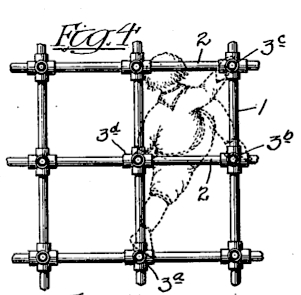
What the elder Mr. Hinton had done was build a three-dimensional grid of bamboo poles that his children could climb on, more funky sculpture than traditional toy. When a coordinate was called out (X,Y,Z), young Sebastian and his siblings raced to that location.

Patent picture by Sebastian Hinton, depicting his
Patent picture by Sebastian Hinton, depicting his “JungleGym.” {{PD-1923}}, Public Domain in the US, via Wikimedia.

Sebastian Hinton explained he’d like to build a similar structure for his own children, though he admitted that it had meant more than developing math skills to him, that he’d really just enjoyed scrambling all over it like a monkey. The superintendent, who’d been looking for ways to incorporate more physical education into his curriculum, was impressed.

Not long after, Hinton applied for a couple of patents and set to work creating and installing the first official “Junglegym.” Despite his monkey math skills, Hinton’s first attempt proved too dangerous (even by 1920 standards), but by the second prototype, he had it. Today that second attempt remains on the playground of Crow Island School in Winnetka, where children still scramble all over it like monkeys.

Whether they are learning math in the process or not, children love to climb and swing and explore. And that’s why, when my boys (8 and 10) had the day off school last Friday, I took them to one of our favorite St. Louis destinations, the St. Louis City Museum.

The first floor contains a gorgeous series of tunnels and climbing tunes that winds through animal sculptures, a large treehouse, caverns, and a ton of surprises like a huge aquarium housing giant river fish.

I know the media currently portrays St. Louis as one of the most dangerous cities in the US and I know we’ve had some challenges over the last year or so, but that’s why I have to tell you about some of the great things you’ll be missing if you choose to avoid the city altogether.

Because my city is awesome. And The City Museum is absolutely amazing.

Built inside (and outside and on top of) the old International Shoe building downtown, the “museum” is a giant, evolving, work of art constructed almost entirely of reclaimed industrial and architectural materials. Everywhere you look you’ll find playful sculptures, beautiful mosaics, funky decorations, and more fun than you can imagine.

You’ll receive no map when you enter, and you’d likely not be able to follow one anyway. What you will find is a wildly imaginative series of structures on which people of all ages are encouraged to climb and explore.

Did I mention the skate park (minus the skate boards). Seriously fun.

There are enchanted caves, tunnels leading through and below a giant whale and a whimsical tree house. Slides of various sizes (including one that is ten-stories high) snake through the building and circus performers present several shows a day.

Outside the building is a pair of dodge ball pits, suspended aircraft fuselages and a fire engine to explore, a castle turret, lots more slides, and all kinds of connecting walkways and tunnels.

Ball pits aren't just for kids anymore. Well, but they do have a separate one for the wee kiddos, so go ahead. Jump in and play some dodgeball will your obnoxious pre-teens. Just no head shots or you'll be asked to leave.
Ball pits aren’t just for kids anymore. Well, but they do have a separate one for the wee kiddos, so go ahead. Jump in and play some dodgeball will your obnoxious pre-teens. Just no head shots or you’ll be asked to leave.

Opened in 1997, the City Museum has become a downtown destination in St. Louis, unlike any other in the world. It’s a place where children (and adults who WILL be sore the next day) can learn about art, creativity, and imagination, about the kinds of materials that make up a city, and yes, probably even a lot about math, if they want to do that sort of thing. It’s in that sense that The City Museum really is a museum.

But mostly it’s just a great place to climb like a monkey.

Give Me My Seventeenth Day!

Today is the sixteenth day of my children’s school year. Sixteen days of getting to know their teachers, running from the bees that invaded to school playground over the summer, re-establishing homework and study routines, and deciding that maybe summer isn’t as long and boring as they thought it was sixteen days ago.

Okay, maybe not THAT creative. photo credit: Lunchbots bento for 5th grade boy - puzzle cheese for autism via photopin (license)
Okay, maybe not THAT creative. photo credit: Lunchbots bento for 5th grade boy – puzzle cheese for autism via photopin (license)

I’ve been pretty busy, too. I’ve packed a variety of creative lunches (not just the slapped together peanut butter sandwiches my children can expect every day by late March), signed and returned every form that’s come home wadded up in the bottom of a backpack, and filed away roughly a billion flyers, making note of PTA fundraiser dates and soccer practice schedules.

And since I work from home, which means that when my children are home, I don’t really get to work (or at least I do a very different kind of work), I’ve had a remarkably productive sixteen days without the constant interruption of, “MOM!”

I have submitted two new short stories, added another 12,000 words to my current novel project, posted to my blog two Thursdays (and now three) in a row, attended my weekly critique group meeting three times (where I both gave and received both brilliant and terrible advice), and disappeared down several research rabbit holes. I’m even getting a start on my reading list.

You could say I’m on something of a sixteen day roll. Sixteen glorious days! That makes two entire weeks, and it would be three tomorrow.

If they had school tomorrow.

They don’t because it’s Labor Day weekend. Monday is a national holiday and all that and our school district, like many, decided to put a teacher planning and in-service training day on Friday, giving students a four day weekend. It’s probably a good idea. Families can travel or whatever. And I certainly don’t begrudge teachers their planning and in-service days. I realize those are important.

But I feel like we were just starting to hit our stride.  I want my day back!

I imagine this is kind of how the people of Great Britain felt when they woke up on the morning of September 3, 1752 and realized the day didn’t actually exist. That year, British citizens (including those in the American colonies) went to bed on September 2 and woke up on September 14, skipping over eleven days in the process.

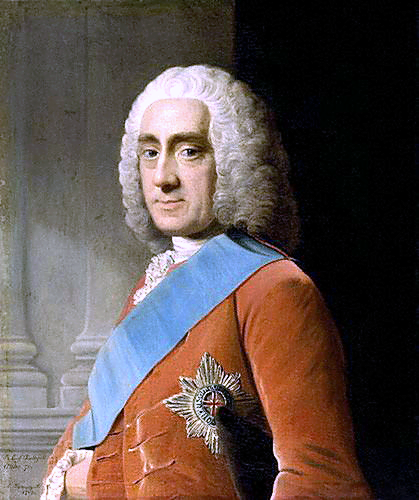
The calendar change was proposed by Philip Stanhope, the 4th Earl of Chesterfield whose birthday is on September 22. Guess he got to open his presents a little bit earlier in 1752. Portrait by Allan Ramsey. Public Domain, via Wikimedia Commons.

It was probably a good idea. Great Britain had been following the Julian calendar, introduced in 46 BC. That would have been all well and good except that the calendar was based on a solar year that had been miscalculated by 11 minutes. What wasn’t such a big miscalculation in 46 BC, had after a while become a very big deal, sending the calendar completely out of sync with the seasons and wreaking havoc on the Catholic feast schedule.

In 1582, Pope Gregory XIII decided he’d had enough and proposed the Gregorian calendar which is much more accurate as long as you add a day every few years and a second or so once in a while. While Catholic nations were quick to adopt the new system, Protestant nations were less enthusiastic.

But in 1750, Parliament decided that doing business with the rest of Europe was somewhat difficult when no one could figure out what day it was, and the plan was set in motion. Two years later September got the shaft.

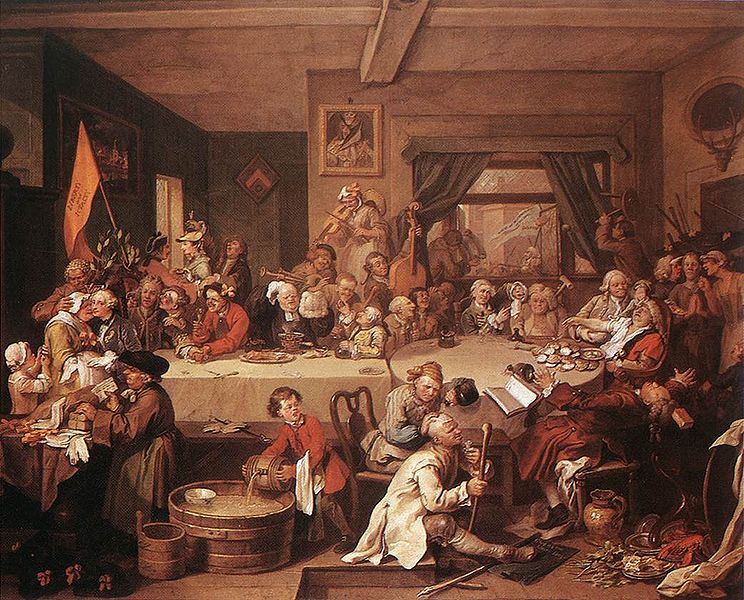
Rumors have swirled across the pages of history books that the people rioted in the streets because their government had the audacity to steal 11 days of their lives. The source of that rumor, as it turns out, is probably a satirical work by William Hogarth. During the next election season in which the Tories drummed up distaste for the Whigs by publicly blaming them for cancelling the first half of September and ruining everyone’s year, Hogarth produced a painting depicting the rioting horde with placards that read: “Give us our 11 days.”

An Election Entertainment by William Hogarth. Public Domain, via Wikimedia Commons

And history was invented.

I may be no William Hogarth, but...nope, I got nothing. I'll just stick to writing.
I may be no William Hogarth, but…nope, I got nothing. I’ll just stick to writing.

I imagine the change did make some people grumble for a while (especially those with birthdays in early September) but others didn’t seem to mind so much. In America (where people were evidently less prone to riot for no real purpose than they are today), Benjamin Franklin wrote of the calendar change, “It is pleasant for an old man to go to bed on September 2, and not have to get up until September 14.”

So as the school district steals what should have been my seventeenth productive day, I will try to channel my inner Ben Franklin and tell myself that it is pleasant for a mom to pack creative school lunches on September 3 and not have to do it again until September 8.