Dark Nights, Bad Decisions, and a Litterbug Comet

Just a little while ago I dropped off my two boys for their first day of school. And a few hours before that I made a questionable parental decision. You may have heard that this is the week of the Perseid meteor shower.

It happens every year around this time, usually peaking out somewhere around August tenth or so as the comet Swift-Tuttle makes its way past the earth flinging rocks at us like a thoughtless driver might flick a smoldering cigarette butt out his driver side window onto the interstate. Except much cooler to witness.

We saw a few like this. By Nick Ares from Auburn, CA, United States (Perseid Meteor 8/12/08) [CC BY-SA 2.0 (http://creativecommons.org/licenses/by-sa/2.0) or CC BY-SA 2.0 (http://creativecommons.org/licenses/by-sa/2.0)], via Wikimedia Commons
We saw a few like this.
By Nick Ares from Auburn, CA, United States (Perseid Meteor 8/12/08) [CC BY-SA 2.0 (http://creativecommons.org/licenses/by-sa/2.0) or CC BY-SA 2.0 (http://creativecommons.org/licenses/by-sa/2.0)%5D, via Wikimedia Commons
That’s especially true this year because Jupiter and its mighty gravitational pull was in a location on its orbital path to come closer than usual to Swift-Tuttle’s path, which, according to the people who know about such things, nudges the comet and its wake a little closer to Earth. This, along with the deep dark of a moonless night and a stunningly clear sky over my great state of Missouri, sets the stage for a great show.

You might say the stars aligned to make this some of the most spectacular viewing of the Perseids in years, though if you do, I’m pretty sure the people who know about these things would make fun of you.

The only factor out of alignment for us was the looming first day of third and fifth grades which happened to immediately follow the peak viewing of the meteor shower. Because my third grader doesn’t care for surprises and we thought might lead us toward wisdom in this particular instance, my husband asked him before he went to bed whether hypothetically he would wish to be awakened at 3:00 in the morning to watch the meteors, if we could see them well. He answered with an emphatic no.

Smart kid. Alas, we are not as wise and so we set our alarm for three and checked it out. Where we live there is a fair amount of light pollution, but Jupiter, the moon, and the litterbug comet did not let us down. I’m sure it would have been better in the country somewhere, but for a suburban backyard meteor viewing, it was pretty amazing.

By 3:30 we made the decision to wake our fifth grader and invite him to join us, an offer he gleefully accepted. As far as questionable parental decisions go, I suppose this one wasn’t so bad. It’s not like we’re Edward Claudius Herrick’s parents who in 1827 decided their highly intelligent son shouldn’t go to college because of his weak eyes.

Instead, Herrick, the son of a Yale graduate and a descendant of one of Yale’s founders, became a clerk in a bookstore that served Yale students, because as everyone knows, reading, sorting, and cataloguing books is much easier on the eyes than say, studying them.

Then on the night of August 9, 1837, Herrick was closing up shop when, with his weak eyes, he noticed a large number of meteors in the sky. He wasn’t the first to observe the Perseids, not by thousands of years. He wasn’t even the first person to take serious note of them in the 19th century, but still, he studied and published a great deal on them, faithfully observing the shower every year for the rest of his life. His body of work on the Perseids gained the attention of Yale which eventually awarded him an honorary Master of Arts degree and appointed him to the position of college librarian, a job to which he, despite his weak eyes, was particularly well suited.

My son did wake up a little bleary-eyed this morning for his first day of fifth grade, but he also woke up excited to tell all of his friends and his new teacher (to whom I have to offer an apology and a promise not to pull him out of bed in the middle of the night again without a really good reason) about the meteor shower that his parents woke him up to see.

It was an experience I imagine he will remember for a long time, much more clearly than his first day of fifth grade, and not only because he’s tired. The experience, I think, was well worth the discomfort it will cause him today and questionable or not, I’m pretty sure I’d do again.

NOTE: A reader who evidently knows about such things recently contacted me to point out that Swift-Tuttle actually zooms by Earth only every 133 years and that in fact it’s Earth that runs into the comet’s trail of discarded cigarette butts every year in early to mid-August producing the Perseid Meteor Shower. Next I suppose he’s going to try to tell me the earth revolves around the sun.

I pass this information on to you, dear reader, because I would hate for you to embarrass yourself at a cocktail party by spouting erroneous information you read on this blog. And I want to remind you that it’s always a good idea to mention this blog at a cocktail party.

Dancing with the Squares

In 1923 America’s dance floors were headed for trouble. Ladies were just beginning to wear almost sensible clothing that allowed them to move and swing, jazz was emerging as a fast-paced and exciting music style, and the kids were snuggling close with a good fox trot or waltz and then dancing themselves silly with the Lindy Hop and the Charleston. The morals of a bygone era were fast crumbling away.

Henry Ford. This man knows his way around a Virginia Reel. [Public Domain], via Wikimedia Commons
Henry Ford, who once famously said, “You can dance any way that you want, so long as it’s square.” [Public Domain], via Wikimedia Commons
One man decided he was going to do something about it. The father of the auto industry and master of the assembly line, Henry Ford, figured if he could put together a car one piece at a time, then he could put wholesome American culture back together the same way, one dance step at a time. And so he set out on a crusade to bring back the good old-fashioned square dance.

American square dance has a muddy history, but it generally traces its roots back to the coordinated group dances of England in the early 1600s. Of course when settlers brought it with them to the new world, it took on a uniquely American flavor. A caller announced the moves, which were given French names (because that seemed likely to irritate the English) like “promenade,” “allemande,” and dos-à-dos” (which quickly became “do-si-do,” because that seemed likely to irritate the French).

As America became more urbanized, square dancing faded, but Ford saw the dance as a way to promote exercise as well as genteel manners. He hired a square dance caller by the name of Benjamin Lovett to teach square dance full time in Dearborn, Michigan and required his employees to engage in the activity. He also sponsored square dance programs in many public schools, on college campuses, and over the radio waves.

It worked. The dance started to catch on. Soon ladies and gentlemen were lined up in groups on the dance floor to bow to their partners and perform coordinated dance steps with very little touching and plenty of room for the Holy Spirit. The dance’s popularity continued through World War II and the following decade before it began once again to fade. But I think it’s going to surge again, led by an army of enthusiastic Missouri 4th graders.

My kids are officially out of school for the summer now, but these last few weeks leading up to the last day have been busy.

Making car parts for the American working square dancer, because that's who they are and that's who they care about. [Public Domain], via Wikimedia Commons
Making car parts for the American working square dancer, because that’s who they are and that’s who they care about. [Public Domain], via Wikimedia Commons
There’ve been awards ceremonies and book fairs and pizza parties and field days. And, yes, square dancing.

Last week, my fourth grader (now officially a 5th grader!) participated in Missouri Day at school. I don’t know if this is a state required thing or if it’s just something our school does, but the kids were taken through a series of activities to help them learn about all things Missouri. Because I am a sucker who can’t say no dedicated parent, I volunteered to help.

It turns out the official state folk dance of Missouri is the square dance (as opposed to other kinds of American folk dances….go on, try to name one). In fact, twenty-four states have declared the square dance their state folk dance, and it would be twenty-five if Minnesota would just bite the bullet and make it official since it was proposed in both 1992 and 1994, but I suppose something this important shouldn’t be rushed.

Go ahead. Just try to do this without making any physical contact with your partner. [Public domain], via Wikimedia Commons
Go ahead. Just try to do this without getting cooties. [Public domain], via Wikimedia Commons
So I went to the school to help the fourth graders learn to square dance. Of course I don’t believe I’ve ever square danced. I went to fourth grade in the state of Illinois (where the square dance is also the state folk dance) and no one seemed to care whether or not I learned this critical life skill.

Basically my job was to try to help two groups of eight kids interpret the instruction given by the elderly square dance caller. Allegedly.

What I really did was attempt to convince a bunch of ten-year-olds that they probably won’t die from touching another ten-year-old of the opposite sex, and failing that, how they might effectively swing their partner without actually coming into contact with him or her.

And I think once they figured it out, the kids  had a pretty good time. Henry Ford would have been proud.

It’s the End of the School Year as I Know It

This has been the last full week of school for my kiddos this year and they have pretty mixed feelings about it. On one hand they’re looking forward to fun days at the pool, family vacation, and the more relaxed vibe of summer. They’ll be able to stay up a little longer and sleep in a little later, and then there will be summer camps and trips to visit grandparents and all kinds of fun. My oldest son who has been counting down the months, weeks, days, and now hours is ready for it.

But for my youngest son, the end of the school year might as well be the end of the world. He’s shed a few tears these last couple of weeks. It’s been a really great second grade year with an absolutely wonderful teacher and even though we love our school and I am confident that his third grade experience will be great, too, he’s not been easy to convince. Transitions are hard for him and the end of the school year is one step closer to the unknown.

Nostradamus predicted the end in 1999, but it seems maybe he wasn't so certain, because he also thought the year 3797 a likely candidate for a fiery apocalypse. [Public Domain] via Wikimedia Commons
Nostradamus predicted the end in 1999, but it seems maybe he wasn’t so certain, because he also thought the year 3797 a likely candidate for a fiery apocalypse. [Public Domain] via Wikimedia Commons
Really, I don’t think his perspective is all that unusual because throughout human history, there has been a recurring obsession with one looming transition in the fate of humanity: the end of the world.

According to Wikipedia (surely the most reliable source of information regarding all things eschatological), there have been approximately 148 failed end-of-the-world predictions since people started to realize it might be fun to count them. According to other “experts” there may be as many as 400 end-of-the-world predictions in all of recorded human history. Either way, that’s a lot.

Images from the Mayan long calendar that ends December 21, 2012, which proved a little unnerving until December 22, 2012 dawned. By Maudslay (Cyrus Thomas (1904) Mayan calendar Systems II) [Public domain or Public domain], via Wikimedia Commons
Images from the Mayan long calendar that ends December 21, 2012, which proved a little unnerving until December 22, 2012 dawned. [Public domain], via Wikimedia Commons.
But don’t worry, because Wikipedia also helpfully points out that “no predicted apocalyptic events have occurred so far.” What a relief!

The obsession with the end of it all stretches  back at least as far as the Assyrians. According to this 2009 Smithsonian article, a clay tablet dating to 2800 B.C states: “Our Earth is degenerate in these later days; there are signs that the world is speedily coming to an end; bribery and corruption are common; children no longer obey their parents; every man wants to write a book and the end of the world is evidently approaching.”

Personally, I suspect the translation might be a little rough, either that or the “prophecy” has been misunderstood by scholars and the stone tablets really is nothing more than the discarded notes of a popular Assyrian standup comedian. It also seems likely that the existence of said “tablet” may have actually been made up in 1979.

Still, there’s something that keeps us humans guessing that the end is upon us. Whether it comes from religious conviction, scientific understanding, or from societal pessimism, our fate seems always to speed on toward some sort of transition and that fills us with a little bit of anxiety.

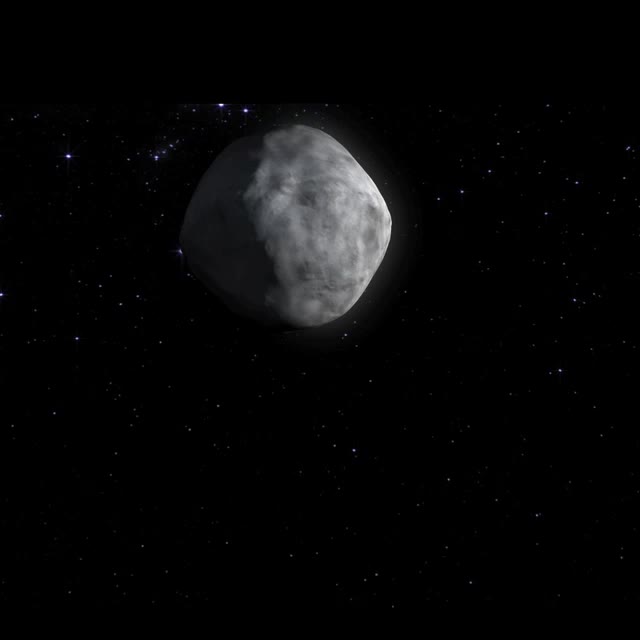
Some even less optimistic scientists say there's a 0.3% chance the world my be destroyed by an asteroid on March 16, 2880. So if you have plans that day, you might want to be prepared with a plan B. photo credit: BENNU’S JOURNEY via photopin (license)
Some even less optimistic scientists say there’s a 0.3% chance the world my be destroyed by an asteroid on March 16, 2880. So if you have plans that day, you might want to be prepared with a plan B. photo credit: BENNU’S JOURNEY via photopin (license)

And just because the end has failed to arrive maybe as many as 400 times, we may not be out of the woods just yet because there are currently at least 15 predictions open for consideration, from the interpretation of the series of blood moon eclipses in 2014 and 2015 that places the end of the world in September of this year (perhaps not coincidentally, just after the start of my son’s third grade year) to the insistence of numerous truly alarmist scientists who insist the sun will consume the earth a mere 5 billion years from next Tuesday, give or take an hour or two.

So perhaps the end is upon us, but I’m not going to worry about it too much. Most likely I have some fun summer days with my kiddos to look forward to. And despite the tears of yesterday, this morning my son told me he’s decided even though he’s sad second grade is ending, he isn’t going to be afraid of third grade, because, “[He does] this ever year, and then the next year turns out the be the funnest ever.”

As we plunge into summer break next week, it may be the end of the world as he knows it, but, all in all, I think he feels fine.

Better than a Pulitzer: The Creative Blogger Award

On May 7, 1912, a few months after the death of Joseph Pulitzer, Columbia University set the plans in motion for establishing the Pulitzer Prize as stipulated in the journalist’s will. Five years later, on June 4, 1917 the Prize Board named the first recipients of that honor, awarding prizes in four categories: history, biography, reporting, and newspaper editorial.

Born in Mako, Hungary, the well educated Joseph Pulitzer fell into his journalism career the way most people do, by well-timed networking at a public chess match. But it wasn’t luck that brought him success as the owner of the St. Louis Post-Dispatch and later as owner of The New York World.

Joesph Pulitzer [Public domain], via Wikimedia Commons
It was hard work and the kind of business savvy that pairs hard news with sensationalized stories, exaggerations, and occasionally stuff that’s just plain made up. And it was also his unfailing belief that a free press and the freedom of creative expression was central to the success of a free society. He once stated, “Our Republic and its press will rise or fall together. An able, disinterested, public-spirited press, with trained intelligence to know the right and courage to do it, can preserve that public virtue without which popular government is a sham and a mockery.”

For Pulitzer, free expression and a free press would always be the watchdog that would protect people from government abuses, calling to account politicians who act in their own interest rather than that of the nation they represent. His ideals stand firmly against suppression of speech, whether deemed prudent or not, and demand that all voices can be heard.

And so he established a school for journalism and a system for awarding excellence in journalism and other creative pursuits, with a particular emphasis on works that in some way serve the betterment of humanity, particularly exposure of government corruption and injustice.

Pulitzer also had the foresight to recognize that society would evolve over the years and so he gave the Board authority to expand the award categories as they deemed appropriate. Since the award was first established, it’s expanded at various times to include, among other things, telegraphic reporting, poetry, music, and feature photography. And since 1995, it’s been adapting to the expansion of online news outlets.

Even so, to the best of my knowledge, there is not yet a category for independent practical history blogs, despite the fact that they tend to pair history with sensational stories, exaggerations, and occasionally stuff that’s just plain made up. And who knows, they may even lead to the betterment of humanity.

But that’s okay, because bloggers are pretty good about recognizing the efforts of other bloggers. Of course blogs cover a wide variety of topics and there are about a million different reasons a writer might turn to blogging. But whatever the purpose, a blog is an unfettered creative outlet with the potential to influence society. We should recognize one another in our creative efforts.

That's prettier than a Pulitzer medal.
That’s prettier than a Pulitzer medal.

That’s why I am extremely grateful, on this 103rd anniversary of the day Columbia University first approved plans to establish the Pulitzer Prize and in this week when I celebrate the third anniversary of my silly little blog, to accept the Creative Blogger Award.

Like most blog awards this one comes with a few rules. First, thank the blogger who nominated you and provide a link to their blog. Second, share five things about yourself. Third, nominate 10 -15 more creative blogs.

Thank you very much to Susan Roberts of Susan’s Musings for the kind nomination.

Five things about me:

1. My fourth grader’s teacher sends an e-mail every week asking parents to remind students they need to practice their recorders. I’ve never reminded him. Not once. And I never will.

2. I once spent a few months working as a dog trainer for a major pet supply retailer. At the time I was a cat person. Actually I still am a cat person. Seriously, it’s a strong preference. Just don’t tell my dog because it would hurt his feelings and he’s pretty sweet.

3. When I was sixteen, my grandmother offered me a piece of sage advice. She said, “If you have to fall in love and marry someone, he might as well be a farmer.” My husband isn’t a farmer, but Grandma always liked him anyway.

4. I read a lot of literary fiction, upscale historical fiction, and narrative nonfiction, but I have a serious weakness for young adult dystopian fiction. I can’t help myself. It doesn’t even have to be well written. And I will set aside just about any great literary work currently on my “to read” shelf in favor of one.

5. The very first home cooked meal I made after my husband and I were married was macaroni and cheese. From a box. He thanked me and ate it with a smile. Now that’s a keeper! And thankfully, I have since become a better cook. Though my kids still prefer the boxed mac ‘n’ cheese.

Nominees:

Victo Dolore

I Didn’t Have My Glasses On

Childhood Relived

Know-It-All

Notes From a Hermitage

Loni Found Herself

Russel Ray Photos

Ponies and Martinis

The Armchair Sommelier

Storyshucker

Baltimore through Stanley’s Eyes

In 1964, Stanley Lambchop had a tragic accident. Just that day his father had given him a new bulletin board to hang on the wall of his room and as he slept, the bulletin board fell, squashing him. Luckily young Stanley survived the near tragedy, but it left him changed. Poor Stanley had become flat. The Lambchop family had enough spunk to transform Stanley’s new disability into an opportunity and soon he found himself posing as a painting on the wall of the local art gallery where he assisted the police in catching a burglar.

By User:Miwillans (Own work) [Public domain], via Wikimedia Commons
This is the plot of children author Jeff Brown’s Flat Stanley. The character would go on to have five more crazy adventures during the author’s lifetime, and since Brown’s death in 2003, has been guided by other authors through at least a dozen more. But Stanley’s biggest adventure was orchestrated in 1995 by third grade teacher Dale Hubert of Ontario.

Hubert assigned his students to design a Flat Stanley and send him through the mail in order to both practice writing letters, and to learn about the various places Stanley visited. Recipients of Stanley were asked to report back on his adventures and include pictures of Stanley in various locations along the way.

The assignment was a great success and earned Hubert the 2001 Prime Minister’s Award for Teaching Excellence. Soon the Flat Stanley Project spread and now teachers all over the world participate in it with their students. My youngest son’s class is working on a Flat Stanley Project right now and a week or so ago, he received his first pictures.

I want to share a few of them with you because his Stanley traveled to visit a friend of mine in the Baltimore area. I know in the past few days we’ve all seen a lot of images of Baltimore, of protest demonstrations, of violence against police, and of buildings engulfed in flames. So, I thought maybe it would do us all some good to see the place in a different light, as a beautiful city full of a rich heritage and deep-rooted history.

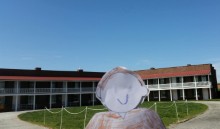
Fort McHenry. Famed for its role in the War of 1812, and site of inspiration for Francis Scott Key's poem
Fort McHenry. Famed for its role in the War of 1812, and site of inspiration for Francis Scott Key’s poem “Defence of Fort M’Henry” which would become “The Star Spangled Banner,” a song that can be well sung by maybe 1% of the US population, but is nonetheless loved by all.
Oriole Park at Camden Yards. Completed in 1992, this is the first of the new old (or retro) baseball stadiums that have since swept the nation. Yesterday it became the place where the Baltimore Orioles offered imaginary autographs to absent fans and defeated the White Sox with no one there to watch.
Washington Monument. Designed by Robert Mills, also the designer of the monument in DC, the Washington Monument in Baltimore was the first to be planned in honor of the first US president, making this one of the oldest giant stone phalli in the nation.
Edgar Allan Poe House and Museum.It was in this house, built around 1830, where Edgar Allan Poe lived for a time with his aunt Maria Clemm and his ten year old cousin, who he would one day marry, but not until she reached the ripe of age of 13.
Edgar Allan Poe House and Museum.It was in this house, built around 1830, where Edgar Allan Poe lived for a time with his aunt Maria Clemm and his ten year old cousin, who he would one day marry, but not until she reached the ripe old age of 13.

Hi ho! The Fourth and Final Voyage of Kermit the Frog

Christopher Columbus, famed explorer who kind of resembles Fozzie Bear. Licensed under Public Domain via Wikimedia Commons

On September 18, 1502, on his fourth and final voyage to the New World (which he still stubbornly insisted was Asia, because by then he was becoming a little floopy) Christopher Columbus arrived in what would come to be known as Costa Rica. I say “arrived” because “discovered” is certainly the wrong word, as he was warmly greeted by canoes full of Carib Indians, representing one of four indigenous tribes living in the area at the time.

In fact, archaeologists have uncovered evidence of human occupation in Costa Rica dating back at least 10,000 years. A large variety of tools, weapons, metal work, and even remnants of an ancient city complete with aqueducts indicate that many cultures may have come, gone, and coexisted through the area.

By Tim Ross (Own work) [Public domain], via Wikimedia Commons
This tree frog from Costa Rica resembles Kermit the Frog when the pollen count is really high. By Tim Ross (Own work) [Public domain], via Wikimedia Commons
But its rich history of human diversity isn’t all that makes the country so fascinating, because representing just one third of one percent of Earth’s landmass, Costa Rica contains approximately four percent of the species that exist on the entire planet. It boasts the highest density of biodiversity of any country in the world, with hundreds of species that, outside of captivity, can only be found there.

And Costa Rica is home to somewhere in the neighborhood of 175 species of amphibians. Eighty-five percent of those are frogs. It’s got the poison dart frogs, the famous red-eyed tree frog, the giant toad, and the rainforest rocket frog, which at a length of about half and inch is not the smallest frog in the world, but it does have the coolest name.

And now there’s one more frog in Costa Rica, because recently researcher Brian Kubicki found a previously undiscovered glass frog he named Hyalinobatrachium dianae. Like in so much of the world, Costa Rican species are being stressed by rapid environmental change and the country has already lost many frog species to extinction. So to discover a new one is pretty exciting.

photo credit: Kermit the Frog - Smithsonian Museum of Natural History - 2012-05-15 via photopin (license)
Hyalinobatrachium dianae, a newly identified species of glass frog. Oh, wait, no that’s a Muppet. photo credit: Kermit the Frog – Smithsonian Museum of Natural History – 2012-05-15 via photopin (license)

Especially when the Internet decides that new species looks like Kermit the Frog. And it does, kind of, at least in the same way that if you put a domestic pig in a blonde wig and taught it karate, it would totally resemble Miss Piggy.

The new frog does have similar coloring to Kermit, except on its belly where its skin is nearly transparent so you can see all of its internal organs. It also has big white eyes that bug out of its head, and like its Muppet counterpart, H. dianae plays the banjo and harbors a not-so-secret wish to make it big in showbiz.

So the only real question remaining is what is Kermit the Frog doing in Costa Rica? Because as everyone who has seen the straight-to-video classic Kermit’s Swamp Years knows (and judging by the reviews that could be as many as a dozen people or more), Kermit is originally from the swamps of the Deep South, not Costa Rica.

The answer to the question may lie in the years he spent as a hard-hitting investigative journalist at Sesame Street News. As something of a hard-hitting investigative journalist myself, I have uncovered footage from Kermit’s past that may explain the link between the famous Muppet and this new little glass frog now taking the Internet by storm, a link drawn straight through the famous explorer Christopher Columbus who accidentally stumbled onto Costa Rica so many years ago. Enjoy!

The Certainty of Death and Taxes

As of yesterday, another income tax season has come to a close here in the US. CPA’s who haven’t been home in months can finally return to the family dinner table. And at long last city sidewalks are free from the invasion of creepy sign-spinning Statues of Liberty beckoning to us from the side of the road.

The Statue of LIbertry wearing a fur-lined hood is creepy enough. In my town where it's been warm the last few days, one Mr. Liberty has been wearing shorts under his robe. I hope.  photo credit: Income tax of liberty via photopin (license)
Actually it might not be a bad idea to tax Statue of Liberty hats. photopin (license)photo credit: Income tax of liberty via photopin (license)

No matter how we feel about the way our taxes are collected and spent and whether some of us should be paying more or some of us less, I’m guessing none of us particularly enjoys the income tax process. The laws are complicated, and growing more so all the time. The effort expended in calculating it all expands from year to year at an unbelievably stupid rate.

But as Benjamin Franklin famously said, “…in this world nothing can be said to be certain, except for death and taxes.” It’s something we have to deal with. Failure to file will net us fines and legal battles. So any readers out there who are law-abiding US taxpayers, I want to offer a hearty congratulations for successfully slugging through another year and getting it done. You may be tired. A few of you may have even been up past your bedtime so you could sneak in just before the deadline. If so, rub your blurry eyes, grab a cup of coffee, draw a deep breath, and realize it could be worse.

Because in 1798, for Englishman John Collins, it was much worse. Collins was busy at work with a printing plate, producing linen hat labels for anxious customers when he learned just how serious the business of taxation could be. The plate was readied, the linen damp and awaiting its impression, and Collins’s hand was covered in ink. That’s when he was arrested for forgery.

What he had been trying to pull off was a sneak around England’s tax on men’s hats. Introduced by Parliament in 1784, it was designed to be a kind of income tax because in theory, the wealthy would own several expensive hats, while the poor may own one cheap hat, if any at all.

Ladies' hats were tax exempt. Even those made of fruit. [Public domain], via Wikimedia Commons
Ladies’ hats were tax exempt. Even those made of fruit. [Public domain], via Wikimedia Commons
To sell hats required a license that cost two pounds in London (or five shillings in the countryside) and gave the seller the right to post a sign reading: “Dealer in Hats by Retail.” A hat costing up to four shillings carried a tax bill of three pence and as the cost of the hat increased, so did the tax, with hats greater than twelve shillings demanding a hefty 2-shilling tax. Penalties for hats without a tax labels affixed to the linings fell both to the seller and the wearer.

No hat is worth that. photo credit: The End of the Line via photopin (license)

The hat tax was perhaps better than the window tax, the disastrous effects of which can still be seen in the large number of bricked-up windows gracing English buildings, but it turns out Englishmen were almost as fond of the hat tax as the citizens of the former British colonies in America had been of the English tea tax just a few years earlier. Removal and reuse of stamps was common and punishable. In the early days of the law, retailers attempted to change the language they used to refer to their wares, causing revisions that broadened the definition of a hat. Still the unpopular hat tax was widely ignored, hard to enforce, and was finally repealed in 1811.

Unfortunately that came after John Collins was caught forging tax labels. He got more than a fine or a legal battle. To forge a hat tax label in England in 1798 was a capital crime. Poor John Collins learned that there were certainties he couldn’t escape when he evaded taxes and met with death.

Your Favorite Dinosaur and the Lie Your Science Teachers May Not Have Told You After All.

In 1870, renowned paleontologist Edward Drinker Cope published a description of a newly discovered giant plesiosaur (an extinct aquatic reptile that a reader less informed than you might mistakenly refer to as a dinosaur). Unfortunately, he’d failed to place the head on the right part of the body, sticking the skull to the end of the creature’s long tail.

oc marsh
Othniel Charles Marsh, respected paleontologist, winner of the bone war, and maybe kind of behaved like a squabbling child. [Public domain], via Wikimedia Commons
Surely after a while, Cope would have figured out his mistake, but he didn’t manage to do so before renowned paleontologist Othniel Charles Marsh (the judgment of whose parents I have to question because they named their kid “Othniel”) gleefully pointed out the mistake for the world to see. The two men weren’t on great terms to begin with, as rumors circulated that Marsh had once paid Cope’s field crew to send anything they found to Marsh instead.

Once insult was added to injury, the great Bone Wars began, with two of the most prominent paleontologists in North America behaving like squabbling children. The rivalry raged for twenty years resulting in great advances in the field, which before this period had discovered only eighteen dinosaur species on the continent. Between the two men, they described and named over 130 new species of dinosaur.

But as beneficial as it may have been, this feverish pace of scientific discovery had some drawbacks, too. The paleontologists’ dig teams were known to spy on each other, steal fossils from one another, vandalize one another’s dig sites, or even dynamite their own to keep anyone else from digging there. And then there were the mistakes of the men themselves that occasionally found their way into work that was rushed to publication.

Edward Drinker Cope, respected paleontologist, second-place in the bone war, and also maybe a little bit of a squabbling child. [Public domain], via Wikimedia Commons
Edward Drinker Cope, respected paleontologist, second-place in the bone war, and also maybe behaved like a little bit of a squabbling child. [Public domain], via Wikimedia Commons
Marsh “won” the bone wars, discovering about eighty North American dinosaurs to Cope’s fifty between the years of 1870 and 1890, but had the two men lived so long, Cope might have gotten the last laugh. In 1877, Marsh described a long-necked herbivorous dinosaur he called Apatosaurus. Just two years later, he unearthed another long-necked dino he called Brontosaurus. Trouble is that in 1903, paleontologist Elmer Riggs determined Apatosaurus and Brontosaurus were really the same species. I imagine Cope was laughing in Heaven.

Because life isn’t fair, and sometimes parents decide to name their son Othniel, the earlier name had precedent. And so, since the year 1903, there has been no such thing as a brontosaurus. No friendly leaf-eating, lumbering, earth-shaking, and, let’s face it, small-brained brontosaurs. And despite what you may have learned from the Flintstones, no brontosaurus burgers or brontosaurus ribs either.

Brontosaurus (but later Apatosaurus, and now brontosaurus again) skeleton displayed with the wrong head at the Carnegie Natural Museum of Natural History. By Dinosaurs, by William Diller Matthew [Public domain], via Wikimedia Commons
Brontosaurus (but later Apatosaurus, and now brontosaurus again) skeleton displayed with the wrong head.
By Dinosaurs, by William Diller Matthew [Public domain], via Wikimedia Commons
How can this be? I know, I know, because when I attended elementary school in the 1980’s, Brontosaurus featured prominently in my science books. And the name was featured in museums up until the 1970’s, when paleontologists discovered the head Marsh had placed on his original “Brontosaurus” actually belonged to yet another species. And again, Cope was laughing in Heaven.

Even the US postal service got itself into a heap of trouble when as recently as 1989 it issued a series of stamps featuring popular dinosaurs, including Tyrannosaurus, Stegosaurus, Pteranodon, and Brontosaurus. To be fair, though, the USPS was probably using an elementary school science textbook as a reference.

So why did the name persist for so long? Well, according to Matt Lamanna, paleontologist and curator at the Carnegie Museum of Natural History, Brontosaurus is just a really cool name. It means “thunder lizard,” evoking the ominous thumping and quaking at the creature’s approach. In contrast, Apatosaur means “deceptive lizard,” which I guess evokes the desire for the creature to pose as a different species so it can go by a cooler name.

Personally, I miss the brontosaurus. Or at least I did. Because earlier this week a team of researchers from the Nova University of Lisbon in Portugal revealed that a comprehensive comparative analysis of dino bones has led them to the undeniable conclusion that Brontosaurus was a separate species after all.

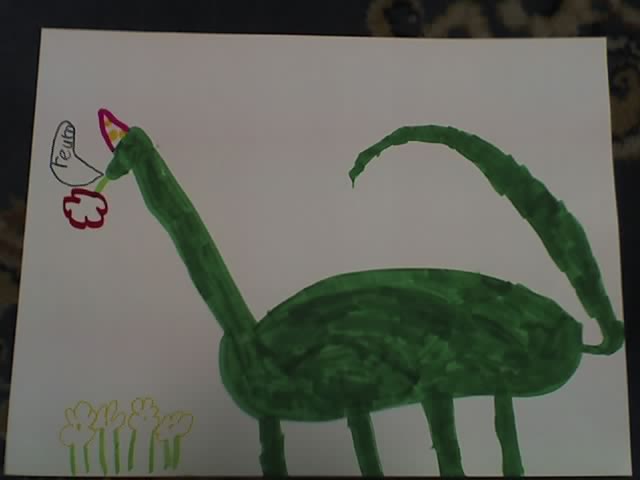
Real or not, the "thunder lizard" has captured our imaginations and our hearts. photo credit: brontosaurus in party hat via photopin (license)
Real or not, the “thunder lizard” has captured our imaginations and our hearts. photo credit: brontosaurus in party hat via photopin (license)

So break out the old text books, reissue the dino stamps, and grill up some stoneage burgers, because the Thunder Lizard is back. I guess Cope didn’t get the last laugh after all. Smiling in Heaven now, the indisputable victor of the bone wars is O.C. Marsh, which is how he’s most often referred to in the literature, because it’s a much cooler name than Othniel.

Playing Well: Pretty Much the Coolest Job in the World

In 1934, Danish master carpenter and builder Ole Kirk Kristiansen held a contest to find a new name for his burgeoning toy company. Since1916 Kristiansen had been operating his carpentry business in the town of Billund, Denmark,constructing mainly houses and household furniture.

With the start of the Great Depression in the 1930’s, construction became a difficult way to make a living and so Kristiansen turned his attention to toys. With the shift came the need for a new name and while Kristiansen had a couple of good ideas, he also had a homemade bottle of wine, which he offered up to the employee who could come up with the best idea.

The best idea was a clever contraction of two Danish words, leg godt, which translate as “play well.” The company, of course, became LEGO, a worldwide building brick phenomenon that pumps out more than 5 million little plastic blocks per hour, which is coincidentally about the same number that are currently scattered on the floors of my house.

LEGO
Creation Nation. There was a large outline of the US on the floor with attendees invited to build a small sculpture to help fill it in. Some were just silly and fun. Others modeled famous landmarks. Still others were inspired by McDonald’s. Because what’s more American than that?

My kiddos are LEGO fanatics. And so are yours most likely because on average every person on earth owns 86 LEGO bricks. Granted, my dog probably ingested more than that number yesterday alone, but there’s still a good chance you have a few lying around. If you want to find them, just take off your shoes and walk around for a bit. Always works at my house.

So it’s probably no surprise that when the traveling LEGO Kids Fest visited St. Louis this past weekend, my family jumped at the chance to go. I’m glad we did, because it was a seriously cool event. For two days, the Edward Jones Dome at America’s Center, normally the football stadium for the St. Louis Rams, was put to a much better use. It became home to a maze of huge LEGO sculptures and interactive building activities.

Kids and their families participated in build challenges and group art projects, teaming up to design and race cars or construct strength-tested bridges. Attendees could enjoy numerous free-play areas set up with tubs full of individual colors so that if they had a hankering to make a replica of the Taj Mahal using only purple bricks, they totally could.

Or it was the perfect place to fulfill the lifelong dream of climbing on top of a big pile of bricks and making a LEGO angel (because who hasn’t dreamt of doing that?) before sitting down to construct a giant multicolored fish taco.

My favorite experience, though, was when we took a break and went to a presentation given by one of the LEGO Master Builders, of which there are only eight in the entire world, all based out of Enfield, Connecticut.

This elite group is responsible for all of the giant LEGO sculptures you might see at the LEGO Kids Fest, or the Mall of America, or Disney World, or anywhere else you might find a giant LEGO sculpture.

20150321_185433
Yep, even Emmett has been Kra gl ed.

We had the opportunity to meet Master Builder Chris Steininger during a presentation on interlocking build design in which he encouraged all the little Master Buidlers in Training to try different structures, and then strength test them with heavy metal wrecking balls. My sons learned their lessons well, intentionally designing weak structures to achieve more spectacular destruction.

Chris talked a little bit about the design and build process and he patiently answered about a hundred questions from the kids in the audience, most of which were some variation of “Do you have the best job in the world or what?”

LEGO R2D2
Coolest. Job. Ever.

Not surprisingly he answered, “Yes,” explaining that even though sometimes there are frustrating design issues to work out and building a new model, layer by layer, gluing each in place along the way (yes, for all you LEGO Movie fans out there, I’m sorry to tell you master builders do use “Kra gl e”) can be tedious, basically what he does for a living is play well. And what could be better than that?

Which is what Ole Kristiansen decided, too. It would be a few years before the emergence of the patented stud-and-tube interlocking brick system that is still inspiring little builders today, but in 1934, Ole knew what he wanted his company to be about. And deep down, he also knew what he wanted to call it. He decided to stick with his own idea and called the company LEGO. There’s no record of whether or not he shared the bottle of wine.

A Writer’s Tour on Wyatt Earp’s Birthday

Mr. Earp will just have to wait for his feature post. Maybe next birthday.
Mr. Earp will just have to wait for his feature post. Maybe next birthday. Licensed under Public Domain via Wikimedia Commons – http://commons.wikimedia.org/wiki/File:Wyatt_Earp.jpg#/media/File:Wyatt_Earp.jpg

On March 19th, 1848 in the little town of Monmouth, Illinois, the gunslinger who would one day become the central figure in the famous shootout at the OK Corral, Wyatt Earp came screaming into the world.

But I’m not going to write about Earp this week. In fact, I’m not going to write about any historical figure at all, because a while back, a fellow blogger was kind enough to extend an invitation for me to participate in a writer’s tour.

So, first, I want to thank Camille Gatza of Wine and History Visited for including me on the tour. I have been enjoying Camille’s blog almost since I started out blogging myself.  Her posts often detail her travels through the US including wonderful background on historic sites and national and state parks. Along the way she always seems to discover unique restaurants and wineries and over the years, she has taught me pretty much everything I pretend to know about wine.

So here are the questions put forward on the tour:

What are you currently working on?

I’m always researching for both my blog and my fiction projects. The blog jumps through time and space from week to week, through the stories that I find interesting at any given time, with really very little rhyme or reason. I find that kind of research, which is admittedly not always very thorough, to be kind of a refreshing break from the research I do for my fiction projects. That is thorough and time consuming and while interesting, doesn’t always yield the kind of lighter stories I like to share in this space.

Okay, okay. Next week. I promise.   photo credit: 79109 Colby City Showdown via photopin (license)
Okay, okay. Next week. I promise. photo credit: 79109 Colby City Showdown via photopin (license)

Currently as a blogger, I am looking into the story behind LEGOS because this weekend my family and I will be attending the traveling LEGO Festival as it visits St. Louis. In my other “writerly” role, I am working through a first full draft of a novel that will hopefully serve as a companion to my first that was recently accepted for publication (!). As part of that process I am reading everything I can get my hands on about the Pennsylvania canal system in 1833, which, while interesting, and will supply wonderful historical details for the novel, is not exactly good material for this particular blog.

How does your work differ from others in your genre?

A lot of history blogs I read (and I do read a lot of them) are very information dense. Often they cite references and speak with a good deal of authority within a fairly narrow scope. I love that. And those kinds of blogs are exactly what history blogs should be.

But this isn’t that kind of blog. In fact I hesitate sometimes to even call it a history blog, because in some ways that’s not what it is. I do share stories from history, and I do spend a good amount of time (or at least some) researching my chosen topic in an attempt to provide readers with tidbits worthy of sharing at cocktail parties. But there’s also a lot of me on the pages of this blog. There’s a lot about my life and the things I find funny, or interesting, or just worthwhile. I try not to claim a great deal of authority in this space, because, frankly, I have none to claim.

But I do hope the posts are fun to read. I have a great time writing them.

Why do you write what you do?

When I was younger, history always seemed either dull or tragic to me. I’ve never been very good at memorizing dates and it seemed all I ever learned about in history class was how one group of people exploited another group of people to become the dominant people. And, really, human history can be boiled down to that if you let it be. But as I grew older and studied more literature, I began to see history through a different lens. When fleshed out with the little details that make up the experiences of individuals, suddenly each moment in history becomes many moments with many perspectives and far-reaching implications. In other words, it becomes a story. And a story, our story, is worth telling.

That realization led me to writing historical fiction, a genre that I fell in love with very quickly as a reader as well as a writer. And this blog is an extension of that. As this wonderful article in The Onion so eloquently points out, there are more stories within the history of human experience than I can possibly tell, or that any of us can possibly tell or ever know. But with this blog, each week, I get to take a stab at illuminating a little bit more.

How does your writing process work?

photo credit: Tapping a Pencil via photopin (license)
Some weeks are just like that. photo credit: Tapping a Pencil via photopin (license)

For the most part, I write what’s on my mind. If I have experienced or will be experiencing a particular event, I may use that as a jump-off for some historical research, and often the structure of the post itself will reveal that. Some weeks, something I come across in the news sends me down a trail I think might be worth sharing. And, of course, like anyone else, I have weeks when I struggle to find something to say.

Typically I start out with a very general idea of what I want to write and just start typing because I never know exactly what I’m going to want to write until I’ve already written it. After that I polish it up, trim the word count, insert what I hope are a few clever lines, throw in a few pictures, and post. Then I just sit back and wait for millions of thoughtful comments to come rolling in.

Well, okay, so that last part doesn’t really happen, but I realize that this blog is a little hard to categorize and it is sure to appeal to a fairly specific kind of reader. I am delighted that so many of you quirky, creative, thoughtful people have found it. Thank you!

And now on with the tour!

For the next stops on the tour, I’ve chosen two writers whose blogs I appreciate very much. They also both happen to be writers of historical fiction, but they each approach blogging differently than I do. I doubt they’ll be writing about Wyatt Earp this week either (although you never know). Still, I hope you’ll visit their sites, and maybe read their books as well, because it will be well worth the effort.

sam

Samuel Hall grew up in the American Heartland.
He lives with his wife near Salem, Oregon. Their three adult children continue to teach him about family relationships and authenticity, core subjects of his novel.

Visit his website at www.samhallwriter.com.

Sign up for the newsletter at www.ashberrylane.com to hear the latest about Sam’s book, Daughter of the Cimarron.

blogtourphotoAdrienne Morris lives in the country, milks goats, chases chickens and sometimes keeps the dogs off the table while writing books about the Weldon and Crenshaw families of Gilded Age Englewood, New Jersey. Her first novel, The House on Tenafly Road was selected as an Editors’ Choice Book and Notable Indie of the Year by The Historical Novel Society.