How Joe Somebody Met Pretty Girl

Of the many wondrous mysteries of my childhood, one survived until I became an adult. Every year on the night of April 30th, someone rang our doorbell and disappeared, leaving behind a gift of four small fudge sundaes from Dairy Queen on our doorstep, one for each of the children in our family.

That's my kind of May basket!    photo credit: Mr.TinDC via photopin cc
That’s my kind of May basket! photo credit: Mr.TinDC via photopin cc

Often this happened shortly after we arrived back at home from our neighborhood May basket deliveries. I know, I know, that’s a quaint little tradition that nobody follows anymore, maybe even fewer people today than when I was growing up in the 1980’s, except that at my house we did. Up and down our block we placed a spring flower on each doorstep, planted in a little basket, usually made from a paper cup decorated with childish scrawl.

Most of the time, we left the gifts to be discovered in the morning, on May Day itself, but with some of the younger neighbors, the ones with kids our age, we would ring the doorbell and run like crazy to hide in the bushes or jump into the car with Mom at the wheel and the motor running (in another, less scrupulous, lifetime she might have made a good bank robber).

It wasn’t a huge secret that our family was behind the May baskets, but it was a great game for the neighborhood kids to try to catch us at it. And we were no better. I remember one year, one of my brothers (I won’t reveal which one because their children sometimes read this blog and it would be more fun to have them ask their dads), deciding he was going to wait out the fudge sundae bandit, dressed in head-to-toe black ninja garb and climbed the tree in the front yard to watch.

He successfully delayed the arrival of the sundaes (much to the dismay of the rest of us), but still they came. And my ninja brother didn’t see a thing.

The stealthiest and most efficient flower delivery service ever.    photo credit: JennyCide/grom via photopin cc
The stealthiest and most efficient flower delivery service ever. photo credit: JennyCide/grom via photopin cc

The May basket and the tradition of celebrating May Day has a messy history, not the kind of thing I usually like to write about. I’d love to be able to tell you about Joe Somebody winning the love of his fair maiden Pretty Girl by getting caught delivering a basket of flowers to her doorstep on May 1 of 472. This of course would have led to her kissing him and a happily-ever-after that their ancestors have been celebrating ever since. I guess that could have happened, but since no one thought to include that story on the Internet (until now), it’s forever lost to us.

What I can share with you is that May 1 has been observed for thousands of years, first as one of four seasonal Pagan holidays, symbolizing the beginning of summer and celebrated with purifying fire. Later the Romans got hold of the holiday and transformed it into a festival honoring Flora, the goddess of flowers. And there was a time when every English village had a Maypole to celebrate spring and welcome summer.
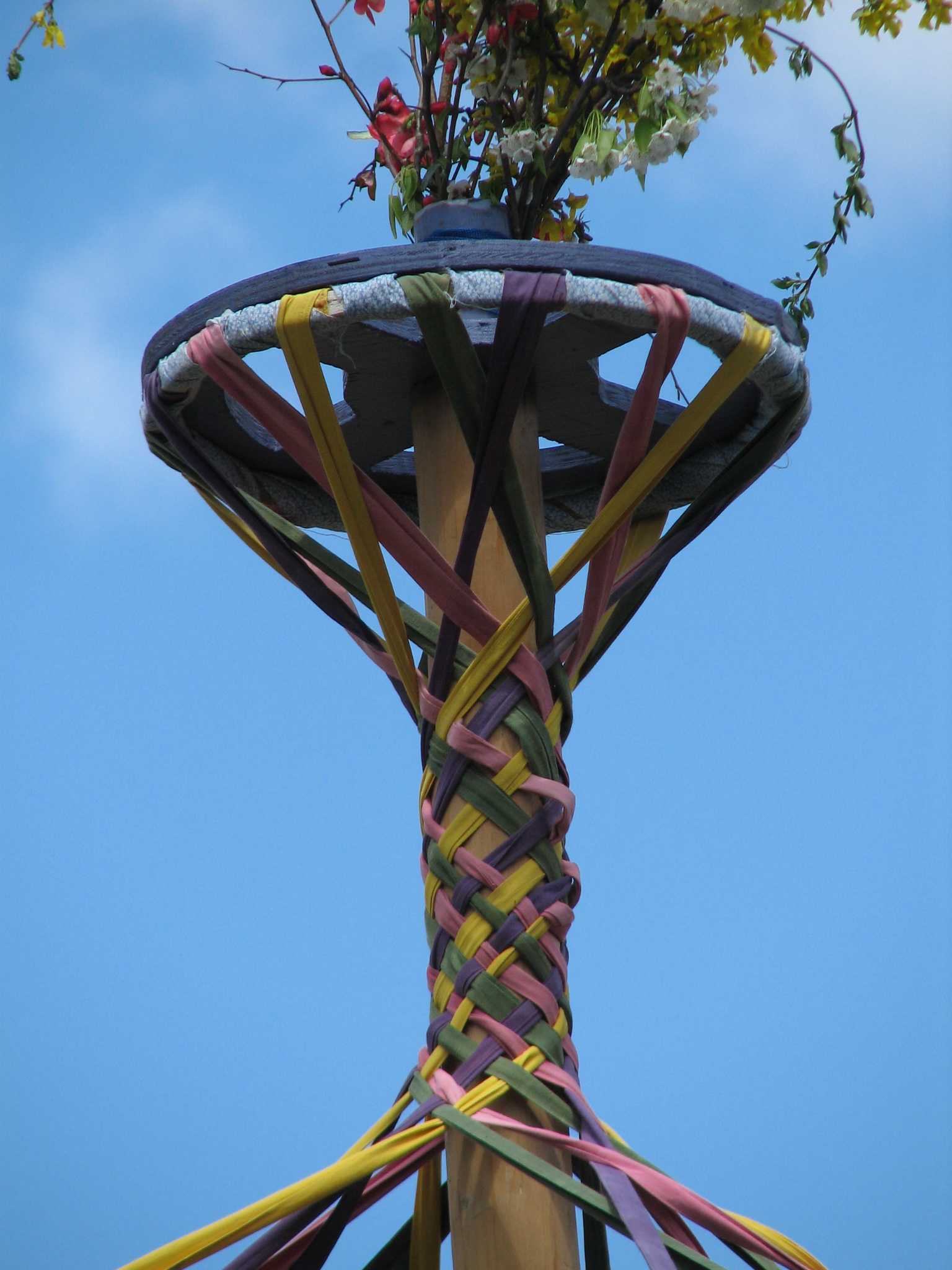
A May Day tradition that has nothing whatsoever to do with fudge sundaes. I don't get it.    photo credit: Liz Castro via photopin cc
A May Day tradition that has nothing whatsoever to do with fudge sundaes. I don’t get it. photo credit: Liz Castro via photopin cc

Not surprisingly, Puritan settlers in America didn’t care for the holiday and to this day it has never been widely observed in the United States. But there are pockets (like my childhood home) where the spring is marked by the sharing of a small gift with friends and neighbors and you might even find the odd festival that has children dancing around a maypole (which I’ve never done) and electing a May queen (which, alas, I’ve never been).

I’m delighted that my children enjoy the tradition now, too. But then what kid wouldn’t want to dress like a ninja and ding-dong-ditch the neighbors for a good cause? And it turns out we have a fudge sundae bandit in our neighborhood, too.
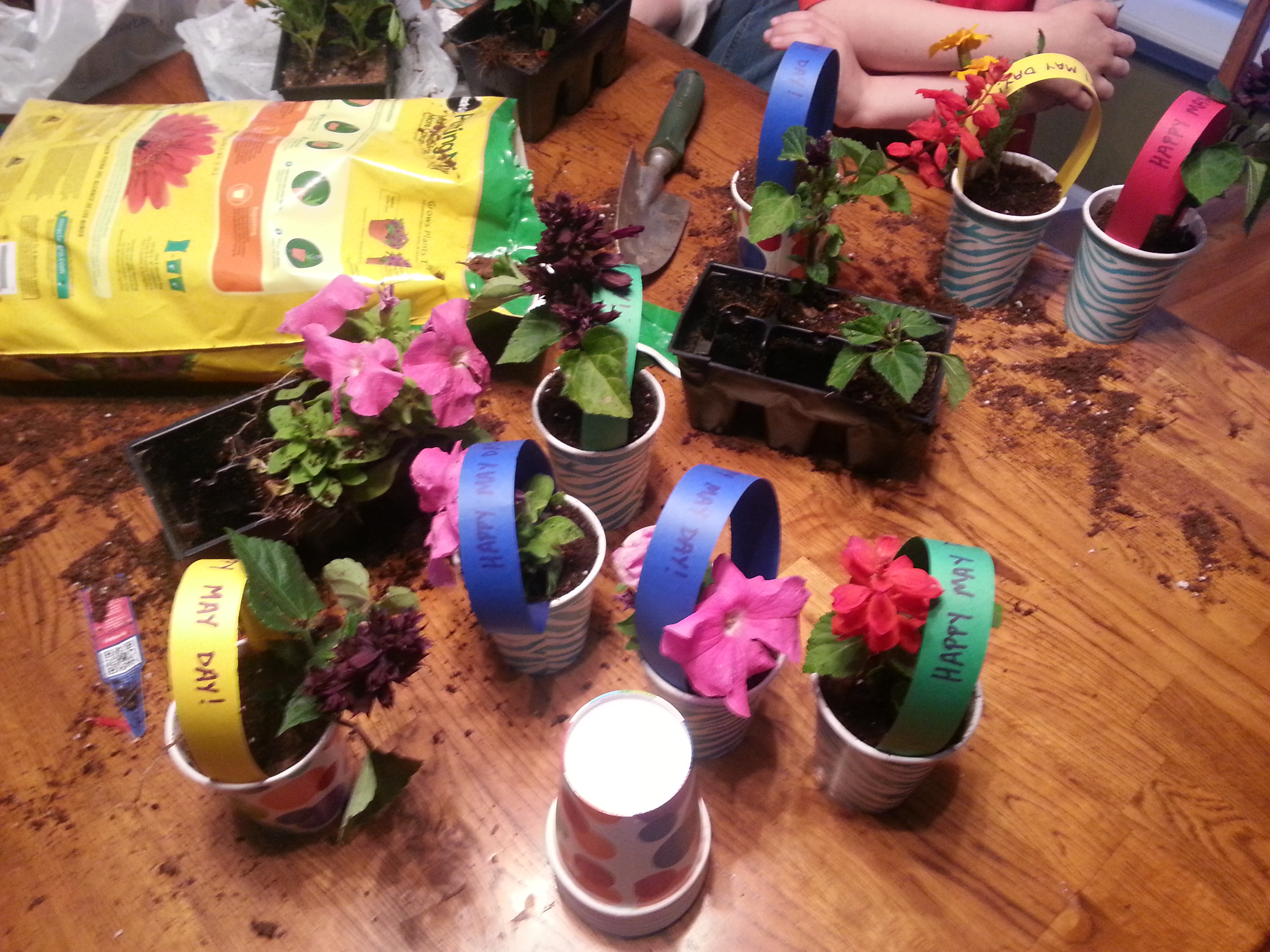
A fun, but messy tradition.
If only someone would sneak in and clean up the mess.

I did finally learn who was responsible for the annual sundae delivery of my childhood and it wasn’t the elderly neighbors down the street that for some reason I was always convinced were responsible. My mom let me in on her big secret a few years ago (sometimes even good bank robbers crack). In retrospect, I probably should have figured it out myself. But then childhood really should include a few good mysteries.
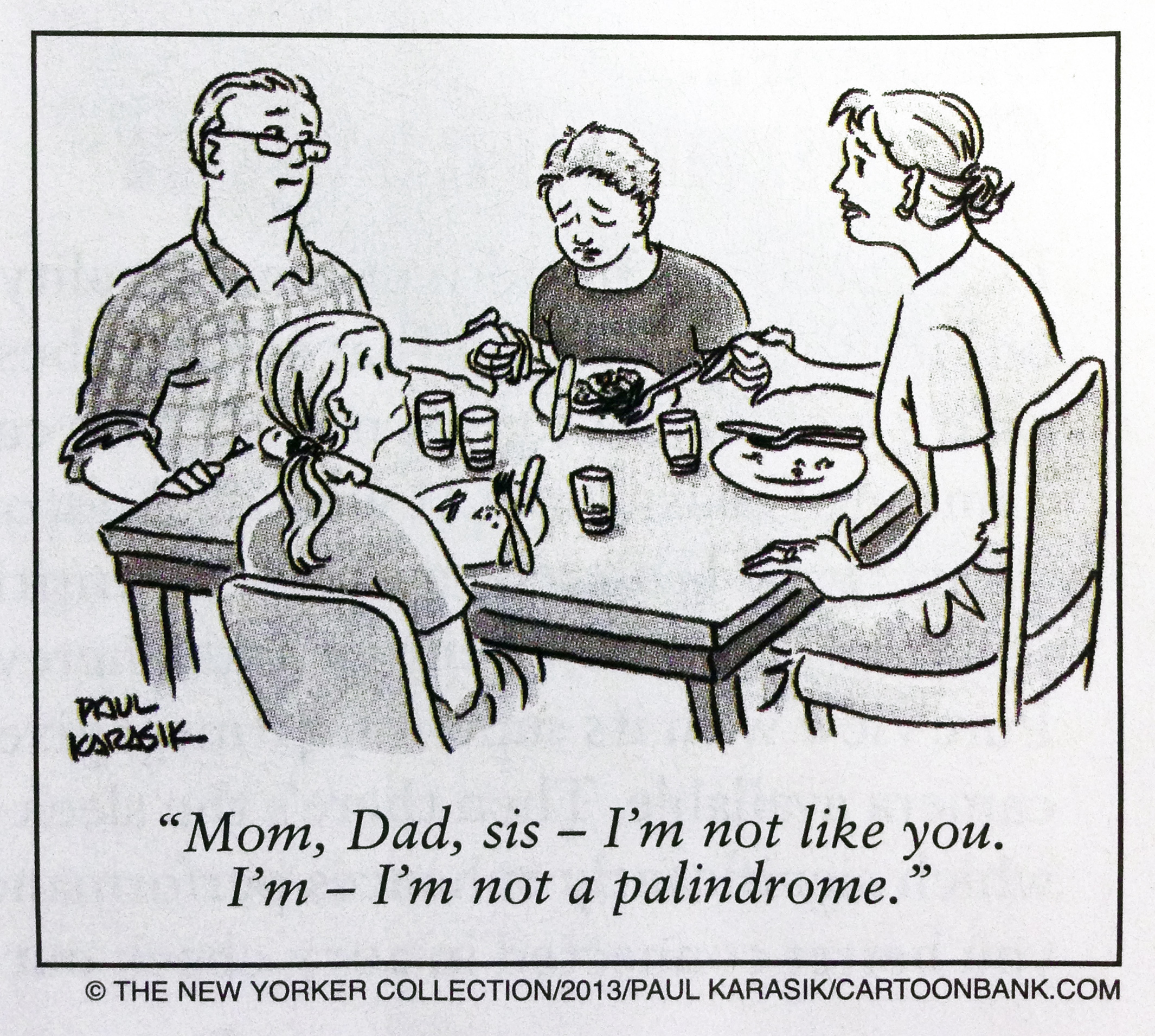
 

A MOM, A RACECAR, A KAYAK—BLOG POST! DANG IT!

If you spend much time on social media, then I’m sure I’m not the first person to wish you a happy palindrome week. In fact, I’m kind of late since it started last Thursday (4-10-14) and will be over after this Saturday (4-19-14). Of course it only works if you write the date like we do here in the US, with month/day/last two digits of the year, but I think you’re probably welcome to celebrate even if you prefer your dates in a different order.

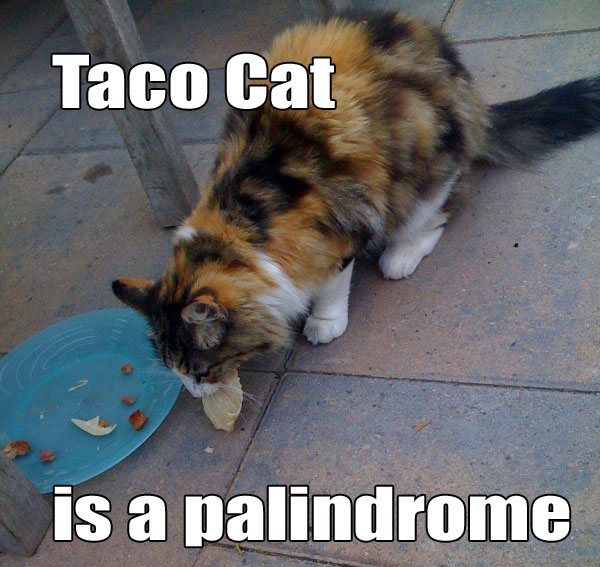
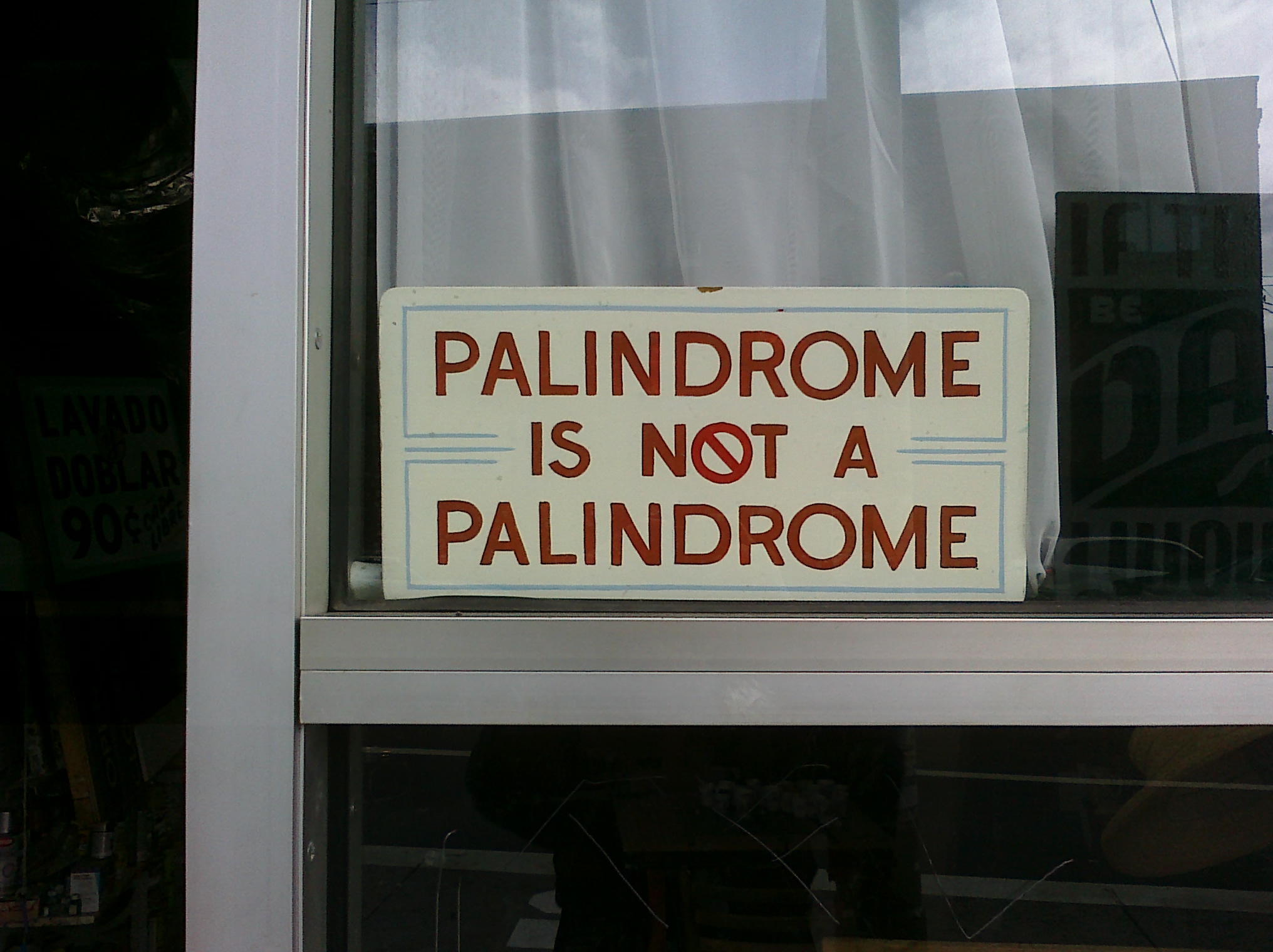
In case you are unfamiliar with the word “palindrome,” it refers to a word or phrase that is written the same forward and backwards. A few examples are “mom,” “racecar,” and “kayak.” You get the idea. Word nerds are fascinated by them, they’ve been around for millennia, and there are examples of them in almost every language on earth.

photo credit: Brett Jordan via photopin cc

But because it can be quite a challenge to come up with a palindrome and because the longer they are, the more nonsensical they tend to be, there are a handful of highly celebrated ones from the minds of some very clever individuals with far too much time on their hands. One of the most noted in English comes from Leigh Mercer (also celebrated for his mathematical limericks, as I’m sure you were already aware) who published in the November 13, 1948 issue of Notes & Queries: “A man, a plan, a canal – Panama!”

And boy did that get the word nerds buzzing with excitement. Mercer’s palindrome spawned numerous spin-offs, including, but certainly not limited to:

“A man, a plan, a cat, a canal – Panama!”

“A man, a plan, a cat, a ham, a yak, a yam, a hat, a canal – Panama!”

And my personal favorite: “A man, a plan, a canoe, pasta, heros, rajahs, a coloratura, maps, snipe, percale, macaroni, a gag, a banana bag, a tan, a tag, a banana bag again (or a camel), a crepe, pins, Spam, a rut, a Rolo, cash, a jar, sore hats, a peon, a canal – Panama!”

photo credit: shannonrosa via photopin cc

All of this nerdy word fun is generally traced back to a poet of Ancient Greece named Sotades who is credited with making the palindrome a thing. He lived during the reign of Ptolemy II in the 3rd century BC and history remembers him best as Sotades the Obscene, since the majority of his poems began “There once was a man from Nantucket.”

Eventually, Sotades decided to turn his poetic attention to the love life of Ptolemy II, which was something of a hot mess. The king didn’t like the attention and had the poet arrested and, eventually, wrapped in lead and thrown into the sea.

Despite his untimely end and the questionable subject of his poems, Sotades is remembered as a genius with words, once allegedly rewriting the Iliad in palindromic verse, presumably changing the setting to Panama. Unfortunately, I can’t post any of the poet’s work here mostly because this is a family-friendly blog, but also because it was lost to history (possibly wrapped in lead and thrown into the sea).

photo credit: engnr_chik via photopin cc

But his legacy has been carried on by people like Mercer and by comedian and wordplay enthusiast Demitri Martin who recently penned a 500 word palindromic poem that mentions neither Panama nor Nantucket, but is, in the tradition of Sotades the Obscene, too dirty to post on this blog. Still, it’s a pretty impressive work, because, it turns out palindrom-ing is not as easy as it looks…Dang it!

Worth Its Weight in Emeralds

About a month ago, I irreparably broke my favorite pair of sunglasses. So that you might understand the implications of this event in my life, I should explain, I’m not really what you might call a sunglasses person.

Of course I find them useful when driving west during sunset. And if I’m going to be hanging out poolside in the summer sun for a few hours with the kiddos, I would prefer to do so while wearing a pair, but I am not the type of gal who runs out to buy the season’s hottest shades in a variety of colors to match my closetful of sundresses. I’m not really a sundress person either.

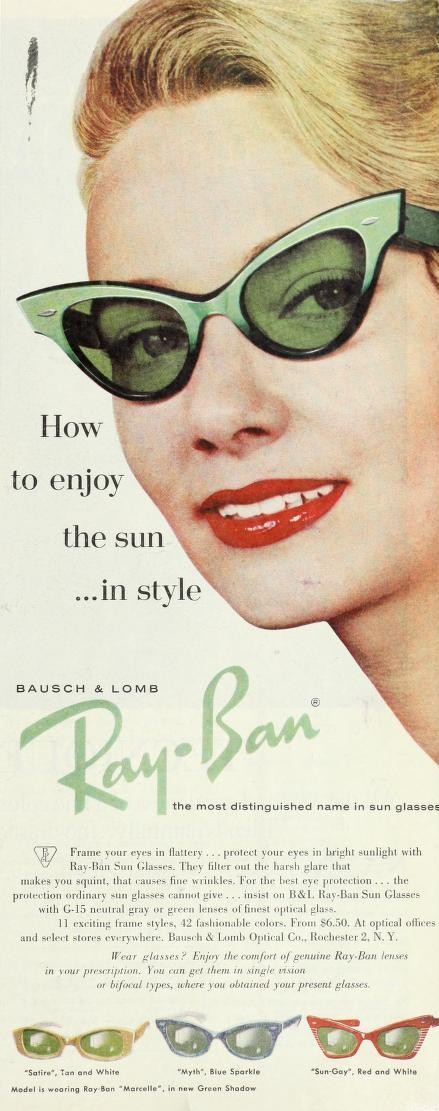
I could never pull off this look. I'm also not a sun hat person.   photo credit: nickel.media via photopin cc
I could never pull off this look. I’m also not a sun hat person. photo credit: nickel.media via photopin cc

Despite that, I have owned many pairs of sunglasses in my lifetime and because I inevitably lose them, I never spend much money on them. So while I may go through as many pairs as your average Hollywood starlet, they probably don’t match the lone sundress hanging in my closet.

But this broken pair was different. You see after many years of encouragement from eye care professionals, I finally had an optometrist who got through to me. Basically, he told me that if I wanted eye cancer, then by all means, I should keep wearing cheap shades, but that if I preferred to live eye cancer-free I should buy overpriced sunglasses from him.

I bought the sunglasses.

I learned a few things from the experience:

  1. Unless you need prescription lenses, never ever buy sunglasses from an optometrist. Or maybe it’s just that mine was the Darth Vader of optometry, but yikes, that’s a markup!
  2. It’s amazing how easy it is to keep track of a pair of sunglasses when it represents more than a casual $10 investment.
  3. I look much better in a sundress when I’m not squinting.
  4. A good pair of sunglasses is worth its weight in emeralds.
I find your lack of expensive sunglasses disturbing.  photo credit: Scott Smith (SRisonS) via photopin cc
I find your lack of expensive sunglasses disturbing. photo credit: Scott Smith (SRisonS) via photopin cc

This last point was even well-understood by Emperor Nero of first-century Rome who, though not described by his contemporaries as a very nice guy, was, according to Pliny the Elder, the proud owner of a nice pair of emerald shades. Or something like them anyway.

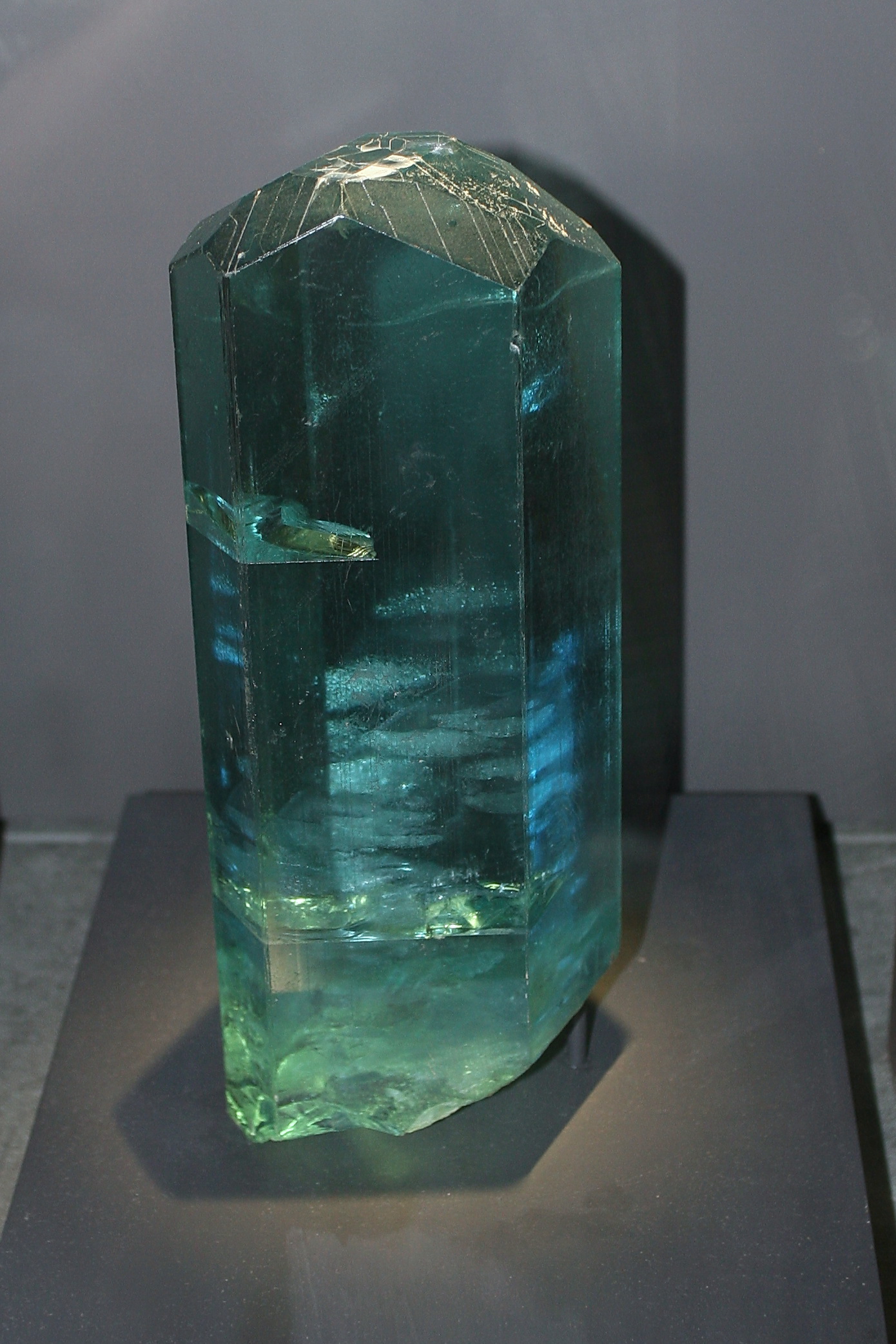
Pliny, who wrote about emeralds (in my favorite translation) that “nothing greens greener,” subscribed to the then commonly held notion that the color green was gentle on the eye and that emeralds in particular might aid in the rehabilitation of eyestrain and poor sight. So it stands to reason, then, that Nero who is known to have been nearsighted, might use emeralds, or as some have suggested, one very large emerald as a sort of looking glass to help him see better at gladiatorial contests.

photo credit: cliff1066™ via photopin cc
And I thought my sunglasses were expensive. photo credit: cliff1066™ via photopin cc

At this point you might be asking, how exactly did that work? Well, I’m not sure it did. First of all, though many sunglass historians (a very narrow field) have claimed Pliny’s reference to Nero’s strange behavior as a part of sunglass history, Pliny seems actually to have suggested that Nero used the emerald as a reflective surface in which to watch the gladiator battles (the first mirrored sunglasses?) rather than as a lens through which to view them.

Retro 1st-Century gladiator viewing emerald lenses. Some things never go out of style.   photo credit: The Bees Knees Daily via photopin cc
Retro 1st-Century gladiator viewing emerald lenses. Some things never go out of style. photo credit: The Bees Knees Daily via photopin cc

And then there’s Dr. David Wood, a classics professor at University College Cork in Ireland who had the audacity a few years back to suggest (fairly convincingly) that Pliny just might have misunderstood the whole bit about Nero’s amazing green goggles. The wording used by other historians of the day could have been interpreted to suggest that Nero watched the games through a slit in a curtain (the precursor of 1980’s shutter glasses) in order to hide the fact that he was too busy tweeting to pay attention.

Apparently Pliny (who didn’t seem to like Nero much) didn’t bother checking the facts. In another time, he would have made a decent practical history blogger, or, perhaps, the world’s most celebrated sunglass historian. We may never know for sure whether Nero rocked a great pair of shades, or a stylish monocle, or a weird concave green mirror type thing, because, of course, history lost them.

What I do know for sure is that over the next few weeks, spring will really be in full bloom here and after that will come summer days filled with sunshine, lazy days at the pool, and maybe even a few sundresses. With that in mind I finally ordered a new pair of sunglasses. They are coming from the same company as the broken ones, a very similar style, at about ¼ of the price I paid in Dr. Darth Vader’s office. Regardless of how much I paid for it, though, I remain convinced that a good pair of sunglasses is worth its weight in emeralds.

Orange Balls and Red Gatorade

Like many American households, ours will be dedicated this weekend to the sport of basketball. My nine-year-old has his final game of the season on Saturday and unlike with other sports seasons he’s had, I’m a little sad to see this one end.

It’s not that I don’t enjoy being the mom who makes it on time to all the practices with a water bottle for my kid and an extra for yours in case he forgot (because I’m the super mom), brings after-game snacks complete with little bottles of red Gatorade (because I’m the cool mom), never argues with the bonehead coach or the most likely blind ref (because I’m the respectful mom), or chants elaborate rhyming cheers (because I’m the most embarrassing mom in the world).

Pardon me, sir, for daring to suggest that my grandma would be a better ref than you. I mean no offense, of course. She's really quite spry for 95 and only completely blind in one eye. photo credit: HPUPhotogStudent via photopin cc
Pardon me, sir, for daring to suggest that my grandma would be a better ref than you. I mean no offense, of course. She’s really quite spry for 95 and only completely blind in one eye.
photo credit: HPUPhotogStudent via photopin cc

It’s just that this basketball season was the first time my kiddo, who is brilliant, but also big for his age and a little awkwardly coordinated, has seemed to really enjoy playing a sport (now if only he could ditch his embarrassing mom). He’s always liked the social aspect of being on a team, but this is the first time that tiny details like rules, skills, strategy, and competition have entered the equation for him.

I’m grateful for a couple of reasons. First, I actually like and understand basketball. Second, it’s one of those great indoor cold-weather sports that keeps him active during even the most brutal winter (this one).

And it turns out, that’s exactly why the sport exists to begin with. Because in 1891, a teacher at the YMCA International Training School in Springfield, Massachusetts by the name of James Naismith, needed a way to keep his class of 18 young athletes in good physical condition, as well as a way to keep them from driving him completely insane during the indoor months of a brutal New England winter.

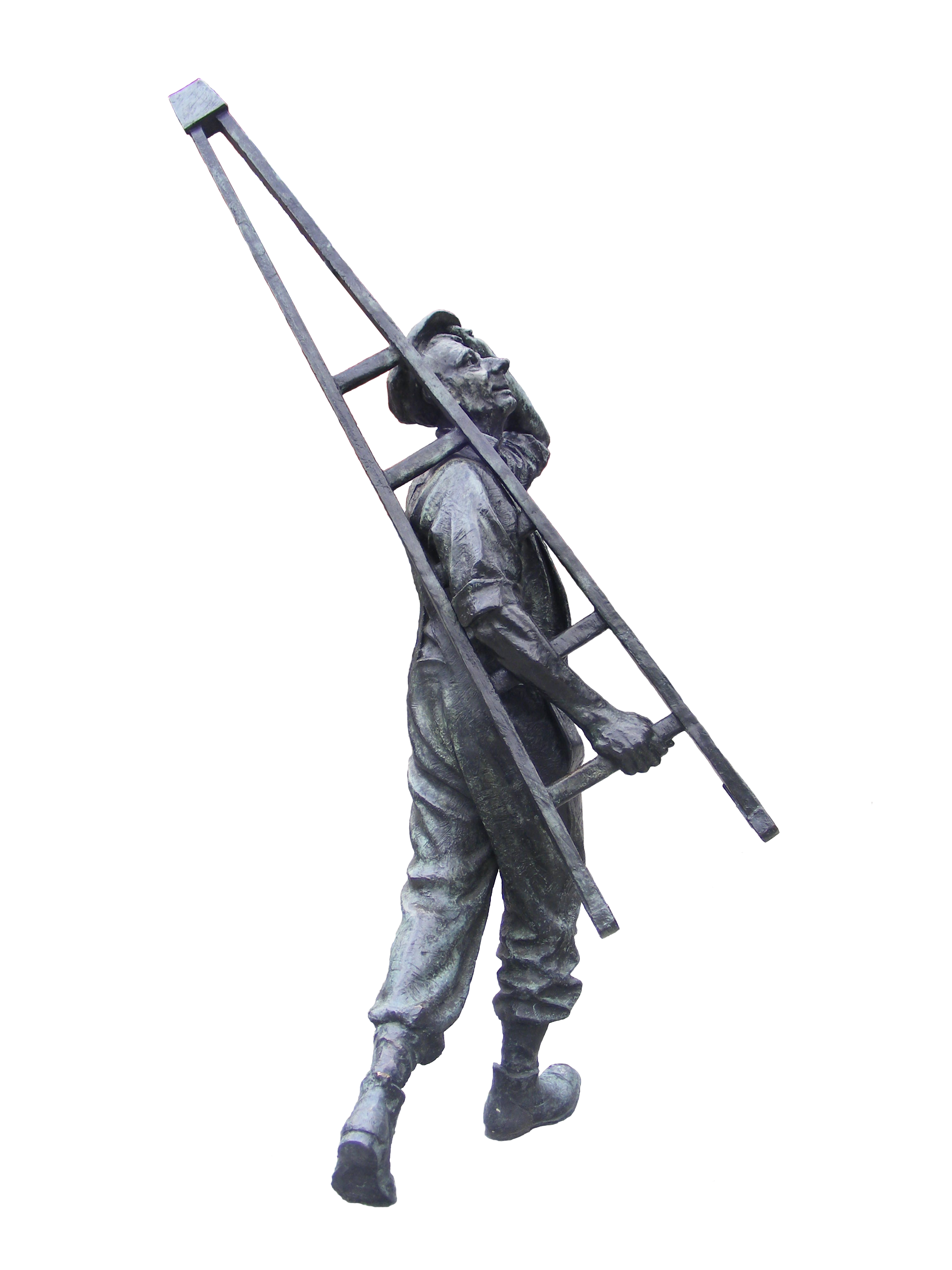
What he came up with was a game with 13 rules in which two teams of nine players each had to pass a soccer ball up and down the gym floor and score goals by tossing the ball into peach baskets nailed onto the edge of the gymnasium balcony. After having to stop play and get out a ladder to retrieve the ball a few hundred too many times, someone was finally smart enough to cut the bottoms out of the baskets and the game started to gain some traction.

And you thought the jump ball slowed down the game too much. photo credit: monkeywing via photopin cc
And you thought the jump ball slowed down the game too much.
photo credit: monkeywing via photopin cc

Actually, it spread incredibly quickly through the YMCA system and soon enough to college campuses where the rules were tweaked until on March 20, 1897, the first 5-on-5 intercollegiate basketball game was held between Yale and the University of Pennsylvania. In case you care (I don’t), Yale won 32-10.

Obviously basketball has grown and changed a lot since those earliest games. Players now dribble the ball (except in the NBA) and the sport can now claim its very own ball that though roughly the size of a soccer ball is much more orange. The peach baskets too have been replaced with metal rims on backboards and nets that make a pleasant swooshing sound.

Because nothing says "This is a real sport" like an orange ball. photo credit: arbyreed via photopin cc
Because nothing says “This is a real sport” like an orange ball.
photo credit: arbyreed via photopin cc

And as the players get more skilled and taller (the average NBA player is now well over ten feet tall), and the game becomes too easy and therefore boring to watch, the rules will continue to change. I’m sure my son will keep track of them all because he likes basketball. And he even kind of gets it, which is a great source of joy for my husband, because I hear that in addition to my son’s game, there may be a few other ones to watch this weekend as well.

Frankly, I probably won’t pay a lot of attention to those other games. I didn’t fill out a billion dollar bracket because I really only cheer for two, or possibly three college teams, when I happen to catch them on television. None of them are in the tournament this year. But I bet all the players who are participating will manage just fine without me because I have no doubt their moms will be there with extra water bottles, elaborate rhyming cheers, and a snack with a little bottle of celebratory red Gatorade for after the game.

The celebratory sports beverage of choice for kids with cool moms.   photo credit: Lorianne DiSabato via photopin cc
The celebratory sports beverage of choice for kids with cool moms.
photo credit: Lorianne DiSabato via photopin cc

It’s Only Wafer Thin

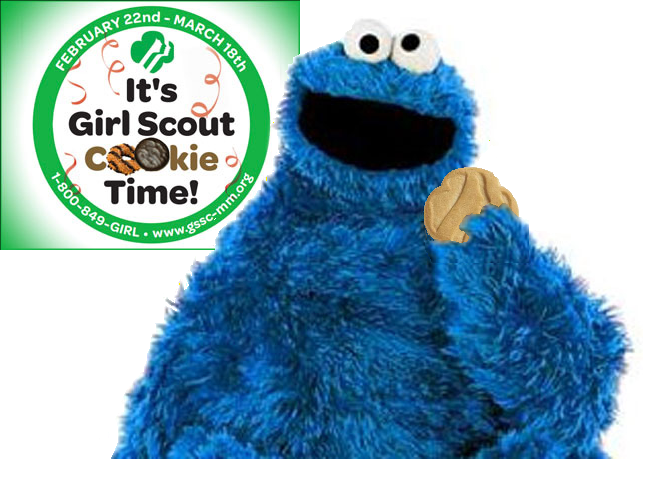
Right now in my freezer, I am proud to report, there is still one full sleeve of Girl Scout Thin Mint Cookies. One afternoon right at the end of January, an adorable little neighbor girl showed up on our doorstep peddling the irresistible treats. And I wasn’t home. I say this because I don’t want to accept the blame for the ridiculous number of boxes we purchased.

You see, my husband is a sucker very generous man, one of the many reasons I love him so much. He also has a competitive streak so when that shrewd little neighbor girl told him her dad had ordered seven boxes of Thin Mints, my man ordered EIGHT BOXES. The trouble with this is that he doesn’t eat them. He doesn’t even like them; he just knows I do. He did  also order a box of his favorite Samoas, which is currently unopened in the pantry, but mainly he ordered cookies for me.

Oh, no, no. I just meant one of the little green boxes. Oh, okay, I'll just take them all. photo credit: Brother O'Mara via photopin cc
Oh, no, no. I just meant one of the little green boxes. Oh, okay, I’ll just take them all.
photo credit: Brother O’Mara via photopin cc

Sweet, right? But as any little scout savvy enough to set up a sales table outside a marijuana clinic or to pit one competitive neighbor against another can tell you, these things are addictive. It’s true that according to the FAQ page linked to the Girl Scouts of America website: “Girl Scout Cookies…are considered a snack or special treat. As with all treats, they should be enjoyed in moderation.”

Of course. That makes sense. It’s good advice. I won’t sit down and eat the entire box, then. I’ll just eat one of the two little sleeves of wafer thin cookies. For now. Then I’ll have a glass of milk. And maybe the other sleeve of cookies, since the box is already open.

And that’s why I don’t order eight boxes.

It’s also the reason that since its humble beginnings as a 1917 fundraising bake sale for the Mistletoe Scout Troop in Muskogee, Oklahoma, the sale of Girl Scout cookies has grown to staggering annual sales of over $700 million. Ten years after Juliette Gordon Low founded the Girl Scouts and just five years after that local cookie fundraiser in Oklahoma, Chicago Girl Scout leader Florence E. Neil put together an inexpensive cookie recipe for the organization’s magazine, The American Girl, encouraging local troops to sell the cookies to raise activity funds.

And even though the original 1922 Girls Scout cookie recipe wasn’t the Thin Mint, the program flourished. In 1936 Girl Scouts started working with a number of commercial bakeries across the country to supply the growing demand for their cookies, which by 1951 came in three delicious varieties: Do-Si-Dos (peanut butter sandwich cookies), Trefoils (shortbread), and at long last, Thin Mints.

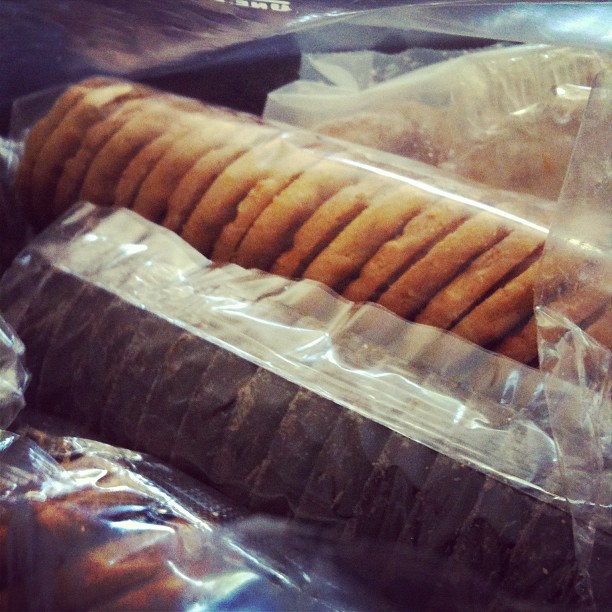
There is absolutley no reason to sit down and eat a whole box of Girl Scout Cookies at once. Not when they come so nicely packages in 1/2 box serving sizes. photo credit: elaine a via photopin cc
There is absolutley no reason to sit down and eat a whole box of Girl Scout Cookies at once. Not when they come so nicely packaged in 1/2 box serving sizes. photo credit: elaine a via photopin cc

Gradually, Girl Scouts consolidated their cookie sources and today the ones you buy because cute little girls are standing in the cold right outside your favorite grocery store and you suspect they might not be allowed to go home until their cookie table is empty, come from one of two commercial bakers. Each bakery is required by the Girl Scouts to produce the three varieties standardized in 1951, but then select five more varieties to offer every year. The recipes are similar between the bakeries, but not identical, and the names may be different as well. So, if like my husband, you for some reason just love Samoas (actually the second best seller in the catalog), don’t be too upset if you find you have to settle for a box of Caramel deLites instead.

Thankfully, Thin Mints are always Thin Mints so there’s no confusion there, and I’m not the only one who likes them. As the top-selling Girl Scout Cookie, Thin Mints make up 25% of sales every year, most of them going to residents of my neighborhood. I am fortunate that even though my husband isn’t a big fan, my two sons enjoy them as much as I do, so I’ve managed to go through several packages by doling them out in lunch bags. I’ve mailed a couple more boxes in college care packages and I put the rest in the freezer.

Sadly, that last solution doesn’t work out all that well, because the only thing tastier than a Thin Mint is a frozen Thin Mint. And the only thing tastier than that is a sleeve of frozen Thin Mints. I’m not thinking the last cookies are going to make it into lunches tomorrow. I wonder how the boys would feel about getting Samoas instead.

I bet he'd rather have a Thin Mint. photo credit: Mike Licht, NotionsCapital.com via photopin cc
I bet he’d rather have a Thin Mint. photo credit: Mike Licht, NotionsCapital.com via photopin cc

Bouncing Ideas Around

My oldest son, a bright nine-year-old with big dreams, wants more than anything to be an inventor when he grows up. And having watched him design and build, and redesign and build better since he was old enough to know blocks could be more useful in his hands than in his mouth, I have no doubt he will succeed in doing just that.

Actually I think if he could just wear a lab coat to work, he might be completely happy. photo credit: philentropist via photopin cc

The trouble is he isn’t quite sure what to invent. He still lives in a nine-year-old’s world and thankfully, from his perspective, life is pretty good. So one of his favorite questions to ask people is whether they have a problem he can solve with an invention.

This approach hasn’t led yet to much inspiration, but I think he’s on the right track because many of the most important inventions in history have occurred specifically because the world had a problem and it needed the inventors to step in and solve it. And, of course, I have to assume that when I say “important”, your mind jumps immediately to silly putty.

In WWII Japan rushed to seize rubber plantations throughout Southeast Asia. This made a lot of sense strategically because rubber is an important resource for armies which need it for tires, rafts, boots, and all kinds of army type things. But this created a big problem for the US that got 90% of its rubber from Southeast Asia.

The call went out to the American public to conserve and to donate any spare rubber they may possess. The public responded, turning in old boots, rain coats, and garden hoses. The Boy Scouts of America chipped in by collecting 54,000 tons of scrap tires in just the first few weeks of the shortage.

It's possible that this boot could be put to better use.    photo credit: runran via photopin cc
It’s possible that this boot could be put to better use. photo credit: runran via photopin cc

But conservation alone couldn’t solve the problem and so the word was sent out to the inventors that we needed a good, cheap, synthetic rubber material and we needed it fast. Industry in the US and around the world had been working on a synthetic rubber for about fifty years with some small scale successes, but nothing that could supply the wartime need. It was Waldo Semon of B.F. Goodrich that produced a substance that could fill the gap. And if this blog were as practical as it claims, this post would probably be about him.

Instead it’s about a General Electric scientist by the name of James Wright who in 1943 made a rubbery putty that bounced even better than natural rubber, that stretched if pulled slowly, broke if twisted quickly, and picked up petroleum-based newspaper ink. And if left on a lab table, it puddled. This last characteristic made it unlikely as a candidate for use in effective tires, but Wright still thought it was pretty cool.

Frustrated that he couldn’t find a good use for it beyond impressing his friends at parties, Wright consulted with fellow inventors throughout the world who all said it also impressed their friends at parties.

Eventually the substance came to the attention of Peter Hodgson, a marketing specialist who had worked with a toy store owner that briefly, and somewhat successfully, included the substance in her catalog.  Hodgson saw potential and bought the production rights from General Electric for $147.

Stringy. Bouncy. Gooey. Not good for making tires.   photo credit: Hometown Beauty via photopin cc
Stringy. Bouncy. Gooey. Not good for making tires. photo credit: Hometown Beauty via photopin cc

With Easter coming up, Hodgson named the stuff “Silly Putty,” packaged it in small plastic eggs and waited for his millions to roll in. Before long silly putty was enjoying worldwide success and it even launched into space with Apollo 8, where it finally proved useful as a means to hold down tools in zero-gravity. By the time of Hodgson’s death in 1976, his estate was worth $140 million in silly putty money (even so, all of his checks bounced—get it?).

So I may not be able to provide a great deal of inspiration for my budding inventor, but it still seems to me that he’s onto something. The world has lots of problems that need solving. And if that doesn’t work out, it also has lots of party-goers that need impressing.

Peanuts, Cracker Jack, and the Most Important Political Movement of Our Time

On Tuesday of this week, a movement of monumental proportions began in the United States. Sure we could be focused on political instability in the Ukraine, nuclear missile testing in North Korea, the ongoing saga of US healthcare reform, or even the hot mess that is Arizona politics, but wouldn’t we rather turn our attention to what really matters: baseball.

The opening of the 2014 St. Louis Cardinals world championship season is only about a month away and rumor has it there may even be some other teams playing, too. Obviously it’s time we start turning our national attention to how we plan to celebrate this wondrous event.

It's hard to disagreee with someone who nods all the time.
It’s hard to disagree with someone who nods all the time.

Thirteen gold glove winning Hall of Famer Ozzie Smith has an idea. He has teamed up with Budweiser (an originally American company now owned by the Belgian company InBev that is committed to demonstrating its all-American-ness) to start a petition that would require the Federal government to consider declaring baseball’s opening day a national holiday. The petition started circulating on Tuesday and the goal is to get the necessary 100,000 signatures within thirty days, giving Smith just enough time to deliver it to the White House before opening day.

And why not? I mean, obviously the federal government doesn’t have much else going on and I can’t think of any reason such a move wouldn’t garner bipartisan support. Because baseball is, after all, America’s Pastime.

But is it really all that American? The history of the sport is a little muddy. There’s evidence that there were bat and ball games played even in Ancient Egypt and the most likely direct ancestors of baseball come largely from England where games like Cricket and Rounders have developed and evolved over centuries.

But when in 1903 British sports writer Henry Chadwick penned an article claiming baseball was a derivative of rounders (which to be fair, is an incredibly similar game), Americans cried foul (or threw their  helmets on the ground, kicked up some dirt, and ejected Chadwick from the game). A commission was formed to ascertain the truth.

What they found was a likely made-up story by a thoroughly unreliable witness who insisted that the first game of baseball played on a well-defined diamond was invented by Abner Doubleday in 1839 in Cooperstown, New York. So it was settled. Baseball was as American as apple pie and it still is.

I'm thinking of petitioning the US government to form a commission to ascertain the truth behind the American-ness of apple pie. photo credit: Barbara.K via photopin cc
I’m thinking of petitioning the US government to form a commission to ascertain the truth behind the American-ness of apple pie. photo credit: Barbara.K via photopin cc

Of course the “witness” was five at the time this game would have taken place and the only “evidence” he could provide was a sketch of Doubleday’s field that he himself reproduced more than sixty years later. It’s also proven unlikely that Doubleday was ever in Cooperstown in 1839, but now I’m probably just being picky.

Even the Hall of Fame in Cooperstown has admitted that the opening of its doors in 1939 honored “the mythical ‘first game’ that allegedly was played in Cooperstown on June 12, 1839.” Commissioner of baseball Bud Selig on the other hand “really believe[s] that Abner Doubleday is the ‘Father of Baseball,’” which just goes to show you that at least one noteworthy baseball expert (my husband) is right when he says that Bud Selig should probably be considered unreliable on most things baseball.

The first truly concrete evidence of American baseball is from a 1791 ordinance in Pittsfield, Massachusetts banning play of the sport near a community building, the fine for which was to garnish allowance until any broken windows had been paid for by the players. So it’s safe to conclude that at least a similar sport to that which we now know as baseball, was being played (carelessly) in America.

And that would be really something if there wasn’t just as reliably recorded evidence that baseball (referred to separately from both rounders and cricket) was being played in England by British royalty as early as 1749.

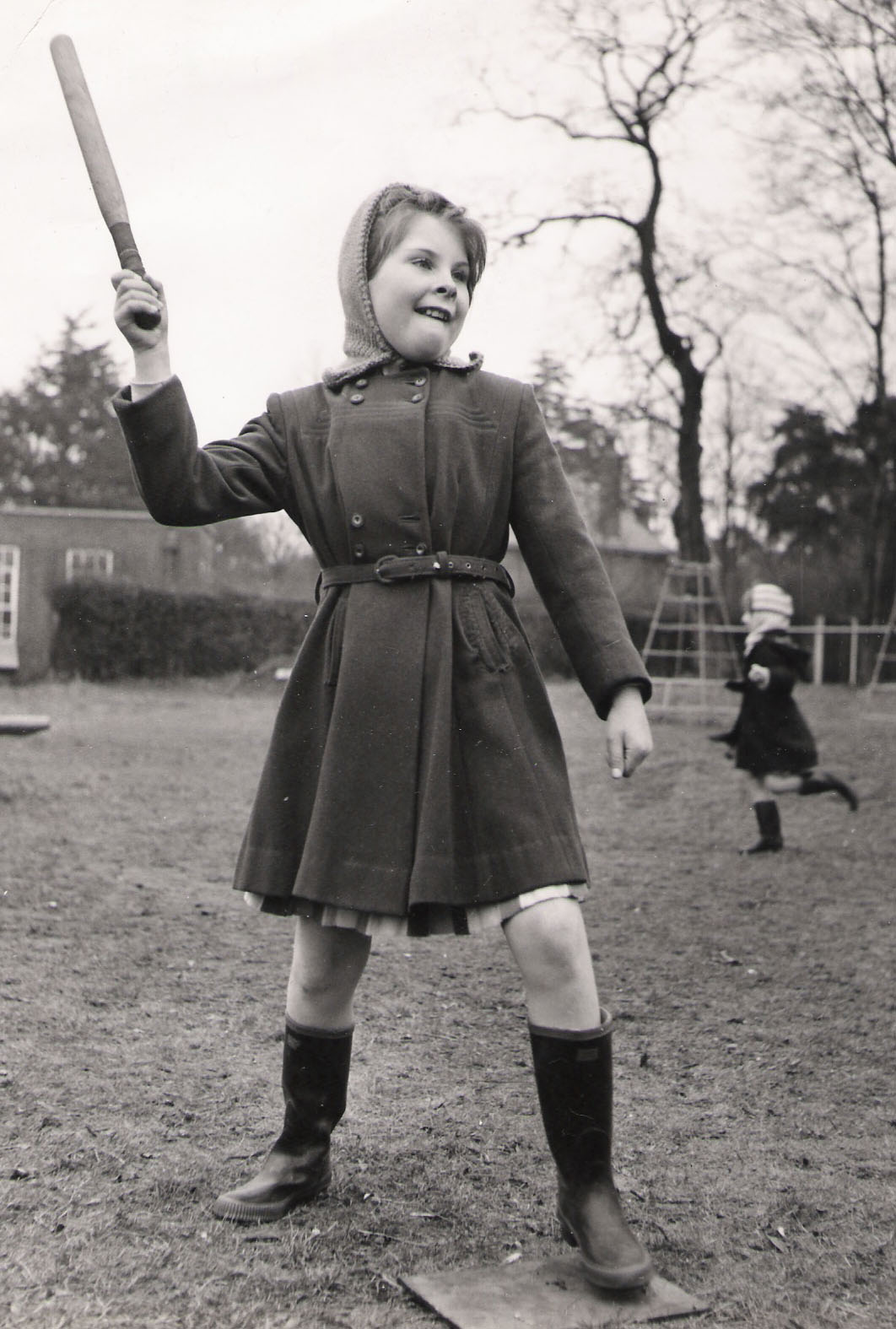
Okay, so in rounders you swing a bat at a ball and score by successfully running around four bases. But she's clearly holding the bat in one hand. It's completely different. See?  photo credit: theirhistory via photopin cc
Okay, so in rounders you swing a bat at a ball and score by successfully running around four bases. But she’s clearly holding the bat in one hand. It’s completely different. See? photo credit: theirhistory via photopin cc

So, is baseball a quintessentially American sport deserving of its own national holiday? I’m not sure. It’s true that no one loves baseball quite like the US (except for maybe Cuba, South Korea, the Netherlands, the Dominican Republic, and Japan, just to name a few). And there can be no doubt that the rules of the sport as it is played today developed primarily in the United States (where it was decided in 1845 that winging a baseball at someone’s head for an out might not constitute fair play).

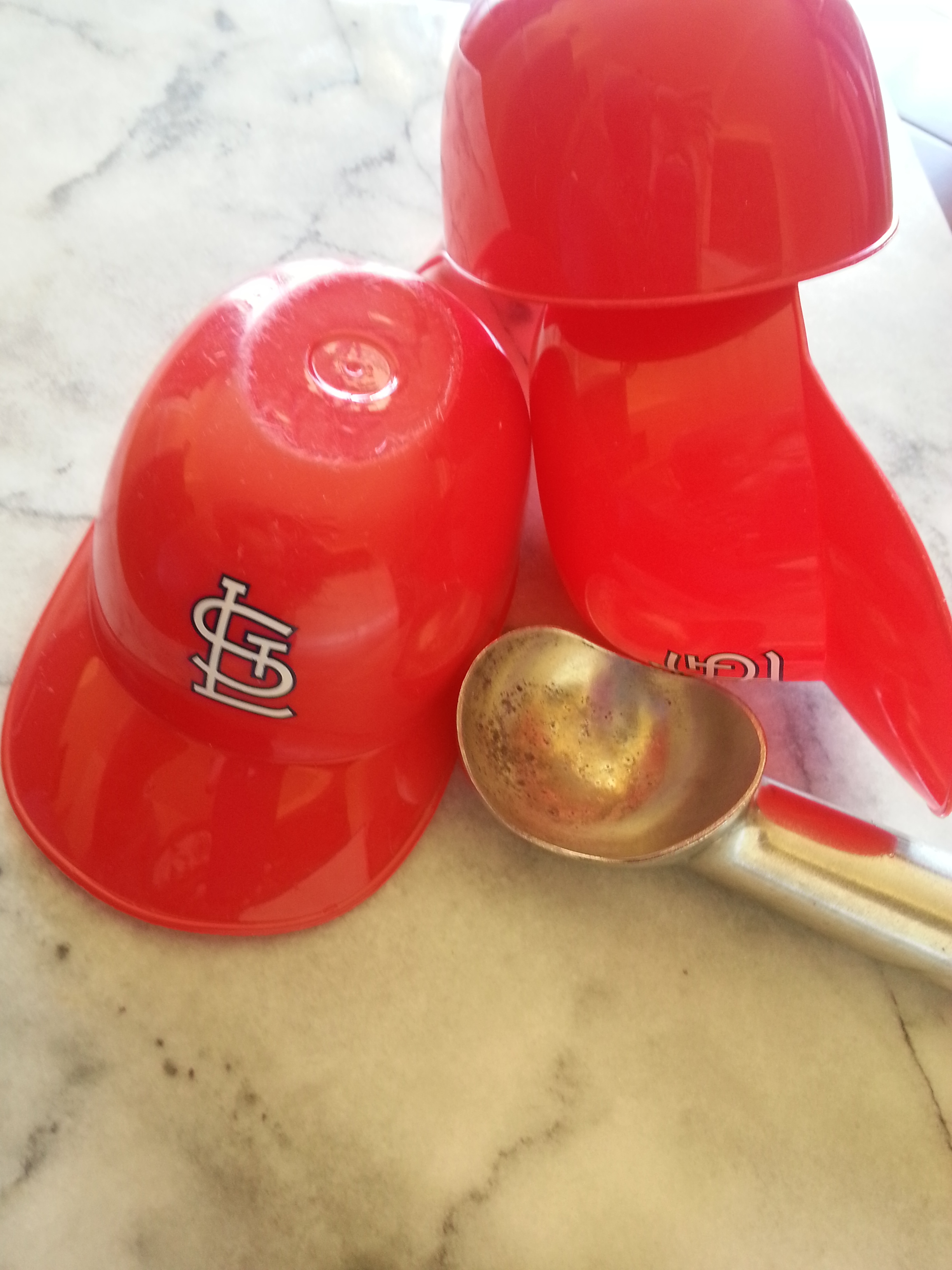
According to Ozzie Smith 22 million Americans claim to have at least at one time played hooky to enjoy opening day so he reckons we ought to make it official. And though I don’t think I’ll sign the petition, I’m sure he’ll get his signatures. At the time of this posting, it stands at  36, 612 with 27 days remaining. And regardless of what happens, my family will celebrate the way we always do, with hot dogs and nachos, with ice cream in those little plastic batting helmets, and with unbridled enthusiasm.

National holiday or not, I'll be getting my celebration on.
National holiday or not, I’ll be getting my celebration on.

No Room for Swirls

At the end of a narrow hallway, tucked into the corner of my basement is a little hidey hole of a room that I have claimed as a writing office. One wall has been covered with chalkboard paint thoroughly graffitied with story ideas. On the other walls hang a bulletin board plastered with notices of submission deadlines, a white board scribbled with possible blog post topics, and above my desk a beautiful photograph of an Oregon Iris given to me by a dear writer/photographer friend.

In the little wall space that remains, just above a bookcase that holds more thesauruses than any one person needs, must have, requires, has an occasion for, or isn’t able to dispense with, hangs a collection of framed quotes about writing by writers whose work has been meaningful to me from Snoopy to Mark Twain.

A master at work. Now that's a great first line!
A master at work. Now that’s a great first line!
photo credit: collectpeanuts via photopin cc

One of the quotes is from James Michener who once said, “I love writing. I love the swirl and swing of words as they tangle with human emotions.” As a writer who loves to read and write historical fiction, I most appreciate Michener for the depth of his works which reach beyond character, through generations, and across large expansions of time, to tell the story of the setting itself. There aren’t a lot of authors who have done that, and none more successfully than Michener.

Of course, it takes a lot of words to do it. Michener’s books are long and swirly and tangly and not for everyone. But I appreciate them because he so boldly leaves nothing out. And it works.

But there’s another approach to writing, one that is more streamlined and maybe more widely appreciated. It’s represented perhaps best by the also highly quotable Ernest Hemingway who once said, “My aim is to put down on paper what I see and what I feel in the best and simplest way.”

Anyone who has read Hemingway’s work knows that he pretty successfully did just that. He didn’t invent brevity in storytelling (it predates him by an awful lot of human history and oral tradition), but he did play an important role in the emergence of the short short story through the 20th century and into the 21st..

Today’s writers who are hip to the lingo generally call such stories flash fiction, a term that refers (not so precisely) to stories up to 1000 or sometimes up to 2000 words and down to as few as six.

That’s right. Six WORDS.

And this is really why Hemingway gets so much of the credit because he wrote (or didn’t write) the first six word story, complete with a beginning, middle, and end. If you don’t believe that, you’re not alone. The rumor, which can be traced all the way back to 1991 (and you know that anything that comes from 1991 is too legit to quit), is that in 1961 Hemingway was in a restaurant with a group of writer friends when he bet them $10 each that he could write a complete story in just six words. They had to cough up the cash after he wrote on his napkin: “For Sale, Baby shoes. Never worn.”

Dang! That is six words. Who do you think you are? Hemingway?!
photo credit: JD Hancock via photopin cc

The biggest problem I see with this tale is that I don’t think anyone would be stupid enough to engage in such a wager because if a writer brags that he can come up with a six word story you can be pretty sure he’s got one in mind. The slightly smaller problem is that the event is basically unsubstantiated. Oh, and there’s evidence that the story existed in various forms well before Hemingway. Still, it’s nice to think he wrote it because it does illustrate his approach to writing.

As a reader I can appreciate both wordy authors and succinct ones. As a writer, I fall somewhere in the middle on the Michener/Hemingway scale. I love the swing and swirl of words and I will at times be unapologetically verbose. But some stories just want to be simple and it can be a fun challenge to put together a piece of flash fiction.

One such work of mine, a story entitled “Blue” has just this week been published in the online magazine 100 Word Story. As the name suggests, the works featured are exactly 100 words long. That doesn’t leave a lot of room for swirls. I hope you’ll follow the link and read not just my story, but also take the time to peruse and appreciate a few of the brief works of some talented writers who slaved away in their hidey holes to trim away all those swinging, swirly tangles of words.

Study Shows VD is Good for Your Heart

Tomorrow we celebrate “love,” on that most romantic of days commemorating a couple of martyrs, a massacre, some very poorly behaving Romans, awkward relationship moments, and heart-shaped boxes of chocolate candies filled with who knows what. As you can probably gather, we’re not big celebrators of Valentine’s Day around here, although, I have to admit, I will likely make a heart-shaped casserole for dinner because I received a heart-shaped pan as a wedding gift and honestly when else am I going to use that?

Despite my own reluctance to celebrate VD, my children have been busy designing and filling out valentines to give to their classmates. They’re excited mostly, I think, to see the pile of candy they will bring home.

If you must celebrate, at least do so Pinterest style, right?

But I am delighted with their teachers and with their school because both classes are also trying to make this kind of silly holiday meaningful on a larger scale than simply fretting over cryptic Conversation Hearts bearing messages such as: “DARE YA,” “GOT CHA,” and “URS 4EVR.”

My oldest son’s third grade class will be spending at least some of their party time making therapy pillows to be donated to a local children’s cardiac unit. And my first grader’s class will be participating in Jump Rope for Heart.

I’m especially pleased about that because in fifth grade I participated in the program myself and not to brag, but I had some pretty mad skill. Over the years the Jump Rope for Heart Program has raised hundreds of millions of dollars for the American Heart Association all while promoting heart-healthy activity and an attitude of service among elementary students.

It might just be me, but I'm pretty sure the conversation hearts of my youth were more innocent.
It might just be me, but I’m pretty sure the conversation hearts of my youth were more innocent.

Because though it’s a ton of fun, jump roping is hard work. Some historians even trace the roots of the sport back precisely to hard work in Ancient Egypt and China from where the earliest twisted or braided ropes are believed to have come. The theory is that rope-makers had to jump the strands as part of the process of twisting them together to make rope and that in imitation of them, their children developed a game of it.

Whether or not the theory has any merit, rope jumping games certainly did take hold early in China. There’s also evidence that similar jumping activities developed early among the Aboriginal population in Australia. But it is most likely the Dutch we have to thank (or blame) for the modern sport of jump rope.

When early Dutch settlers brought jump roping to New Amsterdam (later New York) in America, the English thought it was the most ridiculous thing they’d ever seen. When Dutch children doubled it up, the English (who were obviously jealous of the mad skills) knew they had been wrong and that this “Double Dutch” accompanied by silly sing-song rhymes was, in fact, the most ridiculous thing they’d ever seen.

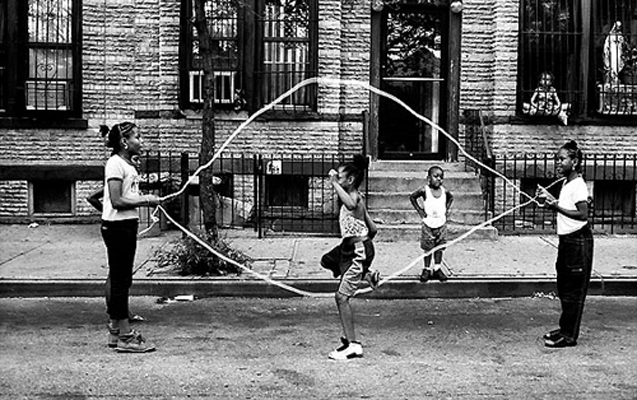
Mad Skill
Mad Skill

The sport’s been though some highs and lows in its history, enjoying a resurgence in the 1970’s with the NYPD’s Double Dutch outreach to inner city youth that included the slogan “Rope, Not Dope,” a “rope skipping” campaign begun in Colorado by PE teacher Richard Cendali, and the Jump Rope for Heart program started in 1978 by Milwaukee PE teacher Jean Barkow.

And now, all over the United States, elementary students jump their hearts out around this time of year in order to do some good in the world and prove that Valentine’s Day, for all the angst and disturbing candy messages, can actually be pretty good for your heart.

jumpropeforheart

So in the interest of exhaustive (or at least exhausting) research, I felt it necessary to dust off my mad skills and jump a little rope. In the process I learned a few things:

  1. I am not at quite the same level of physical conditioning as my fifth grade self.
  2. My “Jumping Rope” list on iTunes needs more Pointer Sisters, Van Halen, and Kris Kross (sure to make me jump jump).
  3. I don’t know if this proves the Englishmen of New Amsterdam right, but my attempt to jump rope is probably the most ridiculous thing anyone could ever see. But won’t. Ever.
  4. Jumping rope is a fantastic way to work off all the empty calories in the heart-shaped box of chocolates filled with who knows what that I’ll probably scarf down in honor of Valentine’s Day.
The things I do for you.

What the Fabulous Fox Says

In 1904, then twenty-five-year-old William Fox bought himself a nickelodeon in Brooklyn. Born in Hungary as Wilhelm Fried, Fox worked largely in the fur and garment industry before catching the movie bug. And it turned out he was pretty good at it his new chosen profession. As the popularity of silent films grew, so did young Fox’s influence. By 1913 he had opened a string of nickelodeons and was making a name for himself with his own production company.

large__4261638740

He had a keen eye for the future of entertainment and a knack for discovering and developing the next big trend. As head of the Fox Film Company, William Fox pioneered organ accompaniment during film showings, promoted a number of bright stars, acquired patent rights to the Swiss-developed sound-on-film process, built great movie palaces, and generally rocked the cinematic world.

Alas, his success was not to last. Just as he was attempting to take over MGM, Fox became the center of an anti-trust investigation and when the stock market crashed in 1929, his domination of the movie industry began to crash along with it. When he died in 1952, not a single representative of the movie industry turned out to mourn him.

But, of course, Fox’s name lives on. His production company merged with 20th Century Pictures to become 20th Century-Fox and later mergers led to the formation of the Fox Network. Also the name of William Fox can still be found gracing the marquis of several movie palaces he had built at the height of his career in the late 1920’s, each decorated in what he called the“Eve-Leo” style.

The ceiling in the lobby. "Eve Leo" style at its best.
The ceiling in the lobby. “Eve Leo” style at its best.

Because his wife Eve Leo Fox had a flare for ostentatious décor, placing side-by-side objects reminiscent of artwork found in Hindu temples, Egyptian sculpture, and pretty much anything else that struck her as glitzy on her travels.

It might be fair to describe these theaters as gaudy. Or garish. Or kind of gorgeous if you’re into sensory overload and aren’t terribly concerned about the general consensus of good taste.

Clearly I will not be ascending the stairs this guy is guarding.

Which brings me to date night this past Saturday. My husband and I enjoy live theater. Now that we live close enough to grandparents to make an occasional late night possible, we’ve tried to make it to several shows, including some really wonderful productions of Broadway musicals and other such highfalutin entertainment. Some of these fancy date nights have been spent at St. Louis’s Fabulous Fox, built by William Fox in 1929 and restored in 1982.

I love fancy date night!

The venue rarely functions as a movie palace these days, instead offering a range of upscale shows in the performing arts and, as we learned this past weekend, the occasional flatulent sock puppet.

We went to see Alton Brown, famous science-y, gadget-y, know-it-all food expert of Food Network fame. His tour Alton Brown Live! made a stop for a sold-out show at the Fox and I was lucky to have purchased tickets for my husband’s birthday way back last summer.

This man taught me everything I know about yeast. And sock puppets. Alton Brown Photo By Lawrence Lansing [CC-BY-3.0 (http://creativecommons.org/licenses/by/3.0)]
This man taught me everything I know about yeast. And sock puppets. Alton Brown Photo By Lawrence Lansing [CC-BY-3.0 (http://creativecommons.org/licenses/by/3.0)%5D
To describe this show to you would be next to impossible, except to say that the gaseous nature of yeast represented by unapologetic sock puppets played a smallish part. And that the show was charming, funny, occasionally juvenile, sort of educational, and gorgeous if you’re into sensory overload and aren’t terribly concerned about the general consensus of good taste.

I admit, the chandelier is just whimsical and fun.

I don’t know that the visionary that lent his name to the industry he loved long after it had left him behind and who ushered sound into the movies and the movies into grand palaces had this in mind when he lavishly decorated his “Eve-Leo” style theater. But I suspect that the echoes of belching sock-puppet “yeast” bouncing off elephant carvings and gargoyles might have made him smile. You know, because it’s obviously the next big trend in entertainment.