Of Hippos and Submarines

When Lugne Mocumin decided to serve with St. Columba in his mission to spread Christianity to the Picts of Northeast Scotland in the middle of the sixth century, he may have gotten a little more than he bargained for. While on its way to visit with the leader of the Picts, a fellow by the name of Brude, the missionary party headed across Loch Ness.

During the trip, the missionaries spied a group of men on the shore engaged in burying a fallen friend, a victim of the ferocious beast that lived in the depths of the lake. Naturally Columba wanted to help in some way and so he ordered Lugne (who truthfully no one in the group really liked that much anyway) to swim out to retrieve the victim’s abandoned boat.

DSC_1198

Not surprisingly the monster of Loch Ness rose up to attack, but Columba was prepared for that. He calmly made the sign of the cross and said: “Thou shalt go no further, nor touch the man; go back with all speed.” At these words, the monster shrugged and swam away with his serpentine tail between his flippers.

This is the earliest known record of the famed Loch Ness Monster and it comes from Adomnán, the 9th Abbot of Iona who wrote his account about a hundred years after the alleged event. That Adomnán’s distance from the event should be considered when determining the reliability of his account is something even most Nessie enthusiasts (sometimes known as “crazies”) will grudgingly admit.

But the same problem can’t be attributed to the next reported appearance of the monster. After Columba it seems no one heard a peep from the fearsome creature of Loch Ness until just eighty years ago on May 2, 1933 when the Inverness Courier broke the story that a couple of highly reliable witnesses driving a newly completed road along the lake edge had seen, well, something.

The report attracted a great deal of interest (mainly from “crazies”) and soon big game hunter Marmaduke Wetherell was on the job. Hired by the London newspaper Daily Mail, Wetherell soon discovered a set of large footprints. Unfortunately for Wetherell and monster enthusiasts everywhere (still known up until 1959 as “crazies”), the prints belonged to a hippopotamus foot umbrella stand.

Shamed by the exposure of the hoax, Wetherall didn’t give up there and in April of 1934, Colonel Robert Wilson, a respected British surgeon, took a stunning picture of the beast, or perhaps of an otter, or maybe a log. The picture, though hardly conclusive evidence of the presence of a lake monster, appeared authentic and it wasn’t until 1994 that the photo was entirely exposed as a hoax perpetrated in part by Wetherell.

Christian Spurling - Loch Ness Monster (1934)
Christian Spurling – Loch Ness Monster (1934) (Photo credit: luvi)

With the exception of a few cryptozoologists (a term coined in 1959 because nobody could get “crazyologist” to stick) who don’t find this whole hoax theory at all credible, the world was shocked when it was revealed that instead of a genuine lake monster, the picture actually showed a plastic mold mounted on a toy submarine.

So, then, what do we make of the story of St. Columba’s redirection of the murderous beast and Lugne Mocumin’s narrow escape? First, I think we need realize that encounters with toy submarines sprouting plastic heads were most likely an uncommon and alarming sight in the sixth century. Second, from some perspectives a hundred-year-old tale of an encounter with an otter or perhaps a log, paired with an untimely death, can look an awful lot like a lake monster. That is if you happen to be a “crazyologist.”

LOOK!  THE LOCH NESS MONSTER!
LOOK! THE LOCH NESS MONSTER! (Photo credit: Extra Medium)

French Fashion Accessories: They’re not just for English Nannies Anymore

Jonas with his brolly
Jonas with his brolly (Photo credit: Wikipedia)

In October of 1750, Englishman Jonas Hanway had the nerve to walk through the streets of London carrying an umbrella. To be clear this was well before the umbrella became the preferred mode of transportation for magical English nannies. Though the umbrella had been introduced through much of Europe at the time, it’s most notable use was as a favorite accessory of the more fashionable ladies of France.

Anything that can be referred to as a bumbershoot is probably a little funny anyway. And it certainly doesn’t take much imagination to conclude that an otherwise well-respected Englishman walking down the street sporting the latest in 18th century French ladies’ fashion might draw some attention and (possibly deserved) ridicule.

But why would someone carrying an umbrella in 21st century Oregon deserve a similar reaction? When we relocated to Salem, Oregon a few years ago, we knew that with a 2000 plus mile relocation would come a few small cultural differences. We expected that we might pick up a few new bits of slang in our vocabulary, learn some variations on well-known songs, and maybe stumble on the recipes of some local specialties.

One thing that did surprise me, though, was when I was warned that in this region in which it rains pretty much from November to July, I could expect to be mocked if I used an umbrella. It made a sort of sense, I suppose. Salem rain most often consists of tiny little droplets that swirl around in the air and are more likely to coat than douse and so are difficult to stop with a traditional umbrella.

Still, even when the rain came down harder, more similar to the sheets that fall in the Midwestern springtime, the Oregonians merely pulled their rain jackets tighter, and ran a little faster. Few were willing to take a cue from 18th century French ladies’ fashion. Or common sense.

So now I’m back in St. Louis and it’s April, which means it is storming. The rain comes down in sheets (like rain is supposed to) and when I venture out (and I’m not cowering in my basement under a tornado warning) I carry an umbrella. Because it’s the sensible thing to do. It would have been the sensible thing to do in Oregon as well, but I am sad to say I wasn’t bold enough. When the rain came down in sheets, I pretended to be a native Oregonian and simply pulled my rain jacket a little tighter and ran a little faster.

As for Jonas Hanway, he stayed the course, determined that the umbrella (used by many ancient civilizations) was a sensible and worthwhile idea. Come rain or come shine, he stubbornly carried his favorite and slightly silly-looking accessory through the city streets for nearly thirty years. Eventually the idea caught on and soon enough the men and women of London began carrying umbrellas (for a long time referred to as “hanways”), though it would still be a few years before the bumbershoot would catch on with practically perfect nannies.

Mary Poppins: Umbrella
Mary Poppins: Umbrella (Photo credit: jpellgen)

Who says spaghetti doesn’t grow on trees?

1957 was a banner year for Switzerland’s spaghetti farmers. A mild winter paired with a dramatic decrease in the population of the dreaded spaghetti weevil led to the record harvest that has to this day never been equaled.  Small family farms went into overdrive plucking spaghetti strands from the trees that had been carefully cultivated to produce spaghetti of precisely the same length. The harvest was followed, as always, by a feast featuring the traditional dish, which, of course, is spaghetti, harvested and sun-dried fresh that morning.

This was the report presented by BBC news program Panorama on April 1, 1957. Panorama had long been a source of reliable serious news. After the story aired, viewers flooded the network with calls, a few of which were disgruntled viewers, but most of which were people genuinely interested in the story. Some even asked how they might grow their own spaghetti trees.

To be fair to the public duped by such a ridiculous prank, spaghetti was not yet a widely known dish in England. It was available only in a canned form and, really, canned vegetables (which have been nearly as processed as spaghetti’s original grain anyway) can kind of resemble pasta in texture. And Panorama went all out. I have to admit, it is a pretty convincing segment.

I have to wonder, though, why a serious news program would sacrifice its integrity to pull a silly prank on its trusting audience? The answer to that question is irritatingly unclear. I mean, yes, the BBC was participating in the long held tradition of April Fools’ Day when we are all supposed to get a little silly and try to make fools of one another. But why do we do it?

There are a couple of theories. The most common one batted about has to do with the introduction of the Gregorian calendar which placed the start of the New Year on January 1 instead of the vernal equinox, which happens just a little before April 1. Only fools continued to celebrate the old holiday instead of the new and so they became the victims of ridicule. One trouble with this theory is that England didn’t adopt the Gregorian calendar until 1752 and by then, April Fools’ Day had already long been a thing.

In 1983, Joseph Boskin, a Boston University history professor, presented perhaps a more plausible theory. According to the professor, a court jester by the name of Kugal claimed that he could run the Roman Empire better than Emperor Constantine. Amused by the claim (because if history has taught us anything it’s that Roman emperors liked having their authority challenged), Constantine gave up his throne for a day to Kugal whose first order of business was to declare a day of foolishness. The problem with this theory, of course, is that Boskin made the whole thing up as an elaborate April Fools’ prank.

And that, I think, is why we will never know the real history behind this very silly day that turns the most serious of people into

This image shows a Paradise fish (Macropodus o...
April Fish!

slightly mean-spirited jokesters. It is a day that has French children pinning paper fish to their teachers’ backs, pointing and erupting in giggles as they announce: “Poisson d’Avril!” (roughly translated as, “French children are not particularly known to be clever pranksters!”).

It is a day that encourages an otherwise loving sister to empty a Cadbury Cream Egg of its fondant center and reseal it with chopped onions packed inside so that she can coax her trusting brother into taking a bite (Alas, I can’t claim this one as my own as it was my sister who pulled off this feat. I did laugh, though.)

Maybe we just do it because the sun is finally shining a little more brightly, the flowers are starting to bloom, and the fading memory of the harsh trudge through winter makes us a little giddy. Whatever the reason for it, today is the day for harvesting spaghetti, assuming you remembered to plant your tree. According to the BBC all you have to do is “place a sprig of spaghetti in a tin of tomato sauce, and hope for the best.”

Nothing says Spring like a plate of home grown spaghetti.

Yielding the Circumference

Today is March 14 (3/14 in the US), which means that millions of nerds are spending the day happily celebrating that most mysterious of irrational numbers, pi. I’ll just briefly explain in case you don’t happen to be a nerd (because the jury’s still out). Pi (which is a stage name because this Rockstar number is too irrational to have it any other way) is the expression of the ratio of the circumference (the distance around) of a circle to the diameter (the distance across and through the center) of that same circle.

English: Illustrates the relationship of a cir...

Ancient nerds discovered that this ratio is constant for any circle and like nerds will do (and this is the reason they generally make more money than non-nerds), they correctly decided that this might be information worth noting. And when I say “ancient,” I’m talking before Egyptians and Babylonians started writing down their various approximations for this handy little ratio, say 4000 years ago.

Pi
Nope. Older than that.

In fact, I think it’s safe to suggest that the approximate value of pi was probably discovered first by the same caveman (let’s just call him Og) who invented the wheel. He carefully painted the number (out to 300 decimal places) on an as yet undiscovered cave wall and proudly showed it to the other cavemen because he thought it was so neat. At that point (and again, I’m just assuming here) the other cavemen gave Og a wedgie.

This is an artist's approximation as it is believed that Og never sat for a portrait. It's pretty good, I think.
This is an artist’s approximation as it is believed that Og never sat for a portrait. It’s pretty good, I think.

Don’t fret, though. Og didn’t suffer in vain because humankind has been using his handy little observation ever since, and has spent thousands of years approximating the constant. After the Egyptians and the Babylonians, who each found the number to be a little more than 3, pi shows up in the history of India and China (where again it was found to be a little over 3).

It also gets a nod in the Hebrew Bible (in 1 Kings 7:23) where it is calculated to be 3. This has (believe it or not) been a source of great controversy for Hebrew scholars, but what I think it indicates is that God isn’t all that impressed by our efforts to calculate pi out to well over 10 trillion places. This may also be illustrated by the fact that if one were to calculate the circumference of a circle that enclosed the entire known universe (you know, just for fun), using just 39 decimal places of pi would yield an answer with a maximum error equal to the radius of a hydrogen atom.

Still, I suppose it’s nice that thanks to computers, we can now calculate that the value of pi is a little bit over 3. Most of us (at least those of us who aren’t mathematicians by trade) never bother with much more than 3.14. So on March 14 we release our inner nerd (some more inner than others) to celebrate by baking and eating pie because if we can’t be bothered with all those extra decimal places, we sure aren’t going to be concerned by an extra (delicious) “e” at the end.

One question that remains for me, though (because my inner nerd is actually more interested in symbol origins than in geometry), is why is this super important irrational constant referred to by the Greek letter π? The answer is pretty simple. Before it had a stage name to call it’s own, pi was referred to most often as “quantitas in quam cum multiflicetur diameter, proveniet circumferencia” or “the quantity which, when the diameter is multiplied by it, yields the circumference.” Admittedly this name is highly descriptive, but probably a little cumbersome written into an equation.

In 1706, a Welsh math teacher by the name of William Jones first introduced π as the now universally recognized symbol for this precise meaning. Though Jones isn’t well remembered for any other contributions to mathematics, Leonhard Euler (who was a heavy hitter in the field) adopted and popularized the symbol. It was chosen simply because in Greek, π is the first letter of the word for perimeter.

William Jones, mathematician from Wales.
William Jones. Not nearly as famous as Leonhard Euler, nevertheless important to pie-loving nerds everywhere.

And I suspect that it was chosen because no one could figure out what to eat in order to celebrate Yielding the Circumference Day. Whatever you call it, it’s a day for all of us nerds (and, yes, if you stuck with this post until the very end, the jury is done deliberating) to enjoy a piece of piE. I’m thinking cherry.

English: A slice of Table Talk brand cherry pi...

If April showers bring May flowers, what do Mayflowers bring?

If anyone reads this blog on a regular basis (and I am grateful that a few people actually do) he or she may have noticed that the Practical Historian has failed to post in the last couple of weeks. I apologize for that. I have missed it terribly, but I do have a really good excuse. You see, just recently, I was sitting in my empty Oregon home (freshly repainted various shades of potato for the benefit of painting-phobic potential buyers), gazing out into the overcast Pacific Northwest mist I have come to know so well over the past couple of years.

Now I am sitting in my new house (not yet repainted, though I am in no way painting-phobic and already have my eye on several bold shades) at what used to be my dining room table (now a temporary computer desk since a vice fell on the real computer desk and broke it), looking out the window at what I can only describe as a blizzard.

I fear that if it doesn't stop snowing soon, the patio table may go the way of the computer desk.
I fear that if it doesn’t stop snowing soon, the patio table may go the way of the computer desk.

But in front of me, at long last, is a working computer, happily connected to the Internet and ready to assist me in all of my blogging endeavors and I am an almost settled Midwesterner. Along the way from Point A to Point B, my family and I had many adventures and I will likely write about a few of them, but first, I want to back up a few months and also about 393 years.

It’s true that two weeks ago, several men showed up at my home and loaded all of my worldly possessions (minus a few packed suitcases) into a large Mayflower moving truck. As anyone who has ever moved can attest, it is a surreal experience watching your home transform from a lived-in family space full of comfy chairs, cheerful artwork, and cozy beds to an unnaturally clean hall of echoes. By the time the movers arrived, though, it was the culmination of a great deal of work on our part.

In anticipation of moving day we spent many weeks patching, painting, organizing, scrubbing, and simplifying. It was exhausting work, but I have to admit, pretty gratifying, too. There’s something kind of wonderful about taking a hard look at your stuff and realizing that you don’t need that much of it, and, when faced with moving it half way across the country, you may not even want that much of it.

Obviously we held on to a lot. Among the things that made the cut was our living room set (the first matching furniture we ever purchased for ourselves), our pots and pans, the excessively large fish tank (just not the fish, who all found good new homes), the cedar chest that has been handed down through three generations of women in my family, and the splintered computer desk.

As I watched the Mayflower men carefully empty my home into the truck (maybe just not carefully enough in the case of the computer desk), I found myself reflecting on the choices we had made and the choices that others in history have made when facing a big move.

I turned my attention to the original Mayflower (actually Mayflower was a fairly common name for English ships in the early 1600s, but in this case, I refer to the one that carried the Pilgrims from Plymouth across the Atlantic to Plymouth (how disappointing that must have been) in 1620. Designed to carry cargo, rather than passengers, the Mayflower probably made most of its trips carrying English wool, French wine, Spanish salt, and other highly trade-worthy goods.

The Mayflower II, a replica of the original Ma...

In 1620, however, the ship was engaged to transport 102 settlers (only about 40 of which were the protestant separatists history has come to call the pilgrims) plus a large crew that brought the total number of people up to around 150. Some of this number originally boarded the Speedwell, also slated to make the journey, but the second ship quickly proved to be less than sea-worthy. Apparently undaunted by this unfortunate turn of events, the settlers huddled together with all of their goods and set out aboard the Mayflower on a trans-Atlantic journey in early September.

If I had to travel in the back of the truck with all of my stuff and the trip was going to take two months and then I might have to spend the rest of the winter on that same truck, I wonder how much beer I would need to have with me.

For the most part the goods with which they huddled are not all that surprising: tools, food, lots of beer (a healthier alternative to water), candles, a fair bit of warm clothing and 126 pairs of shoes and boots brought onboard by passenger William Mullins.

Mullins, one of the many “strangers” on board the Mayflower because he traveled for economic rather than for religious reasons, was a cobbler by trade and I suppose his choice of luggage makes some sense. If one’s business is shoes and his final destination is unknown land filled with potentially little in the way of familiar materials with which to work, then it might even be sound business practice.

I do wonder, though, when the Mayflower finally landed far off-course after sailing through harsh winter storms, only to endure a long freezing winter that just over half of the settlers survived, did Mullins question his choice to bring his 126 pairs of shoes? Or would he rather have had plentiful medicine, more food, a thicker coat, or perhaps more beer?

I wonder, too, if we made the right choices, as I try to find places in my new home for incredibly unnecessary items like: four wire whisks (actually, I’m not sure I have ever found much use for one), two copies of the game Hungry Hungry Hippos (one with exactly two remaining marbles), and a computer desk that proved, in the end, to be less than sea-worthy. Thankfully we were smart enough to hold onto the snow shovel. Hopefully we will survive the harsh Midwestern winter.

Years of overindulging on marbles had ill effe...
I do feel sorry for the hippos as their provisions have run alarmingly low.

Six of One, Half a Dozen of the Other

Groundhog Day 2005 in Punxsutawney, Pennsylvania
Phil the Groundhog surrounded by his Punxsutawney posse, dressed as always in 19th Century garb.

So today is perhaps the strangest holiday on the calendar, the day when otherwise perfectly normal people seek psychic advice from a rodent. Yes, it’s Groundhog Day. Because I realize this “holiday” is somewhat unique to North America (and, really, to Pennsylvania, the University of Dallas, and a few other odd pockets), I’ll go ahead and explain the tradition.

On February 2, the groundhog emerges from his hidey-hole to check the weather. If it’s cloudy, the little guy scrambles out into the wide world and spring is (obviously) “just around the corner.” But if the sun is out and this genius prognosticator can see his shadow, he runs back inside and we can be sure to expect six more weeks of winter.

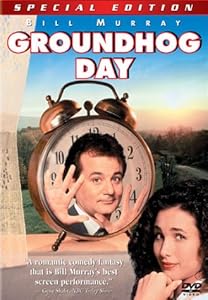
The most famous of these furry meteorologists is “Phil” of Punxsutawney, Pennsylvania (made, if possible, even more famous by the 1993 Bill Murray film) who has been making his predictions since 1886, a curiously long life for a groundhog that should normally live less than 14 years. Since the celebration began, Phil has seen his shadow 100 times. And because no one wants to let go of such a nice round number, this morning he emerged under cloudy skies and predicted a nice short winter.

Cover of "Groundhog Day (15th Anniversary...
A movie that never seems to get better even when you watch it again and again and again.

Of course the practical historian in all of us wonders, I’m sure, from where on earth such a tradition could have come? No one really seems to be sure, but there are a few theories. The one that makes the most sense to me (if one can approach rodent weather prediction sensibly) is that the celebration was born from the clashing of two calendar systems.

While western countries in the Northern Hemisphere recognize the first day of spring as the day the length of daylight finally exceeds the length of night (the Vernal Equinox, which is around 6-7 weeks after Groundhog Day), Celtic tradition places the first day of spring at the cross-quarter day of Imbolc, when it is said that the daylight begins to make significant progress against the night. Probably not coincidentally, Imbolc occurs in Early February (just around the corner from Groundhog Day).

Naturally, people wanted to know when spring really would begin so the most logical thing to do was to seek signs in nature as to when the thaw would begin and the sun would truly emerge. And a tradition was born. Today you can attend Groundhog celebrations in many small towns throughout Pennsylvania, though I should warn you that you’ll need to brush up on your Pennsylvania German because if you speak English during the event, it may cost you up to 25 cents per word.

Of course if you happen to be an alumnus of the University of Dallas, then you know that the party to beat all parties for Groundhog Day is in Groundhog Park in Irving, Texas. This year marks the 50th anniversary of the remarks by University President Dr. Donald Cowan that started the epic celebration: “Think of something to celebrate—celebrate Groundhogs Day, for instance—but whatever you do, do it with style.”

And they have. The Groundhog Day festivities at the school resemble a homecoming celebration with the election of a Groundhog King and Queen, campus-wide sporting events, and crowds of alumni swarming in to join the student body in all-night, semi-controlled, frivolities in the park, which, if I understand correctly, involve quite a bit of heavy drinking.

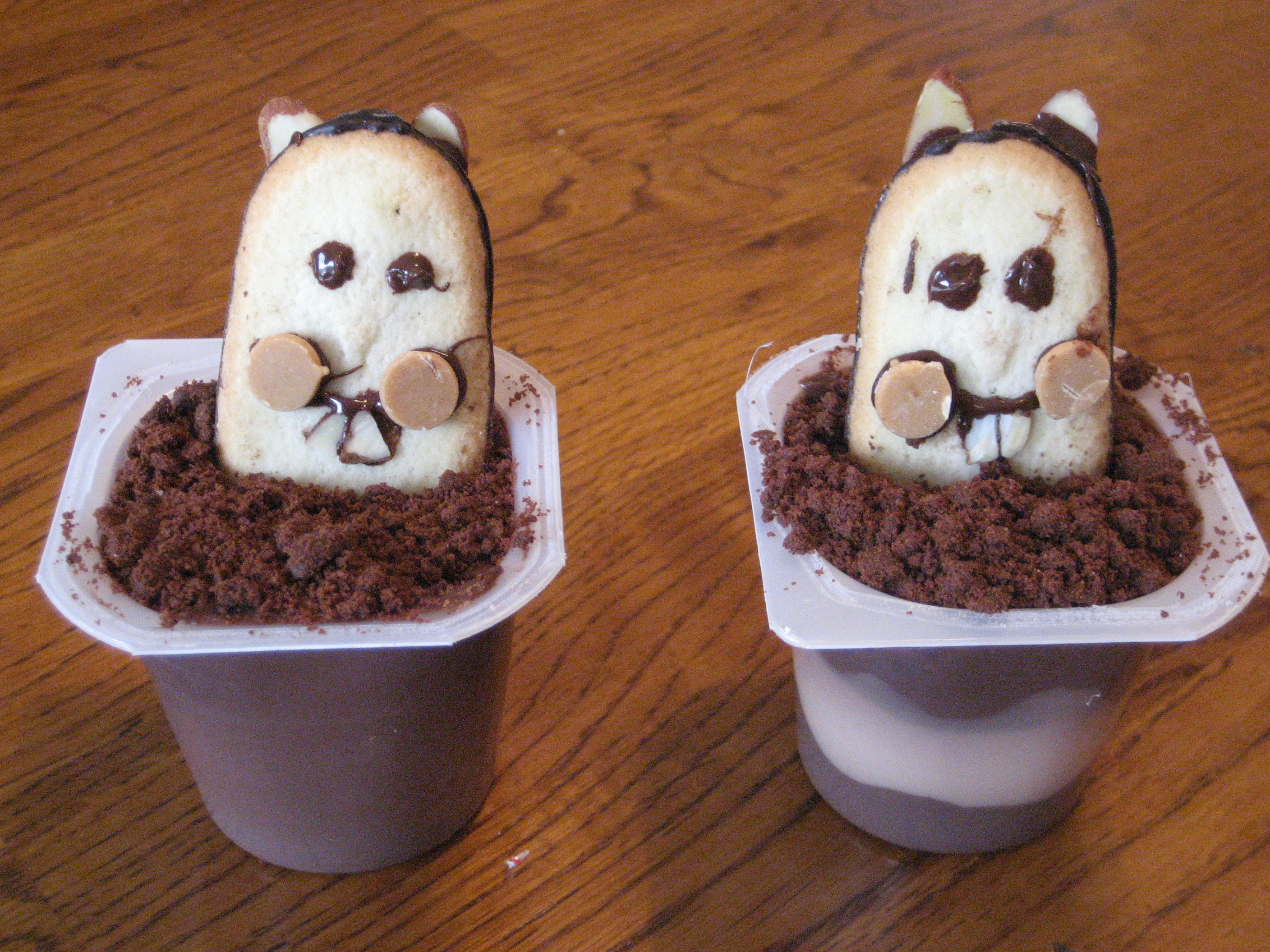
Now, of course, as a responsible adult and practical historian, I cannot condone such behavior. But as my Pennsylvania German is a little rusty, I was at a loss as to how I could observe the day. Here’s what I decided on:

As with almost all of my creative cool mom ideas, this one come straight from a magazine. You can find cuter ones in the most recent issue of Family Fun.
As with almost all of my creative cool mom ideas, this one comes straight from a magazine. You can find cuter ones in the most recent issue of Family Fun.

All that remains to be determined, then, is whether the Groundhog, or Marmota monax (because my Latin is better than my Pennsylvania German) is a accurate meteorologist. The answers to that question are mixed. According to organizers of the event, Punxsutawney Phil has been right 38% of the time, which probably does make him at least as accurate as the average TV meteorologist. Some studies have given the rodent much more credit, claiming accuracy of 75 to 90% of the time.

I think the discrepancy occurs, though, because the beginning of spring may actually be a fairly subjective thing to measure. Depending, of course, on where you live, spring generally pops up somewhere in the six weeks or so just around the corner from the first few days of February. Maybe, then, what the groundhog is really trying to tell us to be patient because spring is either six weeks away or maybe just half a dozen.

Fat Guy-Sized Footprints in the Sands of Time

The morning of March 22, 1882 dawned crisp and clear as a grief-stricken woman followed a slow procession from the London Zoological Gardens to St. Katherine’s Dock. She carried a mug of beer as a small goodbye token for the gentle giant who would depart that day.

After nearly seventeen years in London, Jumbo the elephant was beginning his trans-Atlantic journey to join Barnum & Bailey’s famous show. Jumbo enjoyed his beer,  and though it was a little bit of a struggle (likely because he’d heard that P.T. Barnum had a strict policy against inebriated elephants), allowed himself to be crated and taken to a boat from which he would later be placed onto the large ocean vessel, Assyrian Monarch.

Werbung von Barnum und Bailey
Werbung von Barnum und Bailey (Photo credit: Wikipedia)

Thousands of fans waved and cheered him, causing Jumbo to become agitated, shifting his weight back and forth, the fortunately heavily ballasted boat swaying right along with him. This marked the end of a battle for the English public which had been outraged over the Zoo’s sale of Jumbo to P.T. Barnum. The February announcement of the sale was followed by a huge surge in visitors to the zoo, people (with their eyes popping out) flocking to see one more time, the nearly 12-foot tall African elephant that had given gentle rides to countless English children over the years.

A letter writing campaign both to the zoo and to Queen Victoria, whose own children had been passengers on the elephant’s back, began almost immediately with irate English citizens demanding that Jumbo remain in London. Jumbo’s biggest fans began a fund to try to save Jumbo from his fate as a circus attraction and soon launched a lawsuit against the sale claiming that it contradicted the Zoo’s bylaws.

Despite these efforts, Jumbo made the journey to America and through the aggressive promotion efforts of Barnum and associates, became an immediate star. Posters and handbills showed Jumbo standing head and shoulders above buildings and allowing wagons to comfortably pass under his belly. Barnum’s advance agent insisted that Jumbo stood 13 feet, 4 inches tall and claimed (oh so elegantly) that his trunk was “the size of an adult crocodile, his tail as big as a cow’s leg, and he made footprints in the sands of time resembling an indentation as if a very fat man had fallen off a very high building.”

Elephants performing at the Ringling Bros. and...
Elephants performing at the Ringling Bros. and Barnum & Bailey Circus at the Scottrade Center in St. Louis, Missouri. (Photo credit: Wikipedia)

Of course he wasn’t quite that big (though I think you’ve got to admire the salesmanship, examination of the elephant’s skeleton reveal that he was actually 10’9”), but Jumbo proved even more popular on tour in America than he had in London, his name (again thanks to Barnum’s masterful promotion) even seeping into the English language as a descriptor for all kinds of large things (jumbo jets, jumbo-drinks, and jumbo-size packages of disposable diapers to name just a few).

Jumbo captured the public’s interest for a couple reasons. Obviously, he was well-promoted (I imagine if Jumbo were alive today he’d probably have his own twitter account: “ If one more kid tries to feed me a peanut I swear I will step on his foot #elephantskeepingitreal”).  But that’s not all there was to it, because Jumbo was not the first elephant to be shipped to the US and he was certainly not the first to make a lot of money for his owner. People loved elephants. And we still do.

Several weeks ago, my family and I visited the Oregon Zoo in Portland. We headed that way to view the annual Zoo Lights display, but we decided to go early. Actually, that sounds too casual. We rushed to get there in the early afternoon because on Friday, November 30, the zoo had welcomed a new baby Asian elephant who had finally been named (Lily) by public vote and was now on display for brief windows of time.

Lily at the Oregon Zoo
Lily at the Oregon Zoo. So stinkin’ cute!

Because captive elephant breeding programs are not widely successful (though the Oregon Zoo has been more successful than most), Lily’s birth was a big deal. We stood in line a long time to meet her and just before the docent let us in to see her, the keepers took mama and baby out to clean up a bit. That meant we got to enter the building in time to see Lily, a rambunctious 300-pound toddler, rush into the indoor enclosure to find fresh popcorn scattered between the glass from behind which we viewed her, and the bars that provided a walkway for keepers.

Mama (named Rose-Tu) lumbered in after her baby and reached her trunk through the bars calmly sweeping up the popcorn and dropping it into her mouth. Lily mimicked her, though Rose-Tu was pretty deft at sweeping the popcorn away from her baby. Lily’s little trunk (actually much smaller in proportion to the rest of her than you find in adult elephants) wasn’t quite coordinated enough to grab any of the popcorn, though that certainly didn’t stop her from trying.

I laughed (we all did) because not only was it just about the cutest thing you’d ever want to see, but, I think, because any of us who’d ever seen a human baby reaching and grabbing for something they shouldn’t have as Mom or Dad holds them close and keeps them out of trouble, recognized the actions we were watching.  It was undeniable in that moment that this nearly 300 pound creature was, in fact, a baby, in need of protection.

Lily has enjoyed her fair share of promotion just as Jumbo did, but I think we are drawn to elephants for more than just the fanfare (though I guess it is convenient that they come complete with their own trumpets). Our fascination, I think, stems from the fact that this giant among creatures is actually one of the most vulnerable animals on the planet and it needs our help if it is to survive both in the wild and in captivity. What’s more is that elephants, despite their size, are not overwhelmingly aggressive animals and, in fact, with caution, can establish lasting friendships with people (who they believe are people, no matter how small) and have been known on occasion to share their ice cream with small pigs. They also make very faithful babysitters, provided they stay away from the beer.

Horton Hears a Who
I wonder just how much helium it takes to make an elephant float.

It’s a Major Award!

The Leg Lamp at A Christmas Story House
The Leg Lamp at A Christmas Story House (Photo credit: Buy Leg Lamps)

My blog was recently nominated for the Sunshine Award. The award is a way for bloggers to recognize the efforts of fellow bloggers and express appreciation for writing they have found inspiring in one way or another. Wow!

So you can imagine my delight to find that another blogger, a very gifted one who knows a great deal more about history than I do, honored me with this nomination. Honestly, I was so excited, you would have thought I had just received a crate marked FRA-GI-LE (which is probably Italian).

You remember that scene from A Christmas Story, right? Ralphie’s dad has just received notice that he won a newspaper trivia contest by answering the question: “What was the name of the Lone Ranger’s nephew’s horse?” (It’s Victor, but I’m sure you already knew that). His major award arrives in a large crate during supper time and the whole family gathers around to see what’s inside.

When Mr. Parker pulls from the crate a lamp in the shape of a fishnet-stockinged leg with a fringed skirt shade, he can’t contain his enthusiasm. To his wife’s chagrin and his young sons’ amazement, Mr. Parker puts the lamp in a place of honor right in the middle of the front window for the whole town to admire.

The movie is based on the stories of Jean Shepherd including one titled: “My Old Man and the Lascivious Special Award That Heralded the Birth of Pop Art.” (I think we should all just take a moment to appreciate how ridiculous and wonderful that title is). Shepherd’s lamp was inspired by an early advertising logo of the Nehi Corporation, a fruity soda company, whose ads featured the legs of a seated woman, her stocking visible up to the knee. The company’s bottle design at the time also incorporated a rope like pattern reminiscent of ladies’ stockings.

1932nehiad
1932nehiad (Photo credit: lobstar28)

Though it is now nearly impossible to obtain Nehi soda, it enjoyed great market success in the United States through the middle of the 20th century with flavors such as: luau, chocolate, orange, peach, watermelon, blue cream, lemonade, pineapple, and fruit punch. Of course, the company sold a few of the flavors we would consider more traditional today as well and in the late 1950’s, the Nehi Corporation was renamed the Royal Crown Cola Company after its best selling flavor.

I’m guessing most of you are at least somewhat familiar with RC Cola. It’s that brand carried in a few restaurants that is often viewed as a acceptable alternative to the better Coca-Cola (and I suppose Pepsi fans might offer a similar description, but obviously they would be wrong). Nehi has been largely forgotten by most of us, except for perhaps the most devoted M*A*S*H fans who may remember that grape Nehi was Radar O’Reilly’s favorite soft drink.

Still, every year starting on Christmas Eve, 40 million of us tune into to TBS to watch at least a little bit of the marathon showing of A Christmas Story and Nehi enjoys a moment in the spotlight, as “the soft glow of electric sex gleaming in the window” of Ralphie Parker’s boyhood home.

“Major Awards” have a way of sticking with us long after they are broken and discarded. We love to be recognized. And so I am honored to accept and proudly display the nomination of the Sunshine Award. Here’s how it’s done: First, thank the blogger who nominated you and provide a link to their blog. Second, answer a list of ten interview questions about yourself. Third, nominate ten blogs that have inspired you in some way, link to them and let them know you’ve nominated them.

So, thank you very much to Map of Time! Your posts are so thoroughly researched and informative, that really, they put mine to shame.

And the answers to the ten interview questions:

  1. What is your favorite color? That perfect shade of pink nightmare, just right for footed bunny pajamas.
  2. What is your favorite animal? Victor, the Lone Ranger’s nephew’s horse.
  3. What is your favorite number? This is a slight breach of etiquette, but I’m going right for the throat with the triple dog dare.
  4. What is your favorite drink? It was before my time, but I just know I would have been a big fan of blue cream Nehi. Rumor has it would even turn your teeth blue!
  5. What is your favorite pattern? Soda bottle fishnets.
  6. What is your passion? That yearly bacchanalia of peace on earth and good will to men.
  7. Do you prefer a good movie or a good book? I love it when a good book becomes a good movie. It rarely happens the other way around.
  8. Would you rather give or receive a gift? I love to give that unexpected surprise gift that someone has always wanted, like a “Red Ryder BB Gun with a compass in the stock and this thing which tells time.”
  9. What is your favorite day? Christmas, of course!
  10. What is your favorite flower? I’m quite fond of yellow daisies. Isn’t it pretty?

sunshine_award

Finally, my nominations. One of the best parts about blogging is discovering the work of so many other talented writers. From among many, I have chosen ten that each inspire me in different ways. They all get an A+++++++++++++++++++ in my book.

1. Wine and History

2. Mowry Journal

3. The Laughing Housewife

4. Girl on Contrary

5. The Happy Logophile

6. Bottledworder

7. After the Kids Leave

8. samuelehall

9. The Nice Things About Stangers

10. revelinmomness

Some sincere and honest suggestions

"The First Thanksgiving at Plymouth"...

Happy National Day of Thanksgiving on this the fourth Thursday of November when we here in the United States traditionally feel particularly thankful. But that wasn’t always when we celebrated as a nation. For much of our history, Thanksgiving was sporadically celebrated, with governors occasionally calling for state wide days of thankfulness.

It wasn’t until Abraham Lincoln that we had a national celebration. In 1863 as a gesture of unity for a nation at the height of civil war, Lincoln issued a presidential proclamation declaring the last Thursday of November the official day. Not surprisingly, the holiday was still not uniformly celebrated until 1870, when the war was finally over and Reconstruction was well under way.

After that, every year, part of the president’s responsibility was to declare the official day. And for many years that worked well, with each president following in Lincoln’s footsteps and proclaiming Thanksgiving to be on the last Thursday in November.

Franklin Delano Roosevelt, 1933. Lietuvių: Fra...

Then along came The Great Depression and Franklin Roosevelt. Listening to the appeals of concerned retailers who feared a late Thanksgiving would result in more sluggish Christmas sales, FDR decided to change Thanksgiving to Thursday, November 23, 1939.

What FDR hadn’t counted on, however, was the wrath of a nation determined to celebrate thankfulness on the traditional day. Though larger retailers were grateful for the change, smaller merchants, calendar makers, sports teams, and schools with already set schedules were just plain upset. Angry letters streamed into the White House from concerned citizens like Shelby O. Bennett of Shinnston, West Virginia who wrote the president with a few suggestions of other changes he might make including:

             1. Have Sunday changed to Wednesday;

            2. Have Monday’s to be Christmas;

            3. Have it strictly against the Will of God to work on Tuesday;

            4. Have Thursday to be Pay Day with time and one-half for overtime;

            5. Require everyone to take Friday and Saturday off for a fishing trip down the Potomac.

Despite the outcry, FDR continued to ask the nation to celebrate Thanksgiving one week early and in December of 1941, Congress passed a law naming the fourth Thursday in November the official National Day of Thanksgiving. So at long last Americans were guaranteed more than 24 shopping days leading up to Christmas and as public anger faded, everyone was happy.

Then came Thanksgiving 2012 when, concerned about sluggish sales with only a measly 32 days of Christmas shopping left to the American public, large retailers took it upon themselves to cancel the holiday altogether, declaring instead that “Black Friday” would begin on Thursday, November 22.

A Christmas tree inside a home.
A Christmas tree inside a home. (Photo credit: Wikipedia)

In response, I have drafted a letter of my own:

Dear Retailers,

Though some may feel a little put off by your tenacity, personally I think it’s a great idea to begin your holiday sales extravaganza a little early this year. In fact, I have some suggestions for other changes you might consider as well.

  1. Give away slightly damaged merchandise with purchase of electronics beginning October 1.
  2. Offer free holiday gift wrapping for purchases of $50 and above after July 4th.
  3. To get people thinking Christmas, put up trees decorated with shamrocks and rainbows for St. Patrick’s Day in March (Save the white and pink trees, of course, for when the real Christmas season begins in April).
  4. Open early on Christmas morning to accommodate the returns and exchanges from those customers whose families open just one present on Christmas Eve.

Hoping that as I sit at home in my pajamas watching the Macy’s Thanksgiving Day Parade with my family, enjoying the aroma of a roasting turkey, and dreading the moment when I will finally have to start thinking about my holiday shopping, you will consider these sincere and honest suggestions, I remain,

Yours very truly,

Sarah Angleton

Check out Shelby O. Bennett’s letter to FDR here:

http://docs.fdrlibrary.marist.edu/thanksg.html#doc

The Magic of Nothing

Ship's Steering Wheel

This past week, Hurricane Sandy met up with her blustery friends from the north and the west to pound the east coast of the US. And as cleanup efforts continue an equally terrifying political storm looms on the horizon as we finally get to elections next week. In the midst of all the turmoil, it’s difficult to know exactly where to turn for a blog topic. So what I have decided to do this week is to offer a moment of stress relief during this relative calm between the storms by writing about nothing.

Specifically, I want to talk about the invention of the “nothing” that occupies the center of a traditional American doughnut. Though versions of doughnuts have been around for centuries and can be found throughout the world, the round doughnut with a hole in the middle has become largely an American tradition since it was introduced, most likely by the Dutch. This is one piece of history on which no one can really be sure, but one story does stand out as the clear fan favorite.

At the age of sixteen, a young Dutchman named Hanson Gregory set out for a life at sea. Like most successful young men, Gregory had a mother who loved him and worried about him, probably would have even struck out into the world with him if she could have, but because a young man needs the space to make his own way she did the next best thing. She cooked up a bunch of his favorite pastries (olykoek or “oily cakes”) and sent them with him. And like great moms everywhere, she also sent along the recipe.

Young Gregory gave his mother’s recipe to his cook and set about his ship duties. Life was good. He was doing his own thing, but could still enjoy a taste of home. Then on June 22, 1847, a terrible storm rose up and Gregory, olykoek in hand, had to make a decision. Either he could grab the ship’s wheel with both hands and fight to keep the boat on a safe course, but sacrifice his tasty snack in the process or he could eat his olykoek and possibly sacrifice the ship and the lives of its crew.

The clever young man did the only thing there was to do. He took his olykoek and plunked it down one of the wheel spokes to secure it. His pastry now safe, he grabbed the wheel with all his might and saved the ship.

Doughnut
Doughnut (Photo credit: Images of Sri Lanka – Sequential Shots)

The early olykoek was pretty much just a ball of dough fried in pork fat which often cooked unevenly, leaving a gooey center. What Hanson Gregory discovered during that fateful storm was that an olykoek with a hole in the middle, tasted better than the original and so he asked his cook to prepare them that way from then on. The doughnut as we know it today was born.

The doughnut really took off in America, though, when, in 1920, New York businessman Adolph Levitt invented the first doughnut-producing machine. His mass produced, holey, pastries received the label “Hit Food of the Century of Progress” at the 1934 World’s Fair in Chicago. We Americans have loved our doughnuts ever since and the proof is the success of chains such as Dunkin Donuts, launched in 1948 and Krispy Kreme Doughnuts, which got its start in 1936, as well as the rise of smaller doughnut boutiques throughout the nation, where one can often sample the best and strangest the doughnut industry has to offer.

On a recent trip to Portland, my sons and I visited one such doughnut shop. Voodoo Doughnuts has been a downtown oddity in Portland, OR (a city known for downtown oddities) since 2003.

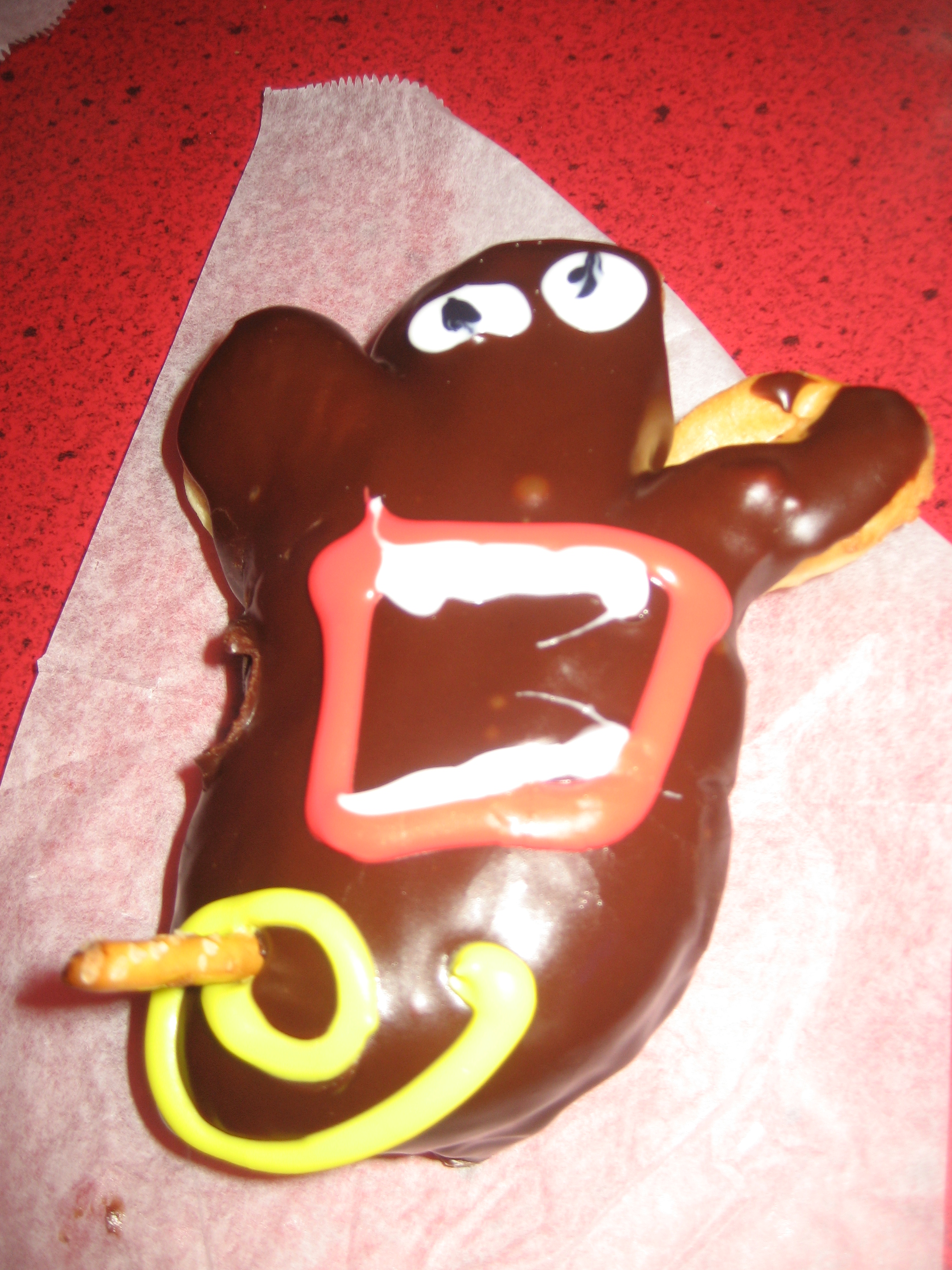
Though it is possible to order a traditional glazed doughnut, the more than 90 doughnut varieties on the menu also include some truly bizarre options such as the Tangfastic. Sadly I was not brave enough to try that one, but the varieties we tasted were delicious. The boys chose chocolate-frosted cake doughnuts while I went for the signature voodoo doll doughnut, complete with a pretzel rod pin through the chest and red jelly filling that, like the hole, effectively addresses the concern of the underdone middle.

The doughnuts are good and the atmosphere is charmingly weird (you can get legally married there if, for some reason, you want to), but what I like most about Voodoo Doughnuts is their motto: “The magic is in the Hole!”

And they’re not wrong because if we learn anything from the heroic tale of Hanson Gregory, it is that this “nothing” in the middle of the doughnut, is really quite something. So as we take a deep breath in this semi-calm we have between storms here in the US, let’s just try to remember that after the ship has been righted and the undercooked dough has been scraped off the steering wheel, great things can come from some of life’s biggest storms, even if those great things might seem at first like nothing at all.