We Don’t Need No Hatchetations

On June 7, 1900 the clientele of Dobson’s Saloon in Kiowa, Kansas got something of a shock when a tall, possibly slightly unhinged woman entered the establishment with a hymn on her lips and bricks in her hands. Following a vision she believed to be from God, Caroline Amelia Nation greeted the bartender with a “Good morning, Destroyer of Men’s Souls,” and proceeded to smash up the place. She claimed she was perfectly within her rights to do so because the business should have been illegal anyway.

Carry A. Nation with a Bible in one hand and a hatchet in the other. N.N., Public domain, via Wikimedia Commons

A decade earlier, Kansas had become the first state in the union to outlaw non-medicinal alcohol. Almost immediately, and to the disappointment of the temperance movement, the US Supreme Court issued a ruling that allowed for the interstate importation of alcohol in its original packaging. That weakened the law significantly and created a loophole for places like Dobson’s Saloon.

Political passion is important, and persuasive and open dialog is essential to a thriving democracy and to just generally being good humans. However, smashing up a lawful business, even if you don’t believe it should be such, is probably going a little too far.

Caroline, more often Carrie, had survived a bad first marriage to an alcoholic husband and became a fervent speaker against drink, founding a local chapter of the Women’s Christian Temperance Union. There’s a lot to admire about a person who crusades for a strongly held political belief, even one that turned out a few years later when the US enacted prohibition, to be kind of a bad idea.

Carry A. Nation, Public domain, via Wikimedia Commons

Carrie Nation, who eventually changed her name to Carry A. Nation soon traded her bricks for a hatchet. Despite more than thirty arrests and a lifetime banishment from Kansas City, she kept on spreading her message through a series of unlawful saloon “hatchetations,” while also marching and speaking for women’s suffrage, establishing a women and children’s shelter, and feeding and clothing the poor.

I think it’s safe to say that in many ways, she was a pretty good lady, with a heart full of fire for the things most important to her. She certainly seemed to think so, and boldly titled her 1908 autobiography The Use and Need of the Life of Carry A. Nation.

In some ways, she’s right. A nation needs passionate people to carry it forward. Of course we in the United States are feeling keenly this week the reality that passionate, pretty good people don’t always agree on which way the nation needs to be carried.

It’s okay to disagree. It’s probably even a good thing because none of us is right all the time, and we do need to engage in purposeful, respectful conversations about the things that matter most to each of us. We just also need to leave our hatchets at home.

The Dark Days Ahead

It’s election season once again here in the United States, with early voting already in full swing, and most people convinced that the nation will fall if their pick for president doesn’t win. I’d say something reassuring, but alas, I’m not totally immune to the hysteria. One thing I can say for sure is that no matter what happens, next Tuesday will be a dark day for all Americans.

That’s because in the early hours of Sunday morning time itself will suffer a stroke when our clocks fall back an hour. The early evening will suddenly become the blackest depths of nighttime, my dog will fail to sleep a second past 4:00 in the morning, traffic accidents will see a slight uptick, and everyone will be universally miserable for a good week or two.

The US first observed Daylight Saving Time in 1918. In 1919 Congress scrapped it because of the universal misery, and because apparently at that time Congress cared. It wasn’t implemented again until World War II when it once again proved temporary on a federal level, though some states and cities embraced the misery and adopted some version of it. Then in 1966, the Uniform Time Act signed by Lyndon Johnson, standardized the practice across the country, except in a couple of states that didn’t feel like it and decided to stay on standard time.

The awful tradition has been tweaked several times since, with the dates of clock changing moving around a little, but the most exciting development came in 2022 when the US Senate passed, by unanimous consent, a bill to eliminate standard time. Everyone cheered and looked forward to the first Sunday of November, 2024 when Daylight Saving Time would become the standard across the land.

Everyone, that is, except the House of Representatives where the bill has still not been voted on because it has proven weirdly controversial despite not dividing along party lines. 71% of US citizens want to stop the biannual insanity, which is pretty much a slam dunk for politicians who claim to want a less divided nation. Granted, 40% favor keeping to Daylight Saving Time while 31% are incorrect. I guess maybe 29% just didn’t understand the question?

20% of the members of my household, and NOT a fan of time changes.

I don’t know, but it is true one has to be careful with polling results because they can be pretty heavily manipulated based on how a question is worded or a sample taken.

For example, I recently conducted a highly scientific poll of a fair cross-section of the American population, consisting of the members of my household and found that 80% of participants were entirely unpersuaded by political gripes on social media. I know that can’t be right because pretty much everyone I know is still spouting their opinions from their keyboards.

20% of the members of my household don’t use social media, were just happy to be a part of the conversation, and thought they deserved a treat. And he’s right, because he’s a very good boy, even though starting this Sunday, he is not going to let me sleep a second past 4:00 in the morning.

One thing I can confidently state is that 100% of the residents of my household do pretty much despise the biannual time change. I was shocked to discover that we don’t all agree on whether we prefer Daylight Saving or Standard Time, but when it comes down to it, I suspect we’d be willing to set our differences aside and agree that we’d just like to stick to one or the other.

Alas, as with all things political, not all of us can get exactly what we want, which can feel a little dark and frightening. But when it comes down to it, at some point, we’re going to have to at least try to set our differences aside if we don’t want to be universally miserable.

Abbott of the Stanley Cup

It has come to my attention recently that there is a trend in the world of drinking vessels. It’s all the rage and has frankly gotten a little out of hand, this bizarre obsession that has captured the enthusiasm of people all over the globe and has even caught the attention of celebrity.

I’m speaking of course of the cups made from human skulls that litter our history like the red Solo cups of last night’s frat party. 

I wouldn’t camp out in a Target parking lot for it, but that’s one fancy cup. Nicolas Perrault III, CC0, via Wikimedia Commons

It all started about 15,000 years ago in a cave in Somerset, England where ancient human remains include skulls that show signs of being carefully cleaned of bodily gunk and intentionally smoothed around the edges to offer a comfortable drinking experience for those who are into that kind of thing.

At this point you might be asking who would be into that sort of thing. It turns out maybe a good number of people, because skull cups have been dug up from lots of cultures and lots of time periods throughout Europe, Asia, and the Middle East. Writings about such things abound, or at least exist from multiple sources, which is significant when considering ancient texts.

Why people might have chosen to drink from human skulls is a little tougher to determine. Most researchers assume it was an act of ceremony, whether honoring the dead or drinking the blood of an enemy. It’s difficult to know for sure.

Rumor has it, Byron also wanted to make a cup with his friend Percy Bysshe Shelley’s skull, but his family said no. Then Mary Shelley allegedly kept her husband’s heart in a drawer. As one does. National Portrait Gallery, Public domain, via Wikimedia Commons

Perhaps there’s an answer in one of the more recent and high profile celebrity uses of a skull cup from the early 19th century when a gardener uncovered a human skeleton at Newstead Abbey, the home of the bad boy of English poetry Lord Byron. 

Byron did what any slightly imbalanced hot mess of a celebrity would do and took the skull of what he assumed was “some jolly friar or monk” to an (I have to think surprised) artisan to commission a skull cup. The poet then dubbed himself “Abbott of the Skull,” drank to his heart’s content, and wrote a poem about how it’s better for a skull to hold wine than worm castings.

So it was a noble pursuit. Or perhaps Lord Byron just wanted to stay really well hydrated like all of the people who are losing their minds right now over the Stanley Quencher. This steel vacuum cup, with reusable straw, holds up to 64 fluid ounces, fits nicely in a standard cup holder, causes stampedes at Target every time there’s a new limited edition collaborative design released, and keeps the blood of your enemies warm for hours.

Okay, so they do look like pretty great cups, and while I still wouldn’t camp out in the Target parking lot, I might be lying if I said I didn’t kind of want one. Photo courtesy of my niece who is clearly much cooler than I am.

Honestly, I don’t understand either trend, but there’s no doubt the Stanley Cup has become a sensation recently. The obsession apparently started with TikTok and has spawned a Stanley Cup Buy, Sell, Trade, and Raffle group on Facebook with more than 68,000 members, as well as another group called Stanley Cup Hunters Anonymous Support for Spouses. 

The wild fad has spurred sales for the Stanley company, which has been in the business of making steel water bottles since 1913, to grow from $94 million in 2020 to $750 million in 2023. 

If you camped out at Target to get one and you want to make a few bucks, the resale value of $45 limited edition Quenchers is currently in the neighborhood of $200. Given that Lord Byron’s skull cup sold at auction a few years ago for only somewhere around £1,000, that feels like a pretty substantial markup. 

As far as I could find, no one has yet started penning verses about the Stanley Quencher. My promised year of not attempting to write poetry is over, so I might see if I can come up with something about staying ultra-hydrated by sipping the well insulated blood of my enemies through a straw. “Abbott of the Stanley Cup” sure has a nice ring to it. Maybe the company would consider a collab and etch my poem on the outside of a limited edition Quencher available only at Target.

Orca-strated Attack

These past few weeks, or maybe months, I have fallen out of the blogosphere a little bit. Life has just been really busy. Fortunately, it has calmed down a little now, and I’m hoping to reestablish the routine of a weekly post, because apparently when I turn my back for just a couple of minutes, the killer whales go to war with humanity.

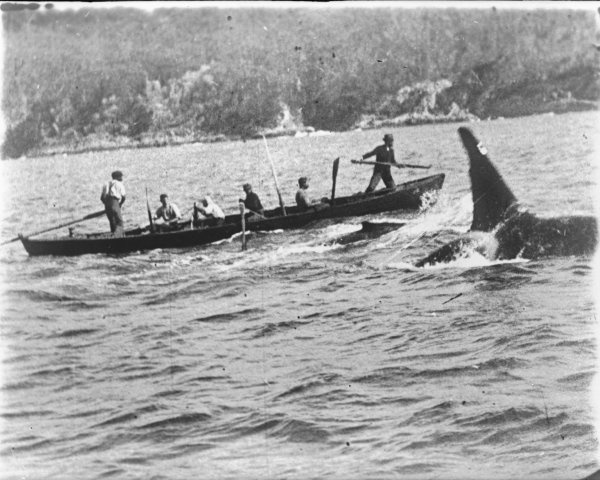
To be fair, this might not be entirely unexpected behavior. In his Natural History, Pliny the Elder refers to the orca as “an enormous mass of flesh armed with teeth” that is “peculiarly hostile” to whales, often ramming them until they manage to kill them, “dash[ing] them to pieces against the rocks.”

This man knew a storm was brewing. Pliny the Elder, Public Domain, Wikimedia Commons.

Humans have had a varied relationship with these animals throughout history. While Western culture has often feared orcas, most Indigenous American cultures have, through various mythologies, regarded them as powerful rulers of the sea, sometimes depicted living in houses and cities beneath the waves, and generally benevolent toward humans.

It turns out that both perspectives might reflect a little bit of the truth, because one thing that’s pretty clear is that orcas, which are more closely related to dolphins than to whales, are pretty smart. Reading about their natural behavior, one comes across words like clans, matriarchs, and friendships. Orcas have highly organized social structures. Throughout the world, though they may “speak” different dialects and enjoy different dietary habits, they still seem to communicate pretty well with one another.

An enormous mass of flesh armed with teeth. But it’s also pretty cute, as long as you don’t make it angry. Public Domain, via Wikimedia Commons

And a growing number of them are angry. It turns out that a global pandemic isn’t the only thing that 2020 brought us. It also saw a rapid uptick in orca attacks on boats, particularly off the coast of the Iberian Peninsula. Some researchers trace the attacks to a single female orca they’ve named White Gladys who after experiencing some unknown trauma at the hands of humans, started rallying the troops to get her revenge.

Now, I’ve grown up in the era of Free Willy, rather than the horror film Orca. I’ve enjoyed watching these beautiful creatures play in the wake of a ferry in the Pacific Northwest, and my adorable little niece (now grown) dubbed them “Er-Ers” because to her that is what they sounded like. I’ve always kind of liked orcas, and so it has been a little shocking for me to discover that they are vengeful, and organized, and seem to have a solid working knowledge of the mechanics of boats.

Because the behavior Pliny the Elder described in 70 AD is more or less exactly what the orcas are now doing to boats. They ram them in a particular and consistent fashion, targeting the rudders until the boats are disabled in the water. These are not boats that have provoked the creatures in any way, though they certainly seem to be getting the blame for something terrible.

I mean, if the orcas have declared war on the humans and their boats, I don’t know that it’s entirely unjustified. Charles Eden Wellings (1881-1952), Public domain, via Wikimedia Commons

Often the animals have lost interest once the boats are rudderless, but there have been recent cases in which the orcas have followed, continually ramming the boat and pretty much terrifying the people on board as it’s towed back to safe harbor. In at least three instances now, boats have actually been sunk by orca attack.

Since July of 2020, there have been more than seven hundred reports of orca encounters in the same part of the world, five hundred of which resulted in engagement and damage to boats. Some observations suggest that adult orcas have been teaching younger ones how to efficiently take out rudders. The behavior is spreading.

One solution on offer is to tag and track several of the adult orcas we know to be instigators so that we can better predict where attacks might occur and boats can more easily avoid troubled waters. The problem is that the tagging process can be fairly traumatic for the animal, which is clearly already a little disgruntled with humans. It could make the problem worse.

Personally, I’m not terribly concerned as I live something like seven hundred miles from the nearest coastline. I’m unlikely to encounter an angry killer whale in my neighborhood. And not to be a traitor to my species, but I also would be lying if I said I wasn’t a little impressed with the orcas.

Obviously, people who do spend a fair amount of time on the ocean are going to have to figure out a good way to avoid conflicts, and marine biologists need to determine how best to stop the problem from spreading across the world. Then again, in a fast-paced world in which the biggest new problem facing humanity feels like artificial intelligence, it’s kind of nice to know that good old fashioned animal intelligence can still be threat.

Creativity Plays Opossum

A few days ago, as I was driving through the City of St. Louis and scanning the local radio stations, my brain caught on a conversation about ChatGPT and dead opossums. If you have been paying much attention around the water cooler lately, you’ve probably heard about ChatGPT. It’s the AI app that will quickly compose an email for you or help you solve that tricky math problem. It can give you the illusion of companionship, tell you a joke, write an essay for your English class, and offer useful advice like that you probably shouldn’t cheat on your English essay.

Which is, of course, exactly what I would say if I were a robot. Image by Janos Perian from Pixabay

I’m told it can even put together a blog post, but as the creative mind behind this blog has been artificially intelligent for years, I’m not sure there’d be much call for it in my little corner of the blogosphere. And yes, though I didn’t catch enough of the conversation to know why one might want this, ChatGPT can also compose lyrics for a song about dead opossums, or presumably also live opossums that are playing dead. It can even do it in a much shorter time period than your average folksinger, most of whom would likely never attempt to write one in the first place.

Personally, I’ve never used the app, and at this moment in time, I believe I never will, but it’s fascinating to listen to people talk about it. For most, it seems to be a bit like watching a horror movie. It’s super creepy and it makes your heart pound and your stomach hurt as your mind gnaws on the notion that human creativity appears as dead as an opossum. But on the other hand, it’s also kind of cheesy and entertaining and pairs well with popcorn.

There’s no doubt that AI is exploding onto the scene, but it’s been on the rise for years, beginning in the 1950s when computers were first able to store and retrieve data in addition to simply running through a program. The concept of artificial intelligence stretches back even further than that to at least 1872 to English writer Samuel Butler’s Erewhon.

This is kind of how I’m currently feeling about AI. Image by Roy Guisinger from Pixabay

The novel tells the tale of protagonist Higgs who discovers a hidden Utopia filled with people who are remarkably concerned about his pocket watch. It turns out that three hundred years before Higgs’s arrival, the Erewhonians gave up all technology, including pocket watches, for fear that it would evolve to eventually overcome the human race.  

At the time the novel was published, and for many years after, it was assumed to be a commentary on the evolutionary work of Charles Darwin. It probably was, but from the perspective of 2023, it might read a little more like an incredibly insightful horror novel that is difficult to get through because it was written in the 19th century and as a result probably seems sort of dull to most 21st century readers.

I bet it could be nicely modernized by ChatGPT if anyone wanted to give it a try. Throw in a nice song about dead opossums, and you might just have a great work on your hands.

Five Thousand Balloons

Apparently, we have something of a balloon problem here in the United States, which is a sentence I never thought I’d write. Such a statement, however, would not have surprised founding father Benjamin Franklin who was suitably impressed on November 21, 1783 when he witnessed French brothers Joseph-Michel and Jacques-Etienne Montgolfier use a hot air balloon to send the first human being into the air.

I don’t know. There’s just
something about this balloon
that feels ominous. Darth_vader_hot_air_balloon.jpg: Tomas Castelazoderivative work: Jebulon, CC BY-SA 3.0 https://creativecommons.org/
licenses/by-sa/3.0, via Wikimedia Commons

It was only nine days later Franklin again observed a balloon rising into the air, only this time with the use of hydrogen, which he referred to as “inflammable air.” That turned out to be somewhat of a misnomer, but at the time it seemed like a really good idea.

It also occurred to Franklin that such balloons could have some remarkably useful military applications. Only a month or so later, he wrote to Dutch scientist Jan Ingenhousz that five thousand balloons manned by two men each would be an awfully cost-effective way to wage war and would be difficult for any nation to defend against.

Balloons haven’t been used to quite the great effect that Franklin predicted, but over the years they have been used, primarily as a way to gather intelligence. Surveillance balloons played a small role in the French Revolution.  And they played a larger role in the American Civil War when civilian Thaddeus Lowe earned the title of “most shot-at-man in the war” while relaying information about Confederate troop movements to the Union from aloft.

Balloons were involved in aspects of both World War I and World War II, and even drifted with cameras over the Soviet Union and the People’s Republic of China, without much success, in the mid-1950s. So, I guess maybe it shouldn’t be so much of a surprise that China might send one drifting over the United States in 2023. At least Benjamin Franklin probably wouldn’t have thought so. 

I mean for all we know, we could be headed for a mass extinction event, like the giant balloon that took out the dinosaurs. Image by Greg McMahan from Pixabay

In the past few weeks, the US has now shot down four balloons, possibly only of one of which was allowed to complete its entire mission first. That’s the only one that as of this posting the public has much information about, though I heard the president may be set to address the nation about it today. I’m sure that will clear things right up.

As much as our media and social media governmental complaints have been preoccupied by this slow, floaty invasion or whatever it is, I can kind of see Franklin’s point. Five thousand balloons would be an awful lot to deal with. If nothing else, the balloons have attacked and directed the attention of the American people.

I’ve even heard it postulated that the three balloons that followed the first might be extraterrestrial in origin. And frankly, it’s about time someone put that possibility out there, because if it’s any indication of what is to come, I have it on good authority that five thousand balloons, each manned by two aliens, would be a pretty cost-effective way to wage war and would be difficult to defend against.

Smarter than the Average Dinosaur

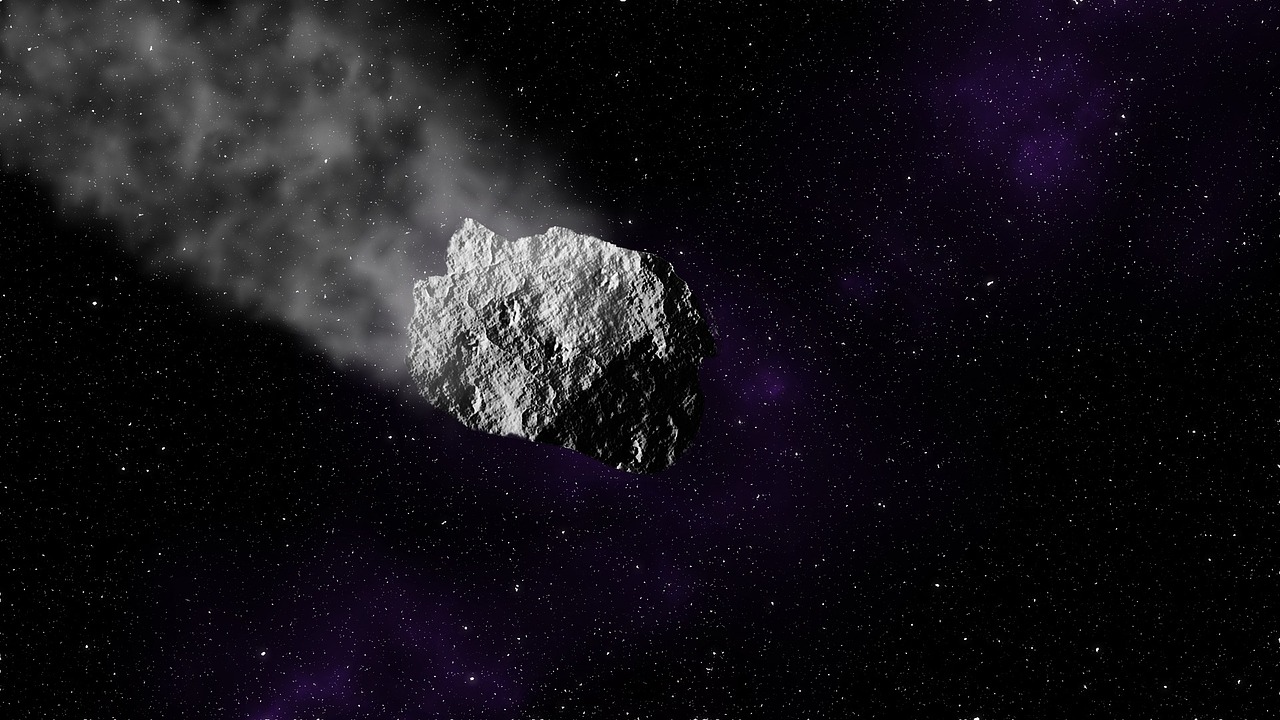
It’s been 70.3 million years, give or take a day or two, since the approximately six-mile-wide Chicxulub meteor landed in Yucatan, Mexico and caused a mass extinction event. Earth’s dinosaur inhabitants didn’t so much as lift a finger to try to stop it, a decision they weren’t around to regret.

Image by A Owen from Pixabay

More than 1.9 billion years before that, the Vredefort meteor, now believed to have been more than twice as large as the Chicxulub, impacted the earth at what today is Free State, South Africa. Nothing was done about it by the unicellular lifeforms that might have eventually become dinosaurs if they could have been bothered.

And so, this week I was happy to hear that the planet’s current dominant inhabitants have decided to take the threat more seriously. Since the very first discovery of an asteroid by Italian astronomer, mathematician, and priest Giuseppe Piazzi in 1901, humanity has held onto a little niggling feeling that a human-ending catastrophe might just be hurtling its way through space on a collision course with our big blue ball.

Piazzi’s asteroid, Ceres, isn’t a threat. It seems content enough in the asteroid belt between Mars and Jupiter and has even received an upgrade to dwarf planet. But there are plenty of rocks flying around up there. The researchers who look at such things suggest that asteroids that are at least three miles in diameter have struck the planet about sixty times in the 4.5 billion years or so it’s been around. Of those, three of them were likely large enough to have caused mass extinction.

Image by Michael Watts from Pixabay

Frankly, while three instances in 4.5 billion years is enough to keep writers of science fiction busy for a long time, I’m not really all that concerned. The odds of being alive to see it happen are pretty small.

Of course, it’s just this kind of nonchalant attitude that took out the dinosaurs. Lucky for humanity, I’m not in charge of Earth’s defenses against incoming space rocks.

Don’t worry, because NASA is on the job. This past Monday, the Double Asteroid Redirection Test successfully collided with and nudged a completely innocent asteroid that was too busy minding its own business to wipe out life on Earth.

Over the next months and years, astronomers all over the world will be observing and calculating just how much impact the DART had on the asteroid’s path and we will all breathe a little easier knowing that we might just be smarter than the average dinosaur.

Bordering on the Ridiculous

It was in 1984 when Danish Minister for Greenland Tom Høyem grabbed a bottle of schnapps, chartered a helicopter, and headed for a barren, rocky island to start a war. Smack dab in the middle of the Nares Strait, which connects the Atlantic Ocean with the Arctic and separates Greenland and Canada, the troublesome Hans Island measures a mere 1.3 square km (or about half a square mile). It has no trees, little soil, no known natural resources of any value, and is approximately 123 miles from any inhabited location.

Um, guys? You know it’s basically just a rock, right? Per Starklint, CC BY-SA 4.0 https://creativecommons.org
/licenses/by-sa/4.0, via Wikimedia Commons

It also contains quite a few bottles of liquor, numerous discarded Danish and Canadian flags, and disregarded signs welcoming visitors to the sovereign land of each country, placed there as a kind of snarky signal to the other that the friendliest border war in history had not yet been settled.

This tiny island was first mapped in the 1920s by Danish explorers, which led the Permanent Court of International Justice (a part of the League of Nations) to declare in 1933 that the island belonged to Denmark. Of course, since the League of Nations was dissolved, its Court of International Justice also proved less permanent than its title implied. It was replaced by the much more creatively named International Court of Justice of the United Nations, which apparently had more important things to not do.

The trouble is that Hans Island falls within the 12 miles of territorial extension from land for both Greenland (Denmark) and Canada, making it tricky to determine which country can claim it.

Weapon of war. Image by 8249023 from Pixabay

In the early 1970s, the nations decided to resolve the conflict themselves and came away from negotiations with a maritime border agreement to the north and south of the island, but didn’t manage to sort out the ownership of Hans Island itself. And so, in 1984 what the press dubbed the “Whiskey War” began.

The whole thing reminds me of when my children were small. I have two sons, two-and-a-half years apart in age. They’re teenagers now who are mostly into their own things and more or less get along most of the time. When they don’t, I’m happy to report they now have the sense to give one another some space. That was not always the case.

I remember one day, at least a decade ago, they had such a hard time leaving one another alone that my husband came home from work to find that I had put painters’ tape on the floor and literally divided the house in two. Each had access to a bathroom and his own bedroom and was not allowed, under any circumstances, to cross even a toe into the other’s territory.

An exhausted, fed-up mom could have solved this problem much faster.

By the time their dad walked through the door, the boys were kind of desperate to resume playing together in a more cooperative manner, and I was ready for a bottle of schnapps.

It took Denmark and Canada until 2005 to decide that some kind of painters’ tape solution might work, and another seventeen years after that to hammer out the details. I’m happy to be able to report that just a few weeks ago, they finally did it. On June 13 of this year, foreign ministers of each country exchanged bottles of whiskey and signed an agreement that will divide Hans Island in two.

The solution comes now, according to Canadian Minister of Foreign Affairs Mélanie Joly, as an example to Russian President Vladimir Putin that border disputes don’t have to be violent. Maybe. Or maybe it says that given a decade or four, most arguments can be resolved with a roll of painters’ tape and plenty of schnapps. But I am glad Canada and Denmark finally got it figured out.

New Zealand Rips a Big One

Those of you who have followed this blog for a long time may have noticed that rarely does it venture into topics that could be considered very serious. You may have even wondered at times why a thoughtful writer such as myself would mostly avoid using my platform, which includes tens of people, to discuss the things that really matter.

Well, thanks to the nation of New Zealand and its necessary and impactful attention to a dangerous problem facing the entire world, I have reconsidered. That’s right, the time has come for us to have a critical conversation in this space about farts.

This cow clearly smelled it. And we all know what that means. Image by Brigitte Werner from Pixabay

While absent through much of this blog’s own history, passing gas has been on the minds of humanity for millennia. This truth was revealed by the 2008 discovery of an ancient fart joke carved upon a Sumerian tablet that dates to around 1900 BC, making it the oldest joke so far discovered.

Other notable moments in the history of flatulence include a god in the mythology of the Innu people of Eastern Quebec and Newfoundland who communicates exclusively through the breaking of wind, the alleged Pythagorean belief that a careless person could accidentally fart out his soul, and a series of Japanese art pieces from the early 19th century depicting, probably satirically, battling samurais cutting a lot of cheese.

But Samurais were far from the only people to have killed with a good toot. Both first century Roman Jewish historian Josephus and the Ancient Greek writer Herodotus, known as the Father of History and Some Stuff He Mostly Made Up, attributed large, deadly battles to the offensiveness of well-timed flatus.

St. Augustine had a slightly more positive view of gaseous emanations, suggesting in his 5th century work The City of God that evidence of perfect bodily control as would have been enjoyed before the expulsion of Adam and Eve from the garden is that some people can produce song through their flatulence. We probably all have that one friend.

This is what it looks like to have the power to destroy the world. Image by Frauke Feind from Pixabay

For the most part, passing gas has always been a little bit funny and kind of rude and, apparently incredibly destructive. At least that is what New Zealand law makers have decided. It’s long been rumored that livestock farts are one of the largest contributors to greenhouse gases and in New Zealand, where people are outnumbered by cows two to one and by sheep more than five to one, the best way to combat the problem is, obviously, to tax the livestock. And so that is the plan, according to Climate Change Minister and apparent savior of Planet Earth James Shaw.

Now, I can almost hear the objections of you naysayers out there whining about the financial burden on farmers and ranchers. You may even go so far as to suggest that the effects of this move will certainly trickle out through the economy, transforming the industry into something much less sustainable and, as other nations follow New Zealand’s bold lead, ultimately contributing to the problems of already threatened global food supply chains.

To that I say that ridding the world of farts was never going to be easy. It was always going to require determination and sacrifice. Like all things worth doing, and most things that aren’t worth doing at all, it will come only at great cost. I’m sure we can all agree that it’s time for the cows to pay up.

A Big Butt in the White House: A Story of the Bustle

When twenty-one-year-old Frances Folsom became the youngest first lady in US history on June 2, 1886 at the only presidential wedding ever held in the White House, she also became something of a fashion icon. Yes, Grover Cleveland was twenty-seven years older than her and had known her as a baby, but no one was thinking about how skeevy that might have been because boy could she rock a bustle.

Check out the bustle on that bride! Frances Folsom marries President Grover Cleveland, Public Domain, via Wikimedia Commons.

Renowned French fashion designer Charles Worth dressed her in a heavy ivory satin, silk, and muslin gown, trimmed in orange blossoms and draped over a birdcage-like bustle. Okay, some people might have been thinking about the kind of creepy age difference between the president and his choice, but everyone agreed she was a beautiful bride. And the event served as a much needed boon for the ever-important bustle.

New Yorker Alexander Douglas patented the bustle in 1857, but it didn’t gain much traction until Worth, who never actually had to wear one, began incorporating it into his designs a few years later. Then by the end of the 1870s, the popularity of this peculiar fashion accessory had waned as even the most fashion-forward of women decided they might like to occasionally be able to sit down.

Charles Worth wasn’t ready to give up on it yet and pushed to bring back the exaggerated tushy in the early to mid-1880s. Thanks in part to the new Mrs. Cleveland, it worked. But then just two years into her stint as first lady, an article in the Atlanta Constitution mentioned that Mrs. Cleveland had decided she was done with bustles.

Frances Cleveland sitting comfortably without a bustle. Anders Zorn, Public domain, via Wikimedia Commons

Women throughout the US breathed a collective sigh of relief as, for the first time in a few years, they boarded trains and entered crowded public spaces without fear of knocking someone over with their accentuated keisters.

The bizarre thing was that, though women throughout the United States were happily removing these pointless additions to their wardrobes, Mrs. Cleveland hadn’t yet gotten the memo. She entered one of her favorite Washington Department stores and asked for a bustle, only to be shown the Atlanta Constitution article, in which a reporter had taken it upon himself to declare the first lady’s shift in fashion choices. I guess it was a slow news day.

Frances Cleveland took the article in stride saying, “I suppose I shall have to adopt the style to suit the newspapers.” She took her dresses in the next day to be altered for wear by a woman without a comically poofy backside. She was happy enough to let it go.

Before all the fashion historians get mad at me, I realize that not all bustles were probably incredibly uncomfortable. But some of them looked like this. Courtesy of the Missouri Historical Society, St. Louis, Attribution, via Wikimedia Commons

No one seemed particularly upset to let bustles become a thing of the past, as they hadn’t really served much of a purpose to begin with, and life was certainly a lot easier when one didn’t have to worry about tucking a bird cage into one’s skirt in order to appear in public.

What Charles Worth thought of the development I don’t know. I assume he was a little annoyed. Perhaps he even attempted to preserve his power over the fashion industry by suggesting that one or two layers of bustle should still be worn. Unfortunately for him, the people seemed inclined to follow the guidance that made the most sense to them and more and more women began sitting comfortably wherever they pleased.

Regardless of how relevant the influential designer might have felt, or how much he had once enjoyed the confidence of the White House and important people, the air had gone out of his overinflated posteriors. The citizens had had enough. They’d taken off their bustles and weren’t keen to put them back on, even on public transportation. In 1888, the occupants of the White House were pretty much okay with that.