Have it My Way

In 1924, while working at his family’s roadside sandwich stand, The Rite Spot, in Pasadena on a part of the famous Route 66, 16-year-old Lionel Sternberger made history when he placed the first slice of cheese ever to grace the top of a hamburger patty. Probably.

The Rite Spot, Pasadena, CA. Unknown (Provided by Don Sternberger), Public domain, via Wikimedia Commons

How exactly it happened is a little unclear. One story suggests that Lionel burned the patty and so he threw on the slice of cheese to cover up his mistake. A slightly less dramatic theory is that a clever, uncredited, customer asked for cheese on their burger and Lionel simply obliged.

But another entirely different tale of the invention of the cheeseburger comes from Kansas City, where a man named Charles Kaelin claimed in 1934 to have had the first genius idea to add tang to a hamburger by adding cheese, just a year before the owner of Denver’s Humpty Dumpty Drive-In first trademarked the word cheeseburger.

There are probably other origin stories as well, and we could certainly debate about them, and produce all kinds of memes and reels and righteously angry and potentially insensitive social media tirades, though somehow I doubt we’d get anywhere productive. I’d rather take today, National Cheesburger Day here in the US, to appreciate and celebrate what we have in common: this fine sandwich we all know and love.

Even veggies love their cheeseburgers.

Well, most of us probably love at least some version of it. What precisely goes on a cheeseburger is not always the same from burger stand to burger stand or from backyard grill to backyard grill.

We can all pretty much agree that it needs to include some sort of beef patty. Unless of course you don’t eat beef and prefer something like bison or venison or even turkey. Or I suppose you could be vegetarian and stick to a plant-based patty or replace it all together with a big beefy portibello mushroom, which I guess still counts.

A bun, too, is standard, either with sesame seeds or without, smeared with a little butter and toasted, or not. Maybe a gluten free bun is your jam or no bun at all. Some people, though surely not anyone I’d want to know, replace the bun with a couple large pieces of lettuce.

There’s also the question of what kind of cheese you use. The traditionalist might go with a cheddar or a melty American, but Pepper Jack can pack a nice punch or blue cheese, an odd funk, in case you’re into that sort of thing. If you’re a little pretentious, a Swiss or smoky Gouda could work, and then there are the vegans among us that I guess have to settle for some sort of not-a-cheese product.

And then we hit the question of toppings. Ketchup is pretty standard, unless you’re dead set against it. Mayonnaise is a contender, too, for those with no taste buds. Steak sauce might work, again, for the unapologetically pretentious. The indulgent might like to add bacon to theirs, and the vegetable obsessed will insist on lettuce, tomato, and pickles, while people who completely hate themselves might even consider raw onion a defensible choice.

With all of these certainly not exhaustive options, maybe the best thing to do would be to avoid confusion and standardize the cheeseburger. And if we do that, then we could make sure we are providing the ultimate cheeseburger experience to all people, regardless of their individual backgrounds and ill-informed biases.

We could use only the very best ingredients, too, and perhaps limit the consumption of cheeseburgers so that people don’t stress the healthcare system with their poor choices or shape the supply chain in a way that we suspect might overburden either the environment or the market.

Yes, it’s true that at first we could get some push back. Some cheeseburger stands and backyard cookouts may initially fail to comply, and will likely use hateful rhetoric to insist that they have a right to prepare and eat cheeseburgers the way they want. If these deplorable enemies of culinary taste get a chance they might even spew their venom in public debates in which they claim it could even be a good and useful thing to consider alternative ways of preparing cheeseburgers.

I believe, however, that if the truly good and hungry people of this nation fight hard enough and take to the streets to protest the non-compliant businesses and backyards, maybe squish up a few buns, torch a couple of grills, and throw a few ketchup bottles, we can silence the opposition. I bet. You know, for the good of all.

But of course, I jest.

In truth, I feel that if you want to ruin your otherwise perfectly delicious cheeseburger with a hunk of raw onion, you should be free to do so. We can even still be friends, provided you brush your teeth before standing close enough to, say, engage with me in a heated political debate. If, however, you try to put a hunk of raw onion on my cheeseburger, be forewarned that I just may say something hurtful on social media that I’ll probably regret and have to try to apologize for later.

I’m Not Quite Sure How to Say This…

In 1837, chemists and business partners John Wheeley Lea and William Perrins decided to clean out the piles of forgotten treasures and banished mistakes from the basement of their pharmacy in Worcester, England. In doing so, they rediscovered one particularly awful batch of a failed sauce they’d attempted to produce two years earlier.

The pair had been commissioned to make the sauce by the third Baron Sandys, Lord Marcus Hill, who’d returned to England after serving as the Governor of Bengal, with a terrible hankering for a particular sauce he had grown fond of in India. 

Tangy, sweet, sour, salty, smoky, and hard to pronounce.

He described a tangy, sweet, sour, salty, smoky sauce that would be great in a beef stew or as part of a marinade or thrown together with some tomato juice, vodka, and maybe even celery, if for some reason you crave a refreshing glass of cold alcoholic brunch soup. Also maybe there was some fish in it?

Like a couple of kids let loose in the backyard with a bucket, a hose, and all the leaves, twigs, and mud they can pull together, Lea and Perrins got to work. What they ended up with was every bit as edible as a bucket of garden muck. 

The awful experimental sauce was banished to the basement, leaving Baron Sandys to dream of tastier days in India, the muck not to be thought of again until two years later when it was rediscovered during the great cleanup. 

I do like to use Worcestershire Sauce for a lot of things, but this I could do without. Trilbeee, CC0, via Wikimedia Commons

It’s not clear why the two pharmacists decided to give their previous failure another taste, but that’s what they did. To their amazement, they discovered a mellowed and flavorful fermented sauce that made them think it might just be the missing ingredient in, according to this practical historian’s opinion, the worst thing to ever happen to brunch. Though their sauce is excellent in a beef stew or as part of a marinade.

The two decided they should market their new discovery, but it needed a name that would roll off the tongue. After mulling it over for not nearly long enough, they decided to name the sauce after the town in which they lived. Worcestershire Sauce was born. 

Personally I think it could have used a bit more workshopping. I’m sure the great citizens of Worcester have no trouble with it, but for the rest of us, the name probably leaves us a little tongue tied. In a recent informal Facebook poll of the people I know, in which I asked what words in English do you think are hardest to pronounce, buried between some excellent answers like brewery, espresso, cinnamon, mischievous, and etcetera, were several mentions of Worcestershire Sauce. 

On second thought, maybe a small brand refresh can hurt a little bit.

Despite the difficult name, the sauce took off, first throughout England, and then across the pond and around the world. In case you want to use the name for a similar sauce of your own, a court ruling in 1876 declared it not copyrighted. Of course if you’d rather, you could take a page from TikTok cowboy cook sensation Pepper Belly Pete who markets his Worcestershire-inspired sauce (say that five times fast) as Worshyoursister Sauce.

I suppose a small brand refresh never hurts, but Lee & Perrins has remained the same since the beginning. I did recently learn that it uses a slightly different recipe in the US market than in Worcester, but it still comes in a brown glass bottle, often wrapped in paper for safer shipping. I never found out whether Baron Sandys liked the sauce, or whether it really did resemble what he’d enjoyed in India, but there’s little doubt brunch just wouldn’t be the same without Worstesheresher Woostesher Warchestershyre that tangy, sweet, sour, salty, smoky sauce that goes in a Bloody Mary. And maybe there’s fish in it?

Gardeners in a Pickle

We’ve reached that part of the summer, when the heat and humidity have soared to almost unbearable levels, bins of school supplies have taken over all of the stores, and it seems like everyone I know wants to give me cucumbers.

We spent a beautiful afternoon recently with friends enjoying live music at a wine and beer garden, and of course, someone brought along homegrown cucumbers.

I should say, I like cucumbers. I enjoy them in salads, on sandwiches, on their own as a crunchy snack, and I usually won’t turn down a nice dill pickle. Most years I grow them in my garden and then when this part of the season rolls around, I try to give them away to everyone I know. 

But our garden is a little smaller this year than it has been in the past. It’s been a busy summer of travel and transition and we’ve been managing two properties as we work on renovations in our new country house and on prepping the city house for the market. I did drop some tomato and pepper plants in the ground, but that’s all I managed. 

It turns out that has not diminished our supply of homegrown cucumbers, because the average plant yields ten to twenty fruits. Now of course this varies quite a bit, but if we assume the average garden cucumber weighs a conservative half pound, the average American eats about eight and a half pounds of cucumber per year, and the average gardener plops eight cucumber plants in their garden plot, that leaves an excess of, well, quite a bit of cucumber.

We’re not talking quite the numbers Newfoundland was dealing with in the late 1980s of course. That’s when the provincial government decided to enter into the cucumber business with innovator Philip Sprung, the man who claimed his hydroponic greenhouses would revolutionize the produce industry and usher Newfoundland into previously undreamt economic prosperity. With mostly cucumbers.

This is not the Sprung Greenhouse, dubbed by the press as the “Pickle Palace.” This appears to be a less massive and more successful greenhouse full of cucumbers. Amnsalem, CC BY-SA 4.0 https://creativecommons.org/licenses/by-sa/4.0, via Wikimedia Commons

The idea was that with the combination of eight interconnected greenhouses, large grow lights to extend the naturally short growing season of Newfoundland, and Sprung’s unique hydroponic solution, the project would yield fully grown, market ready cucumbers in as little as six days.

The enormous project, which employed 330 temporary and 150 permanent staff and ended up costing the taxpayers about $22.2 million, was projected to produce 6.7 million pounds of produce in its first year and expand to 9 million in its second year. It promised to quickly turn Newfoundland into a cucumber powerhouse unlike the world had ever seen.

Instead the greenhouse took much longer to produce about 800,000 cucumbers, many of them misshapen because of moisture control issues. It turned out also that there was very little market for them as the average Newfoundlander was responsible for the consumption of only about half a cucumber per year, and the Sprung cucumbers were almost twice as expensive to produce as they were to purchase. 

Everyone who is currently trying to give me cucumbers has a seriously large number of apples in their future.

In the US, a cucumber could be purchased for about a quarter of the cost of production for a Sprung cucumber, probably because every home gardener had more than enough to share. It’s probably not surprising that the project also brought down several political careers. In the end, each Sprung cucumber wound up costing the Newfoundland taxpayers about $27.50 and a good number of them were fed to livestock.

I don’t think the cucumber growers in my life have gotten that desperate yet, though there have been seasons I might have started offering my overabundance of cucumbers to any cows or pigs I happened to meet. For now, I’m grateful I have friends who are offering me the crisp, cool taste of summer without charging me a dime, much less $27.50.

Since I don’t have to try to figure out what to do with an overabundance, I’m free to live life as cool as a cucumber. At least for a few weeks until the apple harvest comes in.

Overcoming the Hangries

It was sometime in about 1840 or so that Duchess of Bedford Anna Maria Russell found herself getting a little hangry. At the time, surging industrialization had begun to transform the daily schedule of the English, the wealthiest of whom tended to eat breakfast around 9:00 in the morning, luncheon around noon or so, and then dinner not until around 8:00 PM. There might also be a late morning coffee or tea break referred to as elevensies, which I recently learned is not just for Hobbits. That still left a long stretch of time between meals in the afternoon and into the evening.

Anna Maria wasn’t having it. As a lifelong friend of Queen Victoria, serving as a Lady of the Bedchamber (which because my knowledge of aristocratic life comes only from The Crown and Downton Abbey, I assume is just the officially recognized BBF to the queen), she didn’t have to just accept her fate. She was a pretty important lady, so she decided to so something about it.

The duchess began ordering herself a cup of tea and a light snack sometime in the mid-afternoon, and soon found that made her day a lot more pleasant. It became such a habit that she started inviting other important ladies to join her. They liked it, too.

When Anna Maria occasionally took leave of the queen and traveled back to her countryside home in Wobrun, Bedfordshire, she continued enjoying afternoon tea, invited her countryside pals to join her as well, and the tradition of afternoon tea was born.

Then one sunny August afternoon in 2024, a group of pretty important ladies in the United States decided it was high time they participated in the grand tradition of afternoon tea, too.

Okay, so these ladies might not be BFFs with royalty, but they are pretty important to me. I do also realize this may not have been the first time afternoon tea was ever served in the United States. In fact, I remember participating in a version of it in my eighth grade social studies class.

All I really recall from that experience was that we had to wear fancy clothes, had to eat kind of gross cucumber sandwiches right after lunch that I’m assuming consisted of rectangular cafeteria pizza, were warned not to add both milk and lemon to our tea, and had to take at least one no thank you sip. It was a highly educational experience.

When more than three decades later, one of my pretty important friends decided to invite a bunch of her equally important friends to afternoon tea, I didn’t entirely know what to expect. Thankfully, eighth grade social studies had prepared me for such a time as this.

I donned fancy clothes, including a big hat of the variety rarely worn these days by American ladies unless they are either going to the Kentucky Derby or to high church on Easter Sunday, and they happen to be six years old. I enjoyed my tea with milk, and no lemon, and I ate delicious goodies including some cucumber sandwiches that were excellent and very welcome after I failed to eat a lunch of rectangular cafeteria pizza. Truth be told, by the time afternoon tea rolled around, I was getting a little hangry.

Could Substitute for Ordinary Food

In 1748 in a stroke of genius, the French Parliament solved an important problem by banning a loathsome and gnarled vegetable that while perhaps suitable for hogs, was known to cause leprosy when consumed by humans. The French people probably didn’t mind so much, because no one in their right mind would willingly eat a disgusting, likely poisonous, potato from the ground anyway.

I now understand why people might have mistrusted these things. The ants sure did enjoy them, though.

Fortunately the Prussians weren’t quite as persnickety. They cultivated the starchy root vegetable and didn’t hesitate to feed it to humans. And as it was cheap and easy to grow, they certainly fed it to prisoners during the Seven Years’ War.

One such prisoner of war was French pharmacist Antoine-Augustin Parmentier who discovered, much to his delight, that he neither died nor developed leprosy on his potato diet and that in fact, with a little butter, sour cream, or cheese, the pig food he’d been given might not be half bad.

When he returned to France, Parmentier set about repairing the damaged reputation of the veggie by going to scientific institutions and soliciting statements touting the safety of potatoes as a food source. Then when the poor harvest season of 1770 threatened famine, as was not an uncommon occurrence in European history up to this point, Prementier’s “Inquiry into Nourishing Vegetables that in Times of Necessity Could Substitute for Ordinary Food,” won him a prize and some important attention.

They are kind of pretty. George Chernilevsky, Public domain, via Wikimedia Commons

Soon King Louis XVI and Marie-Antoinette jumped on board the potato wagon, adorning their royal clothes with the potato’s purple flower. They also set aside a plot of land on which Parmentier could plant his favorite spuds, which he placed under guard during the day to bestow upon the tubers the appearance of great value.

Under the cloak of darkness, when the guards were strangely scarce, hungry and bold Parisians managed to sneak a few of the highly valued vegetable that nicely bulked up a stew, filled up empty bellies, and didn’t cause any of them leprosy.

I think that’s my favorite part of the story of this transformation from starchy enemy to super veggie. The humble little potato that only pigs would eat became a highly desirable rock star of a vegetable that helped stave off the cycles of famine and became so ubiquitous that instead of substituting for ordinary food as a necessity, it eventually became kind of plain potatoes.

My garden was supposed to yield up a lot of plain potatoes this year, but alas, in our attempt to garden as organically as possible, we left them unguarded just enough that an army of ants managed to feast on them before we could.

The best part of writing this post was that I had to make my favorite potato casserole. Alas, I had to do it with store-bought potatoes.

What we ended up with was a whole bunch of wrinkled, disgusting, half-decayed vegetables that surely would have given us leprosy.

Okay, probably not, but I’m not a huge potato eater anyway. I only really like them prepared a few specific ways—generally either fried crispy or baked into a casserole with a lot of butter and cheese (turns out I’m a bigger fan of fat than vegetables).

But now that I don’t have my garden potatoes to eat, I can truly appreciate the genius of Antoine-Augustin Parmentier. After the ants got to my humble dirt vegetables, I was wishing I’d kept the garden under guard because all the other ordinary food I had to choose from just didn’t seem as appealing.

Guess I’ll get em next year.

Slathered in BBQ Sauce

In 1698, a Dominican missionary known as Pére Labat did what all good cooks throughout history have done—he wrote down the tips and tricks he learned from better cooks. Labat was in the French West Indies when he observed the use of a mixture of lime juice and chili peppers to season meat slowly cooking outdoors over indirect heat. When he wrote about it he possibly became the first person to record the use of an early kind of barbecue sauce, and I’m guessing, made a lot of people a little bit hungry just reading about it.

We had barely started at this point.

Barbecue had been around at least a couple centuries before that, originating with the barbacoa of the Taíno People of the Caribbean, and introduced to the Western world by Columbus’s voyages. Because whether you found the part of the world you were looking for or not, when you smell the roasty deliciousness of barbecuing meat, you want to share the experience.

Over the next several hundred years, the love of barbecue spread and was embraced most enthusiastically by the Southern United States where it became particularly a part of Black American culture. That’s when a broader variety of rubs and sauces really began taking it to the next level. Barbecuing became the quintessential American thing to do, making its way into political campaigns and into backyards across the country.

Ok, technically not barbecue, but I’m not going to turn my nose up at it.

Today, barbecue is pretty much synonymous with summer in the United States, and this year, at the Angleton household summer has arrived. Now, I will admit that like many careless Americans, I’m a little loosely goosey with the term barbecue. I am well aware that the term applies specifically to meat that is cooked with indirect heat and not on a grill, and that some of you are probably pretty persnickety about that definition. It might even make you a little mad that I’m about to use the term barbecue interchangeably with grilling out, which is apparently not the same at all.

But here’s the thing. This year we had a record crop of sweet cherries, largely because the birds we would normally fight for them were stuffed full already of a million cicadas. So we had to get a little creative. We jammed and pied and dried and salsa-ed.

Mmm. Tastes like summer.

Then we made sweet cherry barbecue sauce. And it is really, really good.

So now that the late spring days are starting to feel an awful lot like summer, we are cooking outside a lot more. At some point I’m sure we will legitimately barbecue in a smoker or in a pit. Most of the time we grill and call it good, because it doesn’t take as long to grill up a St. Louis pork steak as it does to smoke a Boston butt. 

And whether I’m using the word right or not, both taste amazing slathered in barbecue sauce.

Happy (almost) summer!

Lobsters, Lemons, and Plain Ol’ Meatloaf

The countdown to summer is in full swing here in the Angleton household with one son already finished with classes and moved back home, mini-fridge and all, and the other heading into final exams and ticking off the the hours until the end of the semester.

I mean if I cooked that, I’d probably take a picture. Image by Mogens Petersen from Pixabay

The brothers have already been busy making plans to earn money, spend time with mutual friends, get fit, and learn to cook more. I’m not sure what exactly inspired this last goal, but they each mentioned it to me separately and I couldn’t be more delighted, not only because I am happy to turn over the task to them, but also because I would like them to be able to feed themselves when they get out into the real world.

Both of my boys do have some cooking skills. They just might lack a little confidence in the kitchen. My youngest took a culinary class at school and has a good base of knowledge. His older brother spent the school year living in a frat house as the low freshman on the totem pole who got stuck with cooking for the house when an ice storm cancelled classes and prevented their cook from reaching them. And then there are a few favorite recipes they each have learned over the years.

Okay, yeah, it’s not beautiful, but it makes for a pretty good family dinner. Image by Wolfgang Eckert from Pixabay

So they aren’t starting entirely from scratch, but they also don’t necessarily want to learn to prepare the typical meals that have graced our dinner table since they were small. My sons are, after all, part of the Instagram Era, and if it’s not worthy of a picture, it probably isn’t worth making in the first place. #foodstagram

Sharing a picture of one’s food isn’t unique to the age of social media of course. For centuries food has been depicted in works of art, and about eight years ago, it even inspired a study from Cornell University that looked at whether food depictions in art can tell us anything about what people ate during the corresponding eras.

The short answer to this question is no. We know this for four reasons:

  1. Historians do have a pretty good idea, from many other sources, of the kinds of foods people frequently ate in the time periods and regions studied, and it doesn’t really match up.
  2. By far the most common meat gracing tables in paintings is fish and shellfish, and the percentage increases in nations with relatively little coastline. #crablife #GettinMyLobsterOn
  3. Artist’s runaway favorite fruit over the five hundred year period looked at is lemons, which for much of the times studied, was a pretty uppity, expensive fruit that wouldn’t have been widely available to just anyone. #making lemonade
  4. No one painted pictures of plain ol’ meatloaf. #JustLikeMamaUsedToMake

It turns out that the artists of the previous five centuries weren’t all that different than the social media #foodies of today. Paintings depicting family meals from the Era of European Exploration through the Industrial and Post-Industrial years don’t typically showcase the everyday fare of most families.

I do draw the line at some ingredients. Now that we are inundated with cicadas, the boys have mentioned trying out some of the recipes floating around the internet. #NOPE Image by Noël BEGUERIE from Pixabay

Instead, paintings feature celebration meals, status dishes, symbolic foods, and fancy choices that might best highlight the skill of the artist, like textured lemon skins and bug-eyed lobsters. They were the kinds of food that could be labeled with #foodie #yummy #foodporn #eatwell #dinnerinspiration or #foodgasm, and that might inspire numerous likes and shares.

Such paintings are definitely not representations of the meatloaf recipe your mama’s been making since since you were old enough to stuff crumbled bits of it into your mouth with a slobbery toddler fist.

Whether they will be taking photos or not, my sons are not looking to make mama’s meatloaf. They’d prefer less familiar ingredients and Instagram-worthy results. This doesn’t really bother me. I’m just glad they’re excited about cooking and I get to spend a summer learning new recipes along with them. But sometimes we’ll probably still eat plain ol’ meatloaf.

Hollow Inside

On December 5, 1942 the Easter Bunny went to war. That’s when the United States War Production Board issued Conservation Order M-145, banning the production of novelty chocolate, including those delightful long-eared treats that had been gracing the Easter baskets of American kids for a few years by then.

The Board defended the decision by suggesting that the move would more intentionally include children in the war effort, providing them with the opportunity to be as sad as the adults in their lives. Instead of enjoying chocolate treats, children would wake up on Easter morning to plush bunnies, or to bunnies carved from soap or wood, which were somewhat less delicious.

Image by Ryan McGuire from Pixabay

Of course it’s worth noting that chocolate Easter bunnies had been introduced in Germany in 1890, had only come to the United States 1939, and had pretty quickly become hollowed out by vanishing supplies and profit margins. The children had already been sacrificing.

And the real reason for the decision had more to do with supply line interruptions and the diversion of limited resources to the front lines. That makes sense, because I think it’s safe to suggest that chocolate improves morale. It packs a pretty substantial caloric punch and is a mild stimulant, which makes it a great snack for soldiers on the go.

What makes it less great is chocolate’s tendency to melt and spoil. The War Production Board had a solution for that as well. Government contracts went to major chocolate manufacturers who could produce a D-ration chocolate bar with a higher melting point and a flavor described by soldiers as maybe a little bit better than a boiled potato. It was also not shaped like a bunny.

So, nobody was happy, though eventually American children did get their chocolate bunnies back. By about 1947, supply lines were humming along more or less at pre-war efficiency and chocolate was allowed to be both fun and delicious once again. The Easter Bunny returned home, but like so many who go to war, he’d been forever changed by the experience.

Image by Jill Wellington from Pixabay

Today, it’s hard to find a chocolate bunny that isn’t hollow inside. Manufacturers and chocolatiers will tell you that’s because when chocolate gets too thick, it’s less pleasant to bite into. Personally, I think I could manage, but hollow or not, I certainly won’t hesitate this Easter to bite into the long ears of a chocolate bunny.

According to many not entirely substantiated claims on the internet, more than ninety million such bunnies are sold in the US every year, and 89% of people surveyed claim that biting first into the ears is the right way to consume them. 5% are convinced that the tail should be first. I don’t know what to think of that other 6%. I guess maybe they’re hollow inside.

How about you? How will you be eating your chocolate bunny this Easter?

When Life Hands You Apples

In the late sixteenth century French Jesuits brought the first apple seeds to America and by the time missionary John Chapman became the legendary Johnny Appleseed in the late eighteenth century, the fruits were already a pretty important part of American culture. Apple pies were on their way to becoming as American as they were ever likely to get, and the hard cider was flowing.

Image by Michael Strobel from Pixabay

Then came the increasing influence of German immigrants who brought with them an enthusiasm for beer. Barley grew well in the US. It was a quicker and cheaper crop, too, and recovered more easily when it occasionally fell victim to the whim of the temperance movement. Apple trees began to decline, beer surged, and apple cider became the drink of the backward-thinking country bumpkin.

That’s probably why, during the presidential campaign season of 1840, a Democratic newspaper insulted the Whig challenger to the Democrat incumbent Martin Van Buren by stating that you could “give [William Harrison] a barrel of hard cider. . .and he will sit out the remainder of his days in a log cabin by the side of his ‘sea coal’ fire, and study moral philosophy.”

The insult turned out to be a pretty big misstep because the US was in the midst of an economic depression that had occurred under the watch and policies of Van Buren and his Democrat predecessor Andrew Jackson. People were stressed and were perhaps feeling nostalgic for better days, even longing for a return of the hard cider they’d previously dismissed.

I mean, the man might have been a little hoity-toity, but he was as American as hard apple cider. Albert Gallatin, Public domain, via Wikimedia Commons

Harrison, who’d been raised as a wealthy and well educated Virginian with a pedigree every bit as hoity-toity as Van Buren’s, embraced hard cider which paired well with his reputation as a western hero of the War of 1812. Yes, it was maybe a little disingenuous, but when life hands you apples, you make hard cider.

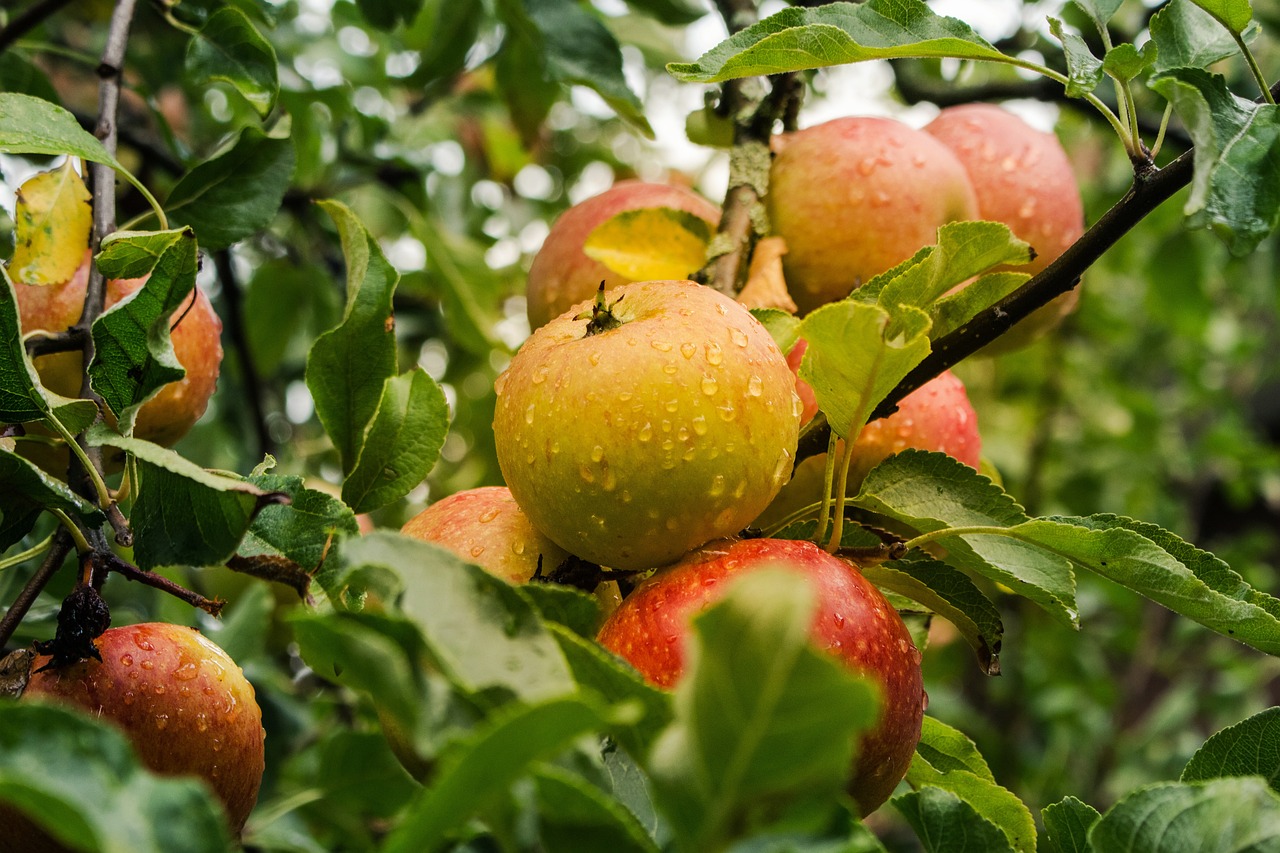
That’s what we’ve decided to do this fall at the Angleton house. Shortly after moving into our current suburban home more than ten years ago, we planted three apple trees, of different varieties. One started producing a pretty good harvest the first year or two. The others took a little longer, but now all three are going strong and we are drowning in apples.

This is not a terrible problem to have. We share a lot of them with friends, family, neighbors, and food banks. With the rest, we get creative. Over the years we have canned applesauce, made apple butter, baked pies and cakes and muffins and doughnuts. Our apples have been the star of salads, hors d’oeuvres, main dishes, and snacks. The only thing we hadn’t done was make cider because we didn’t think we had the right kind of apples to make it work.

But then we found a stovetop recipe that isn’t too picky and it turned out really well. The next logical step then was to try our hand at fermenting it, because it felt like just the kind of thing nostalgic Americans should do.

If you didn’t know better, you might almost think we know what we’re doing.

Turns out it’s not that difficult. It does require some precision and care and a bit of patience. Our first batch isn’t quite through its initial fermentation yet, but as best as we can judge from all our recently obtained YouTube expertise, it’s coming along nicely so far.

Hard cider worked out for Harrison, too. He defeated Van Buren in an electoral college landslide, becoming the oldest person ever elected to the office (a record that has definitely been broken since) as well as the first to lay claim to a campaign slogan.

His success didn’t last, however, because after delivering the longest ever inaugural address (a record he does still hold), in the cold, without even stopping to take to his bed, he developed pneumonia and just a month later, became the first US president to die in office, after the shortest term ever served.

I do hope we have better luck with our hard cider.

Better than Bloodletting and Mercury Poisoning

It’s been a little bit of a long week around these parts, first with the internet woes that have been finally more or less resolved. Judging by the general complaints of nearly everyone I know who uses the same provider, their technicians and maintenance crews have had a couple of even longer weeks than I have, but I am grateful for their efforts.

At our house, the week has mostly been long because we have been nursing a sick kid. He wasn’t scary sick, just persistently so. What started as mild cold symptoms quickly turned into crazy swollen tonsils and a fever that wouldn’t quit. He was tested for all the things, and came up empty, leading to the conclusion that what he had was just a run of the mill miserable virus. Yuck.

So, he traded spending time with grandparents and a visiting cousin for time shivering on the couch and working up the courage to swallow. Meanwhile, I spent my time following him around sanitizing everything he touched and forcing preventive doses of zinc and vitamins C and D on the rest of the family.

British Library, London. Scanned from Maggie Black’s “The Medieval Cookbook,” but not nearly as tasty as a nice chicken soup. Public Domain, via Wikimedia Commons.

We’ve been lucky with our kids in regards to childhood sicknesses. They’ve always been pretty healthy and nothing has ever kept them down for long, so it was unusual when nearly a week later, he was still fighting a fever. I did what any good mom would do and turned to the real experts, those who lived long before the age of modern medicine.

Don’t worry, I didn’t bleed him to balance his humors or force him to take mercury pills. Thankfully, it didn’t come to that. Instead, I went with the suggestion of twelfth century Jewish philosopher and physician Maimonides and made a pot of chicken soup.

Maimonides wrote that the cure for asthma and leprosy and pretty much everything that ails you is chicken soup, and he wasn’t the first to say it. The 2nd century Greek philosopher Galen, with whose work Maimonides was surely familiar, suggested chicken soup as a cure for migraine, constipation, and fever. And Chinese culture has held chicken soup up as restorative for even longer than that, notably adding noodles to the mix, a brilliant move that wasn’t popularized in western culture until Campbell’s did it in 1934.

Maimonides, whose mama probably made a really good chicken soup. Blaisio Ugolino, Public domain, via Wikimedia Commons

I decided to give it a try. The trouble is, my kiddo is not a huge fan of soup. If I were to give him a made-from concentrate Campbell’s chicken noodle from the can, he probably wouldn’t find it worth the painful effort to swallow, even if his throat didn’t hurt.

And so, I made it from scratch. Now, before you get all impressed with me (actually, go ahead and be impressed if you want), it turns out, chicken noodle soup is not really that hard to make. I have made my own broth plenty of times by throwing the picked-clean parts of a rotisserie chicken into the pressure cooker with some onion, celery, carrot, and seasonings. I figured it wouldn’t be hard from there to make it into a soup by adding more vegetables and chicken. And because I sometimes like to be that mom who is a little bit extra, I decided to add some homemade egg noodles as well.

I admit part of the motivation here is that there is currently a list circulating on Facebook that asks how much of a cook you are, to be determined by how many of the things on the list you have ever made from scratch. The list includes things like cooking a pot of beans (which I have done) and making your own noodles (which I had not). And, you know, I like to feel superior. Also, my mom used to make homemade egg noodles and they always tasted a little bit like love.

I don’t mean to brag (except that I kind of do a little bit), but this is a really tasty homemade chicken noodle soup.

It turns out homemade egg noodles aren’t nearly as impressive as they sound, either (but you can still feel free to be impressed). They are, however, pretty much medical magic, because after nearly a week of my otherwise healthy teenage son’s fairly rock solid immune system fighting off a viral infection, he got better right around the time he ate his mama’s homemade chicken noodle soup.

Yes, that could have almost certainly been a coincidence, except that researchers at the University of Nebraska have taken the time to study the effects of chicken soup on illness. This groundbreaking study from back in 2000, suggests that chicken soup may in fact possess some as yet unidentified properties that might legitimately reduce inflammation in the body and make a sick person feel temporarily a little bit better. Or at the very least it’s better than bloodletting and mercury poisoning.

My son did enjoy the soup, and only partly because it was the first thing he’d been able to swallow without pain in several days. Regardless, he’s fully recovered now and this is shaping up to be a much better week.