Recipe for Spring: Start with 1.4 %Egg Yolk. Add Brain Freeze.

When he took on the office of the President of the United States in 1801, Thomas Jefferson brought with him his love for ice cream. Having most likely gotten his favorite ice cream recipe from his time serving as Minister to France, Jefferson often had the dessert served in what would, after a few years and a fire, come to be called the White House.

Thomas_Jefferson_rev
Just a hint of a smile in this portrait…I bet he’s thinking about ice cream. Thomas Jefferson, Public Domain, via Wikimedia Commons.

Jefferson accomplished a lot in his political career, but contrary to rumors that suggest otherwise, he did not introduce ice cream to the United States. He did, however, probably contribute to the spread of its popularity, and his handwritten recipe is the oldest of its kind known in the US.

It calls for cream, of course, and sugar, vanilla, and plenty of egg yolks. I’m sure it was good, and if you want to try Jefferson’s recipe, you can allegedly do so while visiting Mount Rushmore where the National Park Service will be happy to sell you a cone.

Mountrushmore
When we visited Mount Rushmore a few year ago, we had no idea we could have eaten Thomas Jefferson’s way back ice cream. Guess we’ll have to visit again. Mount Rushmore, National Park Service, Public Domain, via Wikimedia Commons.

But according to the FDA, what you’ll be eating won’t technically be ice cream, which is defined as a frozen dessert containing at least 10% milkfat, a maximum of 100% overrun (the amount of mixed in air), and less than 1.4% egg product. You’ll have to call it French ice cream, or frozen custard instead.

It’s the eggs that make the difference, as most American ice cream recipes now forgo eggs all together in order to make production cheaper and handing easier. Custard is generally served fresh, and is stored at a slightly warmer temperature than ice cream. And custard has a much lower overrun, making it denser (upside down frozen custard has been holding onto spoons since long before Dairy Queen’s Blizzards) and creamier and, often, much more delicious.

You can trust me on this because we St. Louisans know a thing or two about frozen custard, which outside of the return of baseball(and yes, I’m going to go out on a limb here and speak for all of us) is our favorite sign of spring.

Finally this week, spring has sprung here in Missouri. It happened officially this past Monday, but all the unofficial signs have begun arriving, too. The temperature reached into the 80s (it didn’t stay there, because Missouri), tornadoes have touched down, the dog is shedding EVERYWHERE, and the seasonal frozen custard stands are finally open.

This last one matters most to our family, and especially to my nine-year-old son. We pass one of his favorites every day on the way home from his school, and every day I have to decided whether I will stop to get an after school treat or whether I will explain to him why it’s not a custard day.

Obviously we stop much less often than we don’t, but he never fails to ask. Fortunately this stand, like many in the area, closes in late November and doesn’t open again until early to mid-March, so I get a few months off from this tedious conversation.

But now it’s open, and my son is relentless. What can I do? He’s a St. Louis kid. And he loves his frozen custard.

Ted Drewes
Ted Drewes Frozen Custard. “It really is good, guys..and gals.” By The original uploader was Indrian at English Wikipedia [GFDL (http://www.gnu.org/copyleft/fdl.html) or CC-BY-SA-3.0 (http://creativecommons.org/licenses/by-sa/3.0/)%5D, via Wikimedia Commons
The Midwest fell in love with this creamiest of frozen dairy desserts in the 1930s. The first machine designed for producing frozen custard was about ten or twelve years old at that point and had already taken the Jersey shore by storm, but no one loves the stuff as much as Midwesterners (the true cultural center of the nation).

The city that grabbed hold the most enthusiastically is Milwaukee. Since Wisconsin is made of dairy cows and ice, it was a natural fit. Today that city calls itself (unofficially) the frozen custard capital of the world and boasts that it contains more frozen custard stands per capita than any other city. Good for them.

fritz's
Our favorite local treat is Fritz’s Frozen Custard, a St. Louis tradition since 1983.

I mean no disrespect to my Milwaukee friends when I say this, but we have an arch, and a better baseball team, and Ted Drewes Frozen Custard, named by celebrity chef Bobby Flay as the best dessert he’s ever eaten. Ted Drewes has been a part of St. Louis since 1931, and as they say in their extremely clever catchphrase, “It really is good guys…and gals.”

My son and I don’t drive past a Ted Drewes every day on our way home from school, but just because our stand is less famous, doesn’t mean it’s any less beloved. And most importantly, it’s now open for the season.

We’ve already made our first stop for rich, creamy, frozen dairy deliciousness complete with more than 1.4% egg yolk, consumed so enthusiastically that my son gave himself his first brain freeze of the spring. I think Thomas Jefferson (coincidentally my favorite historical president, only partially because of his love for frozen custard) would be proud.


 

Corned Beef and Cabbage and Something about Snakes

Last week I got to do something fabulous. I took a quick girls’ trip to Florida with my sister, cousin, and aunt. And I did not take my kids or my husband. Not that I don’t like traveling with them. They’re really fun people. But this was a special trip to celebrate my sister’s birthday by hanging out on the beach and watching some baseball.

We went to Jupiter, Florida, spring training home of the St. Louis Cardinals (and the Florida Marlins, but nobody cares), where we attended three games, played on the beach, explored a lighthouse with the most amusing tour guide I’ve ever encountered (but that’s another post), witnessed a rehabilitated sea turtle get released into the wild, ate a lot of cheesecake, and had, generally, a really great time.

FredbirdandSteve
Okay, so it wasn’t strictly a girls’ trip. Of course we had to take Steve the traveling sock monkey. He’s a huge fan!

And even though I didn’t take him with me, I could not have enjoyed such a trip without the efforts of my wonderful husband who rearranged his busy work schedule to hold down the fort for a few days, getting the kids to and from school, managing homework, keeping up with all the activities, and cooking dinner.

It’s this last part I may appreciate the most, because while I was gone, he cooked corned beef and cabbage. It’s a dish a lot of Americans will be preparing tomorrow in honor of St. Patrick’s Day, even in spite of the fact that it falls this year on a Friday in Lent and at least the dedicated Catholics among us should probably stick to fish.

I confess that not being particularly Irish, nor even the tiniest bit Catholic, I’ve never really known a great deal about Saint Patrick. I just know that if you don’t wear something green on March 17th, someone somewhere will feel compelled to pinch you and that if you cook corned beef and cabbage in my house while I’m home (or possibly in the same state), your fate will be much worse than that.

It turns out history doesn’t yield up a whole lot of reliable information about St. Patrick, either. We know that he was born in Britain sometime in the last half of the 5th century, that he arrived in Ireland as a slave at age sixteen (possibly kidnapped by pirates), made it back home six years later, and had a vision calling him back to Ireland as a missionary, where he proceeded to do all kinds of legendary things like preaching with shamrocks and driving out snakes. That’s where his story gets a little muddy, and may (as some historians suggest) get combined with another missionary known as Palladius who was in Ireland in the early half of the 5th century.

saint patrick
Though we don’t know for sure, it seems likely enough St. Patrick may have used the shamrock to illustrate the concept of the Trinity, since Ireland actually has shamrocks. Unlike snakes, which Ireland never did have. Not even green ones.[Public Domain], via Wikimedia Commons
But the lack of concrete details sure doesn’t stop us all from gettin’ our green on, even though the color more historically associated with this saint is actually blue. Historical stuff does tend to yellow with age, and Chicago goes to all that trouble to turn their river disgusting green, so I guess I’ll allow it.

The tradition that I can’t tolerate, however, is corned beef and cabbage. And frankly, I shouldn’t have to. Because Saint Patrick is as likely to have eaten corned beef as he is to have driven all of the snakes from Ireland (which, according to fossil records, never existed there in the first place). In fact, historically, Irishmen in general never ate much beef, the meaty part of their diet tending to be primarily salted pork.

If we really want to celebrate St. Patrick and all things Irish, then it’s bacon we should be eating. Now that I could get behind.

It wasn’t until the great influx of Irish immigrants into America in the 19th century that corned beef became a St. Patrick’s thing at all, and that’s only because the meaty part of the American diet tended to be more beefy. Relatively cheap beef brisket was readily available to Irish Americans who settled in large numbers alongside the kosher delis of their Jewish neighbors, and so they convinced themselves, their descendants, and green beer-guzzling Americans from all walks of life that corned beef and cabbage is a good, Irish-y idea.

But it’s not.

stpathat
I’m not a total party pooper. I will wear this ridiculous hat while not eating corned beef and cabbage.

Still, Americans will fire up their crock pots, stink up their houses, and line up in droves to eat corned beef and cabbage tomorrow. And I’m sure those lines will include a lot of Irish and/or green beer-guzzling American Catholics throughout the country where many local dioceses (though far from all) have granted dispensations to their parishioners who wish to partake.  

I can honestly say there’s not enough green beer in the world to make me want to participate in the tradition, and because I married a very smart and thoughtful man, I don’t have to. He had his corned beef last week. By the time I got back from my trip, the house had thoroughly aired out. Had it not, I’d not have hesitated to head back to the beach.

Tree-Tapping Squirrels and Ooey, Gooey Deliciousness

In 1557, French cartographer André Thévet published Les Singularitez de la France Antarctique, an account containing a number of tales of the New World, gathered from men who’d been there. One of those men was Jacques Cartier, today credited with establishing a foothold for France in North America, laying claim to the country he named Canada, and for possibly being the first European to discover the ooey, gooey, deliciousness of maple syrup.

cartier
Jacques Cartier, dreaming of drinking maple syrup. By Theophile Hamel – Library and Archives Canada, Public Domain, via Wikimedia Commons

Well, it might not have been in an ooey, gooey form, but evidently Cartier relayed the tale to Thévet of a tree resembling a large European walnut that when felled, released a sugary liquid “as tasty and as delicate as any good wine from Orleans or Beaune.” Cartier’s party quickly filled several pots with the sweet sap and had they boiled it in those pots, they would have wanted some pancakes to go with it.

Native Americans in the area had been tapping maple trees during the Sugar Moon (the first full moon of spring) for enough years for several legends to have arisen around the practice, and North American squirrels had been doing it for even longer.

sap-collection
The squirrels may have been at it longer, but we do it better. photo credit: looseends sap season via photopin (license)

Europeans may have been late to the party, but they proved just as enthusiastic.Widely used as concentrated sugar during the 17th and 18th centuries, at around the time of the American Civil War, maple sap was largely replaced as a sweetener in American cooking by imported cane sugar. And so ooey, gooey, delicious syrup became the maple product of choice for most people (and probably squirrels).

It makes a good glaze for salmon or adds a lovely sweetness to barbecue sauce. It’s great in salad dressings, with bacon, or drizzled over nuts. And according to Yale-trained chemical engineer Edward Cusslerawarded a 2005 prestigious (sort of) Ig Nobel prize for his super science-y studyyou can even swim in it. But the best thing to do with it is to pour it over a big stack of soft, fluffy, warm, and buttery pancakes.

That’s just what my family will be doing next Tuesday. While some people may be donning masks, throwing beads, or eating cakes with a plastic baby trinket baked inside, we’ll be marking Shrove Tuesday with the traditional pancakes, smothered in ooey, gooey, syrupy deliciousness.

squirrel
Clearly up to no good. photo credit: kennethkonica “Didn’t you see the STAY AWAY sign?” via photopin (license)

Chances are, that deliciousness will come from trees in Canada, which produces about 75% of the world’s supply of maple syrup. And fortunately, they’re not going to run out anytime soon, thanks to the Global Strategic Maple Syrup Reserve, which is a real thing. Despite a notable robbery in 2012 in which 1000 tons of syrup vanished (I have to assume wily squirrels were somehow involved) and was only partially recovered, the reserve holds more than 12,000 tons of syrup in three separate warehouses throughout Quebec.

That’s probably just a little more than Cartier’s men gathered all those years ago. Now, the reserve is also a little controversial, because it’s essentially a cartel designed to control the Canadian syrup market and maintain higher prices. But it also means that if there’s a bad year for maples, my family can still observe Shrove Tuesday in style, with a big stack of soft, fluffy, warm, and buttery pancakes, smothered in ooey, gooey, syrupy deliciousness.

Nothing Says Christmas like an Excess of Pickles

In April of 1864, during the American Civil War, Private John C. Lower of the 103rd Pennsylvania Infantry, was captured and taken to a Confederate prison camp. There, after many months of captivity, he found himself on Christmas Eve, hungry, weak, and knocking on death’s door. He begged for help, appealing to the mercy of a guard who took pity on him and gave him a pickle.

christmas-pickle
If I owed my life to a pickle, I would definitely hang one on my Christmas tree.

It was this pickle that Private Lower later credited with the saving of his life, and when he finally returned home, he began a curious holiday tradition with his family. Whether Lower survived because the kindness of the prison camp guard infused him with hope for humanity, or because the slug of seven whole much needed calories provided him the energy to live on, no one can say for sure.

Pickles have long been considered to provide good health and vitality, and have been relied upon by military leaders dating back as far as Julius Caesar, to give their soldiers a much needed kick. Still, it seems likely that Lower’s story is entirely made up to explain the long-standing tradition of the Christmas pickle.

Never heard of it?

Neither had I, but apparently it’s been an American tradition since at least 1890 (or 1865, in the Lower household). Before that it was a “time honored German tradition.” The trouble with that theory, of course, is that most Germans haven’t heard of it either.

The idea is that parents hide a pickle ornament somewhere on the tree on Christmas Eve, and in the morning, the first child to spot it wins a small prize or receives a special blessing for the year to come, or earns the right to open the first present.

Okay, so it’s a little bit charming. And for the purposes of this blog post, I went on a pickle-finding adventure of my own. I searched several stores, asking employees if they had traditional Christmas pickle ornaments. Most of them looked at me with mystified expressions full of barely masked pity. Only one knew what I was talking about, though her store did not carry them. A surprised employee in the store where I finally had success, said, “Well, I think we had some cucumbers. Or maybe they were pickles?”

larry-and-bob
I didn’t have the heart to tell her I already had a cucumber on my tree.

They were. And I bought one. Because even if it isn’t an age-old German Christmas tradition, we Americans sure do love our pickles. More than half of the cucumbers we grow eventually become pickles. That’s twenty-six billion of them per year. And each of us allegedly eats an average of nine pounds of them per year, which means someone out there is eating an awful lot of pickles to balance out my somewhat less than nine pound contribution.

chicken-sandwich
I wonder how many Chick-fil-A sandwiches I’d have to eat to meet my pickle quota.

But there’s still the question of how they ended up on our Christmas trees. There are a couple theories other than the one involving Private Lower, including one that suggests the source is a miracle of St. Nicholas in which he resurrected two murdered boys who’d been sealed into a pickle barrel by an innkeeper (securing his place on the naughty list). There are lots of variations of that story, though, and most don’t involve pickles at all. Also, it’s pretty awful and not very Christmas-y.

The theory that I find most believable, is that in 1890, F.W. Woolworth began importing Christmas ornaments from a German glass factory, many of them in the shapes of fruits. Some of them were pickles (and, yes, cucumbers, and therefore pickles, are fruits…ask a botanist). While the pomegranates and pears sold fairly well, for some reason, the pickles didn’t strike most people as particularly Christmas-y. And so a German custom was born, right there in an American five-and-dime.

It turns out this long standing Christmas tradition that few of us have actually heard of, may really stem from a marketing campaign and an excess of glass pickles, the most non-Christmas-y fruit imaginable. But, it’s kind of fun and weird. So, why not?

Confectionary Kernels and America’s Least Most Awful Choice

On September 9, 1950 the town of Midland Park, New Jersey experienced a holiday tragedy the likes of which had been previously unknown. The effects would be felt by retailers across the nation and by perhaps as many as tens of disappointed little Halloween goblins and ghouls.

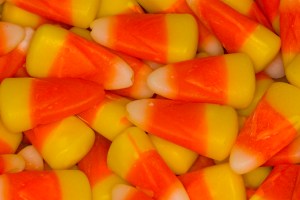
Because right in the middle of the process of making a batch of candy corn, a beeswax-lined kettle caught fire and burned the Goelitz Confectionary Company New Jersey factory to the ground. The good news is that all of the employees managed to escape the blaze unharmed. And the other good news is that 2000 pounds of candy corn was consumed by the blaze, which meant no one else had to eat it.

candy-corn
I would rather set this on fire than eat it. photo credit: Great Beyond Day 293/365 – Candy Corn via photopin (license)

Candy corn has been around since at least the late 19th century when it was allegedly invented by George Renninger of the Wunderle Candy Company. The weird pretend vegetable candy had its wider debut in 1880, when Goelitz Confectionary first mass produced packages of it and sent it out into the world marketed as “Chicken Feed.”

Obviously there can be no accounting for the questionable culinary tastes of 19th century America. But the really strange part is there still seems to be a small, enthusiastic remnant of the population that loves the stuff. These are the folks who at parties, gobble handfuls of candy corn mixed with peanuts and insist it’s just like eating a PayDay candy bar (which in this blogger’s humble opinion, is also gross) or who design specialty candy corn cocktails, because nothing says, “Mix me with vodka!” like corn syrup and fondant.

These are the same people who are responsible for candy companies feeling the need to produce up to 15 billion kernels of candy corn every year, including buckets of them in red, white and green for Christmas (a traditional corn holiday) or red, white, and pink for Valentine’s Day (so you can tell the one you love, “Here, I got you this corn.”).

grosscandycorn
I don’t even know what to think of this.

I know I typically try to avoid a whole lot of controversy on this blog, but I do realize at this point, I will have to concede that a few of you reading may find yourself in the candy corn camp. Even my dad, who is one of the wisest people I know, is generally right about most things, and is a loyal reader of this blog, also occasionally enjoys candy corn.

But highly scientific market research into American candy preferences suggests that candy corn is by far the most divisive candy on the market. People who don’t like it, really don’t like it and probably have their fists raised as they nod along with this post. And I suppose the tens of people who love it, really do love it. They can’t wait for retail Halloween to roll around every July so they can stock up, make themselves a candy corn martini, and munch some PayDay mix.

They’re the people who in 1950, were dismayed at the September Goelitz fire because even though the handful of other companies that produced the confectionary kernels tried their best, there was a candy corn shortfall that year.

Goelitz decided not to rebuild its New Jersey factory, though they still produce a good share of the candy corn on the market. Today, the company is known as Jelly Belly, the same ones responsible for the vomit flavored Bertie Botts Every Flavor Bean, easily the third worst candy in the world.

pumpkinpeeps
Oh no! This is an option I hadn’t considered. This may change things. photo credit: giveawayboy It’s that time again… via photopin (license)

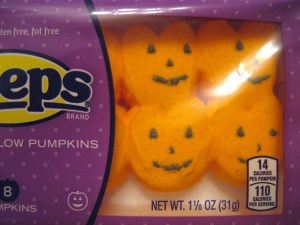
So, you may ask, what’s the second most awful candy in the world? Well, actually I admit there may some room for debate on that front. As much as I dislike candy corn, Halloween offers us another terrible alternative in the form of that weird brown taffy that comes in the orange and back wrappers. Honestly, it’s kind of a toss-up and if you try to give out either one to Trick-or-Treaters, you might deserve the egging your house is sure to receive.

But, since the American* public is facing another looming similar situation in which it will have to attempt to choose the least terrible of the worst alternatives imaginable, I figured we all could use a little practice. To that end, I’d like to conduct a brief and highly scientific poll. So, what do you think? Is candy corn the worst candy on the market? And if not, why, do you think, are you so clearly wrong?


*I realize that candy corn is more or less an American problem, but Non-Americans are more than welcome (and even encouraged) to participate in this important debate, too. I suspect, no matter the outcome, our houses are all getting egged.

A Celebration Worthy of a Slice of Non-Satan-Spit-Poisoned Pie

Centuries ago, though no one is quite sure when, Michael the Archangel engaged in war with the forces of evil. It was a great battle that ended with the expulsion of Lucifer and his minions from Heaven.  And to add injury to insult, the story goes, Lucifer fell directly into a large, thorny blackberry bush and got so mad he spit on the otherwise delicious fruit.

michael-and-dragon
Michael defeating the Dragon. I suppose a day like this would be enough to make anyone a little cranky. But why is that the blackberries’ fault? Jerk. By Sultan Edijingo (Own work) [CC BY-SA 4.0 (http://creativecommons.org/licenses/by-sa/4.0)%5D, via Wikimedia Commons
Originally, the story of this epic battle was extrapolated from a few verses in the twelfth chapter of Revelation and explored by a number of writers including John Milton. Today, the interpretation of those verses is widely debated by Biblical scholars with most assuming that they don’t really refer to a Heavenly battle in the distant past, but instead represent an end-of-days battle to come.

But sometime in the fifth century, a basilica near Rome began to celebrate the feast of Saint Michael and All Angels, also called Michaelmas, on September 30, the traditional day the battle was won. It’s been celebrated to varying degrees ever since.

How exactly the blackberry bush became a part of the legend isn’t entirely clear, but the tale emerged from England where Michaelmas was widely considered the marker of the change of seasons from summer to fall. Since Revelation contains oh-so-delightful imagery of Satan spewing a river of dragon drool, and since blackberries, which usually peak in August, are pretty iffy by the end of September, I suppose it stands to reason that the two are somehow related. I guess.

Or maybe it’s just that with the shifting of the seasons, from long days and ripe berries, into long nights and barren fields feels a little unfair. And Lucifer is just the kind of jerk that might add injury to insult and spit poison all over the last vestiges of summer goodness.

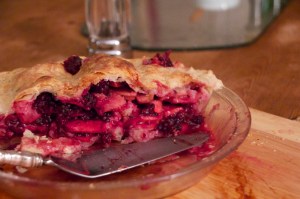
Or it could just be an excuse to eat blackberry pie and celebrate a holiday with a ridiculous name, because by tomorrow, blackberries the world over will be covered in poisonous Satan spit, and I don’t know about you, but I’m not going to take any chances.

The wisest course of action, then, is to bake your last summer pie of the season today, in honor of Poisoned Blackberries Day. Because Satan is a jerk.

blackberry-pie
Actually you should probably eat the whole thing because it’s a pretty important day. Also, just to be safe. photo credit: David Gallagher Apple Blackberry via photopin (license)

But if that’s not reason enough for you to celebrate, then perhaps you could bake a pie in recognition of another equally ridiculous and even less well-known event that also occurs today. Because this is my 200th post on this silly little blog that pretends to be about history. I think a milestone like that deserves a slice of non-Satan-spit-poisoned pie.

Hold the Fermented Fish Sauce

I am not a brilliant cook. I’m not exactly terrible either, unless you ask my youngest son, but then he refuses to eat anything that doesn’t come in a pizza box so I’m not sure you can trust his judgment on the matter. I have gotten braver with ingredients than I once was and may even occasionally go off recipe, which even more occasionally works out fairly well. And I have a few dishes that are actually quite good.

25994550643_12ba7c9d08_o
Over IX billion served. photo credit: The Golden Arches via photopin (license)

But meal planning for a picky household and trying to get everyone fed something that’s not terrible for them before they rush off to the next thing is tough. This is especially true in the summertime when I spend long days playing with my kids and then have to throw dinner together at the last minute.

So like so many busy families, we eat out, or at least eat take-out, far more than we should. It’s a problem that’s been around for millennia.

We know because the Roman city of Pompeii, so perfectly caught in the act of everyday life by the volcanic ash spewing from Mt. Vesuvius in 79 AD, had take-out restaurants. Or at least archaeologists can make a reasonable guess that that’s what they were. These cookshops or thermopolium (which roughly translates as “McDonald’s”) are equipped with stone counters with large recessed bowls. Some of the more well-preserved ones include depictions of the menu items offered.

26488193064_fc1fe16434_o
I’ll take a number VII with a Coke. Hold the fermented fish sauce. photo credit: Au marché, les poissons, Cesenatico, province de Forli-Cesena, Emilie-Romagne, Italie. via photopin (license)

They offered simple, easy to prepare fare, such as lentils, cheese, and porridges. Customers slathered their food with garum, a fermented fish sauce as ubiquitous as ketchup is today (though significantly more disgusting on French fries).

The food must have been fairly cheap, as the cookshops almost exclusively served the less well-to-do, an assumption made by archaeologists both because of the disdain with which Ancient writers refer to the thermopolium, and from the inclusion of kitchen facilities in the homes of the wealthy, a luxury lacking in most of the more modest dwellings.

I suppose if you don’t have a kitchen, it makes sense to eat out all the time. In retrospect, maybe this is the feature (or lack of feature) I should have looked for in a house. Instead I have a lovely kitchen. It’s roomy enough to work in and visit with family, friends, and neighbors while we prepare food to share. I love that.

20160613_084001
But going out to eat with friends is also pretty nice.

It’s the daily grind, when it’s just me, and whining, hungry kids that aren’t going to eat whatever I’m cooking anyway, and a mountain of dishes, that I’m not too fond of. That’s when I start to think that the citizens of Ancient Rome may have had the right idea. Well, except about the fermented fish sauce.

One Super Hip Aunt and The Brownie Express

When gold was discovered there in 1848, hundreds of thousands of people flocked to the area that would a couple years later become state of California. Some struck it rich right away. For some it took a little longer. Still others became wait staff and went to endless auditions only to get a few bit parts in a commercial here or there.

There can be little doubt that this is when the California dream began to become a reality. And man, what a dream. Except that there was one glaring problem: brownies.

Because if you happened to be the super hip aunt of a couple of bright young gold miners on the adventures of their lives, pursuing bright futures, it was hard to send said youngsters care packages full of homemade brownies all the way from Missouri to California.

Most mail to the state traveled by boat, taking about two months to make the trek. The only other option for sending care packages was by a southern stagecoach route, which took somewhere in the neighborhood of twenty-four days. I don’t know if you’ve ever eaten brownies that were made from scratch twenty-four days ago, but I’m pretty sure if you have, it was a mistake.

pony express
Not brownies, but still probably important to the receiver. By Pony Express [Public domain], via Wikimedia Commons
Enter 1860, with a relatively new state, more or less disconnected from a country on the brink of civil war. Communication was an issue and luckily three men in the freighter business had a solution. William H. Russell, Alexander Majors, and William B. Waddell introduced the Pony Express, a relay system in which swift and brave young horsemen carried mail between Missouri and California, making the trek in a previously unheard of ten days.

The first delivery arrived in Sacramento on April 14, 1860, having started out in St. Joseph, Missouri on the 3rd. Changing horses every 10 to 15 miles, and riders every 75 to 100, this first trip transported 49 letters, 5 telegrams, and a handful of papers bound for intermediate destinations.

But still no brownies. Because even ten days is a long time to ask fresh brownies to say, well, fresh. And because the nature of the Express was such that weight was a huge consideration, a bulky box of brownies still had no good way to travel from here to there. Not to mention, the brave young horsemen probably got hungry.

Which brings me to my dilemma. You see, I am a super hip aunt of a couple of bright young people on the adventures of their lives, pursuing bright futures away from home at college. And for the past several years, I have been pretty good about sending care packages to each of them at least once a semester.

20160414_094844
Just need some brownies now.


As my own children keep reminding me, this semester is nearly over. Soon the last projects and papers will be turned in, finals will be taken, grades will be calculated, and if I don’t get on it pretty quickly, no homemade brownies from super hip Aunt Sarah will have arrived.

And the trouble is I don’t have a good excuse. Because even if I were sending a care package to a niece or nephew mining for gold thousands of miles away in California, through the magic of the modern US Postal Service, I could get them their brownies in a couple of days. They’d probably even be relatively fresh.

It’s not that I haven’t thought about getting it done. I figured out when their respective spring breaks were so they wouldn’t receive goodies when they weren’t around to eat them. I’ve set aside appropriate sized boxes. I’ve made several batches of brownies (that were delicious).  And now it would seem I’ve even taken the time to blog about the fact that I haven’t yet put together packages and actually taken them to the post office.

20160414_094958
And now a few swift and brave young horsemen and I can be a super hip aunt.


So today I’m going to get it done.

Though the Pony Express was never financially successful and was halted after only about 18 months at the of the completion of the transcontinental telegraph (which was even less useful for shipping brownies), it did manage to transport more than 35,000 letters  across the nation. And if a bunch of guys on horseback can accomplish that, I can probably box up some brownies and drive across town to the post office. Because I’m a super hip aunt.

Hyperactive Goats, a Pragmatic Pope, and the Bitter Red Cups of Satan

According to legend, sometime in the tenth century or so, Ethiopian goat herder Kaldi made a discovery that would forever change the course of the world. He noticed that his goats were suddenly acting kind of like two-year-olds at bedtime, annoyingly energetic and determined not to sleep.

These guys look like they could use some coffee beans. photo credit: little bobbies via photopin (license)

Kaldi traced the behavior to a berry the goats ingested and alerted the local abbot who decided to try the magic berries himself. The abbot used them to brew a bitter drink that gave him the boost of energy he needed to make it through his evening prayers. Delighted, he passed on his secret.

Soon people (and goats) across the Arabian Peninsula were gathering in cozy coffee houses, discussing politics and the weather while sipping steaming cups of coffee and staying up way past their bedtimes.

By the 17th century, coffee reached Europe and while some rejoiced, adding sugar and cream to make the stuff more palatable, others were suspicious because whereas other popular drinks of the day, like wine and beer, made you sluggish and stupid, this new beverage instead made people thoughtful, productive, and pretentious.

20151111_125114
But no way would you have caught Pope Clement VIII drinking coffee from a plain red cup. I bet.

And so coffee was deemed the “bitter invention of Satan,” with the local clergy in Venice condemning the drinking of the dangerous stimulant. But the people weren’t having it, convinced as they were that if they didn’t start their day with a cuppa, then they might commit homicide. So Pope Clement VIII decided to step in and settle the issue once and for all. He hopped into the pope-mobile, headed to the corner Starbucks, and ordered himself a venti Iced Caffé Latte with skim milk. And you know what? He liked it!

With Satan’s drink safely exorcized, it quickly spread to the Americas. Then in December of 1773, a group of liberty-minded men got all hopped up on coffee and dumped a whole lot of tea (which, as far as I am concerned is at least Satan’s second favorite beverage) into Boston Harbor. Thomas Jefferson then boldly declared (among other notable things) that coffee is the “the favorite drink of the civilized world.”

And for many people, it is.  Personally I’ve never been much of a coffee drinker (though I do make the occasional exception for a Starbucks vanilla Frappuccino, but that’s really more milkshake than coffee), so maybe this isn’t my war to wage. But recently, Satan reclaimed the civilized world’s favorite drink.

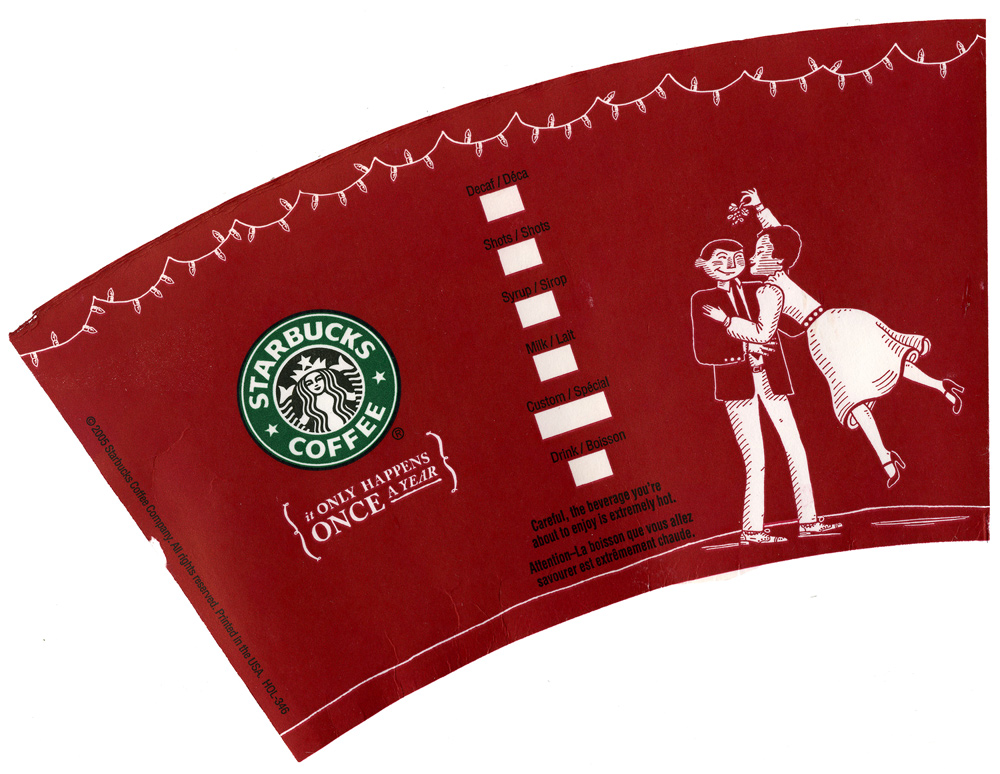
Because nothing says Jesus like levitating under the mistletoe. photo credit: Starbucks 'Red Cup' 2005 (mistletoe) via photopin (license)
Because nothing says Jesus like levitating under the mistletoe. photo credit: Starbucks ‘Red Cup’ 2005 (mistletoe) via photopin (license)

In case you’re not familiar with the controversy, earlier this week a video went viral of a self-declared “former pastor,” and “disciple of Jesus” explaining how he pranked Starbucks. The company, which has traditionally changed its cup designs to reflect the holiday season with pictures of sleds and snowflakes, revealed that this year its holiday cups (clearly designed by Satan himself) will simply be red with a Starbucks logo.

The “prank,” in which video guy was encouraging Christians to participate, was to tell the barista that his name was “Merry Christmas” so she’d have to write that on his cup. His claim is that by eliminating reindeer from the outside of his coffee cup, Starbucks is somehow persecuting Christians and that it is time to stand up and fight back.

Ha! Take that, Satan!

I can’t follow the logic either. But there’ve been a surprising number of people who have taken to Twitter with images of Starbucks coffee cups with “Merry Christmas” written on them. (Ha! Take that, Satan!). I think it’s safe to assume, most of these people have had entirely too much coffee because they’re behaving kind of like hyper goats.

Of course, I’m also happy to report that a larger number of Christians have taken to social media to say, “Um…what?”

Still, perhaps it’s time to call on Pope Francis to hop into the pope-mobile and settle this mess once and for all. Because I could sure go for a vanilla Frappuccino. But don’t worry, I’ll get the last laugh. I’m going to tell the barista my name is “Snowman.”

Ancient Gatorade Tastes Like Ash

Around the year 78 AD, Roman naturalist Gaius Plinius Secundas, or Pliny the Elder, published his only surviving work, Naturalis Historia (Natural History). It was kind of like an encyclopedia, meant by its author to address pretty much everything a first-century Roman might need to know about “the natural world, or life.”

If you ask me, that’s a pretty bold claim, but the work is divided into ten volumes, consisting in total of thirty-seven books, and it does cover an impressive array of topics, including, among others: astronomy, mathematics, zoology, horticulture, sculpture, and Gatorade.

Pliny the Elder   [Public domain], via Wikimedia Commons
Pliny the Elder
[Public domain], via Wikimedia Commons
That last one, as my youngest son would tell you, is the most important. He’s seven and a pretty coordinated kid who I know would enjoy athletics if he weren’t so reluctant to try new things. When I occasionally push him, as I did with basketball this winter, I use an incentive. If he works hard in practice, or a game, he gets a celebratory red Gatorade, because the original yellow tastes like watered-down sweat.

It’s worked really well this basketball season. He’s made friends, had fun, and on the court he’s gone from completely clueless to a little less awkward, even scoring two baskets in his most recent game. All it took was some determination and the right recovery drink.

And if we can take Pliny the Elder at his word, that’s what it took for Rome’s gladiators as well. In Book 36 of Natural History he writes: “Your hearth should be your medicine chest. Drink lye made from its ashes, and you will be cured. One can see how gladiators are helped by drinking this.”

He was quoting the recommendations of another contemporary writer, implying that this magical curative given to the gladiators was fairly common knowledge, but still it’s kind of a quick reference inside a work that covers the entire scope of “the natural world” and so serves as nothing more than anecdotal evidence.

Original Gatorade: Looks like urine; tastes like sweat. For some reason, that add campaign never took off. By Jeff Taylor (Flickr: GatoradeOriginalGlassBottle) [CC BY-SA 2.0 (http://creativecommons.org/licenses/by-sa/2.0)], via Wikimedia Commons
Original Gatorade: Looks like urine; tastes like sweat. For some reason, that ad campaign never took off.
By Jeff Taylor (Flickr: GatoradeOriginalGlassBottle) [CC BY-SA 2.0 (http://creativecommons.org/licenses/by-sa/2.0)%5D, via Wikimedia Commons
Fortunately, we don’t just have to take the author’s word for it. In 1993, a team of archaeologists working near the ancient city of Ephesus in modern day Turkey, found the remains of sixty-eight people who died between the second and third centuries, all young men, between the ages of twenty and thirty, and all showing evidence of having been pretty beaten up. With the remains were several grave markers depicting scenes of battle.

The discovery turned out to be the only known gladiator graveyard ever found, and the bones told researchers an interesting story. First, they confirmed that gladiators ate a mostly grain diet, similar to that of the general public at the time. Second, the gladiator bones contained significantly more strontium than did non-gladiator bone samples.

That doesn’t mean much to me, but what it means to people who know a thing or two about bones, is that gladiators must have ingested some sort of supplement designed to aid in recovery and healing. And thanks to Pliny the Elder, we know it was probably a drink made from water, vinegar, and plant ash.

Scientists claim that if made with a “good vinegar,” the gladiator recovery drink might not have tasted all that bad. I’m not so convinced. If I want my son to keep up on the basketball court, I’ll probably stick with the more modern version. With a whole lot of sugar (which is why this is only an occasional incentive at our house) and plenty of red dye 40, at least Gatorade doesn’t taste like ash.