“Throw Away Your Razor” November

In 1895, a young man named King Camp Gillette stood in front of his shaving mirror contemplating some recent advice he’d received from work at the Crown Cork and Seal Company, manufacturers of bottle caps. The advice was this: “Invent something people use and throw away.”

King Camp Gillette sporting an impressive mustache for the month of Movember.

That seemed like a sound idea to Gillette who thought about it so long and so hard, he nicked himself with his razor. He grabbed a towel and cursed as he attempted to stem the bleeding and clean himself up. Then he grabbed the strop he used to sharpen the blade so he could get good clean nicks the next time he shaved too. That’s when it hit him. What he’d really like to do instead is just throw the darn thing away.

And maybe, he thought, just maybe, other men, men who were tired of tearing up their skin for the sake of a fashionably close shave, might feel the same way. He wasn’t wrong, because about a hundred years later, men stood up in great droves to throw their razors away for an entire month in an effort to tell the world that men’s health and well-being matters.

Evidently babies don't participate in No Shave November. photo attribution: http://www.flickr.com/people/21309047@N00
Evidently babies don’t participate in No Shave November. photo attribution: http://www.flickr.com/people/21309047@N00

It was in the late 1990’s that “No Shave” November (or “Movember” if you prefer a mustache to a beard) began to emerge. The idea is that for a whole month, men (and sometimes women) agree not to shave in order to raise awareness and, in some cases, research funds for health issues specific to men.

I should say, I certainly have nothing against the beardless, even in
November, but I do like the event. I think it’s a fun way to talk about some serious stuff, because, though I really don’t care whether the men in my life sport whiskers or don’t, I do care very much whether or not they look after their health needs. And I realize that too often, men don’t. So, please, Gentlemen, visit your doctor occasionally (or get a doctor, if that’s where you’re at) and take care of business.

razor patent
A great November 1904 leap forward for men’s health.

Now, to be fair, Gillette didn’t think the answer to his problem would be to throw away his razor forever and just stop shaving at all. Instead, he got down to business, found himself a knowledgeable partner (William Nickerson), and applied for a patent for his disposable safety razor in 1904 on the 15th of “Throw away your razor” November.

Though not the first encased blade razor on the market, it was the first with a replaceable head and within a few years, men were sold. Gillette had successfully invented something that people use and throw away and had become a well-shaved millionaire in the process. The company that bears his name, though now owned by Proctor & Gamble, continues to move forward behind the mantra, “There is a better way to shave and we will find it.”

This November, millions of men have come together to declare that at least for a couple more weeks, that better way is not to shave at all. But my hope is that long after November has run its course and a lot of menfolk have returned to their regular shaving routines, they will remember how their manly plight was made better by King Camp Gillette. And I’m hoping that every time they throw away their razor blade, the men in my life, and the men in yours, will remember that it’s important to the people they love that they look after themselves and take care of business.

Super Foods of Future Past

In the fall of 1902, twelve healthy young men sat down together in a dining room set up in the basement of the former Bureau of Chemistry in Washington D.C. for the first of many meals they would share. The food they ate was whole and healthy, prepared with the finest ingredients, and calculated to meet the specific caloric needs of each individual. Oh, and it was laced with borax.

Dr. Harvey Washington Wiley. Chief Chemist in the United States Department of Agriculture. Food and drug safety enthusiast. Poisoner of young men.

The twelve young men at the table were the first volunteer subjects of a study designed by the Bureau of Chemistry’s Chief Chemist Dr. Harvey Wiley to determine the human health effects of various common additive food preservatives.

Each young hero agreed that for the duration of his participation he would ingest nothing but the food provided him through the study, the only exception being water, which was carefully measured. He also agreed to regular medical examinations, and, of course, he agreed to clean his plate.

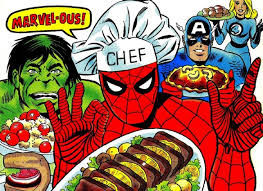
Wait, there isn't any radiated spider venom in this, right? I have the weirdest reaction to that stuff.
Wait, there isn’t any radiated spider venom in this, right? I have the weirdest reaction to that stuff.

At the dawn of the 20th century, Americans were as concerned about the chemicals in their foods as we are in 2014. And with no real regulation, it was nearly as difficult to make good family food decisions as it is today amidst confusing regulation and an overwhelming amount of ever evolving and sometimes conflicting health information.

Then along came Dr. Wiley and his “Poison Squad” as they were soon called by the press. They operated under the motto, “Only the Brave dare eat the fare,” rotating through and testing at various times throughout the five year duration of the study: borax, benzoic acid, sulfur dioxide, formaldehyde, copper sulfate, salicylic acid, and saltpeter.

As soon as a man developed symptoms that inhibited the performance of his daily routine, he was given a minimum of forty days rest during which he ate nutritious food that contained none of the test chemical. But as Dr. Wiley later explained during a hearing before the Committee on Interstate and Foreign Commerce, the study was necessarily limited because unlike with animal testing, he couldn’t cut open his test subjects and examine their organs. Apparently, they wouldn’t agree to that.

So, I don't know what's in that turkey leg, but I don't think it agrees with him.
So, I don’t know what’s in that turkey leg, but I don’t think it agrees with him.

Still, the study and the publicity that accompanied it, helped pave the way for the 1906 Pure Food and Drug Act and for the agency that would emerge officially in 1930 as the Food and Drug Administration. The act addressed fairness in labeling more than the elimination of food dangerous food preservatives, but four of Wiley’s test additives are long since gone from American foods, including borax, salicylic acid, formaldehyde, and copper sulfate.

Thanks to the heroic sacrifices of the poison squad, the food we eat is a little bit safer, which doesn’t seem to do much to ease our minds as we are still at war with all things perceived as unnatural in our foods. Regardless of what diet you subscribe to, be it the Mediterranean, Paleo, Flexitarian, or whatever, the one thing they all pretty much agree on is that you should eat as much real, single-ingredient, “whole” food as you can.

And even the most practical of nutritionists, who caution against adopting a diet so rigid that it’s not workable, agree that this is probably a pretty good idea. But as a mom who does the vast majority of the grocery shopping and as much of the cooking as I can’t get out of, I wanted to know, just what are those whole superfoods my family should be eating?

Turns out Prevention magazine has some suggestions. Actually, there are quite a few lists of the super-est foods of 2014, but I liked this particular list because most of the foods on it were included elsewhere, too, and there were several I’d never heard of before. You just can’t get any more super than that.

Holy Whole Foods, Batman!

A few of my favorite are:

1. Avocado oil – just the oil, not the avocado because it was super a couple of years ago
2. Coffee – some years it’s good; some years it’s bad; this year the price is going up so it’s super
3. Shichimi togarashi – a Japanese spice that is apparently really hot and rich in antioxidants, but way more Hipster-friendly than say, blueberries
4. Salsify – a root vegetable that is low calorie and high in fiber because, you know, it’s a vegetable
5. Za’Atar – a Middle Eastern spice that decreases the instances of foodborne illnesses, kind of like cooking does
6. Teff – a gluten free grain whose biggest claim to healthfulness seems to be that you can’t digest it
7. Canary seed – yep, that’s right, bird seed is a gluten free grain option for people, too, so that in 2014, you have permission to finally eat the way you’ve always wanted to, like a bird. Super.

Um, just no.
Um, just no.

I don’t know what was on the list of super foods in 1906, but I guess I know what wasn’t. Don’t worry, though. No formal follow-up study was ever done on the participants of the poison squad, but anecdotally their health didn’t suffer in the long term. One participant, William O. Robinson of Falls Church, Virginia, passed away in 1979 at the age of 94. I think we have to conclude that his longevity stemmed from the fact that he was so well preserved.

Study Shows VD is Good for Your Heart

Tomorrow we celebrate “love,” on that most romantic of days commemorating a couple of martyrs, a massacre, some very poorly behaving Romans, awkward relationship moments, and heart-shaped boxes of chocolate candies filled with who knows what. As you can probably gather, we’re not big celebrators of Valentine’s Day around here, although, I have to admit, I will likely make a heart-shaped casserole for dinner because I received a heart-shaped pan as a wedding gift and honestly when else am I going to use that?

Despite my own reluctance to celebrate VD, my children have been busy designing and filling out valentines to give to their classmates. They’re excited mostly, I think, to see the pile of candy they will bring home.

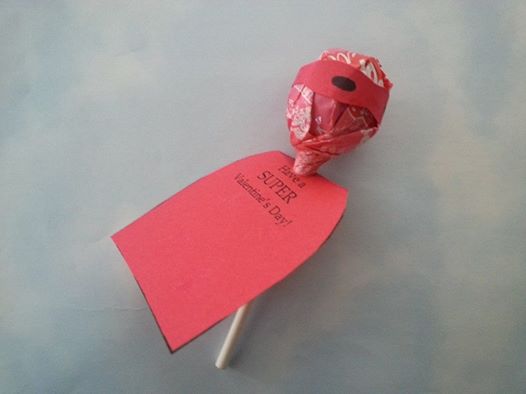
If you must celebrate, at least do so Pinterest style, right?

But I am delighted with their teachers and with their school because both classes are also trying to make this kind of silly holiday meaningful on a larger scale than simply fretting over cryptic Conversation Hearts bearing messages such as: “DARE YA,” “GOT CHA,” and “URS 4EVR.”

My oldest son’s third grade class will be spending at least some of their party time making therapy pillows to be donated to a local children’s cardiac unit. And my first grader’s class will be participating in Jump Rope for Heart.

I’m especially pleased about that because in fifth grade I participated in the program myself and not to brag, but I had some pretty mad skill. Over the years the Jump Rope for Heart Program has raised hundreds of millions of dollars for the American Heart Association all while promoting heart-healthy activity and an attitude of service among elementary students.

It might just be me, but I'm pretty sure the conversation hearts of my youth were more innocent.
It might just be me, but I’m pretty sure the conversation hearts of my youth were more innocent.

Because though it’s a ton of fun, jump roping is hard work. Some historians even trace the roots of the sport back precisely to hard work in Ancient Egypt and China from where the earliest twisted or braided ropes are believed to have come. The theory is that rope-makers had to jump the strands as part of the process of twisting them together to make rope and that in imitation of them, their children developed a game of it.

Whether or not the theory has any merit, rope jumping games certainly did take hold early in China. There’s also evidence that similar jumping activities developed early among the Aboriginal population in Australia. But it is most likely the Dutch we have to thank (or blame) for the modern sport of jump rope.

When early Dutch settlers brought jump roping to New Amsterdam (later New York) in America, the English thought it was the most ridiculous thing they’d ever seen. When Dutch children doubled it up, the English (who were obviously jealous of the mad skills) knew they had been wrong and that this “Double Dutch” accompanied by silly sing-song rhymes was, in fact, the most ridiculous thing they’d ever seen.

Mad Skill
Mad Skill

The sport’s been though some highs and lows in its history, enjoying a resurgence in the 1970’s with the NYPD’s Double Dutch outreach to inner city youth that included the slogan “Rope, Not Dope,” a “rope skipping” campaign begun in Colorado by PE teacher Richard Cendali, and the Jump Rope for Heart program started in 1978 by Milwaukee PE teacher Jean Barkow.

And now, all over the United States, elementary students jump their hearts out around this time of year in order to do some good in the world and prove that Valentine’s Day, for all the angst and disturbing candy messages, can actually be pretty good for your heart.

jumpropeforheart

So in the interest of exhaustive (or at least exhausting) research, I felt it necessary to dust off my mad skills and jump a little rope. In the process I learned a few things:

  1. I am not at quite the same level of physical conditioning as my fifth grade self.
  2. My “Jumping Rope” list on iTunes needs more Pointer Sisters, Van Halen, and Kris Kross (sure to make me jump jump).
  3. I don’t know if this proves the Englishmen of New Amsterdam right, but my attempt to jump rope is probably the most ridiculous thing anyone could ever see. But won’t. Ever.
  4. Jumping rope is a fantastic way to work off all the empty calories in the heart-shaped box of chocolates filled with who knows what that I’ll probably scarf down in honor of Valentine’s Day.
The things I do for you.

Do you smell coconut?

Pod of Hippos (Hippopotamus amphibius) in Luan...

Summer is drawing to a close. The nights are getting cooler and the kids finally head back to school next week. In another month or so, the rainy season will descend upon us here in the Pacific Northwest and so with our last days of yummy summer sun, the boys and I have been doing our best to enjoy the great outdoors while we still can.

But because I have pale-skinned children, this means a thorough slathering in sunscreen before we head into the sunshine, and not only because it makes them smell like coconuts. That’s just a nice bonus.

So I was pretty upset when I started looking into sunscreen guidelines and found the Internet lit up with accusations that sunscreen causes skin cancer. Really? It upset me because it meant that Kurt Vonnegut was in fact wrong in the commencement address he neither wrote nor delivered to the 1997 graduating class of MIT. You probably remember the speech. Originally a column by Mary Schmich of the Chicago Tribune, it became a hit song beloved by graduates everywhere. The column begins with unquestionably sound advice: “wear sunscreen.”

Wear Sunscreen

So I felt misled. I decided to do a little digging into this substance we call sunscreen. There are a few references to innovative sun protection throughout history. Historians think the Ancient Greeks used sand and oil to protect their skin from sun damage as early as 400 BC and quite a few years later, sun block gets another blurb when Christopher Columbus journals about the paint the natives use to protect their skin from the sun.

The first widely used chemical sunscreen was invented by Benjamin Green, whose “Red Vet Pet” was worn by soldiers in the Pacific during WWII. Green’s early attempt would later become a Coppertone product. A handful of others invented basic sunscreens around the same time and they all had one thing in common. They didn’t work particularly well.

So now skip ahead thirty or forty years of growth and development in the industry and a huge increase in the rate of use in the general public. The other thing you will find is an increase in the rates of melanoma skin cancer.

So if sun exposure causes skin cancer and sunscreen causes skin cancer and we’d really rather think of ourselves as the slim, athletic, outdoorsy type with a healthy sunny glow instead of the overweight, unhealthy, couch potato that most of us probably really are, then what do we do with this information?

First we need to examine exactly what we know. There really haven’t been reliable studies that have shown more than a correlation between the use of sunscreen and an increase in the occurrence of melanoma skin cancer, meaning that what we are probably seeing is that with greater sunscreen use, comes greater overconfidence.

What people tend to forget is that sunscreen is not recommended as the frontline defense for harmful sun exposure, but rather avoidance is the key. Current recommendations from the American Academy of Pediatrics state that kids (and their parents) should wear tight-weave clothing in the sun, avoid spending much time in the sun during peak hours, wear hats with brims that shade the face and don sunglasses that offer broad spectrum protection.

Sunscreen with a minimum SPF of 15 (and higher is better) is a good idea, too, but studies do show that most of us don’t use it the way we should and relying on it too heavily may encourage people to make poor decisions about sun exposure. It’s more likely those poor decisions that are the real culprits of higher cancer rates. Sunscreen is not designed to be absorbed into the skin and so harmful chemicals leeching into our systems seems improbable and sunscreen in the US is regulated by the FDA, and so is subjected to the same level of testing as the newest drugs for say hypertension, depression, or birth control.

BUT if you still don’t trust it because you can’t pronounce the ingredients, I don’t blame you. A wise physician once said that the best sunscreen is the one a patient will actually use and there may be some more natural options out there.

The most promising natural sunscreens come from the study of biomimicry (imitating nature’s best ideas). It’s pretty ingenious actually. Basically there are some problems that arise from living on this planet and a lot of natural adaptations that make it easier to cope. Biomimicry suggests that nature may already hold some of the best answers to our most perplexing challenges.

In Part 2 of Man vs. Wild’s Indonesia, the Castaway episode, adventure survivor Bear Grylls introduces the use of a mucous produced by the mushroom coral as sunscreen. In the show, Grylls simply picks up one of these unanchored corals, tips it a bit to catch some of the slime, and places the animal gently back into the water, no harm done.  He goes on to slather his already sunburned shoulders with the stuff while explaining that it has an SPF rating of somewhere around 50. And experts agree. It’s great stuff, but given that the mushroom coral is endangered, large quantities might be hard to come by.

Another promising option may come from hippos. These deceptively adorable creatures (they’re actually quite deadly) produce an oily red secretion, referred to as “hippo sweat” that not only provides protection from the sun, but may also serve as a highly effective insect repellant and antibiotic. The main problem with it, of course, is that it’s difficult to pick up a hippo and pour off its sweat.

On an episode of Dangerous Encounters, Brady Barr (National Geographic’s resident crazy animal guy) devised a scheme to collect the allegedly useful “sweat”. Wearing a nearly 200 pound reinforced hippo decoy suit, Barr attempted (spectacularly unsuccessfully) to get close enough to wild hippos to collect a sample. And since a fair few of you probably don’t have a reinforced hippo suit hanging in your closet, this may not be the ideal solution either, but then, I guess, luck favors the prepared.

Still, perhaps the biggest obstacle in marketing “hippo sweat” sunscreen is that it apparently smells like, well, a hippo. Considering that these large animals spend most of their days literally up to their eyeballs in mucky water, I’m guessing they smell less than fresh. At least for now, I’d rather smell like coconut.

By the way, if you would like some better information about skin cancer, check out this great blog created by Katie Wilkes, a 20-something melanoma survivor I recently had the pleasure of meeting. And, yes, I’m pretty sure she smelled like coconut, too.

http://www.prettyinpale.org/