Your Favorite Dinosaur and the Lie Your Science Teachers May Not Have Told You After All.

In 1870, renowned paleontologist Edward Drinker Cope published a description of a newly discovered giant plesiosaur (an extinct aquatic reptile that a reader less informed than you might mistakenly refer to as a dinosaur). Unfortunately, he’d failed to place the head on the right part of the body, sticking the skull to the end of the creature’s long tail.

oc marsh
Othniel Charles Marsh, respected paleontologist, winner of the bone war, and maybe kind of behaved like a squabbling child. [Public domain], via Wikimedia Commons
Surely after a while, Cope would have figured out his mistake, but he didn’t manage to do so before renowned paleontologist Othniel Charles Marsh (the judgment of whose parents I have to question because they named their kid “Othniel”) gleefully pointed out the mistake for the world to see. The two men weren’t on great terms to begin with, as rumors circulated that Marsh had once paid Cope’s field crew to send anything they found to Marsh instead.

Once insult was added to injury, the great Bone Wars began, with two of the most prominent paleontologists in North America behaving like squabbling children. The rivalry raged for twenty years resulting in great advances in the field, which before this period had discovered only eighteen dinosaur species on the continent. Between the two men, they described and named over 130 new species of dinosaur.

But as beneficial as it may have been, this feverish pace of scientific discovery had some drawbacks, too. The paleontologists’ dig teams were known to spy on each other, steal fossils from one another, vandalize one another’s dig sites, or even dynamite their own to keep anyone else from digging there. And then there were the mistakes of the men themselves that occasionally found their way into work that was rushed to publication.

Edward Drinker Cope, respected paleontologist, second-place in the bone war, and also maybe a little bit of a squabbling child. [Public domain], via Wikimedia Commons
Edward Drinker Cope, respected paleontologist, second-place in the bone war, and also maybe behaved like a little bit of a squabbling child. [Public domain], via Wikimedia Commons
Marsh “won” the bone wars, discovering about eighty North American dinosaurs to Cope’s fifty between the years of 1870 and 1890, but had the two men lived so long, Cope might have gotten the last laugh. In 1877, Marsh described a long-necked herbivorous dinosaur he called Apatosaurus. Just two years later, he unearthed another long-necked dino he called Brontosaurus. Trouble is that in 1903, paleontologist Elmer Riggs determined Apatosaurus and Brontosaurus were really the same species. I imagine Cope was laughing in Heaven.

Because life isn’t fair, and sometimes parents decide to name their son Othniel, the earlier name had precedent. And so, since the year 1903, there has been no such thing as a brontosaurus. No friendly leaf-eating, lumbering, earth-shaking, and, let’s face it, small-brained brontosaurs. And despite what you may have learned from the Flintstones, no brontosaurus burgers or brontosaurus ribs either.

Brontosaurus (but later Apatosaurus, and now brontosaurus again) skeleton displayed with the wrong head at the Carnegie Natural Museum of Natural History. By Dinosaurs, by William Diller Matthew [Public domain], via Wikimedia Commons
Brontosaurus (but later Apatosaurus, and now brontosaurus again) skeleton displayed with the wrong head.
By Dinosaurs, by William Diller Matthew [Public domain], via Wikimedia Commons
How can this be? I know, I know, because when I attended elementary school in the 1980’s, Brontosaurus featured prominently in my science books. And the name was featured in museums up until the 1970’s, when paleontologists discovered the head Marsh had placed on his original “Brontosaurus” actually belonged to yet another species. And again, Cope was laughing in Heaven.

Even the US postal service got itself into a heap of trouble when as recently as 1989 it issued a series of stamps featuring popular dinosaurs, including Tyrannosaurus, Stegosaurus, Pteranodon, and Brontosaurus. To be fair, though, the USPS was probably using an elementary school science textbook as a reference.

So why did the name persist for so long? Well, according to Matt Lamanna, paleontologist and curator at the Carnegie Museum of Natural History, Brontosaurus is just a really cool name. It means “thunder lizard,” evoking the ominous thumping and quaking at the creature’s approach. In contrast, Apatosaur means “deceptive lizard,” which I guess evokes the desire for the creature to pose as a different species so it can go by a cooler name.

Personally, I miss the brontosaurus. Or at least I did. Because earlier this week a team of researchers from the Nova University of Lisbon in Portugal revealed that a comprehensive comparative analysis of dino bones has led them to the undeniable conclusion that Brontosaurus was a separate species after all.
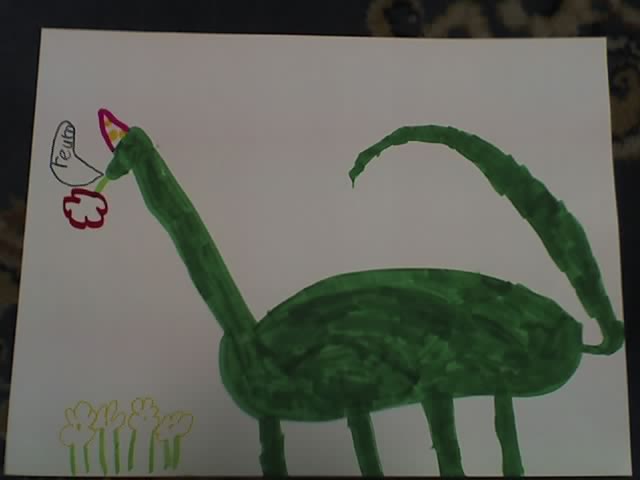
Real or not, the "thunder lizard" has captured our imaginations and our hearts. photo credit: brontosaurus in party hat via photopin (license)
Real or not, the “thunder lizard” has captured our imaginations and our hearts. photo credit: brontosaurus in party hat via photopin (license)

So break out the old text books, reissue the dino stamps, and grill up some stoneage burgers, because the Thunder Lizard is back. I guess Cope didn’t get the last laugh after all. Smiling in Heaven now, the indisputable victor of the bone wars is O.C. Marsh, which is how he’s most often referred to in the literature, because it’s a much cooler name than Othniel.

Ancient Gatorade Tastes Like Ash

Around the year 78 AD, Roman naturalist Gaius Plinius Secundas, or Pliny the Elder, published his only surviving work, Naturalis Historia (Natural History). It was kind of like an encyclopedia, meant by its author to address pretty much everything a first-century Roman might need to know about “the natural world, or life.”

If you ask me, that’s a pretty bold claim, but the work is divided into ten volumes, consisting in total of thirty-seven books, and it does cover an impressive array of topics, including, among others: astronomy, mathematics, zoology, horticulture, sculpture, and Gatorade.

Pliny the Elder   [Public domain], via Wikimedia Commons
Pliny the Elder
[Public domain], via Wikimedia Commons
That last one, as my youngest son would tell you, is the most important. He’s seven and a pretty coordinated kid who I know would enjoy athletics if he weren’t so reluctant to try new things. When I occasionally push him, as I did with basketball this winter, I use an incentive. If he works hard in practice, or a game, he gets a celebratory red Gatorade, because the original yellow tastes like watered-down sweat.

It’s worked really well this basketball season. He’s made friends, had fun, and on the court he’s gone from completely clueless to a little less awkward, even scoring two baskets in his most recent game. All it took was some determination and the right recovery drink.

And if we can take Pliny the Elder at his word, that’s what it took for Rome’s gladiators as well. In Book 36 of Natural History he writes: “Your hearth should be your medicine chest. Drink lye made from its ashes, and you will be cured. One can see how gladiators are helped by drinking this.”

He was quoting the recommendations of another contemporary writer, implying that this magical curative given to the gladiators was fairly common knowledge, but still it’s kind of a quick reference inside a work that covers the entire scope of “the natural world” and so serves as nothing more than anecdotal evidence.

Original Gatorade: Looks like urine; tastes like sweat. For some reason, that add campaign never took off. By Jeff Taylor (Flickr: GatoradeOriginalGlassBottle) [CC BY-SA 2.0 (http://creativecommons.org/licenses/by-sa/2.0)], via Wikimedia Commons
Original Gatorade: Looks like urine; tastes like sweat. For some reason, that ad campaign never took off.
By Jeff Taylor (Flickr: GatoradeOriginalGlassBottle) [CC BY-SA 2.0 (http://creativecommons.org/licenses/by-sa/2.0)%5D, via Wikimedia Commons
Fortunately, we don’t just have to take the author’s word for it. In 1993, a team of archaeologists working near the ancient city of Ephesus in modern day Turkey, found the remains of sixty-eight people who died between the second and third centuries, all young men, between the ages of twenty and thirty, and all showing evidence of having been pretty beaten up. With the remains were several grave markers depicting scenes of battle.

The discovery turned out to be the only known gladiator graveyard ever found, and the bones told researchers an interesting story. First, they confirmed that gladiators ate a mostly grain diet, similar to that of the general public at the time. Second, the gladiator bones contained significantly more strontium than did non-gladiator bone samples.

That doesn’t mean much to me, but what it means to people who know a thing or two about bones, is that gladiators must have ingested some sort of supplement designed to aid in recovery and healing. And thanks to Pliny the Elder, we know it was probably a drink made from water, vinegar, and plant ash.

Scientists claim that if made with a “good vinegar,” the gladiator recovery drink might not have tasted all that bad. I’m not so convinced. If I want my son to keep up on the basketball court, I’ll probably stick with the more modern version. With a whole lot of sugar (which is why this is only an occasional incentive at our house) and plenty of red dye 40, at least Gatorade doesn’t taste like ash.

It’s National Tell a Fairy Tale Day

Once upon a time a young girl named Marie-Catherine Le Jumel de Barneville prepared for her wedding. If the narrator of a fairy tale would ever care to tell you such a thing (which she most certainly would not), the year was around 1666.

Pierre-François Basan [Public domain], via Wikimedia Commons
A heroine fit for a fairy tale. Pierre-François Basan [Public domain], via Wikimedia Commons
Marie-Catherine was a high-spirited girl of sixteen, from a good family who had arranged for her a splendid match. She would live in Paris and her husband was to be Francois de la Motte, Baron d’Aulnoy, a man thirty years older than she who was said to be a freethinker, a fine gambler, and a quick-tempered dirtbag.

I doubt the reader will be much surprised to learn that the new Baroness d’Aulnoy didn’t like her husband very much. But she was a spunky heroine and soon hatched a plot with her mother and two men, one of whom the baroness seemed to like quite a lot.

The foursome schemed and soon the baron found himself accused of treason and the baroness was nearly free of him. Still he proved a wily foe, and found a way to clear his name, resulting in the execution of the two men. The baroness and her mother escaped the country with their lives and spent the next twenty years traveling abroad where Marie-Catherine’s true life’s passion began to take shape.

When at last she returned to Paris she sat down to write of her adventures. She wrote novels, all well received. She wrote memoirs, in which she made up most of the best parts. And she wrote two collections of what she termed “contes de fees,” or fairy tales.

I have to assume there was a witch involved in the plot to get rid of the baron, and a terrible deal struck. There may also have been an apple. I haven't worked out all of the details yet.   photo credit: IMG_1422 via photopin (license)
I have to assume there was a witch involved in the plot to get rid of the baron, and a terrible deal struck. There may also have been an apple. I haven’t worked out all of the details yet. photo credit: IMG_1422 via photopin (license)

This genre, of course, had existed long before her time, perhaps as long as stories had existed at all. Long enough for whole fields of folklorists to rise up and earn PhD’s by writing volumes on the underlying gender role ideology of each tale and for woefully underqualified history bloggers to dabble poorly in it.

But Baroness d’Aulnoy was certainly the first to use the term “fairy tales.” As a successful author and popular hostess for the most interesting residents of Paris, it seems likely the baroness lived happily ever after. Only later did critics get hold of her memoirs and cry foul at her lies exaggerations. As a result, her work was cast aside for many years, leaving the underlying gender role ideologies of fairy tales to be explored by the brothers Grimm.

But now she’s back. Her work, and her history (the best parts of which are likely made up) are emerging in the volumes produced by folklorists in pursuit of their PhD’s and I think Baroness d’Aulnoy is once again headed for her happily ever after.

What story will you tell?   photo credit: Once upon a time ... via photopin (license)
What story will you tell? photo credit: Once upon a time … via photopin (license)

I wish you a very happy National Tell a Fairy Tale Day. It seems fitting that on this day I get to announce the reader who will receive a copy of Cary Elwes’s book As You Wish: Inconceivable Tales from the Making of The Princess Bride, signed by the author, because The Princess Bride is my favorite modern fairy tale. I know I’m not alone in that because so many of you shared stories about how much the film has meant to you, too. Thank you for entering and for sharing the post. I wish I had a book for all of you.

The lucky winner is Sarah from Georgia, who knows that true love is the greatest thing in the world, except for a nice MLT- mutton, lettuce, and tomato sandwich, where the mutton is nice and lean and the tomato is ripe, and maybe also a free book.

Sparkly, Gluten-free Love, and other Reasons we may not get Valentine’s Day Quite Right

I don’t care much for Valentine’s Day. And it’s not just because I spent two days crafting sparkly paper sharks with working clothespin jaws to hold packages of Goldfish crackers for my children to give to their classmates, only to receive a note home the day before the party reminding parents that treats must be peanut and gluten free and all treat labels must be submitted to the school two weeks in advance.

20150211_183811
Stupid shiny sharks.

I don’t actually have a problem with expressing love with a sweet note or a gift. I think remembering to do that from time to time can be really important in a relationship.

And I know Americans will do our fair share of celebrating. In fact, according to a recent National Retail Federation poll, we plan to spend an average of $133.91 on candy (peanut and gluten free, approved two weeks in advance), cards, and gifts, which translates to about $13.7 billion as a nation. A poll by the American Express Spending and Saving Tracker predicts the total will be closer to $37 billion and that half of American engagements for the entire year will occur on Valentine’s Day.

The whole thing stems from the legend of St. Valentine, a 3rd Century priest who was beheaded by command of Roman Emperor Claudius II. Known as Claudius the Cruel, the emperor had strong military aspirations, but was alarmed to find that his soldiers didn’t always share his enthusiasm. He decided the reason must be that their hearts, and their attentions, were at home with their families. The solution was simple. He banned marriage.

Claudius II, the first man to throw an "I hate Valentine's Day" party. By =*File:5305 - Brescia - S. Giulia - Ritratto di Claudio II il Gotico - Foto Giovanni Dall'Orto, 25 Giu 2011.jpg: Giovanni Dall'Orto.  derivative work: Cristiano64 [Attribution], via Wikimedia Commons
Claudius II, the first man to throw an “I hate Valentine’s Day” party. By Brescia – S. Giulia – Ritratto di Claudio II il Gotico – Foto Giovanni Dall’Orto, 25 Giu 2011.jpg: Giovanni Dall’Orto. derivative work: Cristiano64 [Attribution], via Wikimedia Commons
As you can imagine, this didn’t sit well with the young lovers of Rome, many of whom appealed to St. Valentine to marry them in secret. A sucker for romance, Valentine did marry them. Lots of them. Until Claudius found out and had the priest beheaded on February 14, 270-ish.

Okay, I admit, that’s kind of a cool story of standing up for love in the face of a blood-thirsty emperor. It’s the kind of heroic thing that ought to be commemorated. Of course, if the legend is true, and since there were at least three different saints named Valentine, and it’s not entirely clear which the story is attributed to, let’s just say it’s suspicious, then there’s still the reality that February 14th is the day in which the champion of love was beheaded.

I suppose that by celebrating love on a dark day, we honor the man who died for his belief in it. But when I think about what the legend really suggests, that love and the commitment of marriage and family is worthwhile, I’m not sure we’re celebrating it right.

 photo credit: Pink and orange roses via photopin (license)
I honestly don’t think I can listen to another commercial about how even if I say I don’t want roses for Valentine’s Day, I really do want roses for Valentine’s Day, without wanting to hit someone over the head with that free glass vase.
photo credit: Pink and orange roses via photopin (license)

If we are to believe commercials, sitcoms, and Lifetime movies (and why wouldn’t we?), then Valentine’s Day is an incredibly stressful holiday. If you have a special someone in your life, then we are led to believe that your actions, or inactions, on February 14th will make or break your relationship. If you happen not to have a special someone to send you overpriced roses, then you are required to spend the day horribly depressed. Even my seven-year-old is stressed about the day, concerned that if he gives his Valentine sharks to the little girls in his 2nd grade class, “it might give them false hope.”

I just don’t think all the crazy to-do is what the St. Valentine legend is all about. Instead, I think it’s about recognizing the kind of love that demands commitment and hard work, that requires two people to grow and change together, to consider one another always, and to demonstrate appreciation for one another without prodding from a greeting card commercial.

We are going to be eating these things for a very, very long time.

Now I’m not going to throw an “I Hate Valentine’s Day” party and I certainly don’t fault you if you’re among those who will be spending $133.91 (plus a little more to make up for my considerably smaller contribution). I did spend two days constructing sparkly shark Valentines and I will probably find some small way to acknowledge the day because I own a heart-shaped pan and Valentine’s Day really is the one time each year when I get to use it.

Perhaps I’ll bake a peanut- and gluten-free cake and then my family will know that I love them. Or maybe it will be a heart-shaped, gluten-filled extra gooey chewy brownie with peanut butter frosting.

Open Up! It’s Your Pizza!

In 1889, King Umberto and Queen Margherita of Italy, visited the waterfront city of Naples. Known for its large population of working poor, Naples also had in abundance a distinctive dish, one that was cheap to produce and could be eaten quickly. Though ancient Egyptians sometimes ate topped flatbread, it was the pizza of Naples that would become the most beloved food of slumber parties, late night study sessions, and diet cheat days.

I doubt Queen Margherita anticipated the dish’s eventual culinary domination, but she was intrigued by the colorfully topped flatbread the Neapolitans seemed to scarf down with such relish. Tired of posh dinners full of the kind of fancy French cuisine fit for royalty, she decided to see how the little folks live and give it a try.

 [Public domain], via Wikimedia Commons
Queen Margherita of Italy. I bet she’d look happier if someone brought her a pizza. [Public domain], via Wikimedia Commons
She had her people do some asking around and soon summoned Raffaele Esposito, the proclaimed best pizza chef in Naples, to Capodimonte Palace so he could make her some pizza. Thirty minutes (or less) later, Esposito became the first pizza deliveryman as he set up shop in the palace kitchen and prepared three varieties of his best pizza for the queen to try.

Margherita didn’t care much for the one covered in garlic. Nor was she fond of the one sporting anchovies (because she evidently had taste buds), but she quite liked the one topped with tomato sauce, mozzarella, and basil. She liked it so much, Esposito renamed it margherita pizza and assured her majesty that anytime she was in Naples, she need only call and he would deliver one hot and ready to her door.

And of course she loved it, because sometimes after a long day of feigning delight in the company of wealthy Neapolitans, waving in the direction of the poor workers, and looking generally queenly, I bet it can seem pretty daunting to sit up straight, use the correct fork, and choke down an endless parade of haute cuisine dishes (roughly translated as small portions of fancy rich food you won’t find on pizza).

Sometimes, you just want to relax, grab a paper plate and a can of Coke, and answer the door to a nice hot cheesy pizza. We’ve all been there. And that’s presumably where one Oswego, Illinois resident was a little over a week ago on the evening of January 25. It had probably been a long day and it was pizza night.

Unfortunately, the delivery driver took a shortcut through a corner parking lot to avoid a red light and got pulled over by the police. When they discovered drug paraphernalia in the car, the police arrested the deliveryman and pizza night was headed for ruin.

Except that police officers are people, too, and they also have those nights when they just need dinner to come to their doors.

These men look like they've had a long day. I bet they could use a pizza.   photo credit: Ross & sutherland Constabulary patrol car 1968 via photopin (license)
These men look like they’ve had a long day. I bet they could use a pizza. photo credit: Ross & sutherland Constabulary patrol car 1968 via photopin (license)

When they realized the pizza had been paid for and that it had been bound for a home just a few blocks away, the officers went ahead and delivered the pie to a surprised, but grateful customer.

I love that story. And I love the story of Queen Margherita and the first ever pizza delivery. Of course the latter, like so many good tales from history, is unsubstantiated and according to Zachary Nowak, the assistant director of Food Studies at the Umbra Institute in Perugia, Italy, is quite probably false.

He has good reasons for his claims, though his evidence is by no means conclusive. I’m not going to worry about any of that. The start of the school day was delayed here because of icy roads and I’m terribly behind. It’s shaping up to be a long day. I’m thinking this evening I may grab a paper plate and a can of Coke, and open the door to a hot, cheesy pizza. I just wonder who’s going to deliver it.

The Truth about Philosophers: How to Get Your Mom to Give You a Cookie

John_Calvin_2
John Calvin, the father of Presbyterianism, and maybe sometimes kind of a controlling jerk.

In the summer of 1536, a young philosopher and theologian named John Calvin, having recently gotten himself into trouble in his native Catholic France by writing about his unique brand of Protestantism, arrived at an inn in Geneva, Switzerland. While there he was approached by a local church leader who begged him to remain in Geneva to help him organize the new Protestant church there.

Suspecting that it may have been predetermined by God that he do so, Calvin agreed and spent much of the remainder of his life (after being thrown out of Geneva for a few years because he kind of acted like a controlling jerk) preaching and teaching, setting in place a theocratic system of pastors, doctors, elders, and deacons, each dedicated to over-seeing different aspects of running Calvin’s idea of a perfect society.

He was remarkably influential, his ideas in some respects giving rise to capitalism, individualism, and democracy. Still, today, we’d probably call him a controlling jerk, and so did many of his contemporaries. Loudly. Sometimes over the sound of his preaching, and for many years after.

The English philosopher Tomas Hobbes, writing in his controversial Leviathan nearly 100 years after Calvin’s death, was critical of the Presbyterian political design. Sometimes considered the father of modern political philosophy, Hobbes was pretty sure that not only had Calvin been a jerk, but that so were all the bishops ruling within the Church, and, well, basically everyone else, too.

Thomas Hobbes, father of modern political philosophy, and pretty sure you're kind of a jerk.     "Thomas Hobbes (portrait)" by John Michael Wright - National Portrait Gallery: NPG 225While Commons policy accepts the use of this media, one or more third parties have made copyright claims against Wikimedia Commons in relation to the work from which this is sourced or a purely mechanical reproduction thereof. This may be due to recognition of the "sweat of the brow" doctrine, allowing works to be eligible for protection through skill and labour, and not purely by originality as is the case in the United States (where this website is hosted). These claims may or may not be valid in all jurisdictions.As such, use of this image in the jurisdiction of the claimant or other countries may be regarded as copyright infringement. Please see Commons:When to use the PD-Art tag for more information.See User:Dcoetzee/NPG legal threat for more information.This tag does not indicate the copyright status of the attached work. A normal copyright tag is still required. See Commons:Licensing for more information.English | Español | Français | Magyar | Italiano | Македонски | Türkmençe | +/−. Licensed under Public Domain via Wikimedia Commons - http://commons.wikimedia.org/wiki/File:Thomas_Hobbes_(portrait).jpg#mediaviewer/File:Thomas_Hobbes_(portrait).jpg
Thomas Hobbes, father of modern political philosophy, and pretty sure you’re kind of a jerk.

Hobbes promoted the idea that humans were little more than machines, designed to act only in the interest of the self and this informed his political views. His words were influential, often as a starting point for debates by more reasonable philosophers, who mostly thought Hobbes was kind of a pessimistic jerk.

But about three hundred years after his death, and more than four hundred years after the death of John Calvin, both men were honored in the personalities of two of the most beloved philosophers of modern times, when the world was introduced on November 18, 1985, to a six-year-old boy with spiky yellow hair and a stuffed tiger, who was the best friend a kid could have.

Bill Watterson, the creator of Calvin & Hobbes, explained in his 1995 book celebrating the tenth anniversary of the comic strip, that he’d chosen the names from these two historical men. He doesn’t offer a great deal of explanation as to why, only that Hobbes the tiger seems to express a certain mistrust of human nature that shows up from time to time as his apparent pride in not being human himself. Calvin, Watterson claims, is based more or less on his adult self, as he grapples with big questions through the metaphor of tenacious, bratty childhood.

Though the strip ended in 1995 and Bill Watterson makes it a point to remain private and with very few exceptions, irritatingly aloof, the characters of Calvin and Hobbes have remained in the public consciousness, because between the laughs, the strips are really about friendship, imagination, and growing up. In the midst of funny childish games, Calvin and Hobbes speak to certain human truths.

My seven-year-old philosopher's last birthday cake, in which Calvin & Hobbes look a little bit like jerks.
My seven-year-old philosopher’s last birthday cake, on which Calvin & Hobbes look a little bit like jerks.

Right now, in my home, the largest truth they speak to is that a little boy with spiky yellow hair and a wild imagination really can provide profound wisdom disguised as disarming charm, sometimes without even knowing it.

My youngest son, a spiky-yellow-haired seven-year-old philosopher, is a huge fan of Calvin & Hobbes. He spends hours poring over the various collection books and I think he knows every strip by heart, turning over each one in his mind, sharpening his already impressive wit and gleaning some very useful advice. The day he marched into the kitchen and asked me for a chainsaw, and in lieu of that, a cookie, I knew I was in trouble.

He stood there with his clever grin, assured of his predetermined success. Tucked under his arm was his constant companion, a small stuffed rabbit named Bunny (because my son, though wickedly clever, can’t name many 17th-century philosophers). I suspected Bunny might be the real mastermind behind the great cookie plot; that she somehow played on my son’s greedy human nature and put him up to it. That would be just like her. As thoughtful and devoted as she is, sometimes she’s kind of a jerk.

I gave him the cookie.

My son's "Hobbes," a stuffed bunny he appropriately named "Bunny." Sure, she looks all innocent sitting on the couch waiting for him to come home from school, but make no mistake. The second he comes through that door, she'll pounce.
My son’s “Hobbes,” a stuffed bunny he appropriately named “Bunny.” Sure, she looks all innocent sitting on the couch waiting for him to come home from school, but don’t be fooled. The second he comes through that door, she’ll pounce. Because sometimes, she can be a real jerk.

Superglue, Bailing Wire, and Candy Cane Goo

If you were to walk into my parents’ house at Christmastime, you would see an artificial Christmas tree strung with lights and topped with the same lighted, multicolored star my parents have had for as long as I can remember. At this point I’m pretty sure the star contains more bailing wire and superglue than original material and still it’s held together mainly by the sheer will of Christmas spirit. Well, that, and maybe a little sticky candy cane goo.

The most precious ornaments are always made with Popsicle sticks put together by little fingers.

I don’t remember when it happened because I had to have been very small at the time, but the story goes that as the family worked together to decorate the Christmas tree, my eldest brother, who is easily the tallest in the family, was teasing my sister, just two years younger and quite a bit shorter.

As she was always the most zealous keeper of holiday traditions in our house, I suspect she had been giving him a hard time about his tendency to clump the tinsel and to think little of the proper spacing of candy canes as he threw them randomly on the tree.

So he did what any young teenage boy might and stretched up beyond her reach to place a candy cane on the star. He expected it to irritate her. Instead, she was delighted. We all were. Somehow it seemed like the perfect touch to finish off the tree that primarily featured lumpy clay and Popsicle-stick-ornaments constructed by little fingers. And every Christmas since, the tree has been topped with the same (kind of garish) star and a single candy cane.

Because regardless of what religious symbolism a Christmas tree may hold (a hundred different sources will provide a hundred different interpretations), it should represent childhood and good Christmas memories.

At least that’s what Queen Charlotte, the German wife of England’s King George III, seemed to think. When she married in 1761, Charlotte spoke no English (though she learned quickly) and brought with her several German customs, one of which was the setting up of a decorated yew branch at Christmastime.

Christmas trees, or some version of them, had been part of German tradition since at least the 16th-century, when legend credits Martin Luther with the first. The claim of the legend is almost certainly false, but historians do generally agree that the first Christmas trees emerged from the general vicinity of Germany.

Queen Charlotte was certainly fond of the tradition and quickly transformed the private family yew branch celebration of her childhood into a spectacle like none the English nobility had ever seen. Then in 1800, she took the tradition to a whole new level, inviting the children of Windsor to a party featuring at its center an entire yew tree loaded with, according to one contemporary biographer, “bunches of sweetmeats, almonds and raisins in papers, fruits and toys, most tastefully arranged; the whole illuminated by small wax candles.”

He makes no mention of Queen Charlotte topping the tree with a star or a candy cane. Of course since there’s no definite evidence that the candy cane was invented until a hundred years later, I can give her a pass on that one.

Queen Victorian and Prince Albert gathered with their family around the Christmas tree.
Queen Victoria and Prince Albert looking very stylish around the Christmas tree.

What is clear is that the tree was a hit and Christmas trees started popping up in some of the noble households over the next few years, until in 1848, The Illustrated London News featured a woodcarving of Queen Victoria and her family gathered around their Christmas tree. After that, everyone wanted one. When the picture was run two years later in the American publication Godey’s Lady’s Book, the tradition caught fire (sometimes literally) in the United States as well.

Ours is not yet held together by bailing wire and hot glue, but give it time.

Queen Victoria and her Prince Albert often get the credit for popularizing the Christmas tree, but the honor may more appropriately belong to Queen Charlotte, who knew that there are some traditions worth preserving.

So if you were to walk into my house at Christmastime, you would see an artificial Christmas tree strung with lights, decorated with lumpy clay and Popsicle-stick-ornaments, and topped with a (kind of garish) multicolored, lighted star and a single candy cane.

What weird little traditions do you follow and wouldn’t dream of celebrating Christmas without?

The Truth about Streaking in December

In the Early 13th Century, Roger Wendover wrote in his Latin history Flores Historiarum of a very generous 11th  Century noble couple. Leofric, Earl of Mercia, in modern day Great Britain, was one of a few powerful Anglo-Saxon noblemen leading up to the Norman conquest. And his very pious wife the countess Godiva liked to give away his money. Largely at her urging, the earl founded and supported a Benedictine Monastery at Coventry in addition to giving great support to five or six other monasteries throughout the countryside as well as to Old St. Paul’s Cathedral in London.

Seems to me there are worse ways a lady could be remembered.
Seems to me there are worse ways a lady could be remembered.photo credit: yuankuei via photopin cc

That’s all pretty well-documented in contemporary sources, but what is missing from those earlier accounts of the countess is mention of her stark naked horseback ride through the streets of Coventry that she’s come to be known for (well, that and fancy chocolate). According to Wendover, writing almost 200 years later, when the earl grew tired of Godiva’s pleas to lessen the tax burden on the peasants under his authority, he remarked that he would do so as soon as she rode naked through the town.

The countess took him at his word, commanded the townspeople not to peek (and they didn’t, until the 17th century when the original “Peeping Tom” crept into the legend), and set off on her horse in nothing but her birthday suit and some seriously long hair.

ladygodiva
I think she could use more hair.

As you may have guessed, this story is likely not 100% historically accurate. In fact, most historians would be quick to point out (and please forgive the professional jargon here) that it’s complete and utter hogwash.

In addition to the story not surfacing until long after the countess’s death while remaining conspicuously absent from contemporary accounts of her, historians support their accusations of fraud with evidence as weak as the fact that Leofric never actually levied taxes on the people of Coventry outside of a horse toll and that according to the law of the day, it would have been Godiva herself who had the authority to either tax the people or not.

Peeping Tom of Coventry. He does look a little pervy.

It seems then that Godiva’s story was resurrected and buffed to a nice heroic sheen by a well-meaning, if highly inaccurate, chronicler of history long after her death. And with the exception of all the Toms in the world, whose name for the last four hundred years or so has sounded kind of pervy, no one seems to mind too much. It’s a great story about standing up for the little guy even when it means stepping way outside of your comfort zone, because really, I don’t think there’s much that sounds less comfortable than riding on the back of a horse in your altogether. And it’s a story that has made “Lady Godiva” the most famous streaker in history.

It’s because of this that I bring her up. About a week ago, I was invited to go streaking this December. It happened because a friend of a friend posted on Facebook that she was going to start a group committed to a December “streak” of running (or walking because I don’t run unless I’m chasing a penguin) at least one mile every day in the month.

My walking partner, always ready to help me add a couple more miles to my total, and, it should be noted, always without a stitch of clothing.

That doesn’t sound like a lot, and it doesn’t have to be because it’s the streak that’s important. And considering this is the month when the temperatures begin to plummet where I live and I’d rather sit on the couch wrapping presents and eating Christmas cookies than do about anything else, I think this is just the motivation I need to get moving.

I’ve set my goal (and my extra early alarm) and so far so good. But it’s cold here in December and you can rest assured that just like the noble lady Godiva before me, I am not going to streak naked through town. I may, however, eat some fancy chocolate in her honor.

Writing My Hyde Off: A NaNoWriMo Adventure

One fall night in 1885, Mrs. Fanny Stevenson was awakened by the terrified screams of her dreaming husband. Concerned, she quickly roused him, to which he responded, “Why did you wake me? I was dreaming a fine bogey tale.”

What Scottish-born writer Robert Louis Stevenson had been conjuring in his dream was the transformation of the upstanding Dr. Jekyll into the monstrous Mr. Hyde. When he put pen to paper to tell the story, his wife claimed it took him just six days to complete it.

Stevenson
Robert Louis Stevenson looking a little haggard. Like maybe he has TB. Or a cocaine problem. Or nightmares. Or maybe he just wrote a beloved classic novella in SIX DAYS.

Probably suffering from undiagnosed tuberculosis for most of his life, Stevenson was quite ill when The Strange Case of Dr. Jekyll and Mr. Hyde came tumbling out of him. Some have suggested the feverish pace with which he wrote the novella came from a cocaine binge, but his family insisted that it was simply the frustrated workings of bedridden genius.

Whatever spurred him, Stevenson seems to have mirrored his characters, stepping outside of himself for those six days to indulge the part of him that had a story to tell, maybe a brilliant allegory of addiction, and certainly a classic story of the capacity for both good and evil inside each of us.

I’m sure you’re at least somewhat familiar with the story, but even so, it’s a quick read and well worth it if you’ve never opened it up. Maybe knowing that the initial draft was written in only six Hyde-like days makes it all the more chilling. And maybe inspiring.

Because it’s November, which means that it’s that time of year when writers of all walks of life, some experienced and some not, step outside of themselves and write a novel.

I swear I'll get started on those 50,000 words as soon as I make this really important sign for my office door.
I swear I’ll get started on those 50,000 words as soon as I make this really important sign for my office door.

National Novel Writing Month (NaNoWriMo) began in 1999 with the decision of 21 friends in the San Francisco Bay Area to set themselves a ridiculous goal to each write a novel within a month. It sounds crazy at first, because, well, we’re talking about a novel here. It’s a long project full of research and imagination. Some of the greatest novels ever written took years or even decades to complete. And some of the worst novels did, too. Snoopy wrote for fifty years and never made it past his opening line.

But it turned out there was purpose in the madness of the plan, even if the original participants didn’t realize it at first. The group had such a good time with the challenge, they opened it up to a wider community the next year and 140 people participated. The year after that it was around 5,000. In November of last year, 310,000 adult writers and 89,000 young writers, from all over the world, participated in NaNoWriMo.

Not all of them completed the 50,000-word goal, but 400,000 people stepped outside of themselves to indulge that part of them that had a story to tell. What started as a silly little writing challenge has blossomed now into a huge network of encouragement, with resources for writers at every stage of the game before, during, and long after that initial, probably terrible, first 50,000-word draft.

stevewriting
The Strange Case of Dr. Jekyll and Mr. Hyde is around 26,000 words, initially written in just six days, which gives me 24 days to write my additional 24,000 words. No problem.

I heard about NaNoWriMo for the first time a few years ago through my local library that was sponsoring a series of “write-in” events in conjunction with it. I’ve since had lots of friends participate in the event. So, this year, I’m finally doing it. I’ve researched, planned, and outlined what I hope will be become 50,000 revision-worthy words. In December, I’ll have to drink my potion and let Dr. Jekyll take back over to do the real work of revision, revision, and still more revision. But for now, I am stepping outside of myself and indulging my Mr. Hyde (minus the cocaine) because he’s got a story to tell.

Good luck to all my fellow NaNoWriMos out there! Obviously I’m glad you stopped by, but seriously, stop reading blog posts and get to work. You have a novel to write!


Follow the Arrows

As the summer wears on, and my children increasingly have trouble entertaining themselves, I find myself struck at the genius of my mother. It was well-known in my house growing up in Smalltown, Illinois, that it was a very bad idea to utter the words, “I’m bored” in front of Mom. Her response would, without fail, be, “Great! The toilets need to be scrubbed.”

photo credit: Mykl Roventine via photopin cc</a
photo credit: Mykl Roventine via photopin cc

But every so often, if one of us had a friend or two over to play and we found ourselves in a lull, she would take pity on us and come up with these amazingly creative ideas, from fun little games to large scale projects of awesomeness. One of my favorites was a game she resurrected from her own childhood in Even Smallertown, Illinois called an arrow hunt.

The idea was that one person (or one team) would take a piece of chalk and go somewhere in our Smalltown neighborhood to hide. Along the route, the hiders marked a chalk arrow every time they changed directions. The arrow had to be clearly visible, though it could be in an unexpected place, and the final arrow pointed to the spot where the hider(s) would be found.

The game was a hit. It killed a lot of otherwise boring summertime hours, no toilets were scrubbed, and my friends and I discovered all the nooks and crannies of the nearby park and neighborhood landscaping. And I got really good at spotting a trail.

So did pilot Jack Knight on one dark night in 1921 when he completed a successful flight from Chicago to North Platte, Nebraska. This was important for two reasons. First, it was the first (and possibly only) time anyone ended up in North Platte on purpose. Second, Knight’s flight had been a test for the US Postal Service.

A relatively new technology, airplanes offered the promise of efficient coast to coast mail delivery. But navigation was still in its infancy with pilots relying on landmarks to guide them. This meant that night flying was pretty much out.

It's possible this man has no idea where he's going.
It’s possible this man has no idea where he’s going.

That is until someone had the brilliant idea to use postal workers and citizen volunteers to man a series of bonfires along Jack Knight’s dark route. His success led to the (slightly) more sophisticated plan to dot the Transcontinental Air Mail Route from New York to San Francisco with 50-foot steel, gas-lit beacons mounted into giant yellow concrete arrows on the ground.

Each arrow pointed toward the next beacon, around ten miles or so away depending on topography. Congress thought it was a great idea and by 1924 there were giant arrows pointing the way from Cleveland, Ohio all the way to Rock Springs, Wyoming. And because the Postal Service realized there weren’t a lot of reasons to stop in Rock Springs, Wyoming, the route was extended over the next few years, eventually reaching from New York to San Francisco.

air mail route
Transcontinental Airmail Route

Of course it wasn’t long before fancier navigation systems developed and pilots began to feel that radio frequencies were somewhat more reliable than the old fly-real-low-and-follow-the-arrows system. During WWII, the steel beacon towers were dismantled and repurposed, putting a practical end to the dotted Transcontinental Air Mail Route.

But the arrows are still there. Their paint is faded and they may have a few cracks here and there, but many of them that haven’t become the victims of development are still there to be found by the odd eagle-eyed traveler.

So we’re almost to the countdown to the start of school. I am not as creative as my mother and my boys are spending their childhood in Not-So-Small-Suburb, Missouri so even in our very safe neighborhood, I’m not terribly comfortable with the idea of them chasing arrows through the streets. My solution for summer boredom is to plan the big family vacation for the end of the summer, as a reward of sorts, for making it this far. And now I know as we pack up for our trip west, we’ll be following the arrows after all.

Arrows go left. Arrows go right. Follow in the morning, or follow them at night.