Eggs, Months, Disciples, and Blog Years

Earlier this week I received a congratulatory notice from WordPress that I had been at this blogging thing for twelve years, which feels like a pretty significant milestone. As I reflected back on the winding road of ridiculousness that this space has taken over the years, I recalled that not many months into the adventure I wrote about another significant anniversary in my life when my husband and I celebrated twelve years of marriage.

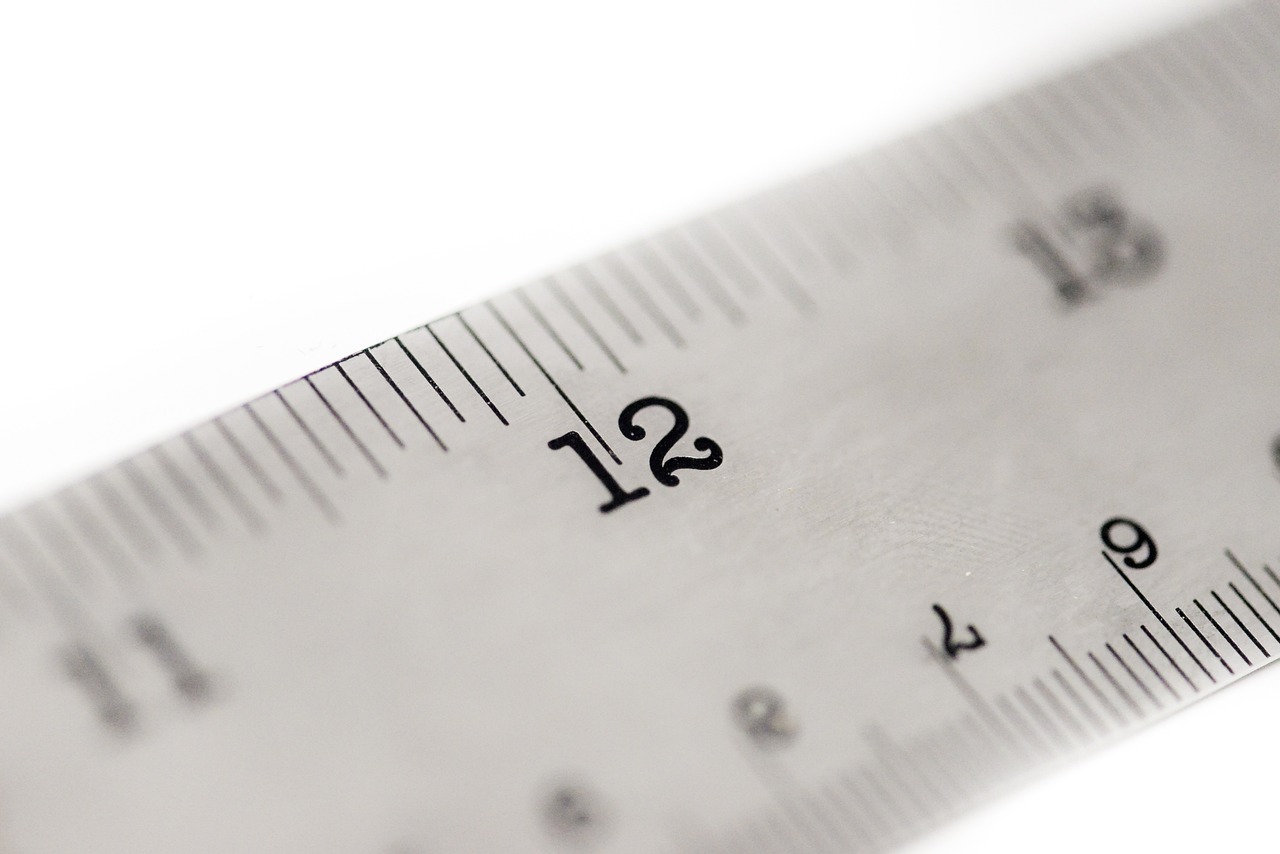
Good things come in twelves. Image by Jean Christophe Baux from Pixabay

In that post, I lamented that between kids’ schedules, work schedules, and the generally tiring pace of life, we put off actually celebrating. We were in a busy time of life then, and twelve years, I suggested, didn’t really feel like a special number. Then I argued that it really should.

So, twelve years after I posted for the first time in this space, a few months before my husband and I will celebrate twenty-four years of marriage, I’m revisiting the case for year number twelve, bloggiversary style.

Because great things come in twelves, things like eggs, months, and disciples, hours on the analog clock, signs of the zodiac, tribes of Israel, drummers drumming, and years of the Practical Historian blog: your guide to practically true history. We regularly bake cookies, cupcakes, and muffins in multiples of twelve, and twelve even has its own special nickname, placing it on par with other rock star numbers like 3.14… and 6.02 x 10²³.

Image by profivideos from Pixabay

The word dozen comes from the French douzaine, which is a derivation of douze, the Latin word for twelve with a collective suffix tacked onto the end. Of course it’s perfectly possible to tack the same suffix onto the end of other numbers and get, for example, quinzaine (a group of fifteen) or centaine (a group of one hundred), but at least in English, we typically don’t.

Because twelve is particularly special.

Speaking mathematically (and if one feels so compelled) there’s a pretty good argument for counting in a base twelve system, rather than the base ten system in which we normally operate. We do it already when we tell time, measure in inches, or order a gross of cocktail umbrellas. In the field of finance where calendar months are often an important part of the calculation a duodecimal or dozenal system (that’s what math nerds who actually do feel compelled to argue about this kind of thing call base twelve) could make sense.

And if we think in terms of factors, which are the kind of things math nerds really geek out about, Twelve is a lot more versatile than ten. Ten factors to 2 x 5, whereas twelve factors to 6 x 2, 4 x 3, and 2 x 2 x 3.

So, thank you WordPress for the heads up, because twelve really is a thing worth celebrating:

6 posts about aliens x 2 Gravitar photo updates = 4 novel launches x 3 posts about vampires = 3 anti-censorship soapboxes x 2 summer blog breaks when my kids were young x 2 more posts about my dog than any history blog has a right to post = 12 years of spilling history and nonsense into this little corner of the blogosphere.

Here’s to another twelve years. And maybe another twelve years after that. I might even suggest that I’ll still be at this twelve times twelve years from now. But that would just be gross.

Thanks for coming along for the ride!

Yielding the Circumference Day

In honor of Pi Day, I have dusted off a post from the early days of the blog. Enjoy!

Today is March 14 (3/14 in the US), which means that millions of nerds are spending the day happily celebrating that most mysterious of irrational numbers, pi. I’ll just briefly explain in case you don’t happen to be a nerd (because the jury’s still out). Pi (which is a stage name because this rock star number is too irrational to have it any other way) is the expression of the ratio of the circumference (the distance around) of a circle to the diameter (the distance across and through the center) of that same circle.

Image by Gordon Johnson from Pixabay

Ancient nerds discovered that this ratio is constant for any circle and like nerds will do (and this is the reason they generally make more money than non-nerds), they correctly decided that this might be information worth noting. And when I say “ancient,” I’m talking before Egyptians and Babylonians started writing down their various approximations for this handy little ratio, say 4000 years ago.

In fact, I think it’s safe to suggest that the approximate value of pi was probably discovered first by the same caveman (let’s just call him Og) who invented the wheel. He carefully painted the number (out to 300 decimal places) on an as yet undiscovered cave wall and proudly showed it to the other cavemen because he thought it was so neat. At that point (and again, I’m just assuming here) the other cavemen gave Og a wedgie.

This is an artist’s approximation as it is believed that Og never sat for a portrait. It’s pretty good, I think.
Image by GraphicMama-team from Pixabay

Don’t fret, though. Og didn’t suffer in vain because humankind has been using his handy little observation ever since, and has spent thousands of years approximating the constant. After the Egyptians and the Babylonians, who each found the number to be a little more than 3, pi shows up in the history of India and China (where again it was found to be a little more than 3).

It also gets a nod in the Hebrew Bible (in 1 Kings 7:23) where it is calculated to be 3. This has (believe it or not) been a source of great controversy for Hebrew scholars, but what I think it indicates is that God isn’t all that impressed by our efforts to calculate pi out to well over 10 trillion places. This may also be illustrated by the fact that if one were to calculate the circumference of a circle that enclosed the entire known universe (you know, just for fun), using just 39 decimal places of pi would yield an answer with a maximum error equal to the radius of a hydrogen atom.

William Jones. Not nearly as famous as Leonhard Euler, nevertheless important to pie-loving nerds everywhere. William Hogarth, Public domain, via Wikimedia Commons

Still, I suppose it’s nice that thanks to computers, we can now calculate that the value of pi is a little bit over 3. Most of us (at least those of us who aren’t mathematicians by trade) never bother with much more than 3.14. So on March 14 we release our inner nerd (some more inner than others) to celebrate by baking and eating pie because if we can’t be bothered with all those extra decimal places, we sure aren’t going to be concerned by an extra (delicious) “e” at the end.

One question that remains for me, though (because my inner nerd is actually more interested in symbol origins than in geometry), is why is this super important irrational constant referred to by the Greek letter π? The answer is pretty simple. Before it had a stage name to call it’s own, pi was referred to most often as “quantitas in quam cum multiflicetur diameter, proveniet circumferencia” or “the quantity which, when the diameter is multiplied by it, yields the circumference.” Admittedly this name is highly descriptive, but probably a little cumbersome written into an equation.

Yum. Happy Pi Day!

In 1706, a Welsh math teacher by the name of William Jones first introduced π as the now universally recognized symbol for this precise meaning. Though Jones isn’t well remembered for any other contributions to mathematics, Leonhard Euler (who was a heavy hitter in the field) adopted and popularized the symbol. It was chosen simply because in Greek, π is the first letter of the word for perimeter.

And I suspect that it was chosen because no one could figure out what to eat in order to celebrate Yielding the Circumference Day. Whatever you call it, it’s a day for all of us nerds (and, yes, if you stuck with this post until the very end, the jury is done deliberating) to enjoy a piece of piE. I’m thinking strawberry.

If Not for a Boatload of Pirates

It’s been a long, cold week or so in my corner of the world as temperatures plunged to the kind of face-freezing levels that cause businesses to delay opening, schools to cancel classes, and mamas of stir-crazy little ones to go just a little bit crazy themselves. I have one teenager at home and no little ones anymore, but I do remember such days, and I understand your pain.

Yesterday we finally warmed up, our precipitation became much less solid, temperatures climbed all the way into the mid-40° range, and mamas rejoiced as kids went back to school. Today we’re expecting to be maybe a couple of degrees cooler than that, but still it feels downright balmy compared to 0° with a windchill of -15° and Monday’s ⅛ to ¼ inch of ice that made the 3 mile drive my son would normally make to school treacherous enough I was grateful for the cancellation.

For the non-American readers who might be into this kind of thing, I’ll translate the previous paragraph. Yesterday topped out at around 7° Celsius and today will likely be only a couple of degrees cooler, which does feel pretty refreshing after temperatures as low as -17.778° C with a windchill around -26.1111° C and anywhere from 3.175 to 6.35 mm of ice, enough to make even a 4.82803 kilometer drive pretty dicey.

Image by newsong from Pixabay

Personally, I don’t think going metric is an improvement, but I suppose it all depends on what your brain is used to, and I recently learned that had it not been for a boatload of pirates, we might all be speaking the same measurement language.

That’s because in 1793, then US Secretary of State Thomas Jefferson was looking for a solution to the problem of inconsistent measurement systems in use throughout the new nation that made doing business both at home and abroad a little bit of a confusing hot mess. As a man who was interested in most things French following a successful revolution in which France had been a crucial ally, Jefferson was most intrigued by their newfangled base-ten measuring system.

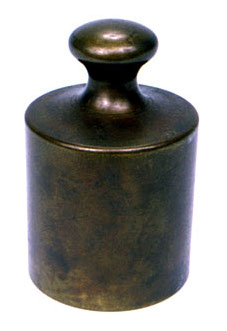
In hopes of learning more and implementing such a logical and useful set of measurements in the US, Jefferson eagerly awaited the arrival of Joseph Dombey, a French physician and botanist who had been tasked by the National Assembly to bring its American friends a meter long copper bar and a copper grave (soon renamed the kilogram).

To be fair, if a bunch of pirates sent this to me, I probably wouldn’t know what to do with it either. Public domain, via Wikimedia Commons

The weather did not cooperate with Dombey’s planned journey and his ship was forced south into the Caribbean where pirates attacked and took the scientist hostage. He died in captivity, but his luggage, marked for the US Secretary of State survived. Much delayed, it was eventually delivered into the hands of Jefferson’s replacement Edmund Jennings Randolph who had no idea what to do with it.

Without a proper introduction to the metric system, the US ended up adopting a standardized reformed British Imperial system of weights and measures in 1824 and all subsequent attempts to move entirely to the metric system, which yes, we do realize makes a lot more sense, have been unsuccessful.

We do scientific research, medical treatment, international business, and soda bottle purchasing in metric, but there’s a 100 yard football field at the high school several miles from my home and as long as the temperature stays above freezing, which happens at 32°, and we don’t get two feet of snow or a quarter inch of ice on the roads, my son will use much less than a gallon of gasoline to drive an approximately 2,700 lbs. car to get there. Because that’s how his brain works, too.

And because of pirates.

The Phantom Blog Theory

In 1991, German historian Heribert Illig discovered a discrepancy that shocked the world when he suggested that around three hundred years of human history never actually existed. To draw this conclusion, Illig looked at the comparatively scant archaeological evidence from the years 614 AD to 911 AD, the presence of Roman-type architecture in Europe that clearly doesn’t date as far back as the Roman Empire, and that one weird time glitch created when Pope Gregory XIII decided the Julian Calendar wasn’t far enough behind the times.

Jefferson Memorial in Washington DC, a structure that is super Roman and therefore serves as evidence that there’s closer to 1400 years of phantom time. Michael Jimenez, Public domain, via Wikimedia Commons

The theory goes that buddies Holy Roman Emperor Otto III, Pope Sylvester II, and Byzantine Emperor Constantine VII conspired to shift time in order to make their own lives and legacies more auspicious.

And it clearly happened just that way, because in 1582, Pope Gregory’s astronomer pals calculated that they could correct the Julian calendar, created in 45 BC, by subtracting a day for every one hundred and twenty-eight years. It was a solid plan until they rounded to ten, thereby correcting the calendar dating all the way back to the year 325 AD, the year of the Council of Nicaea.

That might be a little tough to follow, but don’t worry because in the 90’s, Illig did the math. What he realized is that 128 times ten is 1280, which leaves 347 years unaccounted for between 45 BC and 1582, as if it never happened at all. And the Phantom Time Theory was born.

To say that Illig shocked the world might be a little bit of an overstatement, but his theory did raise some historians’ eyebrows for a minute. And I can sort of understand why, because I have definitely experienced my own version of phantom time.

Silly theory or not, I gotta admit “phantom time” sounds pretty spooky and cool. Image by lidago from Pixabay

You see, five hundred and ninety-eight weeks ago, on May 9, 2012, I posted to this blog for the first time. I admit that at first I didn’t know exactly what I was setting out to create, but what it ended up being was a quirky mashup of history, as viewed from a slightly ridiculous angle, and my life, as viewed from an entirely ridiculous angle.

My aim was to blog once a week, realizing that some bloggers work on a much more ambitious schedule, but acknowledging that with the general demands of a busy life, I wasn’t going to be able to keep up with more. So, without any idea what I was doing, I got started and blogged once a week, for the next eleven-and-a-half years.

Now, if we do the math, that means that today’s post is my five hundred and ninety-ninth in this space. Not too shabby. Except that, according to the number-crunching monkeys at WordPress, this is my four hundred and twenty-fourth post. That sounds way less impressive. And it leaves one hundred and seventy-four weeks unaccounted for, as if they never existed at all.

What happened to those weeks? Well, any number of things might have occurred. It’s possible I was working on a book, or maybe I bumped my head and forgot to post, or I might have spilled a drink on my computer, or I could have blown off blogging and gone to a water park instead. That does sound like something I might do. Or is it possible that those weeks simply didn’t happen and I’m actually a little more than three years younger than I thought?

Yeah. I like that. I think I’m going to assume that’s what has happened here.

Now, I realize that some of you particularly astute readers might question my conclusion by suggesting that time was still passing for you during those missing weeks. Perhaps some of you even posted to your own blogs during the unaccounted-for one hundred and seventy-four weeks, leading you to believe that you have some sort of evidence that time kept marching on even without my contribution to the blogosphere. I mean, I guess if you’re that egocentric, your point could maybe be a little bit valid.

History-schmistory. This looks like way more fun. Image by cafrancomarques from Pixabay

That’s also the best argument against the Phantom Time Theory, which didn’t have most historians scratching their heads for very long. The theory assumes that the presence of 5th to 8th century artifacts from other world cultures sheds no light on whether or not time existed in Europe during the same period. It also relies on the impossibility that anyone in a later era might mimic an architectural style of an earlier era. Both of these assertions are a little hard to swallow.

Then there’s the astronomical evidence. While Otto III, Sylvester II, and Constantine VII were busy conspiring, it seems they forgot to reschedule the comets and eclipses reliably observed here on earth. So, maybe Europe just blew off history for a few centuries in favor of a trip to the water park. For the rest of the world, however, I think it’s safe to assume that time kept on ticking.

The Single Greatest Advancement in the Field of Cookie Science Ever

In 1937, in a busy restaurant kitchen in Whitman, Massachusetts, a harried chef by the name of Ruth Wakefield rushed to make a batch of her butterscotch nut cookies to serve with ice cream. But there was a problem. The vibrations from the industrial mixer Wakefield used, caused enough of a ruckus to knock loose a bar of semi-sweet chocolate stored on the shelf above, which, becoming splintered by the mixer, contaminated the dough with chips of the chocolate variety.

Beware of  falling chocolate.   photo credit: AngryJulieMonday via photopin cc
Beware of falling chocolate. photo credit: AngryJulieMonday via photopin cc

Wakefield nearly threw the dough out, disgusted at the wasteful accident, and determined that the reputation of the Toll House restaurant was important enough to just start the batch over. Fortunately for Grandmas and glasses of milk everywhere, another cook convinced her to go ahead and bake the batch. And the results just seemed right.

Of course that’s probably not a true story. Another version suggests that Wakefield was making chocolate cookies, but had run out of baker’s chocolate. She substituted chunks of semi-sweet chocolate (allegedly a sample bar provided by Nestlé) thinking it would melt through the dough. And the world rejoiced that it didn’t.

If I’m perfectly honest (and I never lie about cookies), I doubt the validity of this tale, too. Because Wakefield was an educated lady and not a hack in the kitchen. I’ve seen enough Food Network shows to know that even highly trained chefs under extreme conditions (like using only a pocket knife and a candle to make a five course gourmet meal made entirely of beef jerky, in fifteen minutes) occasionally make silly mistakes. Still, I’m inclined to give Wakefield the benefit of the doubt on this one.

I suspect that she understood the properties of chocolate and very intentionally invented the single ever greatest leap forward in the field of cookie science (and trust me, it is a science). For her contribution to the field, she received a lifetime supply of free chocolate (and consulting fees) from Nestlé for the rights to print her recipe on the backs of their bright yellow chocolate chip packages, where it’s been ever since.

Even today, for a lot of us this recipe (perhaps tweaked a little over the years, but still largely the same) on the Nestlé’s package is our go-to for chocolate chip cookies. But it’s not without its rivals. Actually, there are some who claim it wasn’t even the first, that in fact the 1934 Hershey’s cookbook contained a similar cookie recipe.

This little yellow package always makes me hungry for cookies.

And there are many who would argue that the Nestlé Toll House recipe is kind of meh when compared to some of the manufactured cookies on the market today, the most exciting of which, according to my quick sampling of those who have enough time on their hands to write about great chocolate chip cookies on the Internet, is the Dutch company Merba’s 37% chocolate chip cookie.

There’s even one blogger who set out to test whether or not Merba cookies really contained 37% chocolate simply because (and I’m guessing here) he has too much time on his hands. He concluded that given a little wiggle room for error in his experimental technique, it did. Why 37% you may ask? It does seem pretty random.

Another mathematics blog attempted to answer that. In a complicated explanation of the behavior of randomly scattered dots within a circle and the intricacies of cookie manufacturing, he proved without question that he has even more time on his hands than the first guy.

Don’t get me wrong. I am super impressed by the dedication of both men to the field of cookie science. Personally, I think the Merba cookie has 37% chocolate because it seems like a good number and it looks good on a package. I base this on the conclusions of some other people with too much time on their hands, who tell us that if asked to pick a random number between 1 and 100, most of us will choose either 37 or 73.

Since a cookie with 73% chocolate would pretty much be, well, a chocolate cookie, Merba wisely chose 37% for their delicious marketing gimmick. Because it just seemed right. And that’s also why I chose to celebrate my 37th birthday this week with a giant chocolate chip cookie, baked from my altered version of Ruth Wakefield’s famous recipe with, if I’m honest, quite likely more than 37% chocolate.

Because it just seemed right.

Way more than 37% delicious.

Yielding the Circumference

Today is March 14 (3/14 in the US), which means that millions of nerds are spending the day happily celebrating that most mysterious of irrational numbers, pi. I’ll just briefly explain in case you don’t happen to be a nerd (because the jury’s still out). Pi (which is a stage name because this Rockstar number is too irrational to have it any other way) is the expression of the ratio of the circumference (the distance around) of a circle to the diameter (the distance across and through the center) of that same circle.

English: Illustrates the relationship of a cir...

Ancient nerds discovered that this ratio is constant for any circle and like nerds will do (and this is the reason they generally make more money than non-nerds), they correctly decided that this might be information worth noting. And when I say “ancient,” I’m talking before Egyptians and Babylonians started writing down their various approximations for this handy little ratio, say 4000 years ago.

Pi
Nope. Older than that.

In fact, I think it’s safe to suggest that the approximate value of pi was probably discovered first by the same caveman (let’s just call him Og) who invented the wheel. He carefully painted the number (out to 300 decimal places) on an as yet undiscovered cave wall and proudly showed it to the other cavemen because he thought it was so neat. At that point (and again, I’m just assuming here) the other cavemen gave Og a wedgie.

This is an artist's approximation as it is believed that Og never sat for a portrait. It's pretty good, I think.
This is an artist’s approximation as it is believed that Og never sat for a portrait. It’s pretty good, I think.

Don’t fret, though. Og didn’t suffer in vain because humankind has been using his handy little observation ever since, and has spent thousands of years approximating the constant. After the Egyptians and the Babylonians, who each found the number to be a little more than 3, pi shows up in the history of India and China (where again it was found to be a little over 3).

It also gets a nod in the Hebrew Bible (in 1 Kings 7:23) where it is calculated to be 3. This has (believe it or not) been a source of great controversy for Hebrew scholars, but what I think it indicates is that God isn’t all that impressed by our efforts to calculate pi out to well over 10 trillion places. This may also be illustrated by the fact that if one were to calculate the circumference of a circle that enclosed the entire known universe (you know, just for fun), using just 39 decimal places of pi would yield an answer with a maximum error equal to the radius of a hydrogen atom.

Still, I suppose it’s nice that thanks to computers, we can now calculate that the value of pi is a little bit over 3. Most of us (at least those of us who aren’t mathematicians by trade) never bother with much more than 3.14. So on March 14 we release our inner nerd (some more inner than others) to celebrate by baking and eating pie because if we can’t be bothered with all those extra decimal places, we sure aren’t going to be concerned by an extra (delicious) “e” at the end.

One question that remains for me, though (because my inner nerd is actually more interested in symbol origins than in geometry), is why is this super important irrational constant referred to by the Greek letter π? The answer is pretty simple. Before it had a stage name to call it’s own, pi was referred to most often as “quantitas in quam cum multiflicetur diameter, proveniet circumferencia” or “the quantity which, when the diameter is multiplied by it, yields the circumference.” Admittedly this name is highly descriptive, but probably a little cumbersome written into an equation.

In 1706, a Welsh math teacher by the name of William Jones first introduced π as the now universally recognized symbol for this precise meaning. Though Jones isn’t well remembered for any other contributions to mathematics, Leonhard Euler (who was a heavy hitter in the field) adopted and popularized the symbol. It was chosen simply because in Greek, π is the first letter of the word for perimeter.

William Jones, mathematician from Wales.
William Jones. Not nearly as famous as Leonhard Euler, nevertheless important to pie-loving nerds everywhere.

And I suspect that it was chosen because no one could figure out what to eat in order to celebrate Yielding the Circumference Day. Whatever you call it, it’s a day for all of us nerds (and, yes, if you stuck with this post until the very end, the jury is done deliberating) to enjoy a piece of piE. I’m thinking cherry.

English: A slice of Table Talk brand cherry pi...