Have it My Way

In 1924, while working at his family’s roadside sandwich stand, The Rite Spot, in Pasadena on a part of the famous Route 66, 16-year-old Lionel Sternberger made history when he placed the first slice of cheese ever to grace the top of a hamburger patty. Probably.

The Rite Spot, Pasadena, CA. Unknown (Provided by Don Sternberger), Public domain, via Wikimedia Commons

How exactly it happened is a little unclear. One story suggests that Lionel burned the patty and so he threw on the slice of cheese to cover up his mistake. A slightly less dramatic theory is that a clever, uncredited, customer asked for cheese on their burger and Lionel simply obliged.

But another entirely different tale of the invention of the cheeseburger comes from Kansas City, where a man named Charles Kaelin claimed in 1934 to have had the first genius idea to add tang to a hamburger by adding cheese, just a year before the owner of Denver’s Humpty Dumpty Drive-In first trademarked the word cheeseburger.

There are probably other origin stories as well, and we could certainly debate about them, and produce all kinds of memes and reels and righteously angry and potentially insensitive social media tirades, though somehow I doubt we’d get anywhere productive. I’d rather take today, National Cheesburger Day here in the US, to appreciate and celebrate what we have in common: this fine sandwich we all know and love.

Even veggies love their cheeseburgers.

Well, most of us probably love at least some version of it. What precisely goes on a cheeseburger is not always the same from burger stand to burger stand or from backyard grill to backyard grill.

We can all pretty much agree that it needs to include some sort of beef patty. Unless of course you don’t eat beef and prefer something like bison or venison or even turkey. Or I suppose you could be vegetarian and stick to a plant-based patty or replace it all together with a big beefy portibello mushroom, which I guess still counts.

A bun, too, is standard, either with sesame seeds or without, smeared with a little butter and toasted, or not. Maybe a gluten free bun is your jam or no bun at all. Some people, though surely not anyone I’d want to know, replace the bun with a couple large pieces of lettuce.

There’s also the question of what kind of cheese you use. The traditionalist might go with a cheddar or a melty American, but Pepper Jack can pack a nice punch or blue cheese, an odd funk, in case you’re into that sort of thing. If you’re a little pretentious, a Swiss or smoky Gouda could work, and then there are the vegans among us that I guess have to settle for some sort of not-a-cheese product.

And then we hit the question of toppings. Ketchup is pretty standard, unless you’re dead set against it. Mayonnaise is a contender, too, for those with no taste buds. Steak sauce might work, again, for the unapologetically pretentious. The indulgent might like to add bacon to theirs, and the vegetable obsessed will insist on lettuce, tomato, and pickles, while people who completely hate themselves might even consider raw onion a defensible choice.

With all of these certainly not exhaustive options, maybe the best thing to do would be to avoid confusion and standardize the cheeseburger. And if we do that, then we could make sure we are providing the ultimate cheeseburger experience to all people, regardless of their individual backgrounds and ill-informed biases.

We could use only the very best ingredients, too, and perhaps limit the consumption of cheeseburgers so that people don’t stress the healthcare system with their poor choices or shape the supply chain in a way that we suspect might overburden either the environment or the market.

Yes, it’s true that at first we could get some push back. Some cheeseburger stands and backyard cookouts may initially fail to comply, and will likely use hateful rhetoric to insist that they have a right to prepare and eat cheeseburgers the way they want. If these deplorable enemies of culinary taste get a chance they might even spew their venom in public debates in which they claim it could even be a good and useful thing to consider alternative ways of preparing cheeseburgers.

I believe, however, that if the truly good and hungry people of this nation fight hard enough and take to the streets to protest the non-compliant businesses and backyards, maybe squish up a few buns, torch a couple of grills, and throw a few ketchup bottles, we can silence the opposition. I bet. You know, for the good of all.

But of course, I jest.

In truth, I feel that if you want to ruin your otherwise perfectly delicious cheeseburger with a hunk of raw onion, you should be free to do so. We can even still be friends, provided you brush your teeth before standing close enough to, say, engage with me in a heated political debate. If, however, you try to put a hunk of raw onion on my cheeseburger, be forewarned that I just may say something hurtful on social media that I’ll probably regret and have to try to apologize for later.

We Don’t Need No Hatchetations

On June 7, 1900 the clientele of Dobson’s Saloon in Kiowa, Kansas got something of a shock when a tall, possibly slightly unhinged woman entered the establishment with a hymn on her lips and bricks in her hands. Following a vision she believed to be from God, Caroline Amelia Nation greeted the bartender with a “Good morning, Destroyer of Men’s Souls,” and proceeded to smash up the place. She claimed she was perfectly within her rights to do so because the business should have been illegal anyway.

Carry A. Nation with a Bible in one hand and a hatchet in the other. N.N., Public domain, via Wikimedia Commons

A decade earlier, Kansas had become the first state in the union to outlaw non-medicinal alcohol. Almost immediately, and to the disappointment of the temperance movement, the US Supreme Court issued a ruling that allowed for the interstate importation of alcohol in its original packaging. That weakened the law significantly and created a loophole for places like Dobson’s Saloon.

Political passion is important, and persuasive and open dialog is essential to a thriving democracy and to just generally being good humans. However, smashing up a lawful business, even if you don’t believe it should be such, is probably going a little too far.

Caroline, more often Carrie, had survived a bad first marriage to an alcoholic husband and became a fervent speaker against drink, founding a local chapter of the Women’s Christian Temperance Union. There’s a lot to admire about a person who crusades for a strongly held political belief, even one that turned out a few years later when the US enacted prohibition, to be kind of a bad idea.

Carry A. Nation, Public domain, via Wikimedia Commons

Carrie Nation, who eventually changed her name to Carry A. Nation soon traded her bricks for a hatchet. Despite more than thirty arrests and a lifetime banishment from Kansas City, she kept on spreading her message through a series of unlawful saloon “hatchetations,” while also marching and speaking for women’s suffrage, establishing a women and children’s shelter, and feeding and clothing the poor.

I think it’s safe to say that in many ways, she was a pretty good lady, with a heart full of fire for the things most important to her. She certainly seemed to think so, and boldly titled her 1908 autobiography The Use and Need of the Life of Carry A. Nation.

In some ways, she’s right. A nation needs passionate people to carry it forward. Of course we in the United States are feeling keenly this week the reality that passionate, pretty good people don’t always agree on which way the nation needs to be carried.

It’s okay to disagree. It’s probably even a good thing because none of us is right all the time, and we do need to engage in purposeful, respectful conversations about the things that matter most to each of us. We just also need to leave our hatchets at home.

The Dark Days Ahead

It’s election season once again here in the United States, with early voting already in full swing, and most people convinced that the nation will fall if their pick for president doesn’t win. I’d say something reassuring, but alas, I’m not totally immune to the hysteria. One thing I can say for sure is that no matter what happens, next Tuesday will be a dark day for all Americans.

That’s because in the early hours of Sunday morning time itself will suffer a stroke when our clocks fall back an hour. The early evening will suddenly become the blackest depths of nighttime, my dog will fail to sleep a second past 4:00 in the morning, traffic accidents will see a slight uptick, and everyone will be universally miserable for a good week or two.

The US first observed Daylight Saving Time in 1918. In 1919 Congress scrapped it because of the universal misery, and because apparently at that time Congress cared. It wasn’t implemented again until World War II when it once again proved temporary on a federal level, though some states and cities embraced the misery and adopted some version of it. Then in 1966, the Uniform Time Act signed by Lyndon Johnson, standardized the practice across the country, except in a couple of states that didn’t feel like it and decided to stay on standard time.

The awful tradition has been tweaked several times since, with the dates of clock changing moving around a little, but the most exciting development came in 2022 when the US Senate passed, by unanimous consent, a bill to eliminate standard time. Everyone cheered and looked forward to the first Sunday of November, 2024 when Daylight Saving Time would become the standard across the land.

Everyone, that is, except the House of Representatives where the bill has still not been voted on because it has proven weirdly controversial despite not dividing along party lines. 71% of US citizens want to stop the biannual insanity, which is pretty much a slam dunk for politicians who claim to want a less divided nation. Granted, 40% favor keeping to Daylight Saving Time while 31% are incorrect. I guess maybe 29% just didn’t understand the question?

20% of the members of my household, and NOT a fan of time changes.

I don’t know, but it is true one has to be careful with polling results because they can be pretty heavily manipulated based on how a question is worded or a sample taken.

For example, I recently conducted a highly scientific poll of a fair cross-section of the American population, consisting of the members of my household and found that 80% of participants were entirely unpersuaded by political gripes on social media. I know that can’t be right because pretty much everyone I know is still spouting their opinions from their keyboards.

20% of the members of my household don’t use social media, were just happy to be a part of the conversation, and thought they deserved a treat. And he’s right, because he’s a very good boy, even though starting this Sunday, he is not going to let me sleep a second past 4:00 in the morning.

One thing I can confidently state is that 100% of the residents of my household do pretty much despise the biannual time change. I was shocked to discover that we don’t all agree on whether we prefer Daylight Saving or Standard Time, but when it comes down to it, I suspect we’d be willing to set our differences aside and agree that we’d just like to stick to one or the other.

Alas, as with all things political, not all of us can get exactly what we want, which can feel a little dark and frightening. But when it comes down to it, at some point, we’re going to have to at least try to set our differences aside if we don’t want to be universally miserable.

When Life Hands You Apples

In the late sixteenth century French Jesuits brought the first apple seeds to America and by the time missionary John Chapman became the legendary Johnny Appleseed in the late eighteenth century, the fruits were already a pretty important part of American culture. Apple pies were on their way to becoming as American as they were ever likely to get, and the hard cider was flowing.

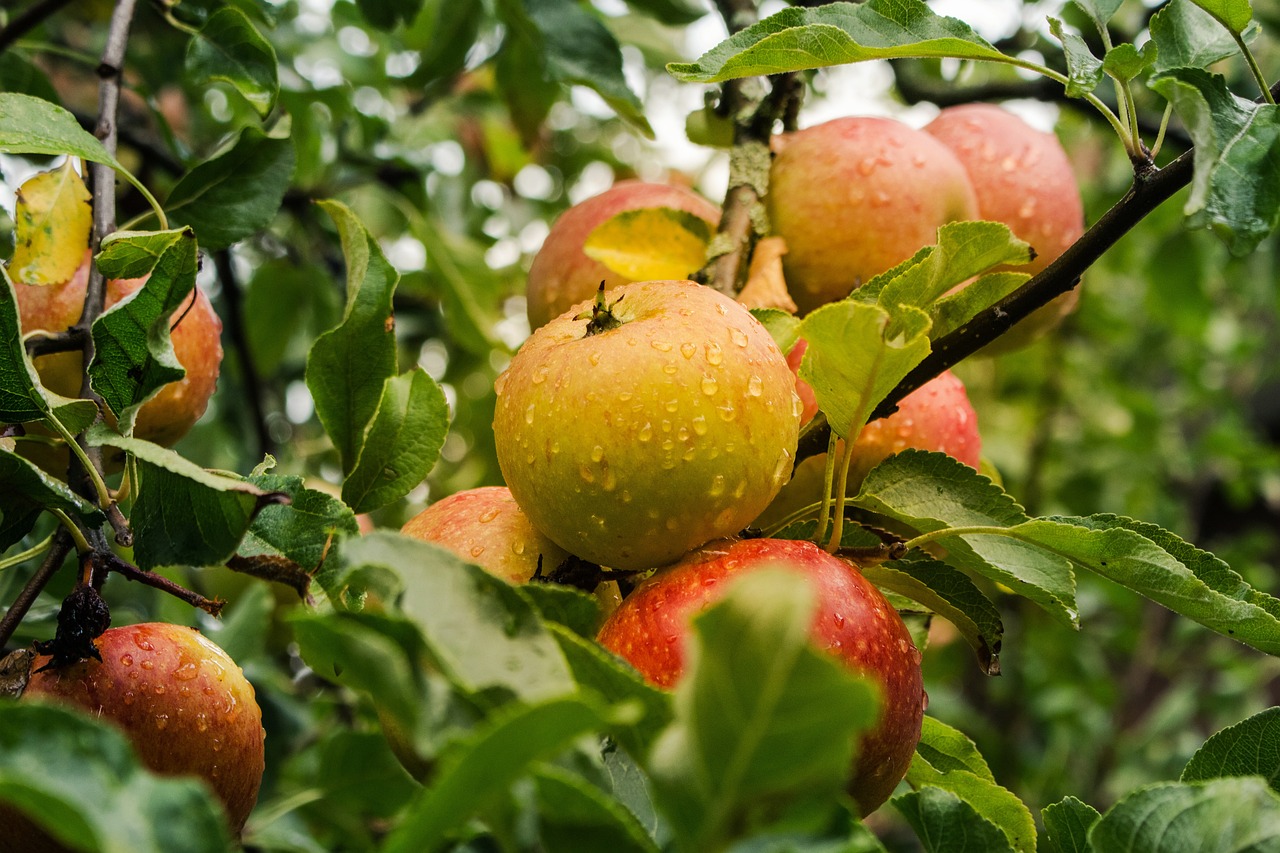
Image by Michael Strobel from Pixabay

Then came the increasing influence of German immigrants who brought with them an enthusiasm for beer. Barley grew well in the US. It was a quicker and cheaper crop, too, and recovered more easily when it occasionally fell victim to the whim of the temperance movement. Apple trees began to decline, beer surged, and apple cider became the drink of the backward-thinking country bumpkin.

That’s probably why, during the presidential campaign season of 1840, a Democratic newspaper insulted the Whig challenger to the Democrat incumbent Martin Van Buren by stating that you could “give [William Harrison] a barrel of hard cider. . .and he will sit out the remainder of his days in a log cabin by the side of his ‘sea coal’ fire, and study moral philosophy.”

The insult turned out to be a pretty big misstep because the US was in the midst of an economic depression that had occurred under the watch and policies of Van Buren and his Democrat predecessor Andrew Jackson. People were stressed and were perhaps feeling nostalgic for better days, even longing for a return of the hard cider they’d previously dismissed.

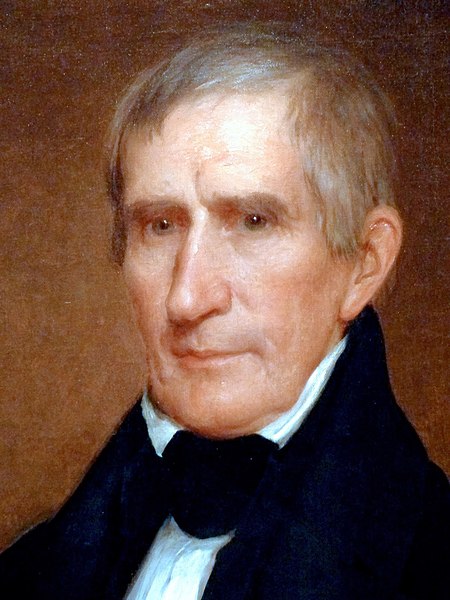
I mean, the man might have been a little hoity-toity, but he was as American as hard apple cider. Albert Gallatin, Public domain, via Wikimedia Commons

Harrison, who’d been raised as a wealthy and well educated Virginian with a pedigree every bit as hoity-toity as Van Buren’s, embraced hard cider which paired well with his reputation as a western hero of the War of 1812. Yes, it was maybe a little disingenuous, but when life hands you apples, you make hard cider.

That’s what we’ve decided to do this fall at the Angleton house. Shortly after moving into our current suburban home more than ten years ago, we planted three apple trees, of different varieties. One started producing a pretty good harvest the first year or two. The others took a little longer, but now all three are going strong and we are drowning in apples.

This is not a terrible problem to have. We share a lot of them with friends, family, neighbors, and food banks. With the rest, we get creative. Over the years we have canned applesauce, made apple butter, baked pies and cakes and muffins and doughnuts. Our apples have been the star of salads, hors d’oeuvres, main dishes, and snacks. The only thing we hadn’t done was make cider because we didn’t think we had the right kind of apples to make it work.

But then we found a stovetop recipe that isn’t too picky and it turned out really well. The next logical step then was to try our hand at fermenting it, because it felt like just the kind of thing nostalgic Americans should do.

If you didn’t know better, you might almost think we know what we’re doing.

Turns out it’s not that difficult. It does require some precision and care and a bit of patience. Our first batch isn’t quite through its initial fermentation yet, but as best as we can judge from all our recently obtained YouTube expertise, it’s coming along nicely so far.

Hard cider worked out for Harrison, too. He defeated Van Buren in an electoral college landslide, becoming the oldest person ever elected to the office (a record that has definitely been broken since) as well as the first to lay claim to a campaign slogan.

His success didn’t last, however, because after delivering the longest ever inaugural address (a record he does still hold), in the cold, without even stopping to take to his bed, he developed pneumonia and just a month later, became the first US president to die in office, after the shortest term ever served.

I do hope we have better luck with our hard cider.

In Your Guts, You Know They’re Nuts

It’s been another big week in the life of Missouri residents who finally had the opportunity a few days ago to vote in primary elections. Let me tell you, it has been a slog getting here. For many months, and particularly in the last few weeks, nearly every television commercial, radio ad, and piece of junk mail has proclaimed the virtues of candidates while bashing opponents.

Our inboxes have been inundated with uninvited appeals, our spam filters have been working overtime, and every street corner has been littered with brightly colored signs featuring slick, stupid slogans. I imagine that’s been the case for most of us in the US as we move through primary season in preparation for the next one which will begin on Wednesday, November 9.

And that’s how it’s been since at least 1840 when William Henry Harrison, famed hero of the Battle of Tippecanoe, made a bid for the presidency with his running mate John Tyler under the slogan, “Tippecanoe and Tyler, too!” It was also a song, that is particularly painful to listen to.

They Might Be Giants released a more tolerable version in 2004.

But it isn’t the worst campaign slogan ever. That distinction probably belongs to 1928 Democratic presidential candidate Al Smith, whose slogan “Make your wet dreams come true,” both communicated his anti-prohibition platform and made would-be voters incredibly uncomfortable. And yes, etymologically speaking, Smith was intentional in doubling his entendre, at least according to Merriam-Webster.

My favorite slogan, however, comes from the race between Barry Goldwater and Lyndon Johnson in 1964. Goldwater’s slogan of choice was “In your heart, you know he’s right.” That one is terrible, but Johnson’s response of, “In your guts, you know he’s nuts” is about as good as it gets. I mean if you’re going to drown us in campaign garbage, then at least have the decency to be clever about it.

I’m just glad that in Missouri it’s finally over. The votes have been cast, the ballot boxes filled, and life can return to normal for approximately fifteen seconds before the winners’ campaigns ramp up for the general election in November.

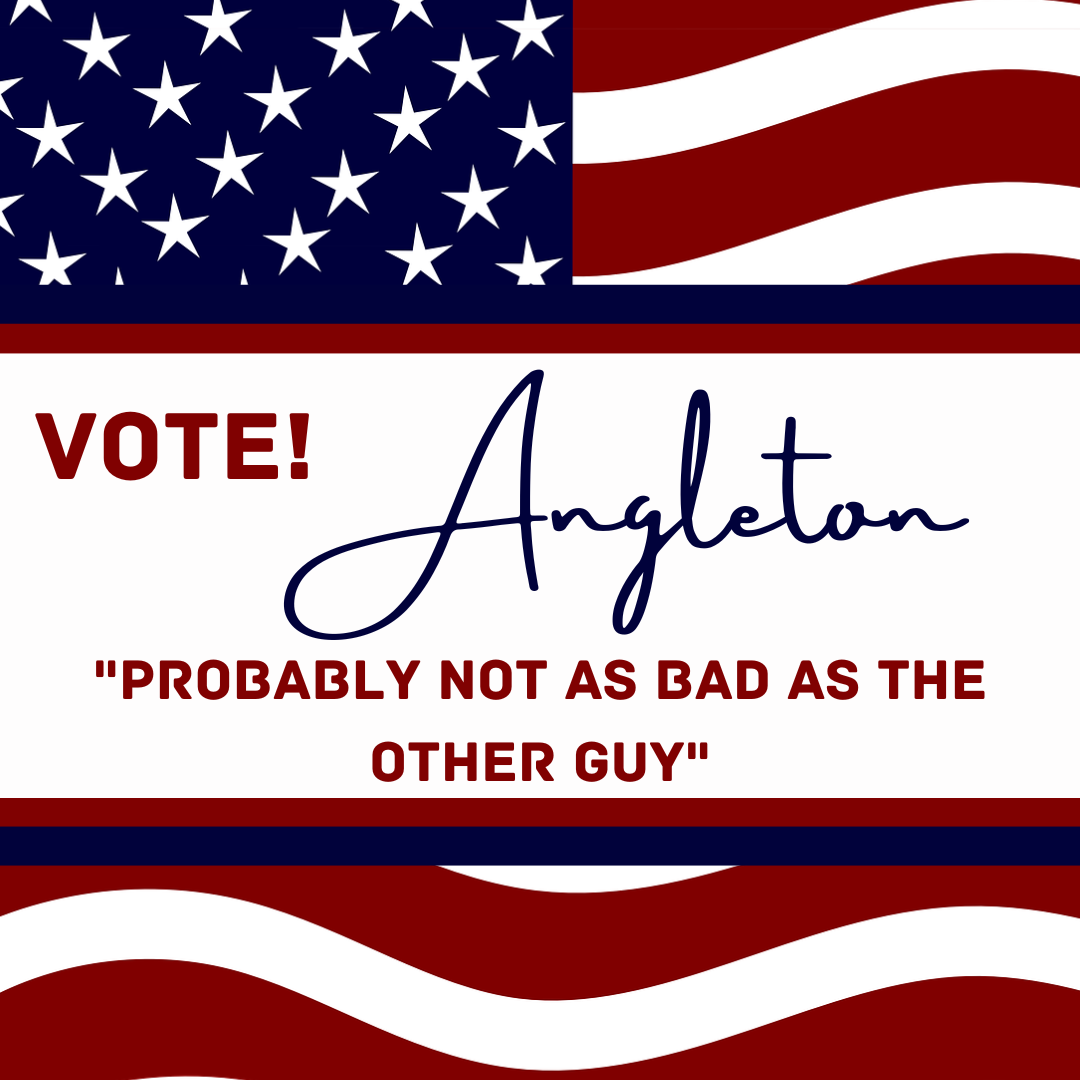
On second thought, I am as bad as the other guy. Worse, even. In case you get any ideas about voting for me.

That’s when the losing candidates who were slinging mud up until and all through this past Tuesday begin instead to issue statements of support, such as, “I may have been mistaken when I called my opponent a child molester who supports cancer in all its varied forms. Regardless, I ask you now to lend him your support because at least he’s not that other guy.”

The elections went okay, I guess, as far as elections go. Primary elections in non-presidential years don’t usually yield a whole lot of excitement, but there were a few hotly contested races and I did have to stand in line in order to vote. I generally think it’s a good thing when citizens care enough to show up. Like pretty much always, the candidates I favored won some and lost others. In a race or two, I was pleased to support someone and in most I voted for the least unsavory alternative.

I can’t complain too much, though, as I remain entirely unwilling to run for office myself. Even if I wanted to, I haven’t yet come up with an adequate slogan. I bet there’s a generator out there circulating on social media somewhere, something to do with rearranging a selection of words like integrity, experience, and leadership, based on your mother’s maiden name and the various digits of your social security number.