
It has come to my attention recently that there is a trend in the world of drinking vessels. It’s all the rage and has frankly gotten a little out of hand, this bizarre obsession that has captured the enthusiasm of people all over the globe and has even caught the attention of celebrity.
I’m speaking of course of the cups made from human skulls that litter our history like the red Solo cups of last night’s frat party.

It all started about 15,000 years ago in a cave in Somerset, England where ancient human remains include skulls that show signs of being carefully cleaned of bodily gunk and intentionally smoothed around the edges to offer a comfortable drinking experience for those who are into that kind of thing.
At this point you might be asking who would be into that sort of thing. It turns out maybe a good number of people, because skull cups have been dug up from lots of cultures and lots of time periods throughout Europe, Asia, and the Middle East. Writings about such things abound, or at least exist from multiple sources, which is significant when considering ancient texts.
Why people might have chosen to drink from human skulls is a little tougher to determine. Most researchers assume it was an act of ceremony, whether honoring the dead or drinking the blood of an enemy. It’s difficult to know for sure.

Perhaps there’s an answer in one of the more recent and high profile celebrity uses of a skull cup from the early 19th century when a gardener uncovered a human skeleton at Newstead Abbey, the home of the bad boy of English poetry Lord Byron.
Byron did what any slightly imbalanced hot mess of a celebrity would do and took the skull of what he assumed was “some jolly friar or monk” to an (I have to think surprised) artisan to commission a skull cup. The poet then dubbed himself “Abbott of the Skull,” drank to his heart’s content, and wrote a poem about how it’s better for a skull to hold wine than worm castings.
So it was a noble pursuit. Or perhaps Lord Byron just wanted to stay really well hydrated like all of the people who are losing their minds right now over the Stanley Quencher. This steel vacuum cup, with reusable straw, holds up to 64 fluid ounces, fits nicely in a standard cup holder, causes stampedes at Target every time there’s a new limited edition collaborative design released, and keeps the blood of your enemies warm for hours.
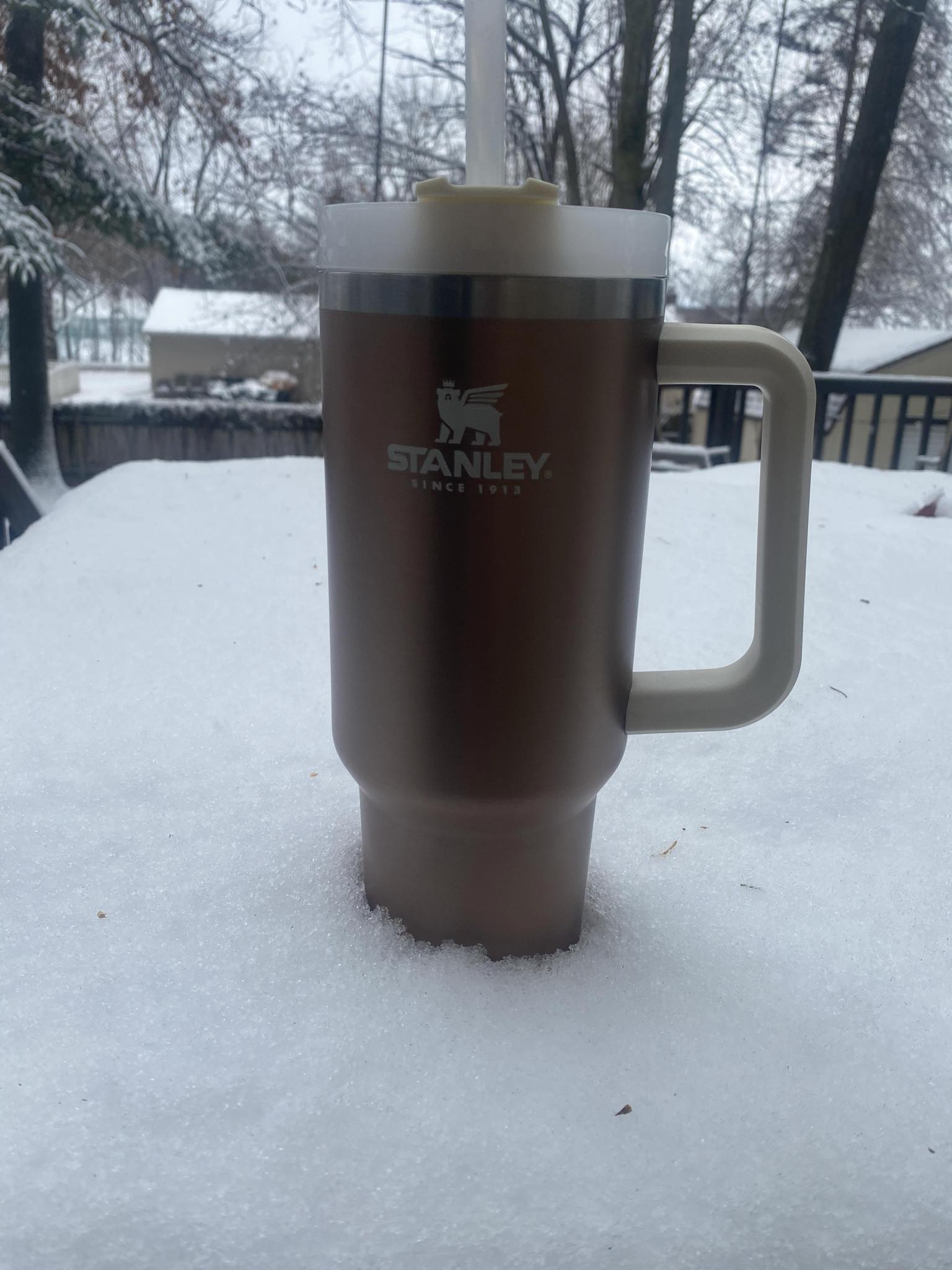
Honestly, I don’t understand either trend, but there’s no doubt the Stanley Cup has become a sensation recently. The obsession apparently started with TikTok and has spawned a Stanley Cup Buy, Sell, Trade, and Raffle group on Facebook with more than 68,000 members, as well as another group called Stanley Cup Hunters Anonymous Support for Spouses.
The wild fad has spurred sales for the Stanley company, which has been in the business of making steel water bottles since 1913, to grow from $94 million in 2020 to $750 million in 2023.
If you camped out at Target to get one and you want to make a few bucks, the resale value of $45 limited edition Quenchers is currently in the neighborhood of $200. Given that Lord Byron’s skull cup sold at auction a few years ago for only somewhere around £1,000, that feels like a pretty substantial markup.
As far as I could find, no one has yet started penning verses about the Stanley Quencher. My promised year of not attempting to write poetry is over, so I might see if I can come up with something about staying ultra-hydrated by sipping the well insulated blood of my enemies through a straw. “Abbott of the Stanley Cup” sure has a nice ring to it. Maybe the company would consider a collab and etch my poem on the outside of a limited edition Quencher available only at Target.
 Author Sarah Angleton