On the wall above the desk where my computer sits is a beautiful painting of an old typewriter. It hangs there I suppose because it makes a sort of sense in this space where fingers fly across the more modern QWERTY keyboard composing e-mails and blog posts and the next great American novel. But when I reflect on the story of how the typewriter came to be, I think there’s more to it than that.
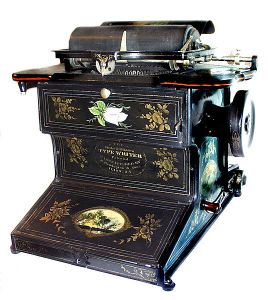
Sholes received a patent for his typewriter 148 years ago today (June 23, 1868). Public Domain, via Wikimedia Commons
In July of 1867 in Milwaukee, Wisconsin, mechanic Carlos Glidden passed on a Scientific American article to his friend, printer Christopher Latham Sholes. The article detailed a recently invented writing machine called the pterotype. Sholes and a partner had recently been somewhat successful designing a number printing machine and when he looked at the device his friend showed him, Sholes thought he might just be able to do better.
He quickly set to work and soon used a converted telegraph key to type the letter “W.” Excited about their initial success Sholes and Glidden had a model with a full alphabet and some punctuation by September of 1867. The only thing left to do was to get the machine to market, which was a long and frustrating experience during which Sholes remarked on several occasions that he wouldn’t recommend the no-good invention to anyone anyway.
Finally in 1873, after receiving an intriguing typewritten query letter, sewing machine and firearms manufacturer E. Remington and Sons asked for a demonstration at their New York headquarters. Seeing what the machine could do, they wasted no time in manufacturing a thousand of them, and optioned 24 thousand more.
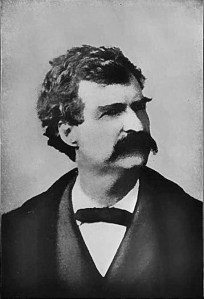
Mark Twain’s Life on the Mississippi became the first manuscript ever typed on a typewriter. Public Domain, via Wikimedia Commons
Initially the Remington typewriter wasn’t a commercial success. Despite the claim that a skilled person could produce 57 words per minute, and a stamp of semi-approval from Mark Twain who had a love/hate relationship with one of the earliest models, the machine cost a whopping $125. The trouble was that at that price, the typewriter cost significantly more than a pen, which came with significantly fewer glitches.
It would take a number of revisions to the initial design, a more reasonable price tag, and the help of a good marketing plan to lead to the typewriter’s eventual success. Sholes, who gained little fortune from his invention, plugged away at improvements for the rest of his life, never really satisfied that he’d gotten it exactly right.
Near the end of his life, however, he had this to say: “Whatever I may have felt in the early days of the value of the typewriter…I am glad I had something to do with it. I built it wiser than I knew, and the world has the benefit of it.”
So a beautiful painting of an old typewriter hangs above my computer because when I sit down at the keyboard, I want to reflect that when my project is at long last complete, and has come out perhaps even wiser than I knew, I will be glad to have been a part of it. And I want to be reminded that in addition to inspiration, great ideas take time and hard work, and often a lot of revision. An intriguing query letter and killer marketing plan won’t hurt either.
Note: I originally wrote this article over a year ago for Saturday Writers of St. Charles County, Missouri, but thought on this 148th anniversary of the original patent for the Sholes typewriter, I would share it in this space. As a writer, I am grateful for the invention of the typewriter. I am even more grateful that I don’t have to use one.
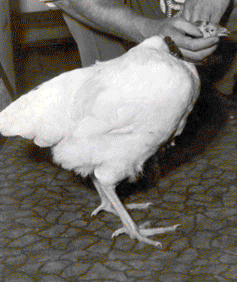
On September 10, 1945, a farmer by the name of Lloyd Olsen was expecting his mother-in-law for a visit and so he set about doing the unsavory work of killing a chicken for dinner. He scooped up a young rooster scratching and pecking its way through the barnyard and dealt the fatal blow.
Except that it wasn’t. The rooster staggered like any freshly killed chicken might, but unlike most, this one never stopped. Astonished, Lloyd decided not to serve the determined bird for dinner that night and the next morning found it sleeping soundly with its phantom head tucked under its wing.
The farmer knew at that point he had a genuine oddity on his hands. With an eyedropper he managed to feed his headless wonder chicken, whom he named Mike, a mix of grain and water. Soon, the Olsens and Mike were headed out on tour across the country, delighting sideshow crowds with what Lloyd referred to as “a fine specimen of a chicken except for not having a head.”
A group of skeptical headless chicken experts at the University of Utah agreed with him. It seems when Lloyd lopped off Mike’s head, the farmer somehow managed to miss the jugular vein and a very lucky clot kept Mike from bleeding out. With most of his brain stem still attached (though the larger part of his head would soon reside in a jar), Mike was still a remarkably healthy rooster. It probably doesn’t come as much of a surprise to the average chicken farmer, but it turns out chickens (which have bird brains to begin with) don’t actually need great deal of brain power to get by.
Mike lived quite happily, raking in a tidy little sum for the Olsens (his would-be murderers), until he finally managed to choke to death eighteen months later in a motel in the middle of Arizona. But don’t be sad, because Mike’s determined spirit remains alive and well in his hometown of Fruita, California where every year on the first weekend in June, they celebrate the Mike the Headless Chicken Festival.
That’s right. This very weekend (since I’m sure you don’t have better things to do), you can hop over to Fruita and run a 5K or participate in a disc golf tournament. If you have a prize chicken of your own (headless or not), you can enter it into a poultry show, or you can try your hand at rooster calling, chicken dancing, or peep eating.
Because people will celebrate pretty much anything.
I think that’s great. It’s all in good fun, and I do love a good quirky celebration (except for maybe that last one). And in fact, I’m doing a little celebrating of my own. If you visit this blog very often, you may have noticed, it looks a little different since the last post. More changes are coming in the near future, but for now, I am using a moderately fancier theme, and if you look to the top, there is a new page as well: “Coming Soon! A Book!”
A book galley. Without a head.
I am delighted to announce that this fall (maybe as early as October), I will finally become a traditionally published novelist, a goal I’ve been working toward for a very long time.
I hope you’ll take a moment to click on the new page, celebrate with me, and maybe even sign up to receive an occasional e-mail about the progress of the project and some other fun stuff. I won’t be holding a mosquito calling contest (which just sounds like a bad idea) or crowning anyone “Miss Roadkill” (or “Miss Practical Historian” because that tiara is all mine). But I will be letting readers in on some exclusive content that I’m sure you’d hate missing out on even more than you’d hate missing the opportunity to don your mask and snorkel to attend the Underwater Music Festival in the Florida Keys National Marine Sanctuary.
The book, a historical novel, has no official title yet, because my publisher and I haven’t yet agreed on the perfect fit, and it has no cover yet because the brilliant graphic designer I’m working with is patiently awaiting a title so he can finish his lovely design. But I assure you that what I do have is a fine specimen of a novel except for not having a head.
While the truth of the existence of Mike the Headless Chicken has occasionally been called into question, despite the testimony of several of Utah’s finest headless chicken experts, I assure you, the book really is coming soon. And headless or not, I think it’s worth celebrating.
Chances are if you’ve been to a circus at some point, you’ve seen people risk their lives. It’s part of the thrill of the show. There are fire-breathers, lion-tamers, high-wire walkers, and sword swallowers to name just a few.
And while the circus used to be primarily about tortured exotic animals, unfortunate human oddities, and psychotic-looking clowns that haunt our nightmares, at some point the attention shifted to more and more dangerous performances of highly skilled human oddities as they defied the kind of grisly deaths that haunt our nightmares.
One of the turning points for the circus came in the middle of the 19th century when a young Frenchman named Jules Léotard went swimming in his father’s pool in Toulouse. A skilled gymnast, Léotard swam a few laps and then thought he might have more fun at the pool if he swung above it. He rigged up a series of apparatuses resembling dangling pull-up bars and began swinging, launching himself from one to the other. Soon he was performing elaborate acrobatic maneuvers above the pool.
Jules Léotard and his bulging muscles. Fetch the smelling salts!
And a terrifyingly dangerous circus act was born. Léotard performed on the trapeze above straw mattresses in his home town and soon he found himself flying above large crowds in Paris and London. The practical, tight-fitting costume he designed both for flexibility and for making the ladies swoon at the sight of his bulging muscles, came to be known as the leotard. And that song about flying through the air with the greatest of ease? That was about Jules Léotard, too.
Today the flying trapeze is an iconic act in the world of the circus performances. And it’s one of the reasons I won’t attend a circus. Now I don’t care much for the animal training or the clowns, either, but I really really don’t like to watch people risk their lives for the sake of my entertainment. It’s just not my thing.
But I am fascinated by the performers who do it. So a few months ago, I wrote a little flash fiction piece about a circus acrobat performing on the trapeze. I entered the story into a contest sponsored by the group Wow! Women on Writing. And the story won third place, which was very exciting. If you’d like, you can follow the link and read “The Greatest of Ease” and some other lovely flash pieces on the Wow! website.
Then, if you’re a really super amazing person, you can also check out an interview with me that was posted on the Wow! blog earlier this week. In it I talk about the story, about my forthcoming novel, and a few other writerly kinds of things.
I hope you will find it entertaining, because though it would be pretty cool if someone wrote a song about me one of these days, this is pretty much as close as I ever plan to get to risking my life for the sake of entertaining an audience. And I think it’s also unlikely I’ll ever wear a leotard in public. Because that’s the kind of thing that haunts my nightmares.
On March 19th, 1848 in the little town of Monmouth, Illinois, the gunslinger who would one day become the central figure in the famous shootout at the OK Corral, Wyatt Earp came screaming into the world.
But I’m not going to write about Earp this week. In fact, I’m not going to write about any historical figure at all, because a while back, a fellow blogger was kind enough to extend an invitation for me to participate in a writer’s tour.
So, first, I want to thank Camille Gatza of Wine and History Visited for including me on the tour. I have been enjoying Camille’s blog almost since I started out blogging myself. Her posts often detail her travels through the US including wonderful background on historic sites and national and state parks. Along the way she always seems to discover unique restaurants and wineries and over the years, she has taught me pretty much everything I pretend to know about wine.
So here are the questions put forward on the tour:
What are you currently working on?
I’m always researching for both my blog and my fiction projects. The blog jumps through time and space from week to week, through the stories that I find interesting at any given time, with really very little rhyme or reason. I find that kind of research, which is admittedly not always very thorough, to be kind of a refreshing break from the research I do for my fiction projects. That is thorough and time consuming and while interesting, doesn’t always yield the kind of lighter stories I like to share in this space.
Currently as a blogger, I am looking into the story behind LEGOS because this weekend my family and I will be attending the traveling LEGO Festival as it visits St. Louis. In my other “writerly” role, I am working through a first full draft of a novel that will hopefully serve as a companion to my first that was recently accepted for publication (!). As part of that process I am reading everything I can get my hands on about the Pennsylvania canal system in 1833, which, while interesting, and will supply wonderful historical details for the novel, is not exactly good material for this particular blog.
How does your work differ from others in your genre?
A lot of history blogs I read (and I do read a lot of them) are very information dense. Often they cite references and speak with a good deal of authority within a fairly narrow scope. I love that. And those kinds of blogs are exactly what history blogs should be.
But this isn’t that kind of blog. In fact I hesitate sometimes to even call it a history blog, because in some ways that’s not what it is. I do share stories from history, and I do spend a good amount of time (or at least some) researching my chosen topic in an attempt to provide readers with tidbits worthy of sharing at cocktail parties. But there’s also a lot of me on the pages of this blog. There’s a lot about my life and the things I find funny, or interesting, or just worthwhile. I try not to claim a great deal of authority in this space, because, frankly, I have none to claim.
But I do hope the posts are fun to read. I have a great time writing them.
Why do you write what you do?
When I was younger, history always seemed either dull or tragic to me. I’ve never been very good at memorizing dates and it seemed all I ever learned about in history class was how one group of people exploited another group of people to become the dominant people. And, really, human history can be boiled down to that if you let it be. But as I grew older and studied more literature, I began to see history through a different lens. When fleshed out with the little details that make up the experiences of individuals, suddenly each moment in history becomes many moments with many perspectives and far-reaching implications. In other words, it becomes a story. And a story, our story, is worth telling.
That realization led me to writing historical fiction, a genre that I fell in love with very quickly as a reader as well as a writer. And this blog is an extension of that. As this wonderful article in The Onionso eloquently points out, there are more stories within the history of human experience than I can possibly tell, or that any of us can possibly tell or ever know. But with this blog, each week, I get to take a stab at illuminating a little bit more.
For the most part, I write what’s on my mind. If I have experienced or will be experiencing a particular event, I may use that as a jump-off for some historical research, and often the structure of the post itself will reveal that. Some weeks, something I come across in the news sends me down a trail I think might be worth sharing. And, of course, like anyone else, I have weeks when I struggle to find something to say.
Typically I start out with a very general idea of what I want to write and just start typing because I never know exactly what I’m going to want to write until I’ve already written it. After that I polish it up, trim the word count, insert what I hope are a few clever lines, throw in a few pictures, and post. Then I just sit back and wait for millions of thoughtful comments to come rolling in.
Well, okay, so that last part doesn’t really happen, but I realize that this blog is a little hard to categorize and it is sure to appeal to a fairly specific kind of reader. I am delighted that so many of you quirky, creative, thoughtful people have found it. Thank you!
And now on with the tour!
For the next stops on the tour, I’ve chosen two writers whose blogs I appreciate very much. They also both happen to be writers of historical fiction, but they each approach blogging differently than I do. I doubt they’ll be writing about Wyatt Earp this week either (although you never know). Still, I hope you’ll visit their sites, and maybe read their books as well, because it will be well worth the effort.
Samuel Hall grew up in the American Heartland. He lives with his wife near Salem, Oregon. Their three adult children continue to teach him about family relationships and authenticity, core subjects of his novel.
Sign up for the newsletter at www.ashberrylane.com to hear the latest about Sam’s book, Daughter of the Cimarron.
Adrienne Morris lives in the country, milks goats, chases chickens and sometimes keeps the dogs off the table while writing books about the Weldon and Crenshaw families of Gilded Age Englewood, New Jersey. Her first novel, The House on Tenafly Road was selected as an Editors’ Choice Book and Notable Indie of the Year by The Historical Novel Society.
Once upon a time a young girl named Marie-Catherine Le Jumel de Barneville prepared for her wedding. If the narrator of a fairy tale would ever care to tell you such a thing (which she most certainly would not), the year was around 1666.
A heroine fit for a fairy tale. Pierre-François Basan [Public domain], via Wikimedia CommonsMarie-Catherine was a high-spirited girl of sixteen, from a good family who had arranged for her a splendid match. She would live in Paris and her husband was to be Francois de la Motte, Baron d’Aulnoy, a man thirty years older than she who was said to be a freethinker, a fine gambler, and a quick-tempered dirtbag.
I doubt the reader will be much surprised to learn that the new Baroness d’Aulnoy didn’t like her husband very much. But she was a spunky heroine and soon hatched a plot with her mother and two men, one of whom the baroness seemed to like quite a lot.
The foursome schemed and soon the baron found himself accused of treason and the baroness was nearly free of him. Still he proved a wily foe, and found a way to clear his name, resulting in the execution of the two men. The baroness and her mother escaped the country with their lives and spent the next twenty years traveling abroad where Marie-Catherine’s true life’s passion began to take shape.
When at last she returned to Paris she sat down to write of her adventures. She wrote novels, all well received. She wrote memoirs, in which she made up most of the best parts. And she wrote two collections of what she termed “contes de fees,” or fairy tales.
I have to assume there was a witch involved in the plot to get rid of the baron, and a terrible deal struck. There may also have been an apple. I haven’t worked out all of the details yet. photo credit: IMG_1422 via photopin(license)
This genre, of course, had existed long before her time, perhaps as long as stories had existed at all. Long enough for whole fields of folklorists to rise up and earn PhD’s by writing volumes on the underlying gender role ideology of each tale and for woefully underqualified history bloggers to dabble poorly in it.
But Baroness d’Aulnoy was certainly the first to use the term “fairy tales.” As a successful author and popular hostess for the most interesting residents of Paris, it seems likely the baroness lived happily ever after. Only later did critics get hold of her memoirs and cry foul at her lies exaggerations. As a result, her work was cast aside for many years, leaving the underlying gender role ideologies of fairy tales to be explored by the brothers Grimm.
But now she’s back. Her work, and her history (the best parts of which are likely made up) are emerging in the volumes produced by folklorists in pursuit of their PhD’s and I think Baroness d’Aulnoy is once again headed for her happily ever after.
I wish you a very happy National Tell a Fairy Tale Day. It seems fitting that on this day I get to announce the reader who will receive a copy of Cary Elwes’s book As You Wish: Inconceivable Tales from the Making of The Princess Bride, signed by the author, because The Princess Bride is my favorite modern fairy tale. I know I’m not alone in that because so many of you shared stories about how much the film has meant to you, too. Thank you for entering and for sharing the post. I wish I had a book for all of you.
The lucky winner is Sarah from Georgia, who knows that true love is the greatest thing in the world, except for a nice MLT- mutton, lettuce, and tomato sandwich, where the mutton is nice and lean and the tomato is ripe, and maybe also a free book.
I tend to avoid controversial topics on this blog, and when I occasionally wander into cultures and histories that are not my own, I try very hard to treat them with respect. I have intentionally chosen to make this little corner of the blogosphere a place where anyone could feel welcome.
But I certainly recognize that people who engage in communication of any kind designed for public consumption are faced with the choice of whether or not they push the envelope into the realm of offensiveness. And I celebrate the freedom of that choice, because it means that when something needs to be said, it can be said in public and it can be considered by the public.
Yesterday’s attack on Charlie Hebdo was a terrible assault on that freedom. With the people of France, with the members of the media, and with all writers, speakers, and illustrators who communicate on a public platform, from the widest national media outlet to the tiniest blog, I am adding my voice. Freedom of speech and freedom of the press matters profoundly. And so I raise my pen up high and say, Je suis Charlie!
One fall night in 1885, Mrs. Fanny Stevenson was awakened by the terrified screams of her dreaming husband. Concerned, she quickly roused him, to which he responded, “Why did you wake me? I was dreaming a fine bogey tale.”
What Scottish-born writer Robert Louis Stevenson had been conjuring in his dream was the transformation of the upstanding Dr. Jekyll into the monstrous Mr. Hyde. When he put pen to paper to tell the story, his wife claimed it took him just six days to complete it.
Robert Louis Stevenson looking a little haggard. Like maybe he has TB. Or a cocaine problem. Or nightmares. Or maybe he just wrote a beloved classic novella in SIX DAYS.
Probably suffering from undiagnosed tuberculosis for most of his life, Stevenson was quite ill when The Strange Case of Dr. Jekyll and Mr. Hyde came tumbling out of him. Some have suggested the feverish pace with which he wrote the novella came from a cocaine binge, but his family insisted that it was simply the frustrated workings of bedridden genius.
Whatever spurred him, Stevenson seems to have mirrored his characters, stepping outside of himself for those six days to indulge the part of him that had a story to tell, maybe a brilliant allegory of addiction, and certainly a classic story of the capacity for both good and evil inside each of us.
I’m sure you’re at least somewhat familiar with the story, but even so, it’s a quick read and well worth it if you’ve never opened it up. Maybe knowing that the initial draft was written in only six Hyde-like days makes it all the more chilling. And maybe inspiring.
Because it’s November, which means that it’s that time of year when writers of all walks of life, some experienced and some not, step outside of themselves and write a novel.
I swear I’ll get started on those 50,000 words as soon as I make this really important sign for my office door.
National Novel Writing Month (NaNoWriMo) began in 1999 with the decision of 21 friends in the San Francisco Bay Area to set themselves a ridiculous goal to each write a novel within a month. It sounds crazy at first, because, well, we’re talking about a novel here. It’s a long project full of research and imagination. Some of the greatest novels ever written took years or even decades to complete. And some of the worst novels did, too. Snoopy wrote for fifty years and never made it past his opening line.
But it turned out there was purpose in the madness of the plan, even if the original participants didn’t realize it at first. The group had such a good time with the challenge, they opened it up to a wider community the next year and 140 people participated. The year after that it was around 5,000. In November of last year, 310,000 adult writers and 89,000 young writers, from all over the world, participated in NaNoWriMo.
Not all of them completed the 50,000-word goal, but 400,000 people stepped outside of themselves to indulge that part of them that had a story to tell. What started as a silly little writing challenge has blossomed now into a huge network of encouragement, with resources for writers at every stage of the game before, during, and long after that initial, probably terrible, first 50,000-word draft.
The Strange Case of Dr. Jekyll and Mr. Hyde is around 26,000 words, initially written in just six days, which gives me 24 days to write my additional 24,000 words. No problem.
I heard about NaNoWriMo for the first time a few years ago through my local library that was sponsoring a series of “write-in” events in conjunction with it. I’ve since had lots of friends participate in the event. So, this year, I’m finally doing it. I’ve researched, planned, and outlined what I hope will be become 50,000 revision-worthy words. In December, I’ll have to drink my potion and let Dr. Jekyll take back over to do the real work of revision, revision, and still more revision. But for now, I am stepping outside of myself and indulging my Mr. Hyde (minus the cocaine) because he’s got a story to tell.
Good luck to all my fellow NaNoWriMos out there! Obviously I’m glad you stopped by, but seriously, stop reading blog posts and get to work. You have a novel to write!
At the end of a narrow hallway, tucked into the corner of my basement is a little hidey hole of a room that I have claimed as a writing office. One wall has been covered with chalkboard paint thoroughly graffitied with story ideas. On the other walls hang a bulletin board plastered with notices of submission deadlines, a white board scribbled with possible blog post topics, and above my desk a beautiful photograph of an Oregon Iris given to me by a dear writer/photographer friend.
In the little wall space that remains, just above a bookcase that holds more thesauruses than any one person needs, must have, requires, has an occasion for, or isn’t able to dispense with, hangs a collection of framed quotes about writing by writers whose work has been meaningful to me from Snoopy to Mark Twain.
One of the quotes is from James Michener who once said, “I love writing. I love the swirl and swing of words as they tangle with human emotions.” As a writer who loves to read and write historical fiction, I most appreciate Michener for the depth of his works which reach beyond character, through generations, and across large expansions of time, to tell the story of the setting itself. There aren’t a lot of authors who have done that, and none more successfully than Michener.
Of course, it takes a lot of words to do it. Michener’s books are long and swirly and tangly and not for everyone. But I appreciate them because he so boldly leaves nothing out. And it works.
But there’s another approach to writing, one that is more streamlined and maybe more widely appreciated. It’s represented perhaps best by the also highly quotable Ernest Hemingway who once said, “My aim is to put down on paper what I see and what I feel in the best and simplest way.”
Anyone who has read Hemingway’s work knows that he pretty successfully did just that. He didn’t invent brevity in storytelling (it predates him by an awful lot of human history and oral tradition), but he did play an important role in the emergence of the short short story through the 20th century and into the 21st..
Today’s writers who are hip to the lingo generally call such stories flash fiction, a term that refers (not so precisely) to stories up to 1000 or sometimes up to 2000 words and down to as few as six.
That’s right. Six WORDS.
And this is really why Hemingway gets so much of the credit because he wrote (or didn’t write) the first six word story, complete with a beginning, middle, and end. If you don’t believe that, you’re not alone. The rumor, which can be traced all the way back to 1991 (and you know that anything that comes from 1991 is too legit to quit), is that in 1961 Hemingway was in a restaurant with a group of writer friends when he bet them $10 each that he could write a complete story in just six words. They had to cough up the cash after he wrote on his napkin: “For Sale, Baby shoes. Never worn.”
Dang! That is six words. Who do you think you are? Hemingway?! photo credit: JD Hancock via photopincc
The biggest problem I see with this tale is that I don’t think anyone would be stupid enough to engage in such a wager because if a writer brags that he can come up with a six word story you can be pretty sure he’s got one in mind. The slightly smaller problem is that the event is basically unsubstantiated. Oh, and there’s evidence that the story existed in various forms well before Hemingway. Still, it’s nice to think he wrote it because it does illustrate his approach to writing.
As a reader I can appreciate both wordy authors and succinct ones. As a writer, I fall somewhere in the middle on the Michener/Hemingway scale. I love the swing and swirl of words and I will at times be unapologetically verbose. But some stories just want to be simple and it can be a fun challenge to put together a piece of flash fiction.
One such work of mine, a story entitled “Blue” has just this week been published in the online magazine 100 Word Story. As the name suggests, the works featured are exactly 100 words long. That doesn’t leave a lot of room for swirls. I hope you’ll follow the link and read not just my story, but also take the time to peruse and appreciate a few of the brief works of some talented writers who slaved away in their hidey holes to trim away all those swinging, swirly tangles of words.
You may have heard that the Midwestern United States has experienced a bit of a cold snap this week. I realize that there are parts of the world where people live (if you can call it living) with subzero temperatures and unimaginable wind chills on a regular basis. But Missouri is not one of them.
Weather only a penguin would love.
Our forecast for this past Monday included a morning temperature/wind chill that was nearly identical to that of the Amundsen-Scott South Pole Station in Antarctica! At those temperatures, you can literally throw a cup of boiling water into the air and watch it turn to snow before it hits the ground. And, yes, we tried it, because what else are you going to do on an impossibly cold day stuck at home with the kids.
So there was no school for the kids and most activities that could be cancelled, were. Even my Tuesday morning Coffee & Critique writers’ group decided not to meet, mostly because driving on sort of clear roads in reluctantly running cars seemed like a bad idea to most of us. When an ice road trucker gets stuck in the cold, he grumbles, pulls out his chains and goes about his business. When it happens to a Missourian, he gets hypothermia and his fingers fall off.
For a Missourian, this would be a problem.
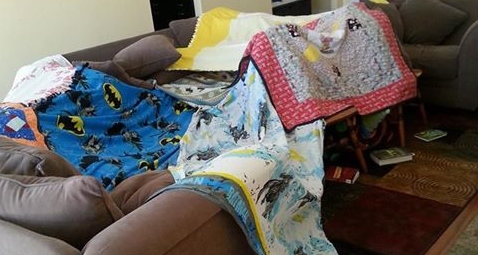
But a weather-induced slow-down is not necessarily a bad thing for a group of writers. In fact, those among us who didn’t spend the time making a giant blanket fort that enveloped the entire living room will probably have better polished or lovely new pieces to show for it. That’s what writers do when the weather doesn’t accommodate our plans. We write. And build blanket forts. But mainly, we write.
That’s what happened anyway in “the summer that never was” of 1816. For several years prior the earth had experienced a series of volcanic eruptions, culminating in the devastating eruption of Indonesia’s Mount Tambora. Together these events spilled enough volcanic ash into the atmosphere to lower temperatures and depress crop production throughout much of the world.
It also affected the vacation plans of friends Mary Godwin (later Mary Shelley), Percy Bysshe Shelley, Lord Byron, and John Polidori who had hoped to spend a delightful summer together at Villa Diodati on Lake Geneva in Switzerland. Finding the chilly weather hopelessly dreary the group abandoned its plans for a friendly jet-ski competition and turned instead to the building of blanket forts and the sharing of scary stories, inspired by the ominous weather and accompanying depression.
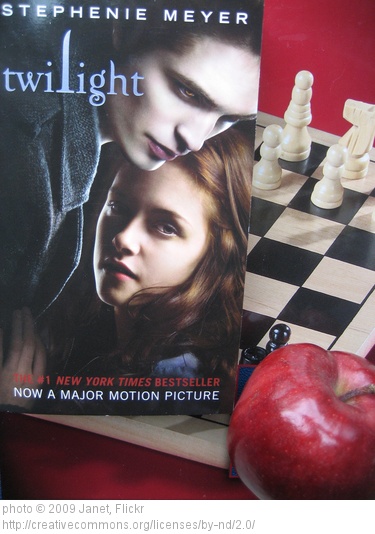
What resulted was a story that would become Mary Shelley’s masterful Frankenstein. Also the offerings of Lord Byron who produced a bit of vampire lore he picked up while traveling served as the inspiration for Polidori’s The Vampyre. This work led to the romantic vampire literary genre without which New Orleans would be safe from the voracious appetite of the overindulged undead and Forks, Washington would have just a little less love and sparkle.
I guess we have to blame Mount Tambora for this, then.
So, you see, great things can come from strange weather and from groups of writers getting together to share their creativity. I have been the very fortunate member of two active writing critique groups, first in Oregon and now in Missouri. Both include members with a wide range of gifts, writing in a multitude of genres with a variety of writing goals. But each has given me great opportunities for growth within my craft.
I don’t know that we’ll establish a new genre or redefine the collective imagination of the monstrous, but I am looking forward this Tuesday to seeing what the cold weather and forced inside time has produced. I might have something to share, too, if my kids ever go back to their (frozen?) school. For now, I just have an incredible blanket fort in my living room.
I may not be getting much writing done, but this is a fun place to hang out.
A late 19th century stroll through the open spaces in German towns may have brought you face to face with a group of laughing children engaged in the fast-paced game of Iron Tag. This is according to the writings of philosopher, teacher, and folklorist William Wells Newell. Newell, who is best known for founding the American Folklore Society in 1888, had a particular interest in the habits of belief he found among children.
His book Games and Songs of American Children published in 1883 explores the persistence of folk beliefs that have leaked into the imaginations of children and manifested as imaginative play. Among the discussion is a description of the classic game of tag pretty much as we all know it still today in which a selected “it” must chase and tag the other children, whose job it is to stand on base and relentlessly tease their hot and sweaty pursuer.
Children’s Games (1560) by Pieter Brueghel. I think I can see an intense round of toilet tag in there. (Photo credit: Wikipedia)
Newell traces the origin of the game to the “original form” of iron tag, which according to him was still common through Germany and Italy in his day (apparently American children had already moved on to the highly advanced “Toilet Tag” version).
Iron tag, as the name suggests, declares that the pursued children are safe as long as they are touching something made of Iron. This is of particular interest to a folklorist because of an ancient superstition that iron is a great source of protection from evil. The belief is prevalent across many cultures probably because the highly useful element occurs naturally in large quantities in the earth, because blood (the life force) contains and smells of iron, and because the wearing of an iron suit powered by a fictional inexhaustible energy source makes one a virtually invincible superhero.
I don’t know about you, but I feel safer with Iron Man around. (Photo credit: Wikipedia)
According to Newell, the “it” in a children’s game of tag represents an evil spirit from which the pursued children must escape, mostly because he is quite the risk taker given that he recently caught a tiger by the toe leading his mother to sock your mother right in the nose.
Newell’s point is a good one, I think. Folklore, he argues, is not merely the realm of adults, but also influences the lives and creativity of children, which we can see in the history of the way even silly games (except of course for “toilet tag” which is serious business) have developed over time.
Where I think he’s wrong is in his assertion that “iron tag” was the original form of the game. It turns out it’s not actually so easy to trace the history of tag. I suspect this is because the game is more or less innate (kind of like Monopoly). We can see lots of young animals engage in tag-like play as they are learning life skills like pouncing, escaping, and irritating the adults in their lives. Human children, too, seem to play versions of tag as soon as they are old enough to chase.
You’re it! (Photo credit: Wikipedia)
And I have it on good authority that the assassination of Julius Caesar and the eventual fall of Rome was really just a byproduct of a game of tag gone wrong. If you want details, you can check out the insightful and thorough treatise on the subject by The History Bluff (who’s blog is nearly as authoritative as this one) here.
But however the game began, it has persisted through the ages and emerged as just plain old fashioned fun. There’s even a group of ten friends from Spokane, Washington who have been engaged in a single game of tag for twenty-three years even though they are now in their forties and living all across the country from one another. The men say the reason they still do it is because it keeps them in touch with one another and fosters lasting friendships among them.
While the rest of us scrape by making the occasional comments on photos of our growing families on Facebook, these men actually fly across the country in order to tag the next “it,” thereby turning this childhood game into the great force for networking and relationship building it was probably always intended to be.
I say this because I recently had the honor of being tagged in a similar game. No one caught a plane and hid in my trunk awaiting my arrival so that they could hand off the terrible burden of being the slow kid. Instead I was “tagged” by a fellow blogger and writer with some questions to answer and pass on to three lucky new “its,” specifically writers who have blogs.
First I’d like to say a big thank you to Donna Volkenannt who is the winner of 2012 Erma Bombeck Global Humor Writing Award and the genius behind the blog Donna’s Book Pub, which is a great resource for writers. Donna claims that she just brushed my arm with her finger tips, so, you know, whatever. I guess I’m it.
Okay, okay. You got me. (Photo credit: Wikipedia)
The Questions:
WHAT ARE YOU WORKING ON RIGHT NOW?
I am in the process of seeking representation and publication for my first historical novel, the story of a fortune-teller from 19th century New York State with a troubled past, a unique talent, and a secret with the potential to unravel one of the most successful deceptions in US history.
In the mean time, I have returned my attentions to short fiction and essay as I research my next novel which will center on a movement among some American abolitionists to establish the nation of Liberia.
HOW DOES IT DIFFER FROM OTHER WORKS IN THE GENRE?
I’ve found there is a lot of variance in historical fiction, but that it basically boils down to two ends of a wide spectrum. On one end are the novels that closely follow the life and story of a known historical figure. The other end of that spectrum would be novels that take place in a particular time and place, but that include only wholly fictional characters that are drawn from the details typical of people from the era in which the author has placed them. My first novel fits between the two. My main character is entirely fictional, though throughout much of the novel she interacts directly with a known historical figure and her experiences include actual historical events and people.
I chose this approach for this particular project because my character has discovered the “smoking gun” in a historically significant conspiracy theory for which there is no known resolution in scholarly writing. Since I was faced with offering an explanation that history itself has never revealed, I thought the best vehicle for doing so would be a character who is a representative of her era rather than a real-life participant in it.
WHY DO YOU WRITE WHAT YOU WRITE?
I write the kinds of things I like to read. I most appreciate fiction that re-introduces me to a world I thought I knew and makes me look at new details that draw connections I never suspected before. I think that’s why I’m so drawn to historical fiction because it immerses me in this world that is familiar, but that I’ve typically considered only through the lens of my own contemporary perspective. When I experience it through a cast of fictional characters, suddenly I find myself immersed in the era and attempting to bridge the gap between my experiences and knowledge to that of a person (whether based on a real person or simply drawn from the era) who approached the same story with an entirely different set of circumstances than I did. My favorite fiction makes me want to do my own research. I write what I write because I would love to inspire that desire in others.
WHAT IS THE HARDEST PART ABOUT WRITING?
I think the hardest part for me is generating that first, terrible rough draft. Most writers, I think, will agree with me that the real work on a story begins when the rough draft is over and the revision starts, but you never get to that part if you don’t first get the thing written. It can be really uncomfortable to return to an unfinished draft to forge ahead with the story when I know darn well that what I’ve already written is full of obvious holes, lazy word choices, and even the kind of bad grammar that would embarrass me right out of the industry. Still, forge on I must, because until I’ve written that overly sentimental ending that I will most certainly change later, I don’t stand a chance of completely restructuring the first chapter.
If I had to use one of these, I’d be in trouble. (Photo credit: alonso_inostrosa)
And now it’s time to tag three more writers so we can all benefit from what I am sure will be their insightful answers to these questions. So…






![Pierre-François Basan [Public domain], via Wikimedia Commons](https://sarah-angleton.com/wp-content/uploads/2015/02/daulnoy.jpg)







 Author Sarah Angleton
