A Fine Specimen of a Novel Except for not Having a Head

On September 10, 1945, a farmer by the name of Lloyd Olsen was expecting his mother-in-law for a visit and so he set about doing the unsavory work of killing a chicken for dinner. He scooped up a young rooster scratching and pecking its way through the barnyard and dealt the fatal blow.
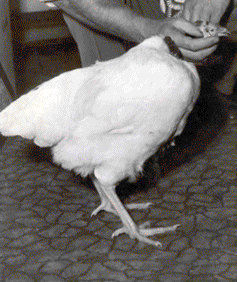
Mike_headless_chicken
Mike the Miracle Chicken posing with his head. Photo via http://www.miketheheadlesschicken.org

Except that it wasn’t. The rooster staggered like any freshly killed chicken might, but unlike most, this one never stopped. Astonished, Lloyd decided not to serve the determined bird for dinner that night and the next morning found it sleeping soundly with its phantom head tucked under its wing.

The farmer knew at that point he had a genuine oddity on his hands. With an eyedropper he managed to feed his headless wonder chicken, whom he named Mike, a mix of grain and water. Soon, the Olsens and Mike were headed out on tour across the country, delighting sideshow crowds with what Lloyd referred to as “a fine specimen of a chicken except for not having a head.”

A group of skeptical headless chicken experts at the University of Utah agreed with him. It seems when Lloyd lopped off Mike’s head, the farmer somehow managed to miss the jugular vein and a very lucky clot kept Mike from bleeding out. With most of his brain stem still attached (though the larger part of his head would soon reside in a jar), Mike was still a remarkably healthy rooster. It probably doesn’t come as much of a surprise to the average chicken farmer,  but it turns out chickens (which have bird brains to begin with) don’t actually need great deal of brain power to get by.

Mike lived quite happily, raking in a tidy little sum for the Olsens (his would-be murderers), until he finally managed to choke to death eighteen months later in a motel in the middle of Arizona. But don’t be sad, because Mike’s determined spirit remains alive and well in his hometown of Fruita, California where every year on the first weekend in June, they celebrate the Mike the Headless Chicken Festival.

That’s right. This very weekend (since I’m sure you don’t have better things to do), you can hop over to Fruita and run a 5K or participate in a disc golf tournament. If you have a prize chicken of your own (headless or not), you can enter it into a poultry show, or you can try your hand at rooster calling, chicken dancing, or peep eating.

Because people will celebrate pretty much anything.

For example, just a few of the quirky celebrations you could attend in the United States this summer include: the Mosquito Festival in Clute, Texas, the Humongous Fungus Festival in Crystal Falls, Michigan, and the Road-Kill Cook off Festival in Marlinton, West Virginia.

I think that’s great. It’s all in good fun, and I do love a good quirky celebration (except for maybe that last one). And in fact, I’m doing a little celebrating of my own. If you visit this blog very often, you may have noticed, it looks a little different since the last post. More changes are coming in the near future, but for now, I am using a moderately fancier theme, and if you look to the top, there is a new page as well: “Coming Soon! A Book!”   

book galley
A book galley. Without a head.

I am delighted to announce that this fall (maybe as early as October), I will finally become a traditionally published novelist, a goal I’ve been working toward for a very long time.

I hope you’ll take a moment to click on the new page, celebrate with me, and maybe even sign up to receive an occasional e-mail about the progress of the project and some other fun stuff. I won’t be holding a mosquito calling contest (which just sounds like a bad idea) or crowning anyone “Miss Roadkill” (or “Miss Practical Historian” because that tiara is all mine). But I will be letting readers in on some exclusive content that I’m sure you’d hate missing out on even more than you’d hate missing the opportunity to don your mask and snorkel to attend the Underwater Music Festival in the Florida Keys National Marine Sanctuary.

The book, a historical novel, has no official title yet, because my publisher and I haven’t yet agreed on the perfect fit, and it has no cover yet because the brilliant graphic designer I’m working with is patiently awaiting a title so he can finish his lovely design. But I assure you that what I do have is a fine specimen of a novel except for not having a head.

While the truth of the existence of Mike the Headless Chicken has occasionally been called into question, despite the testimony of several of Utah’s finest headless chicken experts, I assure you, the book really is coming soon. And headless or not, I think  it’s worth celebrating.

Daily Step Goals: Historical-ish Claims from a Scientific-ish Perspective

If you happened to be a legionary during the early Roman Empire, you were accustomed to walking. In fact, according to Roman military writer Publius Flavius Vegetius Renatus (known by his friends and most practical historians as simply Vegetius), these guys were expected every day to march a little over 18 miles in about five hours or so.

26589319836_70b3334a4a_o
And the sad part is, they aren’t even getting full credit for their hard work. They’ll have to go to the app later and add “lugging heavy equipment, 5 hours.” photo credit: Marcia via photopin (license)

Given that the Roman hour became longer and shorter depending on the season (don’t think about that too hard or you’ll get a headache), it’s difficult to know exactly how much time the soldiers were given to compete their strenuous hike. But to put the task into a little bit of modern day perspective, they didn’t reach their daily Fitbit goal until somewhere around 45,000 steps. Even if they had the full day to work on it, that’s a lot of walking.

As the number of personal fitness trackers I’m seeing worn has exploded over the last few years, I’m guessing by now that most of you are aware that if you’re not getting your prescribed minimum 10,000 steps each day, you’re probably going to die or something. Well, someday, anyway.

But it turns out, the recommendation to take at least 10,000 steps per day, in order to be an active, healthy person, isn’t an especially scientific one. It most likely comes from a brand of Japanese pedometer marketed in the 1960’s under the name manpo-kei , which, if you can believe everything you read on the Internet,  roughly translates to “10,000 steps meter.”

So, like with a lot of un-scientific ideas that sound pretty logical and scientific-ish, 10,000 was adopted as the number to walk toward.

image
Evidently typing doesn’t count as exercise.

While that may not be a lot in the daily life of the average long-distance runner or floor nurse at a large hospital, most of us don’t take more than about 4 to 7 thousand in a day, unless we really work at it. And as a writer, I have to make an intentional effort to get there, because like most writers, I get my best work done on the days I spend a lot of time sitting.

Of course when I say most, I have to exclude historical novelist Ben Kane. Kane writes novels set in Ancient Rome, and while doing so, he spends a lot of time at his desk. He explains that after six novels, he started to realize that while writing is great for sharpening the mind, it’s not so great for trimming the waistline. So Kane grabbed some friends, some typical legionary garb, and about 42 pounds of equipment (still only about half what an actual legionary may have carried). Then he started marching.

Now that’s dedication to the craft. I currently write in the era of 19th century America, and it’s pretty rare (and by that I mean it never happens) for me to don my petticoat and corset to order to take a stroll. But I do have a Fitbit and I try to reach a somewhat arbitrary step goal every day.

image
One of my better days. But I definitely wasn’t wearing full legionary garb. Or a petticoat.

And, really, arbitrary may describe the 45,000 daily steps credited to Roman soldiers by Vegetius, because some scholars have argued that as a writer who never actually donned eighty pounds of legionary garb and equipment, and who wrote in the fourth-century about the bygone era of early Roman Empire military might, Vegetius may not be a strictly reliable source. In other words, Vegetius may have been more practical historian than actual military historian, and he may have had the tendency to exaggerate.

But it really would have been important for a well-oiled military machine to be able to march long distances with great stamina, so if not exactly reliable history, the writer’s claims at least sound historical-ish.

And sometimes I think that’s good enough. Because what most medical experts are saying about fitness bands is that they are helping people become more aware of their sedentary tendencies and in many cases, are encouraging people to get up and move more than they were. We may not all get to 10,000 steps every day, but if we are making an effort to get there, then we are probably improving our health.

You can take my word for it. Because I’m a writer. And my claim sounds pretty scientific-ish.

Lessons that Last Centuries: Celebrating Teacher Appreciation Week

Sometime right around the dawn of the nineteenth century, teacher extraordinaire James Pillans, headmaster of Old High School in Edinburgh, Scotland, had a problem. He had a bang-up geography lesson to share with his students, but he didn’t have the most effective equipment with which to do it. Like teachers have to do far too often, he cobbled together what he needed from what supplies he could come up with, and in this case, it worked pretty well.

Bust_of_Prof_James_Pillans_by_Peter_Slater,_1852,_Old_College,_University_of_Edinburgh
James Pillans, educator extraordinaire. Believed to be responsible for creating the coolest classroom job in elementary school. By Stephencdickson (Own work) [CC BY-SA 4.0 (http://creativecommons.org/ licenses/by-sa/4.0)], via Wikimedia Commons
Like students as far back as the ancient Babylonians and Sumerians, these eager young people had personal slates on which to write and re-write their work. But what Pillans decided he really needed was one much larger slate at the front of the room, on which he could present his lesson to the entire class at one time.

That’s just what he constructed. He connected the slates and hung them in the classroom. The chalkboard was born. It was such a simple, brilliant idea, that the concept grew quickly. In America the first classroom blackboard was used at West Point by instructor George Baron. By the middle of the 19th century, nearly every classroom in America had one.

And because of a surprise discovery last summer, we now have an amazing glimpse of just what kinds of things they might have been used for in the early part of the twentieth century. Because during a summertime classroom renovation project at Emerson High School in Oklahoma City, workers uncovered blackboards from 1917 behind classroom walls.

The really cool thing was that they actually had stuff written on them. The boards, found in several classrooms, were covered with lessons and drawings, and even the names of some students. One featured a multiplication wheel, unfamiliar to any of the teachers. There were beautiful drawings of Thanksgiving turkeys, lists of spelling words, and lessons on cleanliness, all beautifully preserved.

5509319107_7fdf264c3f_o
I can almost smell the chalk dust. photo credit: Red Chalk via photopin (license)

Of course as chalk is intended to be a temporary medium, the boards obviously present a preservation problem. Fear of breakage prevents them from being relocated. So the school has covered some of the boards with plexiglass for display, hoping to preserve the lessons for another hundred years. Others have been re-covered behind walls, as Emerson is still a school building in use, and not all of the space can be sacrificed.

This past January a few more old chalk boards were found and the staff and students are pretty geeked out about the whole thing. Math teacher Sherry Read, whose classroom contains one of the old chalkboards, is particularly delighted because she points out that the drawings were left intentionally.

In an era before so many schools transitioned to using dry erase boards and markers instead of blackboards and dusty chalk, it was pretty much standard procedure to clean off the board and bang out the erasers at the end of the day. I remember in my elementary days (which were not a hundred years ago), that was the classroom job we fought over most.

But when these chalkboards were to be covered up, teachers from back in the day decided to leave behind evidence of what was happening in their classrooms, because if by chance someday, the boards were discovered behind the wall, they would be a record of the kinds of things going on in the classroom years ago. What a cool lesson for future generations to learn.

20160505_094045
The chalkboard wall in my office, where I teach myself bang-up geography lessons. Hopefully James Pillans was a more gifted artist than I am. And didn’t have to contend with a closet door between Pennsylvania and Ohio.

And that, to me, is the very coolest part of this story. Teachers teach. It’s what they do. Their methods may change over time as they discover new ways to motivate and inspire their students, but teachers have always been an innovative, creative, inspiring, and self-sacrificing bunch.

I am sharing this story today not only because it’s awesome, but also because this is Teacher Appreciation Week in the United States. I hope all the teachers out there are having a great week as we rapidly approach the end of what I’m sure at times has been a very long school year. Because even though you are probably underpaid, overworked, and may generally feel underappreciated, your lessons last lifetimes; and your influence, centuries.

Thank you.

One Super Hip Aunt and The Brownie Express

When gold was discovered there in 1848, hundreds of thousands of people flocked to the area that would a couple years later become state of California. Some struck it rich right away. For some it took a little longer. Still others became wait staff and went to endless auditions only to get a few bit parts in a commercial here or there.

There can be little doubt that this is when the California dream began to become a reality. And man, what a dream. Except that there was one glaring problem: brownies.

Because if you happened to be the super hip aunt of a couple of bright young gold miners on the adventures of their lives, pursuing bright futures, it was hard to send said youngsters care packages full of homemade brownies all the way from Missouri to California.

Most mail to the state traveled by boat, taking about two months to make the trek. The only other option for sending care packages was by a southern stagecoach route, which took somewhere in the neighborhood of twenty-four days. I don’t know if you’ve ever eaten brownies that were made from scratch twenty-four days ago, but I’m pretty sure if you have, it was a mistake.

pony express
Not brownies, but still probably important to the receiver. By Pony Express [Public domain], via Wikimedia Commons
Enter 1860, with a relatively new state, more or less disconnected from a country on the brink of civil war. Communication was an issue and luckily three men in the freighter business had a solution. William H. Russell, Alexander Majors, and William B. Waddell introduced the Pony Express, a relay system in which swift and brave young horsemen carried mail between Missouri and California, making the trek in a previously unheard of ten days.

The first delivery arrived in Sacramento on April 14, 1860, having started out in St. Joseph, Missouri on the 3rd. Changing horses every 10 to 15 miles, and riders every 75 to 100, this first trip transported 49 letters, 5 telegrams, and a handful of papers bound for intermediate destinations.

But still no brownies. Because even ten days is a long time to ask fresh brownies to say, well, fresh. And because the nature of the Express was such that weight was a huge consideration, a bulky box of brownies still had no good way to travel from here to there. Not to mention, the brave young horsemen probably got hungry.

Which brings me to my dilemma. You see, I am a super hip aunt of a couple of bright young people on the adventures of their lives, pursuing bright futures away from home at college. And for the past several years, I have been pretty good about sending care packages to each of them at least once a semester.

20160414_094844
Just need some brownies now.


As my own children keep reminding me, this semester is nearly over. Soon the last projects and papers will be turned in, finals will be taken, grades will be calculated, and if I don’t get on it pretty quickly, no homemade brownies from super hip Aunt Sarah will have arrived.

And the trouble is I don’t have a good excuse. Because even if I were sending a care package to a niece or nephew mining for gold thousands of miles away in California, through the magic of the modern US Postal Service, I could get them their brownies in a couple of days. They’d probably even be relatively fresh.

It’s not that I haven’t thought about getting it done. I figured out when their respective spring breaks were so they wouldn’t receive goodies when they weren’t around to eat them. I’ve set aside appropriate sized boxes. I’ve made several batches of brownies (that were delicious).  And now it would seem I’ve even taken the time to blog about the fact that I haven’t yet put together packages and actually taken them to the post office.

20160414_094958
And now a few swift and brave young horsemen and I can be a super hip aunt.


So today I’m going to get it done.

Though the Pony Express was never financially successful and was halted after only about 18 months at the of the completion of the transcontinental telegraph (which was even less useful for shipping brownies), it did manage to transport more than 35,000 letters  across the nation. And if a bunch of guys on horseback can accomplish that, I can probably box up some brownies and drive across town to the post office. Because I’m a super hip aunt.

Bloggy McBlogface: Appeasing Poseidon and the Boat-Loving Internet Trolls

This week I was reminded that even in the era of Donald Trump, people are still capable of taking voting seriously. Because a few days ago my attention was drawn to an exciting ongoing voting process on the Internet.

In case you’re not familiar with this incredible developing story, the Natural Environment Research Council (NERC) in the UK is in the process of designing a new boat. The 287 million dollar polar research vessel is a serious piece of nautical equipment expected to launch in 2019 in order to engage in serious nautical work.

But as everyone knows, a good boat needs a good name. And when I say everyone, I mean even the Ancient Babylonians. As early as the 3rd millennium BC, people heading out onto the water were taking the task pretty seriously, launching their vessels with elaborate ceremony and a carefully chosen name.

The Egyptians did it, too, as did the Greeks and Romans. Ships were most often named in honor of the gods and goddesses sailors felt the need to appease and appeal to for safety on the water. These were important names.

25294419314_5fe3a84abb_o
This boat obviously does not belong to a boat naming historian. photo credit: NS-00388 – Who Cares via photopin (license)

As the tradition continued to develop, ships most often took on feminine personas, either as a natural shift from the use of goddess names or as an outcropping of the feminine assignment in most European languages to la boat.

Some boat naming historians (yep, that’s a real thing) suggest that by giving a woman’s name to a ship, sailors and captains are more likely to take loving care of the vessels in their charge. And as a bonus, should the ship run into danger on the open sea, a feminine entity speaks more to the  comfort and care of those who are at the mercy of her strength.

I don’t know about any of that, but what I do know is that finding the right name for a boat is serious business. And I know that putting the Internet in charge of naming your boat is risky. That’s the painful lesson the NERC is now learning. A few weeks ago the Council appealed to the public to recommend names for the new research vessel and then vote in support of favorites.

The NERC got the ball rolling with a few possibilities, including the RRS Shackleton, RRS Falcon, or RRS Endeavor. Fine names to be sure, but the one that has really caught the imagination of the voting public was proposed by James Hand, who added RRS Boaty McBoatface to the list.

Cages
I think Laryssa may have her work cut out for her protecting this precarious boatload. photo credit: Cages via photopin (license)


Mr. Hand’s idea caught on, and soon jumped to the top of the list, with over 100, 000 votes. And it turns out his suggestion was only one among a long list of very creative (and pretty funny) choices, including the RRS WhateverFloatsYa, the RRS I Like Big Boats and I Cannot Lie, and the RRS Immacrackdatice.

The NERC has actually been pretty cool about the whole thing. In public statements it has expressed thanks to an enthusiastic public for their humorous and overwhelming level of engagement.  The Council will, of course, have final say over the name of the ship, and it will most likely not choose to go with BoatyMcBoatface in the end.

Still it seems the public has spoken, and as everyone knows, changing a ship’s name is about the dumbest thing you can do. Again, by everyone, I mean everyone who knows anything about boats, going back millennia.

Because tradition insists that Poseidon himself records and knows the name of every vessel on the sea. If he has to go scribbling them all out in the Ledger of the Deep, it leaves his records messy and confusing, and makes him all discombobulated and cranky. So if you must change the name of a ship, it’s wise to tread carefully.

5730624609_4b070e6365_o
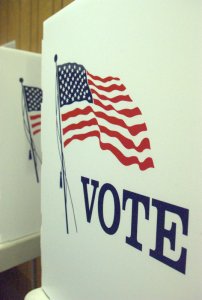
What will Votey McVoteface come up with next? photo credit: Voting via photopin (license)


Personally, I don’t put any stock into such warnings, but then I am not a boat owner, or sailor, or boat naming historian. I’m also thankfully not part of the Natural Environment Research Council, which after the polls close on April 16th, will be tasked with deciding whether it’s better to allow a serious vessel to carry a lighthearted name, or to risk irritating a discombobulated sea god or worse, incurring the wrath of the Internet trolls, and those who take the power of their vote super seriously.

Because one need look no further than the US presidential race to know that people love to vote for ridiculous things. And they get ridiculously upset when you try to reason with them. I’m pretty sure a cranky sea god is the least of the NERC’s concerns.

Famous First Words: Of All the Things They Could Have Said

Today marks the 140th anniversary of a momentous occasion in the history of human communication. March 10, 1876 was the day Alexander Graham Bell, the sort-of inventor of the telephone, uttered into his famous device, “Come here! I want to see you!” The man who heard those words from the next room was Thomas A. Watson.

Actor_portraying_Alexander_Graham_Bell_in_an_AT&T_promotional_film_(1926)
This man is not a telephone inventor, but he once played the role of Alexander Graham Bell, who according to some historians, wasn’t either. Film commissioned by AT&T. (Early Office Museum.) [Public domain], via Wikimedia Commons
Though the message wasn’t glamorous, it was kind of genius. If Watson responded by ducking into the room, Bell would immediately know his message had been received and understood and they would know that they’d finally invented the device that would be sure to change the world.

Watson did receive the message, or at least close enough to it. He would later report that Bell had said, “Come here! I want you!” And of course, that’s how the children’s game of Telephone was invented.

Still, the world was sufficiently impressed. The well-connected Bell obtained a patent, edging out the claims of electrical engineer Elisha Gray and other telephone-like inventors who are each worthy of mention by a more thorough or trustworthy blog than this one.

But no matter where the somewhat controversial credit for the telephone’s invention should fall, there’s little question that Bell was responsible for launching it into commercial viability, maybe in part because he handled the pressure of those first words so beautifully. Because to me, that would be the most terrifying part of getting in on the invention of a communication method with the potential to take off.

268517515_59e6717d88_o
I don’t know what words were first to be uttered over a walkie-talkie, but given that the device wound up being called a “walkie-talkie,” I’m guessing the lost words weren’t terribly creative. photo credit: mob on the radio via photopin (license)


I know that I couldn’t handle such pressure, because a week ago, my sons had some allowance money burning holes in their pockets. They begged me to take them to a store so they could spend some of their hard-earned cash.

What they decided to buy was a set of walkie-talkies, with a video component so they can see one another as they’re talking. It’s pretty much just a lower tech version of FaceTime, exciting for them because our family has not yet reached the era of kiddo smart phones.

They’re really pretty cool little toys and the boys have had a lot of fun with them. But that first night we brought them home, my youngest, who lacks patience for such things, disappeared to play with something else while his older brother and I figured out the new walkie-talkies. We dug them out of their many ridiculous layers of plastic packaging, installed the appropriate batteries, and followed the instructions to synch them.

Then my son ran to another room and yelled, “Say something, Mom!”

I admit that for a second or two, I panicked a little. It felt like a momentous occasion, the breaking in of brand new walkie-talkies. If I said something boring or pointless, I would definitely lose cool mom points. If, on the other hand, I took a chance and ended up saying something stupid, my words might live on in embarrassing family lore.

I briefly thought through my options:

  1. The practical approach, like Bell’s first telephone call to Watson: “Come Here! I want to see you!” (perhaps not so practical when I can already see an image of him in the device).
  2. The highfalutin approach, like Samuel Morse communicating from DC to Baltimore, for the first time with the telegraph: “What hath God wrought?” (sure to garner epic mockery in the annals of family history)
  3. The seasonal approach, like that of Neil Papworth  to the phone of Richard Jarvis, demonstrating the world’s first text message: “Merry Christmas” (hardly appropriate at the beginning of March)
  4. The careless approach, like Ray Tomlinson’s 1971 note to himself in the first successful e-mail: “most likely…‘QWERTYIOP’ or something similar.” (Perhaps it will take an FBI investigation to uncover what happened to the “U”)
  5. The taunting approach, like Motorola’s Martin Cooper to his AT&T rival Joel Engel in the first successful cell phone call: “I’m ringing you just to see if my call sounds good at your end.” (That’s just not very sportsman like.)

    20160310_090527
    But seriously, it wouldn’t hurt the kid to clean his room.

In the end I went with the mom approach: “Time to clean your room!” It turned out, the darn audio didn’t work. But the video worked just fine, because I clearly saw my son stick his tongue out at me before he rushed into the room and grabbed the walkie-talkie from my hand to take it to his brother.

It occurred to me that perhaps what Bell meant to say to his assistant was, “Come here! I want you…to clean up this dreadful experiment!” But Watson, being no dummy, hurried into the room with a big smile on his face. And history was made. Good thing, too, because if not, 140 years later, we might all still be communicating by terribly pretentious telegram.

A Nation So Blessed, Our Dogs Have Love Handles

If you read this blog very often, or if you’ve read the “About This Blog” page, then you know, I don’t do politics in this space. I only rarely even skirt the edge of controversy, because there should be some places on the Internet where you can just have fun and not be offensive or offended, and we all have different opinions, different experiences, and different perspectives.

That being said, in life, I do politics. This has been a weird political season in the US, and a stressful week. No matter what end of the political spectrum you find yourself on most of the time, I think we can all agree that the future looks a little frightening.

22294194410_36b028c547_o
Nothing but nincompoops and megalomaniacs from where I’m sitting. photo credit: hillary clinton ice-picking donald trump : ishootwindows, cliff’s variety, castro, san francisco (2015) via photopin (license)

Because we are very close to declaring that our two frontrunner candidates for President of the United States are:

1.       A woman who is at best an blithering nincompoop who can’t figure out how to use her cell phone and thinks one wipes a server with the swipe of a cloth, or who is at worst a traitor guilty of granting political influence by foreign heads of state in exchange for lucrative speaking engagements.

2.       A man who is at best an incompetent businessman whose ventures have only been highly  successful in the area of declaring bankruptcy and screwing over investors and who has now managed to insult (probably literally) every person on earth, or who is at worst a narcissistic fascist megalomaniac.

I have a lot to say on this topic, but I will spare you. I could use a break, and I’d rather write about my dog. First, I should explain how I feel about dogs in general. I think they smell funny. And they slobber a lot. They bark when they shouldn’t. And they are incredibly needy.

20160302_093000
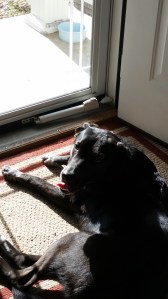
Chubby dog basking in the sunlight, just hoping I’ll shut down the computer and take him for a much needed walk.


Despite the fact that I would not have considered myself a “dog person,” a couple years ago my family adopted a little black puppy we named Ozzie. That alone is a great story, for another time. What’s important to know now is that I love my dog.

I’m pretty sure that the Ancient Egyptian owner of Abuwtiyuw felt the same about his furry companion, who lived sometime during the Sixth Dynasty (2345-2181 BC) and was buried near the Great Pyramid of Giza.

Discovered in 1935 by Egyptologist George Reisner, a tablet that was part of the repurposed material used to build a different tomb, gives detailed instructions about the elaborate burial of a dog. There’s no picture of the dog, but he is described as a tesem, a breed similar to a greyhound or saluki, but with pointier ears. And what’s really cool about it, is that even though the tomb and mummy of the dog remain undiscovered, Abuwtiyuw is the earliest domesticated dog whose name we know.

Because his owner (a pharaoh whose name remains unknown) loved him enough to want to make sure he was taken care of. That’s what good pet owners do. Even if we don’t expect to love them, the little monsters worm their ways into our hearts and we take good care of them, because they take good care of us.

20151001_173226
Ozzie, striking his most presidential pose.


So earlier this week, I took good care of Ozzie by taking him for his annual checkup and vaccinations. The good news is he’s a very healthy two-year-old dog. The bad news is he’s gotten a little chunky over the winter.

The vet’s exact words were, “He’s got some love handles.” So as the weather warms up this spring, we will be extra diligent in making sure Ozzie gets plenty of exercise so he can remain a happy, healthy dog.

That’s what I was thinking as my chubby pet and I waddled away from the vet’s office. And then I found myself reflecting on how amazing it is that I live in a nation where I am so absolutely blessed that not only can I provide my dog with regular medical care (a luxury many people throughout the world can’t even provide for their children), but he also eats so well that he’s overweight. Someday when he dies, I bet I could even provide a funeral for him in a swanky pet cemetery (though I probably won’t).

20151212_160854
He even kisses babies. Or at least he takes food from them. And now I think I’m beginning to see the problem.


So come this November, I may have to decide whether I can vote for a person I might not trust to walk my overweight dog. But for now, I’m going to focus on the fact that I live in a nation so blessed, our dogs have love handles.

I’m still not a dog person. In fact, one thing I can say with a fair amount of certainty is that your dog smells funny, slobbers a lot, barks when he shouldn’t, and is incredibly needy. Ozzie, on the other hand, is all of that, but also happens to be a fuzzy, warm, loving (and maybe just a little chubby) bundle of awesome.

Maybe I’ll vote for him for president.

St. Louis Goes Big, Warts and All

In 1874, Richard Compton, a sheet music publisher from the St. Louis area, hatched a large-scale plan to promote the city he called home. He was attempting to capitalize on an artistic trend in which cities across the United States were engaging. He recruited Camille Dry, an artist who specialized in pictorial maps.

By the late 19th century, every city that was a city had one, a map that highlighted (and exaggerated) its finer qualities. The details of these maps were stunning. Every street, every building, even many windows accounted for, they were designed to attract industry and promote trade.

20160203_111819
One book: St. Louis-Made Population Enlarger and Me: This Sort of Thing is my Bag, Baby

St Louis needed the boost. Its central location and close proximity to the Mississippi River had caused it to boom, but Chicago was booming at a faster clip. Just four years before Dry began his sketches, St. Louis had been embroiled in a scandal over the bribing of census takers to overinflate its population. (Inflate-gate?)

And so the plan was hatched. The artist responsible for producing pictorial maps of eight cities in five different states in 1871 and 1872, took to a hot air balloon (rumor has it anyway), tethered to the East side, and in about a year (probably working with a team), drew a map the likes of which the world had never seen.

Larger and more detailed than any pictorial map then or since, Dry’s work consists of 110 separate drawings, each about 11 x 14 inches in size, that when laid out, cover an area 24 feet long and 8 feet high. Because folding such a map would probably prove challenging, Compton published it, along with 112 pages of business listings, as a book titled Pictorial St. Louis: The Great Metropolis of the Mississippi Valley, a Topographical Survey Drawn in Perspective A.D. 1875.

Eades Bridge
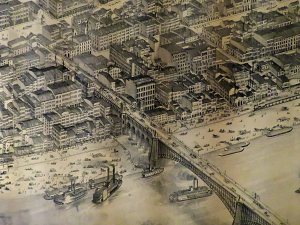
Dry’s map shows almost ten miles of riverfront and more than 40 square miles west of the Mississippi. This panel shows the Eads Bridge, which today is just north of the Arch. But not in 1875.

With a whopping price tag of $25 dollars (which in today’s money is quite a bit more than you’d shell out for your average convenience store road map), and a cumbersome title that didn’t yield great search results on Amazon, the project was a financial flop.

But this beautiful map remains as a point of pride for the city it depicts. Since last May, the Missouri History Museum, located in St. Louis’s Forest Park, has featured an exhibit entitled “A Walk in 1875 St. Louis.” The map has been blown up to 10 feet x 30 feet panels, showing exquisite details like the tents of a visiting circus, a man driving a herd of cows through the city streets, and a mob making a run on a local bank.

Interspersed with the map are the stories of the lives of St. Louisans in 1875, including the foods they ate, the clothes they wore, and the parasites they ingested in their drinking water. The special exhibit will be open through February 14, and I’m ashamed to admit I didn’t get there until time had almost run out. But I’m glad I saw it.

What impressed me the most was that while other cities used their beautiful maps to gloss over their warts, exaggerating and sometimes out-and-out lying to prospective businessmen and settlers in order to lure them in, Compton and Dry took a different approach. The warts are shining brightly on this map. St. Louis wasn’t a perfect Utopia in 1875 and I would never suggest that it is now.

history museum
Missouri History Museum, just one of many places that makes St. Louis great. And wouldn’t it be fun to color?

But like Richard Compton, I love my city. I know we’ve had some problems. Race relations are tense, crime has crept up, and I hear some football team chose to leave us for LA (a city that in 1875, barely took up one page of map). The press has been unforgiving. Still, St. Louis is an amazing place with a lot to offer and I’m proud to call it home.

So here’s my idea. What the city of St. Louis needs to do is promote itself in a medium people can respect. We need to jump on the biggest trend to sweep across this great nation since the pictorial map craze of the 19th century and show off not just our warts, but also everything that is amazing about our city.

That’s right. What we need is a St. Louis-themed adult coloring book. A really, really big one.


That Daring Young Man on the Flying Trapeze

Chances are if you’ve been to a circus at some point, you’ve seen people risk their lives. It’s part of the thrill of the show. There are fire-breathers, lion-tamers, high-wire walkers, and sword swallowers to name just a few.

And while the circus used to be primarily about tortured exotic animals, unfortunate human oddities, and psychotic-looking clowns that haunt our nightmares, at some point the attention shifted to more and more dangerous performances of highly skilled human oddities as they defied the kind of grisly deaths that haunt our nightmares.

One of the turning points for the circus came in the middle of the 19th century when a young Frenchman named Jules Léotard went swimming in his father’s pool in Toulouse. A skilled gymnast, Léotard swam a few laps and then thought he might have more fun at the pool if he swung above it. He rigged up a series of apparatuses resembling dangling pull-up bars and began swinging, launching himself from one to the other. Soon he was performing elaborate acrobatic maneuvers above the pool.

Jules_Léotard
Jules Léotard and his bulging muscles. Fetch the smelling salts!

And a terrifyingly dangerous circus act was born.  Léotard performed on the trapeze above straw mattresses in his home town and soon he found himself flying above large crowds in Paris and London. The practical, tight-fitting costume he designed both for flexibility and for making the ladies swoon at the sight of his bulging muscles, came to be known as the leotard. And that song about flying through the air with the greatest of ease? That was about Jules Léotard, too.

Today the flying trapeze is an iconic act in the world of the circus performances. And it’s one of the reasons I won’t attend a circus. Now I don’t care much for the animal training or the clowns, either, but I really really don’t like to watch people risk their lives for the sake of my entertainment. It’s just not my thing.

But I am fascinated by the performers who do it. So a few months ago, I wrote a little flash fiction piece about a circus acrobat performing on the trapeze. I entered the story into a contest sponsored by the group Wow! Women on Writing. And the story won third place, which was very exciting. If you’d like, you can follow the link and read “The Greatest of Ease” and some other lovely flash pieces on the Wow! website.

Then, if you’re a really super amazing person, you can also check out an interview with me that was posted on the Wow! blog earlier this week. In it I talk about the story, about my forthcoming novel, and a few other writerly kinds of things.

I hope you will find it entertaining, because though it would be pretty cool if someone wrote a song about me one of these days, this is pretty much as close as I ever plan to get to risking my life for the sake of entertaining an audience. And I think it’s also unlikely I’ll ever wear a leotard in public. Because that’s the kind of thing that haunts my nightmares.

Going Tiny in a Very Small Way

In a few weeks I will celebrate the third anniversary of moving into my current home. This most recent move, from Salem, Oregon, was the fifth in my fifteen years of marriage, and I’m sincerely hoping it is the last for a while. I’d like to let my sons go through school with a consistent group of friends. I’d like to think that when someone asks them where they are from originally, they might know how to answer. And despite all the bad press of the last few years, St. Louis is a wonderful place and we are very happy to be living so near our favorite city.

But lately I’ve also been thinking about the one big disadvantage of staying put. Because I’ve become obsessed with the television shows that highlight the tiny house movement. There are several different ones, but each focuses in on a person, or couple, or sometimes even pretty good size family that is looking to either build or buy a home that is somewhere in the neighborhood of 400 square feet or less.

7440329382_18924e42d8_o
Tiny house. Big bludgeoning risk. photo credit: IMG_6224 via photopin (license)

I’ve tried for a long time to figure out what appeals to me about these shows. I know for certain that I do NOT wish to live in such a home. As much as I love my family, if I had to live on top of them every minute of every day, someone would get accidentally bludgeoned to death.

I think the reason these shows appeal to me so much is because of the stories of the people. Almost all of them say the reason they want to “go tiny” is, in part, because they want to rid themselves of the extra stuff in their lives and live more freely with less.

Doesn’t that sound amazing? So I’m a little scared to not be looking ahead to a move now that it’s been a few years, because every time we pack up to move, we pare down. And it’s amazing.

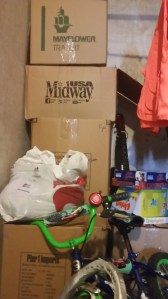
Without a move looming, the drawers are getting a little cluttered, the closets a little crowded, and the tower of boxes in the basement of outgrown clothes and toys and books that should be donated is beginning to teeter dangerously.

I’m afraid if this goes much longer, we risk becoming like Homer and Langley Collyer, a well-to-do pair of brothers that lived together in their family’s 5th Avenue Harlem mansion, along with all the leftover equipment from their deceased father’s medical practice, the possessions from their deceased mother’s separate house, stacks and stacks of newspapers, and fourteen pianos.

4082110101_a077461c7e_o
So my closets don’t look like this. Yet. photo credit: bric-a-brac via photopin (license)

On March 21, 1947 the police received a call about a smell of decay emanating from the house. They dug their way in and discovered Homer Collyer dead. Nearly a month later, workers uncovered the body of Langley Collyer, crushed under the junk. Around 120 tons of debris was eventually removed from the house. The few salvageable things fetched $2000 at auction and the dangerous house was razed, making way for the small Collyer Brother’s Park at the corner of 128th and 5th Avenue.

There’ve been attempts to have the park renamed, in order to honor someone or something perhaps more noble than the famous hoarders, but as then NYC Parks Commissioner Adrian Benepe pointed out, “Not all history is pretty — and many New York children were admonished by their parents to clean their room ‘or else you’ll end up like the Collyer brothers.’”

20160114_101549
A teetering tower of donations. But no pianos, so that’s something.

I think it’s safe to assume there were some underlying pathological issues that led to the lifestyle and tragic demise of the Collyers, but I’m going to try to learn a lesson from them anyway. I’m not facing an impending move, and because I love my family and would hate to have to bludgeon them, I am not going to attempt to live in 400 square feet.

But what I am going to do is make a concerted effort to pare down as if we were planning a big change. Call it my 2016 resolution if you will. I will sort out the junk drawers, reorganize the closets, and haul off that teetering tower of donation boxes.  I will rid myself of the extra stuff and live more freely with less.

And it will feel amazing.