Making a Big Splash

In 1882, owner of the Rock Island and Milan Steam and Horse Railway Company, Bailey Davenport took on a new business venture to drive more business. What he created was Watchtower Park, a leisure destination at the end of the line on the bluffs overlooking the Rock River at Rock Island, Illinois.

This recreational park, admission to which was included with the price of a trolley ticket, opened with groomed hiking trails, a grand pavilion with picnic tables, and what Davenport advertised as a healing spring. Eventually, it would expand to include live theater, vaudeville, tennis courts, and billiards tables.
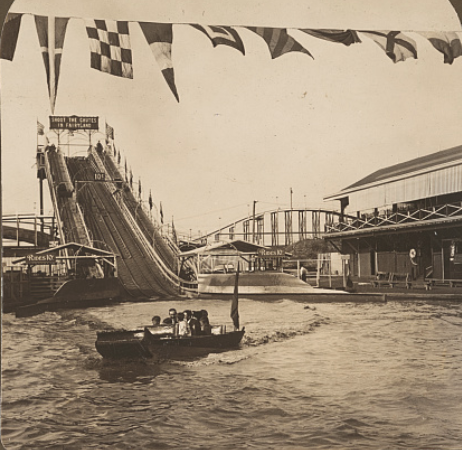
Shoot the Chute on the Pike at the 1904 World’s Fair.

But the biggest attraction, built in 1884 by J. P. Newburg, was a five hundred foot greased wooden track built into a hill down which a wide flat-bottomed boat zoom toward the river where it created a satisfying splash and glided across the surface of the water. An attendant then used a pulley system to drag the boat back up the hill for another go.

Watchtowers “Shoot the Chute” ride was the first of its kind, but the design quickly took off, becoming a frequent feature of amusement parks throughout the United States and the world. It’s probably no surprise then that a Shoot the Chute ride popped up in 1904 in the entertainment section, known as the Pike, on the grounds of the World’s Fair in St. Louis.

What might be more surprising is that there were actually two such rides on the Pike—one for the fairgoers, and one for the elephants at Hagenbeck’s Zoological Paradise and Trained Animal Circus. And just as a visitor standing nearby the Shoot the Chute could expect to enjoy a cool splash on a hot, sticky St. Louis summer day, a visitor to Hagenbeck’s could get showered by the kerplunk of an 8,000 pound pachyderm.

The elephant slide sure did make a splash, and appears frequently as a highlight in fairgoer written accounts. One biographer of Hagenbeck elephant trainer Reuben Castang even recounts a shared story in which Castang took an accidental plunge with the giant animals, and lived to play it off as if it had been a planned stunt.

Now that’s how you make a splash.

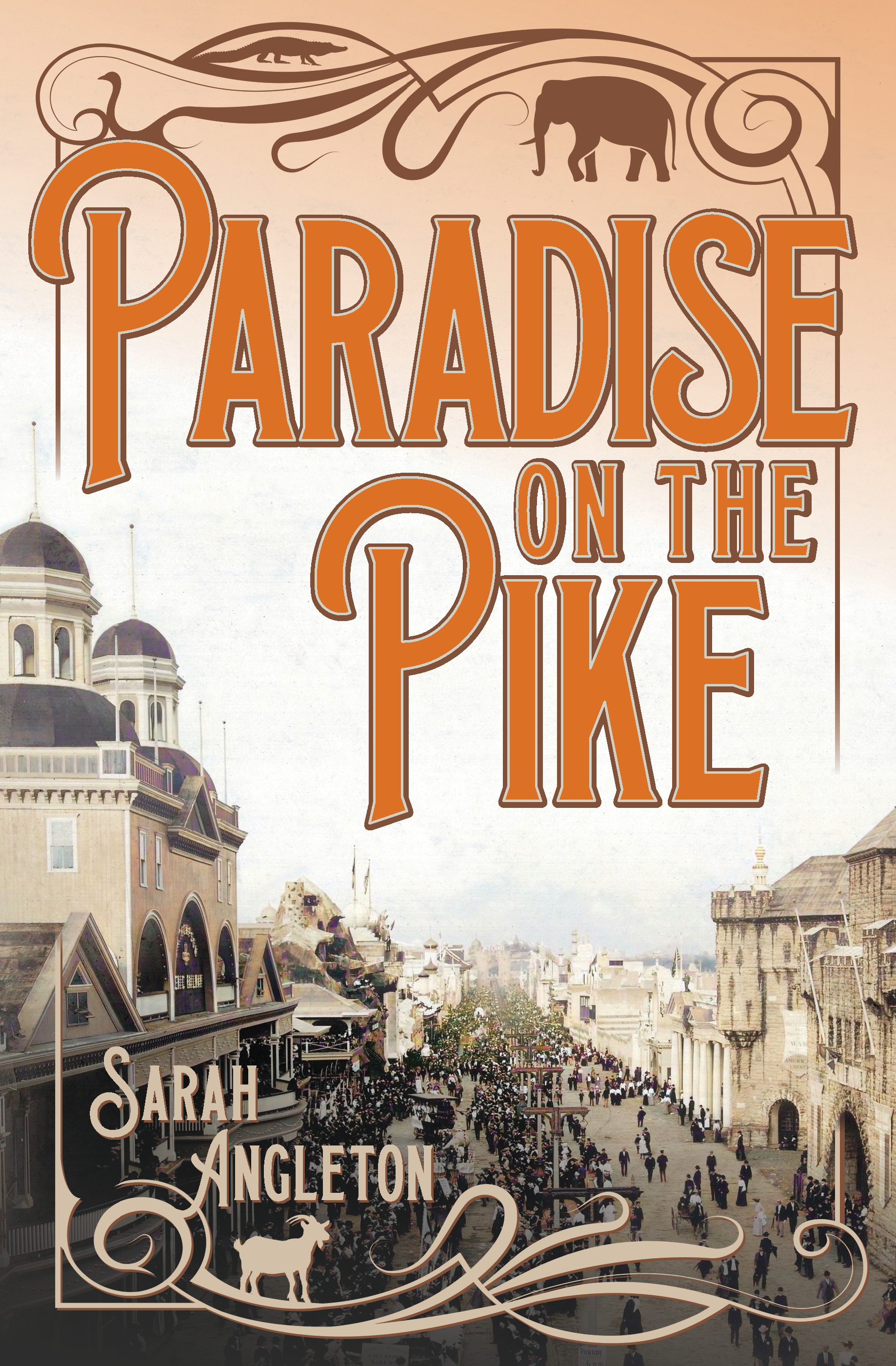
A fictionalized version of this scene appears in my new historical mystery, Paradise on the Pike, which came sliding onto the market this past week. With any luck, and with a lot of help from wonderful people spreading the word and building the buzz, it’s making a big enough splash that readers will notice and take a chance on it.

Hagenbeck’s Zoological Paradise and Trained Animal Circus is central to the novel, which is populated by elephants and many other animals that were fun characters to write. And of course sometimes when researching, you come across something that you just can’t leave out. Because everyone loves a good Shoot the Chute ride and some stories just make a big splash.

If you’d like to read more about the real Hagenbeck elephant antics that appear in the book, check out my guest post featured by writer and very gracious host Roberta Eaton Cheadle on her blog Roberta Writes.


Meet Me at the Fair

On November 22, 1944 after schedule delays, numerous script rewrites, budget woes, and a leading lady still unhappy with her role, a new Christmas musical debuted on the big screen in St. Louis, the city at the film’s heart. 

The song “Meet Me in St. Louis,” well known today because of the musical, is actually from 1904 and was written specifically for the World’s Fair. Public Domain, via Wikimedia Commons

Despite the mess of getting to that moment, Meet Me in St. Louis enjoyed immediate success, becoming Metro-Goldwyn-Mayer’s second highest grossing film up to that point, coming in only behind Gone With the Wind. After the premiere, Judy Garland even decided she liked it after all and commented to the producer, “Remind me not to tell you what kinds of pictures to make.”

The screenplay is based on a series of semi-autobiographical short stories by St. Louis native Sally Benson who wrote of an upper middle-class family that lived at 5135 Kensington Avenue during the construction of the 1904 World’s Fair on the grounds of Forest Park in St. Louis.

I confess, I saw the movie for the first time later in life than I should have, having grown up within easy reach of St. Louis. My childhood summers included trips to downtown to watch the Cardinals play at Busch Stadium where the musical’s title song is still played by the organist at every game and the crowd sings along as the words scroll across the jumbotron. 

I’ve been many times to the wonderful outdoor Muny theater in Forest Park where the stage adaptation of Meet Me in St. Louis, originally produced in 1989, is performed every few years. I even got engaged in that park on the very grounds of the actual 1904 World’s Fair.

I was lucky enough to get a sneak peek at the new exhibit, open to the public on April 27th. It contains a scale model of the entire fairgrounds. And it’s spectacular.

Officially known as the Louisiana Purchase Exposition, the Fair is a big deal in St. Louis history. It transformed the city, launching it for about seven months into the center of the world’s attention. 

And it’s still a big deal, today. One-hundred and twenty years later the World’s Fair looms large in the community memory carried now by not a single living person who was there to see it, sparking excitement whenever it comes up in conversation, which is kind of weirdly a lot.

It’s especially on everyone’s minds right now because at the end of this month, just in time to celebrate the 120th anniversary of the opening of the Fair, the Missouri History Museum will reveal a newly re-imagined permanent World’s Fair exhibit. 

Equally exciting for everyone who either lives in my house or happens to be my mother, is the release of my new historical mystery set on the grounds of the 1904 World’s Fair in St. Louis. 

Paradise on the Pike is available for the first time today. The story takes place in the enchanting world of Hagenbeck’s Zoological Paradise and Trained Animal Circus on the Pike, which is the entertainment strip within the Fair. It’s not a light, sentimental sort of story like Sally Benson’s, but it does contain elephants and lions and a pair of cantankerous goats. It also allowed me, and will hopefully allow you, to spend some time strolling through the Fair, which was almost entirely constructed of temporary buildings meant to disappear.

Available today! Order from your favorite independent bookstore or slightly bigger bookstore or Amazon.

And maybe that’s why, one hundred and twenty years later, it still takes up space in our imaginations, because we’re a little like six-year-old Tootie at the end of Benson’s stories when the family marvels over the lights and fountains on the fairgrounds and her sister Agnes asks if it’ll ever be torn down.

Tootie emphatically replies, “They’ll never tear it down. It will be like this forever.”

Agnes, relieved, exclaims, “I can’t believe it. Right here where we live. Right here in St. Louis.”

Forest Park retains very few physical reminders of the enormous event that once filled its every corner and held the attention of the world, but in the hearts of the St. Louisans who stroll through the grounds and wish they could have seen those lights shining, it will never be torn down. It’ll be like this forever.

You can find more information about Paradise on the Pike at this link.

Seven More Years of Wrinkles and Gray Hair

Today marks exactly four weeks until my fifth book launches into the world. It’s been nearly seven years since I published my first, a collection developed from the first five years of this blog. That book, called Launching Sheep & Other Stories from the Intersection of History and Nonsense, is part history, part memoir, and a good part made-up silliness. The cover features a picture of me in period costume.

This picture has served me well, but it’s time to age up a little bit. Image by KarenAndersonDesigns

That was my first professional author photograph. My second was taken not long after in preparation for the release of my first novel, which happened about five months later. That one is a tad bit more professional and includes much less ridiculous clothing. I’m smiling, but not too much. I look like an approachable but also knowledgeable and literary lady in her thirties.

Most of those things, I hope I am. One of them, I definitely am not. And that’s why I recently had some new photos taken. Having portraits taken is uncomfortable for me. I don’t exactly run from the camera, but as a typical mom and keeper of memories, I am more often behind the lens than in front of it.

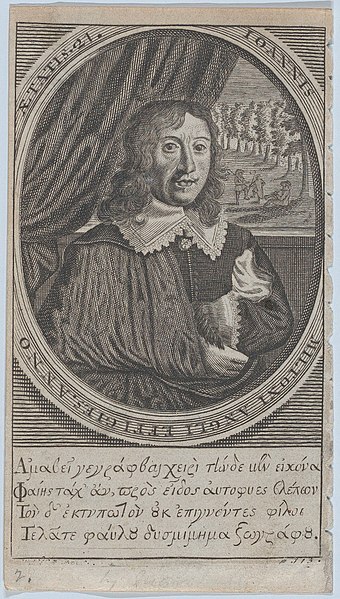
But I’ve earned nearly seven more years of wrinkles and gray hair since the last set of head shots, and readers have been expecting author portraits since the papyrus scrolls of Ancient Egypt. I couldn’t avoid them any more than John Milton could have when his printer Humphrey Moseley insisted the poet include one with his first collection of poems in 1645.

Maybe not the most flattering portrait ever. William Marshall, Public Domain, via Wikimedia Commons

Milton enlisted the help of renowned engraver William Marshall to create a frontispiece including an author portrait. At the time, Milton was thirty-seven years old, but the standard of the day was to include a picture of the poet at a younger age. Alas, that is no longer the standard.

According to the words engraved around the portrait, William aimed to depict Milton at the age of twenty-one. According to the overly large nose, greasy hair, puckered lips, and swollen right eye of the portrait, he missed.

The picture was so unflattering and Milton so upset about it, that the poet asked the engraver to include the following lines in Greek (a language that Marshall allegedly could not read) beneath the portrait:

“Looking at the form of the original, you could say, perhaps that his likeness has been drawn by a rank beginner; but, my friends, since you do not recognize what is pictured here, have a chuckle at a caricature by a good-for-nothing artist.”

An approachable, knowledgeable, literary lady with seven more years of wrinkles and gray hair, looking pretty darn okay. Image by Karen Anderson Designs.

When the collection was updated in 1673, the portrait was no longer included, but Milton, apparently still bitter about the worst head shot ever, moved his added poetic words to the interior of the book and slapped a title on them: “On the Engraver of his Portrait.”

Fortunately, my good friend and photographer is much more pleasant to work with than William Marshall apparently was. She doesn’t bat an eye when I ask her to photograph me in period costume holding a laptop, or to meet me in Forest Park in St. Louis so we can get a hint of the 1904 World’s Fair into the pictures.

She makes it as easy as possible for an awkward, squinty-eyed person such as myself to look pretty darn okay. I can trust that she’d never make my nose appear too large, my eye swollen, or my hair extra greasy. She’d probably even digitally remove my wrinkles and gray hair if I asked her to, but I didn’t. And she can trust that I’ll never include an insulting poem about her work in my book.

A Somewhat Subdued Book Launch

This has been a difficult week in the household of practical history. My sweet mother-in-law passed away after a long health struggle. It’s been an emotional time of grieving and planning and hosting, and it has not been a week for posting or commenting. I am sorry about that, and I am working to catch up.

In general, I would suggest that one might wish to avoid big, emotionally difficult life events when launching a book.  Of course, since big, emotionally difficult life events are rarely planned, here we are. Because the other thing that happened this week is that my third historical novel launched into the world.

I had originally planned to post that announcement accompanied by some interesting history, a little whimsy, and much fanfare. Instead, I’m just going to post the prologue of the book. If you get to the end of the prologue and you would like to keep reading, you can get the book here: mybook.to/PurchaseOnAmazon or here: https://books2read.com/u/31KjGw I would also really appreciate that if you are on Goodreads and feel so compelled, you go ahead and mark it as “Want to Read”: https://bit.ly/3osuNGV. And, of course, reviews are an author’s best friend. Thanks!

Prologue

August 13, 1837

Even the buzz of the insects hushed as the final preacher of the Sabbath day stepped onto the stage to claim the pulpit. It was this man they’d come to see—the farmers and the merchants, the ladies in their finest silks, the young lawyer who, at the request of his friends, had left piles of work in his office six miles away in Springfield only to hear the renowned speaker.

Peter Akers didn’t disappoint. He was a giant of a man. More than six feet tall and broad with long limbs and large hands that animated his speech, he loomed above the crowd. They leaned into his words in the slick heat of the Illinois summer.

He began his sermon with a text from Zechariah 9:9: Rejoice greatly, O daughter of Zion; shout, O daughter of Jerusalem; behold thy King cometh unto thee. Akers favored the Old Testament prophets, often preaching from these strange and ancient texts sometimes for hours, diving without hesitation into high-minded allegory and apocalyptic language, inviting his congregation to ascend with him to new intellectual heights.

Also, this happened.
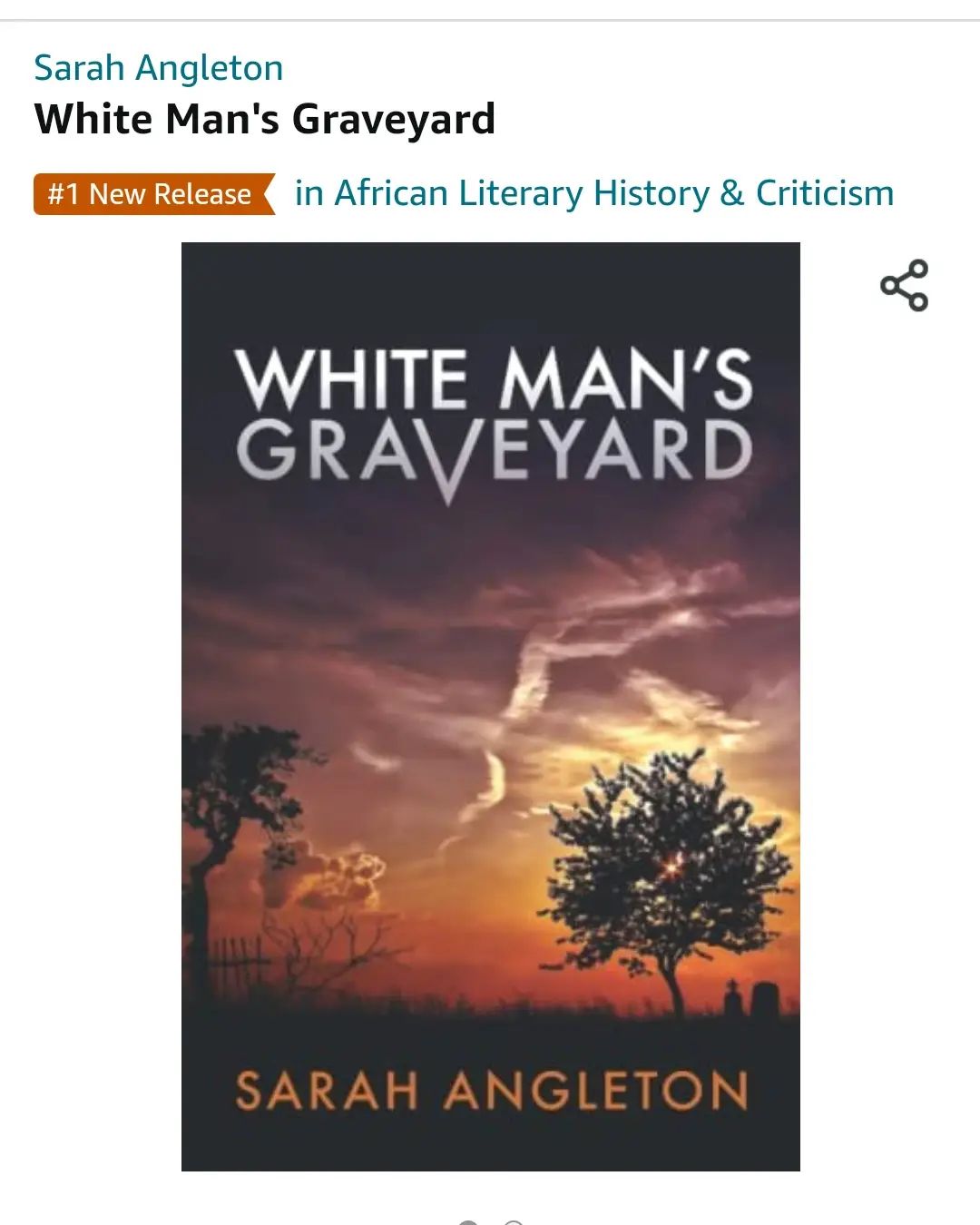
#1 New Release in one fairly obscure category on Amazon. But that’s something. I think.

His were not the emotionally exhilarating sermons of his col­leagues. He neither condemned nor flattered. His words did not in­spire the quaking and contorting otherwise common at camp meeting revivals, yet he held his audience rapt and eager.

Like Jacob of old, Akers wrestled with God, and all who listened came away changed. His sermon danced among the words of God’s prophets, from Zechariah to Isaiah, from Ezekiel’s proclamations of the unrighteous overturned, to the book of Revelation and Baby­lon’s inevitable fall.

And the merchants of the earth shall weep and mourn over her; for no man buyeth their merchandise anymore: the merchandise of silver and gold and precious stone, of wine and oil and fine flour, of sheep and horses and chariots and slaves and the souls of men.

Akers paused here, his eyes raised to heaven and at the same time locked into the hearts of each silent person awaiting the forth­coming conclusion, breaths held in anticipation.

“If we interpret the prophecies of this Book correctly. . .” Though the preacher’s commanding voice lowered to nearly a whisper, not a word could be missed. “There will soon come a time when the head and front of this offending shall be broken; a time when slave-ships, like beasts of prey, will no longer steal along the coast of de­fenseless Africa. When we shall cease to trade in the flesh and souls of men but will instead expel forever from this land the manacle and the whip.

“I am not a prophet,” Akers explained to a congregation that did not believe him. “But a student of the Prophets. American slavery will come to an end in some near decade.”

At these words, shifting and murmuring rose in the crowd, some perhaps angry but most filled with hope and awe at the sheer audacity of the assertion. Undaunted by the excitement, Akers car­ried on, saying, “Who can tell but that the man who shall lead us through this strife might be standing in this presence.”

This was a pronouncement rather than a question. The preacher paused, giving space for the seed of prophetic vision to find fertile soil.

At the edge of the crowd, the young lawyer drew a long breath, rubbed his weary eyes, and reflected on the preacher’s powerful words.

One of his friends clapped him on the back. “What do you think, Mr. Lincoln? Are you glad you came with us?”

“As odd as it seems,” he answered with only slight hesitation, “When the preacher described those changes and revolutions, I was deeply impressed that I should somehow strangely mix up with them.”

He did not wait for a response from his dumbfounded friend, but stood tall and stretched the stiffness from his shoulders and limbs as he thought of the many tasks awaiting him on his desk, and of the much greater work he’d yet to begin.

The Great American Book Cover

In 1925, the world was introduced to a young graphic artist who, up until that time, had remained somewhat obscure. Initially primarily a portrait painter, Francis Cugat was discovered in Chicago by conductor Cleofonte Camanini who connected the artist to numerous opera stars for whom he designed personalized posters.

From there, exactly how he came to the attention of publisher Maxwell Perkins isn’t really known, but in Cugat’s long career which eventually gravitated to film work, he designed only one book cover, and it is among the most recognizable in history.

In all its original glory.

Perkins asked him to sketch some ideas for a forthcoming novel by F. Scott Fitzgerald, tentatively titled Among Ash Heaps and Millionaires. Taking what little bit of information Perkins could give him about the incomplete book, Cugat came back with sketches that included bleak landscapes and various iterations of eyes in a wide expanse of sky.

The publisher then shared the sketches with Fitzgerald who apparently liked them a lot. In fact, after missing a deadline, the writer sent a letter to his publisher in which he wrote, “For Christ’s sake don’t give anyone that jacket you’re saving for me, I’ve written it into the book.”

The 1925 book, which ended up with the title The Great Gatsby, though not initially very commercially successful, has become one of the most critically acclaimed works of the twentieth century and, some would say, is in the running for the label of the Great American Novel. You probably read it in high school. I did. And my son who is a junior just did.

I can honestly say I don’t remember the book particularly well, but I do recall the voice of my junior year English teacher, Mr. K., as he discussed the imagery of the enormous eyes peering, bespectacled, from a faded billboard advertising the practice of T. J. Eckleburg, keeping God-like watch over the unfolding tragedy of Jay Gatsby and Daisy Buchanan, and mimicking the way Daisy’s disembodied face haunted the men who loved her.

I also remember that Mr. K.’s voice was particularly deep and soothing and that even though I adored his class, it was sometimes difficult to stay awake in that period, which immediately followed lunch. So, I have to assume that one of the reasons the imagery stuck with me as the rest of the novel and almost everything else I read that year faded in my memory like a long neglected and weathered billboard, is because of the eyes on the front cover. Not to judge the book by them or anything, but it turns out covers really do matter.

A future classic? Or at least a pretty book.

That’s why I am so excited to introduce to you the cover art for my newest book, coming out in just a couple of weeks. It wasn’t designed before the book was finished, but I think it does capture it really well and I couldn’t be happier with how it turned out.

Fitzgerald must have felt much the same way. The final cover didn’t have universal appeal. Ernest Hemingway, for one, thought it was garish. The Great Gatsby has been published with a few different covers over the years, including one featuring Leonardo Dicaprio, but the original always seems to make a comeback, and it is certainly the most recognized.

Whether the cover of my newest novel will ever become an iconic image remains to be seen. It probably depends on whether the book, in years to come, will be studied in English classes and will be in contention for becoming the Great American Novel. I don’t know that my aspirations are quite that high. But it does, I think, have a pretty nice cover.

Celebrating Family History Month Under a False Bottom Drawer

On June 11, 1837, the ship Charlotte Harper set sail from the United States for the West Coast of Africa where a colony had been established by the American Colonization Society for the purpose of resettling former American slaves. The ship carried supplies for the settlements of Bassa Cove and Monrovia in the colony of Liberia, a handful of ACS agents, a couple of teachers, and one eager twenty-four-year-old Methodist Episcopal missionary physician named Sylvanus Goheen.

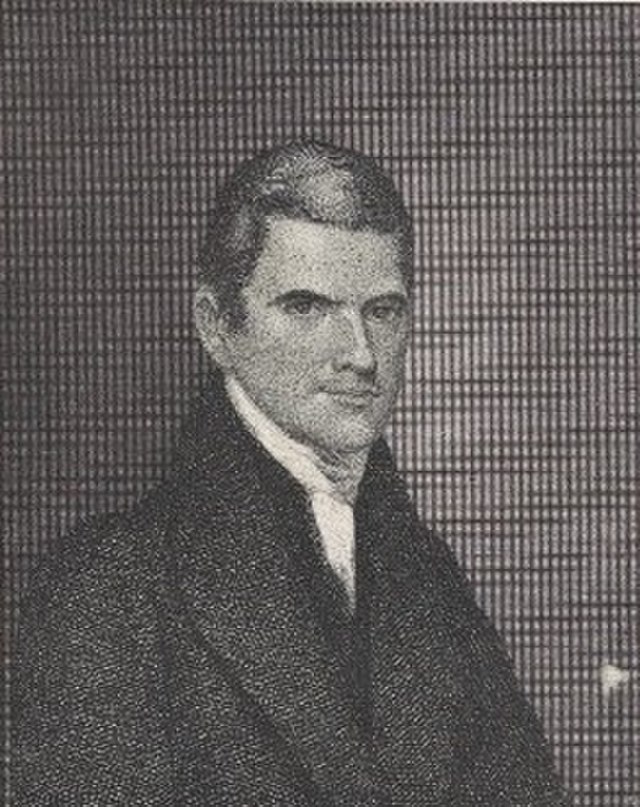
Unfortunately, I don’t have a picture of Sylvanus, but this is his good buddy John Seys, superintendent of the Methodist Episcopal mission in Liberia. Smith sc., Public domain, via Wikimedia Commons

Looking back on history, we might have some strong opinions about colonization, most of them probably negative. At that time, opinions were mixed. But this farm kid from Pennsylvania, youngest of a large brood, and fresh from medical school, such as it was in the 1830s, didn’t question the nobility of his intention to help carry the light of Christ to the new colony. He did, however, fear he might not make it there at all.

Watching the waving handkerchief of the one brother who, with tears in his eyes, had come to send him off, the image slowly fading from view along with the coastline of the United States, Sylvanus began to envision looming tragedy that would send him to the bottom of the Atlantic. The newspaper headlines his mother would read began to drift through his mind: Storm Sunk Vessel and All Aboard Lost or She Went Down in the Night, Cause Unknown or She Happened in with a Pirate who Murdered All Aboard. I think it’s safe to say he was freaking out a little.

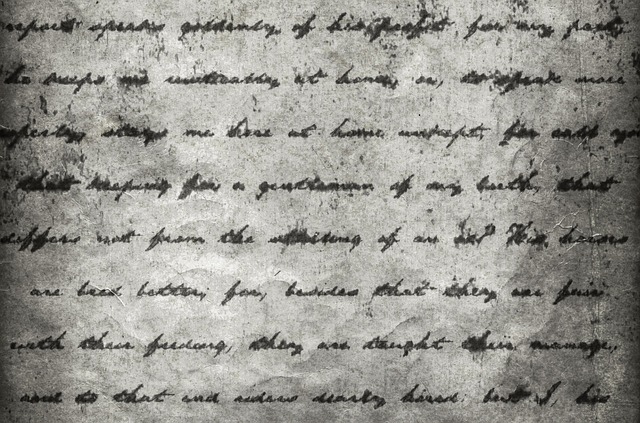
And this is where, after hours and hours of puzzling my way through the handwriting of my ancestors, I lament the fact that a lot of school children are no longer learning cursive. PublicDomainPictures, via Pixabay

I don’t blame him. I’d have probably been freaking out, too. Sylvanus Goheen was imaginative, charming, and pretty funny. He was also sort of arrogant and sometimes kind of petulant, but we all have our faults and, if I’m being honest, he reminds me a little bit of myself.

That makes sense to me, because he was the younger brother of my grandfather’s great grandfather. I first encountered Sylvanus on the pages of a diary he presented to his sister Ann around the time of his departure for Liberia. This diary, though shorter on details than I’d have liked, turned up beneath the false bottom drawer of a lawyer cabinet among my grandmother’s possessions. That’s where my aunt found it shortly after my grandmother’s death.

Since I’m the writer in the family, she presented it to me and I placed it on the backburner where it simmered for quite a few years while, though I dabbled with it a little, I spent most of my time with mummies, lost manuscripts, and scoundrels. But now finally it’s quite a few years later. It’s also October, which means that if you are in the United States, this is officially Family History Month as declared by Congress in 2001 because, evidently, they had nothing better to do.

It’s the month for interviewing your oldest relatives, for checking out the genealogical tools available at your local library, for sending off for that kit that tells you how closely you’re related to Genghis Kahn, and for searching the false bottom drawers in your heirloom furniture. Because I bet you’ll find interesting people, who did interesting things, and if you can manage to learn about them, you might even discover hints of yourself.

Genghis Kahn, allegedly among the most genetically successful men of all time. Clara-Agathe NARGEOT (1829 – ?), Public domain, via Wikimedia Commons

And maybe, if you do a little more research, and a little more than that, and a little more than that until you’ve done quite a lot of research about them, you might someday take them off the backburner and write a book. That’s what I finally did.

My newest novel White Man’s Graveyard will be released in just a few weeks. In its pages, you’ll get to meet Sylvanus, his sister Annie, a dog named Hector, an orangutan named Jenny, and a whole lot of other characters, many of whom come from my own family’s past, and a few of whom come from my head. You’ll also get to explore a controversial piece of not always well remembered American and Liberian history.

And you’ll discover whether or not Sylvanus was murdered by a pirate.

Charles Dickens is in Good Company

On the last day of May in 1837, avid readers of The Posthumous Papers of the Pickwick Club were disappointed. The story had been published in installments by Chapman & Hall at the end of every month since March of 1836 and by this time was approaching a print run of 40,000 for each part. It was perhaps the first truly and widely popular piece of literature to hit the London scene, spawning bootlegged copies, theatrical renditions, circulating jokes, and a wide range of merchandise.

Charles Dickens was living the dream. He’d hit the publishing market just right and given the reading public exactly what it wanted at exactly the moment it wanted it. Then in May of 1837, as it so often does, life happened and Dickens missed a deadline when his sister-in-law Mary, to whom he was close, died suddenly. He also missed a deadline for a new serial novel called Oliver Twist.

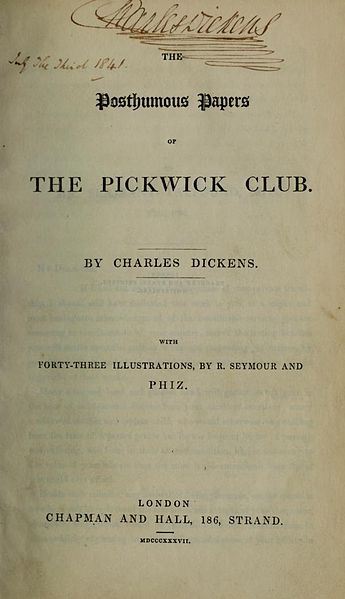
A story written by a some guy named Charles Dickens, who, much like author Sarah Angleton, was known to serialize his novels. Public domain, via Wikimedia Commons

Dickens did manage to publish a section of his Pickwick Papers the following month and an anxious readership was happy to get it. The work, which was later published as a single novel, originally reached its readers as a series of nineteen issues published over twenty months.

The idea of the serial novel wasn’t entirely new, but it hit its stride with Dickens who had begun his career publishing his Sketches by Boz in various newspapers before they were later bundled into a single work.

Readers liked the format because it was cheaper to buy a short piece than a full novel. Publishers liked it because it was cheaper and less risky to produce short pieces, which allowed them to respond to market demand rather than try to predict it. And lots of authors throughout the nineteenth century and into the early twentieth century did it, including Harriet Beecher Stowe, Fyodor Dostoevsky, Henry James, Upton Sinclair, Ernest Hemingway, and many, many others. All the cool kids were doing it.

Some guy named Charles Dickens who published serialized novels, similarly to author Sarah Angleton. National Library of Wales, Public domain, via Wikimedia Commons

Then serial fiction kind of fell out of fashion, with only the occasional experimental foray by a well-known author here or there. But now it’s making a comeback. It’s happening on blogs, of course, and podcasts, and now on more and more online publishing platforms. Even Amazon decided to get a piece of the action.

Last week saw the launch of Amazon’s newest self-publishing platform Kindle Vella. For now, it’s only available in the US and I don’t entirely understand how it works just yet, but basically, it’s an app to which authors publish their stories an “episode” at a time, and readers cash in-app coins they’ve purchased in order to continue with the next episode. I think it’s supposed to be interactive, too. That’s the part I don’t have quite figured out yet.

But I assume I will figure it out before too long, because I have begun publishing a story on Vella. This novel-in-pieces is a little different than my others that got published as plain ol’ books. Those are historical novels that most likely appeal to the kind of people who like to read historical novels, which I know because I’m so great at marketing.  Or at least they probably appeal to people who like history or novels or who have ever had a conversation with my mom or dad.

This story might not appeal to the same crowd. It’s a dystopian, sci fi story I started cooking up several years ago, in which, unsurprisingly, there is a teenage girl who is destined to become a hero and do heroic things, fall in love and possibly become embroiled in a love triangle, and learn something about herself on the way to saving the world.

A serialized novel by Sarah Angleton (aka S. M. Angleton)

Probably. But as I post episodes and get reader feedback, I suppose it could always change a little bit. What I can state with a fair amount of confidence is that I am on schedule to upload episodes far enough in advance that if life happens, as it did last week when I failed to post in this space, new episodes should still drop each Wednesday.

Here’s the description you will find on Vella:

Built on the ashes of St. Louis, Becca’s dystopian world centers on a dark faith dedicated to pushing the limits of the human lifespan. After an unnaturally prolonged childhood, she faces the ritual that will determine her vocation and launch her initiation into adulthood, a ritual that two years prior, her brother sacrificed his life to protest. When Becca’s own ceremony takes a wrong turn, she finds herself in a world preserved by lies and a tangled history that threatens everyone she loves.

If you’re into that kind of thing, please check it out at this link to read the first few episodes for free. It’s an experiment, but I’m kind of excited about it. Maybe by the time I get to the last episode, 40,000 people will be waiting anxiously for it. It might spawn jokes, theatrical renditions, bootlegged copies, and a wide range of merchandise. Someday, I might even publish it as a book. The only thing I know for certain is that I have now joined the ranks of Charles Dickens. And I think he’s in pretty good company.

What to Do in the Meantime

In 1912, rare books dealer Wilfrid Voynich added to his collection of his London shop the strangest book he never read. It’s not entirely clear how the manuscript came into Voynich’s possession, but it most likely came from the Jesuit Order, which around that time, sold some of its holdings from the library of the Roman College (by then Pontifical Gregorian University) to the Vatican and apparently to a few others as well.

Voynich2
Ohhhh… so that’s what it says. Excerpt from the Voynich Manuscript. Public Domain, Wikimedia Commons.

The Jesuits didn’t read it either, not even the scholar Athanasius Kircher, who was likely responsible for the inclusion of the manuscript in the collection.

Before him, the two hundred-plus-page manuscript probably belonged to a physician by the name of Johannes Marcus Marci, who likely received it from alchemist and antique collector George Baresch, who may have gotten it from Jacobus Horcicky de Tepenecz, who served as the personal physician to Emperor Rudolph II of Germany. Emperor Rudolf assumed the manuscript was the work of 13th century philosopher Roger Bacon and purchased it for a fairly large sum.

But none of these men ever read the book.

Because they couldn’t. What came to be known in the 20th century as the Voynich Manuscript is an enduring puzzle. Its vellum pages have been carbon-dated to the early fifteenth century, which means Bacon didn’t write it. They are filled with an unknown language or code, written by a single, careful hand, and accompanied by lots of strange pictures of unidentifiable plants, weird symbols, and plenty of naked ladies.

Voynich1
I chose not to highlight one of the pages with naked ladies, as this is a family-friendly blog. Illustration from the Voynich Manuscript. Public Domain, via Wikimedia Commons

Housed today in Yale’s Beinecke Library, and available to view online if you want to take a stab at it, the Voynich Manuscript has been defying translators for pretty much as long as it has existed. Recent attempts at translation by television writer Nicholas Gibbs and University of Bristol research assistant Gerard Cheshire have been pretty quickly shot down by Voynich scholars and enthusiasts. And in 2016, even AI failed to convince those in the know that it could crack the code.

It’s been suggested that the book is a medical guide of some sort, that it’s written in Hebrew anagrams, that it’s nothing more than an elaborate hoax, or that it’s of otherworldly origin. All we know for certain is that it’s weird, oddly fascinating, and unreadable. Perhaps it contains the answers to the greatest mysteries of the universe.

But as frustrating as it is that there’s this one book that has remained unread by everyone except, presumably, its author, I can’t help but think there are probably a lot of books no one has ever been able to read. Most languish on hard drives or exist only as scribbles in tattered notebooks. Others have been locked up in contracts with defunct presses, trapped away from the public by copyright law.

Hopefully that last possibility doesn’t apply to too many books. Very soon it will apply to one fewer, as the copyright of my first historical novel, Smoke Rose to Heaven, will be returning to me in the coming weeks. What this means is that very soon (February 4th to be exact), I will be releasing it finally into the world for anyone to read.

SmokeFrontCover
Coming soon!

I can’t promise that it contains the answers to the greatest mysteries of the universe, but it’ll be fairly easy to read because it’s written in English without anagrams, strange symbols, or unidentifiable plants. For better or worse, it doesn’t have any pictures of naked ladies, either.

I’ll have a lot more to share about this most elusive of my books in the coming weeks. You can’t read it just yet,* but maybe while you’re waiting, you can decipher the Voynich Manuscript.


*Okay, you can actually get a sneak peek if you would like to commit to giving Smoke Rose to Heaven an honest review. If that’s something that interests you, drop me a line at s_angleton@charter.net before the publication date and I’ll happily send you a complimentary e-book. You can check out the back cover blurb and read a sample here.

Because Reading is Good: Gentleman of Misfortune

February 19, 1843, Ms. Charlotte Haven visited the Nauvoo, Illinois home of Lucy Mack Smith, mother of Mormon prophet Joseph Smith. For a small fee, Mrs. Smith invited Charlotte to follow her up a staircase to a dark attic room where several Egyptian mummies waited to welcome them.

According to the accounts of many visitors, the mummies were somewhat unpleasant to look at, with little of their original wrappings remaining. They couldn’t have been in great shape, either because, according to Charlotte, Mrs. Smith held up a detached appendage of one of them and said, “This is the leg of Pharaoh’s daughter—the one who saved Moses.”

Britishmuseummummy
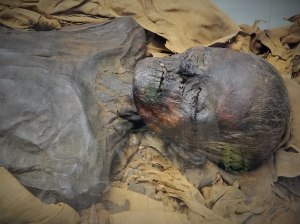
I’m not sure I would want to store this in my attic. By Ibex73 – Own work, CC BY-SA 4.0, https://commons.wikimedia.org/w/index.php?curid=66245615

The back story Charlotte and other visitors received was that the four mummies in Mrs. Smith’s possession included “King Onitus,” two of his daughters, and one poor unknown Egyptian who was spending his afterlife a long way from home.

The four mummies, as well as can be traced, arrived in the US from somewhere near Thebes, in the spring of 1833 along with seven others and at least a couple of scrolls covered in hieroglyphs no one in the US could yet read.

A man named Michael Chandler, armed with an unsubstantiated story about being the nephew and heir of Egyptologist Antonio Lebolo, claimed the shipment and spent the next two years exhibiting what was the largest collection of mummies to have yet toured the United States. He lost a few here or there along the way and eventually sold the final four to the early Mormon church in Ohio.

But Chandler wasn’t the nephew of Antonio Lebolo, at least not as far as any scholar has been able to find, and if Pharaoh’s daughter—the one who saved Moses—lost her leg in the afterlife, it didn’t happen in Nauvoo, Illinois.

Mummies have a strange history in the US, where they’ve found themselves displayed in parlors, ground into medicine, and used by painters to get that just right shade of mummy brown. They were unrolled before curious audiences, occasionally stripped so their linen could be recycled into paper, and yes, sometimes they were the unwitting mouthpieces of showmen and religious leaders.

The “lives” of mummies in 19th century America, thousands of miles from where, in life, they had planned to rest for eternity, was strange indeed. Strange enough even, that when I first began to learn about the Lebolo mummies and Michael Chandler, I thought there’s a great book in that.

I often have that thought as I’m researching. And once in a while I act on it.

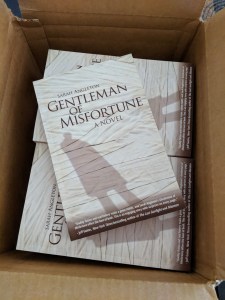
bookboxes
Books just waiting for some readers to come along.

My new novel Gentleman of Misfortune follows the story of the Lebolo mummies and the imposter who stole them. In my story, his real name is Lyman Moreau, a clever gentlemanly criminal, who hatches a plan, assumes an identity, and finds himself caught up in a dangerous journey that will bring him face to face with love and loss, and will force him to consider his own mortality. His adventure takes him through several states, along the Erie Canal, across the paths of several historical figures, and to the doorstep of a prophet. He doesn’t quite get all the way to Mrs. Smith’s attic. But there’s probably a great book in that, too.

You can check out a brief excerpt of Gentleman of Misfortune here. If it sounds like your kind of book, please consider one (or more) of the following:

1. Buy yourself the book. Reading is good for you, and you deserve it.

2. Buy a friend the book. Reading is good for your friend, and s/he deserves it.

3. Request that your library order the book. Reading is good for everyone, and libraries are wonderful places.

4. Help spread the word so others can discover the book. Because reading is good. For example, you could:

    • Share/re-blog this post. Less work for you.
    • Post about the book on Facebook. Watch the “likes” roll in.
    • Put a picture of yourself holding the book on Instagram. #GreatReads
    • Recommend the book on Bookbub. Be an influencer.
    • Snapchat yourself with the book. Give yourself some kitty ears. It’s fun!
    • Tell your neighbor about the book. You can borrow a cup of sugar while you’re at it.
    • Tweet about the book. You can even just click one (or more) of the ready-made tweets below.

tweet-graphic-3Gentleman of misfortune is a dark tale of mummies, mischief, and murder. Perfect for fall! #tbrlist #historicalfiction #newbook https://amzn.to/2Q47em1

19th century gentleman swindler Lyman Moreau finds his next big scheme and loses his heart among a collection of mummies bound for the most successful prophet in US history. #historicalfiction #tbrlist #newbook https://amzn.to/2Q47em1

From author Sarah Angleton comes a new historical novel—a dark tale of eleven mummies, a scoundrel, a seductress, and a prophet. #historicalfiction #tbrlist #fallreads https://amzn.to/

And if you do read and enjoy the book, please consider leaving a review. It helps a lot. Thank you!