Slathered in BBQ Sauce

In 1698, a Dominican missionary known as Pére Labat did what all good cooks throughout history have done—he wrote down the tips and tricks he learned from better cooks. Labat was in the French West Indies when he observed the use of a mixture of lime juice and chili peppers to season meat slowly cooking outdoors over indirect heat. When he wrote about it he possibly became the first person to record the use of an early kind of barbecue sauce, and I’m guessing, made a lot of people a little bit hungry just reading about it.

We had barely started at this point.

Barbecue had been around at least a couple centuries before that, originating with the barbacoa of the Taíno People of the Caribbean, and introduced to the Western world by Columbus’s voyages. Because whether you found the part of the world you were looking for or not, when you smell the roasty deliciousness of barbecuing meat, you want to share the experience.

Over the next several hundred years, the love of barbecue spread and was embraced most enthusiastically by the Southern United States where it became particularly a part of Black American culture. That’s when a broader variety of rubs and sauces really began taking it to the next level. Barbecuing became the quintessential American thing to do, making its way into political campaigns and into backyards across the country.

Ok, technically not barbecue, but I’m not going to turn my nose up at it.

Today, barbecue is pretty much synonymous with summer in the United States, and this year, at the Angleton household summer has arrived. Now, I will admit that like many careless Americans, I’m a little loosely goosey with the term barbecue. I am well aware that the term applies specifically to meat that is cooked with indirect heat and not on a grill, and that some of you are probably pretty persnickety about that definition. It might even make you a little mad that I’m about to use the term barbecue interchangeably with grilling out, which is apparently not the same at all.

But here’s the thing. This year we had a record crop of sweet cherries, largely because the birds we would normally fight for them were stuffed full already of a million cicadas. So we had to get a little creative. We jammed and pied and dried and salsa-ed.

Mmm. Tastes like summer.

Then we made sweet cherry barbecue sauce. And it is really, really good.

So now that the late spring days are starting to feel an awful lot like summer, we are cooking outside a lot more. At some point I’m sure we will legitimately barbecue in a smoker or in a pit. Most of the time we grill and call it good, because it doesn’t take as long to grill up a St. Louis pork steak as it does to smoke a Boston butt. 

And whether I’m using the word right or not, both taste amazing slathered in barbecue sauce.

Happy (almost) summer!

Brought Low by Cherries

It’s been a pretty nice spring around here so far, a little drier than ideal, but the temperature has been mostly mild and with a little strategic watering, the garden is doing well.

I’m kind of a clumsy gardener, but I keep trying. So far this year, I think it’s going pretty well.

A few days ago, I harvested my first (admittedly late) lettuce for a salad, and the locusts I call my sons devoured all the pea pods, strait from the plants. Last week, I pulled radishes that I promptly gave to my mother once I remembered that radishes are gross.

Now I’m watching the formation of green tomatoes, tiny peppers, blossoms that will someday soon become cucumbers, and the crazy growth of squash and melon plants that will eventually battle the potatoes for an epic garden takeover.

The blueberry bushes are producing, and the young strawberry plants are coming along. The blackberry brambles we planted last year are progressing nicely, and our apple trees are looking to be as productive as they ever have been. That means we have an awful lot of applesauce to eat still between now and harvest time. 

Nothing says spring quite like this.

But the one thing we don’t have this year is cherries. With the exception of only a few years in my life, I have always lived with at least one cherry tree in my yard. Their beautiful pink and white blossoms against a storm blue sky is one of my favorite sights of early spring, and I know that spring has truly arrived when I begin fighting the robins for the bright red fruit.

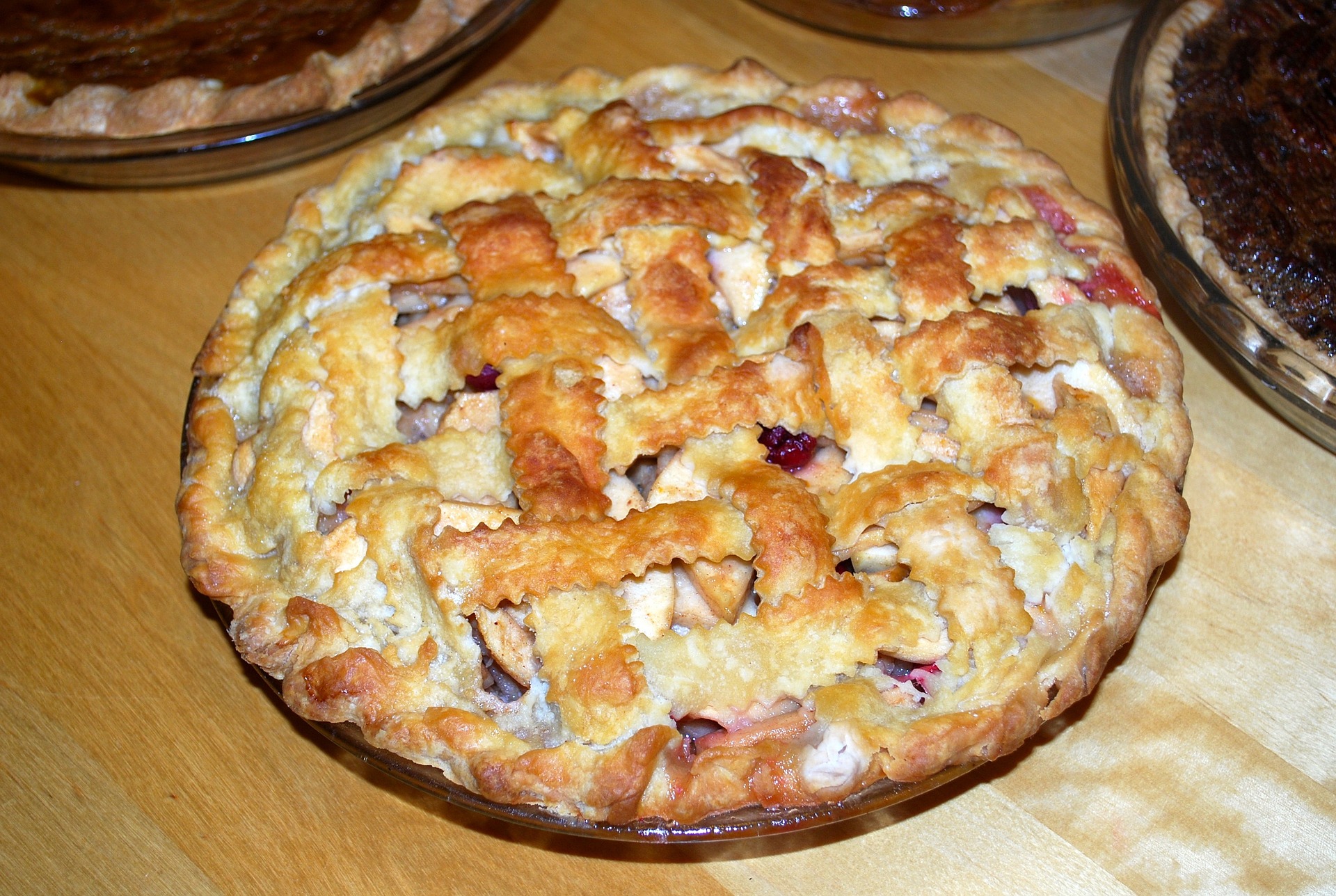
Then come the pink-stained fingertips from endless seeding, followed by a thick slice of tart cherry pie smothered with a scoop of homemade vanilla ice cream. Add in a buttery ear of sweet corn, and this midwestern gal just tasted summer.

But not this year. Because as mild as our weather has been, we did have one unfortunate cold snap that brought us a night of freezing temperatures just as those beautiful blossoms were fully developed and ready to turn the corner into juicy orbs of deliciousness. We watched anxiously to see what would happen, and slowly admitted the cherry harvest wasn’t going to happen.

Our tree, that only a few weeks earlier had been so full of promise that I went ahead and used up the last two cups of last year’s frozen harvest to bake chocolate chip cherry bread, had no more than a handful of fruits on it. And the birds ate those.

Now there’s a man who appreciated a good cherry. Until he didn’t. James Lambdin, Public domain, via Wikimedia Commons

It’s okay, though. I’ll miss the homegrown pie, but at least I’m comforted knowing we won’t go the way of US President Zachary Taylor, who died sixteen months into his presidential term at the age of 65. Taylor, a hardened war hero known as “Old Rough and Ready” because of his rugged, unstoppable nature, may very well have been brought low by cherries.

That’s not the only theory floated by historians and physicians. His own doctors believed he died from cholera, not uncommon in Washington DC at the time. What is known for sure is that on July 4th of that year, the president attended Independence Day festivities at the construction site of the nation’s favorite phallic monument, and while there, ate quite a large number of cherries, which he chased down with a good quantity of iced milk.

That sounds like a pretty great 4th of July to me, but it didn’t work out so well for Old Rough and Ready. Evidently it was a warm day and President Taylor took a stroll along the Potomac before heading back to the White House. Once there, he ate more cherries and enjoyed a lot of ice water to cool down.

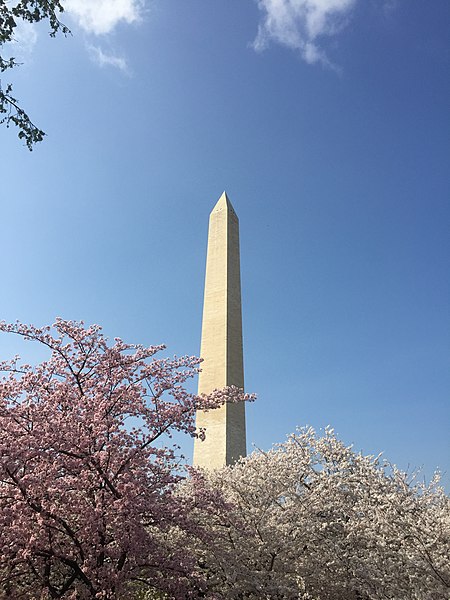
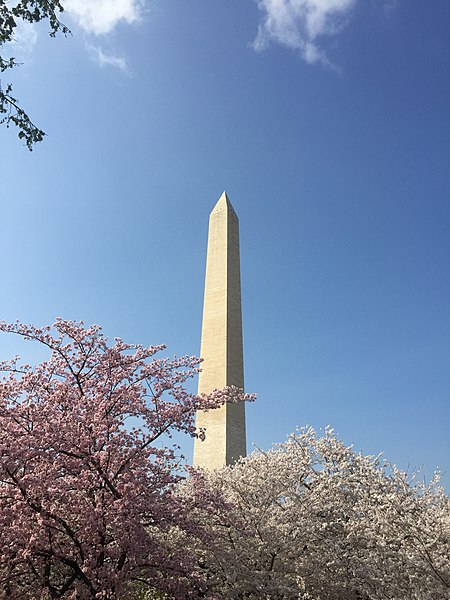
America’s favorite phallic monument, the Washington Monument, and cherry blossoms. Sjgdzn, CC BY-SA 4.0 https://creativecommons.org/
licenses/by-sa/4.0, via Wikimedia Commons

Then that night, the president got sick. Like really sick, with full on abdominal cramping, nausea, and diarrhea of the variety that, I assume, makes you regret your life choices.

It’s possible, of course, the water was contaminated, as Washington DC is well known for containing an awful lot things that are difficult to stomach, or perhaps the iced milk was at fault. But another theory is that the acidity from the cherries Taylor consumed, combined with the acidity of the milk, caused the severe abdominal distress from which he never recovered. He died on July 9th, 1850, leaving Millard Fillmore, of unearned bathtub fame, in charge of the nation.

It is true that Taylor had made some political enemies during his brief stint in the White House. His support for the Wilmot Proviso, which would have excluded slavery in territories acquired from the Mexican-American War, along with his strongly worded promise to personally bring the hurt to anyone who attempted succession, have led some historians to suspect assassination.

I’m not convinced there’s very strong evidence for that, though I admit assassination by cherries would be awfully clever. I know of at least one blogger who may want to use that in a story sometime.

Regardless of whether assassins, or cherries, or bacteria, or all three are to blame for President Taylor’s early demise, the whole story does make me feel a little bit better about our own lack of cherry harvest. Still, I sure could go for a slice of homegrown cherry pie about now.

I Cannot Post a Lie: A Lesson in Irony

In 1806, sixty-eight years after it didn’t happen, minister, bookseller, and promotor of all things virtuous Mason Locke Weems revealed to the world that a six-year-old George Washington had once chopped his father’s cherry tree with a hatchet. According to the story, the unfailingly virtuous young George confessed his wrongdoing to his father who was proud of him for doing so.  

As far as pervasive lies go, I suppose Washington chopping the cherry tree isn’t so bad. Stephen Goodwin, CC BY-SA 4.0, via Wikimedia Commons

It wasn’t until the fifth edition that Weems included the charming tale in his instant bestseller, The Life of George Washington. Like all good biographers, Weems dug deep and attempted to look beyond the familiar public service life of his subject into the less well-known influential moments that eventually led to greatness.  

Weems spun his biography around the idea that in order for George Washington to grow into the great man he had been, he must have developed a healthy collection of good virtues throughout his early years of formation. The trouble was, Weems didn’t have access to all the stories he needed to make the concept work.

So, Weems joined the ranks of those who engage in popular history—that genre which includes a little less strict scholarship and a little more making stuff up for the sake of telling a good story and selling lots of books (or creating a silly blog post).

It worked. Weems sold a lot of books, and he invented one of the most often repeated stories told in American elementary school classrooms, where young children are lied to about history so that they learn to be honest and accountable for their mistakes if they ever want to be president.

I was wrong about cherry pie when I was a child, which I can admit to you because I am a very virtuous person. But as always, please do not vote for me for president. Image by Mary Bettini Blank from Pixabay

So that might have been a slight miscalculation on the part of Mason Locke Weems and the American school system, but at least it is a good lesson in irony. I could think of approximately 42 million things I’d rather do than become the President of the United States, but I do remember learning the story.

And I thought about the tale every spring, because at my house we always had at least one cherry tree that produced a ton of cherries for my mom to turn into pie. I would refuse to eat it, of course, because when I was young, I didn’t see the point of calling something dessert if it included more fruit than chocolate.

Still, I have fond memories of picking cherries. And seeding cherries. Lots of cherries. For hours. Until my fingers were stained red and everything was sticky and I might have been tempted to take a hatchet to that tree. I cannot tell a lie.

Ah. Spring.

I did eventually learn the joys of eating cherry pie and now that I’m a grownup with a home of my own, we have a cherry tree that we manage to pick a few cherries from every spring. For some reason, this was a particularly good year for it. I don’t know if it was the just perfect weather pattern or if our fairly young tree finally reached its fruiting potential or what, but we had a lot of cherries to pick and pit.

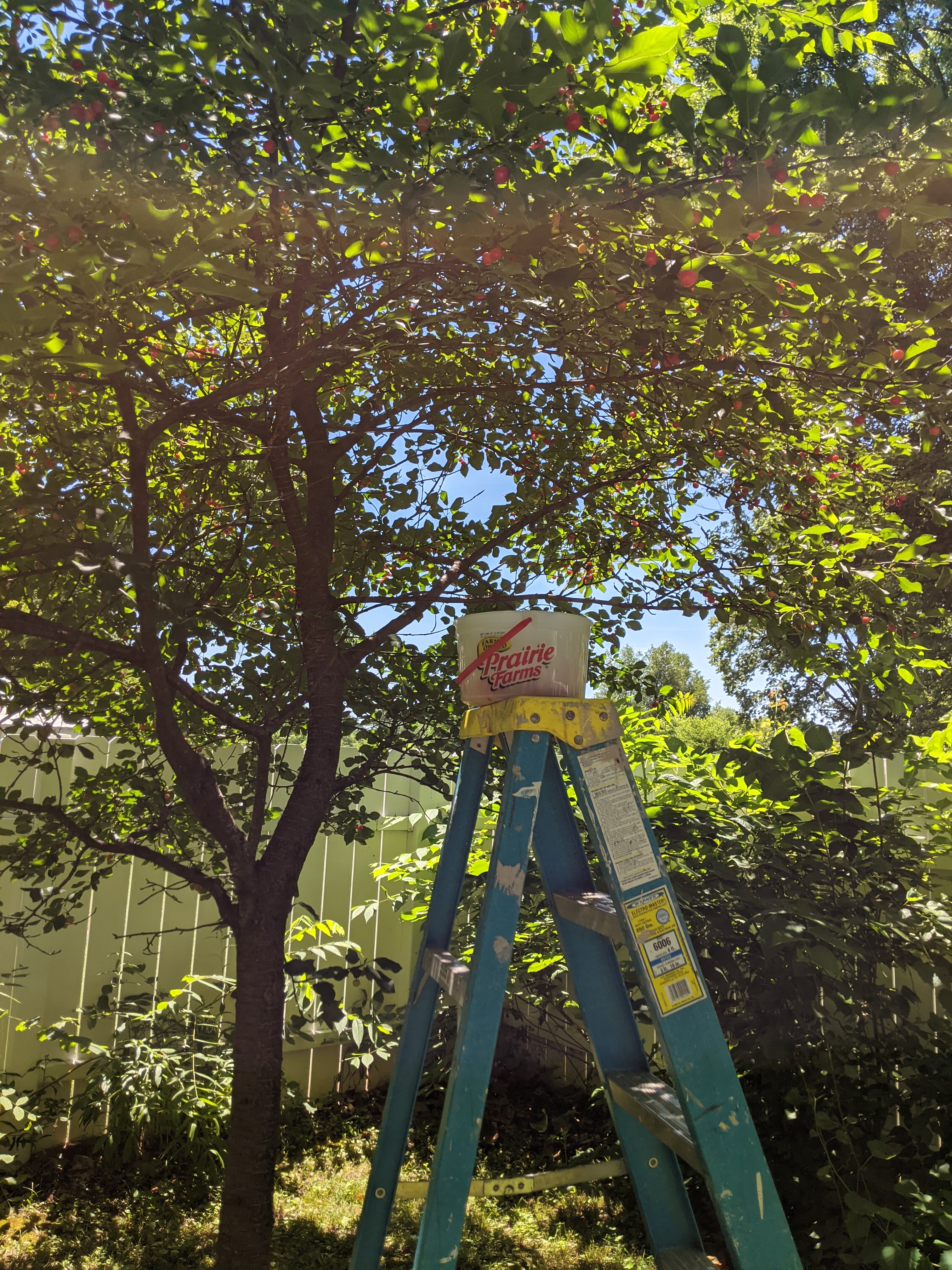
And about a week or so later, so did my parents. I recruited my youngest son and we went to the grandparents’ house to help pick more cherries. Their much bigger tree had outdone itself. We picked and reached and climbed and picked some more, until we were hot and tired, our fingers were sticky, and Grandma said she had enough for more pies than they could probably manage to eat.

By that point, I think I’d not have been surprised if my son had taken a hatchet to the tree. He would have come clean about it because he’s a pretty virtuous kid, and though I wouldn’t wish this on him, I’m sure he would make a brilliant president someday.