Meet Me at the Fair

On November 22, 1944 after schedule delays, numerous script rewrites, budget woes, and a leading lady still unhappy with her role, a new Christmas musical debuted on the big screen in St. Louis, the city at the film’s heart. 

The song “Meet Me in St. Louis,” well known today because of the musical, is actually from 1904 and was written specifically for the World’s Fair. Public Domain, via Wikimedia Commons

Despite the mess of getting to that moment, Meet Me in St. Louis enjoyed immediate success, becoming Metro-Goldwyn-Mayer’s second highest grossing film up to that point, coming in only behind Gone With the Wind. After the premiere, Judy Garland even decided she liked it after all and commented to the producer, “Remind me not to tell you what kinds of pictures to make.”

The screenplay is based on a series of semi-autobiographical short stories by St. Louis native Sally Benson who wrote of an upper middle-class family that lived at 5135 Kensington Avenue during the construction of the 1904 World’s Fair on the grounds of Forest Park in St. Louis.

I confess, I saw the movie for the first time later in life than I should have, having grown up within easy reach of St. Louis. My childhood summers included trips to downtown to watch the Cardinals play at Busch Stadium where the musical’s title song is still played by the organist at every game and the crowd sings along as the words scroll across the jumbotron. 

I’ve been many times to the wonderful outdoor Muny theater in Forest Park where the stage adaptation of Meet Me in St. Louis, originally produced in 1989, is performed every few years. I even got engaged in that park on the very grounds of the actual 1904 World’s Fair.

I was lucky enough to get a sneak peek at the new exhibit, open to the public on April 27th. It contains a scale model of the entire fairgrounds. And it’s spectacular.

Officially known as the Louisiana Purchase Exposition, the Fair is a big deal in St. Louis history. It transformed the city, launching it for about seven months into the center of the world’s attention. 

And it’s still a big deal, today. One-hundred and twenty years later the World’s Fair looms large in the community memory carried now by not a single living person who was there to see it, sparking excitement whenever it comes up in conversation, which is kind of weirdly a lot.

It’s especially on everyone’s minds right now because at the end of this month, just in time to celebrate the 120th anniversary of the opening of the Fair, the Missouri History Museum will reveal a newly re-imagined permanent World’s Fair exhibit. 

Equally exciting for everyone who either lives in my house or happens to be my mother, is the release of my new historical mystery set on the grounds of the 1904 World’s Fair in St. Louis. 

Paradise on the Pike is available for the first time today. The story takes place in the enchanting world of Hagenbeck’s Zoological Paradise and Trained Animal Circus on the Pike, which is the entertainment strip within the Fair. It’s not a light, sentimental sort of story like Sally Benson’s, but it does contain elephants and lions and a pair of cantankerous goats. It also allowed me, and will hopefully allow you, to spend some time strolling through the Fair, which was almost entirely constructed of temporary buildings meant to disappear.
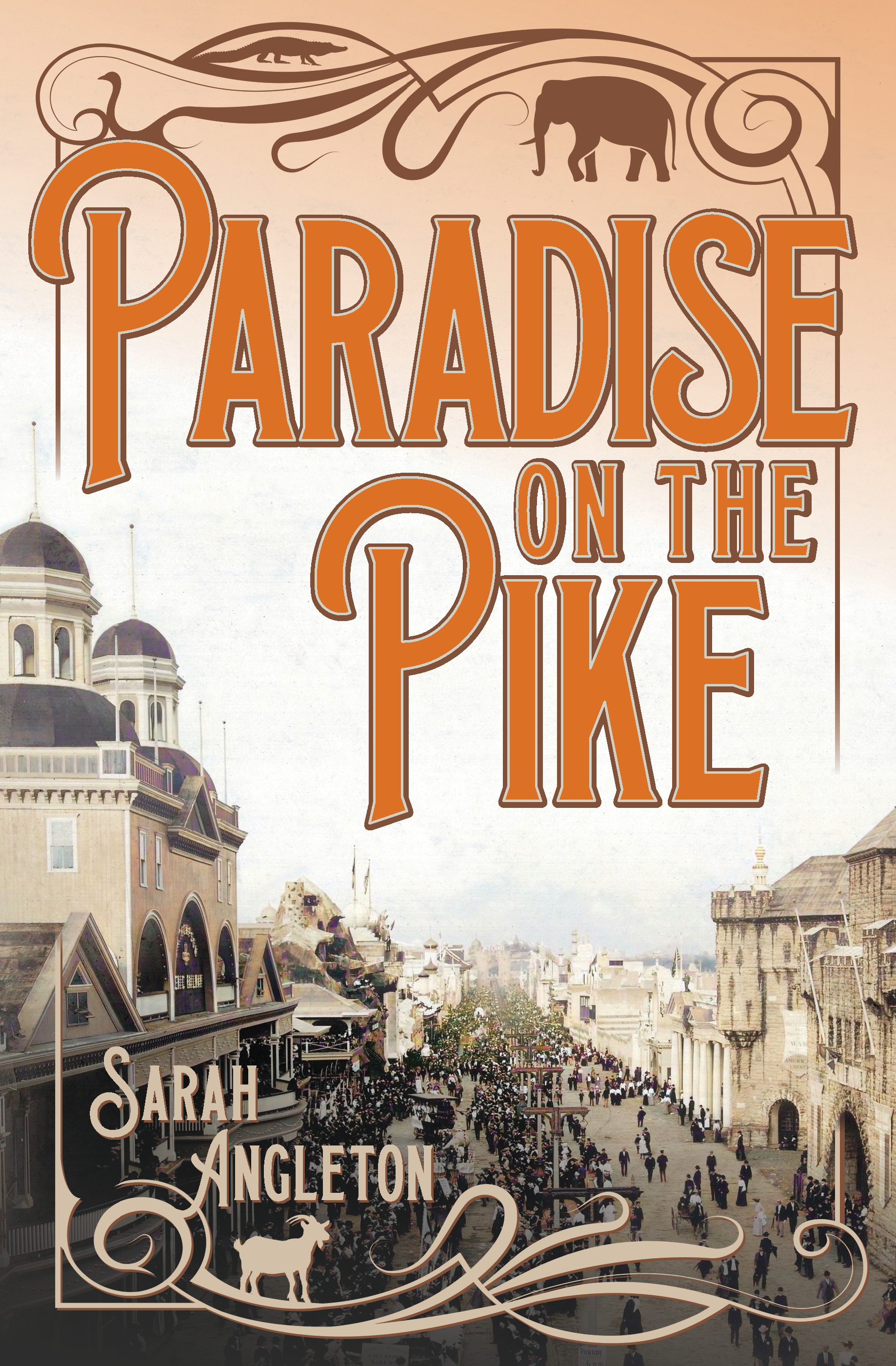
Available today! Order from your favorite independent bookstore or slightly bigger bookstore or Amazon.

And maybe that’s why, one hundred and twenty years later, it still takes up space in our imaginations, because we’re a little like six-year-old Tootie at the end of Benson’s stories when the family marvels over the lights and fountains on the fairgrounds and her sister Agnes asks if it’ll ever be torn down.

Tootie emphatically replies, “They’ll never tear it down. It will be like this forever.”

Agnes, relieved, exclaims, “I can’t believe it. Right here where we live. Right here in St. Louis.”

Forest Park retains very few physical reminders of the enormous event that once filled its every corner and held the attention of the world, but in the hearts of the St. Louisans who stroll through the grounds and wish they could have seen those lights shining, it will never be torn down. It’ll be like this forever.

You can find more information about Paradise on the Pike at this link.

Seven More Years of Wrinkles and Gray Hair

Today marks exactly four weeks until my fifth book launches into the world. It’s been nearly seven years since I published my first, a collection developed from the first five years of this blog. That book, called Launching Sheep & Other Stories from the Intersection of History and Nonsense, is part history, part memoir, and a good part made-up silliness. The cover features a picture of me in period costume.

This picture has served me well, but it’s time to age up a little bit. Image by KarenAndersonDesigns

That was my first professional author photograph. My second was taken not long after in preparation for the release of my first novel, which happened about five months later. That one is a tad bit more professional and includes much less ridiculous clothing. I’m smiling, but not too much. I look like an approachable but also knowledgeable and literary lady in her thirties.

Most of those things, I hope I am. One of them, I definitely am not. And that’s why I recently had some new photos taken. Having portraits taken is uncomfortable for me. I don’t exactly run from the camera, but as a typical mom and keeper of memories, I am more often behind the lens than in front of it.

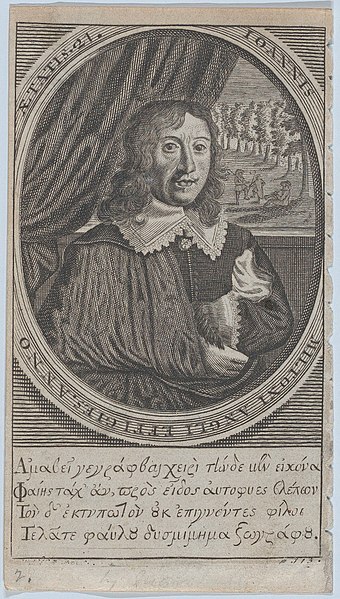
But I’ve earned nearly seven more years of wrinkles and gray hair since the last set of head shots, and readers have been expecting author portraits since the papyrus scrolls of Ancient Egypt. I couldn’t avoid them any more than John Milton could have when his printer Humphrey Moseley insisted the poet include one with his first collection of poems in 1645.

Maybe not the most flattering portrait ever. William Marshall, Public Domain, via Wikimedia Commons

Milton enlisted the help of renowned engraver William Marshall to create a frontispiece including an author portrait. At the time, Milton was thirty-seven years old, but the standard of the day was to include a picture of the poet at a younger age. Alas, that is no longer the standard.

According to the words engraved around the portrait, William aimed to depict Milton at the age of twenty-one. According to the overly large nose, greasy hair, puckered lips, and swollen right eye of the portrait, he missed.

The picture was so unflattering and Milton so upset about it, that the poet asked the engraver to include the following lines in Greek (a language that Marshall allegedly could not read) beneath the portrait:

“Looking at the form of the original, you could say, perhaps that his likeness has been drawn by a rank beginner; but, my friends, since you do not recognize what is pictured here, have a chuckle at a caricature by a good-for-nothing artist.”

An approachable, knowledgeable, literary lady with seven more years of wrinkles and gray hair, looking pretty darn okay. Image by Karen Anderson Designs.

When the collection was updated in 1673, the portrait was no longer included, but Milton, apparently still bitter about the worst head shot ever, moved his added poetic words to the interior of the book and slapped a title on them: “On the Engraver of his Portrait.”

Fortunately, my good friend and photographer is much more pleasant to work with than William Marshall apparently was. She doesn’t bat an eye when I ask her to photograph me in period costume holding a laptop, or to meet me in Forest Park in St. Louis so we can get a hint of the 1904 World’s Fair into the pictures.

She makes it as easy as possible for an awkward, squinty-eyed person such as myself to look pretty darn okay. I can trust that she’d never make my nose appear too large, my eye swollen, or my hair extra greasy. She’d probably even digitally remove my wrinkles and gray hair if I asked her to, but I didn’t. And she can trust that I’ll never include an insulting poem about her work in my book.

Godspeed, Ben!

On April 30, 1904, the Louisiana Purchase Exposition opened to the world on the grounds of Forest Park in St. Louis. To walk through Forest Park today, nearly one hundred and nineteen years later, you almost wouldn’t know the fair had been there at all. The only structures that remain are the Art Museum building and a large, elliptical, walk-through birdcage that forms part of the St. Louis Zoo.

Pub. by Chas. M. Monroe Co. “Tichnor Quality Views,” Reg. U. S. Pat. Off. Made Only by Tichnor Bros., Inc., Boston, Mass., Public domain, via Wikimedia Commons

The aviary wasn’t originally intended to be a permanent structure. It had been erected by the Smithsonian Institute to house the birds it would display as part of the fair. When the fair was over, the city of St. Louis, which had long wanted a zoo, purchased the structure and by 1913 had erected a seventy-seven-acre zoological garden around it.

In 1916 the school children of the city donated enough pennies to acquire the zoo’s first elephant, Miss Jim, and the same year, St. Louis voters approved a special tax to support their new zoo, which today remains one of very few community-supported zoos in the world, offering free admission to visitors.

In 1921 came bear pits; in 1924, a primate house; and in 1927, a reptile house. The 1960s brought an aquatic house, a children’s area and railroad, and a significant renovation to the original aviary. Over the years the zoo in Forest Park has been improved a great deal, has expanded to cover ninety acres, and welcomed around three million visitors per year. It currently houses about eight hundred different species, including 9,200 animals.

Too cute to be contained. (not Ben). Alberto Apollaro Teleuko, Public domain, via Wikimedia Commons

But there’s about to be one less critter among them because on February 7, 2023, a four-year-old Andean bear named Ben escaped his enclosure. Fortunately, this happened in the morning before the zoo had opened to the public and Ben was tranquilized and secured without incident. Zoo staff added stainless steel cargo clips with 450 pounds of tensile strength to the steel mesh through which Ben had found his way to freedom. All was well.

Then about three weeks later Ben forced his way through the new cargo clips and escaped again. This time, the zoo was open. Visitors were ushered indoors while Ben was once again tranquilized and secured. With the exception of the cargo clips, no real harm was done.

Evidently, like so many St. Louis residents these days, with skyrocketing crime rates, a district attorney under fire who can’t even seem to keep the zoo animals behind bars, and yet more negative national media attention, Ben the Andean bear doesn’t want to be in the city. He’s moving to Texas.

And who can blame him, really? This delightful Houdini has been described by zoo staff as a fun and playful character. Soon he’ll get to trade his steel mesh in this currently struggling city for a moat at the Gladys Porter Zoo in Brownsville, Texas, right next to the Mexican border where thankfully there is little crime, a well-functioning system in place for keeping everyone well-organized and contained, and almost no media attention whatsoever.

Godspeed, Ben!