Could Substitute for Ordinary Food

In 1748 in a stroke of genius, the French Parliament solved an important problem by banning a loathsome and gnarled vegetable that while perhaps suitable for hogs, was known to cause leprosy when consumed by humans. The French people probably didn’t mind so much, because no one in their right mind would willingly eat a disgusting, likely poisonous, potato from the ground anyway.

I now understand why people might have mistrusted these things. The ants sure did enjoy them, though.

Fortunately the Prussians weren’t quite as persnickety. They cultivated the starchy root vegetable and didn’t hesitate to feed it to humans. And as it was cheap and easy to grow, they certainly fed it to prisoners during the Seven Years’ War.

One such prisoner of war was French pharmacist Antoine-Augustin Parmentier who discovered, much to his delight, that he neither died nor developed leprosy on his potato diet and that in fact, with a little butter, sour cream, or cheese, the pig food he’d been given might not be half bad.

When he returned to France, Parmentier set about repairing the damaged reputation of the veggie by going to scientific institutions and soliciting statements touting the safety of potatoes as a food source. Then when the poor harvest season of 1770 threatened famine, as was not an uncommon occurrence in European history up to this point, Prementier’s “Inquiry into Nourishing Vegetables that in Times of Necessity Could Substitute for Ordinary Food,” won him a prize and some important attention.

They are kind of pretty. George Chernilevsky, Public domain, via Wikimedia Commons

Soon King Louis XVI and Marie-Antoinette jumped on board the potato wagon, adorning their royal clothes with the potato’s purple flower. They also set aside a plot of land on which Parmentier could plant his favorite spuds, which he placed under guard during the day to bestow upon the tubers the appearance of great value.

Under the cloak of darkness, when the guards were strangely scarce, hungry and bold Parisians managed to sneak a few of the highly valued vegetable that nicely bulked up a stew, filled up empty bellies, and didn’t cause any of them leprosy.

I think that’s my favorite part of the story of this transformation from starchy enemy to super veggie. The humble little potato that only pigs would eat became a highly desirable rock star of a vegetable that helped stave off the cycles of famine and became so ubiquitous that instead of substituting for ordinary food as a necessity, it eventually became kind of plain potatoes.

My garden was supposed to yield up a lot of plain potatoes this year, but alas, in our attempt to garden as organically as possible, we left them unguarded just enough that an army of ants managed to feast on them before we could.

The best part of writing this post was that I had to make my favorite potato casserole. Alas, I had to do it with store-bought potatoes.

What we ended up with was a whole bunch of wrinkled, disgusting, half-decayed vegetables that surely would have given us leprosy.

Okay, probably not, but I’m not a huge potato eater anyway. I only really like them prepared a few specific ways—generally either fried crispy or baked into a casserole with a lot of butter and cheese (turns out I’m a bigger fan of fat than vegetables).

But now that I don’t have my garden potatoes to eat, I can truly appreciate the genius of Antoine-Augustin Parmentier. After the ants got to my humble dirt vegetables, I was wishing I’d kept the garden under guard because all the other ordinary food I had to choose from just didn’t seem as appealing.

Guess I’ll get em next year.

Gardening for Beer. Beer for Gardening.

Nearly four thousand years ago, someone living in what is modern-day Iraq etched into a clay tablet, instructions for making beer. Part recipe and part hymn to the Sumerian goddess of beer, the etching is the oldest written recipe so far discovered. And the one thing we can know for sure is that people have been making beer even longer than that.

Though the precise beginning of beer has proven tricky to pinpoint, researchers have found evidence of it from as far back as ten thousand years ago, around the time the human lifestyle began to shift from hunting and gathering to farming and domesticating.

beer-2439237__340In the late 1980s, University of Pennsylvania anthropologist Dr. Solomon Katz first suggested that the accidental discovery of beer might have even been the driving force behind that shift. Basically, he theorized that when humans left wild wheat and barley outside the cave to get wet, the resulting dark liquid, when mixed with natural yeast in the air, made early man overly confident and inclined to watch football.
Dr. Katz explained that it could have been a desire to find a stable production method for beer that drove humans to plant some seeds and stay a while, beginning the long tradition of plopping onto a barstool and drinking oneself stupid.

One observation that supports the theory is that in some of sites of the earliest Neolithic villages, researchers find plenty of evidence for the presence of grain, but very little for the cooking of it, indicating that beer may have predated bread as a grain-derived food source. Also, astute anthropologist that he is, Dr. Katz has pointed out that cultures all over the world have long gone to great efforts to obtain and produce mind-altering substances. In other words, people like beer, and probably always have.

friendshipbrew
Most of my friends seem to prefer a local-ish craft beer. I won’t argue with them.

Personally, I’m not a big fan. I might drink a beer from time to time when a social occasion calls for it, but I have never particularly enjoyed the taste and would almost always prefer a glass of wine or, more often, a Coke.

But I have lots of friends who really enjoy beer and do things like hold beer tastings and talk to each other using words like dry-hopped, cask conditioning, and adjuncts (which apparently does not refer to the part-timers in the English Department, who coincidentally, also tend to like beer).

These are generally the same friends who turn up their noses at a can of Budweiser and then roll their eyes at me when, at their insistence, I take a sip of their favorite microbrew and say something profound like, “Yep. That’s beer alright.”

So, even though it provided a great deal of nutrition and a safer way to consume water and was possibly a major catalyst that launched humans toward life as we know it today, I don’t have a lot of use for beer. Or at least I didn’t until this past week.

Much like our ancient forefathers thousands of years ago, I am a gardener. Also, like them, I mostly do it by trial and error and am not always good at it. This spring, as my baby plants have tried to push their way through the lush soil in my garden boxes, something has been nibbling away at them. The culprit, I believe, is the sowbug.

OLYMPUS DIGITAL CAMERA
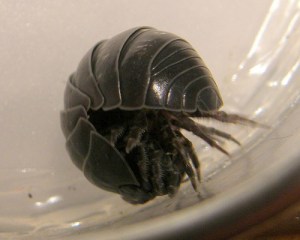
Technically, this is a crustacean. That likes beer. photo credit: Wanderin’ Weeta Big pillbug-3 via photopin (license)

Better gardeners than I may insist that these funny pill-shaped bugs are not my problem, but I have performed a pretty thorough study (meaning I Googled it) and have found that these little monsters, while not a problem for larger, established plants might just munch their way through tender young shoots. And apparently one way to deal with them is to get them rip-roaring drunk.

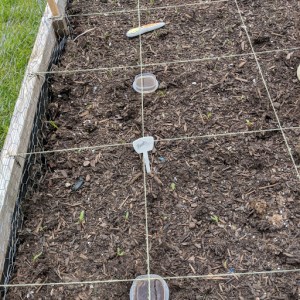
After carefully considering my pest control options for about five minutes, I decided to buy some beer. I went with a craft variety because I don’t know if, like my friends, roly poly bugs are beer snobs and my fresh green beans are worth it. I set shallow dishes of the stuff throughout my garden beds and waited.

gardenbeer
There are bugs in my beer garden. And hopefully, eventually there will be vegetables, too.

It turns out, these critters like beer as much as our ancestors did and they will go to great lengths to get it. As their bar-haunting distant cousins drown their sorrows in beer, great numbers of the sowbugs just drown. I suspect the smarter ones are already trying to figure out how they can make more of it themselves in a sustainable, and possibly less lethal, way.

As I watch this seemingly innate drive for beer, I am convinced that Dr. Katz was onto something. Not every anthropologist agrees that beer was the greatest driving force for giving up the hunter-gatherer lifestyle, citing things like climate change and population growth as other plausible explanations. Still, most admit beer may have been a factor. It seems then that gardening is for beer, and beer is for gardening.