Maybe We Should Taco ‘Bout It

In 1632, Italian scientist Galileo Galilei published his book Dialogue Considering the Two Chief World Systems. Produced under a license issued by the Inquisition, the work presented a discourse between different points of view on a wide range of scientific topics of his day.

One of these conversations involved the competing theories of 2nd century Egyptian mathematician Ptolemy who believed the earth to be the stationary center of the solar system, and that of 16th century Prussian mathematician Nicolaus Copernicus who said, “Nuh-uh.”

Clearly this is heresy. Image by WikiImages from Pixabay

It turned out that Galileo, a devout Catholic who was clearly well versed in the arguments of each, and pretty handy with a telescope, kind of sort of agreed a little bit completely with Copernicus. In the course of his Dialogue, it started to sound that way to his readers, too. Among those readers was Father Vincenzo Maculano who was appointed by Pope Urban VIII to suss out the truth behind Galileo’s potential heresy, general bigotry, and absolute hatred of puppies. Probably.

And he did just that, because three hundred and ninety years ago today, under the threat of torture, Galileo made a public statement denouncing his ridiculous, data-fueled suspicion that Earth revolves around the sun.

The Catholic church at the time, supported by the questionable literal reading of several verses of Scripture, was thoroughly convinced this was an error that had been inappropriately and willfully spread by Galileo’s heretical work. Also that Galileo most likely had other incriminating documents locked up at his house, or possibly in a box tucked behind his Corvette.
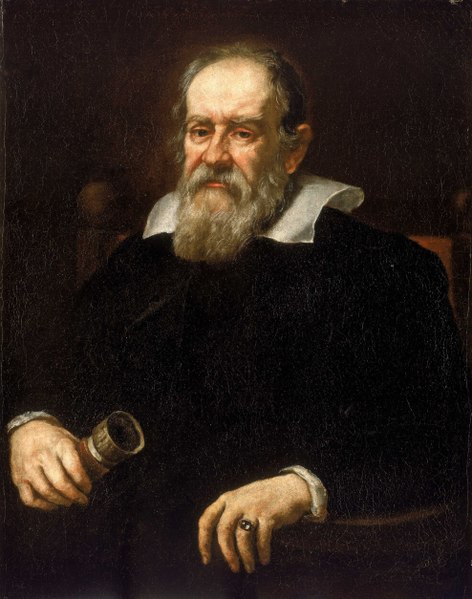
Although, the man really did know his way around a telescope. Justus Sustermans, Public domain, via Wikimedia Commons

It’s not hard to imagine why Galileo, sixty-nine years old at the time and not in the greatest of physical health, went ahead and stated for the record: “. . .with a sincere heart and unfeigned faith I abjure, curse, and detest the aforesaid errors and heresies, and generally every other error, heresy, and sect whatsoever contrary to the said Holy Church. . .”

The book was banned, which made the world much safer from thinking. That was a good thing since the world was already pretty busy revolving around the sun. Galileo himself was sentenced to penance and imprisonment that was soon softened to house arrest for the remainder of his life.

And it served him right, because troublemakers who float theories that go against the grain of societally accepted truth, and who are consequently bigots and puppy-haters who have obviously broken all the laws, deserve to be harshly judged and silenced.

Except that three-hundred and ninety years later, I think it’s safe to assume most of us would agree the trial and forced recantation of Galileo was wrong. It only took the Catholic church three hundred and fifty-nine years to officially come to that conclusion, remove his book from the list of the banned, and pardon the man so he could leave the house and get a taco. Tragically, he didn’t live long enough to see the day.

I’d probably be happy listening to any of your crazy ideas over a taco. Also, I might be a little bit hungry. Kurt Kaiser, CC0, via Wikimedia Commons

Still, it’s nice to know that given enough time, humans will listen to and consider the ideas of fellow humans without automatically assuming the person presenting those ideas hates puppies, which I should add, it’s entirely possible that Galileo did not.

I’d like to think we might even be able to swallow our pride enough to make an effort in fewer than three hundred and fifty-nine years, even though I know it can be pretty uncomfortable to listen to someone challenge a widely held idea that you personally think is pretty spot on.

But it might just be worth the effort to listen, because maybe the person on the other side of that discussion really is a bigot who hates puppies. Or it’s also possible that person actually shares most of your beliefs, but just has a telescope and some pretty good evidence that should also be considered. And that person would probably really like to go get a taco.  

A NaNoWriMo Eggs-periment

Sometime in the mid-1500s as the Spanish Inquisition held a firm grip on Naples, Renaissance man and notable genius of cryptography Giovanni Battista della Porta discovered a useful little trick. Several of his clever friends had been imprisoned for presumably not being quite Catholic enough and della Porta needed to get messages to them.

egg head
16th century egg head Giovanni Battista della Porta. Public Domain, via Wikimedia Commons

Everything that entered through the prison walls was carefully checked, with the exception of food deliveries. So, della Porta allegedly used a combination of vinegar and alum to write messages onto eggs. The special ink disappeared when the eggs were boiled, but the letters transferred through the semi-permeable shell and imprinted themselves on the membrane of the egg.

All della Porta’s nerdy heretic friends had to do was to carefully peel the egg, read the message, and eat the evidence. Not bad, and definitely more subtle than writing “Hoppy Easter” in white crayon before dyeing, which is how I usually convey secret egg messages.

Now I’ve found plenty of references to this little eggs-periment (see what I did there?), but what I haven’t been able to discover is what the messages might have been, or how della Porta’s friends knew to look for them, though I suppose if you peel and egg and discover words on the white, you probably go ahead and read them.

egg
I am probably not the person you want sneaking you hidden messages in prison.

Were these escape plans? Tricks for correctly answering inquisitors’ questions to secure release? Clever microfiction featuring a dashing 16th century polymath who breaks his friends out of prison? Egg salad recipes? Alas, the world will likely never know, because egg messages rarely last very long.

But there are lots of words that go unread in the world, and not just the brilliant ones languishing between the covers of small potatoes authors you’ve never heard of. Just this past month thousands of writers joined in on National Novel Writing Month (NaNoWriMo) and produced millions upon millions of words, many of which are brilliant, and a lot of them will never be read.

Because this was a sprint, and for many it was probably a slog. Some writers made it to the finish line of their goal (or will in the next thirty-eight hours) and many did not. I’m happy to be among those who completed the challenge, but what I can tell you is that you will never see most of the words I wrote.

laptop
Confession: One of my biggest fears is that I’ll die with an unrevised novel on my hard drive and it will get published. Fortunately, I’m pretty sure my family knows better. Also I’m not famous enough for anyone to care what I have left unpublished. So, you know, thank goodness for that. photo credit: wuestenigel Close Up of Woman’s Hand on the Laptop at the Office via photopin (license)

They might as well be written in invisible ink on an egg white. Of course, they are here in my computer, all 50,000+ of them, waiting for me to trim and polish and hard boil. Only after I’ve done that will I allow anyone else to start peeling back the shell and reading them.

It’ll be a while. I’m excited about the book I just spent a huge number of hours drafting, but it’ll be many times that number of hours before I manage to turn it into something I’m proud to share. For now I’ll set is aside and let the hastily scribbled words soak into the eggshell while I change direction for a bit and write something completely different. Maybe I’ll see if I can put together some microfiction. I have a great idea for a story featuring a dashing 16th century polymath who breaks his friends out of prison using only a bowl of egg salad.