Writers Have All the Ideas

In May of 1903, a man by the name of William West, recently convicted of some crime or other, arrived at the Federal Correctional Institute in Leavenworth, Kansas for processing. As the records clerk took the new inmate’s precise measurements, he asked him about the man’s prior murder conviction, at point which a genuinely surprised West insisted he had committed no such heinous crime. The records clerk remained unconvinced, presenting West with a file of a convicted murderer named William West that included his precise measurements and a picture identical to himself.

That a convict might lie about his past crimes didn’t surprise the clerk, but what did surprise him was that the William West in the file was still serving his sentence, and so couldn’t be the William West standing in front of him.

It turned out that the two men, later presumed to be identical twins separated at birth, possessed identical characteristics when processed with the Bertillon measurement of physical characteristics in common use in the US prison system. Fortunately, the clerk was delighted to discover that the two men did have one distinguishing characteristic: their fingerprints.

And that is the excellent story of how fingerprinting became an important tool of forensic science in the United States. Of course as with most excellent stories in history, this bears the telltale too perfectly symmetrical marks of being not precisely true. It makes for good fiction.

In reality, there are oily smudges looping, arching, and whorling all over the smooth surfaces of history, dating back at least 4,000 years when Hammurabi sealed contracts with a fingertip. Not much more recently, the Chinese used inked prints as unique signatures on contracts, and as early as 200 BC may have been using hand prints left at crime scenes to help crack burglary cases.

It was in the 17th century that European scholars started describing the unique combinations of patterns on the ends of our fingers. Then in 1892, Sir Francis Galton, cousin to Charles Darwin, and originator of the unsavory study of eugenics, published a helpful classification of the patterns of fingerprints. That led to Sir Edward Henry’s development of a practical system of identification that could be used in law enforcement, which he presented to Scotland Yard.

Of course as impressive as this sounds, Mark Twain solved a crime using fingerprinting in his somewhat embellished memoir Life on the Mississippi in 1883, indicating, I think, that it would behoove scientists to pay closer attention to writers because they have all the ideas.

Scotland Yard adopted Henry’s system in 1901, brought it to the 1904 World’s Fair in St. Louis, and presented it to St. Louis police detectives and the general public, including both the fictional amateur sleuth in my novel set at the World’s Fair, as well as the historical M.W. McClaughry, records clerk at the penitentiary at Leavenworth, Kansas. In September of 1904, fresh from his trip to the fair McClaughry requested that a fingerprinting system be implemented at the prison. It was another one hundred and twenty years before my sleuth put the science to work in my book, Paradise on the Pike.

But even though the story of the two William Wests is somewhat fictional, too, there’s a ring of some truth to it. There were two William Wests at Leavenworth at the same time and they were identical, distinguishable only by their unique fingerprints. They did become a good illustration of the usefulness of the relatively newfangled science of fingerprinting. Still, in reality, the timeline of the story doesn’t quite work out.

When a second William West showed up to be processed, it doesn’t seem that it caused much of a stir at all. It was, however, convenient to have them both there when clerk M.W. McClaughry got excited about this newfangled science that had already been in use in some way for thousands of years. And it sure did make for a good story.

Shooting for the Moon with A Lot of Help

Even astronauts need a little help from 400,000 friends. NASA, Public domain, via Wikimedia Commons

On July 16 of 1969, at 9:32 AM approximately one million people gathered on Florida beaches to witness the launch of Apollo 11. Many of them had camped out for multiple days to claim a spot. I imagine their enthusiasm was palpable.

Millions more people watched on television. Excitement mounted in the first few days of the mission and by the time Neil Armstrong took that first small step, 650 million people tuned in to see it happen, making the event the most widely watched television broadcast in history.

And it couldn’t have happened if NASA’s first female launch controller JoAnn Morgan hadn’t been in the control room, or electrical engineer Tom Sanzone hadn’t designed and monitored the backpack life support systems worn by the moon-walkers, or if astronaut Frank Borman hadn’t used a personal connection to assure that the Luna 15 Soviet spacecraft wouldn’t interfere with the Apollo mission, or if diver Clancy Hatleb hadn’t been on scene to welcome the returning astronauts to earth by whisking them into quarantine in case of space germs.

A new historical mystery set against the backdrop of the 1904 World’s Fair in St. Louis, for fans of Water for Elephants and Devil in the White City.

In all, NASA estimates that approximately 400,000 people contributed to the success of the Apollo 11 moon landing, from thousands of engineers working throughout the world to the janitors and caterers that kept the facilities running smoothly. Every successful launch requires coordinated effort from a lot of people.

That statement is true when applied to Apollo 11, and it’s true when applied to a new book. My fourth historical novel, Paradise on the Pike, a mystery set against the backdrop of the 1904 World’s Fair in St. Louis, will officially launch on April 18 and it’s taken a lot of people to get it this far, from critique partners, beta readers, and cheerleaders to cover artist, formatter, and editor. It maybe hasn’t taken 400,000 people, but it’s been a lot.

And I still need help to get the book off the ground because no matter how enthusiastic I am about this book launch, I can’t make it successful by myself. I could really use an enthusiastic crowd to camp out on the beach and cheer loudly in hopes that even more people will become curious enough to tune in.

If you are interested in being part of that first, important crowd, I would love for you to join my launch team on Facebook. Participation is simple. You’ll receive an advance digital copy of the book to review (along with some helpful guidance if you’re not too sure how to do that) and some graphics to share on social media, There will also be some fun and chances to win prizes along the way. Sign up to be part of the group at this link:  https://forms.gle/psi7ctZ6fNK88dbB9

Or if Facebook isn’t your thing, but you happen to be a NetGalley reviewer, you can request a review copy of the book at this link: https://www.netgalley.com/catalog/book/354539

I probably won’t be able to pull together a million, or even 400,000, people to help me with this, though feel free to share the opportunity with anyone you think might be interested. Of course I also wouldn’t be terribly surprised if somewhat fewer than 650 million people eventually read my book. Still, it takes a lot of help to shoot for the moon.

Seven More Years of Wrinkles and Gray Hair

Today marks exactly four weeks until my fifth book launches into the world. It’s been nearly seven years since I published my first, a collection developed from the first five years of this blog. That book, called Launching Sheep & Other Stories from the Intersection of History and Nonsense, is part history, part memoir, and a good part made-up silliness. The cover features a picture of me in period costume.

This picture has served me well, but it’s time to age up a little bit. Image by KarenAndersonDesigns

That was my first professional author photograph. My second was taken not long after in preparation for the release of my first novel, which happened about five months later. That one is a tad bit more professional and includes much less ridiculous clothing. I’m smiling, but not too much. I look like an approachable but also knowledgeable and literary lady in her thirties.

Most of those things, I hope I am. One of them, I definitely am not. And that’s why I recently had some new photos taken. Having portraits taken is uncomfortable for me. I don’t exactly run from the camera, but as a typical mom and keeper of memories, I am more often behind the lens than in front of it.

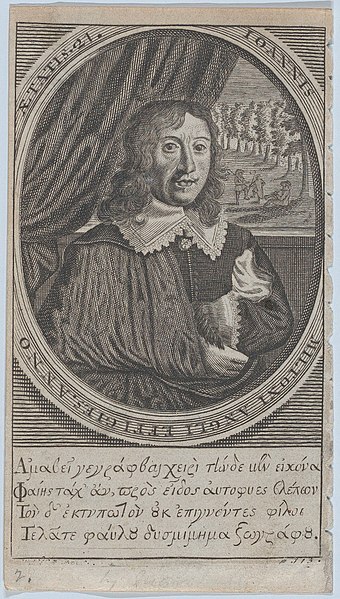
But I’ve earned nearly seven more years of wrinkles and gray hair since the last set of head shots, and readers have been expecting author portraits since the papyrus scrolls of Ancient Egypt. I couldn’t avoid them any more than John Milton could have when his printer Humphrey Moseley insisted the poet include one with his first collection of poems in 1645.

Maybe not the most flattering portrait ever. William Marshall, Public Domain, via Wikimedia Commons

Milton enlisted the help of renowned engraver William Marshall to create a frontispiece including an author portrait. At the time, Milton was thirty-seven years old, but the standard of the day was to include a picture of the poet at a younger age. Alas, that is no longer the standard.

According to the words engraved around the portrait, William aimed to depict Milton at the age of twenty-one. According to the overly large nose, greasy hair, puckered lips, and swollen right eye of the portrait, he missed.

The picture was so unflattering and Milton so upset about it, that the poet asked the engraver to include the following lines in Greek (a language that Marshall allegedly could not read) beneath the portrait:

“Looking at the form of the original, you could say, perhaps that his likeness has been drawn by a rank beginner; but, my friends, since you do not recognize what is pictured here, have a chuckle at a caricature by a good-for-nothing artist.”

An approachable, knowledgeable, literary lady with seven more years of wrinkles and gray hair, looking pretty darn okay. Image by Karen Anderson Designs.

When the collection was updated in 1673, the portrait was no longer included, but Milton, apparently still bitter about the worst head shot ever, moved his added poetic words to the interior of the book and slapped a title on them: “On the Engraver of his Portrait.”

Fortunately, my good friend and photographer is much more pleasant to work with than William Marshall apparently was. She doesn’t bat an eye when I ask her to photograph me in period costume holding a laptop, or to meet me in Forest Park in St. Louis so we can get a hint of the 1904 World’s Fair into the pictures.

She makes it as easy as possible for an awkward, squinty-eyed person such as myself to look pretty darn okay. I can trust that she’d never make my nose appear too large, my eye swollen, or my hair extra greasy. She’d probably even digitally remove my wrinkles and gray hair if I asked her to, but I didn’t. And she can trust that I’ll never include an insulting poem about her work in my book.

Malapropos of Nothing

I admit to being a little bit of a language snob. Of course I recognize that language evolves and a misspoken word today may be perfectly acceptable tomorrow, at least for some, but know that if you use a malapropism, I’ll probably judge you.

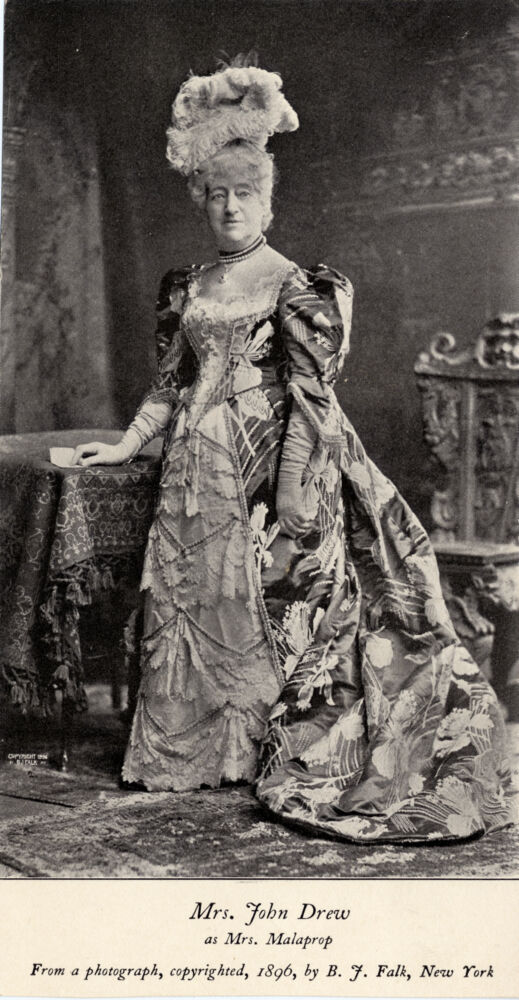
In case you are unfamiliar with the word malapropism, in lame man’s terms, it’s the mistaken replacement of a word with another that sounds similar. The term, derived from the French mal à propos, meaning inappropriate, got picked up in the English language because of playwright Richard Brinsely Sheridan. In his 1775 play The Rivals, a character named Mrs. Malaprop is notorious for muddling up her words. 

One version of Mrs. Malaprop looking “as headstrong as an allegory on the banks of the Nile,” which is one of her delightful lines. University of Illinois Urbana-Champaign University Library, Public domain, via Wikimedia Commons

That’s not to say that Sheridan was the only, or even the first, writer to make use of such a character trait, but I suppose that’s a moo point. For all intensive purposes, that’s when the concept entered the English language where it’s been driving language snobs like me bonkers ever since.

I’ve been thinking about malapropisms a lot lately because the publication date of Paradise on the Pike, my new historical novel set in the 1904 World’s Fair in St. Louis, is drawing near and I have discovered that not everyone is familiar with the word “pike.” 

If you happen to live in one of the handful of US states that contain a turnpike, you might be able to puzzle out that “turnpike” is another word for toll road and that “pike” is another word for a road. You might even be familiar with the phrase “coming down the pike,” meaning something is going to happen in the future. For example, I have a new novel coming down the pike. 

If you don’t happen to live near a turnpike, then you might mistakenly believe the phrase is “coming down the pipe,” in which case, I’m probably judging you. 

But this particular malapropism does make some logical sense because there is another phrase “in the pipeline” that also refers to something that is going to happen soon. I could, for example, tell you that I have a new novel in the pipeline. Conflating the two seems like a fairly innocuous mistake.

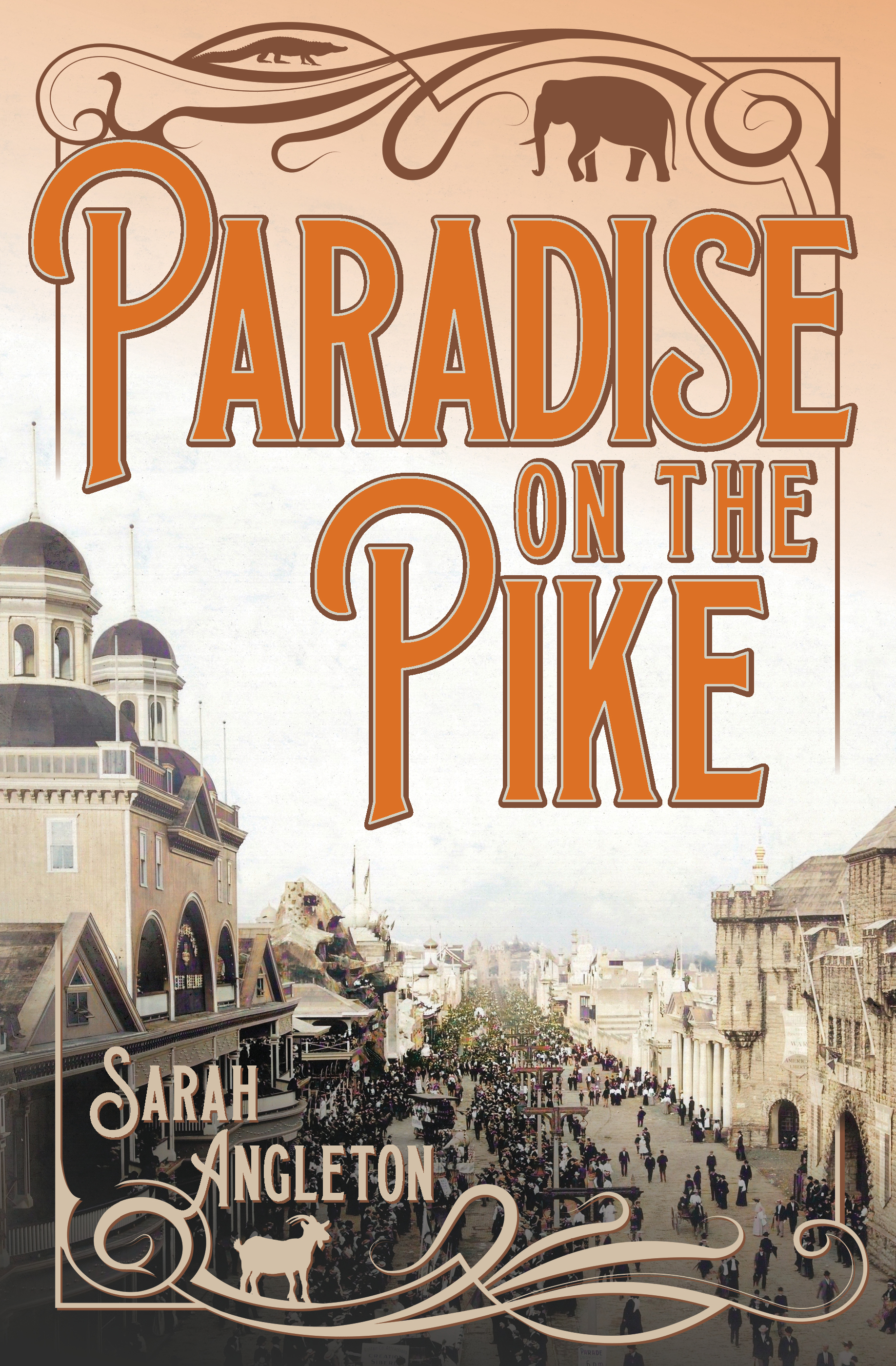
And of course you can go ahead and say whatever you like. It’s a doggy dog world and I don’t always get my way even if I do think malapropisms ought to be nipped in the butt whenever possible. Really, I could care less. Except that the expression, “coming down the pike,” may actually have its roots in the 1904 World’s Fair in St. Louis in which a mile long stretch of road along the north side of the fairgrounds that formed the main entertainment section of the fair was referred to as “the Pike.”

A new historical mystery coming down the pike on April 18, 2024.

The Pike contained all manner of concessions including battle reenactments, rides, a wax museum, fashion demonstrations, mock-ups of exotic locales, dancers, musicians, and animal shows. It was also the site of daily parades, leading to much excitement as people crowded around to catch a glimpse of what wondrous things might be coming down the Pike.

And so, the cover of my newest novel in the pipeline that will be coming down the pike on the 18th of April, just in time to celebrate the 120th anniversary of the 1904 World’s Fair, features a picture looking down the historical Pike. I hope you’ll forgive me for stringing out the cover reveal and keeping you on tender hooks for a few weeks. I also hope you’ll really enjoy the book when it’s finally here. And in the meantime, language snobbery aside, I hope you’ll love the book by its cover.