Pomp, Illuminations, and the Hard Work of Revision

So, today we celebrate a pretty big holiday here in the United States. We follow in the footsteps of John Adams who wrote to his wife Abigail that Independence Day should be recognized with “pomp and parade, with [shows], games, sports, guns, bells, bonfires, and illuminations from one end of this continent to the other.”

It’s a little rainy today in my corner of the world, but most of us will have all that pretty much covered. Of course, we aren’t really celebrating the anniversary of the day the Continental Congress first declared independence, nor the day one of history’s most famous breakup letters was drafted. The holiday doesn’t fall on the anniversary of the signing of the Declaration of Independence, and it doesn’t mark the moment when King George III read it and decided to sing a love song about sending an armed battalion.  

John Trumbull, Public domain, via Wikimedia Commons

Today’s July 4th celebration does commemorate all of that, but what it actually marks on the calendar is the day of the final pen stroke of the final draft of the document that spurred a war that birthed a nation.

As a writer who recognizes that first drafts rarely amount to much and that most of the best writing occurs in the rewriting, I find this pretty satisfying. It seems John Adams would not have agreed with me. When he wrote of his future nation’s Independence Day, he was referring to July 2, 1776.

I get it. He was excited. He’d had a hand in the original draft, working with Benjamin Franklin, Robert Livingston, Roger Sherman, and of course Thomas Jefferson to get it just so. Like a student who waited too long to start his final term paper and stayed up all night before the due date, assuming that in his push to get it finished, he’d written the most brilliant words ever penned by any student in the history of students, Adams was probably anxious to get it turned in to the Continental Congress, send it on to the king, and sit back to watch the fireworks.

Image by Johnny Maertens from Pixabay

Not surprisingly, however, Adams and his fellow committee members weren’t the only ones who had something to say about the wording of the Declaration. The debating began. In some ways, this important American document was improved by a few tweaks here or there, a little tightening of language or nuance of phrasing. And in other ways, it was made worse, like in the removal of all references to the immorality of slavery.

It’s still possible to make the wrong decision in revision, too, which is one of the things that makes the process so difficult. But the Continental Congress figured out where they had to compromise in order to make the declaration work enough for all the representatives in the room to move forward. The final draft would be signed nearly a month later on August 2. The date at the top of the document, however, remained July 4, which became an officially declared federal holiday in 1870.

The date is pretty ingrained at this point and I think, all things considered, it’s the right one to celebrate, though with the a full day of rain expected, and much to the frustration of my poor dog, I suspect many of my neighbors will celebrate with illuminations on the 5th and 6th this year.

Image by Jill Wellington from Pixabay

But in my mind, the 4th is the day the United States truly embarked on the notion that freedom and liberty sometimes require compromise and consideration of those who don’t agree with us, and that revision is painful, difficult, and necessary work.

The United States, such as it was imagined by the Second Continental Congress, wasn’t a perfect nation, nor was the vision of it perfected yet. That would take many, many years. So many, in fact, we’re still counting, and I suspect always will be.

But the best work comes in the difficult, painful revision process in which debate and compromise occurs. No matter how politically divided we may think we are, or how we as individuals may feel our nation is doing in this moment, I hope that’s something every American can be proud to celebrate.

If you are celebrating American Independence today or perhaps in the coming days, please be careful with all your pomp and illuminations, and have a wonderful holiday!

P.S. In the interest of full disclosure, I originally posted a version of this a few years ago, but it’s a holiday and the post still feels pretty relevant

If Not for a Boatload of Pirates

It’s been a long, cold week or so in my corner of the world as temperatures plunged to the kind of face-freezing levels that cause businesses to delay opening, schools to cancel classes, and mamas of stir-crazy little ones to go just a little bit crazy themselves. I have one teenager at home and no little ones anymore, but I do remember such days, and I understand your pain.

Yesterday we finally warmed up, our precipitation became much less solid, temperatures climbed all the way into the mid-40° range, and mamas rejoiced as kids went back to school. Today we’re expecting to be maybe a couple of degrees cooler than that, but still it feels downright balmy compared to 0° with a windchill of -15° and Monday’s ⅛ to ¼ inch of ice that made the 3 mile drive my son would normally make to school treacherous enough I was grateful for the cancellation.

For the non-American readers who might be into this kind of thing, I’ll translate the previous paragraph. Yesterday topped out at around 7° Celsius and today will likely be only a couple of degrees cooler, which does feel pretty refreshing after temperatures as low as -17.778° C with a windchill around -26.1111° C and anywhere from 3.175 to 6.35 mm of ice, enough to make even a 4.82803 kilometer drive pretty dicey.

Image by newsong from Pixabay

Personally, I don’t think going metric is an improvement, but I suppose it all depends on what your brain is used to, and I recently learned that had it not been for a boatload of pirates, we might all be speaking the same measurement language.

That’s because in 1793, then US Secretary of State Thomas Jefferson was looking for a solution to the problem of inconsistent measurement systems in use throughout the new nation that made doing business both at home and abroad a little bit of a confusing hot mess. As a man who was interested in most things French following a successful revolution in which France had been a crucial ally, Jefferson was most intrigued by their newfangled base-ten measuring system.

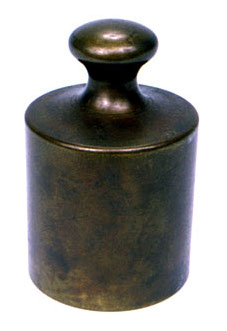
In hopes of learning more and implementing such a logical and useful set of measurements in the US, Jefferson eagerly awaited the arrival of Joseph Dombey, a French physician and botanist who had been tasked by the National Assembly to bring its American friends a meter long copper bar and a copper grave (soon renamed the kilogram).

To be fair, if a bunch of pirates sent this to me, I probably wouldn’t know what to do with it either. Public domain, via Wikimedia Commons

The weather did not cooperate with Dombey’s planned journey and his ship was forced south into the Caribbean where pirates attacked and took the scientist hostage. He died in captivity, but his luggage, marked for the US Secretary of State survived. Much delayed, it was eventually delivered into the hands of Jefferson’s replacement Edmund Jennings Randolph who had no idea what to do with it.

Without a proper introduction to the metric system, the US ended up adopting a standardized reformed British Imperial system of weights and measures in 1824 and all subsequent attempts to move entirely to the metric system, which yes, we do realize makes a lot more sense, have been unsuccessful.

We do scientific research, medical treatment, international business, and soda bottle purchasing in metric, but there’s a 100 yard football field at the high school several miles from my home and as long as the temperature stays above freezing, which happens at 32°, and we don’t get two feet of snow or a quarter inch of ice on the roads, my son will use much less than a gallon of gasoline to drive an approximately 2,700 lbs. car to get there. Because that’s how his brain works, too.

And because of pirates.

America’s Big Cheese

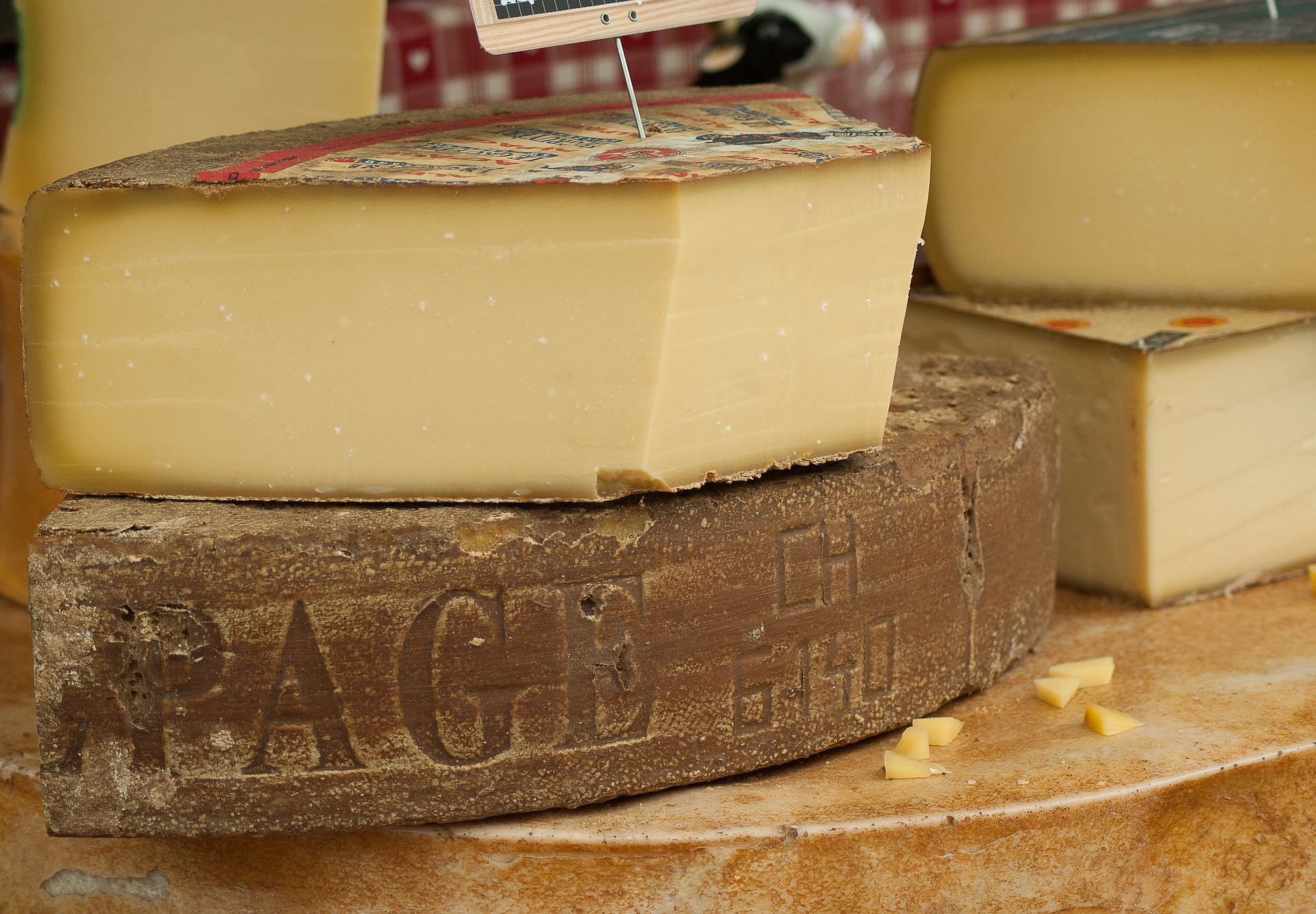
On January 1, 1802, then President of the United States Thomas Jefferson became the recipient of what I think is safe to say was probably the best gift ever received by someone who has held the office. After travel by sleigh, barge, sloop, and wagon, a 1,235-pound wheel of cheese arrived at the home of the president.

The cheese came from the good people of Cheshire, Massachusetts who, led by cheese enthusiast (I’m guessing) and Baptist minister John Leland, made the wheel from the milk of nine hundred (non-Federalist) cows in a gigantic press fashioned specifically for that purpose.

The gift, allegedly created entirely without slave labor, served as a show of support and appreciation for Jefferson’s commitment to the complete separation of church and state. What was a controversial issue among religious citizens, was embraced as freeing rather than limiting by Leland and his flock. So, they sent cheese. As one does.

The cheese wheel made quite a splash in the towns it passed through as it traveled five hundred miles over the course of three weeks. When at last Thomas Jefferson saw it, he graciously thanked the gift-givers for their thoughtfulness and accepted it, while also donating $200 to their church because he opposed the practice of presidents accepting gifts.

But what a gift it was! The cheese wheel was even carved with the words of his favorite motto: “Rebellion to tyrants is obedience to God.” I mean, who doesn’t love a good motto carved into a giant wheel of cheese?

Thomas Jefferson, a man who could appreciate a good cheese-carved motto. By Rembrandt Peale – White House Historical Association, Public Domain, https://commons.wikimedia.org/
w/index.php?curid=1604678

Not Thomas Jefferson. Despite his Federalist political opponents’ mockery of what they called the “mammoth cheese,” the president proudly had it served at his home for more than two years. Of course, rumor has it that by then, some of it may have gone a little south and ended up at the bottom of the Potomac.

Because as you probably know, cheese doesn’t tend to last forever and big cheeses have to be changed out once in a while.

Yesterday in the United States, we officially changed out the big cheese in the White House. There are a lot of hard-working, thoughtful, cheese-loving Americans who are pretty excited about that. And there are a lot of hard-working, thoughtful, cheese-loving Americans who are pretty nervous about that.

Even though this has been a particularly tumultuous political season, that’s pretty much how it’s always been and yet, transfer of power happens and the nation, for better or worse, rolls forward. Like a big wheel of cheese.

I mean, it wouldn’t be the worst gift. Image by jacqueline macou from Pixabay

No matter how any of us might feel about the inauguration of a particular new president, I think we can be proud of and celebrate what has become a grand tradition.

To be clear, I’m referring to the peaceful transition of power and not the presentation of giant cheese to the new president, which with the exception of one other occasion involving Andrew Jackson, never really caught on.

But I suppose that tradition could be resurrected. All we need is a well designed press and about nine hundred (non-Republican) cows.

Recipe for Spring: Start with 1.4 %Egg Yolk. Add Brain Freeze.

When he took on the office of the President of the United States in 1801, Thomas Jefferson brought with him his love for ice cream. Having most likely gotten his favorite ice cream recipe from his time serving as Minister to France, Jefferson often had the dessert served in what would, after a few years and a fire, come to be called the White House.

Thomas_Jefferson_rev
Just a hint of a smile in this portrait…I bet he’s thinking about ice cream. Thomas Jefferson, Public Domain, via Wikimedia Commons.

Jefferson accomplished a lot in his political career, but contrary to rumors that suggest otherwise, he did not introduce ice cream to the United States. He did, however, probably contribute to the spread of its popularity, and his handwritten recipe is the oldest of its kind known in the US.

It calls for cream, of course, and sugar, vanilla, and plenty of egg yolks. I’m sure it was good, and if you want to try Jefferson’s recipe, you can allegedly do so while visiting Mount Rushmore where the National Park Service will be happy to sell you a cone.

Mountrushmore
When we visited Mount Rushmore a few year ago, we had no idea we could have eaten Thomas Jefferson’s way back ice cream. Guess we’ll have to visit again. Mount Rushmore, National Park Service, Public Domain, via Wikimedia Commons.

But according to the FDA, what you’ll be eating won’t technically be ice cream, which is defined as a frozen dessert containing at least 10% milkfat, a maximum of 100% overrun (the amount of mixed in air), and less than 1.4% egg product. You’ll have to call it French ice cream, or frozen custard instead.

It’s the eggs that make the difference, as most American ice cream recipes now forgo eggs all together in order to make production cheaper and handing easier. Custard is generally served fresh, and is stored at a slightly warmer temperature than ice cream. And custard has a much lower overrun, making it denser (upside down frozen custard has been holding onto spoons since long before Dairy Queen’s Blizzards) and creamier and, often, much more delicious.

You can trust me on this because we St. Louisans know a thing or two about frozen custard, which outside of the return of baseball(and yes, I’m going to go out on a limb here and speak for all of us) is our favorite sign of spring.

Finally this week, spring has sprung here in Missouri. It happened officially this past Monday, but all the unofficial signs have begun arriving, too. The temperature reached into the 80s (it didn’t stay there, because Missouri), tornadoes have touched down, the dog is shedding EVERYWHERE, and the seasonal frozen custard stands are finally open.

This last one matters most to our family, and especially to my nine-year-old son. We pass one of his favorites every day on the way home from his school, and every day I have to decided whether I will stop to get an after school treat or whether I will explain to him why it’s not a custard day.

Obviously we stop much less often than we don’t, but he never fails to ask. Fortunately this stand, like many in the area, closes in late November and doesn’t open again until early to mid-March, so I get a few months off from this tedious conversation.

But now it’s open, and my son is relentless. What can I do? He’s a St. Louis kid. And he loves his frozen custard.

Ted Drewes
Ted Drewes Frozen Custard. “It really is good, guys..and gals.” By The original uploader was Indrian at English Wikipedia [GFDL (http://www.gnu.org/copyleft/fdl.html) or CC-BY-SA-3.0 (http://creativecommons.org/licenses/by-sa/3.0/)%5D, via Wikimedia Commons
The Midwest fell in love with this creamiest of frozen dairy desserts in the 1930s. The first machine designed for producing frozen custard was about ten or twelve years old at that point and had already taken the Jersey shore by storm, but no one loves the stuff as much as Midwesterners (the true cultural center of the nation).

The city that grabbed hold the most enthusiastically is Milwaukee. Since Wisconsin is made of dairy cows and ice, it was a natural fit. Today that city calls itself (unofficially) the frozen custard capital of the world and boasts that it contains more frozen custard stands per capita than any other city. Good for them.

fritz's
Our favorite local treat is Fritz’s Frozen Custard, a St. Louis tradition since 1983.

I mean no disrespect to my Milwaukee friends when I say this, but we have an arch, and a better baseball team, and Ted Drewes Frozen Custard, named by celebrity chef Bobby Flay as the best dessert he’s ever eaten. Ted Drewes has been a part of St. Louis since 1931, and as they say in their extremely clever catchphrase, “It really is good guys…and gals.”

My son and I don’t drive past a Ted Drewes every day on our way home from school, but just because our stand is less famous, doesn’t mean it’s any less beloved. And most importantly, it’s now open for the season.

We’ve already made our first stop for rich, creamy, frozen dairy deliciousness complete with more than 1.4% egg yolk, consumed so enthusiastically that my son gave himself his first brain freeze of the spring. I think Thomas Jefferson (coincidentally my favorite historical president, only partially because of his love for frozen custard) would be proud.