
It’s been a pretty nice spring around here so far, a little drier than ideal, but the temperature has been mostly mild and with a little strategic watering, the garden is doing well.

A few days ago, I harvested my first (admittedly late) lettuce for a salad, and the locusts I call my sons devoured all the pea pods, strait from the plants. Last week, I pulled radishes that I promptly gave to my mother once I remembered that radishes are gross.
Now I’m watching the formation of green tomatoes, tiny peppers, blossoms that will someday soon become cucumbers, and the crazy growth of squash and melon plants that will eventually battle the potatoes for an epic garden takeover.
The blueberry bushes are producing, and the young strawberry plants are coming along. The blackberry brambles we planted last year are progressing nicely, and our apple trees are looking to be as productive as they ever have been. That means we have an awful lot of applesauce to eat still between now and harvest time.

But the one thing we don’t have this year is cherries. With the exception of only a few years in my life, I have always lived with at least one cherry tree in my yard. Their beautiful pink and white blossoms against a storm blue sky is one of my favorite sights of early spring, and I know that spring has truly arrived when I begin fighting the robins for the bright red fruit.
Then come the pink-stained fingertips from endless seeding, followed by a thick slice of tart cherry pie smothered with a scoop of homemade vanilla ice cream. Add in a buttery ear of sweet corn, and this midwestern gal just tasted summer.
But not this year. Because as mild as our weather has been, we did have one unfortunate cold snap that brought us a night of freezing temperatures just as those beautiful blossoms were fully developed and ready to turn the corner into juicy orbs of deliciousness. We watched anxiously to see what would happen, and slowly admitted the cherry harvest wasn’t going to happen.
Our tree, that only a few weeks earlier had been so full of promise that I went ahead and used up the last two cups of last year’s frozen harvest to bake chocolate chip cherry bread, had no more than a handful of fruits on it. And the birds ate those.

It’s okay, though. I’ll miss the homegrown pie, but at least I’m comforted knowing we won’t go the way of US President Zachary Taylor, who died sixteen months into his presidential term at the age of 65. Taylor, a hardened war hero known as “Old Rough and Ready” because of his rugged, unstoppable nature, may very well have been brought low by cherries.
That’s not the only theory floated by historians and physicians. His own doctors believed he died from cholera, not uncommon in Washington DC at the time. What is known for sure is that on July 4th of that year, the president attended Independence Day festivities at the construction site of the nation’s favorite phallic monument, and while there, ate quite a large number of cherries, which he chased down with a good quantity of iced milk.
That sounds like a pretty great 4th of July to me, but it didn’t work out so well for Old Rough and Ready. Evidently it was a warm day and President Taylor took a stroll along the Potomac before heading back to the White House. Once there, he ate more cherries and enjoyed a lot of ice water to cool down.
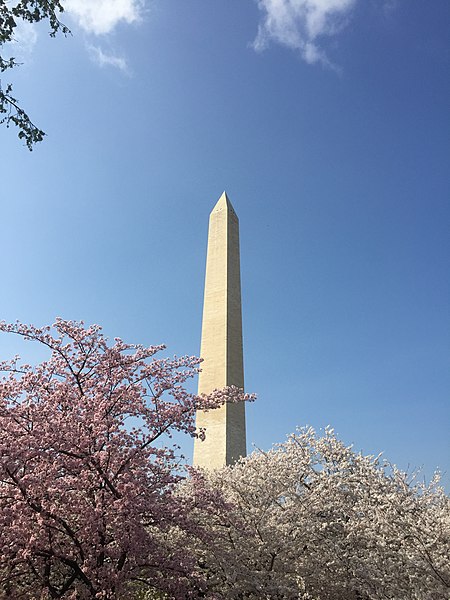
licenses/by-sa/4.0, via Wikimedia Commons
Then that night, the president got sick. Like really sick, with full on abdominal cramping, nausea, and diarrhea of the variety that, I assume, makes you regret your life choices.
It’s possible, of course, the water was contaminated, as Washington DC is well known for containing an awful lot things that are difficult to stomach, or perhaps the iced milk was at fault. But another theory is that the acidity from the cherries Taylor consumed, combined with the acidity of the milk, caused the severe abdominal distress from which he never recovered. He died on July 9th, 1850, leaving Millard Fillmore, of unearned bathtub fame, in charge of the nation.
It is true that Taylor had made some political enemies during his brief stint in the White House. His support for the Wilmot Proviso, which would have excluded slavery in territories acquired from the Mexican-American War, along with his strongly worded promise to personally bring the hurt to anyone who attempted succession, have led some historians to suspect assassination.
I’m not convinced there’s very strong evidence for that, though I admit assassination by cherries would be awfully clever. I know of at least one blogger who may want to use that in a story sometime.
Regardless of whether assassins, or cherries, or bacteria, or all three are to blame for President Taylor’s early demise, the whole story does make me feel a little bit better about our own lack of cherry harvest. Still, I sure could go for a slice of homegrown cherry pie about now.
![By User:Miwillans (Own work) [Public domain], via Wikimedia Commons](https://sarah-angleton.com/wp-content/uploads/2015/04/swallowfieldstanley.jpg)

 Author Sarah Angleton