In 1880, led by then University President Charles W. Eliot, Harvard began a program of granting sabbatical to its professors. A concept derived from Old Testament Biblical tradition, this year of rest from the demands of teaching would include half the normal salary and could only take place once every seven years.
Not how I’ve been spending my time. But wouldn’t it be lovely? Image by Lukas from Pixabay
Though Harvard was the first to apply the concept, several universities followed suit over the course of the next few years. Today, of course, the sabbatical is a common occurrence in university settings, but it is also surging in the corporate world, where more and more companies are recognizing productivity benefits in allowing their high level employees to take a little time to switch directions and clear their minds a bit.
I’m a big fan of taking a minute, and have from time to time found in my own creative journey, the need to do so. Sometimes when the creative juices are less willing to flow, a walk or a day spent in some other kind of work, has often been helpful to get them going again. But the notion of a full year away has always been a lot to imagine.
It turns out that even though corporate sabbaticals are beginning to become more common, a good percentage still begin with unplanned events, like an unexpected health challenge or family emergency. I can’t claim either was the impetus for the sabbatical I have recently found myself on.
Also not how I’ve been spending my time But it probably should be. Image by Pexels from Pixabay
I’m sure that those of you who follow this blog very closely have noticed that I haven’t posted in quite a while. I apologize for disappearing without explanation, but I honestly didn’t realize how much I needed to step away.
Many of you know that this school year I took on a full-time position for the first time since my children were born, the youngest of whom is a high school senior. I knew that in doing so, I would be limiting the time I could spend writing. I just didn’t know how much I would benefit from that. I also didn’t know that it would extend to the blog.
I do sometimes miss writing, but for the moment, I’m happy putting my creative energy elsewhere, and I’m hopeful that when I return it will be with renewed enthusiasm. There is a book simmering away on the backburner, perhaps growing thicker and richer for the neglect. There are jotted notes about potential future blog posts and essays and short stories, their flavors melding in the back of the fridge. And though I have thought up several excellent mixed metaphors, there remain exactly zero poems on the horizon.
This break has not been a resignation nor a retirement. I’ve come to think of it as a necessary sabbatical. I’m not sure precisely when yet, but I’ll be back.
There’s a video put out by the folks of Miriam-Webster that has been floating around. It’s worth a little thinking about. It suggests that, despite what your third grade teacher taught you, a preposition might not be the most terrible thing to end a sentence with.
In fact, these language experts who, mind you, have now decided to include the nonsensical “irregardless” in their dictionary, point to the history of English to rest their case upon. They suspect it began with a little known 17th century grammarian named Joshua Poole whose work, The English Accidence, does mention that one should use prepositions following only the natural order they should appear in.
England’s first Poet Laureate John Dryden apparently agreed with him, and once took critical aim at poet Ben Johnson’s use of the line: “The bodies that those souls were frighted from.” Because Dryden used to translate his own work into Latin as a way to revise for concise and elegant language, the assumption is that he preferred the grammatical rules of Latin to force English into.
If you want to get creative with prepositions, you’ll have to think outside the box. Or in it. Or on it. Or around it. Image by Agata from Pixabay
Whether this was the real reason for his preference, however, doesn’t totally shine through. Dryden did also once take himself to task for occasionally spotting a line or two in his own work where a sentence-ending preposition had slipped out.
All writers have preferences they rarely go against. It’s certainly not a habit that I can claim to be above. Still, it’s unclear why this particular preference of this particular poet became a hard and fast rule no student could live without. What is certain is that in the wake of Miriam-Webster’s claim that the rule never was a rule, the debate has been a furious one that it may take some time to get over. This is a topic that sure gets people worked up.
I do appreciate that language evolves and I try not to be too pretentious about it, but based on this brief experiment with lackluster, and maybe even just plain strange sentence structures, I don’t think I’m ready yet to throw the rule out. All I can say is that I will certainly think it through.
Lately I’ve been feeling my age pretty keenly. It’s not that I’m old, but I am solidly middle-aged, not yet quite to the morning/evening pill divider, but well beyond the days of waking up without back pain. For the most part, I don’t mind too much. Getting older, after all, beats the alternative, but I do sometimes marvel at the fact that I have no idea what the young’uns are talking about.
I mean, I’m definitely young enough to enjoy a good birthday cake, but I’m also old enough there’s no way anyone is lighting that many candles. Image by Marco Apolinário from Pixabay
Because middle age also falls somewhere between no longer being able to hear what the kids are saying and no longer understanding it. This, more than anything except perhaps for the regularity with which I ask my sons to help me fix whatever stupid thing I’ve done to my computer, makes me aware of my age.
It doesn’t help that I celebrated a birthday last week, in that way middle aged mothers do. The hubs, bless him, slaved away over the grill to make me a special meal that we ate alone because my teenage sons each made plans to not celebrate their mother’s birthday.
That’s fine because they’re sigmas with rizz and they got that drip, so it stands to reason they’d have plans extending beyond their dad’s bussin steak. Too bad for them because it slapped. No Cap.
Yeah, I don’t know what I just wrote, either, though I’m fairly certain I used every bit of that gen Z slang just a little bit incorrectly.
I find myself longing for the good old days when we said logical things like “totes magotes.” Image by Chräcker Heller from Pixabay
And that’s kind of what it’s for anyway. The term slang has existed since at least the 1740s when it referred to the speech of thieves and beggars rather than teenagers, but I’m betting the concept has been around pretty much since the dawn of speech, with each generation’s drive to distinguish itself just a little bit from its elders.
Personally, I used to really enjoy slang. I was a totally rad preteen in the 1980s. Then as a teenager in the 90s I was all that and a bag of chips. I chillaxed through my twenties in the 2000s, and in the 2010s this thirty-something was a little bit extra.
But now in the 2020s, I’m mostly just tired of all this skibidi Ohio brain rot. As far as I’m concerned all these sus kids are delulu. But now I’m just talking out of pocket.
She was the first, and the error was unfortunate because instead of typing public education, I had accidentally left out a very important letter l. Fortunately, I was able to fix it quickly and if any of the rest of you noticed, you were gracious enough to cut me some slack.
I try to be a meticulous editor, but anyone who has followed this blog for very long has probably spotted the occasional error that gets through. Often either the hubs or my eagle-eyed mother will discover them and point out the mistakes spell check won’t catch. One time a reader I don’t know personally was kind enough to politely point out that the country of Wales is spelled differently than the marine mammal with a similar name.
You’ve all been very kind over the years, and as far as I know none of my silly typos have led to any controversy. Royal printers Robert Barker and Martin Lucas were not so fortunate. In 1632, they stood trial in the court of King Charles I for a mistake that made its way into their 1631 re-printing of the King James Bible. The mistake occurred in Exodus 20:14, which should read: “Thou shalt not commit adultery.” The problem was that this printing omitted the word not.
Barker and Lucas had to answer for the slip-up to the tune of £300. That’s roughly £56,000 today, or about 75,000 US Dollars, which is a pretty steep price to pay for three little letters. To make matters worse, the gentlemen lost their publishing license.
But think about how many words they got right! Image by Pexels from Pixabay
While nearly all of the one thousand misprinted Bibles were confiscated and destroyed before they had a chance to tear apart too many families, at least fifteen copies still exist today—seven in England, seven in the United States, and one in New Zealand.
A British rare book dealer named Henry Stevens obtained one of the copies in 1855 and called it the Wicked Bible, a name that has pretty much stuck since then. In the last decade, copies have changed hands for somewhere around $50,000, which means that if the descendants of Robert Barker and Martin Lucas still had a copy, they’d need to wait a few years yet to come out ahead.
I doubt any of my typos would fetch that kind of bling, and so my promise to you, dear reader is that I will continue to do my best to catch all the irritating little typos on this blog. I can assure you that if I ever suggest adultery as a good life choice, then you can assume it’s a terrible mistake.
I do feel for Barker and Lucas, though. It may be true that none of the errors that have occasionally popped up in my little corner of the blogosphere have been so grievous or costly. Still, I’m certainly aware that no matter how cautious an editor one may be, it can be a big risk to put your words out there in a pubic space.
Today marks exactly four weeks until my fifth book launches into the world. It’s been nearly seven years since I published my first, a collection developed from the first five years of this blog. That book, calledLaunching Sheep & Other Stories from the Intersection of History and Nonsense, is part history, part memoir, and a good part made-up silliness. The cover features a picture of me in period costume.
This picture has served me well, but it’s time to age up a little bit. Image by KarenAndersonDesigns
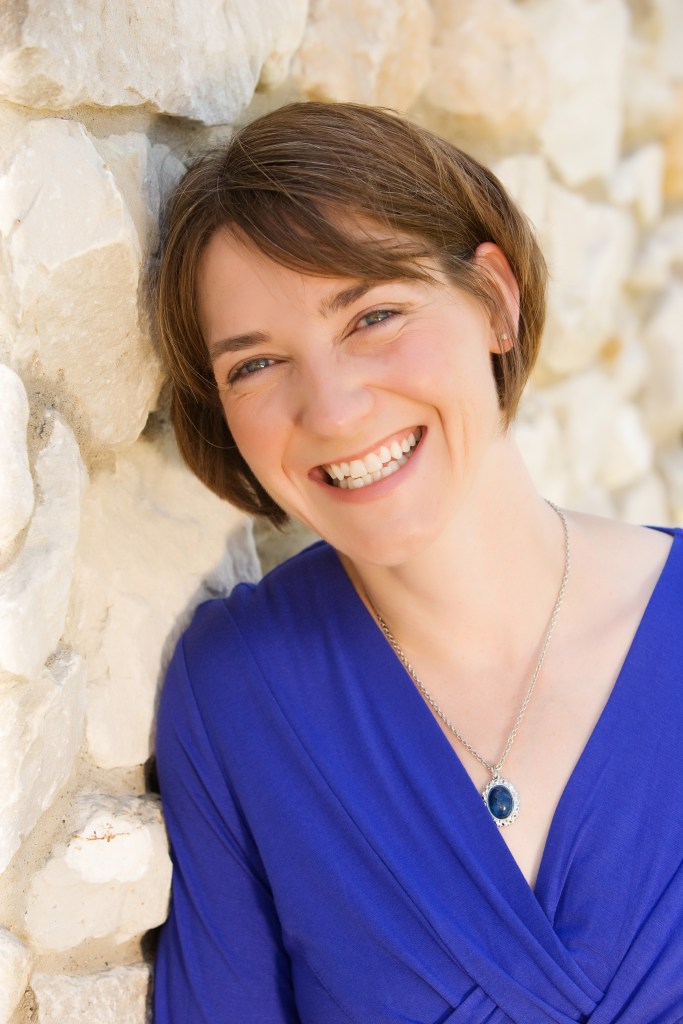
That was my first professional author photograph. My second was taken not long after in preparation for the release of my first novel, which happened about five months later. That one is a tad bit more professional and includes much less ridiculous clothing. I’m smiling, but not too much. I look like an approachable but also knowledgeable and literary lady in her thirties.
Most of those things, I hope I am. One of them, I definitely am not. And that’s why I recently had some new photos taken. Having portraits taken is uncomfortable for me. I don’t exactly run from the camera, but as a typical mom and keeper of memories, I am more often behind the lens than in front of it.
But I’ve earned nearly seven more years of wrinkles and gray hair since the last set of head shots, and readers have been expecting author portraits since the papyrus scrolls of Ancient Egypt. I couldn’t avoid them any more than John Milton could have when his printer Humphrey Moseley insisted the poet include one with his first collection of poems in 1645.
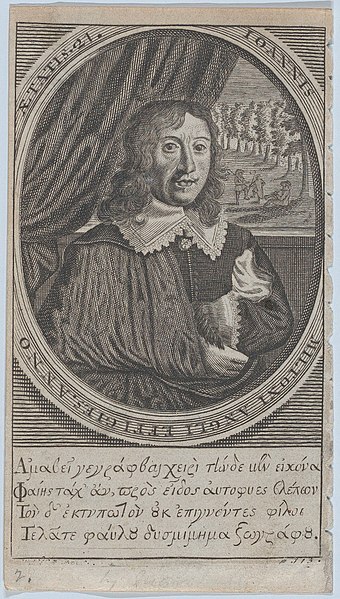
Maybe not the most flattering portrait ever. William Marshall, Public Domain, via Wikimedia Commons
Milton enlisted the help of renowned engraver William Marshall to create a frontispiece including an author portrait. At the time, Milton was thirty-seven years old, but the standard of the day was to include a picture of the poet at a younger age. Alas, that is no longer the standard.
According to the words engraved around the portrait, William aimed to depict Milton at the age of twenty-one. According to the overly large nose, greasy hair, puckered lips, and swollen right eye of the portrait, he missed.
The picture was so unflattering and Milton so upset about it, that the poet asked the engraver to include the following lines in Greek (a language that Marshall allegedly could not read) beneath the portrait:
“Looking at the form of the original, you could say, perhaps that his likeness has been drawn by a rank beginner; but, my friends, since you do not recognize what is pictured here, have a chuckle at a caricature by a good-for-nothing artist.”
An approachable, knowledgeable, literary lady with seven more years of wrinkles and gray hair, looking pretty darn okay. Image by Karen Anderson Designs.
When the collection was updated in 1673, the portrait was no longer included, but Milton, apparently still bitter about the worst head shot ever, moved his added poetic words to the interior of the book and slapped a title on them: “On the Engraver of his Portrait.”
Fortunately, my good friend and photographer is much more pleasant to work with than William Marshall apparently was. She doesn’t bat an eye when I ask her to photograph me in period costume holding a laptop, or to meet me in Forest Park in St. Louis so we can get a hint of the 1904 World’s Fair into the pictures.
She makes it as easy as possible for an awkward, squinty-eyed person such as myself to look pretty darn okay. I can trust that she’d never make my nose appear too large, my eye swollen, or my hair extra greasy. She’d probably even digitally remove my wrinkles and gray hair if I asked her to, but I didn’t. And she can trust that I’ll never include an insulting poem about her work in my book.
On March 19th, 1848 in the little town of Monmouth, Illinois, the gunslinger who would one day become the central figure in the famous shootout at the OK Corral, Wyatt Earp came screaming into the world.
But I’m not going to write about Earp this week. In fact, I’m not going to write about any historical figure at all, because a while back, a fellow blogger was kind enough to extend an invitation for me to participate in a writer’s tour.
So, first, I want to thank Camille Gatza of Wine and History Visited for including me on the tour. I have been enjoying Camille’s blog almost since I started out blogging myself. Her posts often detail her travels through the US including wonderful background on historic sites and national and state parks. Along the way she always seems to discover unique restaurants and wineries and over the years, she has taught me pretty much everything I pretend to know about wine.
So here are the questions put forward on the tour:
What are you currently working on?
I’m always researching for both my blog and my fiction projects. The blog jumps through time and space from week to week, through the stories that I find interesting at any given time, with really very little rhyme or reason. I find that kind of research, which is admittedly not always very thorough, to be kind of a refreshing break from the research I do for my fiction projects. That is thorough and time consuming and while interesting, doesn’t always yield the kind of lighter stories I like to share in this space.
Currently as a blogger, I am looking into the story behind LEGOS because this weekend my family and I will be attending the traveling LEGO Festival as it visits St. Louis. In my other “writerly” role, I am working through a first full draft of a novel that will hopefully serve as a companion to my first that was recently accepted for publication (!). As part of that process I am reading everything I can get my hands on about the Pennsylvania canal system in 1833, which, while interesting, and will supply wonderful historical details for the novel, is not exactly good material for this particular blog.
How does your work differ from others in your genre?
A lot of history blogs I read (and I do read a lot of them) are very information dense. Often they cite references and speak with a good deal of authority within a fairly narrow scope. I love that. And those kinds of blogs are exactly what history blogs should be.
But this isn’t that kind of blog. In fact I hesitate sometimes to even call it a history blog, because in some ways that’s not what it is. I do share stories from history, and I do spend a good amount of time (or at least some) researching my chosen topic in an attempt to provide readers with tidbits worthy of sharing at cocktail parties. But there’s also a lot of me on the pages of this blog. There’s a lot about my life and the things I find funny, or interesting, or just worthwhile. I try not to claim a great deal of authority in this space, because, frankly, I have none to claim.
But I do hope the posts are fun to read. I have a great time writing them.
Why do you write what you do?
When I was younger, history always seemed either dull or tragic to me. I’ve never been very good at memorizing dates and it seemed all I ever learned about in history class was how one group of people exploited another group of people to become the dominant people. And, really, human history can be boiled down to that if you let it be. But as I grew older and studied more literature, I began to see history through a different lens. When fleshed out with the little details that make up the experiences of individuals, suddenly each moment in history becomes many moments with many perspectives and far-reaching implications. In other words, it becomes a story. And a story, our story, is worth telling.
That realization led me to writing historical fiction, a genre that I fell in love with very quickly as a reader as well as a writer. And this blog is an extension of that. As this wonderful article in The Onionso eloquently points out, there are more stories within the history of human experience than I can possibly tell, or that any of us can possibly tell or ever know. But with this blog, each week, I get to take a stab at illuminating a little bit more.
For the most part, I write what’s on my mind. If I have experienced or will be experiencing a particular event, I may use that as a jump-off for some historical research, and often the structure of the post itself will reveal that. Some weeks, something I come across in the news sends me down a trail I think might be worth sharing. And, of course, like anyone else, I have weeks when I struggle to find something to say.
Typically I start out with a very general idea of what I want to write and just start typing because I never know exactly what I’m going to want to write until I’ve already written it. After that I polish it up, trim the word count, insert what I hope are a few clever lines, throw in a few pictures, and post. Then I just sit back and wait for millions of thoughtful comments to come rolling in.
Well, okay, so that last part doesn’t really happen, but I realize that this blog is a little hard to categorize and it is sure to appeal to a fairly specific kind of reader. I am delighted that so many of you quirky, creative, thoughtful people have found it. Thank you!
And now on with the tour!
For the next stops on the tour, I’ve chosen two writers whose blogs I appreciate very much. They also both happen to be writers of historical fiction, but they each approach blogging differently than I do. I doubt they’ll be writing about Wyatt Earp this week either (although you never know). Still, I hope you’ll visit their sites, and maybe read their books as well, because it will be well worth the effort.
Samuel Hall grew up in the American Heartland. He lives with his wife near Salem, Oregon. Their three adult children continue to teach him about family relationships and authenticity, core subjects of his novel.
Sign up for the newsletter at www.ashberrylane.com to hear the latest about Sam’s book, Daughter of the Cimarron.
Adrienne Morris lives in the country, milks goats, chases chickens and sometimes keeps the dogs off the table while writing books about the Weldon and Crenshaw families of Gilded Age Englewood, New Jersey. Her first novel, The House on Tenafly Road was selected as an Editors’ Choice Book and Notable Indie of the Year by The Historical Novel Society.






 Author Sarah Angleton
