Staring at the Wall

On August 22, 1911, artist Louis Béroud intended to spend his day at the Louvre, working his way through mimicking the paintings in one of its many galleries. He’d chosen Salon Carré, the room in which a small 16th century painting by Italian Renaissance polymath Leonardo da Vinci smirked from behind glass between Antonio da Correggio’s Mystical Marriage and Titian’s Allegory of Alfonso d’Avalos.

Mona Lisa by Leonardo da Vinci, Public Domain, via Wikimedia Commons

When he found an empty spot where the Mona Lisa had been on display for more than a century, he didn’t initially think much of it. At the time, there was an ongoing project to photograph many of the paintings in the Louvre, and several had been removed from their display locations temporarily to capture better lighting on the roof. 

The portrait had been the focus of critical attention in the art world for about fifty years at that point, as an excellent representative of Renaissance oil paintings, but outside that circle, the world hadn’t really given the Mona Lisa much thought.

That changed the moment Louis Béroud thought to ask one of the security guards when the painting might be returned, and the guard discovered that the painting hadn’t been taken for photographing at all. It was missing.

I love listening to his list because he finds all kinds of bands I’d never heard of, but that I absolutely love.

A thorough search of the museum didn’t turn up the painting, nor did nearly two years of investigation. The story became a fascinating true crime mystery and made the Mona Lisa, with its curious half smile and uncertainly identified subject, one of the most famous paintings in the world. It also made the empty spot where it had hung the most highly visited blank gallery wall in the world.

It’s that part of the story that I find most interesting, that people came in droves to stare at a vacant bit of wall. Of course, I don’t know why they all came. Maybe they were hoping to find clues or at least understand the circumstances of the crime a little better by putting themselves in the space. Maybe like the Instagrammers of today, people just wanted to seem interesting at parties because they’d taken time to be there, and obviously they’d always known that the Mona Lisa was an important work of art.

But lately, as I see the social media posts of so many grieving friends sending their newly grown up kids out into the world to college, or the military, or apparently in one lucky young man’s case, a gap year European tour, I tend to imagine that the crowds came to the Louvre as an expression of grief that they couldn’t quite make sense of and couldn’t quite shake off.

I imagine all those parents are catching glimpses of, and maybe even intentionally visiting, bedrooms once occupied by the children they never fully understood until now just how much they would miss. For me, it’s not the room so much, though it is sad and empty, but the Spotify list that I can’t stop listening to because it makes it sound like my youngest son is still at home.

And then there are just some fun surprises because he’s kind of an old soul.

I realize this is not a perfect analogy of course, because at least I hope every parent who’s watching a son or daughter leave the nest, already knows their kid is a work of art that fills an important space in the history of the world.  

Thankfully for most, even though their grief is very real, their young adult children will eventually return home, at least to visit. Mona Lisa did finally turn up again and wound its way back to the Louvre. It had been stolen on August 21st, the day before Louis Béroud noticed it was gone, and a day when the museum was closed. 

Vincenzo Peruggia, an Italian man who had been employed at the museum, and helped install the glass that protected the painting, had walked out the door with it. The Mona Lisa’s almost immediate burst of fame had made it impossible for him to do anything with it and only when he attempted to fence the work two years later was he finally found out and arrested. 

Today, Da Vinci’s kind of cheeky portrait is the most visited piece of art in the entire world. Because when you get the chance to miss something, that’s when you truly understand how special the time you spend with it really is.

Lobsters, Lemons, and Plain Ol’ Meatloaf

The countdown to summer is in full swing here in the Angleton household with one son already finished with classes and moved back home, mini-fridge and all, and the other heading into final exams and ticking off the the hours until the end of the semester.

I mean if I cooked that, I’d probably take a picture. Image by Mogens Petersen from Pixabay

The brothers have already been busy making plans to earn money, spend time with mutual friends, get fit, and learn to cook more. I’m not sure what exactly inspired this last goal, but they each mentioned it to me separately and I couldn’t be more delighted, not only because I am happy to turn over the task to them, but also because I would like them to be able to feed themselves when they get out into the real world.

Both of my boys do have some cooking skills. They just might lack a little confidence in the kitchen. My youngest took a culinary class at school and has a good base of knowledge. His older brother spent the school year living in a frat house as the low freshman on the totem pole who got stuck with cooking for the house when an ice storm cancelled classes and prevented their cook from reaching them. And then there are a few favorite recipes they each have learned over the years.

Okay, yeah, it’s not beautiful, but it makes for a pretty good family dinner. Image by Wolfgang Eckert from Pixabay

So they aren’t starting entirely from scratch, but they also don’t necessarily want to learn to prepare the typical meals that have graced our dinner table since they were small. My sons are, after all, part of the Instagram Era, and if it’s not worthy of a picture, it probably isn’t worth making in the first place. #foodstagram

Sharing a picture of one’s food isn’t unique to the age of social media of course. For centuries food has been depicted in works of art, and about eight years ago, it even inspired a study from Cornell University that looked at whether food depictions in art can tell us anything about what people ate during the corresponding eras.

The short answer to this question is no. We know this for four reasons:

  1. Historians do have a pretty good idea, from many other sources, of the kinds of foods people frequently ate in the time periods and regions studied, and it doesn’t really match up.
  2. By far the most common meat gracing tables in paintings is fish and shellfish, and the percentage increases in nations with relatively little coastline. #crablife #GettinMyLobsterOn
  3. Artist’s runaway favorite fruit over the five hundred year period looked at is lemons, which for much of the times studied, was a pretty uppity, expensive fruit that wouldn’t have been widely available to just anyone. #making lemonade
  4. No one painted pictures of plain ol’ meatloaf. #JustLikeMamaUsedToMake

It turns out that the artists of the previous five centuries weren’t all that different than the social media #foodies of today. Paintings depicting family meals from the Era of European Exploration through the Industrial and Post-Industrial years don’t typically showcase the everyday fare of most families.

I do draw the line at some ingredients. Now that we are inundated with cicadas, the boys have mentioned trying out some of the recipes floating around the internet. #NOPE Image by Noël BEGUERIE from Pixabay

Instead, paintings feature celebration meals, status dishes, symbolic foods, and fancy choices that might best highlight the skill of the artist, like textured lemon skins and bug-eyed lobsters. They were the kinds of food that could be labeled with #foodie #yummy #foodporn #eatwell #dinnerinspiration or #foodgasm, and that might inspire numerous likes and shares.

Such paintings are definitely not representations of the meatloaf recipe your mama’s been making since since you were old enough to stuff crumbled bits of it into your mouth with a slobbery toddler fist.

Whether they will be taking photos or not, my sons are not looking to make mama’s meatloaf. They’d prefer less familiar ingredients and Instagram-worthy results. This doesn’t really bother me. I’m just glad they’re excited about cooking and I get to spend a summer learning new recipes along with them. But sometimes we’ll probably still eat plain ol’ meatloaf.

Seven More Years of Wrinkles and Gray Hair

Today marks exactly four weeks until my fifth book launches into the world. It’s been nearly seven years since I published my first, a collection developed from the first five years of this blog. That book, called Launching Sheep & Other Stories from the Intersection of History and Nonsense, is part history, part memoir, and a good part made-up silliness. The cover features a picture of me in period costume.

This picture has served me well, but it’s time to age up a little bit. Image by KarenAndersonDesigns

That was my first professional author photograph. My second was taken not long after in preparation for the release of my first novel, which happened about five months later. That one is a tad bit more professional and includes much less ridiculous clothing. I’m smiling, but not too much. I look like an approachable but also knowledgeable and literary lady in her thirties.

Most of those things, I hope I am. One of them, I definitely am not. And that’s why I recently had some new photos taken. Having portraits taken is uncomfortable for me. I don’t exactly run from the camera, but as a typical mom and keeper of memories, I am more often behind the lens than in front of it.

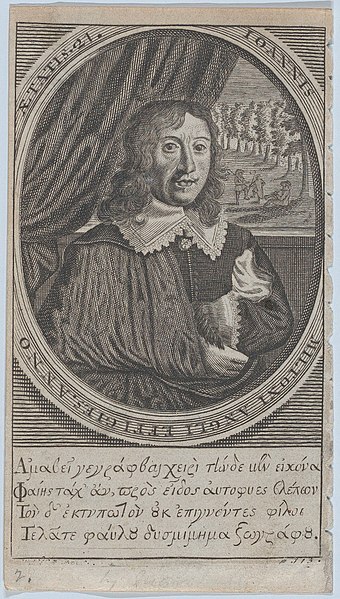
But I’ve earned nearly seven more years of wrinkles and gray hair since the last set of head shots, and readers have been expecting author portraits since the papyrus scrolls of Ancient Egypt. I couldn’t avoid them any more than John Milton could have when his printer Humphrey Moseley insisted the poet include one with his first collection of poems in 1645.

Maybe not the most flattering portrait ever. William Marshall, Public Domain, via Wikimedia Commons

Milton enlisted the help of renowned engraver William Marshall to create a frontispiece including an author portrait. At the time, Milton was thirty-seven years old, but the standard of the day was to include a picture of the poet at a younger age. Alas, that is no longer the standard.

According to the words engraved around the portrait, William aimed to depict Milton at the age of twenty-one. According to the overly large nose, greasy hair, puckered lips, and swollen right eye of the portrait, he missed.

The picture was so unflattering and Milton so upset about it, that the poet asked the engraver to include the following lines in Greek (a language that Marshall allegedly could not read) beneath the portrait:

“Looking at the form of the original, you could say, perhaps that his likeness has been drawn by a rank beginner; but, my friends, since you do not recognize what is pictured here, have a chuckle at a caricature by a good-for-nothing artist.”

An approachable, knowledgeable, literary lady with seven more years of wrinkles and gray hair, looking pretty darn okay. Image by Karen Anderson Designs.

When the collection was updated in 1673, the portrait was no longer included, but Milton, apparently still bitter about the worst head shot ever, moved his added poetic words to the interior of the book and slapped a title on them: “On the Engraver of his Portrait.”

Fortunately, my good friend and photographer is much more pleasant to work with than William Marshall apparently was. She doesn’t bat an eye when I ask her to photograph me in period costume holding a laptop, or to meet me in Forest Park in St. Louis so we can get a hint of the 1904 World’s Fair into the pictures.

She makes it as easy as possible for an awkward, squinty-eyed person such as myself to look pretty darn okay. I can trust that she’d never make my nose appear too large, my eye swollen, or my hair extra greasy. She’d probably even digitally remove my wrinkles and gray hair if I asked her to, but I didn’t. And she can trust that I’ll never include an insulting poem about her work in my book.

The Oldest Senior Pictures Ever

In 1936, family historian Alva Gorby published a book no one but her family was likely interested in reading. She called it The Gorby Family: Origin, History and Genealogy. It was, as she claimed in the introduction “a very enjoyable ‘labor of love’” that required many years of collecting family memories, photographs, and lore, chasing down records, and verifying claims.

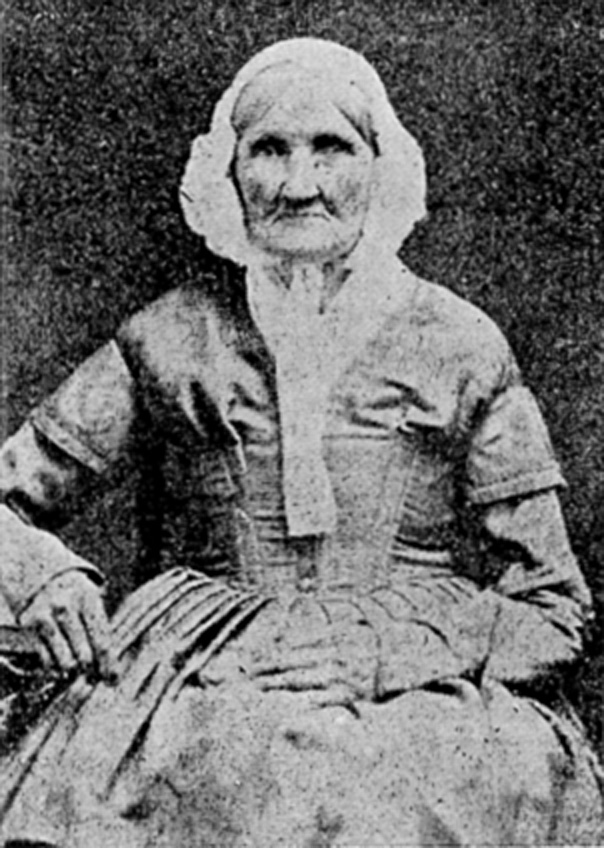
Hannah Stilley Gorby. This maybe wouldn’t be the worst country album cover. Public Domain, via Wikimedia Commons

Like any family genealogy project is bound to do, this one allegedly contains a few errors here and there, but it also includes something of great interest to the wider public beyond just the descendants of Samuel and Mary (May) Gorby. In its pages can be found a print of what is generally accepted to be the oldest living person ever photographed.

I should explain that further because there is a lot of confusion on the internet about just what is meant by such a claim. The photograph in question depicts a woman named Hannah Stilley Gorby, the second wife of Joseph Gorby, son of Samuel and Mary and it was taken around 1840, which would make it not the oldest photo ever taken by maybe about fifteen years or so.

If Alva Gorby’s records are correct, Hannah was born in 1746, making her in the neighborhood of 94 when the picture was snapped. Now, the woman was thirty when the US became a nation and ninety-four is certainly nothing to sneeze at, but there’ve been plenty of photos of people with more birthdays under their belts. Hannah wasn’t even old enough to get her picture featured on a Smuckers jar on the Today Show.

What Hannah Stilley Gorby can claim, however, is that of all the people ever photographed, she was first to have been born. Probably. Or at least maybe.

The problem is that the original daguerreotype of Hannah Stilley Gorby is lost to history and the most reliable support we have for the claim comes from the work of her amateur genealogist descendent who, let’s be honest, probably totally geeked out about her photographically famous aunt. I mean, who wouldn’t?

Probably not a very good country album cover. Image by Jorge Guillen from Pixabay

Because family history can be pretty geek-out worthy, like when you discover an uncle from five generations back who was a missionary physician with a pet orangutan and write a novel because no way can you make this stuff up yourself.

And family pictures are precious. I’ve been thinking about them a lot lately because my oldest son is now a senior in high school and we recently had a series of senior photographs taken of him. Like a lot of photographs.

We haven’t had the opportunity yet to sit down with my photographer friend to look through the proofs, but the shoot was amazing. My son, who was a smushy-faced newborn like yesterday, cooperated with every crazy idea (some of which he volunteered) from donning a suit and tie for a professional headshot to leaning flannel-clad against a fence post with his acoustic guitar in case he someday needs a cover for a country album.

I can’t wait to see how the pictures all came out because no matter what, I know they are photos of my more-or-less grown son, and are technically the oldest senior pictures ever of any of my children. That may not mean much to the general public, but you know that guitar pic is going into a family genealogy book one of these days for the benefit of my descendants, who will probably attempt to verify that he was a famous country music star.

A Shakeup in the Weather

In 1900, Austrian inventor Erwin Perzy was given a challenge by a local physician who wasn’t quite getting the light be needed for his surgeries from Edison’s new-fangled lightbulb. Perzy specialized in designing medical equipment and the surgeon was hoping the inventor could improve upon the design to eek out just a little bit more brightness. Much to the relief, I’m sure, of the many patients facing the surgeon’s blade, Perzy rose brilliantly to the challenge by inventing the snow globe.

Snow globes are kind of oddly fascinating to look at. Image via Pixabay.

Of course, he didn’t exactly do this on purpose. Perzy attempted to increase the amount of reflected light by shining into a glass globe containing water and reflective glitter. The glitter, as it turned out, didn’t float well enough to really work, so he tried semolina flakes instead. That didn’t really work, either, but the whitish flakes swirling around in the globe reminded Perzy of snow and he thought they were kind of pretty.

Next, he did what any inventor would do if he tries to invent something really useful and instead stumbles onto something essentially useless that might make him a lot of money. He filed for the world’s first snow globe (or Schneekugel) patent and began production though the Original Vienna Snow Globe Company which still exists as a Perzy family-run business in Vienna today.

These original Vienna snow globes probably weren’t actually the first the world had ever seen. There is evidence that several years earlier at the 1878 Universal Exposition in Paris a glass company had exhibited something similar as a decorative paperweight. But Perzy is generally credited with the invention, which led to the inventor himself being honored for his accomplishment by Emperor Franz Joseph I, and eventually to Guinness Book of World Records title holder Wendy Suen’s collection of 4,059 snow globes.

That record is from 2016, so by now Ms. Suen’s collection has most likely grown. At least I assume it has since because experience tells me that once word gets out that you’re a collector, it pretty much snowballs (snow globes?) from there. The only thing I know for sure is that she has at least 4,059 more snow globes than I do. But that’s okay, because today I need one about as much as your average physician does who really just wants a little brighter light to illuminate his surgical table.

Ozzie and I agree that this is the best kind of snow globe.

My corner of the world hasn’t received much snow so far this winter season, or it hadn’t before the last day or so when a winter storm worthy of being named Landon by meteorologists came our way. School has been cancelled, activities have been postponed, the grocery shelves have been cleared of eggs, milk, and bread, and the world outside my house has been essentially transformed into a snow globe.

Since I don’t have to be out on the road, I don’t mind at all. I get to just sit back and watch what looks like a big bunch of semolina flakes swirl through the air and settle onto my lawn. And while it’s true that I haven’t been able to use the days for anything as important as improving surgical outcomes, it has been an awfully pretty couple of days for looking out the window.  

The Great American Book Cover

In 1925, the world was introduced to a young graphic artist who, up until that time, had remained somewhat obscure. Initially primarily a portrait painter, Francis Cugat was discovered in Chicago by conductor Cleofonte Camanini who connected the artist to numerous opera stars for whom he designed personalized posters.

From there, exactly how he came to the attention of publisher Maxwell Perkins isn’t really known, but in Cugat’s long career which eventually gravitated to film work, he designed only one book cover, and it is among the most recognizable in history.

In all its original glory.

Perkins asked him to sketch some ideas for a forthcoming novel by F. Scott Fitzgerald, tentatively titled Among Ash Heaps and Millionaires. Taking what little bit of information Perkins could give him about the incomplete book, Cugat came back with sketches that included bleak landscapes and various iterations of eyes in a wide expanse of sky.

The publisher then shared the sketches with Fitzgerald who apparently liked them a lot. In fact, after missing a deadline, the writer sent a letter to his publisher in which he wrote, “For Christ’s sake don’t give anyone that jacket you’re saving for me, I’ve written it into the book.”

The 1925 book, which ended up with the title The Great Gatsby, though not initially very commercially successful, has become one of the most critically acclaimed works of the twentieth century and, some would say, is in the running for the label of the Great American Novel. You probably read it in high school. I did. And my son who is a junior just did.

I can honestly say I don’t remember the book particularly well, but I do recall the voice of my junior year English teacher, Mr. K., as he discussed the imagery of the enormous eyes peering, bespectacled, from a faded billboard advertising the practice of T. J. Eckleburg, keeping God-like watch over the unfolding tragedy of Jay Gatsby and Daisy Buchanan, and mimicking the way Daisy’s disembodied face haunted the men who loved her.

I also remember that Mr. K.’s voice was particularly deep and soothing and that even though I adored his class, it was sometimes difficult to stay awake in that period, which immediately followed lunch. So, I have to assume that one of the reasons the imagery stuck with me as the rest of the novel and almost everything else I read that year faded in my memory like a long neglected and weathered billboard, is because of the eyes on the front cover. Not to judge the book by them or anything, but it turns out covers really do matter.

A future classic? Or at least a pretty book.

That’s why I am so excited to introduce to you the cover art for my newest book, coming out in just a couple of weeks. It wasn’t designed before the book was finished, but I think it does capture it really well and I couldn’t be happier with how it turned out.

Fitzgerald must have felt much the same way. The final cover didn’t have universal appeal. Ernest Hemingway, for one, thought it was garish. The Great Gatsby has been published with a few different covers over the years, including one featuring Leonardo Dicaprio, but the original always seems to make a comeback, and it is certainly the most recognized.

Whether the cover of my newest novel will ever become an iconic image remains to be seen. It probably depends on whether the book, in years to come, will be studied in English classes and will be in contention for becoming the Great American Novel. I don’t know that my aspirations are quite that high. But it does, I think, have a pretty nice cover.

A Lot of Nerve

In March of 1903 the city of Buffalo, New York was intrigued by the recent murder of successful businessman Edwin L. Burdick. Rumors suggested that Burdick and his social circle were embroiled in activities of questionable morality that had led to several divorces, including Burdick’s own. The story included plenty of soap-opera worthy subplots and culminated in a bloody head bashing-in with a golf club by a never definitively identified angry woman with one heck of a follow-through. The public couldn’t get enough of the whole lurid circus and photographers ended up banned from the inquest.

But this wasn’t much of an obstacle to hobbyist-turned-professional photographer Jessie Tarbox Beals, who had been hired by both the Buffalo Inquirer and The Buffalo Courier, making her the world’s first female photojournalist. Disallowed from the room, Beals boldly shoved a bookcase into position so that she could climb up and snap a few photos through a transom window.

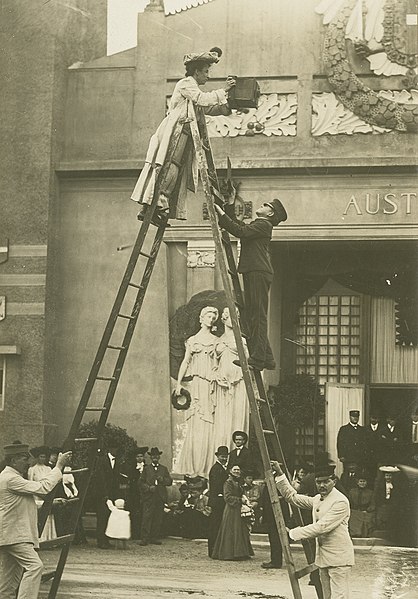
Jessie Tarbox Beals at the Louisiana Purchase Exhibition, 1904. Taking great photos. On a ladder. In a skirt. Bold. Public domain, via Wikimedia Commons

It was this kind of tenacity that brought her success at the 1904 Louisiana Purchase Exposition in St. Louis, where copious amounts of iced tea were consumed, ice cream cones were almost certainly not invented, and possibly history’s most disorganized marathon took place.

Beal arrived in St. Louis with her husband (who served as her assistant) in time to beg her way onto the pre-exposition grounds after initially being denied any press credentials by fair officials. Once there she absolutely wowed the skeptical officials with her incredible eye for candid images that captured the essence of the fair more than they could have imagined and unfolded a story that sparked imagination and drew people to the exposition.

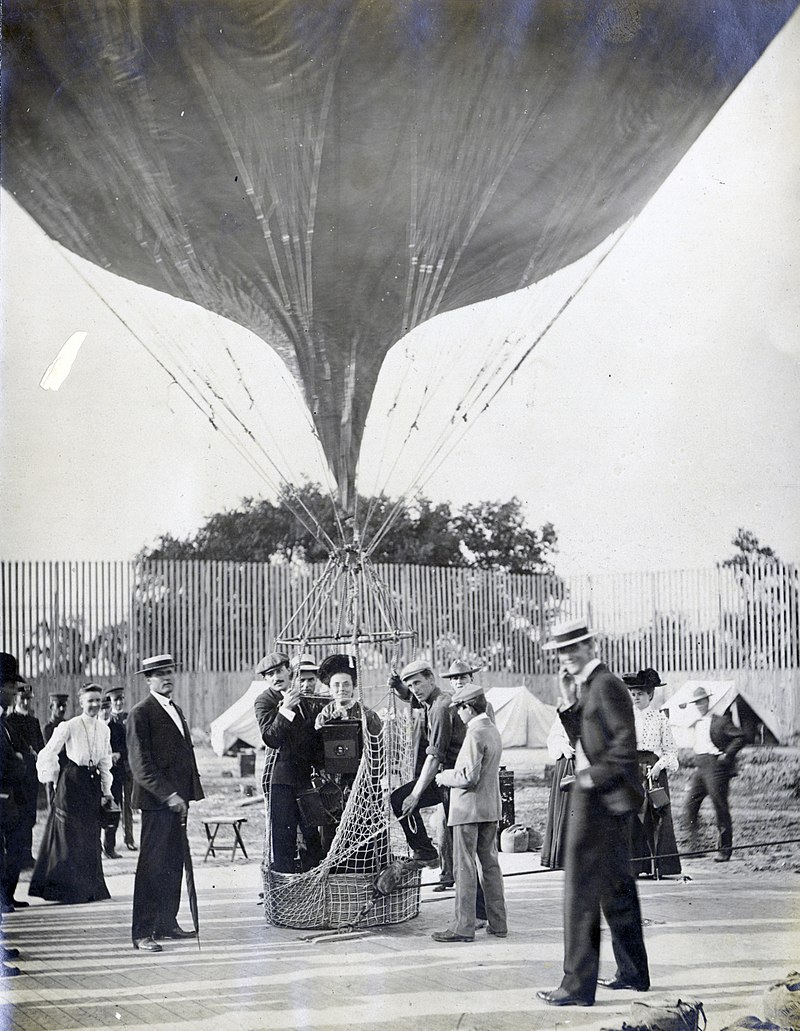
Of course, she also drove them kind of crazy. She thought nothing of scurrying up a commandeered twenty-foot ladder in her heavy skirt or recruiting fairgrounds employees to hold it steady for her while she grabbed shots of parades and crowds of fairgoers. When her request to take aerial pictures from a hot air balloon was denied because she was far too delicate for such a risky activity, she did it anyway.

She also snapped many beautiful photographs of the subjects of ethnographic exhibits, displaying a universal humanity that didn’t entirely support the tale of racial superiority the fair’s organizers had expected to tell.

Jessie Tarbox Beals: A female photographer with a lot of nerve. Unknown author, Public domain, via Wikimedia Commons

And when President Theodore Roosevelt arrived at the fair and the male photographers respectfully hung back to await their chances, she didn’t hesitate to approach him to ask for a photo op. Then she pursued him relentlessly throughout the day to snap at least thirty more photographs of the president and his entourage. She was one bold lady.

I came across Jessie Tarbox Beals while doing some research for my newest novel project. She won’t be in the book, or really even tangential to it outside of sharing an era, but she leapt out at me anyway as someone I wouldn’t mind knowing more about.

Every new historical novel I write begins with a bit of trepidation. The task of immersing myself into a time and place different than my own is daunting, as is making those many tiny decisions about when to cling tightly to known historical facts and when to play a little fast and loose for the benefit of shaping a story. Then there’s the balance to consider between historically representative attitudes and remarkably different modern sensibilities. I often find myself questioning just what and how much I am really allowed to do.

And I think that’s why the story of Jessie Tarbox Beals appeals to me so much. This week, when we have just marked International Women’s Day and as I take those first careful steps onto the blank page, I am trying to take a lesson from the tenacious lady photojournalist who climbed a bookcase, hopped into a hot air balloon, and chased down a president.

She told great stories with her photos and when asked whether the male-dominated profession of photography was really a good place for a woman she answered that as long as that woman had “a good supply of nerve, good health, and the ability to pick out interesting subjects and handle them in an interesting manner” that she saw no reason why it shouldn’t be. She was one bold lady. With a lot of nerve.

A New Hobby in the Bag

In 1568, Mary Stewart arrived at the doorstep of her cousin Elizabeth Tudor looking for some help.  Mary was fresh from a controversial straight-from-the-soap-operas marriage to a man who may have murdered her previous husband, had kidnapped and imprisoned her, and was just the right kind of divorcé who could make a group of angry Catholic Scottish lords demand an abdication and force their queen into exile.

It seems she may have also spent a fair amount of time posing for portraits. Mary, Queen of Scots. National Trust, Public domain, via Wikimedia Commons

The Protestant Elizabeth I was not particularly happy to see the Catholic Mary, Queen of Scots, who might have, from a certain point of view, had a legitimate claim to the English throne, so instead of being strictly helpful, Elizabeth decided to imprison Mary.

It wasn’t exactly a harsh prison we’re talking about here. Basically, she just had to spend her time in comfort at the various estates of George Talbot, Sixth Earl of Shrewsbury. She didn’t have the freedom to go outside unsupervised, but she did have nice furniture, a full domestic staff, and a lot of time on her hands.

She also made a friend. Talbot’s wife, Bess of Hardwick, seemed to get along with Mary pretty well and the two spent many, many, many hours embroidering together. I have no idea if Mary was particularly good at embroidery before her imprisonment, though she was surely familiar with it, as it was a common pastime of the 16th century woman of a certain class. I do know that she got pretty good at it during these long years of her life. I also know that if you find yourself suddenly stuck at home for a long time, it’s good to develop a hobby.

As we come upon nearly a year since life in my corner of the world went completely sideways due to the pandemic, I can look back and see some good things that came from spending a little more time at home and a little less time rushing about. One of those is a new hobby, begun more or less because I had too many plastic grocery bags on my hands.

Woo hoo! I figured it out!

First, let me explain that I have long been dedicated to the reusable shopping bag, not only because it uses a lot less plastic, but because you can weigh one of those suckers down with a gallon of milk, three bottles of wine, and a giant cheese wheel big enough for Thomas Jefferson. Then you can just sling it over your shoulder with as little effort as the world’s strongest man pushing a locomotive, and saunter to your car. Also, you don’t end up with bags and bags full of bags and bags waiting months for someone to remember to take them to be recycled.

But when the pandemic hit, two things happened around these parts. First, the grocery stores stopped allowing reusable bags because, obviously, such bags are notorious for virus transmission. It’s probably safest if you don’t even see a reusable bag.

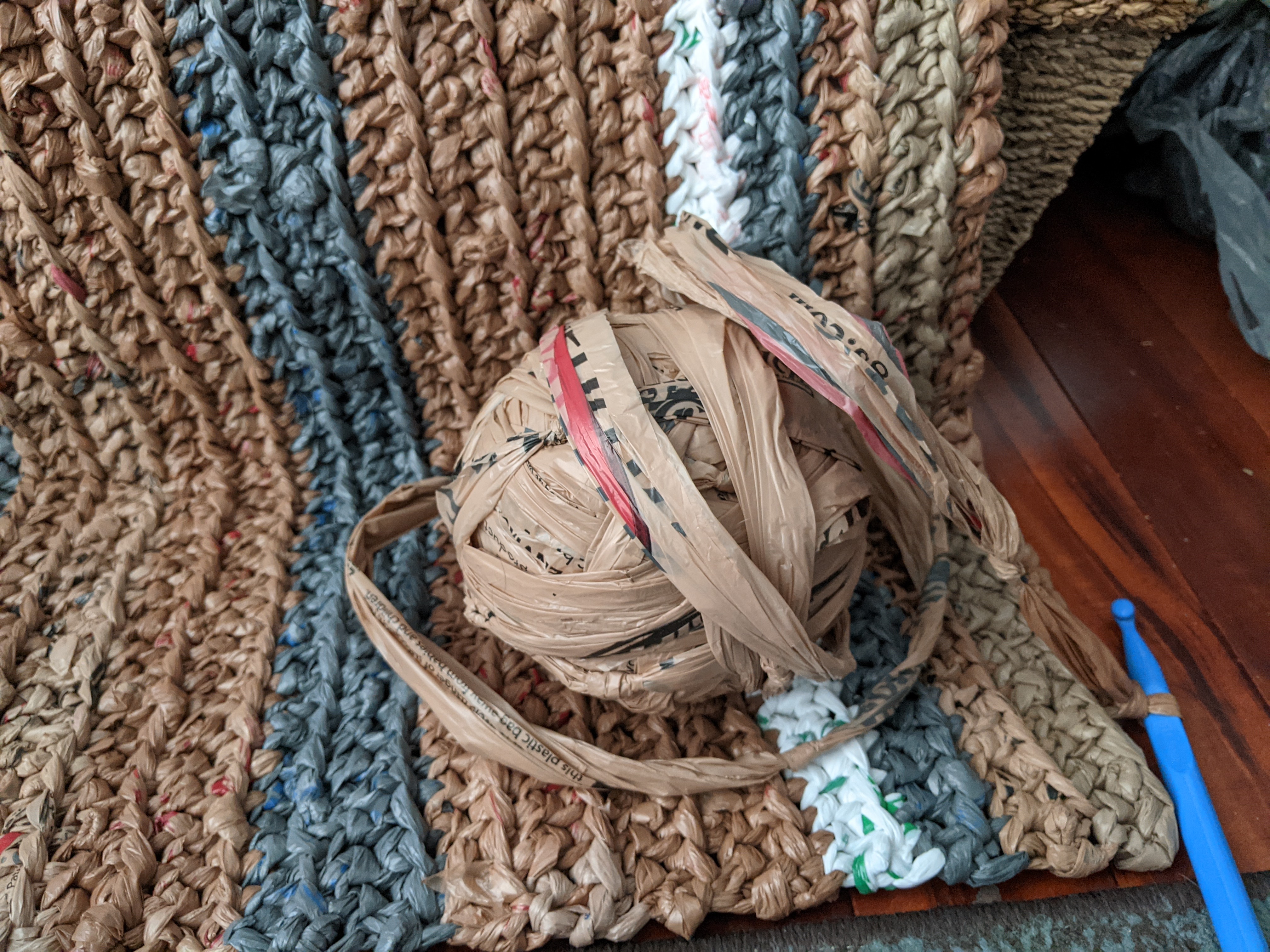
Second, the recycling center that processed plastic shopping bags shut down operations for a while. I’m not sure why this happened, but it led to the buildup of a large number these bags in my house. I had an easy solution, though, because I have a couple friends who use the bags to make these really cool plastic sleeping mats for people experiencing homelessness. I even knew how to cut the bags and make the plarn (plastic + yarn) they used to do the crocheting.

If I see you leaving the grocery store with colorful bags, don’t be alarmed, but I will probably follow you to your car.

I dutifully made plarn, setting aside just the scraps to one day be recycled, and reached out to say I had it for anyone who wanted it. And that’s when a very kind friend instead said, “I’ll teach you how to crochet.” It took some time, but I had plenty of that. It also took some dedicated YouTubing and a Zoom tutoring session, but I finally got it.

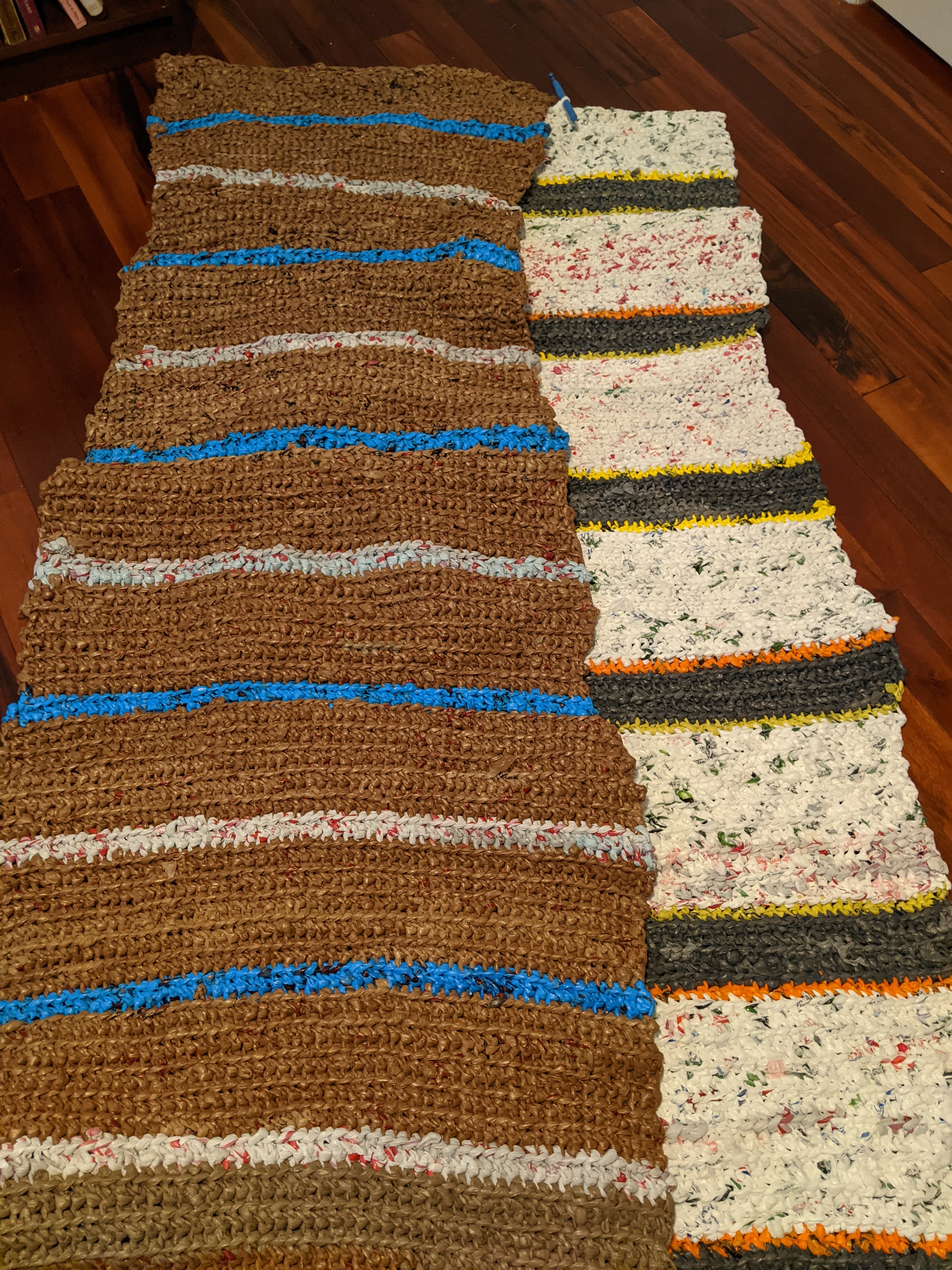
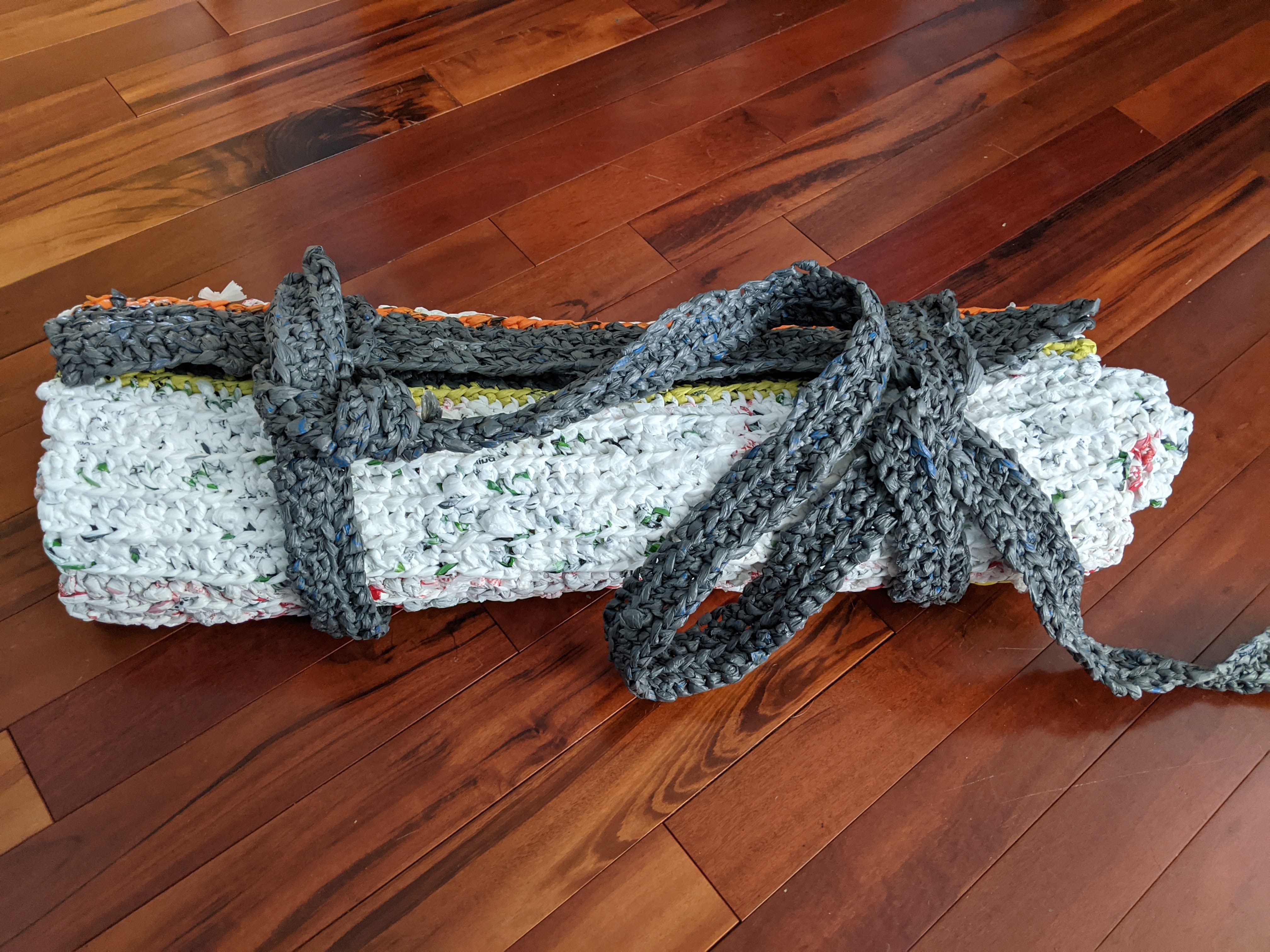
So now, in my year of forced social distancing that has contained a couple stretches of actual quarantine and has at time felt a little like imprisonment, I have crocheted sleeping mats out of plastic grocery bags. I’ve even started asking friends for their bags so I can do more. Because developing a new hobby really does help.

It certainly helped Mary, Queen of Scots. When asked by an envoy from Elizabeth I how she was passing the time, Mary said that “all the day she wrought with her needle, and that the diversity of the colours made the work seem less tedious.” I get that, too, because after crocheting rows and rows of brown, gray, and white, I get ridiculously excited to get to use a bright blue or orange or yellow.

If you have any interest in learning how to make these, I found this YouTube tutorial particularly helpful: https://www.youtube.com/watch?v=yr_WHW_tGSE&t=742s

And Mary used her needlework well. Between 1569 and 1586 when Elizabeth finally went ahead and had her beheaded, Mary and friends produced a vast number of embroidered panels, many of which contained secret messages and emblems. Collectively they came to be known as the Oxburgh Hangings because they made their way to Oxburgh Hall in Norfolk, England, where some of them can still be seen today. The panels contain birds, elephants, plants, and all kinds of natural and symbolic scenes.

My work mainly contains wobbly stripes. It probably also won’t be on display for the public more than four hundred years after my death. But that’s okay, because I’m hoping that someone will get some good used out of my efforts. And I know it has helped me pass the time this year. It’s good to have a hobby.

&%#$@!

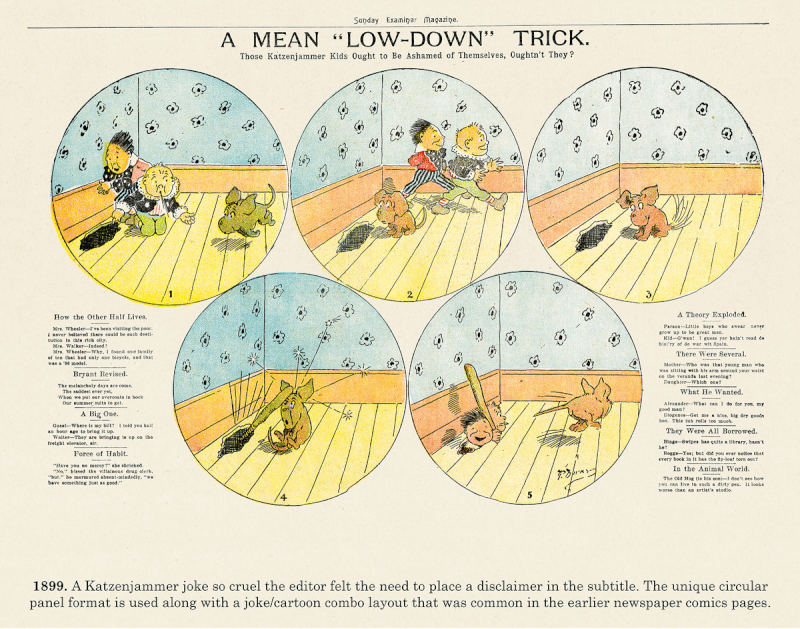
In 1884, seven-year-old German-born Rudolph Dirks immigrated to the United States with his family and settled in Chicago. A gifted artist, Dirks began doodling comics at an early age and as a young man he moved to New York to seek out employment as an illustrator. Before long, he was hired onto the staff the New York Journal.

At the time, the New York Journal was in a heated circulation war with the rival New York World, which contained one of journalism’s first featured Sunday comic strips, The Yellow Kid. Dirks’s editor asked him to create a comic strip that would compete.

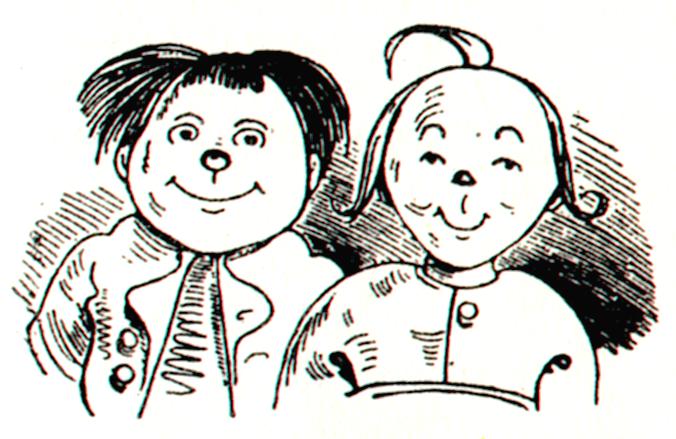
Wilhelm Busch’s Max & Moritz. Public Domain, via Wikimedia Commons

Reaching back to the tales of his childhood, Dirks created Katzenjammer Kids, based on an 1860 illustrated children’s story Max & Moritz by Wilhelm Busch, which tells of a pair of truly naughty boys who engaged in a series of brutal pranks and, in the grand tradition of German stories for children, wound up dying gruesome deaths.

The Katzenjammer Kids, whose names were Hans and Fritz, didn’t share the same terrible fate, but they were naughty. The comic strip consisted of their many shenanigans as they made life terribly difficult for a cast of adult characters that included, among others, their mother, a shipwrecked sailor, and a school official. These adults were sometimes, understandably, frustrated enough to say words that weren’t suitable for Sunday comics.

Hans & Fritz, the &#%’n #^%#s. Public Domain, via Wikimedia Commons

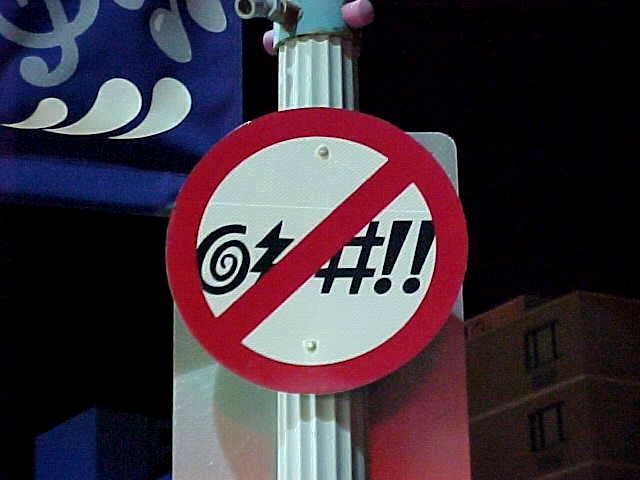
Dirks came up with a pretty clever solution for that. When his characters were wound up and so frustrated they couldn’t think straight enough to reach for better words, they said things like “%&$#!” instead.

The term for this handy little tool in the comic artist’s kit became official in 1964, when Beetle Bailey creator Mort Walker coined the term “grawlix” in an article he wrote for National Cartoonist Society. By then the cartoonist’s version of audio media’s bleep had been in common use since its initial appearance in Katzenjammer Kids in the early 1900s. And I for one, am grateful for that.

I’m not a big fan of profanity in general. I don’t use it much either as a writer or in my personal life. It’s not that I’m particularly shocked or offended by it and I don’t step too far out of the way to avoid it in the writing of others. I’m just aware that profanity seems to be the thing I reach for when it’s probably not the best time for me to speak.

It pops into my head, and if I’m not careful out of my mouth, when I’m angry, frustrated, exhausted, and irrational. When I write fiction, I do occasionally bring a character to that point and in those moments, a well-timed, and rare, use of profanity may be the best way to express his or her emotional state.

But for me, I find I’m usually best served by taking a deep breath and a step back to think about whether or not I need to communicate my feelings at all and if so, how best to do it. After all, according to some estimates, there are nearly a million words in the English language. Even if 800,000 or so of those are essentially obsolete, that still gives me a lot to work with.

Even with all of that at my disposal, I have found it difficult to put together the right words during these past few weeks of unrest in the United States. I’m angry of course; also worried about the future of the nation if we can’t redirect righteous anger into rational conversation and actionable solutions. Oh, and there’s still a pandemic, I think? I kind of just want to say, “&@#%$!”

But then sometimes . . . Public Domain, via Wikimedia Commons

I chose not to post to my blog last week because I realized that probably wouldn’t be that helpful for anyone. I didn’t know what words to send into the blogosphere. I had no comfort to offer readers who are likely feeling some of the same things I am and who maybe aren’t even ready to find comfort. I have prayed a lot and have found a great deal of personal peace in that, but I’m aware not everyone who stumbles across this blog views prayer in the same way I do.

So, a week later I still don’t have the right words. Because even with a million to choose from, sometimes the right one just can’t be found.  Maybe we need some creative person to invent a new term for us. Or maybe we all really do just need to say a collective, “&%#$@!”

And then take a deep breath and a step back.

Plastic Faces and Great Hats

On November 5, 1854 French tailor Alexis Lavigne filed the world’s first patent for the mannequin, though by then he’d been perfecting its use for a number of years and had displayed a prototype as early as 1849 in the Industrial Expedition in Paris. As the industrial revolution had begun to make itself felt and the metric system took over most of Europe, Lavigne understood the shifting of the clothing industry away from individually tailored items toward those which could be mass-produced.

Armed with a flexible tape measure, which he invented, Lavigne set out to study human body types and measurements and produce mannequins that could approximate them, reducing the need for large numbers of fittings and increasing productivity in the fashion industry. And that was a pretty great use for mannequins.

This mannequin doesn’t creep me out, but it would still probably look better in a dress than I would. Image by AnnaliseArt, via Pixabay

Known in the fashion industry as Professor Lavigne, the founder of the famous French fashion school ESMOD, the inventor was not the first person to ever make a vaguely creepy fake person, even for the purpose of modeling clothing. Dating back to 1350 BC, King Tut had a mannequin of himself tucked away in his tomb, that some scholars have suggested may have been used for assembling fashionable pharaoh garb.  

Of course, plenty of artists, too, including Marie Tussaud modeled life-size, and much more lifelike, sculptures of people. When mannequins began to make their way into the department stores of the twentieth century, they became more lifelike, too.

Materials changed from wax to papier-mâché to plastic and female mannequins went from busty to boyish and back again to reflect trends in ideal body shapes. Headless busts gave way to pronounced facial features complete with realistic hair and pouty lips, which then became bald and faceless forms or even unfortunate mannequins who had once again lost their heads.

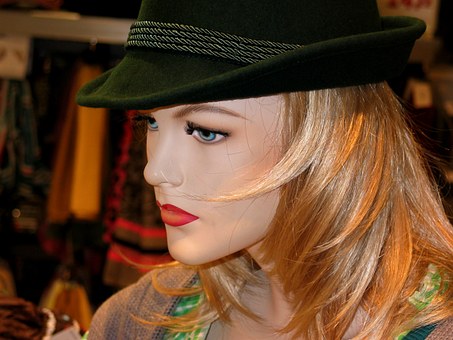
I would not look as good as this fake person does in this real hat. But I would occasionally blink. Image by KRiemer, via Pixabay

But regardless of the trend, there’s probably always been something just a little unsettling about mannequins. As lifelike as they can sometimes be, mannequins don’t move. Instead they openly stare at anyone passing by in a way that is so unnatural that in the right lighting, or on the set of a horror film, it can appear frightening. They are the silent observers, who in some ways, are just a little bit superior to their human counterparts.

Mannequins are more fashionable than most of us, are much better at holding that perfect awkward pose to best show off their hemlines, and they are completely comfortable in their clothing choices. They’re slimmer than most of us, slightly more ideal in proportion than most of us, and they always look good in hats. They are these disturbing, often quite pretty, pieces of art that stand in the place that should be occupied by people.

And now they are going to restaurants and baseball games, occupying even more spaces that should belong to living and breathing human beings.

Apparently in Taiwan, where baseball is in about as full swing as any of us is likely to see this year, the stands are filled with mannequins. And at least one popular restaurant in Virginia is seating stylishly-dressed mannequins at tables that would otherwise remain empty for social distancing purposes. And yes, even though mannequins are notoriously bad tippers, if you go, they will probably still be served before you.

This family is all ready to go to the hockey game. But I can’t tell if they’re excited.

I suppose it’s a creative solution to the problem of discomfort created by empty spaces once occupied by people. Humans are social creatures by nature, and even the most introverted among us often crave communal experiences. But I’m not convinced that this is a great use for mannequins because regardless of how good they look in hats, I don’t think they can give us that.

Instead, I fear we will find ourselves surrounded by frozen, emotionless faces made of plastic and will be reminded even more starkly that the community we crave is at home in its pajamas.

And I think we might all feel just a little bit lonelier for it.

So, I’m curious. What do you think? Would you want to dine with mannequins? Or watch them sitting in the stands cheering for your favorite teams in your stead?