Avoiding Traffic

August 15, 1969 was a mild, warm day near the small town of Bethel, New York. It was the perfect day for a leisurely drive down State Highway 17B. By leisurely of course, I mean about an eight hour drive to move about ten miles with nearly half a million of your closest friends.

Just like in the classic children’s book Go Dog, Go! by P.D. Eastman, the place everyone was going on that pretty day in the middle of nowhere, was a great big party—in this case, the Woodstock Music and Art Fair that was to take place for “three days of peace and music” on a 600-acre dairy farm.   

I have lots of friends who made the drive and took the pictures. This isn’t one of theirs, but they all look pretty much like this. Image by Dane from Pixabay

The weather didn’t stay nice, of course. The sky grew overcast and there was a fair amount of rain to try to soak into an already somewhat saturated ground. By the end of the event, which rain delays pushed into a fourth day, there was an awful lot of mud. And the road snarl to get there was bad enough the performers had to be brought in by helicopter. Nearly fifty-five years later it still makes the top ten list of all-time worst traffic jams in history.

But people who attended seem to think it was a pretty good time. The whole thing sounds like an absolute nightmare to me, but then my perfect day would more likely be spent on a dairy farm in the middle of nowhere with no one but the cows and a book. Well, maybe a few people could come with me. And I’d want at least three books. Also, no traffic. 

There are probably a lot of things I’d choose not to do just so I could avoid traffic. Earlier this week I made just such a decision when a swath of my state experienced a total solar eclipse. From the vantage point of my driveway, the moon’s coverage of the sun was somewhere close to 98%. 
If you do like to avoid a rush, you can still get a free advance digital copy of my new historical mystery by joining the launch team by April 15th: https://forms.gle/psi7ctZ6fNK88dbB9

A lot of people got pretty excited about the idea of traveling a smidge into the area of totality. I do mean a lot. The news reported that drive times doubled and even more than tripled in parts of the state. In many places, traffic completely shut down during the eclipse itself with motorists donning cardboard eclipse glasses and staring up at the sky.

Of those I know who traveled for the event, most say it was well worth it. I’m sure it was. If I hadn’t experienced a total eclipse seven years ago, I might have been excited enough to travel, too, but the traffic in my driveway was no thicker than usual.

At nearly 98% coverage of the sun, the sky grew noticeably darker, the air got cooler, the insect noise shifted a bit, and my dog grew a touch antsy. I had a pair of cardboard eclipse glasses and I did stare up at a sliver of the sun. Then I had a lengthy conversation with my four-year-old neighbor who was wearing a Spider-Man sweatshirt just in case the eclipse gifted him with superpowers. 

It didn’t, which was disappointing for both of us. But the day was mild and warm, perfect for standing on the driveway, looking up at the sky, and avoiding traffic.

Shooting for the Moon with A Lot of Help

Even astronauts need a little help from 400,000 friends. NASA, Public domain, via Wikimedia Commons

On July 16 of 1969, at 9:32 AM approximately one million people gathered on Florida beaches to witness the launch of Apollo 11. Many of them had camped out for multiple days to claim a spot. I imagine their enthusiasm was palpable.

Millions more people watched on television. Excitement mounted in the first few days of the mission and by the time Neil Armstrong took that first small step, 650 million people tuned in to see it happen, making the event the most widely watched television broadcast in history.

And it couldn’t have happened if NASA’s first female launch controller JoAnn Morgan hadn’t been in the control room, or electrical engineer Tom Sanzone hadn’t designed and monitored the backpack life support systems worn by the moon-walkers, or if astronaut Frank Borman hadn’t used a personal connection to assure that the Luna 15 Soviet spacecraft wouldn’t interfere with the Apollo mission, or if diver Clancy Hatleb hadn’t been on scene to welcome the returning astronauts to earth by whisking them into quarantine in case of space germs.

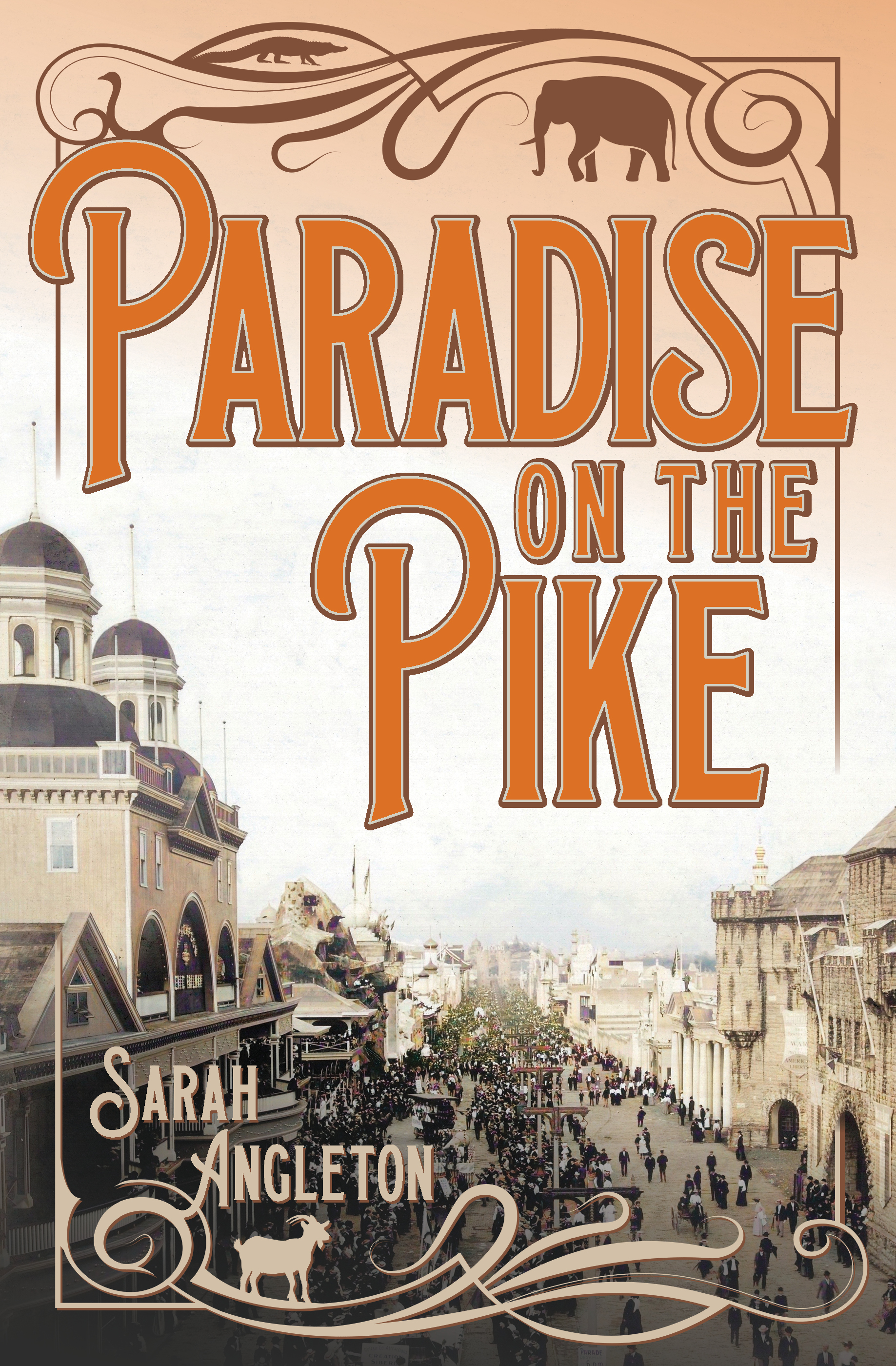
A new historical mystery set against the backdrop of the 1904 World’s Fair in St. Louis, for fans of Water for Elephants and Devil in the White City.

In all, NASA estimates that approximately 400,000 people contributed to the success of the Apollo 11 moon landing, from thousands of engineers working throughout the world to the janitors and caterers that kept the facilities running smoothly. Every successful launch requires coordinated effort from a lot of people.

That statement is true when applied to Apollo 11, and it’s true when applied to a new book. My fourth historical novel, Paradise on the Pike, a mystery set against the backdrop of the 1904 World’s Fair in St. Louis, will officially launch on April 18 and it’s taken a lot of people to get it this far, from critique partners, beta readers, and cheerleaders to cover artist, formatter, and editor. It maybe hasn’t taken 400,000 people, but it’s been a lot.

And I still need help to get the book off the ground because no matter how enthusiastic I am about this book launch, I can’t make it successful by myself. I could really use an enthusiastic crowd to camp out on the beach and cheer loudly in hopes that even more people will become curious enough to tune in.

If you are interested in being part of that first, important crowd, I would love for you to join my launch team on Facebook. Participation is simple. You’ll receive an advance digital copy of the book to review (along with some helpful guidance if you’re not too sure how to do that) and some graphics to share on social media, There will also be some fun and chances to win prizes along the way. Sign up to be part of the group at this link:  https://forms.gle/psi7ctZ6fNK88dbB9

Or if Facebook isn’t your thing, but you happen to be a NetGalley reviewer, you can request a review copy of the book at this link: https://www.netgalley.com/catalog/book/354539

I probably won’t be able to pull together a million, or even 400,000, people to help me with this, though feel free to share the opportunity with anyone you think might be interested. Of course I also wouldn’t be terribly surprised if somewhat fewer than 650 million people eventually read my book. Still, it takes a lot of help to shoot for the moon.

Yielding the Circumference Day

In honor of Pi Day, I have dusted off a post from the early days of the blog. Enjoy!

Today is March 14 (3/14 in the US), which means that millions of nerds are spending the day happily celebrating that most mysterious of irrational numbers, pi. I’ll just briefly explain in case you don’t happen to be a nerd (because the jury’s still out). Pi (which is a stage name because this rock star number is too irrational to have it any other way) is the expression of the ratio of the circumference (the distance around) of a circle to the diameter (the distance across and through the center) of that same circle.

Image by Gordon Johnson from Pixabay

Ancient nerds discovered that this ratio is constant for any circle and like nerds will do (and this is the reason they generally make more money than non-nerds), they correctly decided that this might be information worth noting. And when I say “ancient,” I’m talking before Egyptians and Babylonians started writing down their various approximations for this handy little ratio, say 4000 years ago.

In fact, I think it’s safe to suggest that the approximate value of pi was probably discovered first by the same caveman (let’s just call him Og) who invented the wheel. He carefully painted the number (out to 300 decimal places) on an as yet undiscovered cave wall and proudly showed it to the other cavemen because he thought it was so neat. At that point (and again, I’m just assuming here) the other cavemen gave Og a wedgie.

This is an artist’s approximation as it is believed that Og never sat for a portrait. It’s pretty good, I think.
Image by GraphicMama-team from Pixabay

Don’t fret, though. Og didn’t suffer in vain because humankind has been using his handy little observation ever since, and has spent thousands of years approximating the constant. After the Egyptians and the Babylonians, who each found the number to be a little more than 3, pi shows up in the history of India and China (where again it was found to be a little more than 3).

It also gets a nod in the Hebrew Bible (in 1 Kings 7:23) where it is calculated to be 3. This has (believe it or not) been a source of great controversy for Hebrew scholars, but what I think it indicates is that God isn’t all that impressed by our efforts to calculate pi out to well over 10 trillion places. This may also be illustrated by the fact that if one were to calculate the circumference of a circle that enclosed the entire known universe (you know, just for fun), using just 39 decimal places of pi would yield an answer with a maximum error equal to the radius of a hydrogen atom.

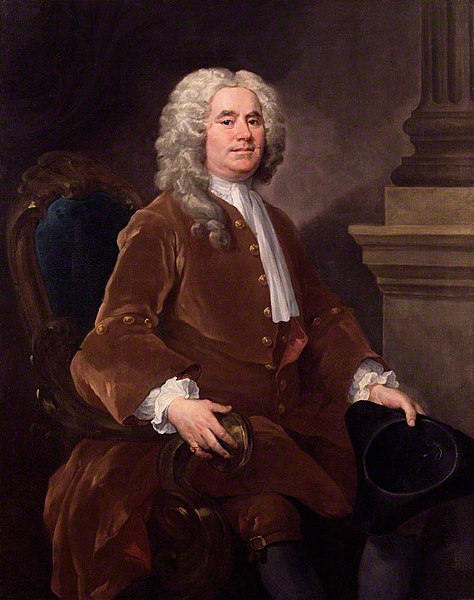
William Jones. Not nearly as famous as Leonhard Euler, nevertheless important to pie-loving nerds everywhere. William Hogarth, Public domain, via Wikimedia Commons

Still, I suppose it’s nice that thanks to computers, we can now calculate that the value of pi is a little bit over 3. Most of us (at least those of us who aren’t mathematicians by trade) never bother with much more than 3.14. So on March 14 we release our inner nerd (some more inner than others) to celebrate by baking and eating pie because if we can’t be bothered with all those extra decimal places, we sure aren’t going to be concerned by an extra (delicious) “e” at the end.

One question that remains for me, though (because my inner nerd is actually more interested in symbol origins than in geometry), is why is this super important irrational constant referred to by the Greek letter π? The answer is pretty simple. Before it had a stage name to call it’s own, pi was referred to most often as “quantitas in quam cum multiflicetur diameter, proveniet circumferencia” or “the quantity which, when the diameter is multiplied by it, yields the circumference.” Admittedly this name is highly descriptive, but probably a little cumbersome written into an equation.

Yum. Happy Pi Day!

In 1706, a Welsh math teacher by the name of William Jones first introduced π as the now universally recognized symbol for this precise meaning. Though Jones isn’t well remembered for any other contributions to mathematics, Leonhard Euler (who was a heavy hitter in the field) adopted and popularized the symbol. It was chosen simply because in Greek, π is the first letter of the word for perimeter.

And I suspect that it was chosen because no one could figure out what to eat in order to celebrate Yielding the Circumference Day. Whatever you call it, it’s a day for all of us nerds (and, yes, if you stuck with this post until the very end, the jury is done deliberating) to enjoy a piece of piE. I’m thinking strawberry.

0p3N SE$@me!

Once upon a time in a Persian town, there were two brothers. One was a much better hacker than the other. The first brother stumbled on a password, carelessly scribbled on a sticky note and stuck to the underside of a keyboard. Thus he was able to open a secret door, sneak into a cave filled with stolen treasure, and take a pouch of coins, small enough not to be noticed. 

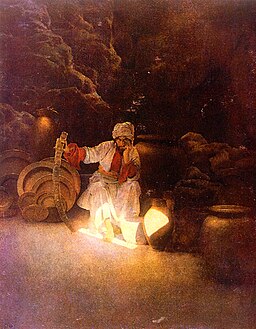
If I’m honest, I relate to the second brother. Not that I would steal gold from someone’s cave, but if my life depended on my recall of a password, I’d be in trouble. Maxfield Parrish, Public domain, via Wikimedia Commons

The second brother, learning of this success, decided he’d go a little bigger, hacked his way into the cave, loaded himself and a bunch of mules down with enough treasure that it would most certainly be missed, and then promptly forgot the password to get back out of the cave. Then the thieves who’d stolen the treasure to begin with, returned to the cave and did a little hacking of their own.

It’s a familiar story of course, added to the collection of Middle Eastern tales One Thousand and One Nights in the eighteenth century by French translator Antoine Galland who heard the tale from Syrian storyteller Hanna Diyab. It also feels a little bit like the story of my life. 

I don’t mean the part about the hacking. Rest assured, I have no skills whatsoever in that area. Most of the time I can’t even remember my own passwords. I have zero brainspace left over for yours, even if I overhear you loudly proclaim them at the hidden door leading to your treasure trove.

In fact, were you to leave your password written down on a sticky note underneath your keyboard, your biggest concern should be that I would mistype it enough times that I’d accidentally lock you out of your cave. And if I ever ask you the name of your first pet, I assure you, I’m just curious. Also, I’ll probably forget that, too.

Can’t be too careful.
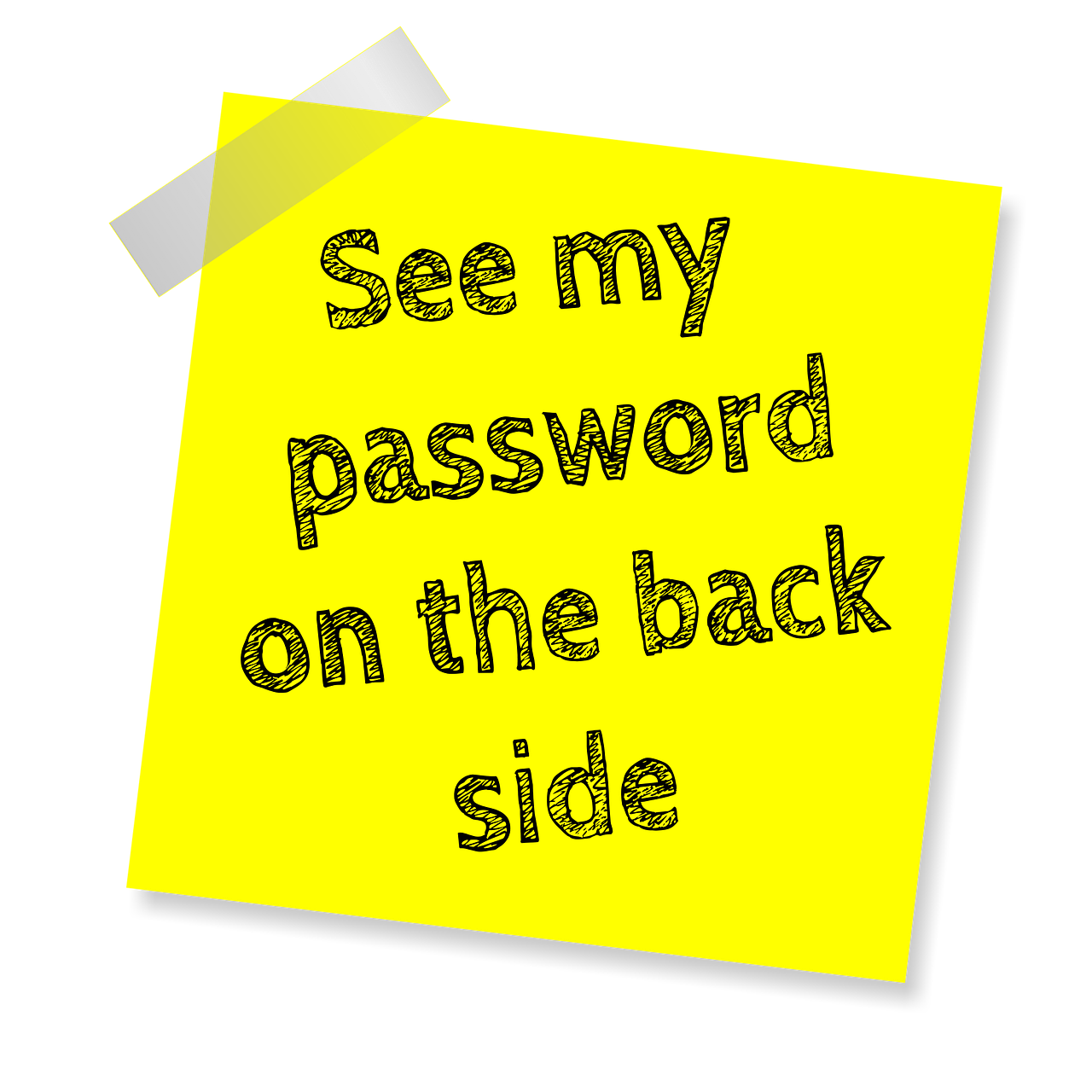
Image by S K from Pixabay

Like most of us I have a pretty contentious relationship with passwords. I recognize they are necessary. So much of our lives are stored digitally now and it is certainly important to safeguard our privacy and our treasure from unscrupulous people with enough skills and mules to try to steal it. 

But I also feel like it’s a little much. For example, why exactly do I need a password to protect my popcorn rewards at my local movie theater? Are there a lot of hackers who are anxious to steal my $2 off coupon? And do I care enough to dedicate already pretty crowded memory space to a unique password made up of a minimum of ten characters that must include both upper and lower case letters, a number, a symbol, a sign of the zodiac, a knock-knock joke, and a blood sacrifice? 

Also, it’s February 1, which means there are approximately 12 weeks to go before the launch of my new historical mystery. Cover reveal coming soon!

The experts, who I assume in some cases are the hackers themselves, say the era of passwords may be coming to an end anyway. In the coming decades the whole system may be replaced entirely by biometrics. As often as the fingerprint scanner on my phone fails and I have to either put in a password or wait thirty seconds and try again to see if my thirty-second-older fingerprint works any better, I’m not yet convinced that will be a huge improvement.

But in the meantime, we will just have to hustle to stay a step ahead of the hackers with our wily strings of ever-changing mixed-up characters. To aid in that effort, I am reminding you that today, February 1, is apparently Change Your Password Day. I suspect that, like me, you have too many passwords floating around in your head to remember such a thing. So, you know, take a little time today to change up your one thousand and one passwords and be proactive in protecting your vital information. And your popcorn coupons.

If Not for a Boatload of Pirates

It’s been a long, cold week or so in my corner of the world as temperatures plunged to the kind of face-freezing levels that cause businesses to delay opening, schools to cancel classes, and mamas of stir-crazy little ones to go just a little bit crazy themselves. I have one teenager at home and no little ones anymore, but I do remember such days, and I understand your pain.

Yesterday we finally warmed up, our precipitation became much less solid, temperatures climbed all the way into the mid-40° range, and mamas rejoiced as kids went back to school. Today we’re expecting to be maybe a couple of degrees cooler than that, but still it feels downright balmy compared to 0° with a windchill of -15° and Monday’s ⅛ to ¼ inch of ice that made the 3 mile drive my son would normally make to school treacherous enough I was grateful for the cancellation.

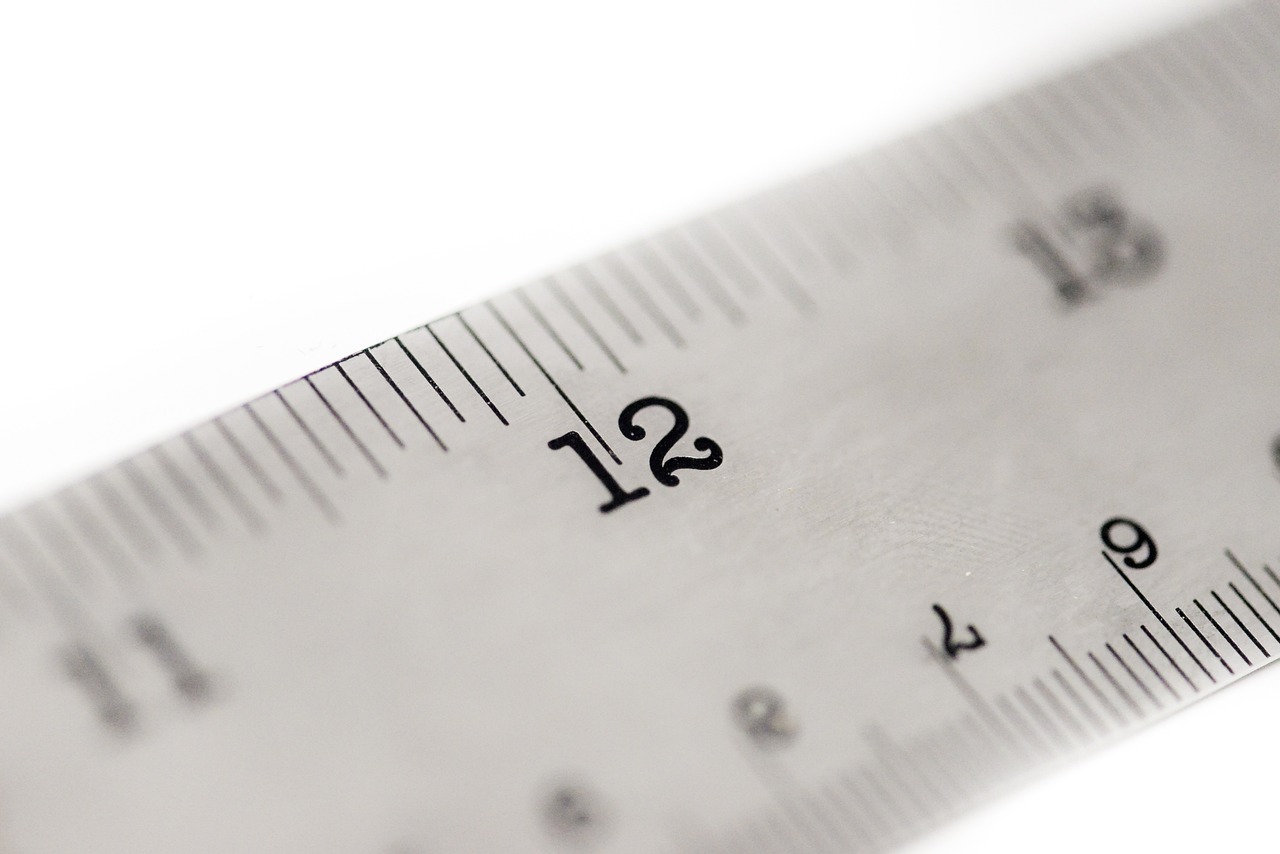
For the non-American readers who might be into this kind of thing, I’ll translate the previous paragraph. Yesterday topped out at around 7° Celsius and today will likely be only a couple of degrees cooler, which does feel pretty refreshing after temperatures as low as -17.778° C with a windchill around -26.1111° C and anywhere from 3.175 to 6.35 mm of ice, enough to make even a 4.82803 kilometer drive pretty dicey.

Image by newsong from Pixabay

Personally, I don’t think going metric is an improvement, but I suppose it all depends on what your brain is used to, and I recently learned that had it not been for a boatload of pirates, we might all be speaking the same measurement language.

That’s because in 1793, then US Secretary of State Thomas Jefferson was looking for a solution to the problem of inconsistent measurement systems in use throughout the new nation that made doing business both at home and abroad a little bit of a confusing hot mess. As a man who was interested in most things French following a successful revolution in which France had been a crucial ally, Jefferson was most intrigued by their newfangled base-ten measuring system.

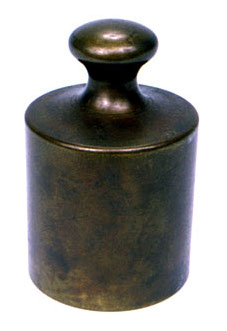
In hopes of learning more and implementing such a logical and useful set of measurements in the US, Jefferson eagerly awaited the arrival of Joseph Dombey, a French physician and botanist who had been tasked by the National Assembly to bring its American friends a meter long copper bar and a copper grave (soon renamed the kilogram).

To be fair, if a bunch of pirates sent this to me, I probably wouldn’t know what to do with it either. Public domain, via Wikimedia Commons

The weather did not cooperate with Dombey’s planned journey and his ship was forced south into the Caribbean where pirates attacked and took the scientist hostage. He died in captivity, but his luggage, marked for the US Secretary of State survived. Much delayed, it was eventually delivered into the hands of Jefferson’s replacement Edmund Jennings Randolph who had no idea what to do with it.

Without a proper introduction to the metric system, the US ended up adopting a standardized reformed British Imperial system of weights and measures in 1824 and all subsequent attempts to move entirely to the metric system, which yes, we do realize makes a lot more sense, have been unsuccessful.

We do scientific research, medical treatment, international business, and soda bottle purchasing in metric, but there’s a 100 yard football field at the high school several miles from my home and as long as the temperature stays above freezing, which happens at 32°, and we don’t get two feet of snow or a quarter inch of ice on the roads, my son will use much less than a gallon of gasoline to drive an approximately 2,700 lbs. car to get there. Because that’s how his brain works, too.

And because of pirates.

Abbott of the Stanley Cup

It has come to my attention recently that there is a trend in the world of drinking vessels. It’s all the rage and has frankly gotten a little out of hand, this bizarre obsession that has captured the enthusiasm of people all over the globe and has even caught the attention of celebrity.

I’m speaking of course of the cups made from human skulls that litter our history like the red Solo cups of last night’s frat party. 

I wouldn’t camp out in a Target parking lot for it, but that’s one fancy cup. Nicolas Perrault III, CC0, via Wikimedia Commons

It all started about 15,000 years ago in a cave in Somerset, England where ancient human remains include skulls that show signs of being carefully cleaned of bodily gunk and intentionally smoothed around the edges to offer a comfortable drinking experience for those who are into that kind of thing.

At this point you might be asking who would be into that sort of thing. It turns out maybe a good number of people, because skull cups have been dug up from lots of cultures and lots of time periods throughout Europe, Asia, and the Middle East. Writings about such things abound, or at least exist from multiple sources, which is significant when considering ancient texts.

Why people might have chosen to drink from human skulls is a little tougher to determine. Most researchers assume it was an act of ceremony, whether honoring the dead or drinking the blood of an enemy. It’s difficult to know for sure.

Rumor has it, Byron also wanted to make a cup with his friend Percy Bysshe Shelley’s skull, but his family said no. Then Mary Shelley allegedly kept her husband’s heart in a drawer. As one does. National Portrait Gallery, Public domain, via Wikimedia Commons

Perhaps there’s an answer in one of the more recent and high profile celebrity uses of a skull cup from the early 19th century when a gardener uncovered a human skeleton at Newstead Abbey, the home of the bad boy of English poetry Lord Byron. 

Byron did what any slightly imbalanced hot mess of a celebrity would do and took the skull of what he assumed was “some jolly friar or monk” to an (I have to think surprised) artisan to commission a skull cup. The poet then dubbed himself “Abbott of the Skull,” drank to his heart’s content, and wrote a poem about how it’s better for a skull to hold wine than worm castings.

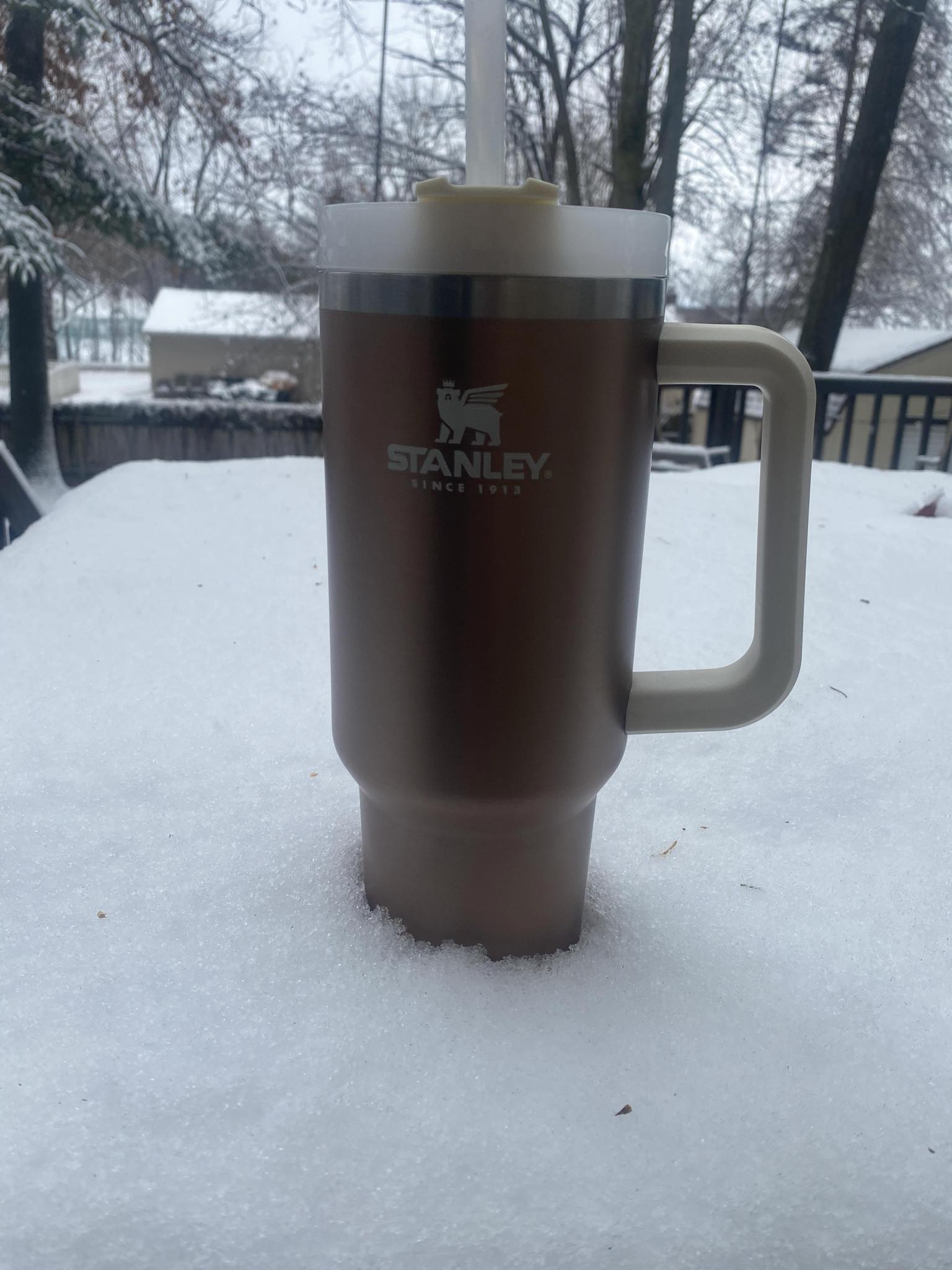
So it was a noble pursuit. Or perhaps Lord Byron just wanted to stay really well hydrated like all of the people who are losing their minds right now over the Stanley Quencher. This steel vacuum cup, with reusable straw, holds up to 64 fluid ounces, fits nicely in a standard cup holder, causes stampedes at Target every time there’s a new limited edition collaborative design released, and keeps the blood of your enemies warm for hours.

Okay, so they do look like pretty great cups, and while I still wouldn’t camp out in the Target parking lot, I might be lying if I said I didn’t kind of want one. Photo courtesy of my niece who is clearly much cooler than I am.

Honestly, I don’t understand either trend, but there’s no doubt the Stanley Cup has become a sensation recently. The obsession apparently started with TikTok and has spawned a Stanley Cup Buy, Sell, Trade, and Raffle group on Facebook with more than 68,000 members, as well as another group called Stanley Cup Hunters Anonymous Support for Spouses. 

The wild fad has spurred sales for the Stanley company, which has been in the business of making steel water bottles since 1913, to grow from $94 million in 2020 to $750 million in 2023. 

If you camped out at Target to get one and you want to make a few bucks, the resale value of $45 limited edition Quenchers is currently in the neighborhood of $200. Given that Lord Byron’s skull cup sold at auction a few years ago for only somewhere around £1,000, that feels like a pretty substantial markup. 

As far as I could find, no one has yet started penning verses about the Stanley Quencher. My promised year of not attempting to write poetry is over, so I might see if I can come up with something about staying ultra-hydrated by sipping the well insulated blood of my enemies through a straw. “Abbott of the Stanley Cup” sure has a nice ring to it. Maybe the company would consider a collab and etch my poem on the outside of a limited edition Quencher available only at Target.

Not a Nut

In January of 1942, Pennsylvania dental surgeon and amateur inventor Lytle S. Adams had a big idea to share with the United States government. Like many Americans, I’m sure, in the weeks following the Japanese attack on Pearl Harbor, Adams had big feelings to work through, a strong sense of patriotism, and an overwhelming desire to help defeat the darkness then spreading through the world.

He knew just how to do it, too. All he needed was the attention of President Roosevelt and about a million bats.

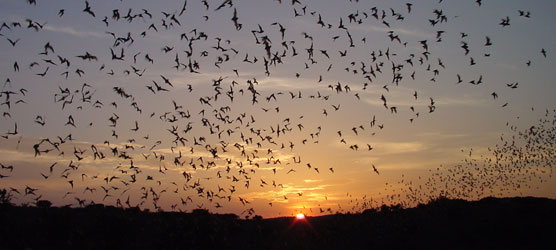
Mexican free-tailed bats emerging from Carlsbad Cavern. Nick Hristov, Public domain, via Wikimedia Commons

A recent vacation to Carlsbad Caverns in New Mexico to watch thousands upon thousands of bats take flight and begin their nightly bug-hunting expedition had inspired Adams to wonder if a million bats might carry a million tiny incendiary devices to roost in a million hard to reach places within the flammable buildings throughout Japan.

Adams happened to be acquainted with First Lady Eleanor Roosevelt, and so when he sent his cruel, disturbing, and possibly kind of genius idea to the White House, it made it to the president’s desk where Roosevelt wrote in a memo: “This man is not a nut. It sounds like a perfectly wild idea but is worth looking into.”

With approval of the project, later known as Project X-Ray, Adams began assembling a team of specialists from a wide variety of fields. The list included mammalogist Dr. Jack von Bloeker, as well as Harvard chemist and inventor of napalm Dr. Theodore Fieser. It also included a pilot-turned-actor, a one-time hotel manager, a fitness expert, a former gangster, a lobster fisherman, and a couple of high school student lab assistants, which sounds a bit like the set up to a joke. And in case you forgot, it’s worth mentioning again that the project leader was a dentist.

The team got to work and designed a tube carrier that could hold 1,040 Mexican free-tailed bats, kept just cold enough to maintain hibernation during transport, deploy a parachute at four thousand feet above the ground, and open to release the newly awakened bats, each with fifteen to eighteen grams of napalm glued to their furry chests.

Upon testing, some of the bats dropped to the ground having never woken up, and others flew off into the sunset neglecting to roost, but the bat bombs weren’t entirely unsuccessful. They did burn down a mock Japanese Village. Unfortunately, a handful of accidental releases also managed to completely destroy the Carlsbad auxiliary airfield.

Then after the not-yet-perfected project got shuffled around from branch to branch within the US military for a while, another secret weapons project came to light. While the atom bomb was certainly no less cruel, disturbing, and possibly genius than the bat bomb, it did overshadow Project X-Ray, which was cancelled in late 1944, much to the relief of a million Mexican free-tailed bats.

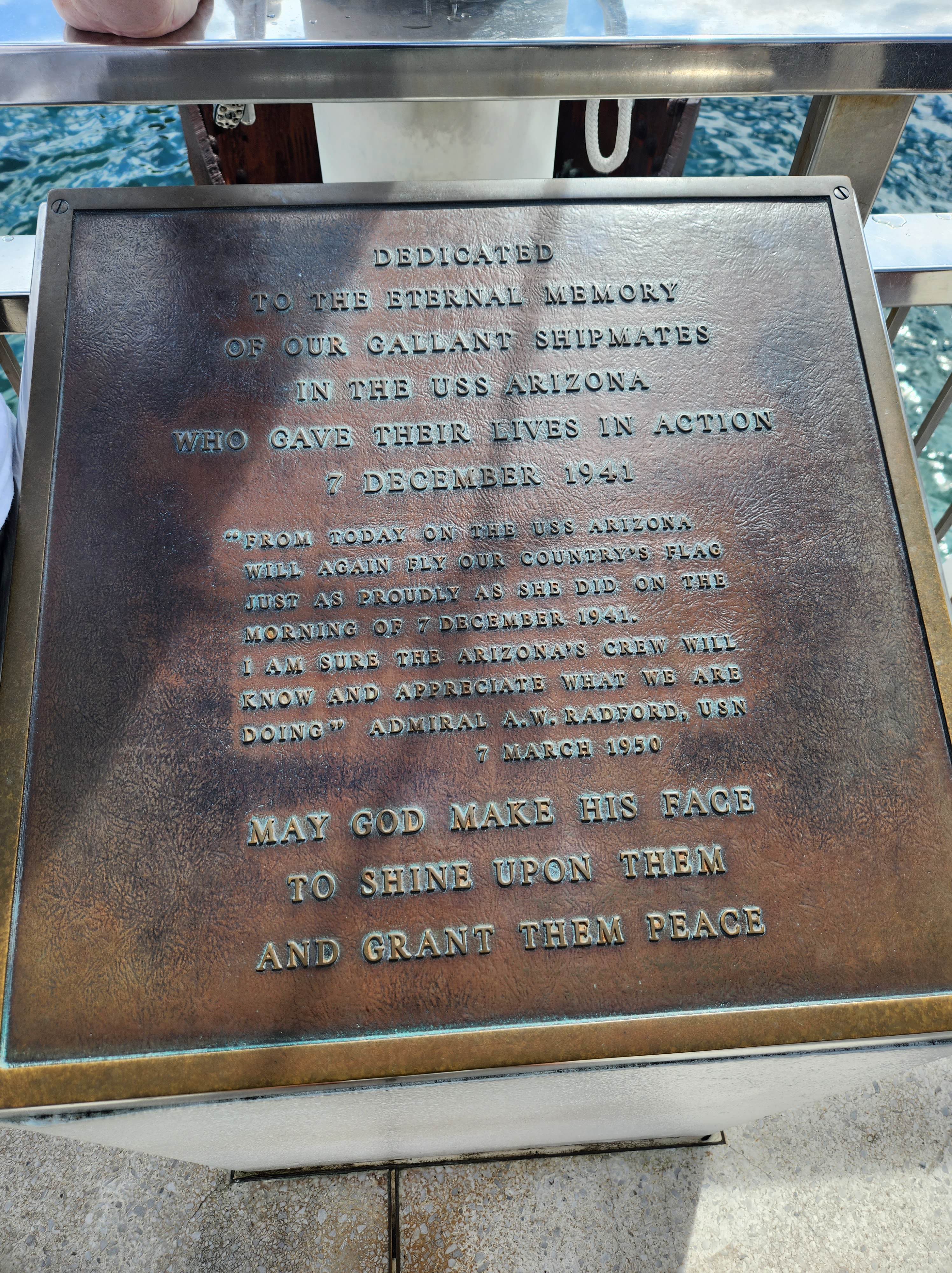
I don’t often write in this space about the more serious moments in history, at least not very directly, but today marks the anniversary of one of the deadliest attacks ever committed against the United States, and the beginning of this nation’s official participation in World War II. This year more than any other, I feel connected to that moment in history. Largely that’s because this past summer my family and I visited the Pearl Harbor National Memorial in Honolulu.

There we stood silent above the watery grave of the USS Arizona where the bones of many trapped servicemen still lie, and watched as small amounts of oil bubbled up to the surface of water that eighty-two years ago today was covered in flames. It’s a somber place that leaves one with big feelings to work through, a strong sense of patriotism, and an overwhelming desire to help defeat the darkness now spreading through the world.

Because I don’t know about you, but to me the world is feeling like a pretty dark place right now. I’m certainly not prepared to assemble a motley crew and sentence a million poor little bats to death, but I can almost understand the sentiment behind Lytle Adams’s big idea. I might even agree with Franklin Roosevelt’s assessment that the man was perhaps not a nut.

When Life Hands You Apples

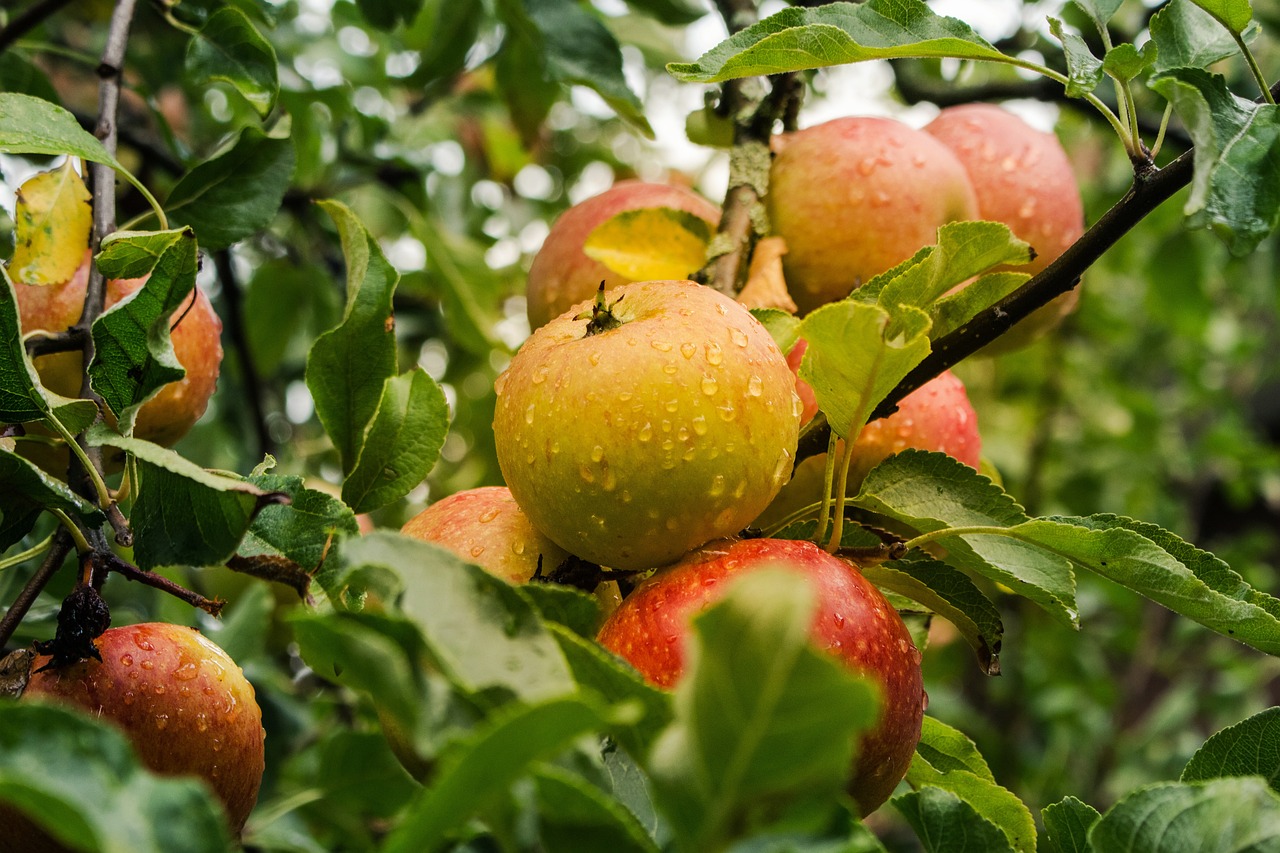
In the late sixteenth century French Jesuits brought the first apple seeds to America and by the time missionary John Chapman became the legendary Johnny Appleseed in the late eighteenth century, the fruits were already a pretty important part of American culture. Apple pies were on their way to becoming as American as they were ever likely to get, and the hard cider was flowing.

Image by Michael Strobel from Pixabay

Then came the increasing influence of German immigrants who brought with them an enthusiasm for beer. Barley grew well in the US. It was a quicker and cheaper crop, too, and recovered more easily when it occasionally fell victim to the whim of the temperance movement. Apple trees began to decline, beer surged, and apple cider became the drink of the backward-thinking country bumpkin.

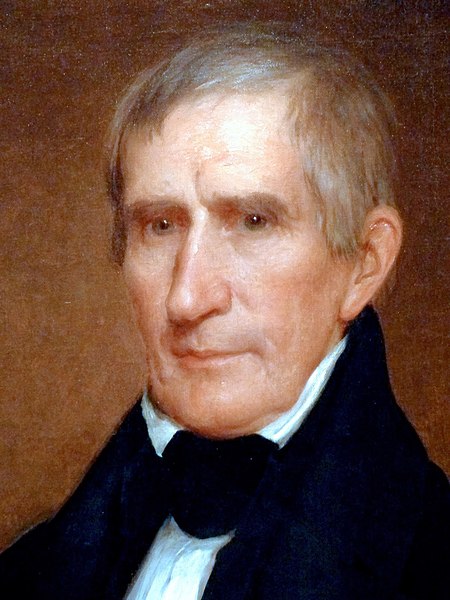
That’s probably why, during the presidential campaign season of 1840, a Democratic newspaper insulted the Whig challenger to the Democrat incumbent Martin Van Buren by stating that you could “give [William Harrison] a barrel of hard cider. . .and he will sit out the remainder of his days in a log cabin by the side of his ‘sea coal’ fire, and study moral philosophy.”

The insult turned out to be a pretty big misstep because the US was in the midst of an economic depression that had occurred under the watch and policies of Van Buren and his Democrat predecessor Andrew Jackson. People were stressed and were perhaps feeling nostalgic for better days, even longing for a return of the hard cider they’d previously dismissed.

I mean, the man might have been a little hoity-toity, but he was as American as hard apple cider. Albert Gallatin, Public domain, via Wikimedia Commons

Harrison, who’d been raised as a wealthy and well educated Virginian with a pedigree every bit as hoity-toity as Van Buren’s, embraced hard cider which paired well with his reputation as a western hero of the War of 1812. Yes, it was maybe a little disingenuous, but when life hands you apples, you make hard cider.

That’s what we’ve decided to do this fall at the Angleton house. Shortly after moving into our current suburban home more than ten years ago, we planted three apple trees, of different varieties. One started producing a pretty good harvest the first year or two. The others took a little longer, but now all three are going strong and we are drowning in apples.

This is not a terrible problem to have. We share a lot of them with friends, family, neighbors, and food banks. With the rest, we get creative. Over the years we have canned applesauce, made apple butter, baked pies and cakes and muffins and doughnuts. Our apples have been the star of salads, hors d’oeuvres, main dishes, and snacks. The only thing we hadn’t done was make cider because we didn’t think we had the right kind of apples to make it work.

But then we found a stovetop recipe that isn’t too picky and it turned out really well. The next logical step then was to try our hand at fermenting it, because it felt like just the kind of thing nostalgic Americans should do.

If you didn’t know better, you might almost think we know what we’re doing.

Turns out it’s not that difficult. It does require some precision and care and a bit of patience. Our first batch isn’t quite through its initial fermentation yet, but as best as we can judge from all our recently obtained YouTube expertise, it’s coming along nicely so far.

Hard cider worked out for Harrison, too. He defeated Van Buren in an electoral college landslide, becoming the oldest person ever elected to the office (a record that has definitely been broken since) as well as the first to lay claim to a campaign slogan.

His success didn’t last, however, because after delivering the longest ever inaugural address (a record he does still hold), in the cold, without even stopping to take to his bed, he developed pneumonia and just a month later, became the first US president to die in office, after the shortest term ever served.

I do hope we have better luck with our hard cider.

A Book for the Chore Doers

Spurred by the return of soldiers blinded from service in World War I, the American Foundation for the Blind was established in 1921. The organization quickly set about the work of becoming a wellspring of knowledge, research, and advocacy for the visually impaired. It ushered in important standardization in English Braille, pushed for universal design in manufacturing, and encouraged considerations of accessibility.

How audiobooks got their start. American Foundation for the Blind, Public domain, via Wikimedia Commons

And in 1932, led by AFB Education Director Robert B. Irwin, and with the lackluster support of Helen Keller who thought there might be more important priorities, the foundation established a recording studio for the purpose of putting books on vinyl records.

A year later the Library of Congress got in on the action. Soon audio performances of the Constitution and the writings of William Shakespeare became available in 15-minute segments on vinyl. The Bible also made the cut, as did many of the works of Edgar Allan Poe, O. Henry, and Helen Keller, who finally decided she was pretty much on board with that.

In the ninety years since, the audiobook has grown up quite a bit alongside some pretty impressive advances in technology, to become the fastest growing segment of the publishing market for going on twelve years now. The consumers of audiobooks have expanded beyond the visually impaired to include the commuters, exercisers, and household chore doers.

I’m just glad we no longer have to change the record every fifteen minutes. Image by sindrehsoereide from 
Pixabay

Like Helen Keller, I was a little bit of a latecomer to the audiobook, but over the last few years, I have listened to more and more of them. It’s still not my preferred method of book consumption, but as much as I would like to sit and read books all day long, I do occasionally have other things I need to get done. When that happens, it’s nice to have someone read to me while I work.

About a year ago, I set out to put one of my own books into this format. I have started with Gentleman of Misfortune, my first published novel, which you can learn more about here if you like. The project took a little longer than I expected, primarily because of slow communications with distributors, but finally, the audiobook is available in enough places that I feel like I can start to tell people about it.

For when you just want to read a book, but you really need to clean your house.

If you are into audiobooks, I hope you will consider checking it out at whatever link below would make you the happiest. Also, in case this is important to you here at the murky dawn of everything AI—and I really do hope it is—the reader for Gentleman of Misfortune is a real live human being with a real live voice.  His name is George Sirois and he is a talented voice actor, podcaster, and writer, who I think did a pretty bang-up job bringing my story to life in this way.

At this moment, Gentleman of Misfortune is available on audio in the following places, but platforms are still being added, so if your favorite isn’t listed, you still might find it there.

Audible

Spotify

Scribd

Libro.FM

Storytel

Kobo, Walmart

Google Play

BingeBooks

Chirp

NOOK Audiobooks

Audiobooks.com

Overdrive

Brought Low by Cherries

It’s been a pretty nice spring around here so far, a little drier than ideal, but the temperature has been mostly mild and with a little strategic watering, the garden is doing well.

I’m kind of a clumsy gardener, but I keep trying. So far this year, I think it’s going pretty well.

A few days ago, I harvested my first (admittedly late) lettuce for a salad, and the locusts I call my sons devoured all the pea pods, strait from the plants. Last week, I pulled radishes that I promptly gave to my mother once I remembered that radishes are gross.

Now I’m watching the formation of green tomatoes, tiny peppers, blossoms that will someday soon become cucumbers, and the crazy growth of squash and melon plants that will eventually battle the potatoes for an epic garden takeover.

The blueberry bushes are producing, and the young strawberry plants are coming along. The blackberry brambles we planted last year are progressing nicely, and our apple trees are looking to be as productive as they ever have been. That means we have an awful lot of applesauce to eat still between now and harvest time. 

Nothing says spring quite like this.

But the one thing we don’t have this year is cherries. With the exception of only a few years in my life, I have always lived with at least one cherry tree in my yard. Their beautiful pink and white blossoms against a storm blue sky is one of my favorite sights of early spring, and I know that spring has truly arrived when I begin fighting the robins for the bright red fruit.

Then come the pink-stained fingertips from endless seeding, followed by a thick slice of tart cherry pie smothered with a scoop of homemade vanilla ice cream. Add in a buttery ear of sweet corn, and this midwestern gal just tasted summer.

But not this year. Because as mild as our weather has been, we did have one unfortunate cold snap that brought us a night of freezing temperatures just as those beautiful blossoms were fully developed and ready to turn the corner into juicy orbs of deliciousness. We watched anxiously to see what would happen, and slowly admitted the cherry harvest wasn’t going to happen.

Our tree, that only a few weeks earlier had been so full of promise that I went ahead and used up the last two cups of last year’s frozen harvest to bake chocolate chip cherry bread, had no more than a handful of fruits on it. And the birds ate those.

Now there’s a man who appreciated a good cherry. Until he didn’t. James Lambdin, Public domain, via Wikimedia Commons

It’s okay, though. I’ll miss the homegrown pie, but at least I’m comforted knowing we won’t go the way of US President Zachary Taylor, who died sixteen months into his presidential term at the age of 65. Taylor, a hardened war hero known as “Old Rough and Ready” because of his rugged, unstoppable nature, may very well have been brought low by cherries.

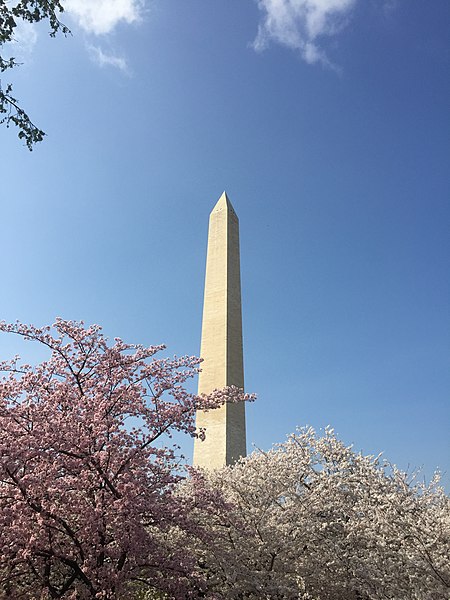
That’s not the only theory floated by historians and physicians. His own doctors believed he died from cholera, not uncommon in Washington DC at the time. What is known for sure is that on July 4th of that year, the president attended Independence Day festivities at the construction site of the nation’s favorite phallic monument, and while there, ate quite a large number of cherries, which he chased down with a good quantity of iced milk.

That sounds like a pretty great 4th of July to me, but it didn’t work out so well for Old Rough and Ready. Evidently it was a warm day and President Taylor took a stroll along the Potomac before heading back to the White House. Once there, he ate more cherries and enjoyed a lot of ice water to cool down.

America’s favorite phallic monument, the Washington Monument, and cherry blossoms. Sjgdzn, CC BY-SA 4.0 https://creativecommons.org/
licenses/by-sa/4.0, via Wikimedia Commons

Then that night, the president got sick. Like really sick, with full on abdominal cramping, nausea, and diarrhea of the variety that, I assume, makes you regret your life choices.

It’s possible, of course, the water was contaminated, as Washington DC is well known for containing an awful lot things that are difficult to stomach, or perhaps the iced milk was at fault. But another theory is that the acidity from the cherries Taylor consumed, combined with the acidity of the milk, caused the severe abdominal distress from which he never recovered. He died on July 9th, 1850, leaving Millard Fillmore, of unearned bathtub fame, in charge of the nation.

It is true that Taylor had made some political enemies during his brief stint in the White House. His support for the Wilmot Proviso, which would have excluded slavery in territories acquired from the Mexican-American War, along with his strongly worded promise to personally bring the hurt to anyone who attempted succession, have led some historians to suspect assassination.

I’m not convinced there’s very strong evidence for that, though I admit assassination by cherries would be awfully clever. I know of at least one blogger who may want to use that in a story sometime.

Regardless of whether assassins, or cherries, or bacteria, or all three are to blame for President Taylor’s early demise, the whole story does make me feel a little bit better about our own lack of cherry harvest. Still, I sure could go for a slice of homegrown cherry pie about now.